
7. After the drug takes effect, it is completely eliminated from the body.
8. Pregnant and lactating women should absolutely not use this medicine.
9. Be careful when using medicine for children & pregnant women, breastfeeding women. 10. Injection is the fastest way to get medicine into the blood.
Maybe you are interested!
-

 Developing tourism in Ca Mau province in a sustainable direction - 16
 -
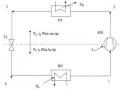 Basic Refrigeration Refrigeration and Air Conditioning Engineering - Intermediate - Ha Nam Vocational College 2020 - 1
 -
 The Kennedy Administration and the Vietnam War 1960 – 1963 - 18
 -
 SQL Database Administration - Hanoi University of Business and Technology - 14
 -
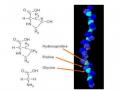 Crocodile Bones Removed Marrow, Fat and Meat (Source: Hoa Ca Crocodile Company Limited, 2014)
11. The disadvantage of using by injection is that if a reaction occurs, it will be difficult to treat.
12. The advantage of oral administration is that it can be used in emergency situations. ANSWER SHORT QUESTIONS.
1. List 2 factors that affect the effects of drugs.
..........................................................................
..........................................................................
2. The effectiveness of the drug depends on .
..........................................................................
Route of administration.
..........................................................................
3. The therapeutic effect is .................................................................
4. Side effects are ........................................................but still occur.
5. Systemic effects
Is ............................................................and spread throughout the body
6. Selective effect: Is ................................................ and strongest.
7. Specialized effects: specialized treatment ........................................................
8. List 4 sources of pharmaceuticals
...................................
Animals.
..........................................
Microorganisms.
9. List 6 routes of drug excretion.
.................... , ...................., ...................... , ................. , secretory glands , placenta
10. Ovarian medicine: Solid at ........................................liquid at
.................
11. The content of the finished product is: medicine ................................... contained in
...................................................
12. List 4 ways to introduce drugs into the body = digestive tract: 13. Routes of introducing drugs into the body
..........................................................
..........................................................
14. Synergistic effect: combining 2 or more drugs
...................................................................
15. Medicinal effects: .................................................................................
MINISTRY OF HEALTH
Number: 27/2008/QD-BYT
SOCIALIST REPUBLIC OF VIETNAM
Independence - Freedom - Happiness
_
Hanoi, August 4, 2008
DECISION
On the cancellation of Decision No. 2032/1999/QD-BYT dated July 9, 1999 of the Minister of Health on promulgating the Regulation on management of toxic drugs, list of toxic drugs and list of antitoxic drugs and Decision No. 3046/2001/QD-BYT dated July 12, 2001 of the Minister of Health on supplementing the list of toxic drugs and list of antitoxic drugs
_
MINISTER OF HEALTH
Pursuant to Decree No. 188/2007/ND-CP dated December 27, 2007 of the Government stipulating the functions, tasks, powers and organization of the Ministry of Health;
Pursuant to the Law on Promulgation of Legal Documents 1996, the Law on Amending and Supplementing a Number of Articles of the Law on Promulgation of Legal Documents 2002;
Pursuant to Decree No. 161/2005/ND-CP dated December 27, 2005 of the Government guiding the implementation of the Law on promulgation of legal documents;
Pursuant to Decree No. 135/2003/ND-CP dated November 14, 2003 of the Government on inspection and handling of legal documents;
Pursuant to the Law on Pharmacy No. 34/2005/QH11 dated June 14, 2005; Considering the proposal of the Director of the Department of Drug Administration,
DECISION
Article 1. To annul Decision No. 2032/1999/QD-BYT dated July 9, 1999 of the
Minister of Health on promulgating the Regulation on management of toxic drugs, list of toxic drugs and list of antitoxic drugs and Decision No. 3046/2001/QD-BYT dated July 12, 2001 of the Minister of Health on supplementing the list of toxic drugs and list of antitoxic drugs.
Article 2. This Decision comes into force 15 days after the date of publication in the Official Gazette.
Article 3. The Chief of the Ministry's Office, the Chief Inspector of the Ministry, the Director of the Department of Drug Administration, the Heads of units under the Ministry, the Directors of the Departments of Health of provinces and centrally run cities, and the Health sector are responsible for implementing this Decision./.
KT. MINISTER DEPUTY MINISTER
(Signed)
CAO MINH QUANG
LESSON 2. DIABETES TREATMENT MEDICATIONS
TARGET:
1- Distinguish between 2 types of diabetes
2- How to use, indications, side effects, contraindications of blood glucose lowering drugs
CONTENT:
I. GENERAL
In a normal body, blood glucose levels are maintained at a constant level by insulin, glucagon, growth hormone, cortisol and catecholamines. When there is a disturbance in the balance of this system, especially a decrease in the quantity, quality and sensitivity of cells to insulin, diabetes will occur.
Diabetes is a syndrome of hyperglycemia, accompanied by lipid and protein metabolism disorders and vascular damage. Based on the amount and sensitivity to insulin, diabetes is divided into two groups:
- Insulin-dependent group, also known as type I diabetes, is often found in thin people, children under 40 years old, with reduced number of β cells and very low blood insulin concentration. Treatment is with insulin.
- The non-insulin dependent group, also known as type II diabetes, is common in the elderly, with no reduction in the number of β cells and normal or high blood insulin levels. This group has impaired insulin secretion and insulin resistance in peripheral tissues. The main treatment is oral synthetic antidiabetic drugs.
II. COMMONLY USED DRUGS: 1. INSULIN
Insulin is a polypeptide extracted from the pancreas of cows, pigs, and sheep. Today, based on the structure, it is possible to synthesize or extract human insulin by genetic engineering through culturing human pancreatic cells.
- Effect: lowers blood glucose.
- Side effects: injection site reactions: itching, pain, hardening or lipoma at injection site, hypoglycemia, allergy.
- Insulin dosage: should use about 0.2-0.5 units per 1kg body weight / 24 hours.
- Uses:
+ All patients with type I diabetes are prescribed insulin. In addition, insulin is also prescribed for patients with type II diabetes, but after changing the diet and using synthetic antidiabetic drugs have no effect.
+ Diabetes after pancreatic resection.
+ Diabetes in pregnant women.
+ Diabetes with high blood and urine ketones.
1.1. Rapid-acting insulin
+ Insulin hydrochloride: The time of effect after injection is 1 hour and reaches maximum after 3 hours and lasts about 6 hours. The drug is used in diabetic coma, 1ml contains 20-40 units, can be injected intramuscularly, subcutaneously, intravenously.
+ Insulin-zinc emulsion: injected subcutaneously only; effects begin to appear 1 hour after injection and last about 14 hours.
1.2. Intermediate-acting insulin
+ Insophaninsulin (NPH – insulin) in emulsion form, is a combination of insulin, protamine and zinc in a phosphate buffer medium. For every 100 units of insulin, there is an additional 0.4 mg of protamine. Subcutaneous injection, the effect appears after 2 hours and lasts about 24 hours.
+ Lenteinsulin: emulsion form, injected subcutaneously, takes effect after 2 hours and lasts about 24 hours.
1.3. Slow-acting insulin
+ Insulin protamine zinc: emulsion preparation, every 100 units of insulin contains 0.2 mg of protamine. The time of effect after subcutaneous injection is 4-6 hours and lasts up to 37 hours.
+ Slow-acting zinc insulin (Ultralente insulin) is injected subcutaneously, the time of onset and duration of action is similar to protamine-zinc.
2. ORAL HYPOGLUCOSE-LOWERING DRUGS
2.1. Sulfonylurea derivatives.
- Effect: stimulates pancreatic cells to secrete insulin and increases the number of insulin receptors in monocytes, red blood cells, and fat cells.
+ Tolbutamide (Orabet, Oramid): 0.5 – 2.0g/24 hours
+ Acetohexamide (Dymelor): 0.25 – 1.25g/24 hours
+ Tolazamide (Tolinase): 0.1 – 0.75g/24 hours
+ Chlopropamide (Meldian, Diabinase): 0.1 – 0.5g/24 hours
+ Glibenclamide (Maninil, Glyburide): 0.0025 – 0.02g/24 hours
+ Glipizide (Glucotrol): 0.005 – 0.02g/24 hours
- Indication
+ All patients with type II diabetes, not insulin dependent.
+ Obese people over 40 years old have blood insulin below 40 units a day.
- Contraindications
+ Type I diabetes, insulin dependent.
+ Pregnant and lactating women.
+ Liver and kidney dysfunction.
- Undesirable effects
+ Lower blood glucose.
+ Allergy.
2.2. Biguanide derivatives
- Metformin: 0.5-2.5g/24 hours, divided into 3 times after meals
- Indicated for type II diabetes patients who have had ineffective diet and exercise adjustments
- Side effects: digestive disorders, blood acidity
2.3. Other drugs
+ Thiazolidinedione group:
Increases glucose metabolism, increases glycogen synthesis, increases insulin receptor
*Troglitazone: 200 – 800mg/day. Can cause hepatitis
*Rosiglitazone (Avandia): 4mg/1 time/day Does not cause hepatitis.
Contraindications: under 18 years old, pregnant women, breastfeeding women, people with heart failure, liver failure
+ Nateglinide: 60mg/1 time/day
Because it rapidly binds to specific receptors to stimulate rapid insulin secretion and also dissociates from receptors quickly, it avoids hypoglycemia and does not deplete pancreatic β cells.
+ Acarbose (Glucobay): 300mg / 24 hours
Drug action: inhibits enzymes: α-glucosidase, glucoamylase, maltase, so glucose cannot be absorbed, lowering blood glucose. Take glucose when there is a hypoglycemic accident.
Contraindications: people with absorption disorders, pregnant women, breastfeeding women, children under 18 years old.
VALUATION
CHOOSE THE MOST CORRECT SENTENCE
1 Pharmaceutical substance indicated for patients with type I diabetes:
A. Glibenclamide
B. Insulin
C. Prednisolone
D. Levothyroxine
2 Pharmaceutical substances indicated for patients with type II diabetes:
A. Levothyroxine
B. Insulin
C. Hydrocortisone
D. Glibenclamide
3 Drugs indicated for patients with insulin-dependent diabetes:
A. Glibenclamide
B. Insulin
C. Prednisolone
D. Levothyroxine
4 Insulin-dependent groups are common in subjects: