
The most basic issues about cultural heritage and orientations to preserve and promote the values of Vietnamese cultural heritage in general.
The book Preserving and promoting Vietnamese cultural heritage , Culture - Information Publishing House (2010) by author Nguyen Kim Loan [19], summarizes theoretical issues on cultural heritage such as concepts, characteristics, criteria for classifying cultural heritage, and at the same time analyzes and evaluates the role of cultural heritage in current socio-economic development.
The book " Protecting and promoting the value of Vietnamese cultural heritage" , Culture - Information Publishing House (2014) by author Truong Quang Binh [3] clarified the issue of protecting and promoting the value of Vietnamese cultural heritage and especially mentioned the important role of collecting artifacts in the process of preparing for construction and organizing museum activities in Vietnam.
The book Cultural Heritage Management with Tourism Development , National Publishing House (2011) by author Le Hong Ly [20], has examined how to manage cultural heritages to organize and promote their values in tourism development, creating economic resources for the country, and thereby preserving the country's cultural heritages.
Maybe you are interested!
-
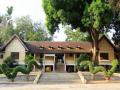
 State management of conservation and promotion of relic values in Dak Lak province - 15
 -
 Improving State Management Capacity for Tourism Market, Tourists and Propaganda and Promotion of Hanoi Tourism
 -
 Directions for Improving State Management of Tourism Activities in Dak Nong Province
 -
 State management of compensation, support and resettlement when the State acquires land in Buon Ho town, Dak Lak province - 12
 -
 Current Status of State Management Activities for Tourism Enterprises in Hanoi
The contents of the above books are the premise for in-depth studies on cultural heritage and the preservation of cultural heritage values. However, the documents only stop at the orientation for the preservation of cultural heritage in general and do not mention the promotion of cultural heritage in the current development trend.
The book Museumization of Monuments , Construction Publishing House (2014) by author Nguyen Thinh [31] reflects the basic contents of monument operations to contribute to preserving and promoting the value of historical and cultural relics of the country, focusing on "museumization" of historical and cultural relics. The document focuses on preserving and promoting the value of monuments by displaying
Display documents, artifacts and stories associated with the relic, to contribute to orienting the work of improving the relic.
Monograph: Historical relics of the revolutionary resistance war in Vietnam in tourism development , Ho Chi Minh City National Publishing House (2018) edited by Associate Professor, Dr. Lam Nhan [22], the work mentions and clarifies the theoretical basis of relics, tourism and the relationship between cultural heritage in which the type of historical relics of the revolutionary resistance war is a resource in tourism development. At the same time, it forecasts the trend of tourism development on this heritage resource and proposes groups of recommended solutions to promote well in linking tourism development. However, the document only mentions revolutionary resistance relics in particular and has not yet been popularized to the relic system of the whole country.
The author himself participated in the provincial-level scientific project "Research on developing a system of modeling and managing artifacts, museums, and historical relics in Dak Lak province " led by Dr. Le Thi Kim Nga - Quy Nhon University, which was implemented from 2018 to 2021. Up to now, the project has been transferred to Dak Lak Museum to receive and operate at Dak Lak Museum. Through the process of participating in the scientific project, the author realized that the issue of preserving and promoting the value of relics has not received much attention, especially the application of science and technology in this field is still limited.
Master's thesis in public administration by Nguyen Huyen Minh Trang, State management of historical and cultural relics in Dak Lak province, National Academy of Public Administration, Tay Nguyen branch, 2017 [34], focused on studying issues on the current status of management of the system of historical and cultural relics in Dak Lak province in the period of 2013 - 2016, and at the same time proposed a number of solutions to improve the management of historical and cultural relics in Dak Lak province. However, the thesis did not mention much about the preservation and promotion of the values of the province's relics, especially the linkage of relics with tourism development.
The article “Protecting and promoting the value of relics in Dak Lak associated with tourism development” by Master Dang Gia Duan published in Cultural Heritage Magazine No. 2
(59) in 2017 [11]; Article "State management of cultural heritage and the issue of preserving and promoting the value of intangible cultural heritage in the integration period", Dr. Nguyen Thi Thu Trang - Department of Cultural Heritage, May 6, 2020 [33]; Article " Preserving and promoting cultural heritage associated with tourism development in Vietnam ", MSc. Cu Thi Nhung - Faculty of Economics - Business Administration, Ha Tinh University in the Journal of Business and Market, June 22, 2020 [23]... along with many presentations by the Department of Culture, Sports and Tourism of Dak Lak province at conferences and seminars related to heritage and relic management..., are documents that present a number of different aspects in the work of preserving historical and cultural relics associated with tourism development in the current period.
In general, the research works have provided many basic theories and guiding viewpoints of the Party and the State on cultural heritage in general and historical - cultural relics in particular. The above works are valuable sources of information for the author of the thesis to refer to and inherit. However, in reality, there is still no research topic that goes in-depth into the state management of the conservation and promotion of relic values in Dak Lak province. Therefore, by choosing the topic " State management of conservation and promotion of relic values in Dak Lak province ", the author directly and fully addresses the theory as well as the current state of state management of conservation and promotion of relic values in the province, and at the same time proposes a number of solutions to further enhance the role of state management in the conservation and promotion of relic values in the province.
3. Purpose and tasks of the thesis
- Systematize the theoretical basis related to state management of relics, conservation and promotion of relic values. Refer to the experience of state management of conservation and promotion of relic values in some provinces to draw lessons.
experience for state management of conservation and promotion of relics in Dak Lak province.
- Analyze and evaluate the current state management of relics, conservation and promotion of relic values in Dak Lak province.
- Propose some solutions to improve the effectiveness of State management in preserving and promoting the value of relics in Dak Lak province today.
4. Research object and scope
- Research object: State management of conservation and promotion of relic values in Dak Lak province.
- Research scope:
+ Space: The thesis focuses mainly on researching the state management situation on the conservation and promotion of relic values in Dak Lak province.
+ Time: From 2017 to 2020.
5. Methodology and research methods of the thesis
- Methodology: The viewpoints of dialectical materialism, historical materialism and Ho Chi Minh's thought on inheriting traditional cultural capital as well as the Party's guidelines in preserving and promoting national cultural heritage, building an advanced Vietnamese culture imbued with national identity.
- Research method:
+ Synthesis and analysis method: This is the method used throughout the thesis writing process. The method helps the thesis explain the basic concepts and guiding viewpoints of the Party and State on relic management, preservation and promotion of relics; experiences in state management of relics, preservation and promotion of relics.
+ Comparative method: The method helps to identify and evaluate the potential of relics in order to provide directions in preserving, exploiting and promoting the values of relics in the current trend.
+ Survey and statistical methods: Collect data and research documents to determine the value of relics in the province.
6. Theoretical and practical significance of the thesis
- The topic contributes to summarizing theories and viewpoints on relics; issues of preserving and promoting the value of relics.
- Analyze and clarify the current state management of the conservation and promotion of relic values in Dak Lak province such as: Advantages, limitations, causes and issues.
- Propose some recommendations and solutions with scientific and practical basis to improve the effectiveness of state management on conservation and promotion of relic values in Dak Lak province in the coming time.
7. Structure of the thesis
In addition to the introduction and conclusion, the thesis consists of 03 chapters:
Chapter 1 : Theoretical basis of state management on conservation and promotion of relic values.
Chapter 2: Current status of state management on conservation and promotion of relic values in Dak Lak province.
Chapter 3: Some solutions to improve the effectiveness of state management in preserving and promoting the value of relics in Dak Lak province.
Chapter 1
THEORETICAL BASIS OF STATE MANAGEMENT OF HERITAGES; CONSERVATION AND PROMOTION OF HERITAGE VALUES
1.1. Some concepts
1.1.1. Culture and cultural heritage
1.1.1.1. Culture
There are many different definitions of culture in the world, according to different cross-sections and scopes, but in general, they all acknowledge that culture is a great value created by humans. In 1982, UNESCO (incomplete) counted about 200 definitions of culture in the world. With the strong development of society in recent decades, this number is certainly much higher.
During their lifetime, C.Marx and F.Engels had profound studies on culture and affirmed that: "culture is the totality of human social consciousness associated with national and ethnic characteristics". Culture is the essential forces of human beings participating in transforming nature for the purpose of living, existing and developing. Culture is the creation and at the same time the expression of the essential forces of human beings: Based on the level of nature transformed by humans into human nature, that is, the level of nature exploited and transformed by humans, we can consider the cultural level of humans.
According to Edward B. Tylor, Culture is: " That complex whole which includes knowledge, belief, art, morals, law, custom and any other capabilities and habits acquired by man as a member of society" . This can be considered the first scientific definition of culture, and from here, culture became a new and separate object of many social sciences and humanities.
In 1943, Ho Chi Minh put forward a cultural concept that was both specific and general: " For the sake of survival as well as the purpose of life, mankind
People create and invent language, writing, ethics, law, religion, literature and art, tools for daily life of eating, dressing, living and methods of using. All of these inventions and creations are culture. Culture is the synthesis of all modes of living and their manifestations that have been produced by humans to adapt to the needs of life and the demands of survival .
In 1982, in the Declaration on Cultural Policies, UNESCO agreed to define “culture” as follows:
In its broadest sense, culture may be considered as the whole complex of distinctive spiritual and material, intellectual and emotional features that characterize a society or a social group. It includes art or literature, ways of life, fundamental human rights, value systems, customs, and beliefs. Culture gives human beings the ability to reflect on themselves. It is culture that makes us specifically human, rational, critical, and morally committed beings. It is through culture that we judge values and make choices. It is through culture that human beings express themselves, become self-aware, know themselves as an unfinished project, examine their own achievements, tirelessly search for new meanings, and create works that transcend them [38].
Thus, culture is something accumulated and chosen by humans through a process of cognition, choosing methods to adapt to circumstances, creating to work and produce, improve circumstances, improve life, and affirm human strength to the outside world. At the same time, humans perfect themselves, renew their activities, bringing more efficiency and better quality in both material and spiritual aspects.
1.1.1.2. Cultural heritage
Cultural heritage, in general, is the works and customs that a society inherits from the past, wants to preserve and pass on to future generations. An object can be considered a heritage when it meets three criteria, which are also three basic values: communication, science, and economy. Cultural heritage is a creative product in the process of human activities to reach the peak of the values of truth - goodness - beauty, is the crystallization of the overall relationship and interaction between the environment - people - culture, is the rise of fierce challenges with perseverance, courage, intelligence and the aspiration to reach the heights of humanity, is tolerance, the fusion between preserving one's own identity and adapting and absorbing the values of other cultures.
It can be affirmed that: Cultural heritage is a spiritual and material product of historical, cultural and scientific value that is passed down from generation to generation. Cultural heritage is the characteristic that makes this country or nation different from other countries or nations, it is something that lasts through time and is recognized and honored by society.
On June 29, 2001, the 10th National Assembly passed the Law on Cultural Heritage (Law No. 28/2001/QH10) and continued to be amended and supplemented by the 12th National Assembly (Law No. 32/2009/QH12). Cultural heritage is stipulated in the Law on Cultural Heritage: " is a spiritual and material product of historical, cultural and scientific value, passed down from generation to generation in the Socialist Republic of Vietnam ".
1.1.2. Monuments and conservation, promotion of monument values
1.1.2.1. Monuments
Relics are understood in the most general sense as "traces of the past remaining underground or on the ground that have cultural and historical significance " [25, p.414]. Accordingly, relics are tangible cultural heritages created by