
Hanoi, Vung Tau, Ho Chi Minh City. In 2000, Hue Tourism Vocational High School was established with the function of training secondary and lower level human resources for the Central and Central Highlands provinces. In 2007, the school was upgraded to College level of vocational training according to Decision No. 1876/QD-BLDTBXH dated December 31, 2007 of the Minister of Labor - Invalids and Social Affairs and renamed Hue Tourism Vocational College. Currently, the school has 02 operating facilities (02 teaching facilities, 01 practice facility) in convenient locations right in the center of Hue city. In the early years (from 2000-2003), the school trained 3 intermediate occupations (hotel reception, restaurant service, food preparation) and 4 elementary occupations (hotel reception, restaurant service, food preparation, room service). Since 2004, 3 more majors have been added to the TCCN system (Tourism, Accommodation Management, Restaurant Management). By 2008, the school started to offer vocational college level. The current teaching staff consists of 157 people, the number of whom have postgraduate degrees and are studying for master's degrees accounts for over 20%. The number of students enrolled has also increased rapidly in recent times: 814 students in 2010-2011, 827 students in 2011-2012, and 2013-2014.
912 students.
- Vocational training system in Thua Thien Hue province
As of 2014, in addition to vocational training facilities of enterprises in Thua Thien Hue province, there are 16 vocational training facilities, including 2 vocational colleges, 6 vocational secondary schools and 8 vocational training centers of districts. Along with the development of vocational training facilities, the number of vocational teachers has also increased rapidly and is increasingly standardized. According to statistics of the Department of Labor, War Invalids and Social Affairs, in the period of 2013-2014, the province had 9,366 workers trained in vocational training, reaching 98.5% of the plan (1,290 vocational college students, accounting for 13.7%; 895 vocational secondary students, accounting for 9.5%; 7,181 vocational primary and under 3 months students, accounting for 76.6%). Of which, vocational training was provided to 3,284 rural workers (825 in agricultural vocational training and 2,459 in non-agricultural vocational training), reaching 93.8% of the plan.
…At the same time, 4 training courses for captains and chief engineers have been and are being implemented in Phu Loc, Phu Vang districts and Huong Tra town. It is expected that in 2015, training will be
Maybe you are interested!
-
 Survey Results on the Current Situation of Human Resources Training at Indochina Petroleum Transportation Joint Stock Company
 -
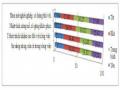 Results of Evaluating the Level of Dedication to Work of Human Resources at Tourism Enterprises in Da Nang City, 2017
 -
 Group of Direct Solutions for Training and Developing Human Resources for Tourism in Thua Thien Hue Province
 -
 The problem of training human resources for tourism in the Mekong Delta today - 2
 -
 Research Results on the Implementation of Training and Development Policies for Human Resources in the Diplomatic Sector
9,911 workers, reaching 100% of the plan to bring the rate of trained workers to 54% by the end of 2014.
In general, with a fairly complete network of universities, colleges, and vocational schools like in Hue, it will promptly and fully meet the quantity and quality of human resources needed for the tourism industry of Thua Thien Hue province. However, like the general situation of the whole country, the training system of human resources in the tourism industry of Thua Thien Hue province still has many weaknesses and shortcomings in terms of quantity, quality, and structure of training professions due to the lack of uniformity in the training program, the lack of building many types of programs suitable for the training needs of the subjects, the program layout has not been connected between the professions in the practical part, there has not been enough investment in developing facilities suitable for the training scale, there is a lack of practice facilities, the selection of qualified teachers is quite difficult because a person who graduates from a university of Tourism Management with a good or even excellent degree is not qualified to teach because of the lack of knowledge of professional techniques and practical skills such as Reception, Table - Bar, Kitchen and Housekeeping, so human resources in the tourism industry still cannot meet the increasingly high demands for human resources.

2.2.3.2. Results of training tourism human resources in Thua Thien Hue province
In the period 2010-2014, the number of tourism business administration graduates was higher than the demand for recruitment of managers and staff. Thus, in form, the demand for tourism management human resources was fully met. In reality, there was a shortage of senior and middle-level managers because the training objectives were not suitable and not closely linked to the needs of users.
Every year, tourism training institutions in Thua Thien Hue province produce more than 2,500 graduates in tourism majors at all levels (university, college, intermediate, vocational training and short-term training) and thousands of graduates from foreign language universities and colleges. This is a very large number, promptly meeting the quantity for the development of the tourism industry in the province and meeting the preparation of forces for major events often held in Thua Thien Hue province. However, the number of workers graduating from these formal training courses recruited is still limited and lacks planning.
From the starting point of needing a number of workers in the tourism industry such as tourism business administration, tourism culture, tourism geography, up to now, many training majors in the tourism field have been born to meet the increasing demands of tourists. The graduates have been promoting their abilities well and have made many important contributions to society.
In addition to the regular system, training institutions in the area also expand the training form, training more on-the-job training and the second degree system with two majors in general business administration and tourism business administration, in most areas in the Central and Central Highlands regions. Up to now, 871 bachelors of general business administration have been trained on the on-the-job training system. This force of bachelors is playing an important role in the socio-economic development of the provinces and localities in the Central and Central Highlands regions. In particular, there are tourism training institutions that also organize graduate training in business administration such as the Faculty of Tourism - Hue University, which has enrolled and trained 4 courses with a scale of 162 students, of which 1 course (20 students) has graduated, most of the students are important nuclei in localities, agencies and enterprises.
The demand for tour guides is quite high, but schools in the area and in the region do not provide training. Training facilities do not have departments or subjects for German, Spanish, or Korean, while the demand for tour guides and hotel staff who know these languages is very high.
2.3 Issues that need to be solved to develop human resources in the tourism industry in Thua Thien Hue province
2.3.1. Achievements in human resource development of the tourism industry in Thua Thien Hue province
- Firstly , the scale of labor in the tourism industry increases every year, but the population growth rate is lower than the national average. Therefore, with a moderate population growth rate, this will be an advantage for the province in policy making and job creation without worrying about great pressure on population growth.

- Second , NNL aged 15 and over account for a large proportion.
 , these people will add to the force
labor force. If the province has a strategy to train and utilize this force well, the province will have many advantages to meet the human resources requirements of the province in general and the tourism industry in particular.
- Third, in recent years, the number of tourism workers has been  constantly increasing, the number has developed quite rapidly and relatively evenly. Labor in the tourism industry has a stable gender ratio of male and female (female workers are always larger than male workers). The difference in the proportion between men and women

The tourism industry has many job positions that require a higher proportion of women than men, because they require dexterity and flexibility...
- Fourthly , the physical strength of tourism workers in terms of height, weight, health, longevity... has gradually improved. This shows that the income and living conditions of both the material and spiritual aspects of the people are increasingly improved, the quality of life is increasingly improving. Besides, it also reflects effective health care and medical development policies.
- Fifth, the quality of tourism human resources is increasingly improved, not only in terms of educational level but also professional level. The province also has a team of high-quality tourism management staff, trained domestically and internationally. This is an important result of the development of the education and training system in the province  .
.
- Sixth, the qualities, skills, characteristics and foreign language proficiency of tourism human resources  such as creativity, dynamism, flexibility, discipline, and industrial style tend to improve. Most of the workers directly involved in tourism business want to study to improve their professional skills and foreign languages, especially in the group of young workers and trained workers. The improvement of the qualities and psychosocial qualities of human resources not only contributes to improving labor productivity and economic efficiency but also facilitates the integration of the province's human resources into the regional and world labor markets.
- Seventh, the scale of formal training and short-term training has increased continuously. Forms, methods and training programs have been gradually innovated to gradually improve training efficiency. The teaching staff of universities, high schools and vocational schools has received attention and investment in development in both quantity and quality.
- Eighth, in recent years, awareness of the importance of human resources for the effectiveness of tourism business operations has changed significantly. A number of tourism businesses, especially high-quality accommodation establishments, have invested appropriately in developing their human resources and have coordinated well with training institutions to provide consultation and select staff. International cooperation in developing tourism human resources in the province is increasingly developing.
- Ninth , the rate of trained and assigned workers, the rate of retrained workers, workers with professional experience and foreign language proficiency tends to increase rapidly. The human resource is generally quite young, suitable for the characteristics of the tourism industry.
- Tenth, the source of human resources in the Central region in general and Thua Thien Hue province in particular is quite rich, with all levels of training, the scale is increasingly expanding with about 500 - 600 university graduates majoring in tourism, more than 2,000 intermediate graduates of regular vocational training; thousands of students are trained in short-term courses (3 months to 6 months). In addition, there are thousands of students graduating from universities, foreign language colleges, ... this is a fairly abundant source of human resources for the tourism industry.
- Eleventh, more and more enterprises are hiring managers (domestic and foreign), applying advanced human resource management models, doing well in the stages of selection, training, use and maintenance of human resources. In these units, especially foreign joint ventures and large travel companies, the workforce is of quite high quality, as well as in terms of style, professional attitude, practical skills, knowledge and foreign language communication level.
2.3.2. Limitations and causes of limitations in human resource development in the tourism industry in Thua Thien Hue province
2.3.2.1. Limitations in human resource development of the tourism industry in Thua Thien Hue province
- Firstly , there is a large shortage of qualified workers from low to high levels of management, making it very difficult to recruit suitable workers for supervisory positions, department managers, as well as general directors and deputy general directors. Units are forced to spend a huge amount of money to hire foreigners, or must find ways to attract workers from other units.
- Second , Hue is lacking marketing experts and professional travel managers. Although Hue has many tour guides, English guides account for 51.5%. There is currently a serious shortage of Russian, Thai, Lao, Spanish, and German tour guides.
- Third , the lack of supply of highly qualified tourism human resources with professional working style is also a concern of employers. This leads to unhealthy competition to attract highly qualified workers from other units.
- Fourth , in small-scale private hotels and restaurants, labor turnover is frequent due to the psychology of workers who still prefer to work in state-owned or joint-venture businesses. Furthermore, the proportion of female workers of childbearing age is high (usually over 50%), making it difficult for businesses to ensure a stable labor source, especially during peak seasons.
- Fifth , not only lacking, the current human resources in Hue are also weak in many aspects: labor discipline, initiative, creativity in work, teamwork skills, foreign language proficiency, planning, strategic thinking... In particular, hygiene and safety issues are not given much importance while tourists are particularly concerned. According to the general assessment of many foreign experts, Hue's tourism staff are very friendly, cheerful, enthusiastic, hard-working, eager to learn but poor in promotion skills, product introduction and sales, lacking confidence, creativity and work organization capacity.
- Sixth , the quality of labor in general does not meet the requirements, causing instability in service quality, the rate of customer complaints about service quality is still quite high. The labor structure by occupation is not reasonable, the rate of indirect labor is high.
- Seventh , middle and senior managers of many businesses do not meet the standards, operate mainly based on experience, are weak in strategic vision, organizational capacity, coordination, etc. There is a large difference in awareness, working attitude, technical level and professional knowledge, general knowledge between the direct labor force in joint ventures or 100% foreign-owned units and other business units.
- Eighth, a significant number of workers do not clearly understand the characteristics of the profession before entering the industry, so they do not really love the profession.
- Ninth, the management organization of many enterprises still has many shortcomings. Most enterprises have not clearly defined the authority and tasks of each individual in each job position. Work standards have not been established. Subordinate employees are less proactive, creative, and lack confidence, and the potential of employees has not been fully developed. Modern and advanced human resource management models have only been mainly applied in foreign units and joint ventures.
- Tenth , the shortage of good managers, highly specialized and skilled workers (chefs, bartenders, tour guides, etc.) is a common concern of tourism businesses. Many new establishments have difficulty in recruiting hotel and restaurant directors or department heads.
- Eleventh, there is not yet high stability in the workforce directly involved in tourism business. The rate of labor transfer within the industry or out of the industry has tended to increase recently due to the lack of recruitment and employment policies and unreasonable incentive policies, and the income gap between types of tourism businesses.
- Twelfth , human resource training for the tourism industry in Thua Thien Hue province is still inadequate in terms of: scale, profession, program, training form; technical facilities for training.
2.3.2.2. Causes of limitations in human resource development of the tourism industry in Thua Thien Hue province
- Firstly, Thua Thien Hue is still one of the provinces with low development level: backward technology, uneven development between regions, low labor productivity and accumulation capacity, thus greatly affecting investment in human resource development. Limited financial resources have made the use, promotion and treatment of highly qualified human resources extremely difficult. Low salaries, in addition to working in conditions with inadequate facilities in terms of offices, equipment and research materials. These are the first causes leading to the increasingly alarming "brain drain" situation in Thua Thien Hue province.
- Second , most tourism businesses have not fully recognized the important role of high-quality human resources; have not paid attention to investing properly in human resources . Many businesses do not have a management team, especially a highly professional and capable human resources director; have not yet established service standards and job descriptions; have not properly implemented the process of selecting, training and developing human resources, and have not paid attention to properly resolving the relationship between labor use and training.
- Third , the existing tourism training facilities in Thua Thien Hue province do not have enough capacity to meet the demand for human resource development in the tourism industry. Most of the faculties and departments training in tourism management are newly established, not qualified to organize specialized training courses or open new training courses. There is a large gap between the scale, structure and quality of training and the labor needs of enterprises. The training programs at schools are quite outdated, training heavily on theory; innovation is quite slow due to lack of technical facilities, lack of training funding (constrained by mechanisms). Some job titles do not have training facilities to meet the needs of enterprises such as: General Director, Department Director in the field of accommodation; conference and entertainment service staff; foreign languages Japanese, Korean, Chinese, ... The quality of labor supply sources is generally not good, especially the labor supply of senior administrators.