
+ Sminoff Blue Label USA (USA)
+ Absolut vodka (Sweden)
+ New Rice Wine, New Sticky Rice Nang Huong, Lang Van (Vietnam).
+ Stolichnaya
+ Finlandia
Maybe you are interested!
-
 Completing the management and supply of raw materials at the training equipment manufacturing factory X55 - 7
 -
 Completing the management and supply of raw materials at the training equipment manufacturing factory X55 - 5
 -
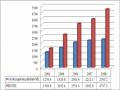 Comparison of Imported Raw Materials Value and Export Turnover of Vietnam's Leather and Footwear
 -
 Improving the efficiency of raw material import activities at C&T Construction and Materials Trading Joint Stock Company - 2
 -
 Ensuring Raw Materials for Production in the Enterprise:
+ Skyy
+ Altai
+ Grey goose
+ Pinacle
+ Nemiroff
+ Ciroc
* Gin
- Gin has an alcohol concentration of 43% Vol clear, with a synthetic aroma.
Most of them are slightly sweet. Gin is made by distilling the raw material twice. The first time is to reduce impurities and create the base spirit. The second time, the base spirit is added with flavorings and other things. Each producer has their own flavoring process and it is kept very secret.
The raw materials used to produce Gin are rye, rice, and corn. Flavorings include ingredients from herbs and fruit peels such as: licorice, nutmeg, wolfberry, tangerine peel, orange peel, juniper seeds, almonds, asarum bark, etc.
Famous Gin includes 7 types:
+ American Gin (unsweetened)
+ Genever Gin (Holland Gin; strong, juniper flavor, served cold, no ice)
+ Golden Gin (aged in wooden barrels for a short time, light yellow color)
+ Sloe Gin (Not exactly gin, more like a liqueur, made from Sloe strawberries)
+ Gordons Dry Gin
+ Tom Gin
+ Flavour Gin (add flavors such as apple, lemon, pineapple, mint, with or without sugar, low alcohol content).
Gin Anh :
+ London Dry Gin (not only produced in the capital of England but also in many other places, but everyone must admit that the type produced in England is the most delicious)
Dutch Gin : Hollands Gin
Gin is drunk neat, often with tonic (the British and Dutch often use it as an aperitif or after a meal) or to mix Gin with lemon juice, orange liqueur and Vermouth.
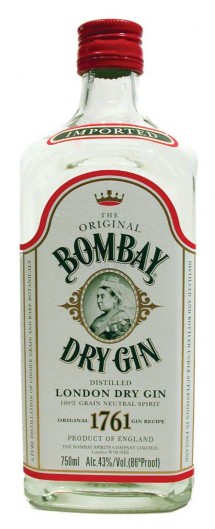
Figure 2.2.5.5. Bombay Gin
Popular brands:
+ Gordon's
+ Beefeater
+ Gilbey
+ Tanqueray
+ Bombay Sapphire
+ Churchill
* Rum
- Since the 17th century, people have known how to use sugarcane as raw material to distill into strong alcohol. Squeeze sugarcane to get juice, put it in a vacuum pot and heat it. After evaporation in the pot, the remaining sugar is left, put this product into a centrifuge and rotate at high speed to get distilled Rhum syrup.
Different types of Rum are due to the nature of the yeast, the distillation method and the additives. After distilling the Rum, the Rum is also matured and then sold to consumers.
- Rum has an alcohol concentration of about 40-45% Vol, ester aroma, slightly sweet taste, light brown, dark or colorless.
- Classification: There are 3 main types:
+ White/Light/Silver Rum: Colorless, not sweet, low alcohol content, light flavor
+ Gold/Oro/Ambre Rum: light yellow color, sweet taste, high alcohol concentration, mild flavor.
+ Dark/Black Rum: Dark in color because of caramel, sweet, high alcohol content, rich flavor.
- Famous Rhum brands from various countries include:
+ Cuba: Bacadi, Ron Rico, Carioca.
Bacadi is the most used Rhum brand in cocktail making.
+ Jamaica: Lemon Hart, Myers''s
+ English: Lemon Hart, Hudson Bay
Rum can be drunk on ice or mixed with cold lemon juice, pineapple juice, coconut water. It is also used to make some types of fruit cocktails when Rum is mixed with some fruit juices will make the cocktail more fresh and interesting, for example some cocktails like Bacadi, Amazon, Blue Hawaii...
Popular drinks:
+ Rum lemon
+ Rum and Coke
Popular brands:
+ Bacardi White/Gold
+ Havana Club White/Gold/Black
+ Captain Morgan White/Gold/Black
+ Myers's Black
+ Coruba
+ Pampero
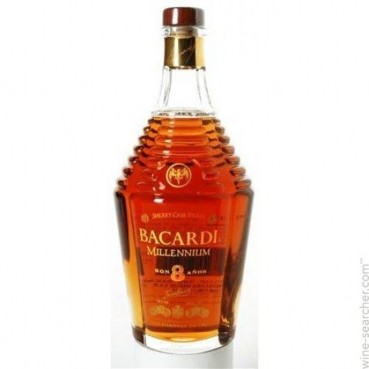
Figure 2.2.5.6. Bacardi Rum
* Tequila
- Tequila originates from Mexico, the raw material is the dragon tongue orchid (Agave Tequila Weber). People take a part of the plant's core and simmer it for about 1/2 day, then squeeze the juice, add sugar and yeast, after a few days of fermentation, it is distilled into wine and matured in large tanks (4000L) for at least 3 years. Tequila is famous in the field of making base wine for mixing cocktails, especially the Margarita cocktail.
- Classification:
+ General: there are 2 types: 100% agave and Mixed tequila
+ Color: 2 types: White/Silver Tequila and Gold/Oro/Ambre Tequila
+ Quality: there are 2 types: Reposado (2-11 months) and Anejo (1-4 years)
- Characteristics: Alcohol content from 40 to 45%, clear or colorless, yellow, has natural herbal and aromatic scent, very sensitive to light, spicy and not sweet.
- Popular drinks:
+ Tequila without ice with salt and lime
+ Tequila Pop
+ Tequila and Tonic water
- Popular brands:
+ The coffee
+ Jose Cuervo
+ Mariachi
+ Arandas
+ Pepe Lopez
+ Camino
+ Sombrero Negro
+ La Sauza
+ Don Angel
+ Two fingers
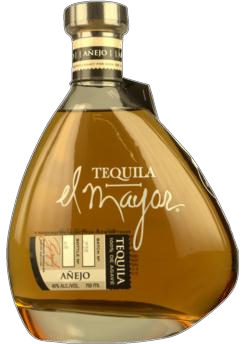
Figure 2.2.5.7. Tequila Anejo
2.2.5.4. Use and storage
Usage: Use according to the characteristics and properties of each type of strong alcohol.
Preserve:
Store spirits like wine but at a higher temperature (20 to 24 o C), and keep the bottle upright to prevent the alcohol in the wine from decomposing the cork.
2.2.6 Liqueurs
2.2.6.1. Concept
Liqueur is an alcoholic beverage made by combining spirits with flavorings and sweeteners.
2.2.6.2. Origin of liqueur
- During the Middle Ages, French and Italian monasteries created a beverage with medicinal purposes by combining wine with medicinal herbs.
This drink was born with the name "Liqueur". This word is derived from the Latin word meaning to melt.
2.2.6.3. Raw materials for producing liqueur
There are 3 main ingredients to produce liqueur:
- Base alcohol: use pure spirits such as: Whiskey, Brandy, Rum, rice wine, fruit juice...
- Flavorings: there are many types of herbs, fruits and flavors used to make liqueurs such as mint, cloves, thyme, fruits such as oranges, tangerines, grapes, longans... tree barks such as cinnamon, licorice, ginger, seeds such as anise, apricot seeds, almonds, cloves...
- Sweetening agents: sugar syrups give the liqueur its sweetness and other substances such as sugar and honey.
In addition to the basic ingredients above, there are also catalysts that give the wine its color.
2.2.6.4. Production method
There are 3 methods of making liqueur:
* Producing liqueur by distillation method : Use strong alcohol to soak aromatic plants and then distill once to get colorless wine with the desired aroma, then add sugar water at about 0.4% to 2.5% of weight, we get the desired sweetness. Then add color with natural color of fruit and leave in barrel for a while to make the flavor more delicious. Then filter and bottle.
* Producing liqueurs by filtration : Boiling spirits and aromatic ingredients continuously or passing spirit vapors through a substance containing aromatics, after condensing, evaporating again through the aromatics, repeating this many times until the desired flavor is obtained.
* Producing liqueur by soaking method : Add flavoring to strong alcohol and soak for 1 year. When the alcohol has the desired flavor, filter it, add water, color, add sweetness and let it sit for several months to 1 year for the ingredients to blend before bottling.
2.2.6.5. Classification
Liqueurs are considered tonics if used in moderation. They are also mostly used to make cocktails, and there are hundreds of different types of liqueurs.
- In Vietnam, mixed liqueurs are strongly developed, including types of wine such as orange wine, apple wine, plum wine, lemon wine, honey apricot wine, coffee wine, green plum wine, ginger wine...
+ Orange wine: is a type of liqueur commonly produced in our country, accounting for a large proportion of liqueurs. Orange wine has low ethyl alcohol content, has a distinct orange aroma, is transparent, has no residue, and is orange in color.
Alcohol content: 25 degrees + 0.5 degrees Sugar content: 150gr + 10gr/liter Acid content: 15gr + 0.2gr/liter
+ Coffee wine: This is a liqueur that many people like. The ingredients to make coffee wine include food, vanilla, food acid, distilled water and coffee, so coffee wine has a distinct coffee smell, a sweet taste, coffee color, and is transparent.
Alcohol content: 25 degrees + 0.5 degrees Sugar content: 200gr + 10gr/liter Acid content: 1gr +0.25gr/liter
+ Thanh mai wine: is one of the good quality mixed wines, liked by many people. Thanh mai is made from the water extracted from apricots mixed with sugar, juice, and colorants in a certain ratio. Thanh mai wine has a distinct apricot aroma, apricot yellow color, clear without sediment, and sweet taste.
Alcohol content: 25 degrees + 0.5 degrees Sugar content: 150gr + 10gr/liter Acid content: 2gr +0.2gr/liter
In addition, in the Vietnamese market today, there are many types of foreign liqueurs that are commonly used in cocktail making such as:
+ Charteuse: The main ingredient of this wine is cognac from Voigin, France. Teragon Spain. This wine is divided into 2 types: Charteuse Yellow and