
Regarding the time of opening L/C: Normally, L/C is opened about 20-25 days before the delivery date if the contract does not specify. But to make the contract strict, the contract often specifies the date of opening L/C.
Basis for opening L/C: Is the term of the import contract. When opening L/C, the company must rely on this basis to fill out the pre-printed form of the L/C opening bank called "Application for opening import letter of credit".
How to open L/C in Vietnam: To open L/C, import-export enterprises must carry out the following tasks:
Submit documents and make application for opening L/C.
Maybe you are interested!
-
 Completing the management and supply of raw materials at the training equipment manufacturing factory X55 - 7
 -
 Improving business efficiency of import-export cargo insurance business transported by sea at Petrolimex Insurance Joint Stock Company - 11
 -
 Completing the management and supply of raw materials at the training equipment manufacturing factory X55 - 5
 -
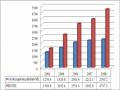 Comparison of Imported Raw Materials Value and Export Turnover of Vietnam's Leather and Footwear
 -
 Ensuring Raw Materials for Production in the Enterprise:
Deposit to open a letter of credit account (deposit level can be from 5-100% of contract value)
Payment of L/C opening fee.
When the bank informs the importer that the L/C has been opened, the importer contacts the bank to check whether the details of the L/C are consistent with the contract, and then asks the bank to forward it to the exporter. If there is anything inappropriate that needs to be amended, the importer submits a request to the bank to amend the L/C (according to the agreement with the exporter), stating all the details that need to be amended. Then the result of the amendment is notified.
Step 3: The buyer urges the seller to deliver the goods.
To ensure the import process is on schedule as stipulated in the contract, the importer needs to urge the seller to deliver the goods in the correct quantity, quality, packaging specifications, etc. and on time. This will avoid delaying the business progress of the importing enterprise.
Step 4: Rent a vehicle
Most of the goods traded in the world market are transported by sea (accounting for about 80% of the volume of goods in international trade) due to the superiority of this type of transport. Therefore, the business of chartering ships to transport goods by sea has become a popular, basic and almost indispensable business in most import and export activities in the world today.
For importers, the business of chartering a ship to transport goods only arises when the sales contract stipulates that this obligation belongs to the buyer (according to delivery terms of group F and EXW).
The importer will conduct his chartering business based on the following bases:
after:
Terms of the sales contract.
Characteristics of goods bought and sold.
Transport conditions.
Currently in the world there are two methods of chartering ships for importers to choose from.
select. That is:
Chartering method: Chartering a market ship, also known as booking shipping space, is when the cargo owner, through a broker or himself, requests the shipowner to rent a part of the ship to transport goods from one port to another.
Voyage Chartering: Voyage Chartering is when the shipowner (Shipowner) leases the entire or part of a ship to a charterer to transport goods from one or several ports to one or several other ports. The relationship between the shipowner and the charterer is regulated by a document called a Voyage Charter Party (C/P).
In general, the chartering and freight forwarding business requires the charterer to have professional experience, have full information about the chartering market situation and information about chartering conditions. Therefore, in reality, most import-export businesses often entrust the chartering and freight forwarding to a shipping company such as Vietfracht, Vosa, Transimex... Importers base on the characteristics of the import business of the business as well as the transportation characteristics of the goods to choose the appropriate type of entrustment contract. Currently, there are two types of ship chartering contracts: annual ship chartering contracts and voyage chartering contracts.
Step 5: Buy insurance.
Due to the characteristics of international trade contracts, goods often have to be transported over long distances from one country to another over a long period of time. Therefore, goods often encounter many risks and losses. To ensure safety in business, importers and exporters often purchase insurance for their goods.
through an insurance contract. The insurance contract can be an open policy or a voyage policy. Currently, marine cargo insurance is the most popular type of insurance in foreign trade.
Importers only purchase insurance for goods in case of import under trade terms of groups E, F and C (except CIF and CIP).
When purchasing insurance for goods, importers need to follow the procedure.
following order:
Choose the appropriate conditions to buy insurance.
Importers need to base on: characteristics of goods, nature of packaging and method of loading, contract terms, type of transport vessel... to choose appropriate insurance conditions: ensuring safety of goods and achieving high economic efficiency.
Make an insurance claim.
The importer shall, based on the contract and L/C (if any), fill in all the information in the insurance application form.
In addition, the importer must also inform the insurer of other important circumstances of which they are aware to help the insurer assess the risk.
Pay insurance premium and get insurance certificate.
After submitting the insurance claim to the insurer, the insurer will determine the amount of premium payable, the importer will pay the insurance premium and receive the insurance certificate (insurance policy or insurance certificate).
Step 6: Make payment.
Payment is the main business of the buyer in the buying and selling process. In international trade, there are many forms of payment, but the three most commonly used methods are:
Collection.
Money transfer.
Documentary credit (L/C).
(In which L/C is the most commonly used form)
If the contract stipulates payment by L/C when the original set of documents from abroad arrives at the foreign trade bank, the enterprise must conduct an inspection.
Documents, if valid, proceed with payment to the bank or sign for payment to receive the set of goods receipt documents.
If the contract stipulates payment by collection with documents, after receiving the documents at the foreign trade bank, the importing enterprise must check the documents and see if they are consistent with the contract, then accept to pay or pay to get the goods receipt documents. In the case of collection with blank bills, after receiving the bank's bill of exchange, the importer can pay or refuse to pay the seller. This method is completely disadvantageous for the seller because it depends only on the buyer's will.
If payment is made by money transfer, upon receipt of the goods sent by the seller and the documents transferred from the bank, upon the specified deadline, the importing enterprise must write a money transfer order to the bank requesting the bank to transfer money to the exporter. There are two forms, telegraphic transfer (T/T) and letter of transfer (M/T). Of these, Vietnam often uses telegraphic transfer, which is faster than letter of transfer but costs much more, so it should be carefully considered when using it.
Step 7: Customs clearance
Customs clearance is a task that any import-export business must perform when goods cross national borders. Customs clearance is a tool to manage international trade according to state law in order to: prevent illegal import and export across borders, check for errors and forgery of documents, and compile statistics on import and export goods.
The customs clearance process includes the following three main steps:
Declaration - submission of customs declaration.
In this step, the owner must declare the details of the imported goods according to the customs declaration form so that the customs authority can check the paperwork. The declaration must be carried out honestly and accurately. After fully declaring the contents of the declaration, the enterprise submits the declaration to the customs authority along with a number of other documents, mainly: import license, invoice, packing list, detailed declaration, certificate of origin of goods...
Presentation of goods.
The next step is for the enterprise to organize the presentation of imported goods to the customs authority for inspection. Imported goods must be arranged in an orderly manner, convenient for inspection and control. All costs and labor for packing and opening the packages are borne by the owner of the goods. The requirement for presenting the goods is the honesty of the owner of the goods.
For small volumes of goods, the owner of the goods organizes transportation to the customs warehouse to check the quantity, carry out customs procedures and pay taxes (if any) when the imported goods arrive on shore.
For large import shipments, customs inspection of goods and documents may take place in two places:
At the border gate: customs officers check goods and paperwork right at the border gate where the goods are imported.
At the final place of delivery of goods: customs officers check the lead seal and the contents of the goods according to their professional duties at the importer's warehouse or at the owner's warehouse.
Implementation of customs decisions:
After completing the necessary inspections as prescribed, the customs authority will issue decisions such as:
Bring goods across the border (customs clearance).
Allowing goods to cross the border is conditional (for example: defects must be repaired, repackaged).
Allow goods to cross the border after the owner has paid import and export taxes.
Import and export are not allowed. When these decisions are made, the owner of the goods must strictly implement these decisions. Violation will be a criminal offense.
Step 8: Receive imported goods.
According to state regulations (Decree 200/CP dated December 31, 1973), transport agencies (stations, ports) are responsible for receiving imported goods on means of transport from abroad, preserving those goods during loading, unloading, warehousing, storage and delivering them to the ordering units according to the delivery order of the foreign trade unit that imported that shipment. Therefore, when the goods arrive at the port, the shipping line will directly take charge.
deliver goods to the port, then bring the goods to a safe location: warehouse or yard. The owner of the goods must sign a contract authorizing the port to do this.
Before the ship arrives, the shipping agent or shipping line will send a “Notice of Arrival” to the consignee, so that they know and come to receive the “Delivery Order” (D/O) at the shipping agent.
When receiving D/O, you need to bring:
Original B/L.
Letter of introduction from the unit.
With D/O, the importer needs to quickly complete procedures to receive the shipment.
me.
Procedures for receiving goods are as follows:
Receiving bulk cargo or empty container cargo at the port: what should the shipper do?
The following steps are required to receive the goods:
Go to the port or ship owner to pay storage and unloading fees, get a receipt.
Then, bring the warehouse receipt, 3 copies of D/O, Invoice and Packing list to the shipping agent's office at the port to sign the D/O confirmation, find a place to store the goods, and save a D/O here.
Bring the remaining 2 D/Os to the warehouse department to make a warehouse release note. This department keeps one D/O and makes 2 warehouse release notes for the owner.
Bring 2 warehouse delivery notes to the warehouse to check the goods, complete the warehouse delivery procedures, separate the goods to wait for customs inspection, go to the port customs to invite the warehouse customs to supervise the receipt of goods.
After customs confirms "customs clearance completed", the goods are released from the warehouse and taken out of the port to the designated location.
Receive the whole container, customs check at private warehouse: After carefully considering economic efficiency, the owner wants to receive the whole container, check at private warehouse, in this case need to do the following:
Make an application for inspection of goods at a private warehouse, submit it with the customs clearance registration documents.
mandarin.
Carry out procedures to borrow containers from shipping lines, pay money, deposit, loading and unloading fees, fees
Transport containers from port to private warehouse (if renting a vehicle from the shipping line).
Bring the set of documents including: D/O (3 copies) signed by the customs officer at the registration stage, stamped “declaration received”, receipt of loading and unloading fees and transportation fees from the shipping line, receipt of container storage fees, approved container borrowing application to the shipping line agent office to obtain a permit to export the container from the yard. Keep one D/O here. Find the container with the yard staff, check the integrity of the container and the Seal (lead seal). Receive two copies of the “Transport Order” from the warehouse staff. Bring all documents to the warehouse customs office for the customs officer to check, sign to confirm the container number and seal number, declaration and transport order. Export the container from the yard, submit one transport order to the port customs, one to the port security, and bring the container to the private warehouse. Go to the supervision office, city customs to pick up the customs for inspection. After the inspection, if there are no problems, you will be confirmed as “customs procedures completed”.
Receiving the whole ship or receiving goods in large quantities: After receiving D/O, submitting documents to customs, receiving NOR (Notice of readies) notifying readiness to load, the delivery staff proceeds to receive the goods. Before opening the ship's hold, representatives of the following agencies are required:
Import unit.
Seller representative (if there is a representative office in Vietnam).
Goods inspection agency.
Ship representative, ship agent.
Customs supervision. Customs inspection.
Port representative.
Insurance (if there is suspicion of damage to insured goods).
During the process of receiving goods, delivery staff must constantly monitor the scene, update data hourly, shift by shift, and daily. Promptly detect errors to have appropriate handling measures.
Step 9: Check imported goods.
According to State regulations, imported goods must be carefully inspected when they arrive through the border gate. The purpose of this inspection process is to protect the legitimate rights of buyers, promptly prevent bad consequences, determine the responsibilities of the parties, ensure the reputation of business units and serve as a basis for future complaints (if any).
Each agency, depending on its function, must conduct such inspection. The importing business unit, as a party named on the bill of lading, must make a letter of reservation. If it suspects or actually finds that the goods are damaged, deficient, inconsistent, or inconsistent with the contract, it must request the competent authority to make a survey report.
Step 10: Complaints and complaint resolution (if any).
Complaints are one of two ways to resolve disputes arising in foreign trade. By complaining, the parties negotiate with each other to resolve the disputes.
During the implementation of the import contract, if the importer discovers that the goods are damaged, broken, deficient or lost, he/she must file a complaint within the prescribed time limit. Because after that time limit, the complaint is invalid. The complaint file includes: the complaint and accompanying documents as evidence of the complaint such as the sales contract, bill of lading, appraisal reports of the competent authority... The completed file must be sent immediately to the subject of the importer's complaint. Depending on the nature of the loss, the subject of the complaint may be the seller, the carrier or the insurance company. Specifically:
The subject of the complaint is the seller if the seller violates the contract such as: not delivering, late delivery, bad delivery or missing delivery, inappropriate packaging...
The subject of the complaint is the carrier if the goods are damaged during transportation or the damage is caused by the carrier (the B/L is clean but the goods are damaged...).
The subject of the claim is the insurance company if the goods - the subject of the insurance - are damaged due to natural disasters, unexpected accidents or caused by a third party and these risks have been insured.
If the loss is unclear, the victim has the right to complain to one of the three parties above and reserve the right to complain to the remaining parties. When complaining, copy the complaint file and send it to the remaining parties. In case the importer is complained about the delay in receiving goods, delay in payment... then the importer must be responsible for resolving those complaints. In this case, the importer has the right to prove that he is not at fault or that the fault was caused by a third party. If he cannot prove