
Table 3.6. Rare and precious species prioritized for protection in the National Park
Status
Vietnamese name | Scientific name | IUCN 2021 | Decree of the Government | Endemic | Recorded habitat | |||
SC1 | SC2 | SC3 | ||||||
1 | Fingered lizard Hua Phan | Cyrtodactylus houaphanensis | II | + | x | x | ||
2 | Fingered lizard jagerri | Cyrtodactylus jaegeri | CR | II | + | x | ||
3 | Fingered lizard prank | Cyrtodactylus khammouanensis | VU | II | + | x | ||
4 | Fingered lizard messy | Cyrtodactylus lomyenensis | VU | II | + | x | ||
5 | Fingered lizard area | Cyrtodactylus Muangfuangensis | II | + | x | x | ||
6 | Fingered lizard sit | Cyrtodactylus Ngoiensis | II | + | x | x | ||
7 | Fingered lizard loan | Cyrtodactylus wayakonei | NT | II | x | x | x | |
8 | Lizard foot leaf | Dixonius Lao | II | + | x | x | ||
9 | Lizard foot blanket leaves | Dixonius somchanhae | II | + | x | x | ||
10 | Gecko a rooster | Gekko Aaronbauer | VU | II | + | x | x | |
11 | Gecko | Gekko boehmei | VU | II | + | x | ||
12 | Gecko four kake | Gekko bonkowskii | VU | II | + | x | ||
13 | Gecko prank | Gekko khunkhamensis | + | x | x | x | ||
14 | Gecko blanket tha vong | Gekko Sensationalism | VU | II | + | x | ||
15 | Gecko | Gekko thakhekensis | VU | II | + | x | ||
Maybe you are interested!
-
 Cultivation and Production Process of Special Rare Weasel Coffee
 -
 Study on botanical characteristics, chemical composition and acetylcholinesterase enzyme inhibitory effects of two species Piper thomsonii (C. DC.) Hook. f. var. thomsonii and Piper hymenophyllum Miq., Piperaceae family - 24
 -
 Growth of Caribbean Pine in Species Trial Model in Cao Bang and Yen Bai Provinces
 -
 Study on natural regeneration characteristics of Lim xet tree species Peltophorum tonkinensis A.Chev in Lam Binh district, Tuyen Quang province - 13
 -
 Evaluation of the possibility of cultivating and trading some wild orchid species in Sa Pa - Lao Cai area - 8
Note: (IUCN): International Union for Conservation of Nature and Natural Resources; (NDCP): Decree No. 08/CP/2021 of the Government on the list of wild animals of Laos, II: group of forest animals with restricted exploitation; (SC1): Limestone mountain habitat in cultivated areas; (SC2): Limestone mountain habitat in secondary forests; (SC3): Limestone mountain habitat in primary forests.
Recorded rare and precious species according to the research habitat: The limestone mountain habitat in the secondary forest (SC2) recorded the most rare and precious species with 15 species (accounting for 100% of the total number of rare and precious species). The limestone mountain habitat in the cultivated area (SC1) recorded 07 rare and precious species (accounting for 46.7% of the total number of rare and precious species). The limestone mountain habitat in the primary forest (SC3) is the habitat that recorded the least, with 03 species (accounting for 20% of the total number of rare and precious species). Of which, 02 species were recorded in all 3 habitats: C. wayakonei toe lizard and Gecko G. khunkhamensis , 06 species were recorded in 2 habitats: C. houaphanensis ; C. muangfuangensis ; C. ngoiensis ; D. lao ;
D. somchanhae ; G. aaronbaueri ; 07 species were recorded in only one habitat: C. jaegeri ; C. khammauanensis ; C. lomyenensis ; G. boehmei ; G. bonkowskii ; G. sengchanthavongi ; G. thakhekensis (Table 3.6).
Record rare and precious species by altitude: rare and precious species are distributed from altitudes below 200 m to 1,000 m. The detailed distribution of species in altitude zones is as follows: altitude zone below 200 m includes 09 species (accounting for 60% of the total number of rare and precious species), altitude zone from 200 to under 400 m includes 04 species (accounting for 26.7% of the total number of rare and precious species), altitude zone from 400 to under 600 m includes 01 species (accounting for 6.7% of the total number of rare and precious species), altitude zone from 600 to under 800 m includes 02 species (accounting for 13.3% of the total number of rare and precious species) and altitude zone from 800 to under 1,000 m has 01 species (accounting for 6.7% of the total number of rare and precious species), and altitude zone 1,000 m or higher is There are no species. This shows that altitude has a great influence on the habitat and adaptation of the Gecko family, the higher the altitude, the fewer the number of gecko species distributed (Figure 3.42).
<200
200-400
400-600
600-800
800-1000
>1000
Gekko thakhekensis Gekko sengchanthavongi Gekko khunkhamensis Gekko bonkowskii Gekko boehmei
Gekko aaronbaueri Dixonius somchanhae
Dixonius tuberculosis Cyrtodactylus wayakonei Cyrtodactylus ngoiensis Cyrtodactylus muangfuangensis Cyrtodactylus lomyenensis Cyrtodactylus khammouanensis
Cyrtodactylus jaegeri Cyrtodactylus houaphanensis
0
1
2
3
Figure 3.42. Distribution of rare and precious species according to altitude in the National Park
The rare and precious species in the research area account for a high proportion of up to 15 species (accounting for 30% of the total number of gecko species in Laos), up to 33 endemic species with narrow distribution areas and only distributed in Laos (accounting for 66% of the total number of gecko species in Laos), up to 06 species discovered new to science (accounting for 12% of the total number of gecko species in Laos). It is necessary to prioritize the conservation of their habitats and conduct more research to find more rare and precious species and new species for science.
3.5.2 Factors threatening gecko species
In order to have a basis for planning the conservation of gecko species, as well as finding solutions to limit the negative impact of humans on the habitat and population of gecko species, within the scope of the study, two main groups of factors affecting gecko species in the research area were analyzed as follows:
1). Habitat loss and degradation
Deforestation for farming: Most of the forest area in the study area is in the limestone mountainous region characterized by mountain peaks interspersed with valleys, so people often take advantage of arable land to reclaim for farming, especially in the Northern provinces because the limestone mountains have a lot of land and forest cover, so people often take advantage of these areas.
Figure 3.43. Burning fields in Hua Phan province
Figure 3.44. New rice fields in Xieng Khouang province
Deforestation for farming is relatively common, which directly kills some gecko species and their prey when burning forests, depleting water resources, and destroying the natural habitat of gecko species. This activity mainly occurs in the northern provinces such as Hua Phan, Xieng Khouang, Luang Prabang, and Udom Xay (Figures 3.43 and 3.44).
Quarrying: Quarrying in Lao provinces is very prominent, especially in provinces with many limestone mountains such as Khammouane, Vientiane, Hua Phan and Luang Prabang. Quarrying destroys the natural habitat of geckos, affecting their reproduction and survival, because geckos mostly rely on cliffs, caves and plants in rocky mountains for their survival (Figures 3.45, 3.46 and 3.47).
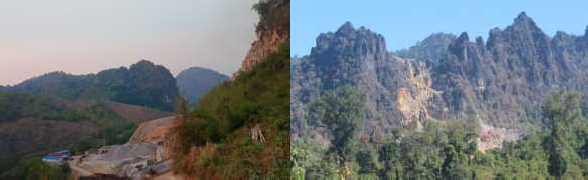
Figure 3.45. Stone crushing plant in Hua Phan province
Figure 3.46. Stone crushing plant in Kham Muon province
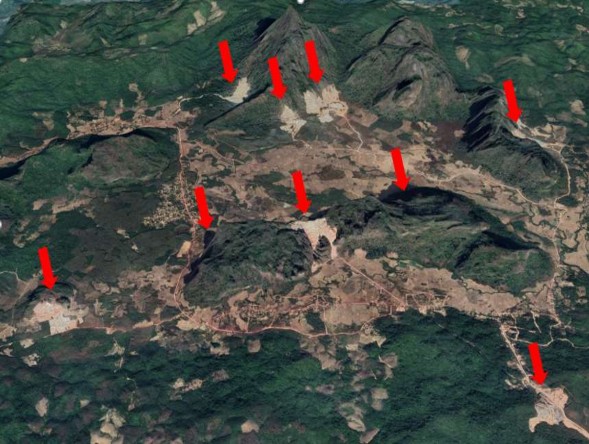
Figure 3.47. Stone crushing plants in Vientiane province. Image source: (Google Earth Pro, December 1, 2020)
Quarrying works affect many gecko species because limestone cliffs are suitable habitats for gecko species. This study showed that 22 species were found on cliffs, accounting for 62.9% of the total 28 species, thus showing that limestone forests are very important for the survival of gecko species.
Road construction: The road construction project in Hua Phan province from Muong Hiem through Muong Xon to Pha Thi and from Muong Xon to the Laos-Vietnam border destroyed a large area of natural forest on the road, many sections of which intersected with Nam Et-Phu Loi National Park and some limestone mountains had to be blasted, the new roads created favorable conditions for illegal logging and transportation of timber (Figures 3.48, 3.49 and 3.50).
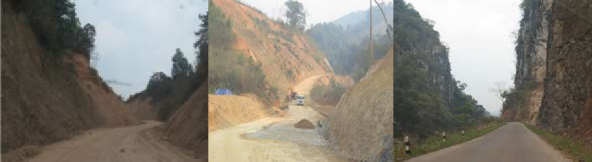
Figure 3.48. Road under construction from Muong Hiem through Nam Et-Phu Loi National Park
Figure 3.49. Road under construction from Muong Xon through Nam Et-Phu Loi National Park
Figure 3.50. Road with a section through the rocky mountain from Muong Xon to the Vietnam border
The road divides the habitat of many gecko species because many gecko species with limited mobility will move less if impacted. In addition, road construction causes landslides, soil erosion and siltation of caves and cliffs in the forest, losing the natural habitat of animals in general and gecko species in particular.
Rampant forest fires: During the dry season from December to April of the following year, there are many areas in Laos where widespread forest fires often occur. During the survey period, KVNC also directly encountered a number of forest fires. Currently in Laos, there is no organization that is officially responsible for and manages this, so many forest fires are left to burn out on their own (Figures 3.51 and 3.52).
Figure 3.51. Forest fire raging in Hua Phan province
Figure 3.52. Forest fire spread in Udomxay province.
Wildfires have a direct impact on the lives of geckos, especially arboreal and ground-dwelling species, reducing population sizes and possibly leading to the extinction of some species, as many geckos have small populations and move in tight, slow movements. Wildfires also destroy their habitat and reduce their food sources.
Logging and non-timber forest products: Talking about logging, Lao PDR is very famous after the liberation of the country. In 1960, Laos had a coverage of about 71% of the country's area and by 2015, the coverage was only about 40%. In the period of 1980-2010, Laos's main income was from forest exploitation. Due to its geographical location, the area is mostly mountainous and tropical with many large, valuable and economically valuable timber species. In 2015, the Lao government issued Decree No. 15/CP/2015 on stopping the exploitation of natural forests and exporting logs abroad.
Until now, illegal logging still occurs. In research and field surveys, the KVNC is mainly limestone forests with many precious wood species, so illegal logging occurs quite commonly and frequently. In addition, logging for household use such as building houses, making firewood... logging in limestone mountain areas affects the habitat and food source of geckos and can cause some species to disappear in that area.
2). Overhunting
Hunting for food and wine: Some gecko species are exploited for food and medicine such as Gekko gecko , ... Mainly exploited for wine and medicine and as ingredients for some traditional medicine (figures 3.53 and 3.54).
Figure 3.53. Gecko used as medicine. Photo source: https://gomsubattrang360.com/tin- tuc/cach-ngam-ruou-tac-ke/
Figure 3.54. Gecko used as medicine and soaked in wine. Photo source: https://duoclieuthaison.com/ruou-tac-ke/
During the surveys and information collection, the local people did not use geckos, they only caught them to sell when people came to buy them. The size to sell them must be over 25 cm long with a price of about 20,000-50,000 Lao kip per gecko (equivalent to about 50,000-125,000 VND/1 gecko). The amount of geckos purchased is sold directly to Chinese and Vietnamese traders. Every year, dozens of tons of geckos are exported to Vietnam and China.
3.5.3 Some proposed solutions for conservation work
Based on the practical situation and assessment of the influencing factors in the above section, I propose some solutions for the conservation of gecko species in the research area as follows:
1). Priority conservation points
To determine the Conservation Priority Points in the KVNC, priority habitats must first be selected for conservation. Using the scoring method of 5 criteria.
According to the assessment and scoring, the points that have met the priority conservation standards with high total scores are: Khun Kham, Bua La Pha, Kham Muon province; Vang Vieng, Muong Phuong, Vientiane province; Nam Mo, Udom Xay province; Muong Ngoi, Luang Prabang province; Muong Xon and Vieng Xay, Hua Phan province.