
3.3.5. Medicinal plant species composition in pine plantations
In the pine plantation area, there are 28 families, 39 genera and 50 species. However, the distribution of families, genera and species is not uniform in the plant phyla. The analysis results are presented in Table 3.10 and Figure 3.5.
Table 3.10. Distribution of families, genera and species of medicinal plants in pine plantations in the research area
TT
Taxon | Surname | Spend | Species | ||||
Number quantity | Ratio (%) | Number quantity | Ratio (%) | Number quantity | Ratio (%) | ||
1 | Lycopodiophyta | 1 | 3.57 | 2 | 5.13 | 2 | 4.00 |
2 | Horsetail (Equisetophyta) | 1 | 3.57 | 1 | 2.56 | 1 | 2.00 |
3 | Ferns (Polypodiophyta) | 3 | 10.71 | 3 | 7.69 | 6 | 12.00 |
4 | Pine (Pinophyta) | 1 | 3.57 | 1 | 2.56 | 1 | 2.00 |
5 | Magnolia (Magnoliophyta) | 22 | 78.57 | 32 | 82.05 | 40 | 80.00 |
5.1 | Magnoliopsida class | 20 | 71.43 | 29 | 74.36 | 36 | 72.00 |
5.2 | Class Liliopsida | 2 | 7.14 | 3 | 7.69 | 4 | 8.00 |
General | 28 | 100 | 39 | 100 | 50 | 100 | |
Maybe you are interested!
-

 The Role of Tam Dao National Park in Biodiversity Conservation and Environmental Protection in the Northern Delta Region and Vietnam
 -
 Overview of Bidoup – Nui Ba National Park, Lam Dong Province
 -
 Cat Ba National Park (Source: Internet, Accessed June 15, 2018)
 -
 In the Last 5 Years, Have You Logged Timber in Nam Ka Dinh National Park for the Purpose of Selling Outside?
 -
 Research on the Current Characteristics of Forest Resources and Factors Affecting Forest Resources Management in the National Park Area
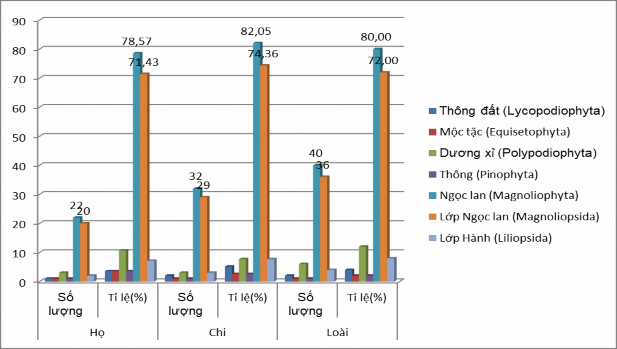
Figure 3.5. Distribution of families, genera, and species of medicinal plants in pine plantations in the research area
Looking at table 3.10 and figure 3.5, it can be seen that the Magnolia phylum accounts for the largest proportion: 78.57% of the total number of families, 82.05% of the total number of genera and 80% of the total number of species. Next is the Polypodiophyta phylum, accounting for 10.71% of the total number of families, 7.69% of the total number of genera and 12% of the total number of species. The Lycopodiophyta phylum accounts for 3.57% of the total number of families, 5.13% of the total number of genera and 4% of the total number of species. The remaining 2 phyla, Equisetophyta and Pinophyta, account for 3.57% of the total number of families, 2.56% of the total number of genera and 2% of the total number of species in the pine plantation type in the KVNC.
In the Magnolia phylum, the Magnoliopsida class also has a very large number of medicinal plant families: 20/22 families (accounting for 71.43%), 29/32 genera (accounting for 74.37%) and 36/50 species (accounting for 72%). Thus, the number of taxon levels of the Magnolia class is absolutely dominant compared to the Onion class.
Of the 28 families of medicinal plants obtained, 17 families have 1 species: Equistaceae, Adiantaceae, Gleicheniaceae, Polypodiaceae, Pinaceae, Alangiaceae, Apiaceae, Apocynaceae, Asteraceae, Chloranthaceae, Cucurbitaceae, Loganiaceae, Loranthaceae, Melastomataceae, Polygalaceae, Solanaceae, and Smilacaceae. There are 9 families with 2 species: Lycopodiaceae, Actinidiaceae, Amaranthaceae, Annonaceae, Araliaceae, Malvaceae, Rubiaceae, Rutaceae, Verbenaceae, Vitaceae. There are 2 families with 3 species: Zingiberaceae and Caesalpiniaceae.
3.3.6. Medicinal plant species composition in secondary forests
In the KVNC, secondary forests have 65 families, 136 genera and 168 species. However, the distribution of families, genera and species is also uneven in the plant phyla. The analysis results are presented in Table 3.11 and Figure 3.6.
Table 3.11. Distribution of families, genera and species of medicinal plants in secondary forests in the research area
TT
Taxon | Surname | Spend | Species | ||||
Number quantity | Ratio (%) | Number quantity | Ratio (%) | Number quantity | Ratio (%) | ||
1 | Lycopodiophyta | 0 | 0.00 | 0 | 0.00 | 0 | 0.00 |
2 | Horsetail (Equisetophyta) | 0 | 0.00 | 0 | 0.00 | 0 | 0.00 |
3 | Ferns (Polypodiophyta) | 4 | 6.15 | 5 | 3.68 | 6 | 3.57 |
4 | Pine (Pinophyta) | 2 | 3.08 | 2 | 1.47 | 2 | 1.19 |
5 | Magnolia (Magnoliophyta) | 59 | 90.77 | 129 | 94.85 | 160 | 95.24 |
5.1 | Magnoliopsida class | 49 | 75.38 | 110 | 80.88 | 137 | 81.55 |
5.2 | Class Liliopsida | 10 | 15.38 | 19 | 13.97 | 23 | 13.69 |
General | 65 | 100 | 136 | 100 | 168 | 100 | |
According to statistics in Table 3.11 and Figure 3.6, the Magnolia phylum accounts for the largest proportion: 90.77% of the total number of families, 94.85% of the total number of genera and 95.24% of the total number of species. Next is the Polypodiophyta phylum, accounting for 6.15% of the total number of families, 3.68% of the total number of genera and 3.57% of the total number of species, and the lowest is the Pinophyta phylum, accounting for 3.08% of the total number of families, 1.47% of the total number of genera and 1.19% of the total number of species in the secondary forest type in the NC area.
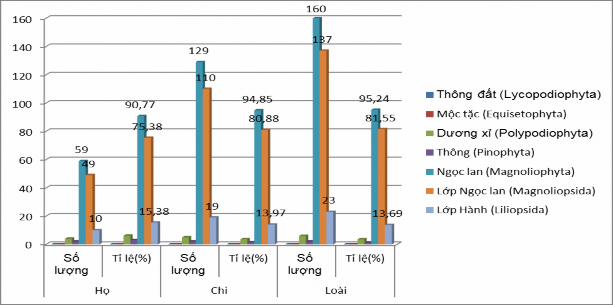
Figure 3.6. Distribution of families, genera, and species of medicinal plants in secondary forests in the research area
In the Magnolia phylum, the Magnoliopsida class is more dominant than the Onion class. The Magnolia class has a very large number of medicinal plant families, 49/59 families (accounting for
75.38%), the number of medicinal plant genera is 110/129 genera (accounting for 80.88%) and the number of species is 137/160 species (accounting for 81.55%).
In 65 families of medicinal plants collected in secondary forests in the KVNC, there are 25 families with only 1 species, namely Gleicheniaceae, Polypodiaceae, Gnetaceae, Pinaceae, Balanophoraceae, Betulaceae, Bombacaceae, Campanulaceae, Chloranthaceae, Convolvulaceae, Elaeocarpaceae, Hippocastanaceae, Hydrangeaceae, Myristicaceae, Oleaceae, Pandaceae, Ranunculaceae, Rosaceae, Sapindaceae, Solanaceae, Sterculiaceae, Thymelaeaceae, Ulmaceae, Stemonaceae, Trilliaceae. There are 18 families with 2 species: Adiantaceae, Schizaeaceae, Alaniaceae, Amaranthaceae, Apocynaceae, Bignoniaceae, Fabaceae, Loranthaceae, Magnoliaceae, Menispermaceae, Myrsinaceae, Polygonaceae, Tiliaceae, Vitaceae, Arecaceae, Commelinaceae, Dioscoreaceae, Marantaceae. There are 10 families with 3 species: Actinidiaceae, Araliaceae, Asclepiadaceae, Clusiaceae, Cucurbitaceae, Meliaceae, Myrtaceae, Araceae, Smilacaceae, Zingiberaceae. There are 6 families with 4 species: Burseraceae, Mimosaceae, Rubiaceae, Rutaceae, Verbenaceae, Poaceae. There is 1 family with 5 species: Annonaceae and 1 family with 6 species: Caesalpiniaceae. Lauraceae has 8 species. Moraceae has 10 species. Euphorbiaceae has 11 species. The family with the largest number of species is the Asteraceae family with 13 species.
3.4. Diversity of life forms of medicinal plants
According to Raunkiaer's system of classifying plant life forms (1934), plants have main groups of life forms, distinguished by the position of the buds in the growing season.
the harshest for their annual growth. In the study area, we identified 5 life form groups: Ground shoot group (Ph), ground shoot group (Ch), semi-hidden shoot group (He), hidden shoot group (Cr) and annual plant group (Th).
The results of the study on the life form composition of medicinal plants are presented in Table 3.12 and Figure 3.7.
Table 3.12. Distribution of life form groups
Life form
Ph (Plant Group) shoots on the ground) | Ch (Tree Group) ground sprout) | He (Group of trees) semi-hidden buds) | Cr (hidden bud group) | Th (annual plant group) | |
Number of species | 189 | 30 | 44 | 26 | 16 |
Percentage | 61.97 | 9.84 | 14.43 | 8.52 | 5.25 |
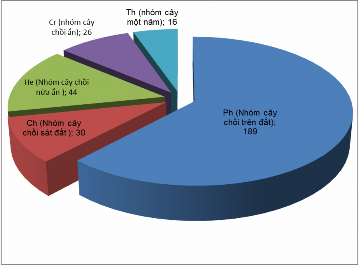
Figure 3.7. Life form ratio of medicinal plant species in the KVNC
According to statistics in Table 3.12 and Figure 3.7, medicinal plant species in the study area mainly belong to the group of terrestrial shoots (Ph) with 189 species, accounting for 61.97% of the total number of medicinal plant species. This group is concentrated in the families: Annonaceae, Apocynaceae, Araliaceae, Burseraceae, Caesalpiniaceae, Euphorbiaceae, Lauraceae, Moraceae, Mimosaceae, Rutaceae, etc.
The semi-hidden shoot group (He) has 44 species, accounting for 14.43%, concentrated in the families: Lycopodiaceae, Adiantaceae, and Mentha spp.
(Schizaeaceae), Poaceae, Araceae,…
The group of ground-shoot plants (Ch) has 30 species, accounting for 9.84%, found in the families: Malvaceae, Cucurbitaceae, Commelinaceae, Loganiaceae,....
The group of hidden shoots (Cr) has 26 species, accounting for 8.52%, found in the families: Zingiberaceae, Menispermaceae, Dioscoreaceae, Marantaceae, Smilacaceae, etc.
The group of annual plants (Th) has 16 species, accounting for 5.25%, found in the families: Gleicheniaceae, Amaranthaceae, Asteraceae, Polygonaceae, etc.
Thus, the spectrum of life forms of the flora in the study area is: SB = 61.97Ph + 9.84Ch + 14.43 He + 8.52 Cr + 5.25 Th.
In which the group of above-ground shoots (Ph) is dominant. That shows that the above group of shoots is a typical feature of tropical plants.
3.5. Diversity of medicinal parts of medicinal plants
Studying the parts of the plant used helps to use the raw materials effectively and to orient the analysis of its chemical composition and medicinal properties, while also avoiding possible dangers. To see the diversity in the frequency of use of different parts for medicine, through the investigation we have obtained preliminary results shown in Table 3.13
Table 3.13. Number of medicinal plant parts used
TT
Part | Quantity | Rate (%) | |
1 | Whole plant | 76 | 24.92 |
2 | Roots | 57 | 18.69 |
3 | Leaf | 53 | 17.38 |
4 | Close | 36 | 11.80 |
5 | Bark | 31 | 10.16 |
6 | Seed | 16 | 5.25 |
7 | Fruit | 16 | 5.25 |
8 | Root | 9 | 2.95 |
9 | Pus | 7 | 2.30 |
10 | Flower | 3 | 0.98 |
11 | young top | 1 | 0.33 |
Total | 305 | 100 |
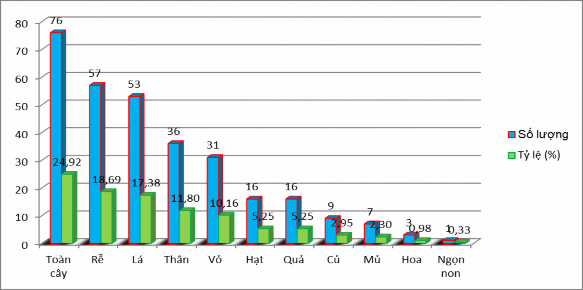
Figure 3.8. Proportion of medicinal plant parts used in KVNC
The data in Table 3.13 and Figure 3.8 show the richness and diversity in the use of plant parts for medicine.
The number of species with all parts (whole plant) used as medicine is the largest, including 76 species (accounting for 24.92% of the total number of species), including representatives such as: Balanophora fungosa to treat abdominal pain, body pain, kidney tonic, spermatorrhea, impotence..., Sarcandra glabra to treat epilepsy, Gynostemma pentaphyllum to treat inflammation, detoxification, cough and expectorant, Taxillus gracilifolius to treat back pain, knee pain, rheumatism, boils, strengthen teeth..., Solanum surallense to treat injuries from falls, chronic bronchitis, rheumatism, back pain, boils, stomach pain...
Next are the roots with 57 species (accounting for 18.69%), including representatives such as: Black fat-boosting ( Goniothalamus vietnamensis ) used as a tonic, digestive stimulant..., Golden tail-shaped mastic ( Polygala aureocauda ) used to induce sleep and prevent convulsions, lower blood pressure..., Water jasmine ( Commelina paludosa ) used to treat toxic abscesses, Bowringia callicarpa used to treat rheumatism...
There are 53 species of leaves (accounting for 17.38%), including species such as: Chromolaena odorata which has antiseptic, hemostatic, anti-inflammatory effects; Markhamia stipulata which treats high fever and hoarseness; Claoxylon hainanensis which treats constipation, dysentery, abdominal pain, and yellow skin; Melastoma septemnervium which is used to reduce fever and lower blood pressure; Maesa indica which is antibacterial...
The stem has 36 species (accounting for 11.8%), with representatives such as: Embelia ribes , a tree trunk used to treat rash, leucorrhea; Clematis armandii , used to treat urethritis, urinary retention, nephritis, amenorrhea, and milk stagnation; Agarwood ( Aquilaria crassna ), used to treat vomiting, aphasia, difficulty breathing, asthma, and shortness of breath in the elderly...
The bark has 31 species (accounting for 10.16%), including the following species: Saurauja nepaulensis used as a poultice to remove thorns, splinters, and splinters embedded in the flesh; Holarrhena pubescens treats fever, diarrhea, and hepatitis; Garcinia oblongifolia treats stomach and duodenal ulcers, gastroenteritis, stomatitis, hemoptysis, and is used externally to treat burns, boils, rashes, etc.; Chukrasia tabularis treats diarrhea, etc.
Seeds have 16 species (accounting for 5.25%) such as: White cockscomb ( Celosia argentea ) treats conjunctivitis, keratitis, eye pigment inflammation, high blood pressure, gastrointestinal bleeding, hemoptysis, nosebleeds, uterine bleeding..., Oroxylon indicum treats sore throat, bronchitis, epigastric pain..., Canavalia ensiformis treats chest pain, lung pain, cough..., Albizia procera seeds promote bowel movements, aid digestion and prevent flatulence... Fruits have 16 species (accounting for 5.25%), including representatives: Actinidia chinensis used to treat heat, diabetes, jaundice, gynecological diseases, hemorrhoids; Cnidium monnieri treats impotence, cold uterus in women, vaginal discharge, leukorrhea, back and knee pain, used externally to treat gynecological diseases, scabies; Canarium tramdenum is used to detoxify fish, treat chapped skin due to cold and dryness, itching, and tooth decay...
There are 9 tubers (accounting for 2.95%), including species such as: Codonopsis javanica , which treats body weakness, anemia, jaundice, adrenalitis, cough, expectorant, diuretic; Stephania rotunda , which is used as a sleeping pill, sedative, to treat fever, stomach ache, cough with phlegm, asthma, shortness of breath; Polygonum multiflorum , which treats impotence, reduces cholesterol and blood glucose, is a sedative, treats knee pain, and cures tumors...
There are 7 types of latex (accounting for 2.3%), such as: Sui ( Antiaris toxicaria ) used to induce vomiting, can strengthen the heart; Bodhi ( Styrax tonkinensis ) treats asthma, cough, cold stomachache, cholera, fainting due to blood stasis and heals wounds... There are 3 types of flowers (accounting for 0.98%) such as: Melodorum fruticosum used as a blood tonic, blood-generating medicine..., Gossampinus malabarica treats enteritis, dysentery...