
Through studying the current situation of coordination between trade unions and the government in managing professional activities at a number of universities under the National University of Natural Sciences in recent times, it can be assessed as follows:
2.4.1. Advantages
Regarding the coordination between the union and the government in managing professional activities in universities, most managers, union members and lecturers have recognized the importance of this activity as well as the function of the union and its role in managing professional activities.
The coordination between the union and the government is mainly in the management of teaching activities, scientific research, etc. The union and the school government, the departmental union and functional departments, the faculties as well as the union groups with the departments have closely coordinated in the management of professional activities of the faculties and departments; there is interest in developing professional activities for lecturers.
The survey results of the current situation of coordination between the trade union and the government in managing professional activities at universities under Thai Nguyen University show that the coordination activities between the trade union and the government have received attention and achieved significant successes, contributing to the completion of the political tasks of the school and Thai Nguyen University.
Maybe you are interested!
-
 Solutions for tourism development in Tien Lang - 10
zt2i3t4l5ee
zt2a3gstourism, tourism development
zt2a3ge
zc2o3n4t5e6n7ts
- District People's Committees and authorities of communes with tourist attractions should support, promote, and provide necessary information to people, helping them improve their knowledge about tourism. Raise tourism awareness for local people.
*
* *
Due to limited knowledge and research time, the thesis inevitably has shortcomings. Therefore, I look forward to receiving guidance from teachers, experts as well as your comments to make the thesis more complete.
Chapter III Conclusion
Through the issues presented in Chapter II, we can come to some conclusions:
Based on the strengths of available tourism resources, the types of tourism in Tien Lang that need to be promoted in the coming time are sightseeing and resort tourism, discovery tourism, weekend tourism. To improve the quality and diversify tourism products, Tien Lang district needs to combine with local cultural tourism resources, at the same time combine with surrounding areas, build rich tourism products. The strengths of Tien Lang tourism are eco-tourism and cultural tourism, so developing Tien Lang tourism must always go hand in hand with restoring and preserving types of cultural tourism resources. Some necessary measures to support and improve the efficiency of exploiting tourism resources in Tien Lang are: strengthening the construction of technical facilities and labor force serving tourism, actively promoting and advertising tourism, and expanding forms of capital mobilization for tourism development.
CONCLUDE
I Conclusion
1. Based on the results achieved within the framework of the thesis's needs, some basic conclusions can be drawn as follows:
Tien Lang is a locality with great potential for tourism development. The relatively abundant cultural tourism resources and ecological tourism resources have great appeal to tourists. Based on this potential, Tien Lang can build a unique tourism industry that is competitive enough with other localities within Hai Phong city and neighboring areas.
In recent years, the exploitation of the advantages of resources to develop tourism and build tourist routes in Tien Lang has not been commensurate with the available potential. In terms of quantity, many resource objects have not been brought into the purpose of tourism development. In terms of time, the regular service time has not been extended to attract more visitors. Infrastructure and technical facilities are still weak. The labor force is still thin and weak in terms of expertise. Tourism programs and routes have not been organized properly, the exploitation content is still monotonous, so it has not attracted many visitors. Although resources have not been mobilized much for tourism development, they are facing the risk of destruction and degradation.
2. Based on the results of investigation, analysis, synthesis, evaluation and selective absorption of research results of related topics, the thesis has proposed a number of necessary solutions to improve the efficiency of exploiting tourism resources in Tien Lang such as: promoting the restoration and conservation of tourism resources, focusing on investment and key exploitation of ecotourism resources, strengthening the construction of infrastructure and tourism workforce. Expanding forms of capital mobilization. In addition, the thesis has built a number of tourist routes of Hai Phong in which Tien Lang tourism resources play an important role.
Exploiting Tien Lang tourism resources for tourism development is currently facing many difficulties. The above measures, if applied synchronously, will likely bring new prospects for the local tourism industry, contributing to making Tien Lang tourism an important economic sector in the district's economic structure.
REFERENCES
1. Nhuan Ha, Trinh Minh Hien, Tran Phuong, Hai Phong - Historical and cultural relics, Hai Phong Publishing House, 1993
2. Hai Phong City History Council, Hai Phong Gazetteer, Hai Phong Publishing House, 1990.
3. Hai Phong City History Council, History of Tien Lang District Party Committee, Hai Phong Publishing House, 1990.
4. Hai Phong City History Council, University of Social Sciences and Humanities, VNU, Hai Phong Place Names Encyclopedia, Hai Phong Publishing House. 2001.
5. Law on Cultural Heritage and documents guiding its implementation, National Political Publishing House, Hanoi, 2003.
6. Tran Duc Thanh, Lecture on Tourism Geography, Faculty of Tourism, University of Social Sciences and Humanities, VNU, 2006
7. Hai Phong Center for Social Sciences and Humanities, Some typical cultural heritages of Hai Phong, Hai Phong Publishing House, 2001
8. Nguyen Ngoc Thao (editor-in-chief, Tourism Geography, Hai Phong Publishing House, two volumes (2001-2002)
9. Nguyen Minh Tue and group of authors, Hai Phong Tourism Geography, Ho Chi Minh City Publishing House, 1997.
10. Nguyen Thanh Son, Hai Phong Tourism Territory Organization, Associate Doctoral Thesis in Geological Geography, Hanoi, 1996.
11. Decision No. 2033/QD – UB on detailed planning of Tien Lang town, Hai Phong city until 2020.
12. Department of Culture, Information, Hai Phong Museum, Hai Phong relics
- National ranked scenic spot, Hai Phong Publishing House, 2005. 13. Tien Lang District People's Committee, Economic Development Planning -
Culture - Society of Tien Lang district to 2010.
14.Website www.HaiPhong.gov.vn
APPENDIX 1
List of national ranked monuments
STT
Name of the monument
Number, year of decisiondetermine
Location
1
Gam Temple
938 VH/QĐ04/08/1992
Cam Khe Village- Toan Thang commune
2
Doc Hau Temple
9381 VH/QĐ04/08/1992
Doc Hau Village –Toan Thang commune
3
Cuu Doi Communal House
3207 VH/QĐDecember 30, 1991
Zone II of townTien Lang
4
Ha Dai Temple
938 VH/QĐ04/08/1992
Ha Dai Village –Tien Thanh commune
APPENDIX II
STT
Name of the monument
Number, year of decision
Location
1
Phu Ke Pagoda Temple
178/QD-UBJanuary 28, 2005
Zone 1 - townTien Lang
2
Trung Lang Temple
178/QD-UBJanuary 28, 2005
Zone 4 – townTien Lang
3
Bao Khanh Pagoda
1900/QD-UBAugust 24, 2006
Nam Tu Village -Kien Thiet commune
4
Bach Da Pagoda
1792/QD-UB11/11/2002
Hung Thang Commune
5
Ngoc Dong Temple
177/QD-UBNovember 27, 2005
Tien Thanh Commune
6
Tomb of Minister TSNhu Van Lan
2848/QD-UBSeptember 19, 2003
Nam Tu Village -Kien Thiet commune
7
Canh Son Stone Temple
2160/QD-UBSeptember 19, 2003
Van Doi Commune –Doan Lap
8
Meiji Temple
2259/QD-UBSeptember 19, 2002
Toan Thang Commune
9
Tien Doi Noi Temple
477/QD-UBSeptember 19, 2005
Doan Lap Commune
10
Tu Doi Temple
177/QD-UBJanuary 28, 2005
Doan Lap Commune
11
Duyen Lao Temple
177/QD-UBJanuary 28, 2005
Tien Minh Commune
12
Dinh Xuan Uc Pagoda
177/QD-UBJanuary 28, 2005
Bac Hung Commune
13
Chu Khe Pagoda
177/QD-UBJanuary 28, 2005
Hung Thang Commune
14
Dong Dinh
2848/QD-UBNovember 21, 2002
Vinh Quang Commune
15
President's Memorial HouseTon Duc Thang
177/QD-UBJanuary 28, 2005
NT Quy Cao
Ha Dai Temple
Ben Vua Temple
Tien Lang hot spring
div.maincontent .p { color: black; font-family:"Times New Roman", serif; font-style: normal; font-weight: normal; text-decoration: none; font-size: 14pt; margin:0pt; } div.maincontent p { color: black; font-family:"Times New Roman", serif; font-style: normal; font-weight: normal; text-decoration: none; font-size: 14pt; margin:0pt; } div.maincontent .s1 { color: black; font-family:"Times New Roman", serif; font-style: normal; font-weight: normal; font-size: 16pt; } div.maincontent .s2 { color: black; font-family:"Times New Roman", serif; font-style: italic; font-weight: bold; text-decoration: none; font-size: 14pt; } div.maincontent .s3 { color: black; font-family:"Times New Roman", serif; font-style: italic; font-weight: normal; text-decoration: none; font-size: 14pt; } div.maincontent .s4 { color: black; font-family:"Times New Roman", serif; font-style: normal; font-weight: normal; font-size: 14pt; } div.maincontent .s5 { color: black; font-family:"Times New Roman", serif; font-style: normal; font-weight: bold; font-size: 14pt; } div.maincontent .s6 { color: black; font-family:"Times New Roman", serif; font-style: normal; font-weight: normal; text-decoration: none; font-size: 14pt; } div.maincontent .s7 { color: black; font-family:"Times New Roman", serif; font-style: normal; font-weight: bold; text-decoration: none; font-size: 14pt; } div.maincontent .s8 { color: black; font-family:"Times New Roman", serif; font-style: normal; font-weight: normal; text-decoration: none; font-size: 9pt; vertical-align: 6pt; } div.maincontent .s9 { color: black; font-family:"Times New Roman", serif; font-style: normal; font-weight: bold; text-decoration: none; font-size: 12pt; } div.maincontent .s11 { color: black; font-family:"Times New Roman", serif; font-style: normal; font-weight: normal; tex
Solutions for tourism development in Tien Lang - 10
zt2i3t4l5ee
zt2a3gstourism, tourism development
zt2a3ge
zc2o3n4t5e6n7ts
- District People's Committees and authorities of communes with tourist attractions should support, promote, and provide necessary information to people, helping them improve their knowledge about tourism. Raise tourism awareness for local people.
*
* *
Due to limited knowledge and research time, the thesis inevitably has shortcomings. Therefore, I look forward to receiving guidance from teachers, experts as well as your comments to make the thesis more complete.
Chapter III Conclusion
Through the issues presented in Chapter II, we can come to some conclusions:
Based on the strengths of available tourism resources, the types of tourism in Tien Lang that need to be promoted in the coming time are sightseeing and resort tourism, discovery tourism, weekend tourism. To improve the quality and diversify tourism products, Tien Lang district needs to combine with local cultural tourism resources, at the same time combine with surrounding areas, build rich tourism products. The strengths of Tien Lang tourism are eco-tourism and cultural tourism, so developing Tien Lang tourism must always go hand in hand with restoring and preserving types of cultural tourism resources. Some necessary measures to support and improve the efficiency of exploiting tourism resources in Tien Lang are: strengthening the construction of technical facilities and labor force serving tourism, actively promoting and advertising tourism, and expanding forms of capital mobilization for tourism development.
CONCLUDE
I Conclusion
1. Based on the results achieved within the framework of the thesis's needs, some basic conclusions can be drawn as follows:
Tien Lang is a locality with great potential for tourism development. The relatively abundant cultural tourism resources and ecological tourism resources have great appeal to tourists. Based on this potential, Tien Lang can build a unique tourism industry that is competitive enough with other localities within Hai Phong city and neighboring areas.
In recent years, the exploitation of the advantages of resources to develop tourism and build tourist routes in Tien Lang has not been commensurate with the available potential. In terms of quantity, many resource objects have not been brought into the purpose of tourism development. In terms of time, the regular service time has not been extended to attract more visitors. Infrastructure and technical facilities are still weak. The labor force is still thin and weak in terms of expertise. Tourism programs and routes have not been organized properly, the exploitation content is still monotonous, so it has not attracted many visitors. Although resources have not been mobilized much for tourism development, they are facing the risk of destruction and degradation.
2. Based on the results of investigation, analysis, synthesis, evaluation and selective absorption of research results of related topics, the thesis has proposed a number of necessary solutions to improve the efficiency of exploiting tourism resources in Tien Lang such as: promoting the restoration and conservation of tourism resources, focusing on investment and key exploitation of ecotourism resources, strengthening the construction of infrastructure and tourism workforce. Expanding forms of capital mobilization. In addition, the thesis has built a number of tourist routes of Hai Phong in which Tien Lang tourism resources play an important role.
Exploiting Tien Lang tourism resources for tourism development is currently facing many difficulties. The above measures, if applied synchronously, will likely bring new prospects for the local tourism industry, contributing to making Tien Lang tourism an important economic sector in the district's economic structure.
REFERENCES
1. Nhuan Ha, Trinh Minh Hien, Tran Phuong, Hai Phong - Historical and cultural relics, Hai Phong Publishing House, 1993
2. Hai Phong City History Council, Hai Phong Gazetteer, Hai Phong Publishing House, 1990.
3. Hai Phong City History Council, History of Tien Lang District Party Committee, Hai Phong Publishing House, 1990.
4. Hai Phong City History Council, University of Social Sciences and Humanities, VNU, Hai Phong Place Names Encyclopedia, Hai Phong Publishing House. 2001.
5. Law on Cultural Heritage and documents guiding its implementation, National Political Publishing House, Hanoi, 2003.
6. Tran Duc Thanh, Lecture on Tourism Geography, Faculty of Tourism, University of Social Sciences and Humanities, VNU, 2006
7. Hai Phong Center for Social Sciences and Humanities, Some typical cultural heritages of Hai Phong, Hai Phong Publishing House, 2001
8. Nguyen Ngoc Thao (editor-in-chief, Tourism Geography, Hai Phong Publishing House, two volumes (2001-2002)
9. Nguyen Minh Tue and group of authors, Hai Phong Tourism Geography, Ho Chi Minh City Publishing House, 1997.
10. Nguyen Thanh Son, Hai Phong Tourism Territory Organization, Associate Doctoral Thesis in Geological Geography, Hanoi, 1996.
11. Decision No. 2033/QD – UB on detailed planning of Tien Lang town, Hai Phong city until 2020.
12. Department of Culture, Information, Hai Phong Museum, Hai Phong relics
- National ranked scenic spot, Hai Phong Publishing House, 2005. 13. Tien Lang District People's Committee, Economic Development Planning -
Culture - Society of Tien Lang district to 2010.
14.Website www.HaiPhong.gov.vn
APPENDIX 1
List of national ranked monuments
STT
Name of the monument
Number, year of decisiondetermine
Location
1
Gam Temple
938 VH/QĐ04/08/1992
Cam Khe Village- Toan Thang commune
2
Doc Hau Temple
9381 VH/QĐ04/08/1992
Doc Hau Village –Toan Thang commune
3
Cuu Doi Communal House
3207 VH/QĐDecember 30, 1991
Zone II of townTien Lang
4
Ha Dai Temple
938 VH/QĐ04/08/1992
Ha Dai Village –Tien Thanh commune
APPENDIX II
STT
Name of the monument
Number, year of decision
Location
1
Phu Ke Pagoda Temple
178/QD-UBJanuary 28, 2005
Zone 1 - townTien Lang
2
Trung Lang Temple
178/QD-UBJanuary 28, 2005
Zone 4 – townTien Lang
3
Bao Khanh Pagoda
1900/QD-UBAugust 24, 2006
Nam Tu Village -Kien Thiet commune
4
Bach Da Pagoda
1792/QD-UB11/11/2002
Hung Thang Commune
5
Ngoc Dong Temple
177/QD-UBNovember 27, 2005
Tien Thanh Commune
6
Tomb of Minister TSNhu Van Lan
2848/QD-UBSeptember 19, 2003
Nam Tu Village -Kien Thiet commune
7
Canh Son Stone Temple
2160/QD-UBSeptember 19, 2003
Van Doi Commune –Doan Lap
8
Meiji Temple
2259/QD-UBSeptember 19, 2002
Toan Thang Commune
9
Tien Doi Noi Temple
477/QD-UBSeptember 19, 2005
Doan Lap Commune
10
Tu Doi Temple
177/QD-UBJanuary 28, 2005
Doan Lap Commune
11
Duyen Lao Temple
177/QD-UBJanuary 28, 2005
Tien Minh Commune
12
Dinh Xuan Uc Pagoda
177/QD-UBJanuary 28, 2005
Bac Hung Commune
13
Chu Khe Pagoda
177/QD-UBJanuary 28, 2005
Hung Thang Commune
14
Dong Dinh
2848/QD-UBNovember 21, 2002
Vinh Quang Commune
15
President's Memorial HouseTon Duc Thang
177/QD-UBJanuary 28, 2005
NT Quy Cao
Ha Dai Temple
Ben Vua Temple
Tien Lang hot spring
div.maincontent .p { color: black; font-family:"Times New Roman", serif; font-style: normal; font-weight: normal; text-decoration: none; font-size: 14pt; margin:0pt; } div.maincontent p { color: black; font-family:"Times New Roman", serif; font-style: normal; font-weight: normal; text-decoration: none; font-size: 14pt; margin:0pt; } div.maincontent .s1 { color: black; font-family:"Times New Roman", serif; font-style: normal; font-weight: normal; font-size: 16pt; } div.maincontent .s2 { color: black; font-family:"Times New Roman", serif; font-style: italic; font-weight: bold; text-decoration: none; font-size: 14pt; } div.maincontent .s3 { color: black; font-family:"Times New Roman", serif; font-style: italic; font-weight: normal; text-decoration: none; font-size: 14pt; } div.maincontent .s4 { color: black; font-family:"Times New Roman", serif; font-style: normal; font-weight: normal; font-size: 14pt; } div.maincontent .s5 { color: black; font-family:"Times New Roman", serif; font-style: normal; font-weight: bold; font-size: 14pt; } div.maincontent .s6 { color: black; font-family:"Times New Roman", serif; font-style: normal; font-weight: normal; text-decoration: none; font-size: 14pt; } div.maincontent .s7 { color: black; font-family:"Times New Roman", serif; font-style: normal; font-weight: bold; text-decoration: none; font-size: 14pt; } div.maincontent .s8 { color: black; font-family:"Times New Roman", serif; font-style: normal; font-weight: normal; text-decoration: none; font-size: 9pt; vertical-align: 6pt; } div.maincontent .s9 { color: black; font-family:"Times New Roman", serif; font-style: normal; font-weight: bold; text-decoration: none; font-size: 12pt; } div.maincontent .s11 { color: black; font-family:"Times New Roman", serif; font-style: normal; font-weight: normal; tex -
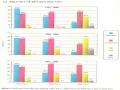 Evaluation of Measures for Managing Organization and Coordination of Educational Forces Inside and Outside the School.
 -
 Principles of Building Measures to Develop Teaching Skills for Secondary School Teachers
 -
 Survey on the Urgency and Feasibility of Proposed Management Measures
 -
 Testing the Urgency and Feasibility of Proposed Measures
2.4.2. Limitations and causes
- Limit:
A number of managers, union officials and lecturers do not fully and deeply understand the role, functions and tasks of the union as well as the coordination between the union and the government in managing professional activities in schools.
In the process of developing professional activity plans at the Faculty/Department level, the participation of the trade union has not been clearly shown or the participation is not in accordance with the functions and tasks of the trade union organization; it has not been clearly defined which are the tasks of the trade union, which are the tasks of the government in coordination activities and the responsibilities of each party.
The coordination mechanism between the union and the government, especially the coordination mechanism in managing professional activities, has almost not been built at the union levels in schools (except for the coordination regulations between the school union and the Board of Directors).
The union office staff is a very important staff, who directly advises the Standing Committee and the Executive Committee of the Union to manage all union activities in schools. Most of them have not been formally trained in trade unions but mainly operate through learning and experience; their qualifications and capacity have not kept up with current development practices.
The assessment of the effectiveness of coordination between the union and the government as well as coordination in managing professional activities has not been continuous and regular, and has not promoted the strength and role of departmental unions and union groups in participating in managing professional activities at faculties, departments and professional groups.
- Reason:
Most union officials are part-time, non-professional officials, so they do not have much time for union activities; some are elected to key union positions not entirely voluntarily but are assigned by the unit, or some officials are energetic and enthusiastic but have limited capacity, are young, and have little work experience, which significantly affects the quality of union activities as well as coordination with the government in professional management.
In most departments, offices, and divisions in schools, there is no coordination mechanism between the union and the government, especially a coordination mechanism to implement professional management activities to clearly define the responsibilities of each party when coordinating implementation, ... but there is only a Regulation on coordination of work between the School Union Executive Committee and the School Board of Directors.
The current school union office staff are all recruited and assigned by the government to do union work, sometimes only holding the position for a period of time and then transferring jobs, changing frequently so it is very difficult to grasp when implementing activities and in advising and assisting the union leaders.
Every year, the union and the government coordinate in managing professional activities, but have not yet evaluated the effectiveness of the coordination to find out the causes of limitations, weaknesses and remedial measures in the process of coordinating in managing professional activities.
Chapter 2 Conclusion
Professional activities directly affect the teaching quality of lecturers and the learning quality of students, contributing significantly to the implementation of educational tasks and improving the quality of education and training of the school. The coordination between the trade union and the government in managing professional activities at universities under Thai Nguyen University is still very limited.
Through a survey of the current situation of coordination between trade unions and the government in managing professional activities, we found that in addition to the achieved results, the management of coordination between trade unions and the government in managing professional activities at universities under the National University of Natural Resources and Environment still faces many difficulties due to: the lack of a coordination mechanism between trade unions and the government in managing professional activities; the activity plan does not reflect the participation of trade unions; the inspection and evaluation of management coordination between trade unions and the government has not received adequate attention.
In addition, the awareness of managers, union members and lecturers regarding the coordination between the union and the government in managing professional activities is still limited and incomplete; the team of union officials of schools who are the direct advisors to the Standing Committee and Executive Committee of the Union in managing all union activities mostly hold concurrent positions and have not received proper training on unions;
From that reality, it is necessary to have measures to coordinate between the trade union and the government in managing professional activities to improve the quality and effectiveness of management, thereby contributing to improving the quality of education and training of schools and universities.
Chapter 3
MEASURES FOR COOPERATION BETWEEN TRADE UNIONS AND GOVERNMENTS IN MANAGING PROFESSIONAL ACTIVITIES
AT UNIVERSITIES BELONGING TO THAI NGUYEN UNIVERSITY
3.1. Principles for proposing measures for coordination between the trade union and the government in managing professional activities at some universities under Thai Nguyen University
3.1.1. Principle of ensuring purposefulness
The proposed management measures must fully ensure the objectives and significance of the coordination activities between the trade union and the government in managing professional activities; raise awareness and develop capacity for lecturers and staff, thereby improving the quality of coordination in managing professional activities in schools, while improving the management capacity and effectiveness of management work of managers and union members of universities.
3.1.2. Principle of ensuring legality
When proposing measures, it is necessary to ensure adherence to the Party's guidelines and the State's laws and policies on education and school management activities, and respect the role and management function of trade unions as prescribed by law. Management coordination must aim to improve the efficiency and quality of professional management activities in universities to meet the requirements of the current period.
3.1.3. Principles of ensuring systematicity and inheritance
A system is a collection of elements that are organically related to each other, influencing and influencing each other according to certain rules to become a whole. Therefore, when proposing measures, ensuring systematicity is extremely important. The trade union organization in universities under the University of Natural Sciences operates under the direction of the Party Committee of the school and coordinates with the government and other organizations in the school, forming a unified whole in the school, focusing on implementing the Party and State's policies and guidelines on education and training, and at the same time implementing regulations, plans, work projects, etc. to improve the quality of education and training of the school.
The measures taken must also ensure inheritance and absorption of scientific works of previous researchers to continue implementing effective management measures.
3.1.4. Principle of ensuring feasibility
Based on the theoretical basis and analysis of the current situation of management coordination, on the basis of scientific arguments, ensuring practical requirements, the measures must be highly feasible, consistent with the development goals and missions of the school, creating conditions for planning, organizing and managing professional activities, meeting the development requirements of the school in the coming time.
3.1.5. Principles of ensuring effectiveness
The proposed management measures must be suitable for the coordination between the trade union and the government in managing professional activities but not disrupting the system, ensuring the principles of stability and general development of the school. At the same time, the proposed measures must be practical to serve the current educational innovation in universities according to the guiding documents of the Party and the State; especially, they must have positive effects to improve the quality of coordination between the trade union and the government in managing professional activities in universities.
3.2. Measures for coordination between the union and the government in managing professional activities at some universities under Thai Nguyen University
3.2.1. Raising awareness of managers and union officials about coordination between unions and the government in managing professional activities
3.2.1.1. Objectives of the measure
The effectiveness of the coordination between trade unions and the government depends largely on managers and union officials at all levels, so it is necessary to raise awareness of managers and union officials. The goal of the measure is to create a change in awareness for managers and union officials about the role, function and importance of coordination between trade unions and the government in managing professional activities to meet the increasingly high development requirements of the education and training sector and of society. Only with correct awareness can we act correctly, and only with correct action can activities go in the right direction and achieve the desired results.
3.2.1.2. Contents of the measure
Providing useful and practical information, equipping basic knowledge and necessary skills to supplement knowledge about trade union work and understanding more about some policies and regimes related to employees in addition to professional activities to improve the understanding and awareness of each manager and trade union officer.
Propagating the history of the formation and development of trade unions at all levels such as: World trade union movement; Vietnam workers movement; Vietnam Trade Union, Vietnam Education Trade Union, Thai Nguyen University Trade Union and grassroots trade unions at schools. Thereby, learning about the values that people are currently enjoying, fostering patriotism and national pride. Those things bring an extremely great and hidden value in each person; filtering out the good and the bad to study and apply appropriately, both preserving the national quintessence and absorbing the world's quintessence.
Study and research on laws, policies and regimes such as Labor Law, Education Law, Trade Union Law, Vietnam Trade Union Charter; Regimes and policies related to employees (Social insurance, health insurance, unemployment insurance, salary, bonus, maternity regime, etc.). When having basic knowledge of the law, each cadre and lecturer will "live and work according to the Constitution and the law", and at the same time, accurately propagate the guidelines and policies on laws, policies and regimes. More than anyone else, managers and trade union members need to understand the law, especially labor law and regimes and policies related to employees in order to protect the legitimate and legal rights and interests of employees.
3.2.1.3. How to do it
Organize conferences, seminars, talks, rallies, etc. to disseminate information related to trade union organizations as well as coordination activities between trade unions and the government in professional management.
Organize learning, research, and discussion of the content. After completing the learning content, write a summary test and store it at the Union Office to monitor, grasp, evaluate, ... learning and research.
Organize for cadres to visit historical sites, review traditions to learn about the history of formation and development of workers' organizations and movements, trade unions, etc.
Organize clubs (such as law clubs, trade union clubs, ...) and maintain and develop the activities of women's clubs, table tennis clubs, badminton clubs, tennis clubs, ... to help members in studying, promoting their capacity and professional skills, creating a favorable environment for members to exchange, learn from each other and cultivate qualities, ethics and lifestyle, propose and recommend solutions to contribute to the development of trade union activities and school activities.
Preserving and displaying images, documents, and artifacts about the process of building, protecting, growing, and developing the school as well as the trade union organization. This is a practical work that shows respect for the past, the process of building, growing, and maturing, has educational value, giving the current and future generations the right to be proud, promote the traditions of previous generations, continue to preserve, build the school to be more and more spacious, modern, and increasingly developed.
3.2.1.4. Implementation conditions
Strengthen activities and sessions to disseminate laws, policies, etc. Create conditions for employees to access books, newspapers, documents, raise awareness about the history of formation and development of the Trade Union organization, etc.
The school board needs to pay attention to creating conditions for clubs to operate (such as supporting maintenance costs, operating locations, etc.). Space must be arranged to make a traditional room of the school, including a separate area for trade union activities. The traditional room is a place to preserve memorabilia and images to educate the next generation about cultural and spiritual values, etc. to raise awareness about the history of formation, construction and development of the school as well as the trade union organization.
3.2.2. Developing a plan to manage professional activities at the Faculty and Department levels must include coordination with the Faculty Council and Faculty Team.
3.2.2.1. Objectives of the measure
To clearly define the responsibilities of each party in coordinating the implementation of common tasks of the Faculty and Department; to increase the participation of the Faculty's trade union and trade union groups in faculties and departments in managing professional activities.
3.2.2.2. Contents of the measure
Faculty is a professional unit of a university; department is a professional unit of a faculty in a university. The faculty manages lecturers, other employees and students of the faculty according to the decentralization of the principal as well as plans and organizes the implementation of educational and training activities according to the general plan of the school. The department is responsible for the content, quality and teaching progress of the subjects assigned in the training program and the general teaching plan of the school and the faculty [14]. Therefore, it can be affirmed that the faculty and department are the places where the professional activities of the school directly take place.
A departmental union is a collection of union groups in a specialized department or a functional department. Union groups are places to gather and unite union members with different levels of expertise and profession in the school into a unified block to ensure the successful implementation of the school's political tasks. Each union group gathers union members with different professional skills but has relatively unified functions and tasks and, moreover, they live and work together in a unit of the school.
Each department, division, faculty, and team has its own functions, tasks, and has its own professional and technical characteristics. In order for the Union activities to be effective, the school's grassroots union has established departmental unions and union groups to gather the number of employees working in all departments, faculties, and teams to participate in union activities. This is a model suitable for the characteristics of a school with a relatively large number of union members and diverse in expertise and profession.
When developing professional management plans in faculties and departments, there are often annual plans, school year plans, semester plans, course plans, classes, etc. Each plan depends on the school's goals for that year and the tasks to implement those goals. The plan must reflect the assigned tasks and be consistent with the characteristics and actual situation of the school; balance between tasks, clearly state the key tasks, balance between needs and capabilities, content and measures; present specifically and clearly... The plan must state