
4.Luffa
- Seeds: Only take the seeds from the middle of old squash (remove the head and tail), clean them, remove the empty seeds (floating seeds), then dry them thoroughly in the sun for 1-3 days, let them cool, put them in bottles, close tightly and keep them in a high, cool place, and take them out to use when it's time to plant.
- Soil: Choose a moist, well-drained place, near tall trees for the squash to climb, no need to build a trellis, and it will produce a lot of fruit.
- Season: In January and February of the lunar calendar, choose a warm, sunny day to sow seeds, the seeds will grow quickly. Use compost and compost to mix well with the soil, then sow, sow in rows or holes, sow 1-5 seeds in each hole, cover lightly with soil, and put up fences around to prevent chickens from scratching.
Maybe you are interested!
-
 Production and supply of clean vegetables in Van Duc commune, Gia Lam district, Hanoi - 7
 -
 Production and supply of clean vegetables in Van Duc commune, Gia Lam district, Hanoi - 1
 -
 Identify Rating Levels and Rating Scales
zt2i3t4l5ee
zt2a3gstourism,quan lan,quang ninh,ecology,ecotourism,minh chau,van don,geography,geographical basis,tourism development,science
zt2a3ge
zc2o3n4t5e6n7ts
of the islanders. Therefore, this indicator will be divided into two sub-indicators:
a1. Natural tourism attractiveness a2. Cultural tourism attractiveness
b. Tourist capacity
The two island communes in Quan Lan have different capacities to receive tourists. Minh Chau Commune is home to many standard hotels and resorts, attracting high-income domestic and international tourists. Meanwhile, Quan Lan Commune has many motels mainly built and operated by local people, so the scale and quality are not high, and will be suitable for ordinary tourists such as students.
c. Time of exploitation of Quan Lan Island Commune:
Quan Lan tourism is seasonal due to weather and climate conditions and festivals only take place on certain days of the year, specifically in spring. In Quan Lan commune, the period from April to June and from September to November is considered the best time to visit Quan Lan because the cultural tourism activities are mainly associated with festivals taking place during this time.
Minh Chau island commune:
Tourism exploitation time is all year round, because this is a place with a number of tourist attractions with diverse ecosystems such as Bai Tu Long National Park Research Center, Tram forest, Turtle Laying Beach, so besides coming to the beach for tourism and vacation in the summer, Minh Chau will attract research groups to come for tourism combined with research at other times of the year.
d. Sustainability
The sustainability of ecotourism sites in Quan Lan and Minh Chau communes depends on the sensitivity of the ecosystems to climate changes.
landscape. In general, these tourist destinations have a fairly high level of sustainability, because they are natural ecosystems, planned and protected. However, if a large number of tourists gather at certain times, it can exceed the carrying capacity and affect the sustainability of the environment (polluted beaches, damaged trees, animals moving away from their habitats, etc.), then the sustainability of the above ecosystems (natural ecosystems, human ecosystems) will also be affected and become less sustainable.
e. Location and accessibility
Both island communes have ports to take tourists to visit from Van Don wharf:
- Quan Lan – Van Don traffic route:
Phuc Thinh – Viet Anh high-speed boat and Quang Minh high-speed boat, depart at 8am and 2pm from Van Don to Quan Lan, and at 7am and 1pm from Quan Lan to Van Don. There are also wooden boats departing at 7am and 1pm.
- Van Don - Minh Chau traffic route:
Chung Huong high-speed train, Minh Chau train, morning 7:30 and afternoon 13:30 from Van Don to Minh Chau, morning 6:30 and afternoon 13:00 from Minh Chau to Van Don.
f. Infrastructure
Despite receiving investment attention, the issue of infrastructure and technical facilities for tourism on Quan Lan Island is still an issue that needs to be resolved because it has a direct impact on the implementation of ecotourism activities. The minimum conditions for serving tourists such as accommodation, electricity, water, communication, especially medical services, and security work need to be given top priority. Ecotourism spots in Minh Chau commune are assessed to have better infrastructure and technical facilities for tourism because there are quite complete and synchronous conditions for serving tourists, meeting many needs of domestic and foreign tourists.
3.2.1.4. Determine assessment levels and assessment scales
Corresponding to the levels of each criterion, the index is the score of those levels in the order of 4, 3, 2, 1 decreasing according to the standard of each level: very attractive (4), attractive (3), average (2), less attractive (1).
3.2.1.5. Determining the coefficients of the criteria
For the assessment of DLST in the two communes of Quan Lan and Minh Chau islands, the students added evaluation coefficients to show the importance of the criteria and indicators as follows:
Coefficient 3 with criteria: Attractiveness, Exploitation time. These are the 2 most important criteria for attracting tourists to tourism in general and eco-tourism in particular, so they have the highest coefficient.
Coefficient 2 with criteria: Capacity, Infrastructure, Location and accessibility . Because the assessment area is an island commune of Van Don district, the above criteria are selected by the author with appropriate coefficients at the average level.
Coefficient 1 with criteria: Sustainability. Quan Lan has natural and human-made ecotourism sites, with high biodiversity and little impact from local human factors. Most of the ecotourism sites are still wild, so they are highly sustainable.
3.2.1.6. Results of DLST assessment on Quan Lan island
a. Assessment of the potential for natural tourism development
For Minh Chau commune:
+ Natural tourism attractiveness is determined to be very attractive (4 points) and the most important coefficient (coefficient 3), so the score of the Attractiveness criterion is 4 x 3 = 12.
+ Capacity is determined as average (2 points) and the coefficient is quite important (coefficient 2), then the score of Capacity criterion is 2 x 2 = 4.
+ Exploitation time is long (4 points), the most important coefficient (coefficient 3) so the score of the Exploitation time criterion is 4 x 3 = 12.
+ Sustainability is determined as sustainable (4 points), the important coefficient is the average coefficient (coefficient 1), so the score of the Sustainability criterion is 4 x 1 = 4 points
+ Location and accessibility are determined to be quite favorable (2 points), the coefficient is quite important (coefficient 2), the criterion score is 2 x 2 = 4 points.
+ Infrastructure is assessed as good (3 points), the coefficient is quite important (coefficient 2), then the score of the Infrastructure criterion is 3 x 2 = 6 points.
The total score for evaluating DLST in Minh Chau commune according to 6 evaluation criteria is determined as: 12 + 4 + 12 + 4 + 4 + 6 = 42 points
Similar assessment for Quan Lan commune, we have the following table:
Table 3.3: Assessment of the potential for natural ecotourism development in Quan Lan and Minh Chau communes
Attractiveness of self-tourismof course
Capacity
Mining time
Sustainability
Location and accessibility
Infrastructure
Result
Point
DarkMulti
Point
DarkMulti
Point
DarkMulti
Point
DarkMulti
Point
DarkMulti
Point
DarkMulti
CommuneMinh Chau
12
12
4
8
12
12
4
4
4
8
6
8
42/52
Quan CommuneLan
6
12
6
8
9
12
4
4
4
8
4
8
33/52
b. Assessment of the potential for humanistic tourism development
For Quan Lan commune:
+ The attractiveness of human tourism is determined to be very attractive (4 points) and the most important coefficient (coefficient 3), so the score of the Attractiveness criterion is 4 x 3 = 12.
+ Capacity is determined to be large (3 points) and the coefficient is quite important (coefficient 2), then the score of the Capacity criterion is 3 x 2 = 6.
+ Mining time is average (3 points), the most important coefficient (coefficient 3) so the score of the Mining time criterion is 3 x 3 = 9.
+ Sustainability is determined as sustainable (4 points), the important coefficient is the average coefficient (coefficient 1), so the score of the Sustainability criterion is 4 x 1 = 4 points.
+ Location and accessibility are determined to be quite favorable (2 points), the coefficient is quite important (coefficient 2), the criterion score is 2 x 2 = 4 points.
+ Infrastructure is rated as average (2 points), the coefficient is quite important (coefficient 2), then the score of the Infrastructure criterion is 2 x 2 = 4 points.
The total score for evaluating DLST in Quan Lan commune according to 6 evaluation criteria is determined as: 12 + 6 + 6 + 4 + 4 + 4 = 36 points.
Similar assessment with Minh Chau commune we have the following table:
Table 3.4: Assessment of the potential for developing humanistic eco-tourism in Quan Lan and Minh Chau communes
Attractiveness of human tourismliterature
Capacity
Mining time
Sustainability
Location and accessibility
Infrastructure
Result
Point
DarkMulti
Point
DarkMulti
Point
DarkMulti
Point
DarkMulti
Point
DarkMulti
Point
DarkMulti
Quan CommuneLan
12
12
6
8
9
12
4
4
4
8
4
8
39/52
Minh CommuneChau
6
12
4
8
12
12
4
4
4
8
6
8
36/52
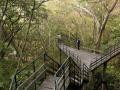
Basically, both Minh Chau and Quan Lan localities have quite favorable conditions for developing ecotourism. However, Quan Lan commune has more advantages to develop ecotourism in a humanistic direction, because this is an area with many famous historical relics such as Quan Lan Communal House, Quan Lan Pagoda, Temple worshiping the hero Tran Khanh Du, ... along with local festivals held annually such as the wind praying ceremony (March 15), Quan Lan festival (June 10-19); due to its location near the port and long exploitation time, the beaches in Quan Lan commune (especially Quan Lan beach) are no longer hygienic and clean to ensure the needs of tourists coming to relax and swim; this is also an area with many beautiful landscapes such as Got Beo wind pass, Ong Phong head, Voi Voi cave, but the ability to access these places is still very limited (dirt hill road, lots of gravel and rocks), especially during rainy and windy times; In addition, other natural resources such as mangrove forests and sea worms have not been really exploited for tourism purposes and ecotourism development. On the contrary, Minh Chau commune has more advantages in developing ecotourism in the direction of natural tourism, this is an area with diverse ecosystems such as at Rua De Beach, Bai Tu Long National Park Conservation Center...; Minh Chau beach is highly appreciated for its natural beauty and cleanliness, ranked in the top ten most beautiful beaches in Vietnam; Minh Chau commune is also home to Tram forest with a large area and a purity of up to 90%, suitable for building bridges through the forest (a very effective type of natural ecotourism currently applied by many countries) for tourists to sightsee, as well as for the purpose of studying and researching.
Figure 3.1: Thenmala Forest Bridge (India) Source: https://www.thenmalaecotourism.com/(August 21, 2019)
3.2.2. Using SWOT matrix to evaluate Quan Lan island tourism
General assessment of current tourism activities of Quan Lan island is shown through the following SWOT matrix:
Table 3.5: SWOT matrix evaluating tourism activities on Quan Lan island
Internal agent
Strengths- There is a lot of potential for tourism development, especially natural ecotourism and humanistic ecotourism.- The unskilled labor force is relatively abundant.- resource environmentunpolluted, still
Weaknesses- Poorly developed infrastructure, especially traffic routes to tourist destinations on the island.- The team of professional staff is still weak.- Tourism products in general
quite wild, originalintact
general and DLST in particularalone is monotonous.
External agents
Opportunity- Tourism is a key industry in the socio-economic development strategy of the province and Van Don economic zone.- Quan Lan was selected as a pilot area for eco-tourism development within the framework of the green growth project between Quang Ninh province and the Japanese organization JICA.- The flow of tourists and especially ecotourism in the world tends toincreasing
Challenge- Weather and climate change abnormally.- Competition in tourism products is increasingly fierce, especially with other localities in the province such as Ha Long, Mong Cai...- Awareness of tourists, especially domestic tourists, about ecotourism and nature conservation is not high.
Through summary analysis using SWOT matrix we see that:
To exploit strengths and take advantage of opportunities, it is necessary to:
- Diversify products and service types (build more tourism routes aimed at specific needs of tourists: experiential tourism immersed in nature, spiritual cultural tourism...)
- Effective exploitation of resources and differentiated products (natural resources and human resources)
div.maincontent .p { color: black; font-family:"Times New Roman", serif; font-style: normal; font-weight: normal; text-decoration: none; font-size: 14pt; margin:0pt; } div.maincontent p { color: black; font-family:"Times New Roman", serif; font-style: normal; font-weight: normal; text-decoration: none; font-size: 14pt; margin:0pt; } div.maincontent .s1 { color: black; font-family:"Times New Roman", serif; font-style: normal; font-weight: normal; text-decoration: none; font-size: 13pt; } div.maincontent .s2 { color: black; font-family:"Times New Roman", serif; font-style: normal; font-weight: normal; text-decoration: none; font-size: 13pt; } div.maincontent .s3 { color: #0D0D0D; font-family:"Times New Roman", serif; font-style: normal; font-weight: bold; text-decoration: none; font-size: 14pt; } div.maincontent .s4 { color: black; font-family:"Times New Roman", serif; font-style: italic; font-weight: normal; text-decoration: none; font-size: 14pt; } div.maincontent .s5 { color: black; font-family:"Times New Roman", serif; font-style: italic; font-weight: bold; text-decoration: none; font-size: 14pt; } div.maincontent .s6 { color: black; font-family:"Times New Roman", serif; font-style: italic; font-weight: normal; text-decoration: none; font-size: 14pt; vertical-align: -3pt; } div.maincontent .s7 { color: black; font-family:"Times New Roman", serif; font-style: italic; font-weight: normal; text-decoration: none; font-size: 14pt; vertical-align: -2pt; } div.maincontent .s8 { color: black; font-family:"Times New Roman", serif; font-style: italic; font-weight: normal; text-decoration: none; font-size: 14pt; vertical-align: -1pt; } div.maincontent .s9 { color: black; font-family:"Times New Roman", serif; font-style: normal; font-weight: normal; text-decoration: none; font-size: 14pt; } div.maincontent .s10 { color: black; font-family:"Times New Roman", serif; font-style: normal; font-weight: bold; text-decoration: none; font-size: 14pt; } div.maincontent .s11 { color: black; font-family:"Times New Roman", serif; font-style: normal; font-weight: normal; text-decoration: none; font-size: 14pt; } div.maincontent .s12 { color: black; font-family:Symbol, serif; font-style: normal; font-weight: normal; text-decoration: none; font-size: 14pt; } div.maincontent .s13 { color: black; font-family:Wingdings; font-style: normal; font-weight: normal; text-decoration: none; font-size: 14pt; } div.maincontent .s14 { color: black; font-family:"Times New Roman", serif; font-style: normal; font-weight: normal; text-decoration: none; font-size: 9pt; vertical-align: 5pt; } div.maincontent .s15 { color: black; font-family:"Times New Roman", serif; font-style: normal; font-weight: normal; text-decoration: none; font-size: 9pt; vertical-align: 5pt; } div.maincontent .s16 { color: black; font-family:Cambria, serif; font-style: italic; font-weight: normal; text-decoration: none; font-size: 14pt; } div.maincontent .s17 { color: #080808; font-family:"Times New Roman", serif; font-style: normal; font-weight: bold; text-decoration: none; font-size: 14pt; } div.maincontent .s18 { color: #080808; font-family:"Times New Roman", serif; font-style: normal; font-weight: normal; text-decoration: none; font-size: 14pt; } div.maincontent .s19 { color: black; font-family:"Times New Roman", serif; font-style: normal; font-weight: normal; text-decoration: none; font-size: 11pt; } div.maincontent .s20 { color: black; font-family:"Times New Roman", serif; font-style: normal; font-weight: normal; text-decoration: none; font-size: 10pt; } div.maincontent .s21 { color: black; font-family:"Times New Roman", serif; font-style: normal; font-weight: bold; text-decoration: none; font-size: 11pt; } div.maincontent .s22 { color: black; font-family:"Times New Roman", serif; font-style: normal; font-weight: normal; text-decoration: none; font-size: 11pt; } div.maincontent .s23 { color: black; font-family:"Times New Roman", serif; font-style: italic; font-weight: normal; text-decoration: none; font-size: 14pt; } div.maincontent .s24 { color: #212121; font-family:"Times New Roman", serif; font-style: normal; font-weight: normal; tex
Identify Rating Levels and Rating Scales
zt2i3t4l5ee
zt2a3gstourism,quan lan,quang ninh,ecology,ecotourism,minh chau,van don,geography,geographical basis,tourism development,science
zt2a3ge
zc2o3n4t5e6n7ts
of the islanders. Therefore, this indicator will be divided into two sub-indicators:
a1. Natural tourism attractiveness a2. Cultural tourism attractiveness
b. Tourist capacity
The two island communes in Quan Lan have different capacities to receive tourists. Minh Chau Commune is home to many standard hotels and resorts, attracting high-income domestic and international tourists. Meanwhile, Quan Lan Commune has many motels mainly built and operated by local people, so the scale and quality are not high, and will be suitable for ordinary tourists such as students.
c. Time of exploitation of Quan Lan Island Commune:
Quan Lan tourism is seasonal due to weather and climate conditions and festivals only take place on certain days of the year, specifically in spring. In Quan Lan commune, the period from April to June and from September to November is considered the best time to visit Quan Lan because the cultural tourism activities are mainly associated with festivals taking place during this time.
Minh Chau island commune:
Tourism exploitation time is all year round, because this is a place with a number of tourist attractions with diverse ecosystems such as Bai Tu Long National Park Research Center, Tram forest, Turtle Laying Beach, so besides coming to the beach for tourism and vacation in the summer, Minh Chau will attract research groups to come for tourism combined with research at other times of the year.
d. Sustainability
The sustainability of ecotourism sites in Quan Lan and Minh Chau communes depends on the sensitivity of the ecosystems to climate changes.
landscape. In general, these tourist destinations have a fairly high level of sustainability, because they are natural ecosystems, planned and protected. However, if a large number of tourists gather at certain times, it can exceed the carrying capacity and affect the sustainability of the environment (polluted beaches, damaged trees, animals moving away from their habitats, etc.), then the sustainability of the above ecosystems (natural ecosystems, human ecosystems) will also be affected and become less sustainable.
e. Location and accessibility
Both island communes have ports to take tourists to visit from Van Don wharf:
- Quan Lan – Van Don traffic route:
Phuc Thinh – Viet Anh high-speed boat and Quang Minh high-speed boat, depart at 8am and 2pm from Van Don to Quan Lan, and at 7am and 1pm from Quan Lan to Van Don. There are also wooden boats departing at 7am and 1pm.
- Van Don - Minh Chau traffic route:
Chung Huong high-speed train, Minh Chau train, morning 7:30 and afternoon 13:30 from Van Don to Minh Chau, morning 6:30 and afternoon 13:00 from Minh Chau to Van Don.
f. Infrastructure
Despite receiving investment attention, the issue of infrastructure and technical facilities for tourism on Quan Lan Island is still an issue that needs to be resolved because it has a direct impact on the implementation of ecotourism activities. The minimum conditions for serving tourists such as accommodation, electricity, water, communication, especially medical services, and security work need to be given top priority. Ecotourism spots in Minh Chau commune are assessed to have better infrastructure and technical facilities for tourism because there are quite complete and synchronous conditions for serving tourists, meeting many needs of domestic and foreign tourists.
3.2.1.4. Determine assessment levels and assessment scales
Corresponding to the levels of each criterion, the index is the score of those levels in the order of 4, 3, 2, 1 decreasing according to the standard of each level: very attractive (4), attractive (3), average (2), less attractive (1).
3.2.1.5. Determining the coefficients of the criteria
For the assessment of DLST in the two communes of Quan Lan and Minh Chau islands, the students added evaluation coefficients to show the importance of the criteria and indicators as follows:
Coefficient 3 with criteria: Attractiveness, Exploitation time. These are the 2 most important criteria for attracting tourists to tourism in general and eco-tourism in particular, so they have the highest coefficient.
Coefficient 2 with criteria: Capacity, Infrastructure, Location and accessibility . Because the assessment area is an island commune of Van Don district, the above criteria are selected by the author with appropriate coefficients at the average level.
Coefficient 1 with criteria: Sustainability. Quan Lan has natural and human-made ecotourism sites, with high biodiversity and little impact from local human factors. Most of the ecotourism sites are still wild, so they are highly sustainable.
3.2.1.6. Results of DLST assessment on Quan Lan island
a. Assessment of the potential for natural tourism development
For Minh Chau commune:
+ Natural tourism attractiveness is determined to be very attractive (4 points) and the most important coefficient (coefficient 3), so the score of the Attractiveness criterion is 4 x 3 = 12.
+ Capacity is determined as average (2 points) and the coefficient is quite important (coefficient 2), then the score of Capacity criterion is 2 x 2 = 4.
+ Exploitation time is long (4 points), the most important coefficient (coefficient 3) so the score of the Exploitation time criterion is 4 x 3 = 12.
+ Sustainability is determined as sustainable (4 points), the important coefficient is the average coefficient (coefficient 1), so the score of the Sustainability criterion is 4 x 1 = 4 points
+ Location and accessibility are determined to be quite favorable (2 points), the coefficient is quite important (coefficient 2), the criterion score is 2 x 2 = 4 points.
+ Infrastructure is assessed as good (3 points), the coefficient is quite important (coefficient 2), then the score of the Infrastructure criterion is 3 x 2 = 6 points.
The total score for evaluating DLST in Minh Chau commune according to 6 evaluation criteria is determined as: 12 + 4 + 12 + 4 + 4 + 6 = 42 points
Similar assessment for Quan Lan commune, we have the following table:
Table 3.3: Assessment of the potential for natural ecotourism development in Quan Lan and Minh Chau communes
Attractiveness of self-tourismof course
Capacity
Mining time
Sustainability
Location and accessibility
Infrastructure
Result
Point
DarkMulti
Point
DarkMulti
Point
DarkMulti
Point
DarkMulti
Point
DarkMulti
Point
DarkMulti
CommuneMinh Chau
12
12
4
8
12
12
4
4
4
8
6
8
42/52
Quan CommuneLan
6
12
6
8
9
12
4
4
4
8
4
8
33/52
b. Assessment of the potential for humanistic tourism development
For Quan Lan commune:
+ The attractiveness of human tourism is determined to be very attractive (4 points) and the most important coefficient (coefficient 3), so the score of the Attractiveness criterion is 4 x 3 = 12.
+ Capacity is determined to be large (3 points) and the coefficient is quite important (coefficient 2), then the score of the Capacity criterion is 3 x 2 = 6.
+ Mining time is average (3 points), the most important coefficient (coefficient 3) so the score of the Mining time criterion is 3 x 3 = 9.
+ Sustainability is determined as sustainable (4 points), the important coefficient is the average coefficient (coefficient 1), so the score of the Sustainability criterion is 4 x 1 = 4 points.
+ Location and accessibility are determined to be quite favorable (2 points), the coefficient is quite important (coefficient 2), the criterion score is 2 x 2 = 4 points.
+ Infrastructure is rated as average (2 points), the coefficient is quite important (coefficient 2), then the score of the Infrastructure criterion is 2 x 2 = 4 points.
The total score for evaluating DLST in Quan Lan commune according to 6 evaluation criteria is determined as: 12 + 6 + 6 + 4 + 4 + 4 = 36 points.
Similar assessment with Minh Chau commune we have the following table:
Table 3.4: Assessment of the potential for developing humanistic eco-tourism in Quan Lan and Minh Chau communes
Attractiveness of human tourismliterature
Capacity
Mining time
Sustainability
Location and accessibility
Infrastructure
Result
Point
DarkMulti
Point
DarkMulti
Point
DarkMulti
Point
DarkMulti
Point
DarkMulti
Point
DarkMulti
Quan CommuneLan
12
12
6
8
9
12
4
4
4
8
4
8
39/52
Minh CommuneChau
6
12
4
8
12
12
4
4
4
8
6
8
36/52
Basically, both Minh Chau and Quan Lan localities have quite favorable conditions for developing ecotourism. However, Quan Lan commune has more advantages to develop ecotourism in a humanistic direction, because this is an area with many famous historical relics such as Quan Lan Communal House, Quan Lan Pagoda, Temple worshiping the hero Tran Khanh Du, ... along with local festivals held annually such as the wind praying ceremony (March 15), Quan Lan festival (June 10-19); due to its location near the port and long exploitation time, the beaches in Quan Lan commune (especially Quan Lan beach) are no longer hygienic and clean to ensure the needs of tourists coming to relax and swim; this is also an area with many beautiful landscapes such as Got Beo wind pass, Ong Phong head, Voi Voi cave, but the ability to access these places is still very limited (dirt hill road, lots of gravel and rocks), especially during rainy and windy times; In addition, other natural resources such as mangrove forests and sea worms have not been really exploited for tourism purposes and ecotourism development. On the contrary, Minh Chau commune has more advantages in developing ecotourism in the direction of natural tourism, this is an area with diverse ecosystems such as at Rua De Beach, Bai Tu Long National Park Conservation Center...; Minh Chau beach is highly appreciated for its natural beauty and cleanliness, ranked in the top ten most beautiful beaches in Vietnam; Minh Chau commune is also home to Tram forest with a large area and a purity of up to 90%, suitable for building bridges through the forest (a very effective type of natural ecotourism currently applied by many countries) for tourists to sightsee, as well as for the purpose of studying and researching.
Figure 3.1: Thenmala Forest Bridge (India) Source: https://www.thenmalaecotourism.com/(August 21, 2019)
3.2.2. Using SWOT matrix to evaluate Quan Lan island tourism
General assessment of current tourism activities of Quan Lan island is shown through the following SWOT matrix:
Table 3.5: SWOT matrix evaluating tourism activities on Quan Lan island
Internal agent
Strengths- There is a lot of potential for tourism development, especially natural ecotourism and humanistic ecotourism.- The unskilled labor force is relatively abundant.- resource environmentunpolluted, still
Weaknesses- Poorly developed infrastructure, especially traffic routes to tourist destinations on the island.- The team of professional staff is still weak.- Tourism products in general
quite wild, originalintact
general and DLST in particularalone is monotonous.
External agents
Opportunity- Tourism is a key industry in the socio-economic development strategy of the province and Van Don economic zone.- Quan Lan was selected as a pilot area for eco-tourism development within the framework of the green growth project between Quang Ninh province and the Japanese organization JICA.- The flow of tourists and especially ecotourism in the world tends toincreasing
Challenge- Weather and climate change abnormally.- Competition in tourism products is increasingly fierce, especially with other localities in the province such as Ha Long, Mong Cai...- Awareness of tourists, especially domestic tourists, about ecotourism and nature conservation is not high.
Through summary analysis using SWOT matrix we see that:
To exploit strengths and take advantage of opportunities, it is necessary to:
- Diversify products and service types (build more tourism routes aimed at specific needs of tourists: experiential tourism immersed in nature, spiritual cultural tourism...)
- Effective exploitation of resources and differentiated products (natural resources and human resources)
div.maincontent .p { color: black; font-family:"Times New Roman", serif; font-style: normal; font-weight: normal; text-decoration: none; font-size: 14pt; margin:0pt; } div.maincontent p { color: black; font-family:"Times New Roman", serif; font-style: normal; font-weight: normal; text-decoration: none; font-size: 14pt; margin:0pt; } div.maincontent .s1 { color: black; font-family:"Times New Roman", serif; font-style: normal; font-weight: normal; text-decoration: none; font-size: 13pt; } div.maincontent .s2 { color: black; font-family:"Times New Roman", serif; font-style: normal; font-weight: normal; text-decoration: none; font-size: 13pt; } div.maincontent .s3 { color: #0D0D0D; font-family:"Times New Roman", serif; font-style: normal; font-weight: bold; text-decoration: none; font-size: 14pt; } div.maincontent .s4 { color: black; font-family:"Times New Roman", serif; font-style: italic; font-weight: normal; text-decoration: none; font-size: 14pt; } div.maincontent .s5 { color: black; font-family:"Times New Roman", serif; font-style: italic; font-weight: bold; text-decoration: none; font-size: 14pt; } div.maincontent .s6 { color: black; font-family:"Times New Roman", serif; font-style: italic; font-weight: normal; text-decoration: none; font-size: 14pt; vertical-align: -3pt; } div.maincontent .s7 { color: black; font-family:"Times New Roman", serif; font-style: italic; font-weight: normal; text-decoration: none; font-size: 14pt; vertical-align: -2pt; } div.maincontent .s8 { color: black; font-family:"Times New Roman", serif; font-style: italic; font-weight: normal; text-decoration: none; font-size: 14pt; vertical-align: -1pt; } div.maincontent .s9 { color: black; font-family:"Times New Roman", serif; font-style: normal; font-weight: normal; text-decoration: none; font-size: 14pt; } div.maincontent .s10 { color: black; font-family:"Times New Roman", serif; font-style: normal; font-weight: bold; text-decoration: none; font-size: 14pt; } div.maincontent .s11 { color: black; font-family:"Times New Roman", serif; font-style: normal; font-weight: normal; text-decoration: none; font-size: 14pt; } div.maincontent .s12 { color: black; font-family:Symbol, serif; font-style: normal; font-weight: normal; text-decoration: none; font-size: 14pt; } div.maincontent .s13 { color: black; font-family:Wingdings; font-style: normal; font-weight: normal; text-decoration: none; font-size: 14pt; } div.maincontent .s14 { color: black; font-family:"Times New Roman", serif; font-style: normal; font-weight: normal; text-decoration: none; font-size: 9pt; vertical-align: 5pt; } div.maincontent .s15 { color: black; font-family:"Times New Roman", serif; font-style: normal; font-weight: normal; text-decoration: none; font-size: 9pt; vertical-align: 5pt; } div.maincontent .s16 { color: black; font-family:Cambria, serif; font-style: italic; font-weight: normal; text-decoration: none; font-size: 14pt; } div.maincontent .s17 { color: #080808; font-family:"Times New Roman", serif; font-style: normal; font-weight: bold; text-decoration: none; font-size: 14pt; } div.maincontent .s18 { color: #080808; font-family:"Times New Roman", serif; font-style: normal; font-weight: normal; text-decoration: none; font-size: 14pt; } div.maincontent .s19 { color: black; font-family:"Times New Roman", serif; font-style: normal; font-weight: normal; text-decoration: none; font-size: 11pt; } div.maincontent .s20 { color: black; font-family:"Times New Roman", serif; font-style: normal; font-weight: normal; text-decoration: none; font-size: 10pt; } div.maincontent .s21 { color: black; font-family:"Times New Roman", serif; font-style: normal; font-weight: bold; text-decoration: none; font-size: 11pt; } div.maincontent .s22 { color: black; font-family:"Times New Roman", serif; font-style: normal; font-weight: normal; text-decoration: none; font-size: 11pt; } div.maincontent .s23 { color: black; font-family:"Times New Roman", serif; font-style: italic; font-weight: normal; text-decoration: none; font-size: 14pt; } div.maincontent .s24 { color: #212121; font-family:"Times New Roman", serif; font-style: normal; font-weight: normal; tex -
 Developing agricultural production loans at the Bank for Agriculture and Rural Development of Vietnam, Van Ban District Branch, Lao Cai Province - 2
 -
 State Nature in Production and Supply Activities
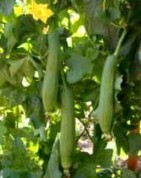
- Care: When the seeds have not yet sprouted, water lightly occasionally, if the soil is dry. When the plant grows 20 - 30cm, do not let it climb up the trellis immediately, use scissors to cut it all off, pull the string down and wrap it around the base 3 - 4 times, use
rotten straw or lightly filled soil (leaving the top). When
When the top reaches 50 - 60cm, then let it climb up the trellis.
or a big and tall tree will produce more fruit because the tree grows
exposed to lots of sunlight. Use
Phosphorus and potassium are soaked in water to irrigate plants, but nitrogen is used very little.
If you fertilize too much, it will only make the vines and leaves better, which will greatly affect the fruit. Do not let the plant climb up the trellis in a hurry. Use scissors to cut it all off, pull the vines down, circle them around the base 3-4 times, and cover them lightly with rotten straw or soil (leaving the tops alone). When the tops reach 50-60cm, then you can let them climb up the trellis. Or the plants will grow bigger and taller and will produce more fruit because they are exposed to more sunlight. Use phosphate and potassium soaked in water to water the plants, and use very little nitrogen. If you fertilize too much, it will only make the vines and leaves better, which will greatly affect the fruit.
5. Watercress
Lettuce comes in two varieties:
Egg lettuce: white leaves that can withstand sun and rain, tightly rolled.
Tiny lettuce: green leaves, large canopy, few stems, spongy, water-resistant.
In general, the technical aspects of growing lettuce varieties are the same.
- Planting season:
Egg lettuce is sown from July to February.
Lettuce is sown in March and April to be eaten in the summer.
- Soil preparation and fertilization: The soil needs to be loosened, compacted, and carefully prepared. The beds should be 7-10cm high. The fertilization for 1 hectare is 7-10 tons of compost and 40kg of potassium.
- Planting density: distance between plants is 15-18 cm.
- Care: After planting, water immediately. Water once a day.
times. Later, just water to keep moist, watering once every 2-3 days.
Only hoe when the plants are still small. Combine hoeing with weeding.
When the plant is 15-20 days old and the leaves are pale white, it means the plant is lacking fertilizer. It is necessary to fertilize with nitrogen fertilizer with the amount of 33-35 kg of urea for 1 hectare or mix manure and water the lettuce. After fertilizing, water the leaves immediately.
In general, lettuce is a short-term vegetable variety with few pests and diseases, so as long as the soil is prepared carefully and the lettuce is well cared for, it will have the desired yield and quality.
After 30-40 days of planting, the lettuce field can be harvested.
6. Sweet cabbage
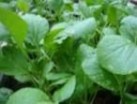
Season: Winter-spring crop: Sow from August to December
11; summer-autumn crop: sown from February to June.
Nursery: Bok choy can be sown directly from seed or
sow in nursery and then transplant. Make small soil, make beds
1m wide, 30cm high, 30cm wide furrow. Fertilize with 2 - 3kg/ m2 of decomposed manure . If sowing to keep the soil close together, use 0.5 - 1g of seeds/m2 ; if sowing in the nursery and then transplanting, use 1 - 1.2g of seeds/m2 . After sowing, cover the bed with rice husks or straw and then use a watering can to water evenly, then water once a day.
Soil preparation and planting: Choose sandy loam or light loam soil with pH 5.5 - 6.5. Prepare small soil, make beds 1m wide, 30cm high, 30cm wide furrows. Apply 1.2 - 2kg/m2 of decomposed manure . If there is no manure, you can use organic microbial fertilizer, the amount used is 100 - 110kg/Northern pole. Mix microbial fertilizer with nitrogen, level the bed surface, then sow seeds or transplant. If sowing at the same time, thin out the soil in 2 batches when the plants have 2 - 3 true leaves with a distance of 15 - 20cm. If transplanting, leave a distance of 20-25cm, ensuring a planting density of 3,000 - 3,600 plants/Northern pole.
Fertilizer:
Fertilizer amount (calculated per Northern sao):
+ Manure: 700kg (or 400kg manure + 100kg Bokashi fertilizer). Can use organic microbial fertilizer or processed garbage instead (equal to 1/3 of the amount of manure).
+ Chemical fertilizer: 5.5kg urea + 12-15kg superphosphate + 2.5kg potassium chloride.
How to fertilize:
+ Base fertilizer: All manure, organic microbial fertilizer and phosphate fertilizer + 30% nitrogen fertilizer + 50% potassium fertilizer.
+ Top dressing:
- 1st time: Fertilize with 40% nitrogen + 30% potassium; fertilize when the plant turns green (after
Planting 7 - 10 days).
- 2nd time: Fertilize with the remaining amount of nitrogen and potassium; fertilize 16 - 20 days after planting.
In addition to the above amount of fertilizer, between fertilizations, foliar fertilizer should be applied to vegetables. Amount 0.1 - 0.2 kg/sao, mixed with water and sprayed evenly on the leaves. EM products can be used to spray or water vegetables.
Care: Chinese cabbage is a short-term plant that needs a lot of water to grow, so it needs to be kept moist regularly. After planting, water once a day, then water once every 2-3 days. Combine watering with fertilizing. Pick up weeds, hoe and mound the base 1-2 times.
Pest control: Chinese cabbage is often affected by major pests such as: aphids, flea beetles, cutworms, silkworms, green worms, and soft rot. Use the following pesticides for prevention: Sherpa 25EC or biological pesticide Bt to kill pests. Use Rhidomil MZ72 WP, Score 25EC to prevent soft rot, spray at the concentration and dosage indicated on the manufacturer's packaging. It is necessary to use comprehensive prevention measures such as field sanitation, crop rotation, balanced fertilization, etc.
Harvesting: When harvesting, remove the original leaves, old leaves, leaves with pests and diseases, pay attention to wash clean, do not crush the plant, put it in clean packaging for use.
7. Bitter melon
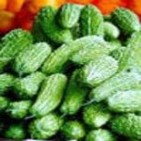
Season and soil
Bitter melon is sown from early March to September and harvested from May to December. If sown late, yield will decrease and pests and diseases will increase.
The soil should be light loam, sandy soil, loose,
flat, easy to irrigate and drain, pH from 5.5-6.5.
Plow and harrow the land thoroughly and clean the weeds before sowing. Make beds 1.3-1.4m wide, 1-1.2m wide and 30cm high.
Pay attention to choosing land far from industrial zones, cemeteries, hospitals, and sources of pollution.
wastewater, national highway 100m.
- Planting distance: 75-80cm x 25cm/tree. Density: 5-57 thousand trees/ha.
Fertilizer
Absolutely do not use manure, fresh manure and fresh manure water.
fertilize or water.
Manure is used as basal fertilizer at a rate of 15-20 tons/ha (550-740kg/sao); organic fertilizer or processed waste can also be used instead of manure at a rate of 1/3 of the amount of manure.
Nitrogen fertilizer: 100-120kg/ha, divided into 4 top dressings.
Phosphate fertilizer: 60kg/ha used as basal fertilizer.
Potassium fertilizer: 90kg/ha, 50% basal application, the rest divided into 2 top dressings.
Fertilize the first time when the plant has 4-5 true leaves; the second time when the plant starts to bloom; the third time when the plant is in the fall.
1st crop; 4th time when harvesting 3rd crop.
In addition to applying to the soil, you can spray macronutrient, micronutrient, and trace nutrient solutions on the leaves according to the instructions for use. Use treated manure water to irrigate between chemical fertilizer applications to maintain growth. Care:
Weeding, hoeing and hilling combined with the first 2 top dressings, mainly hoeing and hilling.
before mounting the rack.
- Use clean water for irrigation, do not use untreated wastewater for irrigation.
Soil moisture should be kept at 80-85% during the female flower bloom period.
- Harvest fruit only after fertilizing with nitrogen at least 10 days.
- It is necessary to prune off damaged and small fruits during the care process.
Pest control
- Fruit borer: use Sherpa 20EC, Sumicidin 10EC, Cyperan 25EC, minimum quarantine time 7 days.
- Green worms: use Cyperan 25EC, Mimic 20FC, Sherpa 20EC, minimum quarantine time 7 days.
- Leaf miner: Baythroit 50EC, Confidorr 100SL, Ofatox 400EC.
- Diseases: Powdery mildew mainly affects leaves, use Anvil 5SC, Score 250EC, minimum isolation time 10 days.
Harvest
- After sowing 48-50 days (local varieties) and 45-50 days (imported varieties), start harvesting the fruit.
- Harvest at the right maturity, especially at the right commercial maturity stage to achieve both productivity and quality.
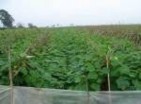
8. Cucumber
Cucumbers adapt to hot and humid climates. The suitable temperature for cucumber growth is 30 degrees Celsius during the day and 18-21 degrees Celsius at night. A lot of light makes the fruit grow quickly, plump, and of good quality.
Under short-day conditions, cucumbers tend to have many leaves and fruit.
Cucumbers have high water requirements but cannot tolerate waterlogging. They grow well in rich, well-drained soil with a pH of 6.0 - 6.5.
Varieties and seasons
Cucumbers include small, medium and large fruit varieties, so choose varieties with high quality, high yield and resistance to pests and diseases.
Cucumbers can be grown twice a year.
- Spring crop: sow from late January to late February.
- Winter crop: sow seeds from early September to late October.
Growing cucumbers between two rice crops requires making pots to take advantage of the season.
Sow seedlings
To save seeds, early plant care and increase plant uniformity, it is necessary to produce seedlings in foam trays or plastic trays measuring 60x45 cm with 60 holes/tray.
The material for making pots includes 40% soil, 30% burnt rice husks or humus and 30% composted manure. The above ingredients are mixed well, straw, garbage, solids are removed, then filled into the holes on the tray, pressed lightly and then placed on a shelf at least 50cm above the ground in a greenhouse with a roof covered with light material (nylon or white plastic sheet).
Soak the seeds in warm water at 35-40 degrees Celsius for 3 hours, then incubate at 27-30 degrees Celsius. When the seeds crack, sow them in holes, 2 seeds per hole, and water them sufficiently. Then water the plants every day to keep them moist until 2-3 days before planting, then stop watering.
The amount of melon seeds to sow per hectare is from 0.7-1 kg (30g/sao).
Tilling, fertilizing, planting
Choose high, well-drained land but proactively source irrigation water. Light loam or sandy soil with pH from 5.5-6.5. Do not plant squash or pumpkin plants in the previous 2 crops.
Because the cucumber root system is weak, the soil needs to be plowed, harrowed, small, loose, and picked up.
clean weeds. Make beds 1.2m wide, 0.3m high, and furrows 0.3m wide.
After making the beds, make rows of 60-70 cm apart, 20-30 cm from the edge of the bed, then fertilize the furrows with the following amount:
- Nitrogen fertilizer: 120 kg/ha or 12-15 kg/sao
- Phosphate fertilizer: 90 kg/ha or 20-25 kg/sao.
- Potassium fertilizer: 120 kg/ha or 12-15 kg/sao
- Decomposed manure: 20 - 30 tons or 7.4 - 11 quintals/sao
Fertilization and bed covering: all manure, 50% phosphate fertilizer and 30% potassium fertilizer are applied into the furrow, mixed well and covered with soil. Then sprinkle a layer of soil treatment on the bed surface to prevent pests on seedlings. You can use Basudin 10H with a dosage of 27 - 30 kg/ha (equivalent to 1 kg/sao) and cover with nylon. You should use double-sided nylon to spread on the bed surface (the black side is spread down and the silver side is spread up), cover the soil carefully on both sides of the bed and then punch holes with a diameter of 10-12 cm. The distance between each hole is 35 cm in the winter crop and 40 cm in the spring crop.
Planting: After removing the different types of plants and diseased plants, move the tray to the middle of the field, gently lift the pots out of the tray and spread them evenly along the holes punched on the bed surface. Bury the pots in the soil and water thoroughly to firmly cover the roots.
Watering, fertilizing
Cucumbers have shallow roots so they need a lot of water. The source of irrigation water is well water or river water. Before planting the trellis (20-30 days after planting), it is necessary to water the furrows, let the water soak into the bed and then drain all the water. In the autumn and winter, you can water the furrows to provide water for the plants. It is necessary to keep the soil moist from the flowering stage, especially from the time of fruit harvest to increase the commercial quality of the fruit (when lacking water, the fruit is often bitter and curved).
Combine watering with top dressing in 3 periods:
- 1st time: When the plant has 5-6 true leaves, fertilize with 20% nitrogen, 25% phosphorus and 10% potassium, mix with water to water.