
Chapter 3 Summary
Assessing the current status of tourism activities in Bai Tu Long National Park, the following comments can be made:
- The number of tourists to the National Park has increased quite rapidly in recent years. However, this number is still too small compared to the potential of the Park.
Maybe you are interested!
-
 Solutions for tourism development in Tien Lang - 10
zt2i3t4l5ee
zt2a3gstourism, tourism development
zt2a3ge
zc2o3n4t5e6n7ts
- District People's Committees and authorities of communes with tourist attractions should support, promote, and provide necessary information to people, helping them improve their knowledge about tourism. Raise tourism awareness for local people.
*
* *
Due to limited knowledge and research time, the thesis inevitably has shortcomings. Therefore, I look forward to receiving guidance from teachers, experts as well as your comments to make the thesis more complete.
Chapter III Conclusion
Through the issues presented in Chapter II, we can come to some conclusions:
Based on the strengths of available tourism resources, the types of tourism in Tien Lang that need to be promoted in the coming time are sightseeing and resort tourism, discovery tourism, weekend tourism. To improve the quality and diversify tourism products, Tien Lang district needs to combine with local cultural tourism resources, at the same time combine with surrounding areas, build rich tourism products. The strengths of Tien Lang tourism are eco-tourism and cultural tourism, so developing Tien Lang tourism must always go hand in hand with restoring and preserving types of cultural tourism resources. Some necessary measures to support and improve the efficiency of exploiting tourism resources in Tien Lang are: strengthening the construction of technical facilities and labor force serving tourism, actively promoting and advertising tourism, and expanding forms of capital mobilization for tourism development.
CONCLUDE
I Conclusion
1. Based on the results achieved within the framework of the thesis's needs, some basic conclusions can be drawn as follows:
Tien Lang is a locality with great potential for tourism development. The relatively abundant cultural tourism resources and ecological tourism resources have great appeal to tourists. Based on this potential, Tien Lang can build a unique tourism industry that is competitive enough with other localities within Hai Phong city and neighboring areas.
In recent years, the exploitation of the advantages of resources to develop tourism and build tourist routes in Tien Lang has not been commensurate with the available potential. In terms of quantity, many resource objects have not been brought into the purpose of tourism development. In terms of time, the regular service time has not been extended to attract more visitors. Infrastructure and technical facilities are still weak. The labor force is still thin and weak in terms of expertise. Tourism programs and routes have not been organized properly, the exploitation content is still monotonous, so it has not attracted many visitors. Although resources have not been mobilized much for tourism development, they are facing the risk of destruction and degradation.
2. Based on the results of investigation, analysis, synthesis, evaluation and selective absorption of research results of related topics, the thesis has proposed a number of necessary solutions to improve the efficiency of exploiting tourism resources in Tien Lang such as: promoting the restoration and conservation of tourism resources, focusing on investment and key exploitation of ecotourism resources, strengthening the construction of infrastructure and tourism workforce. Expanding forms of capital mobilization. In addition, the thesis has built a number of tourist routes of Hai Phong in which Tien Lang tourism resources play an important role.
Exploiting Tien Lang tourism resources for tourism development is currently facing many difficulties. The above measures, if applied synchronously, will likely bring new prospects for the local tourism industry, contributing to making Tien Lang tourism an important economic sector in the district's economic structure.
REFERENCES
1. Nhuan Ha, Trinh Minh Hien, Tran Phuong, Hai Phong - Historical and cultural relics, Hai Phong Publishing House, 1993
2. Hai Phong City History Council, Hai Phong Gazetteer, Hai Phong Publishing House, 1990.
3. Hai Phong City History Council, History of Tien Lang District Party Committee, Hai Phong Publishing House, 1990.
4. Hai Phong City History Council, University of Social Sciences and Humanities, VNU, Hai Phong Place Names Encyclopedia, Hai Phong Publishing House. 2001.
5. Law on Cultural Heritage and documents guiding its implementation, National Political Publishing House, Hanoi, 2003.
6. Tran Duc Thanh, Lecture on Tourism Geography, Faculty of Tourism, University of Social Sciences and Humanities, VNU, 2006
7. Hai Phong Center for Social Sciences and Humanities, Some typical cultural heritages of Hai Phong, Hai Phong Publishing House, 2001
8. Nguyen Ngoc Thao (editor-in-chief, Tourism Geography, Hai Phong Publishing House, two volumes (2001-2002)
9. Nguyen Minh Tue and group of authors, Hai Phong Tourism Geography, Ho Chi Minh City Publishing House, 1997.
10. Nguyen Thanh Son, Hai Phong Tourism Territory Organization, Associate Doctoral Thesis in Geological Geography, Hanoi, 1996.
11. Decision No. 2033/QD – UB on detailed planning of Tien Lang town, Hai Phong city until 2020.
12. Department of Culture, Information, Hai Phong Museum, Hai Phong relics
- National ranked scenic spot, Hai Phong Publishing House, 2005. 13. Tien Lang District People's Committee, Economic Development Planning -
Culture - Society of Tien Lang district to 2010.
14.Website www.HaiPhong.gov.vn
APPENDIX 1
List of national ranked monuments
STT
Name of the monument
Number, year of decisiondetermine
Location
1
Gam Temple
938 VH/QĐ04/08/1992
Cam Khe Village- Toan Thang commune
2
Doc Hau Temple
9381 VH/QĐ04/08/1992
Doc Hau Village –Toan Thang commune
3
Cuu Doi Communal House
3207 VH/QĐDecember 30, 1991
Zone II of townTien Lang
4
Ha Dai Temple
938 VH/QĐ04/08/1992
Ha Dai Village –Tien Thanh commune
APPENDIX II
STT
Name of the monument
Number, year of decision
Location
1
Phu Ke Pagoda Temple
178/QD-UBJanuary 28, 2005
Zone 1 - townTien Lang
2
Trung Lang Temple
178/QD-UBJanuary 28, 2005
Zone 4 – townTien Lang
3
Bao Khanh Pagoda
1900/QD-UBAugust 24, 2006
Nam Tu Village -Kien Thiet commune
4
Bach Da Pagoda
1792/QD-UB11/11/2002
Hung Thang Commune
5
Ngoc Dong Temple
177/QD-UBNovember 27, 2005
Tien Thanh Commune
6
Tomb of Minister TSNhu Van Lan
2848/QD-UBSeptember 19, 2003
Nam Tu Village -Kien Thiet commune
7
Canh Son Stone Temple
2160/QD-UBSeptember 19, 2003
Van Doi Commune –Doan Lap
8
Meiji Temple
2259/QD-UBSeptember 19, 2002
Toan Thang Commune
9
Tien Doi Noi Temple
477/QD-UBSeptember 19, 2005
Doan Lap Commune
10
Tu Doi Temple
177/QD-UBJanuary 28, 2005
Doan Lap Commune
11
Duyen Lao Temple
177/QD-UBJanuary 28, 2005
Tien Minh Commune
12
Dinh Xuan Uc Pagoda
177/QD-UBJanuary 28, 2005
Bac Hung Commune
13
Chu Khe Pagoda
177/QD-UBJanuary 28, 2005
Hung Thang Commune
14
Dong Dinh
2848/QD-UBNovember 21, 2002
Vinh Quang Commune
15
President's Memorial HouseTon Duc Thang
177/QD-UBJanuary 28, 2005
NT Quy Cao
Ha Dai Temple
Ben Vua Temple
Tien Lang hot spring
div.maincontent .p { color: black; font-family:"Times New Roman", serif; font-style: normal; font-weight: normal; text-decoration: none; font-size: 14pt; margin:0pt; } div.maincontent p { color: black; font-family:"Times New Roman", serif; font-style: normal; font-weight: normal; text-decoration: none; font-size: 14pt; margin:0pt; } div.maincontent .s1 { color: black; font-family:"Times New Roman", serif; font-style: normal; font-weight: normal; font-size: 16pt; } div.maincontent .s2 { color: black; font-family:"Times New Roman", serif; font-style: italic; font-weight: bold; text-decoration: none; font-size: 14pt; } div.maincontent .s3 { color: black; font-family:"Times New Roman", serif; font-style: italic; font-weight: normal; text-decoration: none; font-size: 14pt; } div.maincontent .s4 { color: black; font-family:"Times New Roman", serif; font-style: normal; font-weight: normal; font-size: 14pt; } div.maincontent .s5 { color: black; font-family:"Times New Roman", serif; font-style: normal; font-weight: bold; font-size: 14pt; } div.maincontent .s6 { color: black; font-family:"Times New Roman", serif; font-style: normal; font-weight: normal; text-decoration: none; font-size: 14pt; } div.maincontent .s7 { color: black; font-family:"Times New Roman", serif; font-style: normal; font-weight: bold; text-decoration: none; font-size: 14pt; } div.maincontent .s8 { color: black; font-family:"Times New Roman", serif; font-style: normal; font-weight: normal; text-decoration: none; font-size: 9pt; vertical-align: 6pt; } div.maincontent .s9 { color: black; font-family:"Times New Roman", serif; font-style: normal; font-weight: bold; text-decoration: none; font-size: 12pt; } div.maincontent .s11 { color: black; font-family:"Times New Roman", serif; font-style: normal; font-weight: normal; tex
Solutions for tourism development in Tien Lang - 10
zt2i3t4l5ee
zt2a3gstourism, tourism development
zt2a3ge
zc2o3n4t5e6n7ts
- District People's Committees and authorities of communes with tourist attractions should support, promote, and provide necessary information to people, helping them improve their knowledge about tourism. Raise tourism awareness for local people.
*
* *
Due to limited knowledge and research time, the thesis inevitably has shortcomings. Therefore, I look forward to receiving guidance from teachers, experts as well as your comments to make the thesis more complete.
Chapter III Conclusion
Through the issues presented in Chapter II, we can come to some conclusions:
Based on the strengths of available tourism resources, the types of tourism in Tien Lang that need to be promoted in the coming time are sightseeing and resort tourism, discovery tourism, weekend tourism. To improve the quality and diversify tourism products, Tien Lang district needs to combine with local cultural tourism resources, at the same time combine with surrounding areas, build rich tourism products. The strengths of Tien Lang tourism are eco-tourism and cultural tourism, so developing Tien Lang tourism must always go hand in hand with restoring and preserving types of cultural tourism resources. Some necessary measures to support and improve the efficiency of exploiting tourism resources in Tien Lang are: strengthening the construction of technical facilities and labor force serving tourism, actively promoting and advertising tourism, and expanding forms of capital mobilization for tourism development.
CONCLUDE
I Conclusion
1. Based on the results achieved within the framework of the thesis's needs, some basic conclusions can be drawn as follows:
Tien Lang is a locality with great potential for tourism development. The relatively abundant cultural tourism resources and ecological tourism resources have great appeal to tourists. Based on this potential, Tien Lang can build a unique tourism industry that is competitive enough with other localities within Hai Phong city and neighboring areas.
In recent years, the exploitation of the advantages of resources to develop tourism and build tourist routes in Tien Lang has not been commensurate with the available potential. In terms of quantity, many resource objects have not been brought into the purpose of tourism development. In terms of time, the regular service time has not been extended to attract more visitors. Infrastructure and technical facilities are still weak. The labor force is still thin and weak in terms of expertise. Tourism programs and routes have not been organized properly, the exploitation content is still monotonous, so it has not attracted many visitors. Although resources have not been mobilized much for tourism development, they are facing the risk of destruction and degradation.
2. Based on the results of investigation, analysis, synthesis, evaluation and selective absorption of research results of related topics, the thesis has proposed a number of necessary solutions to improve the efficiency of exploiting tourism resources in Tien Lang such as: promoting the restoration and conservation of tourism resources, focusing on investment and key exploitation of ecotourism resources, strengthening the construction of infrastructure and tourism workforce. Expanding forms of capital mobilization. In addition, the thesis has built a number of tourist routes of Hai Phong in which Tien Lang tourism resources play an important role.
Exploiting Tien Lang tourism resources for tourism development is currently facing many difficulties. The above measures, if applied synchronously, will likely bring new prospects for the local tourism industry, contributing to making Tien Lang tourism an important economic sector in the district's economic structure.
REFERENCES
1. Nhuan Ha, Trinh Minh Hien, Tran Phuong, Hai Phong - Historical and cultural relics, Hai Phong Publishing House, 1993
2. Hai Phong City History Council, Hai Phong Gazetteer, Hai Phong Publishing House, 1990.
3. Hai Phong City History Council, History of Tien Lang District Party Committee, Hai Phong Publishing House, 1990.
4. Hai Phong City History Council, University of Social Sciences and Humanities, VNU, Hai Phong Place Names Encyclopedia, Hai Phong Publishing House. 2001.
5. Law on Cultural Heritage and documents guiding its implementation, National Political Publishing House, Hanoi, 2003.
6. Tran Duc Thanh, Lecture on Tourism Geography, Faculty of Tourism, University of Social Sciences and Humanities, VNU, 2006
7. Hai Phong Center for Social Sciences and Humanities, Some typical cultural heritages of Hai Phong, Hai Phong Publishing House, 2001
8. Nguyen Ngoc Thao (editor-in-chief, Tourism Geography, Hai Phong Publishing House, two volumes (2001-2002)
9. Nguyen Minh Tue and group of authors, Hai Phong Tourism Geography, Ho Chi Minh City Publishing House, 1997.
10. Nguyen Thanh Son, Hai Phong Tourism Territory Organization, Associate Doctoral Thesis in Geological Geography, Hanoi, 1996.
11. Decision No. 2033/QD – UB on detailed planning of Tien Lang town, Hai Phong city until 2020.
12. Department of Culture, Information, Hai Phong Museum, Hai Phong relics
- National ranked scenic spot, Hai Phong Publishing House, 2005. 13. Tien Lang District People's Committee, Economic Development Planning -
Culture - Society of Tien Lang district to 2010.
14.Website www.HaiPhong.gov.vn
APPENDIX 1
List of national ranked monuments
STT
Name of the monument
Number, year of decisiondetermine
Location
1
Gam Temple
938 VH/QĐ04/08/1992
Cam Khe Village- Toan Thang commune
2
Doc Hau Temple
9381 VH/QĐ04/08/1992
Doc Hau Village –Toan Thang commune
3
Cuu Doi Communal House
3207 VH/QĐDecember 30, 1991
Zone II of townTien Lang
4
Ha Dai Temple
938 VH/QĐ04/08/1992
Ha Dai Village –Tien Thanh commune
APPENDIX II
STT
Name of the monument
Number, year of decision
Location
1
Phu Ke Pagoda Temple
178/QD-UBJanuary 28, 2005
Zone 1 - townTien Lang
2
Trung Lang Temple
178/QD-UBJanuary 28, 2005
Zone 4 – townTien Lang
3
Bao Khanh Pagoda
1900/QD-UBAugust 24, 2006
Nam Tu Village -Kien Thiet commune
4
Bach Da Pagoda
1792/QD-UB11/11/2002
Hung Thang Commune
5
Ngoc Dong Temple
177/QD-UBNovember 27, 2005
Tien Thanh Commune
6
Tomb of Minister TSNhu Van Lan
2848/QD-UBSeptember 19, 2003
Nam Tu Village -Kien Thiet commune
7
Canh Son Stone Temple
2160/QD-UBSeptember 19, 2003
Van Doi Commune –Doan Lap
8
Meiji Temple
2259/QD-UBSeptember 19, 2002
Toan Thang Commune
9
Tien Doi Noi Temple
477/QD-UBSeptember 19, 2005
Doan Lap Commune
10
Tu Doi Temple
177/QD-UBJanuary 28, 2005
Doan Lap Commune
11
Duyen Lao Temple
177/QD-UBJanuary 28, 2005
Tien Minh Commune
12
Dinh Xuan Uc Pagoda
177/QD-UBJanuary 28, 2005
Bac Hung Commune
13
Chu Khe Pagoda
177/QD-UBJanuary 28, 2005
Hung Thang Commune
14
Dong Dinh
2848/QD-UBNovember 21, 2002
Vinh Quang Commune
15
President's Memorial HouseTon Duc Thang
177/QD-UBJanuary 28, 2005
NT Quy Cao
Ha Dai Temple
Ben Vua Temple
Tien Lang hot spring
div.maincontent .p { color: black; font-family:"Times New Roman", serif; font-style: normal; font-weight: normal; text-decoration: none; font-size: 14pt; margin:0pt; } div.maincontent p { color: black; font-family:"Times New Roman", serif; font-style: normal; font-weight: normal; text-decoration: none; font-size: 14pt; margin:0pt; } div.maincontent .s1 { color: black; font-family:"Times New Roman", serif; font-style: normal; font-weight: normal; font-size: 16pt; } div.maincontent .s2 { color: black; font-family:"Times New Roman", serif; font-style: italic; font-weight: bold; text-decoration: none; font-size: 14pt; } div.maincontent .s3 { color: black; font-family:"Times New Roman", serif; font-style: italic; font-weight: normal; text-decoration: none; font-size: 14pt; } div.maincontent .s4 { color: black; font-family:"Times New Roman", serif; font-style: normal; font-weight: normal; font-size: 14pt; } div.maincontent .s5 { color: black; font-family:"Times New Roman", serif; font-style: normal; font-weight: bold; font-size: 14pt; } div.maincontent .s6 { color: black; font-family:"Times New Roman", serif; font-style: normal; font-weight: normal; text-decoration: none; font-size: 14pt; } div.maincontent .s7 { color: black; font-family:"Times New Roman", serif; font-style: normal; font-weight: bold; text-decoration: none; font-size: 14pt; } div.maincontent .s8 { color: black; font-family:"Times New Roman", serif; font-style: normal; font-weight: normal; text-decoration: none; font-size: 9pt; vertical-align: 6pt; } div.maincontent .s9 { color: black; font-family:"Times New Roman", serif; font-style: normal; font-weight: bold; text-decoration: none; font-size: 12pt; } div.maincontent .s11 { color: black; font-family:"Times New Roman", serif; font-style: normal; font-weight: normal; tex -
 Orientation and Solutions for Tourism Development in Ba Ria - Vung Tau to 2020
 -
 Orientation and Solutions for Ecotourism Development at Xuan Thuy National Park, Nam Dinh
 -
 Orientation and Solutions for Tourism Development in Ho Chi Minh City in International Integration
 -
 Evaluation of tourism resources and proposed orientation for ecotourism development on Co To Lon Island, Co To District, Quang Ninh Province - 13
- Revenue from activities mainly comes from accommodation services. Currently, the National Park has not organized entrance fee collection, so the budget for development and conservation is still limited.
- Due to the large area of the National Park and the distance between tourist attractions, the organization of tourist attractions is still scattered and disconnected. Currently, only a few points in Minh Chau and Quan Lan communes have been exploited, many areas with beautiful landscapes and biodiversity have not been exploited.
- Infrastructure and technical facilities serving tourism are still poor, not meeting the needs of tourists, especially the national grid and fresh water system.
- Tourism activities have not yet ensured the principles of ecotourism such as environmental education and explanation due to limited sources of information on the environment and human resources dedicated to the tourism sector. Due to low income, the remaining principles of ecotourism such as support, conservation, support for local communities, and community engagement in tourism activities have not been implemented.
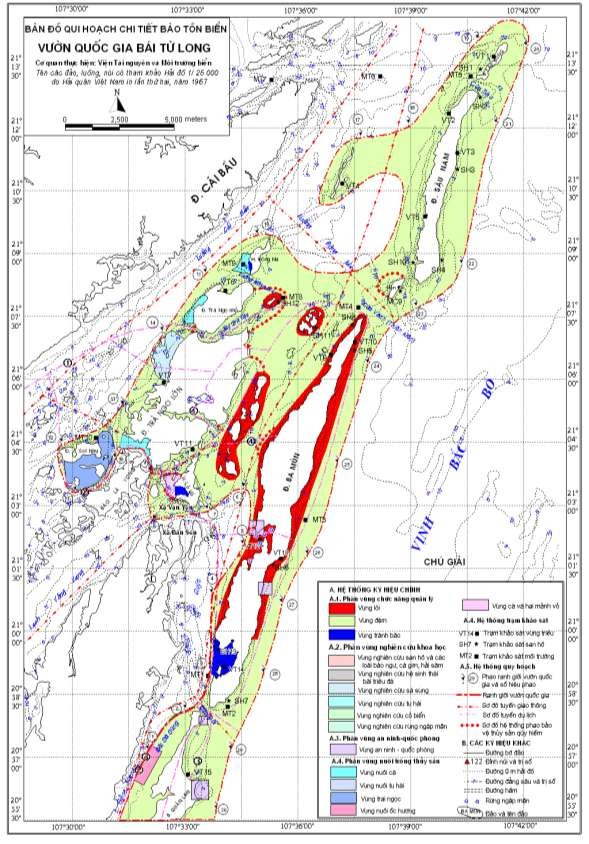
Figure 3: Detailed planning for marine conservation in Bai Tu Long National Park
CHAPTER 4: ORIENTATION - SOLUTIONS FOR DEVELOPING ECO-TOURISM IN BAI TU LONG NATIONAL PARK
4.1. Orientation for ecotourism development in Bai Tu Long National Park
4.1.1. Orientation on sustainable use of ecotourism resources
- Organizing tourism services in the National Park should be streamlined to ensure efficiency in conservation, with conservation as the overarching goal, and the general direction is to improve service quality. Within the Park's boundaries, only use services from one unit to be able to manage closely, avoiding negative impacts caused by tourism activities.
- The organization of tourism services in the National Park is in cooperation with agencies with high professional qualifications in tourism, aiming to ensure the quality and goals of high-quality eco-tourism.
- In addition to environmental education, it is necessary to delineate functional zones to conduct tourism activities while still ensuring natural conservation. According to the planning of Bai Tu Long National Park Management Board, the park is divided into the following two functional areas:
+ Strict protection zone regulations: Absolutely prohibit all impacts, exploitation, hunting, fishing of any species. Fishing is limited and controlled on the sea channel. No accommodation facilities or any residential activities are organized. Scientific activities, research, tourism, nature exploration according to specific registration programs, under the control of the National Park Management Board.
+ The ecological restoration zone stipulates: Enclosing and researching to supplement the habitat system components for some endemic marine species. Planting forests with native tree species, planting compartments, caring for and restoring natural forest vegetation. Exploiting resources but limited to a certain quantity, according to instructions and on the basis of semi-natural enclosing. Particularly, the Soi Nhu island area conducts forest planting, ornamental gardening according to the type of archaeological relics.
ancient, suitable for the purpose of the content of the ancient Vietnamese relics of the Paleolithic period, has the meaning of embellishing the value of this relic.
4.1.2. Orientation on tourism space
* Development of DLST products
Bai Tu Long National Park is an area with rich and diverse resources, both natural and human. Ecotourism in Bai Tu Long National Park is mainly summer - autumn, this is the season of resort tourism combined with spiritual tourism, learning about the culture of the islands. Scientific research, exploration and learning tourism activities can take place all year round. From the special resources of Bai Tu Long, there will be very "special" tourism products. Each group of programs will have its own name, expressing the meaning of the program:
Trekking tour: Opening the forest path Through the forest opening the way
Kayaking tour: Turn the waves Drifting with the waves
Relaxation, sea bathing: Thalassotherapy spa
Relaxation and sunbathing Including the following types of tourism:
- Biodiversity research tourism.
- Sightseeing tours on means of transport.
- Visit fishing villages such as mollusk exploitation - squid fishing.
- Outdoor travel to visit natural attractions.
- Resort travel combined with beach bathing.
- Spiritual tourism to visit historical sites combined with sightseeing.
- Comprehensive sightseeing tour.
The national park with its available natural conditions is an ideal place for organizing and implementing various types of ecotourism, meeting the demands of tourists. Therefore, developing in the direction of high-quality ecotourism will help develop tourism associated with conservation goals. Strengthen the implementation of all measures to protect the environment. Strictly control and promptly regulate the number of visitors, avoiding the situation of
environmental overload. High and flexible fees are enough to create attraction and at the same time are a measure to regulate the number of visitors in accordance with the capacity of the territory.
* Exploiting tourist routes and destinations
Because the National Park has a large area and high aesthetic and biodiversity value, it is one of the areas that need to be preserved in Vietnam, so tourism exploitation, especially ecotourism, is only allowed to be carried out in the buffer zone of the Park. Therefore, the tourist attractions are limited, the tourist routes are also under control, and cannot go deep into the center of the core zone without permission from the Park management board.
- Routes and tourist attractions in Bai Tu Long National Park departing from Cai Rong port:
+ Cai Rong - Tra Ngo island - Mang Khoi point - central tourist point - Soi Nhu cave point - Cai Rong.
+ Cai Rong – Ba Mun Island – central tourist destination – Soi Nhu cave – Cai Rong.
+ Cai Rong - Tra Ngo island - Ba Mun island - central tourist destination.
- Out of area routes:
+ Hanoi – Bai Tu Long National Park – Hanoi.
+ Hai Phong – Bai Tu Long National Park – Hai Phong.
+ Hanoi – Hai Phong – Bai Tu Long National Park – Hanoi.
Currently, tourism activities in Bai Tu Long National Park are only carried out at the central tourist spots and Soi Nhu cave. Therefore, when coming here, tourists want to visit a mountainous and island ecological area of the North with wild natural features and interact with the culture of the island fishing village. Based on the great potential for ecotourism, Bai Tu Long National Park needs to soon have a master plan connecting tourist spots in the area as well as other tourist areas in the province. In order to attract a large number of tourists as well as domestic and foreign investors, so that Bai Tu Long National Park is worthy of its position and potential.
4.1.3. Orientation on human resource training
This is a necessary task to meet the goals and requirements of ecotourism activities, especially in the early stages, when ecotourism implementation in Bai Tu Long National Park is still new and inexperienced. It is necessary to form a team of qualified staff in terms of professional skills and tourism activities, especially ecotourism.
- Training on tourism management: State management in tourism activities, policies of the Central and local governments related to ecotourism activities, experiences and knowledge in organizing and managing tourists.
- Training tour guides: Communication skills to serve customers, content of guiding tourists, content of environmental education and propaganda and conservation of natural landscapes, historical and cultural relics. Training in foreign languages, information technology as well as the ability to attract community participation in ecotourism activities.
- Send staff to attend tourism training courses and vocational schools. Then open crash courses to train local people to have tourism and eco-tourism qualifications, and to have knowledge of natural resources and local culture. Furthermore, staff in island communes must have a clear understanding of tourism and eco-tourism in order to have priority policies for local tourism development .
- Training on how to use specialized equipment for DLST such as: snorkels, diving goggles, first aid methods, and emergency care for injured people.
- Study and consult with other domestic and foreign tourism companies and national parks about their experiences in developing ecotourism. Promote training programs to improve professional qualifications such as training on biodiversity conservation and environmental protection.
4.1.4. Orientation on community participation
The respondents all agreed to let guests stay in their homes and planned to renovate their homes to welcome visitors. Bai Tu Long National Park is facing a very favorable opportunity to promote ecotourism development because it is
high support and consensus of local people. Orientation of community participation includes the following issues:
- Encourage community participation in all stages of organizing ecotourism activities: Guiding tourists to visit the forests of the National Park, providing accommodation and transportation services, contributing ideas to development programs for tourist routes and destinations...
- Establish good relationships with organizations in the core and buffer zones of the National Park such as: Farmers' Association, Women's Association, Veterans Association, Youth Union... to launch a movement to protect the natural resources of the National Park.
However, it is important to note that in encouraging community participation, it is important to ensure fairness in tourism exploitation benefits and avoid conflicts between groups of people and families.
4.1.5. Market orientation and tourism promotion
Bai Tu Long Bay is known to many domestic and foreign tourists, but few people know that in the area there is also a newly established National Park, with a diversity and abundance of species, and valuable forest and marine biological resources. To overcome this weakness, the National Park Management Board and competent authorities need to take positive and reasonable measures to inform tourists about the attractive features of the Park and the area:
* Need to continue building messages - Slogans
The common slogan for all 3 typical tourism program groups at Bai Tu Long National Park is:
Bai Tu Long – the bait of tuneful longshore
Bai Tu Long – The charm of a long sandy beach in harmony with the waves
In the definition of the English-English dictionary, Bai Tu Long is understood as “The bait of tuneful longshore”; In terms of the meaning of the phrase, it can be understood as “Bai Tu Long – The charm of a long sandy beach in harmony with the waves”. However, it can be seen that a special thing is right in the English definition of Bai Tu Long, it shows
right in the name Bai Tu Long. The change in language creates a sense of familiarity and wonder of the world as well as of Bai Tu Long itself.
In Vietnamese, “Bai Tu Long – the charm of long sandy beaches in harmony with the waves” may not fully describe the natural beauty and potential tourism resources that Bai Tu Long has. But in part, the slogan also speaks to the attraction of Bai Tu Long with long white sandy beaches and gentle blue sea. The saying may not make a strong impression on tourists and has an emotional tone, but it more or less arouses curiosity for tourists who want to learn about Bai Tu Long. However, if the message is broadcast on television, it needs to be combined with vivid and impressive images.
The person who delivers the message also needs to have a certain prestige with the public, because when a prestigious person speaks, he will attract more public attention than an ordinary, little-known person. Therefore, it is always necessary to pay attention to the source of the message. The majority of the public will be interested in and learn about the message that the message carrier has said. Tourists who are prestigious, highly knowledgeable, trustworthy, and popular will have a certain impact on other tourists.
* Enhance advertising methods with advertising information content
Introducing the National Park and Van Don island district in terms of characteristics, geographical boundaries, terrain, biodiversity levels, suitability for different types of tourism, detailed information on tourist routes of Bai Tu Long National Park in particular and Van Don area in general. Characteristics of culture, history, local dishes, achievements of local people in the resistance war to protect the fatherland as well as achievements in building and innovating the country.
4.2. Some solutions for tourism development
4.2.1. Solutions on organization of activities and management
- Develop a plan for training and developing human resources for tourism activities. Based on improving the quality and quantity of the staff system