
Noi always wants to give comments and perspectives on people considered the quintessence of the country. About Hanoians, you can be impressed with the articles of Hoang Hung and Le Phu Khai. Although they are not researchers, they are native Hanoians talking about native Hanoians: Hoang Hung has eight comments about Hanoians:
1. Value family life. A family is stable, orderly, with superiors and subordinates, with love and loyalty. It is difficult to sacrifice family for career and ideals.
2. Have a strong sense of personal interests and property rights, not easily violated by others, easily considered "petty", calculating, but also do not like to violate other people's interests, fair and clear ("love each other, fence it tightly").
3. Respect your personal freedom as well as that of others. In relationships outside the family such as relatives, friends, colleagues, neighbors... keep the limits at a reasonable level, "with a hint of jasmine". Avoid disputes and confrontations, "peace is precious". It is easy to be seen as "smart", easy to become indecisive, "harmonious with the whole village".
4. Be polite and tactful in social interactions, both in dress and speech. Hate vulgarity, ridiculousness, and blatantness. Afraid of "speaking bluntly". Just want to be a decent and reasonable person.
Maybe you are interested!
-
 Identify Rating Levels and Rating Scales
zt2i3t4l5ee
zt2a3gstourism,quan lan,quang ninh,ecology,ecotourism,minh chau,van don,geography,geographical basis,tourism development,science
zt2a3ge
zc2o3n4t5e6n7ts
of the islanders. Therefore, this indicator will be divided into two sub-indicators:
a1. Natural tourism attractiveness a2. Cultural tourism attractiveness
b. Tourist capacity
The two island communes in Quan Lan have different capacities to receive tourists. Minh Chau Commune is home to many standard hotels and resorts, attracting high-income domestic and international tourists. Meanwhile, Quan Lan Commune has many motels mainly built and operated by local people, so the scale and quality are not high, and will be suitable for ordinary tourists such as students.
c. Time of exploitation of Quan Lan Island Commune:
Quan Lan tourism is seasonal due to weather and climate conditions and festivals only take place on certain days of the year, specifically in spring. In Quan Lan commune, the period from April to June and from September to November is considered the best time to visit Quan Lan because the cultural tourism activities are mainly associated with festivals taking place during this time.
Minh Chau island commune:
Tourism exploitation time is all year round, because this is a place with a number of tourist attractions with diverse ecosystems such as Bai Tu Long National Park Research Center, Tram forest, Turtle Laying Beach, so besides coming to the beach for tourism and vacation in the summer, Minh Chau will attract research groups to come for tourism combined with research at other times of the year.
d. Sustainability
The sustainability of ecotourism sites in Quan Lan and Minh Chau communes depends on the sensitivity of the ecosystems to climate changes.
landscape. In general, these tourist destinations have a fairly high level of sustainability, because they are natural ecosystems, planned and protected. However, if a large number of tourists gather at certain times, it can exceed the carrying capacity and affect the sustainability of the environment (polluted beaches, damaged trees, animals moving away from their habitats, etc.), then the sustainability of the above ecosystems (natural ecosystems, human ecosystems) will also be affected and become less sustainable.
e. Location and accessibility
Both island communes have ports to take tourists to visit from Van Don wharf:
- Quan Lan – Van Don traffic route:
Phuc Thinh – Viet Anh high-speed boat and Quang Minh high-speed boat, depart at 8am and 2pm from Van Don to Quan Lan, and at 7am and 1pm from Quan Lan to Van Don. There are also wooden boats departing at 7am and 1pm.
- Van Don - Minh Chau traffic route:
Chung Huong high-speed train, Minh Chau train, morning 7:30 and afternoon 13:30 from Van Don to Minh Chau, morning 6:30 and afternoon 13:00 from Minh Chau to Van Don.
f. Infrastructure
Despite receiving investment attention, the issue of infrastructure and technical facilities for tourism on Quan Lan Island is still an issue that needs to be resolved because it has a direct impact on the implementation of ecotourism activities. The minimum conditions for serving tourists such as accommodation, electricity, water, communication, especially medical services, and security work need to be given top priority. Ecotourism spots in Minh Chau commune are assessed to have better infrastructure and technical facilities for tourism because there are quite complete and synchronous conditions for serving tourists, meeting many needs of domestic and foreign tourists.
3.2.1.4. Determine assessment levels and assessment scales
Corresponding to the levels of each criterion, the index is the score of those levels in the order of 4, 3, 2, 1 decreasing according to the standard of each level: very attractive (4), attractive (3), average (2), less attractive (1).
3.2.1.5. Determining the coefficients of the criteria
For the assessment of DLST in the two communes of Quan Lan and Minh Chau islands, the students added evaluation coefficients to show the importance of the criteria and indicators as follows:
Coefficient 3 with criteria: Attractiveness, Exploitation time. These are the 2 most important criteria for attracting tourists to tourism in general and eco-tourism in particular, so they have the highest coefficient.
Coefficient 2 with criteria: Capacity, Infrastructure, Location and accessibility . Because the assessment area is an island commune of Van Don district, the above criteria are selected by the author with appropriate coefficients at the average level.
Coefficient 1 with criteria: Sustainability. Quan Lan has natural and human-made ecotourism sites, with high biodiversity and little impact from local human factors. Most of the ecotourism sites are still wild, so they are highly sustainable.
3.2.1.6. Results of DLST assessment on Quan Lan island
a. Assessment of the potential for natural tourism development
For Minh Chau commune:
+ Natural tourism attractiveness is determined to be very attractive (4 points) and the most important coefficient (coefficient 3), so the score of the Attractiveness criterion is 4 x 3 = 12.
+ Capacity is determined as average (2 points) and the coefficient is quite important (coefficient 2), then the score of Capacity criterion is 2 x 2 = 4.
+ Exploitation time is long (4 points), the most important coefficient (coefficient 3) so the score of the Exploitation time criterion is 4 x 3 = 12.
+ Sustainability is determined as sustainable (4 points), the important coefficient is the average coefficient (coefficient 1), so the score of the Sustainability criterion is 4 x 1 = 4 points
+ Location and accessibility are determined to be quite favorable (2 points), the coefficient is quite important (coefficient 2), the criterion score is 2 x 2 = 4 points.
+ Infrastructure is assessed as good (3 points), the coefficient is quite important (coefficient 2), then the score of the Infrastructure criterion is 3 x 2 = 6 points.
The total score for evaluating DLST in Minh Chau commune according to 6 evaluation criteria is determined as: 12 + 4 + 12 + 4 + 4 + 6 = 42 points
Similar assessment for Quan Lan commune, we have the following table:
Table 3.3: Assessment of the potential for natural ecotourism development in Quan Lan and Minh Chau communes
Attractiveness of self-tourismof course
Capacity
Mining time
Sustainability
Location and accessibility
Infrastructure
Result
Point
DarkMulti
Point
DarkMulti
Point
DarkMulti
Point
DarkMulti
Point
DarkMulti
Point
DarkMulti
CommuneMinh Chau
12
12
4
8
12
12
4
4
4
8
6
8
42/52
Quan CommuneLan
6
12
6
8
9
12
4
4
4
8
4
8
33/52
b. Assessment of the potential for humanistic tourism development
For Quan Lan commune:
+ The attractiveness of human tourism is determined to be very attractive (4 points) and the most important coefficient (coefficient 3), so the score of the Attractiveness criterion is 4 x 3 = 12.
+ Capacity is determined to be large (3 points) and the coefficient is quite important (coefficient 2), then the score of the Capacity criterion is 3 x 2 = 6.
+ Mining time is average (3 points), the most important coefficient (coefficient 3) so the score of the Mining time criterion is 3 x 3 = 9.
+ Sustainability is determined as sustainable (4 points), the important coefficient is the average coefficient (coefficient 1), so the score of the Sustainability criterion is 4 x 1 = 4 points.
+ Location and accessibility are determined to be quite favorable (2 points), the coefficient is quite important (coefficient 2), the criterion score is 2 x 2 = 4 points.
+ Infrastructure is rated as average (2 points), the coefficient is quite important (coefficient 2), then the score of the Infrastructure criterion is 2 x 2 = 4 points.
The total score for evaluating DLST in Quan Lan commune according to 6 evaluation criteria is determined as: 12 + 6 + 6 + 4 + 4 + 4 = 36 points.
Similar assessment with Minh Chau commune we have the following table:
Table 3.4: Assessment of the potential for developing humanistic eco-tourism in Quan Lan and Minh Chau communes
Attractiveness of human tourismliterature
Capacity
Mining time
Sustainability
Location and accessibility
Infrastructure
Result
Point
DarkMulti
Point
DarkMulti
Point
DarkMulti
Point
DarkMulti
Point
DarkMulti
Point
DarkMulti
Quan CommuneLan
12
12
6
8
9
12
4
4
4
8
4
8
39/52
Minh CommuneChau
6
12
4
8
12
12
4
4
4
8
6
8
36/52
Basically, both Minh Chau and Quan Lan localities have quite favorable conditions for developing ecotourism. However, Quan Lan commune has more advantages to develop ecotourism in a humanistic direction, because this is an area with many famous historical relics such as Quan Lan Communal House, Quan Lan Pagoda, Temple worshiping the hero Tran Khanh Du, ... along with local festivals held annually such as the wind praying ceremony (March 15), Quan Lan festival (June 10-19); due to its location near the port and long exploitation time, the beaches in Quan Lan commune (especially Quan Lan beach) are no longer hygienic and clean to ensure the needs of tourists coming to relax and swim; this is also an area with many beautiful landscapes such as Got Beo wind pass, Ong Phong head, Voi Voi cave, but the ability to access these places is still very limited (dirt hill road, lots of gravel and rocks), especially during rainy and windy times; In addition, other natural resources such as mangrove forests and sea worms have not been really exploited for tourism purposes and ecotourism development. On the contrary, Minh Chau commune has more advantages in developing ecotourism in the direction of natural tourism, this is an area with diverse ecosystems such as at Rua De Beach, Bai Tu Long National Park Conservation Center...; Minh Chau beach is highly appreciated for its natural beauty and cleanliness, ranked in the top ten most beautiful beaches in Vietnam; Minh Chau commune is also home to Tram forest with a large area and a purity of up to 90%, suitable for building bridges through the forest (a very effective type of natural ecotourism currently applied by many countries) for tourists to sightsee, as well as for the purpose of studying and researching.
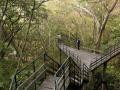
Figure 3.1: Thenmala Forest Bridge (India) Source: https://www.thenmalaecotourism.com/(August 21, 2019)
3.2.2. Using SWOT matrix to evaluate Quan Lan island tourism
General assessment of current tourism activities of Quan Lan island is shown through the following SWOT matrix:
Table 3.5: SWOT matrix evaluating tourism activities on Quan Lan island
Internal agent
Strengths- There is a lot of potential for tourism development, especially natural ecotourism and humanistic ecotourism.- The unskilled labor force is relatively abundant.- resource environmentunpolluted, still
Weaknesses- Poorly developed infrastructure, especially traffic routes to tourist destinations on the island.- The team of professional staff is still weak.- Tourism products in general
quite wild, originalintact
general and DLST in particularalone is monotonous.
External agents
Opportunity- Tourism is a key industry in the socio-economic development strategy of the province and Van Don economic zone.- Quan Lan was selected as a pilot area for eco-tourism development within the framework of the green growth project between Quang Ninh province and the Japanese organization JICA.- The flow of tourists and especially ecotourism in the world tends toincreasing
Challenge- Weather and climate change abnormally.- Competition in tourism products is increasingly fierce, especially with other localities in the province such as Ha Long, Mong Cai...- Awareness of tourists, especially domestic tourists, about ecotourism and nature conservation is not high.
Through summary analysis using SWOT matrix we see that:
To exploit strengths and take advantage of opportunities, it is necessary to:
- Diversify products and service types (build more tourism routes aimed at specific needs of tourists: experiential tourism immersed in nature, spiritual cultural tourism...)
- Effective exploitation of resources and differentiated products (natural resources and human resources)
div.maincontent .p { color: black; font-family:"Times New Roman", serif; font-style: normal; font-weight: normal; text-decoration: none; font-size: 14pt; margin:0pt; } div.maincontent p { color: black; font-family:"Times New Roman", serif; font-style: normal; font-weight: normal; text-decoration: none; font-size: 14pt; margin:0pt; } div.maincontent .s1 { color: black; font-family:"Times New Roman", serif; font-style: normal; font-weight: normal; text-decoration: none; font-size: 13pt; } div.maincontent .s2 { color: black; font-family:"Times New Roman", serif; font-style: normal; font-weight: normal; text-decoration: none; font-size: 13pt; } div.maincontent .s3 { color: #0D0D0D; font-family:"Times New Roman", serif; font-style: normal; font-weight: bold; text-decoration: none; font-size: 14pt; } div.maincontent .s4 { color: black; font-family:"Times New Roman", serif; font-style: italic; font-weight: normal; text-decoration: none; font-size: 14pt; } div.maincontent .s5 { color: black; font-family:"Times New Roman", serif; font-style: italic; font-weight: bold; text-decoration: none; font-size: 14pt; } div.maincontent .s6 { color: black; font-family:"Times New Roman", serif; font-style: italic; font-weight: normal; text-decoration: none; font-size: 14pt; vertical-align: -3pt; } div.maincontent .s7 { color: black; font-family:"Times New Roman", serif; font-style: italic; font-weight: normal; text-decoration: none; font-size: 14pt; vertical-align: -2pt; } div.maincontent .s8 { color: black; font-family:"Times New Roman", serif; font-style: italic; font-weight: normal; text-decoration: none; font-size: 14pt; vertical-align: -1pt; } div.maincontent .s9 { color: black; font-family:"Times New Roman", serif; font-style: normal; font-weight: normal; text-decoration: none; font-size: 14pt; } div.maincontent .s10 { color: black; font-family:"Times New Roman", serif; font-style: normal; font-weight: bold; text-decoration: none; font-size: 14pt; } div.maincontent .s11 { color: black; font-family:"Times New Roman", serif; font-style: normal; font-weight: normal; text-decoration: none; font-size: 14pt; } div.maincontent .s12 { color: black; font-family:Symbol, serif; font-style: normal; font-weight: normal; text-decoration: none; font-size: 14pt; } div.maincontent .s13 { color: black; font-family:Wingdings; font-style: normal; font-weight: normal; text-decoration: none; font-size: 14pt; } div.maincontent .s14 { color: black; font-family:"Times New Roman", serif; font-style: normal; font-weight: normal; text-decoration: none; font-size: 9pt; vertical-align: 5pt; } div.maincontent .s15 { color: black; font-family:"Times New Roman", serif; font-style: normal; font-weight: normal; text-decoration: none; font-size: 9pt; vertical-align: 5pt; } div.maincontent .s16 { color: black; font-family:Cambria, serif; font-style: italic; font-weight: normal; text-decoration: none; font-size: 14pt; } div.maincontent .s17 { color: #080808; font-family:"Times New Roman", serif; font-style: normal; font-weight: bold; text-decoration: none; font-size: 14pt; } div.maincontent .s18 { color: #080808; font-family:"Times New Roman", serif; font-style: normal; font-weight: normal; text-decoration: none; font-size: 14pt; } div.maincontent .s19 { color: black; font-family:"Times New Roman", serif; font-style: normal; font-weight: normal; text-decoration: none; font-size: 11pt; } div.maincontent .s20 { color: black; font-family:"Times New Roman", serif; font-style: normal; font-weight: normal; text-decoration: none; font-size: 10pt; } div.maincontent .s21 { color: black; font-family:"Times New Roman", serif; font-style: normal; font-weight: bold; text-decoration: none; font-size: 11pt; } div.maincontent .s22 { color: black; font-family:"Times New Roman", serif; font-style: normal; font-weight: normal; text-decoration: none; font-size: 11pt; } div.maincontent .s23 { color: black; font-family:"Times New Roman", serif; font-style: italic; font-weight: normal; text-decoration: none; font-size: 14pt; } div.maincontent .s24 { color: #212121; font-family:"Times New Roman", serif; font-style: normal; font-weight: normal; tex
Identify Rating Levels and Rating Scales
zt2i3t4l5ee
zt2a3gstourism,quan lan,quang ninh,ecology,ecotourism,minh chau,van don,geography,geographical basis,tourism development,science
zt2a3ge
zc2o3n4t5e6n7ts
of the islanders. Therefore, this indicator will be divided into two sub-indicators:
a1. Natural tourism attractiveness a2. Cultural tourism attractiveness
b. Tourist capacity
The two island communes in Quan Lan have different capacities to receive tourists. Minh Chau Commune is home to many standard hotels and resorts, attracting high-income domestic and international tourists. Meanwhile, Quan Lan Commune has many motels mainly built and operated by local people, so the scale and quality are not high, and will be suitable for ordinary tourists such as students.
c. Time of exploitation of Quan Lan Island Commune:
Quan Lan tourism is seasonal due to weather and climate conditions and festivals only take place on certain days of the year, specifically in spring. In Quan Lan commune, the period from April to June and from September to November is considered the best time to visit Quan Lan because the cultural tourism activities are mainly associated with festivals taking place during this time.
Minh Chau island commune:
Tourism exploitation time is all year round, because this is a place with a number of tourist attractions with diverse ecosystems such as Bai Tu Long National Park Research Center, Tram forest, Turtle Laying Beach, so besides coming to the beach for tourism and vacation in the summer, Minh Chau will attract research groups to come for tourism combined with research at other times of the year.
d. Sustainability
The sustainability of ecotourism sites in Quan Lan and Minh Chau communes depends on the sensitivity of the ecosystems to climate changes.
landscape. In general, these tourist destinations have a fairly high level of sustainability, because they are natural ecosystems, planned and protected. However, if a large number of tourists gather at certain times, it can exceed the carrying capacity and affect the sustainability of the environment (polluted beaches, damaged trees, animals moving away from their habitats, etc.), then the sustainability of the above ecosystems (natural ecosystems, human ecosystems) will also be affected and become less sustainable.
e. Location and accessibility
Both island communes have ports to take tourists to visit from Van Don wharf:
- Quan Lan – Van Don traffic route:
Phuc Thinh – Viet Anh high-speed boat and Quang Minh high-speed boat, depart at 8am and 2pm from Van Don to Quan Lan, and at 7am and 1pm from Quan Lan to Van Don. There are also wooden boats departing at 7am and 1pm.
- Van Don - Minh Chau traffic route:
Chung Huong high-speed train, Minh Chau train, morning 7:30 and afternoon 13:30 from Van Don to Minh Chau, morning 6:30 and afternoon 13:00 from Minh Chau to Van Don.
f. Infrastructure
Despite receiving investment attention, the issue of infrastructure and technical facilities for tourism on Quan Lan Island is still an issue that needs to be resolved because it has a direct impact on the implementation of ecotourism activities. The minimum conditions for serving tourists such as accommodation, electricity, water, communication, especially medical services, and security work need to be given top priority. Ecotourism spots in Minh Chau commune are assessed to have better infrastructure and technical facilities for tourism because there are quite complete and synchronous conditions for serving tourists, meeting many needs of domestic and foreign tourists.
3.2.1.4. Determine assessment levels and assessment scales
Corresponding to the levels of each criterion, the index is the score of those levels in the order of 4, 3, 2, 1 decreasing according to the standard of each level: very attractive (4), attractive (3), average (2), less attractive (1).
3.2.1.5. Determining the coefficients of the criteria
For the assessment of DLST in the two communes of Quan Lan and Minh Chau islands, the students added evaluation coefficients to show the importance of the criteria and indicators as follows:
Coefficient 3 with criteria: Attractiveness, Exploitation time. These are the 2 most important criteria for attracting tourists to tourism in general and eco-tourism in particular, so they have the highest coefficient.
Coefficient 2 with criteria: Capacity, Infrastructure, Location and accessibility . Because the assessment area is an island commune of Van Don district, the above criteria are selected by the author with appropriate coefficients at the average level.
Coefficient 1 with criteria: Sustainability. Quan Lan has natural and human-made ecotourism sites, with high biodiversity and little impact from local human factors. Most of the ecotourism sites are still wild, so they are highly sustainable.
3.2.1.6. Results of DLST assessment on Quan Lan island
a. Assessment of the potential for natural tourism development
For Minh Chau commune:
+ Natural tourism attractiveness is determined to be very attractive (4 points) and the most important coefficient (coefficient 3), so the score of the Attractiveness criterion is 4 x 3 = 12.
+ Capacity is determined as average (2 points) and the coefficient is quite important (coefficient 2), then the score of Capacity criterion is 2 x 2 = 4.
+ Exploitation time is long (4 points), the most important coefficient (coefficient 3) so the score of the Exploitation time criterion is 4 x 3 = 12.
+ Sustainability is determined as sustainable (4 points), the important coefficient is the average coefficient (coefficient 1), so the score of the Sustainability criterion is 4 x 1 = 4 points
+ Location and accessibility are determined to be quite favorable (2 points), the coefficient is quite important (coefficient 2), the criterion score is 2 x 2 = 4 points.
+ Infrastructure is assessed as good (3 points), the coefficient is quite important (coefficient 2), then the score of the Infrastructure criterion is 3 x 2 = 6 points.
The total score for evaluating DLST in Minh Chau commune according to 6 evaluation criteria is determined as: 12 + 4 + 12 + 4 + 4 + 6 = 42 points
Similar assessment for Quan Lan commune, we have the following table:
Table 3.3: Assessment of the potential for natural ecotourism development in Quan Lan and Minh Chau communes
Attractiveness of self-tourismof course
Capacity
Mining time
Sustainability
Location and accessibility
Infrastructure
Result
Point
DarkMulti
Point
DarkMulti
Point
DarkMulti
Point
DarkMulti
Point
DarkMulti
Point
DarkMulti
CommuneMinh Chau
12
12
4
8
12
12
4
4
4
8
6
8
42/52
Quan CommuneLan
6
12
6
8
9
12
4
4
4
8
4
8
33/52
b. Assessment of the potential for humanistic tourism development
For Quan Lan commune:
+ The attractiveness of human tourism is determined to be very attractive (4 points) and the most important coefficient (coefficient 3), so the score of the Attractiveness criterion is 4 x 3 = 12.
+ Capacity is determined to be large (3 points) and the coefficient is quite important (coefficient 2), then the score of the Capacity criterion is 3 x 2 = 6.
+ Mining time is average (3 points), the most important coefficient (coefficient 3) so the score of the Mining time criterion is 3 x 3 = 9.
+ Sustainability is determined as sustainable (4 points), the important coefficient is the average coefficient (coefficient 1), so the score of the Sustainability criterion is 4 x 1 = 4 points.
+ Location and accessibility are determined to be quite favorable (2 points), the coefficient is quite important (coefficient 2), the criterion score is 2 x 2 = 4 points.
+ Infrastructure is rated as average (2 points), the coefficient is quite important (coefficient 2), then the score of the Infrastructure criterion is 2 x 2 = 4 points.
The total score for evaluating DLST in Quan Lan commune according to 6 evaluation criteria is determined as: 12 + 6 + 6 + 4 + 4 + 4 = 36 points.
Similar assessment with Minh Chau commune we have the following table:
Table 3.4: Assessment of the potential for developing humanistic eco-tourism in Quan Lan and Minh Chau communes
Attractiveness of human tourismliterature
Capacity
Mining time
Sustainability
Location and accessibility
Infrastructure
Result
Point
DarkMulti
Point
DarkMulti
Point
DarkMulti
Point
DarkMulti
Point
DarkMulti
Point
DarkMulti
Quan CommuneLan
12
12
6
8
9
12
4
4
4
8
4
8
39/52
Minh CommuneChau
6
12
4
8
12
12
4
4
4
8
6
8
36/52
Basically, both Minh Chau and Quan Lan localities have quite favorable conditions for developing ecotourism. However, Quan Lan commune has more advantages to develop ecotourism in a humanistic direction, because this is an area with many famous historical relics such as Quan Lan Communal House, Quan Lan Pagoda, Temple worshiping the hero Tran Khanh Du, ... along with local festivals held annually such as the wind praying ceremony (March 15), Quan Lan festival (June 10-19); due to its location near the port and long exploitation time, the beaches in Quan Lan commune (especially Quan Lan beach) are no longer hygienic and clean to ensure the needs of tourists coming to relax and swim; this is also an area with many beautiful landscapes such as Got Beo wind pass, Ong Phong head, Voi Voi cave, but the ability to access these places is still very limited (dirt hill road, lots of gravel and rocks), especially during rainy and windy times; In addition, other natural resources such as mangrove forests and sea worms have not been really exploited for tourism purposes and ecotourism development. On the contrary, Minh Chau commune has more advantages in developing ecotourism in the direction of natural tourism, this is an area with diverse ecosystems such as at Rua De Beach, Bai Tu Long National Park Conservation Center...; Minh Chau beach is highly appreciated for its natural beauty and cleanliness, ranked in the top ten most beautiful beaches in Vietnam; Minh Chau commune is also home to Tram forest with a large area and a purity of up to 90%, suitable for building bridges through the forest (a very effective type of natural ecotourism currently applied by many countries) for tourists to sightsee, as well as for the purpose of studying and researching.
Figure 3.1: Thenmala Forest Bridge (India) Source: https://www.thenmalaecotourism.com/(August 21, 2019)
3.2.2. Using SWOT matrix to evaluate Quan Lan island tourism
General assessment of current tourism activities of Quan Lan island is shown through the following SWOT matrix:
Table 3.5: SWOT matrix evaluating tourism activities on Quan Lan island
Internal agent
Strengths- There is a lot of potential for tourism development, especially natural ecotourism and humanistic ecotourism.- The unskilled labor force is relatively abundant.- resource environmentunpolluted, still
Weaknesses- Poorly developed infrastructure, especially traffic routes to tourist destinations on the island.- The team of professional staff is still weak.- Tourism products in general
quite wild, originalintact
general and DLST in particularalone is monotonous.
External agents
Opportunity- Tourism is a key industry in the socio-economic development strategy of the province and Van Don economic zone.- Quan Lan was selected as a pilot area for eco-tourism development within the framework of the green growth project between Quang Ninh province and the Japanese organization JICA.- The flow of tourists and especially ecotourism in the world tends toincreasing
Challenge- Weather and climate change abnormally.- Competition in tourism products is increasingly fierce, especially with other localities in the province such as Ha Long, Mong Cai...- Awareness of tourists, especially domestic tourists, about ecotourism and nature conservation is not high.
Through summary analysis using SWOT matrix we see that:
To exploit strengths and take advantage of opportunities, it is necessary to:
- Diversify products and service types (build more tourism routes aimed at specific needs of tourists: experiential tourism immersed in nature, spiritual cultural tourism...)
- Effective exploitation of resources and differentiated products (natural resources and human resources)
div.maincontent .p { color: black; font-family:"Times New Roman", serif; font-style: normal; font-weight: normal; text-decoration: none; font-size: 14pt; margin:0pt; } div.maincontent p { color: black; font-family:"Times New Roman", serif; font-style: normal; font-weight: normal; text-decoration: none; font-size: 14pt; margin:0pt; } div.maincontent .s1 { color: black; font-family:"Times New Roman", serif; font-style: normal; font-weight: normal; text-decoration: none; font-size: 13pt; } div.maincontent .s2 { color: black; font-family:"Times New Roman", serif; font-style: normal; font-weight: normal; text-decoration: none; font-size: 13pt; } div.maincontent .s3 { color: #0D0D0D; font-family:"Times New Roman", serif; font-style: normal; font-weight: bold; text-decoration: none; font-size: 14pt; } div.maincontent .s4 { color: black; font-family:"Times New Roman", serif; font-style: italic; font-weight: normal; text-decoration: none; font-size: 14pt; } div.maincontent .s5 { color: black; font-family:"Times New Roman", serif; font-style: italic; font-weight: bold; text-decoration: none; font-size: 14pt; } div.maincontent .s6 { color: black; font-family:"Times New Roman", serif; font-style: italic; font-weight: normal; text-decoration: none; font-size: 14pt; vertical-align: -3pt; } div.maincontent .s7 { color: black; font-family:"Times New Roman", serif; font-style: italic; font-weight: normal; text-decoration: none; font-size: 14pt; vertical-align: -2pt; } div.maincontent .s8 { color: black; font-family:"Times New Roman", serif; font-style: italic; font-weight: normal; text-decoration: none; font-size: 14pt; vertical-align: -1pt; } div.maincontent .s9 { color: black; font-family:"Times New Roman", serif; font-style: normal; font-weight: normal; text-decoration: none; font-size: 14pt; } div.maincontent .s10 { color: black; font-family:"Times New Roman", serif; font-style: normal; font-weight: bold; text-decoration: none; font-size: 14pt; } div.maincontent .s11 { color: black; font-family:"Times New Roman", serif; font-style: normal; font-weight: normal; text-decoration: none; font-size: 14pt; } div.maincontent .s12 { color: black; font-family:Symbol, serif; font-style: normal; font-weight: normal; text-decoration: none; font-size: 14pt; } div.maincontent .s13 { color: black; font-family:Wingdings; font-style: normal; font-weight: normal; text-decoration: none; font-size: 14pt; } div.maincontent .s14 { color: black; font-family:"Times New Roman", serif; font-style: normal; font-weight: normal; text-decoration: none; font-size: 9pt; vertical-align: 5pt; } div.maincontent .s15 { color: black; font-family:"Times New Roman", serif; font-style: normal; font-weight: normal; text-decoration: none; font-size: 9pt; vertical-align: 5pt; } div.maincontent .s16 { color: black; font-family:Cambria, serif; font-style: italic; font-weight: normal; text-decoration: none; font-size: 14pt; } div.maincontent .s17 { color: #080808; font-family:"Times New Roman", serif; font-style: normal; font-weight: bold; text-decoration: none; font-size: 14pt; } div.maincontent .s18 { color: #080808; font-family:"Times New Roman", serif; font-style: normal; font-weight: normal; text-decoration: none; font-size: 14pt; } div.maincontent .s19 { color: black; font-family:"Times New Roman", serif; font-style: normal; font-weight: normal; text-decoration: none; font-size: 11pt; } div.maincontent .s20 { color: black; font-family:"Times New Roman", serif; font-style: normal; font-weight: normal; text-decoration: none; font-size: 10pt; } div.maincontent .s21 { color: black; font-family:"Times New Roman", serif; font-style: normal; font-weight: bold; text-decoration: none; font-size: 11pt; } div.maincontent .s22 { color: black; font-family:"Times New Roman", serif; font-style: normal; font-weight: normal; text-decoration: none; font-size: 11pt; } div.maincontent .s23 { color: black; font-family:"Times New Roman", serif; font-style: italic; font-weight: normal; text-decoration: none; font-size: 14pt; } div.maincontent .s24 { color: #212121; font-family:"Times New Roman", serif; font-style: normal; font-weight: normal; tex -
 Old stories of Hanoi in To Hoai's literature - 2
 -
 Provisions of the 2004 Vietnam Civil Procedure Code on civil case mediation and implementation practices at the People's Court of Hoai Duc district, Hanoi city - 2
 -
 Natural, Economic and Social Characteristics of Hanoi and Organizational Structure of People's Court in Hanoi City
 -
 Requirements for Improving the Efficiency of Law Enforcement in Resolving Marriage and Family Cases of the People's Court in Hanoi City
5. Don't just work hard but know how to enjoy life, and enjoy it in a lavish, elegant, and moderate way, without being infatuated, indulged, or "overindulged".
6. Respect existing traditions: family traditions, rules, social conventions. Be able to adapt to change but not proactively create change.

7. Respect honor and trust in relationships. Self-respect in work, professional conscience. Able to be patient to rise up or slowly restore lost rights and status. Does not like taking risks or succeeding at all costs.
8. Moderate, moderate. Moderate, neither extreme nor drastic. Reason is stronger than emotion. Logical thinking is stronger than intuition and instinct.
Le Phu Khai talked about the general characteristics of Hanoians: "Hanoians prefer integrity, purity, no "blood" of corruption, do not like to bully subordinates, Hanoians are elegant and polite. They are very gallant, elegant, intelligent, have sharp thinking, tight arguments, have clear and concise language, and are attractive to everyone. If in a peaceful era, Hanoians would be honest scientists, they have the qualities of "good subjects" in a court with an "enlightened king", a wise king. Hanoians do not have the will to progress, do not dare to do great things "opening mountains and breaking rocks" "moving walls and uprooting mountains" like Mr. Phan, Mr. Ho in the Lam River and Hong Mountain area. Hanoians live a closed life, taking care of their family and children, not infringing on anyone's property, relationships are give and take, not generous like people in the South. Hanoians live peacefully, elegantly, respect morality and justice, like to gnaw on loneliness and sadness of human life. Hanoians do not like noisy ostentation, hate the ridiculous and vulgar "rich people pretending to be rich". They live quietly, but are very stylish and playful.
And of course, in his work, To Hoai also presents a perspective on the people of Hanoi in the past and present. He sees the beauty of sophistication in behavior, the beauty in their speech, in their elegant hobbies, in their way of eating, dressing, thinking, and feeling. It is rare to see in To Hoai's Old Hanoi Stories portraits of workers with a typical character's fate or personality. Obviously, in To Hoai's mind when writing this work, he did not intend to build great characters, as the central characters of the era. People often see in it the silhouettes of ordinary, honest workers instead of the image of the upper class, the noble people of a luxurious Hanoi. But what is noteworthy is that in them, there still exudes the beauty of the soul of the common people, kind-hearted, and respectful of love.
That was Mrs. Viet, a poor peasant woman, with a bent back who worked as a seamstress, specializing in mending torn clothes for families in December when the cold came. “Mrs. Viet was really good at patching up the hems and shoulders. My aunt’s long brown dress was completely re-dressed without needing a single piece of new fabric. My clothes, the bottom of my pants, the knees, the elbows, wherever the tables and chairs were worn or torn, Mrs. Viet would patch them up. Mrs. Viet cut the front down to the hem, then sewed the flaps, filled in the buttons to make a strip, and took care of everything herself.” Mrs. Viet sat chewing betel “phôm phém” because she had no teeth left, but she was a treasure trove of stories, a treasure trove of rhymes that the children could not leave. Remembering those random rhymes, Tô Hoài had to exclaim: “Oh, the silly songs of the past, the wild, joyful wishes and mocking laughter”. As for her stories, not the story of Tam Cam, but she had a treasure trove of village stories from ancient times, remembering them for a long time, remembering them until you don't know how many stories: ghost stories, stories about the New Year, stories about selling chicken paintings, stories about uprising men, stories about people leaving the village, stories about broken dikes... It feels like this type of character is what To Hoai likes, because they are the ones who keep and pass on the legends about the village, making the souls of poor children in the countryside bathed in an atmosphere of imagination, illusion and reality. Mrs. Viet is like a character often seen in Gorky's stories, To Hoai himself also affirmed the influence of the stories Mrs. Viet told on his works: "Later, when I became a writer, in my imagination, the distant Nghia Do village from whence it came back to me, perhaps those images were piled up and printed from these old stories". That is the beauty in the souls of ordinary people that To Hoai is grateful for and remembers forever.
With traditional beauty deeply ingrained in their core, even in the scene of debt collection and debt begging, the true Hanoians of the past still showed emotional restraint and kindness. The debt collector (in The days before Tet ) became poorer each year, the year before he even used a handkerchief to spit when
cough, in the following years, using diary paper (coughing and spitting phlegm onto the paper, then folding it up and putting it in your pocket), the debt collector never had any significant assets for the debt collector to collect (“no money, no coin, nothing in the house worth half a cent, what are you going to do with each other”). Money should have made people treat each other rudely, especially when the debtor was “stubborn and daring”. Yet Mr. Phan still sat still, at the end of the meeting he only said one sentence, his voice seemed to be broken: “You promised… You promised me something definite, I will come back next January”. What was remarkable was their actions when the debt collector left. “My grandmother then took out a few coins from her belt and put them in his hand: I am giving you a tram ticket, you can hold it for now”. Many years later, the debt was still not collected, the debtor was already starving and suffering even more, the polite act of “giving you a tram ticket” was no longer there. In addition, the debt collector had to ask for…the fare. Yet, the judge only told my grandmother: “Please give me a train ticket.” Putting that behavior “in the middle of the late-year afternoon market scene, bustling, hurried, the market was like a robbery”, did To Hoai find it pitiful and heartbreaking? Yes, that scene was pitiful, but their heartbreakingness spoke of something very precious, when people were fighting each other for food and clothing, that small gesture still had the ability to warm people’s hearts, because it contained humanity.
2.2.2. Ordinary people with diverse personalities and fates
2.2.2.1. Discovering Hanoi people from the perspective of everyday reality, discovering diverse personalities...
To Hoai inherently has a humanistic sense of everyday people, he does not have the habit of looking at people with an idealized, one-sided view. Therefore, even when many writers of the same period fall into "simplicity, illustrationism", To Hoai's characters are still very real, that is, vivid, because they are viewed in a multi-dimensional way, revealing diverse personalities, as real as their everyday nature. In Old Stories of Hanoi , many classes of Hanoi are described, including the upper class and the lower class.
But it is worth noting that, whether describing the Western class, the Western bosses, the Western ladies, or the gangster bosses, the ticket inspectors on the tram, the scholar teaching in the countryside, the rickshaw pullers on the street, the crazy woman who lost her child... To Hoai's perspective still maintains objectivity, composure, and no bias. Each character, in their personality, is a mixture of good and bad, good and bad mixed together, and lively in everyday life, that is, diverse and memorable, and cannot be simply concluded in just one word.
Therefore, there was a scholar who, at a time when "the times were chaotic, when brushes and pencils were mixed up, many teachers taught both Chinese characters and national languages, both teaching children very majestically and "like a brooding hen spreading its wings" to cover a bottle of wine when the "proper" soldiers from the office came to catch them drinking.
He did not hesitate to point out the limitations of his class, who were very poor but “no one had ever worked for hire to earn a living”, simply because “people often pretend to look good, especially in Ke Cho land, the outside is often full of crab fat” [14,423]. He never painted a beautiful scene where the character appeared in a sterile atmosphere, but on the contrary, he always let the character appear in an everyday artistic space, sometimes “sloppy”, but because of that, it was lively and realistic. That was the scene of a classroom in the early summer room, where “a hen led a flock of chicks to scratch in the corner, running through chicken droppings, dust and garbage, but when the students came, how clean and orderly it was”. Even the mat spread out for the teacher to sit on was “a mat that had been spread out for a long time and had a big hole in the middle”. However, the slovenliness did not make people forget morality and etiquette, so the children, when spreading out the mat to invite the teacher to sit and teach, still "had to be considerate, even though the edge of the mat was torn and dirty, they had to look at the left and right sides, they could not spread the mat upside down" [14,424]. In the same way, the teacher appeared both neat and dignified in front of the students and "mischievous" in the case of escaping from the mandarin's arrest for alcohol. Even
In the neatness there is also the ordinary in the poverty that cannot be hidden: "The teacher wore worn-out shoes made of yellow buffalo hide; a square silk scarf tied around his hair bun; the long dark silk shirt was faded at both elbows, and had just been replaced with two brown cloth tubes" [14,424].
The world of characters in To Hoai, each person has a personality, many times, people see those people as too bland. I think, that is not a weakness of To Hoai. Because when looking at life with ordinary eyes, we must be honest and see that blandness is also one of the characteristics of human existence. How many people have lived and then disappeared in this life, having such a bland existence. However, haunting the reader does not always require typical personalities, blandness itself is also a way to haunt and evoke sorrow. It is worth mentioning that the blandness of To Hoai's character is also extremely diverse, it is a diversity arising from this very messy and messy life. Therefore, the reader encounters a grandmother who is both kind, rich in faith and seemingly lost her self-respect (miserable, because self-respect is sometimes too luxurious for the poor); an out-of-date Mr. Am who is both depressed and trying to show off, a crazy man "like a butterfly, but a ghost butterfly" because he is only used to asking for smiles from unmarried girls, a cold and imposing Mrs. Hai, a noisy crowd, who likes flattery and is cunning...
Nguyen Vinh Phuc, in the introduction to Old Stories of Hanoi, affirmed that: “The entire inner city of Hanoi is spread out in the book: Thirty-six streets, The tram, New Street, Hang Dao Street, Hang Ngang Street, Craft Street, Western Association, Mrs. Ba Ty, Night Calling, Rice at the Head of the Chair, Ao Dai, Mr. Hai Tay… Just mentioning a few of the titles like that makes us see more clearly the presence of the multi-faceted inner city” [14;5]. Indeed, Hang Dao Street with its disdainful Mrs. Hai, full of gold and jade on its necks and arms, Hang Ngang Street with its black Western men who worship pigs, fabric shop owners, mysterious but also passionate lives, New Street has
Van Bao pawnshop "skinned" the poor, there was also a human trafficking market, a brokerage market that hired - and bought - nannies, boys, servants, poor people who offered their bodies as servants to the world...
To Hoai did not romanticize the upper class people in the old society like Khai Hung, Nhat Linh, but he also did not caricature them to the point of horror like Vu Trong Phung, or exaggerate them with a humorous tone like Nguyen Cong Hoan. He also described the lower class people with love, but To Hoai whispered rather than loudly like Nguyen Hong, was humorous rather than mischievous like Nam Cao, was subtle rather than rustic like Ngo Tat To, and did not mention major social upheavals like Nguyen Cong Hoan, Nguyen Hong... he only told daily stories in the ordinary lives of ordinary people, not exaggerated or embellished to attract readers, not exaggerated or forced for sensational effect. His laughter was also gentle, leisurely, not venomous.
2.2.2.2. The many fates
In Hanoi and Hanoi , To Hoai wrote: "The strange thing is that I can never fully explain the ups and downs of human lives in the past century in our country." The old story of Hanoi is the miserable fate of human lives drifting between light and darkness.
Only by living truly and deeply penetrating the life of old Hanoi can one know the humiliation of the urban poor from concrete images: “At that time, it was very hard to maintain a bicycle. The bicycle had to be attached with a piece of iron or copper engraved with the owner’s name, house number, and street name. There was no fine. If you pressed each other to fine, the bicycle looked so ugly, it was an eyesore, so you were fined”. At that time, “thatched houses were everywhere, the earthen walls were bumpy like crawling turtles”, at night “the sound of cuckoos calling at dusk was heartbreaking”. The writer touched on the miserable life of old Hanoi that few writers talked about. In the past, people were busy looking for food, barely making a living, having to
crawling far away, all the way to Dat Do, Dau Tieng in the "rapid rapids" never to return, a lot": Many details, seemingly recorded accidentally but bitter from the bottom of the heart, "the Westerners ate and sat around, while the rest of the people dug up duckweed to find bugs, lived on each other's backs, supported each other... Desperately looking for work to get through the day and night". In a very personal and profound perspective, writer To Hoai especially successfully portrayed a part of the life of the old Hanoians, from woodworkers, shoemakers, dusty and miserable, hungry, from the scene of the inner villages immersed in the scene of Westerners illegally catching alcohol leading to the tragedy of poor people having to "go to prison for alcohol so that their wives and children at home have someone to take care of", to the scene of the watchtowers, the hawker gates, Mo market, Ha Dong buffalo market wharf, Cau Go, Cau Cuoi..." full of disabled people, beggars, everywhere "the sad sobbing sound resounds on the lips of the poor begging for food" is the heartbreaking image of debt collection, the creditor and the debtor are both poor, so poor that every year on the days before Tet, the creditor comes to collect, they can only look at each other, every year is the same and ends with the promise "next January... next January" and then never being able to pay the debt. These very real images of life are interwoven together, creating the ups and downs of a hard-working life.
It is also a Hanoi with miserable lives - Lives of "climbing tamarinds, climbing crocodiles". To Hoai has thoroughly explained the popular saying "climbing tamarinds, climbing crocodiles" which is only commonly understood as a curse for children who wander around the city. But even in his explanation, there is also a taste of sadness about the lives of poor children who steal tamarinds and crocodiles "to sell for a living every day, sometimes to feed their whole family". Those children are always chased by the boss's team, just need the boss to threaten to shoot and "suddenly, from the tree, as fast as a falling areca tree, one, two, three or four children. Each child is naked, shivering, skinny, naked like a dry branch broken down. The pants, two pant legs of each child are tied around the neck, tightly packed with tamarinds up to the waist". Modern Hanoians may not be too unfamiliar with the sight of children wandering around the city, but these