
positive educational environment; so that teachers have more motivation and need to effectively apply self-developed knowledge into practical work.
Content and implementation:
The management staff organizes for English teachers to present the implementation of the self-improvement plan. This is meaningful as a public report, on the other hand, it is also for members of the school to evaluate, give comments and learn. Implementation form:
Individuals report their self-improvement plans, professional groups or subject groups exchange, give comments, learn and gain experience based on the assessment of the current status of qualifications and achieved capacity, individuals complete and promote their self-improvement plans; effectively apply them in teaching work.
The professional team and the school acknowledge, adjust or promptly encourage and reward both materially and spiritually.
Maybe you are interested!
-
 Managing teacher evaluation activities according to professional standards in secondary schools in Quang Yen town, Quang Ninh province - 14
 -
 Managing teacher evaluation activities according to professional standards in secondary schools in Quang Yen town, Quang Ninh province - 1
 -
 Managing primary school teacher training activities according to professional standards in Thuong Tin district, Hanoi city - 14
 -
 Managing English teacher training activities in high schools according to the competency development approach - 17
 -
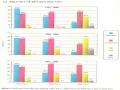 Evaluation of Measures for Managing Organization and Coordination of Educational Forces Inside and Outside the School.
The organization of activities for English teachers to present their self-improvement implementation needs to be adjusted and updated regularly in a positive direction. Note:
Ask English teachers to express their opinions after reporting on the implementation of the self-improvement plan...

Require English teachers to write reports, presentations, action plans, or write initiatives and experiences from what they have learned through the self-training process...
Apply the knowledge and skills acquired during self-training to perform tasks;
The work of encouraging, training and developing English teachers will not be highly effective if it is not combined with measures to care for their material and spiritual lives and create a favorable working environment for them. Reality shows that, in the process of managing an organization, if we only pay attention to setting out principles, legal regulations, documents... requiring teachers to implement without paying attention to the thoughts, aspirations, conditions, necessary environment, and benefits that the organization brings to each individual, it will lead to the consequences that each individual's activities are only formal, coping, lacking a sense of responsibility, not dedicated to the work, to the goals of the organization. Therefore, management staff
Schools need to pay attention to the material and spiritual life of workers because that is the foundation for efficiency and common benefits for the collective. Building a healthy educational environment, creating favorable conditions for English teachers to actively work, conduct scientific research, and self-improve their professional skills. Caring for the material and spiritual life, creating a positive and favorable working environment for English teachers is an important issue for management levels and needs to achieve the following basic goals:
Improve income and living standards of English teachers;
Work in a healthy, favorable educational environment, with a united, humane and cultural atmosphere;
Excellent English teachers with many contributions receive timely and adequate benefits;
Receive attention from school leaders, creating conditions to promote abilities and strengths;
Guaranteed democratic rights.
In summary, managers need to pay attention to material and spiritual life, prioritize salary regime, labor division, and treatment regime for self-trained English teachers who achieve good results and apply them effectively in actual work; pay attention to teachers' circumstances and provide timely encouragement; consider teachers with achievements in work, training and upgrading, and promote them if they have the right aspirations and abilities; request competent authorities to decide to reward individuals with achievements or handle violations during the self-training process.
3.4. Managing the arrangement, evaluation and use of English teachers
The arrangement, organization, evaluation and use of English teachers properly, appropriately, effectively, and meeting the requirements of the unit in each stage is an important issue and needs to be carefully considered.
To do well in training and development, it is necessary to combine it with the arrangement, planning and use of English teachers in each stage of school development.
Managing the arrangement, evaluation and use of English teachers helps to select and use the right people for the right job.
3.4.1. Planning and arranging the use of English teachers Purpose and meaning:
Building a plan to arrange and use English teachers will help managers be proactive, forecast the development of the English teaching staff and have long-term goals and plans in particular.
Besides, English teachers can indirectly build specific goals and plans for themselves to meet personal aspirations and organizational requirements.
Content and implementation:
The work of training, fostering, evaluating and using English teachers has not yet received attention from educational institutions and has not yet been specifically planned, especially the plan for developing capacity and career for English teachers has not been given attention and taken into account.
The plan for training and fostering English teachers must be linked to planning, originate from planning and only be effective when linked to use. Avoid the situation of training and fostering but not arranging, using or arranging, using not in accordance with the initial training and fostering goals to avoid waste as well as reduce the motivation of teachers to strive to improve. Based on the general planning, staff standards, professional standards, management staff need to develop policies and plans to regularly organize implementation with many appropriate methods to train, foster and use the team of English teachers effectively and appropriately.
Therefore, to increase the effectiveness of this work, it is necessary to periodically evaluate and summarize the implementation of training and development plans in each stage. It is necessary to develop criteria to systematically evaluate the specific results of a training program and the activities of training programs. Evaluate positive changes in behavior thanks to the training program. Evaluate the effectiveness and quality of training and draw experiences in training and development.
All activities must be planned, well-prepared, and accompanied by appropriate policies and mechanisms to ensure success. Managers need to develop an annual plan for training, arranging, and using English teachers, combined with the establishment of accompanying policies, specifically:
Regarding recruitment and use of English teachers: there should be mechanisms and policies for screening, eliminating, and promoting... based on awareness and positivity when participating in training and self-training to improve capacity and professional qualifications.
Regarding the assessment, classification and use of English teachers: Based on the system of professional standards and a unified teacher assessment process, classify and accurately assess teachers, in order to help English teachers have a basis for developing annual self-improvement plans and actively participate in training courses; at the same time, helping education and training management levels have a basis for screening, improving the capacity and quality of English teachers, arranging classes, assigning responsibilities for management support, enjoying priority and incentive and reward policies, etc.
Regarding the assignment of responsibilities in the management of English teacher training: it is necessary to develop a system and regulations for managing cadres and teachers participating in or related to management and training activities, especially regulations on the responsibilities and obligations of English teachers in training and self-training activities to develop capacity, professional expertise and apply training knowledge in teaching work.
Regarding investment policy for English teacher training activities: in the annual budget estimate for schools' professional activities, there must be a source of funding for English teacher training, including school-level, cluster-school, and inter-school workshops, inviting experts, preparing documents, and means to support training activities, etc.
Regarding the regime: Develop a regime for relevant components and participants in training activities; stipulate the obligation to conduct on-site self-training during the school year, convert it into the number of hours to have more basis for evaluating and classifying teachers. Encourage teachers to actively train and apply it effectively in their work through reward regimes, early salary review or enjoy privileges in the following school year...
The process of developing a plan for arranging and using English teachers needs to meet the following requirements:
Firstly, the plan for arranging and using English teachers needs to specify the resolutions, guidelines and policies of the Party and State, the Ministry and the Department of Education and Training.
Second, the plan for arranging and using English teachers after training must meet the training goals, in line with the school's development strategy and overall planning.
Third, planning the arrangement and use of English teachers helps managers shape the results and development of English teaching and learning activities in schools, minimizing possible limitations and risks.
Fourth, planning and using English teachers must ensure effective use of school resources and funds.
Fifth, through the plan for arranging and using English teachers, each teacher will review and redefine their own capacity, training plan and career development in the future.
3. 4.2. Evaluation and use of English teachers based on competence Purpose and meaning:
To properly evaluate and employ English teachers based on their abilities, managers need to understand the purpose of competency assessment:
Improve the ability to perform assigned tasks and provide feedback to English teachers to know the level of work performance, thereby taking measures to improve and perfect work performance.
Competency assessment provides school administrators with data indicating the potential for advancement and career development of English teachers.
Help English teachers adjust and correct limitations in the teaching and working process, and at the same time serve as a basis for encouraging and motivating them to continue to develop and promote their capacity.
Competency assessment helps managers have a basis for forecasting future human resources, thereby having a plan to train and develop the school's resources.
Through assessing the English teachers' abilities, managers can adjust the arrangement of teachers to suit their jobs, discover their hidden potentials and help them develop.
Correctly assessing and employing English teachers based on their abilities plays an important role in ensuring that the right people are recruited and employed, and the right jobs are assigned based on job position standards.
Evaluate and use English teachers effectively; recruit the right people for the right jobs; pay salaries or allowances based on dedication and work efficiency; meet the unit's educational career development strategy.
Content and implementation:
Innovation in evaluating and using English teachers based on their abilities and job performance will help managers shift from training and development in the direction of upgrading academic degrees, equipping and updating knowledge and skills to training and development in order to meet performance standards, complete jobs according to their abilities and in the direction of long-term career development.
Competency assessment has certain differences compared to the assessment of results and work efficiency. Assessment of achievements and work results is linked to the achieved output products, while competency assessment focuses on the process, efforts, and potential of teachers' work. From the results of competency assessment activities, managers develop plans for using English teachers and developing individuals, based on teachers' wishes and to promote their strengths, overcome their weaknesses in capacity, and improve their work productivity in accordance with the school's human resource plans. To do that, it is necessary to have specific methods and tools for measuring capacity combined with issued teacher standards and competency standards to accurately, objectively, and realistically assess the capacity of English teachers in schools, such as: Assessment interviews; Scoring method; Ranking method; Paired comparison method; Recording and archiving method; Observation assessment method of attitudes and behaviors; Management by objectives method; Work standard method; Synthetic method…
When evaluating the competence of English teachers, managers should avoid some mistakes and pay attention to the following:
Unclear standards.
Bias error: relying only on a certain outstanding characteristic of the teacher.
Over-rating bias: Some administrators tend to rate all teachers either too high or too low.
Average tendency: teacher evaluations are generally toward the average level.
Personal prejudice.
Managers must make teachers believe in fairness. In teacher evaluation, it is necessary to be democratic, allowing teachers to participate in this process. On the basis of correct and objective evaluation, implement salary and disciplinary policies promptly and strictly to encourage and motivate teachers, pay attention to training, fostering and developing them to ensure that the school has a high-quality English teaching staff to meet the school's development strategy in the future.
Competency-based utilization emphasizes the use of certain competencies and skills to meet specific job requirements; focuses on the quality of work achieved through the performer's competencies. Therefore, when utilizing competency-based utilization, work results are evaluated by the performance of English teachers at the facility, through skills and the level of practical application. On that basis, managers can plan, change to develop English teachers or rearrange them to suit their competencies, plan additional training to equip missing competencies or improve weak competencies compared to current position requirements or compared to future English teacher development plans.
3.4.3. Use according to the wishes of English teachers Purpose, meaning:
After training courses, training results are one of the bases for managers to evaluate and arrange English teachers in schools. The use of English teachers' wishes may need to be considered when training results and actual application in teaching among teachers fluctuate, differ, and are difficult to manage.
Content and implementation:
Teachers, more than anyone else, are the ones who understand their own level, their strengths and weaknesses, what they want and how they plan to develop their careers. Therefore, referring to the use of teachers' wishes with criticism, analysis and careful research will be a form of self-assessment and planning for future career development plans.
Below, we suggest steps to learn and use according to the wishes of English teachers:
Step 1: The head of the professional group or the deputy head of the professional group will directly inform the English teacher that there will be a direct discussion about the teacher's training plan, self-training and long-term career development. The teacher may be asked more about his/her personal plans or given a choice of major according to his/her wishes and in accordance with his/her ability and dedication.
Step 2: Ask English teachers to think and prepare to share, write or present their wishes to participate in any work or professional activities in the unit that are suitable to their circumstances, conditions and abilities or if they need any other support or resources.
Step 3: The manager takes notes and, if possible, immediately responds to the thoughts, opinions, and wishes of the English teacher based on providing counter-arguments, analysis, and convincing arguments, avoiding conflicts and unconstructive arguments. The manager can refer to and learn more about the goals, plans for training, and future career development of the English teacher.
Step 4: Teachers' wishes are saved and recorded, then discussed, considered and agreed upon by the school leadership or subject council.
Step 5: Save the minutes and content of the teacher's wishes to manage, monitor and evaluate the level of work completion according to the wishes of the English teacher in order to arrange, change and develop the capacity and career of the English teacher in the future.
The above steps can be suggestions for managers in researching and using teachers according to their wishes. In the process of implementation, related issues may arise, managers need to be proactive, flexible in researching, accepting and arranging appropriately according to the conditions and circumstances of each educational institution.
3.4.4. Use according to the structure and recommendations of the department. Purpose and meaning:
The professional team is a component part of the organization and management system of a high school. In addition to its function of assisting the principal in managing professional activities related to teaching and learning, the professional team directly manages teachers in the team according to prescribed tasks. Therefore, the use of teachers