
TT
Comment | Graph representation | |
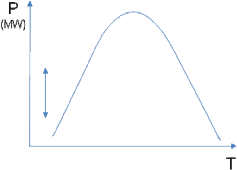
6 | Method 6: flexible load, changing the amount of electricity supplied at different load times Efficiency: flexibility between load and power supply, grid stability and safety Conflict: Load is diverse in terms of power usage efficiency; underdeveloped electricity market; source structure is unbalanced between hydropower, thermal power and highly dependent on season Status: Investing in digital power measurement systems, unifying operations load and power management |
|
Maybe you are interested!
-

 Choosing Parameters and Assumptions for Valuation
 -
 Some Key Solutions to Promote Positive Changes and Limit Negative Changes of Socialist Production Relations in
 -
 Some Theories on Industrial Development in Key Economic Regions
 -
 Growth Parameters of Plants in Strip No. 1 Growth Measurement Chart of Seedlings in Strip No. 1
 -
 Key Solutions to Strengthen the Leadership of Hai Phong City Party Committee in Security and Order Work by 2030
In addition to the above information, Circular 08 also reflects the unreasonable financial cost chain from the production stage to the transmission and distribution stage to consumers. Since EVN currently has a monopoly on the transmission and distribution stage, Box 4.2 below only presents two groups of subjects: Electricity producers and EVN (transmission and distribution), specifically as follows: Box 4.2 Analysis of the financial cost chain from the production stage to consumers
Financial costs in the value chain
(average electricity price: 1,058 VND)
Ratio weight | Usage needs | |
Of manufacturers (hydroelectric + thermal power...): 710 VND | 67% | Cover costs and meet benefits Expected profit of manufacturer |
EVN's: 1058 VND - 710 VND = 348 VND: - Market operating costs, benefits of transmission and distribution chains - Reinvestment and upgrading of transmission network and distribution? | 33% | - Covers O&M costs - Not enough for upgrading and renovating the power grid to expand service scope and reduce TTĐN on the grid |
Based on the analysis results in boxes 4.1 and 4.2, the author comes to the following two conclusions:
a) Firstly, to resolve the contradiction between electricity prices and attracting investment in the industry, in addition to improving management and operation capacity, the most effective method in terms of the market today is that electricity prices need to reflect the nature of the supply-demand relationship through proper implementation of the roadmap set out in Power Plan VI.
b) Second, to solve the problem of funding for upgrading and expanding the distribution grid system, the current price is not enough to compensate. Therefore, the financial electricity price is under pressure to increase to compensate for the reinvestment costs of the electricity industry, specifically EVN. Investment funding for EVN from the state budget may be ineffective due to policy distortions or poor management, while finding funding sources outside the state budget is facing difficulties due to low electricity prices.
4.2 2 5 Key assumptions and parameters of the baseline model
4.1.3 Main operating parameters
Number of operating hours per year: 6500 hours/year Annual commercial electricity output: 292.5 million kW Annual commercial slag output: 69,540 tons Annual fuel consumption:
- Coal: 190 thousand tons (Quang Ninh: 133 thousand tons; Bo Ha: 57 thousand tons)
- FO oil: 488 tons Limestone: 7500 tons
4.1.4 Currency used, inflation and calculation basis
a) Currency used
The currency used in the analysis is USD, the cash flows are VND transferred.
converted to USD at the official 2010 exchange rate of 18,500/USD20 .
b) Inflation, depreciation
Project financial analysis does not take into account inflation and currency devaluation (both foreign and domestic currencies). The impact of these factors will be considered in the risk analysis section21 .
c) Calculation plan
The calculation basis is the first year of capital investment (2010) and is considered the first year.
4.1.5 Capital and cost of capital
a) Capital
Total investment capital before VAT is 60,991,000 USD, of which:
- Investor: 20%, equal to 12,089,000 USD
- Long-term loan: 80%, equal to 48,902,000 USD
b) Cost of debt, cost of equity and Wacc
- According to EIC's point of view:
USD loan interest rate: Rd = 8%/year Equity return: Re = 7.5%/year
Wacc = ExRe/(D+E) + D*Rd/(D+E) = 7.5%x20% + 8%*80% = 7.9%
- In the author's opinion: EIC's views on cost of equity and weighted average cost of capital are not consistent due to the following two arguments:
1, The cost of equity Re = 7.5%, lower than the loan interest rate = 8% is unreasonable, if so, EIC should invest 100% of the main capital in the project.
2, The weighted average cost of capital Wacc does not take into account the impact of tax leverage.
- Author's suggestion:
1. The domestic USD loan interest rate of 8% is higher than the current average, while EIC is in the group encouraged for investment. Therefore, the reasonable interest rate is the current market average of 7.5% per year, which the author will apply in the basic model.
2. Regarding the required rate of return on equity: in theory, the minimum rate of return on equity must be equal to or higher than the interest rate on debt. EIC's proposal of a rate of return on equity of 7.5% is unreasonable based on EIC's capital scarcity situation.
Therefore, the author proposes a Re = 8%, equivalent to the EOCK economic discount rate commonly applied in Vietnam today.
3, The Wacc rate of return applied in the basic model is calculated by the direct method based on the weighted average cost of capital sources and adding the impact of tax leverage.
4. In addition, the author recommends referring to Wacc calculated according to the CAPM model with reference to US market data to roughly assess the required rate of return of FDI investors in the thermal power generation sector.
4.1.6 Accounts Receivable (AR), Accounts Payable (AP)
The structure of the project's annual AR and AP payments is as follows:
- Receivables: 16% of annual revenue from electricity and coal slag sales.
- Payables: Input fuel: 8% of annual fuel cost O&M: 8% of annual O&M cost
4.1.7 Working capital for initial operations
Initial working capital is $400,000.
4.1.8 Fuel, O&M, tax and depreciation costs
a) Fuel coal
Based on the calculation results in Appendix E.5, the price of coal supplied to the project is as follows: Table 4.1 Determining the price of coal supplied to the project
TT
Coal type | Proportion (%) | Quantity (thousand tons) | Price before VAT (USD/ton) | |
1 | 6b Quang Ninh coal | 70% | 133 | 26.22 |
2 | Bo Ha Coal | 30% | 57 | 17.84 |
Weighted average price | 23.7 |
- Price of 6b Quang Ninh coal dust according to Circular 08/2010/TT-BCT with subsidized price equal to 68% of average FOB price in 2009 22 .
22 Appendix E.5 Determination of price conversion factors and economic prices
- The price of Bo Ha coal dust is applied according to the average selling price before VAT of Bac Giang Coal and Minerals Joint Stock Company at the time of calculation.
b) FO oil
Based on the price announcement on March 1, 2010 of Vietnam National Petroleum Corporation and current petroleum transportation costs, the FO oil price at the project is 660 USD/ton23 .
c) Limestone
The limestone supplied to the project is locally produced and traded at competitive market prices of USD 6/tonne24 .
d) Operation and O&M management
Annual O&M costs are equal to 2.5% of total investment in construction and equipment25 , of which:
- Labor cost: 50% of O&M cost
- Maintenance and repair costs: 50% of O&M costs
e) Depreciation and allocation of initial investment costs
- Depreciation: Fixed assets formed from investment are depreciated using the straight-line method over 20 years for both equipment and construction.
- Investment cost allocation: Initial investment costs excluding fixed assets will be allocated to operating costs in the first 10 years of the project.
f) Tax
Income tax applicable to the project is calculated according to current regulations as follows26 :
0% | ||
- The next 9 years: | 12.5% | |
- Remaining years: | 25% | |
VAT: Electricity: 5%; | Coal slag: | 10% |
23 Appendix E.5 Determination of conversion factor and economic price
24 Appendix E.5 Determination of conversion factor and economic price
25 Ministry of Industry (2007). Decision 2014/QD-BCN on temporary regulations on the contents of calculation and analysis of financial economics.
Investment and price framework for electricity purchase and sale of power source projects.
26 Government (2008). Decree 124/2008/ND-CP dated December 11, 2008, detailing the implementation of a number of articles of the Law on Corporate Income Tax.
4.1.9 Project revenue
The project's annual revenue is equal to the total revenue from selling electricity and coal ash, specifically:
a) Revenue from electricity sales
The popular pricing method, widely applied in developed countries, is pricing according to marginal cost MC. In this case, the electricity price (P) is equal to marginal cost (MC) and equal to marginal revenue MR (P = MC = MR). This mechanism will ensure the requirements for efficient allocation of resources even in the electricity industry, ensuring fairness and stability in the long term with the greatest net benefit compared to other pricing methods 27 .
EIC is a new manufacturer with an average electricity output accounting for only 0.24% of the total system output in 201328. Therefore, the project's output is small and not enough to impact the market price mechanism. The determination of the marginal cost MC is only for financial efficiency comparison purposes. The electricity selling price of EIC to EVN will depend on the current prices on the market. The summary of current reference prices is presented in Table 4.2 below: Table 4.2 Reference to current electricity buying and selling prices
Source
Electricity price | Note | ||
cents/kWh | VND/kWh | ||
Price specified in the Decision 2014/QD-BCN dated June 13, 2007 | Dry season: 3.5-5 Rainy season: 3.5-4.4 | Application in appraisal power projects | |
Peak price in dry season 2009-2010 | 6 | 1110 | Reference: EVN buys from Cao Ngan, Son Dong29 |
Price by agreement between EVN and the project Mong Duong BOT project | 5,036 | 932 | Deal done BOT early 201030 |
Based on the above information, the average electricity price applied throughout the EIC project life cycle (Baseline Model) is selected as 5 cents/kWh because it satisfies the following conditions:
Glenn P.Jenkins & Arnold C.Harberger (1995). A handbook of cost-benefit analysis for investment decisions , Harvard Institute for International Development.
Based on BMI forecast (Q1-2009), Vietnam Power Report 2007-2013 , Vietnam's total electricity output in 2013 is 120 billion kWh, EIC's electricity output is expected to be 292.5 million kWh, the proportion of EIC's electricity output/total system is 0.24%
29 Source: Author's own investigation
30 http://www.baodautu.vn/portal/public/vir/. Investment Newspaper - Ministry of Planning and Investment
- Within the scope of regulations by Decision 2014/QD-BCN.
- Equivalent to the price according to the PPA agreement between EVN and BOT Mong Duong.
- About 17% lower than electricity price during peak season 2009-2010.
b) Coal slag
Based on the market survey results at Ha Bac Fertilizer and Chemical Company, the long-term average selling price of coal slag on the market is 1.08 USD/ton (20,000 VND). EIC's annual commercial slag output is 69,540 tons, calculated based on the proportion of quantity and type of coal used, ash ratio in coal, and coal combustion technology31 .
4.3 2 6 Financial analysis from the perspective of total investment
Through analyzing the project's potential financial flows to determine the project's financial feasibility, borrowing needs, and debt repayment capacity.
4.3.1 Calculation results
a) Calculation results with discount rate calculated by direct method (Wacc1) This method is applied to EIC projects based on the argument that domestic investors often ignore factors of national risk.
Table 4.3 Calculation results from total investment perspective
TT
Target | Symbol | Unit of measure | Result | |
1 | Discount factor | Wacc1 | % | 7.88% |
2 | Internal rate of return | IRR | % | 10.43% |
3 | Net present value | NPV(TIP) | USD | 13,500,457 |
4 | Benefit/cost ratio | B/C | Proportion | 1.12 |
5 | Discounted payback period | T hv | Year | 13 |
6 | Average production cost | P | cents/kWh | 3.53 |
7 | Debt service safety ratio | DSCR | Proportion | 1.68 |
Detailed results are presented in Appendix F.1
b) Calculation results with discount rate calculated by indirect method (Wacc2)
31 Appendix E.5 Determination of conversion factor and economic price
Since Vietnam is calling for foreign investment in the electricity production sector, the Project considers the possible case when investors use the discount rate calculated by the CAPM 32 method.based on the characteristics of the US market33 . The results are presented in the following
Table 4.4 Calculation results from the perspective of total investment (FDI project)
TT
Target | Symbol | Unit of measure | Result | |
1 | Project discount factor | Wacc2 | % | 12.32% |
2 | Project net present value | NPV(TIP) | USD | -6,815,520 |
4.3.2 Conclusion
The analysis results of the basic model show that with the discount rate Wacc1=7.88%, the Project is financially feasible from the perspective of total investment with IRR = 10.43%, average DSCR equal to 1.68 and the financial balance analysis results show that the project is completely capable of repaying the principal and interest.
The results in Table 4.4 show that, with Vietnam's market conditions, attracting foreign investment in the coal-fired thermal power production sector is difficult because the required rate of return of foreign sponsors takes into account Vietnam's risk factors.
4.4 2 7 Financial analysis from the investor's perspective
Consider the effectiveness that the project brings to the investor, focusing on financial efficiency indicators, expected income, and the project's debt repayment capacity.
4.4.1 Calculation results
a) Calculation results with discount rate calculated by direct method (r e1 )
Table 4.5 Calculation results from the investor's perspective
TT
Target | Symbol | Unit | Result | |
1 | Required rate of return | r e1 | % | 8.18% |
2 | Internal rate of return | IRR | % | 15.3% |
3 | Net present value | NPV(EIP) | USD | 13,157,136 |
32 Appendix F.13 Cost of Capital by CAPM