
Thuy Van 42.43% 54.26% 3.31% | ||
Korea China Vietnam | ||
Maybe you are interested!
-
 Solutions for tourism development in Tien Lang - 10
zt2i3t4l5ee
zt2a3gstourism, tourism development
zt2a3ge
zc2o3n4t5e6n7ts
- District People's Committees and authorities of communes with tourist attractions should support, promote, and provide necessary information to people, helping them improve their knowledge about tourism. Raise tourism awareness for local people.
*
* *
Due to limited knowledge and research time, the thesis inevitably has shortcomings. Therefore, I look forward to receiving guidance from teachers, experts as well as your comments to make the thesis more complete.
Chapter III Conclusion
Through the issues presented in Chapter II, we can come to some conclusions:
Based on the strengths of available tourism resources, the types of tourism in Tien Lang that need to be promoted in the coming time are sightseeing and resort tourism, discovery tourism, weekend tourism. To improve the quality and diversify tourism products, Tien Lang district needs to combine with local cultural tourism resources, at the same time combine with surrounding areas, build rich tourism products. The strengths of Tien Lang tourism are eco-tourism and cultural tourism, so developing Tien Lang tourism must always go hand in hand with restoring and preserving types of cultural tourism resources. Some necessary measures to support and improve the efficiency of exploiting tourism resources in Tien Lang are: strengthening the construction of technical facilities and labor force serving tourism, actively promoting and advertising tourism, and expanding forms of capital mobilization for tourism development.
CONCLUDE
I Conclusion
1. Based on the results achieved within the framework of the thesis's needs, some basic conclusions can be drawn as follows:
Tien Lang is a locality with great potential for tourism development. The relatively abundant cultural tourism resources and ecological tourism resources have great appeal to tourists. Based on this potential, Tien Lang can build a unique tourism industry that is competitive enough with other localities within Hai Phong city and neighboring areas.
In recent years, the exploitation of the advantages of resources to develop tourism and build tourist routes in Tien Lang has not been commensurate with the available potential. In terms of quantity, many resource objects have not been brought into the purpose of tourism development. In terms of time, the regular service time has not been extended to attract more visitors. Infrastructure and technical facilities are still weak. The labor force is still thin and weak in terms of expertise. Tourism programs and routes have not been organized properly, the exploitation content is still monotonous, so it has not attracted many visitors. Although resources have not been mobilized much for tourism development, they are facing the risk of destruction and degradation.
2. Based on the results of investigation, analysis, synthesis, evaluation and selective absorption of research results of related topics, the thesis has proposed a number of necessary solutions to improve the efficiency of exploiting tourism resources in Tien Lang such as: promoting the restoration and conservation of tourism resources, focusing on investment and key exploitation of ecotourism resources, strengthening the construction of infrastructure and tourism workforce. Expanding forms of capital mobilization. In addition, the thesis has built a number of tourist routes of Hai Phong in which Tien Lang tourism resources play an important role.
Exploiting Tien Lang tourism resources for tourism development is currently facing many difficulties. The above measures, if applied synchronously, will likely bring new prospects for the local tourism industry, contributing to making Tien Lang tourism an important economic sector in the district's economic structure.
REFERENCES
1. Nhuan Ha, Trinh Minh Hien, Tran Phuong, Hai Phong - Historical and cultural relics, Hai Phong Publishing House, 1993
2. Hai Phong City History Council, Hai Phong Gazetteer, Hai Phong Publishing House, 1990.
3. Hai Phong City History Council, History of Tien Lang District Party Committee, Hai Phong Publishing House, 1990.
4. Hai Phong City History Council, University of Social Sciences and Humanities, VNU, Hai Phong Place Names Encyclopedia, Hai Phong Publishing House. 2001.
5. Law on Cultural Heritage and documents guiding its implementation, National Political Publishing House, Hanoi, 2003.
6. Tran Duc Thanh, Lecture on Tourism Geography, Faculty of Tourism, University of Social Sciences and Humanities, VNU, 2006
7. Hai Phong Center for Social Sciences and Humanities, Some typical cultural heritages of Hai Phong, Hai Phong Publishing House, 2001
8. Nguyen Ngoc Thao (editor-in-chief, Tourism Geography, Hai Phong Publishing House, two volumes (2001-2002)
9. Nguyen Minh Tue and group of authors, Hai Phong Tourism Geography, Ho Chi Minh City Publishing House, 1997.
10. Nguyen Thanh Son, Hai Phong Tourism Territory Organization, Associate Doctoral Thesis in Geological Geography, Hanoi, 1996.
11. Decision No. 2033/QD – UB on detailed planning of Tien Lang town, Hai Phong city until 2020.
12. Department of Culture, Information, Hai Phong Museum, Hai Phong relics
- National ranked scenic spot, Hai Phong Publishing House, 2005. 13. Tien Lang District People's Committee, Economic Development Planning -
Culture - Society of Tien Lang district to 2010.
14.Website www.HaiPhong.gov.vn
APPENDIX 1
List of national ranked monuments
STT
Name of the monument
Number, year of decisiondetermine
Location
1
Gam Temple
938 VH/QĐ04/08/1992
Cam Khe Village- Toan Thang commune
2
Doc Hau Temple
9381 VH/QĐ04/08/1992
Doc Hau Village –Toan Thang commune
3
Cuu Doi Communal House
3207 VH/QĐDecember 30, 1991
Zone II of townTien Lang
4
Ha Dai Temple
938 VH/QĐ04/08/1992
Ha Dai Village –Tien Thanh commune
APPENDIX II
STT
Name of the monument
Number, year of decision
Location
1
Phu Ke Pagoda Temple
178/QD-UBJanuary 28, 2005
Zone 1 - townTien Lang
2
Trung Lang Temple
178/QD-UBJanuary 28, 2005
Zone 4 – townTien Lang
3
Bao Khanh Pagoda
1900/QD-UBAugust 24, 2006
Nam Tu Village -Kien Thiet commune
4
Bach Da Pagoda
1792/QD-UB11/11/2002
Hung Thang Commune
5
Ngoc Dong Temple
177/QD-UBNovember 27, 2005
Tien Thanh Commune
6
Tomb of Minister TSNhu Van Lan
2848/QD-UBSeptember 19, 2003
Nam Tu Village -Kien Thiet commune
7
Canh Son Stone Temple
2160/QD-UBSeptember 19, 2003
Van Doi Commune –Doan Lap
8
Meiji Temple
2259/QD-UBSeptember 19, 2002
Toan Thang Commune
9
Tien Doi Noi Temple
477/QD-UBSeptember 19, 2005
Doan Lap Commune
10
Tu Doi Temple
177/QD-UBJanuary 28, 2005
Doan Lap Commune
11
Duyen Lao Temple
177/QD-UBJanuary 28, 2005
Tien Minh Commune
12
Dinh Xuan Uc Pagoda
177/QD-UBJanuary 28, 2005
Bac Hung Commune
13
Chu Khe Pagoda
177/QD-UBJanuary 28, 2005
Hung Thang Commune
14
Dong Dinh
2848/QD-UBNovember 21, 2002
Vinh Quang Commune
15
President's Memorial HouseTon Duc Thang
177/QD-UBJanuary 28, 2005
NT Quy Cao
Ha Dai Temple
Ben Vua Temple
Tien Lang hot spring
div.maincontent .p { color: black; font-family:"Times New Roman", serif; font-style: normal; font-weight: normal; text-decoration: none; font-size: 14pt; margin:0pt; } div.maincontent p { color: black; font-family:"Times New Roman", serif; font-style: normal; font-weight: normal; text-decoration: none; font-size: 14pt; margin:0pt; } div.maincontent .s1 { color: black; font-family:"Times New Roman", serif; font-style: normal; font-weight: normal; font-size: 16pt; } div.maincontent .s2 { color: black; font-family:"Times New Roman", serif; font-style: italic; font-weight: bold; text-decoration: none; font-size: 14pt; } div.maincontent .s3 { color: black; font-family:"Times New Roman", serif; font-style: italic; font-weight: normal; text-decoration: none; font-size: 14pt; } div.maincontent .s4 { color: black; font-family:"Times New Roman", serif; font-style: normal; font-weight: normal; font-size: 14pt; } div.maincontent .s5 { color: black; font-family:"Times New Roman", serif; font-style: normal; font-weight: bold; font-size: 14pt; } div.maincontent .s6 { color: black; font-family:"Times New Roman", serif; font-style: normal; font-weight: normal; text-decoration: none; font-size: 14pt; } div.maincontent .s7 { color: black; font-family:"Times New Roman", serif; font-style: normal; font-weight: bold; text-decoration: none; font-size: 14pt; } div.maincontent .s8 { color: black; font-family:"Times New Roman", serif; font-style: normal; font-weight: normal; text-decoration: none; font-size: 9pt; vertical-align: 6pt; } div.maincontent .s9 { color: black; font-family:"Times New Roman", serif; font-style: normal; font-weight: bold; text-decoration: none; font-size: 12pt; } div.maincontent .s11 { color: black; font-family:"Times New Roman", serif; font-style: normal; font-weight: normal; tex
Solutions for tourism development in Tien Lang - 10
zt2i3t4l5ee
zt2a3gstourism, tourism development
zt2a3ge
zc2o3n4t5e6n7ts
- District People's Committees and authorities of communes with tourist attractions should support, promote, and provide necessary information to people, helping them improve their knowledge about tourism. Raise tourism awareness for local people.
*
* *
Due to limited knowledge and research time, the thesis inevitably has shortcomings. Therefore, I look forward to receiving guidance from teachers, experts as well as your comments to make the thesis more complete.
Chapter III Conclusion
Through the issues presented in Chapter II, we can come to some conclusions:
Based on the strengths of available tourism resources, the types of tourism in Tien Lang that need to be promoted in the coming time are sightseeing and resort tourism, discovery tourism, weekend tourism. To improve the quality and diversify tourism products, Tien Lang district needs to combine with local cultural tourism resources, at the same time combine with surrounding areas, build rich tourism products. The strengths of Tien Lang tourism are eco-tourism and cultural tourism, so developing Tien Lang tourism must always go hand in hand with restoring and preserving types of cultural tourism resources. Some necessary measures to support and improve the efficiency of exploiting tourism resources in Tien Lang are: strengthening the construction of technical facilities and labor force serving tourism, actively promoting and advertising tourism, and expanding forms of capital mobilization for tourism development.
CONCLUDE
I Conclusion
1. Based on the results achieved within the framework of the thesis's needs, some basic conclusions can be drawn as follows:
Tien Lang is a locality with great potential for tourism development. The relatively abundant cultural tourism resources and ecological tourism resources have great appeal to tourists. Based on this potential, Tien Lang can build a unique tourism industry that is competitive enough with other localities within Hai Phong city and neighboring areas.
In recent years, the exploitation of the advantages of resources to develop tourism and build tourist routes in Tien Lang has not been commensurate with the available potential. In terms of quantity, many resource objects have not been brought into the purpose of tourism development. In terms of time, the regular service time has not been extended to attract more visitors. Infrastructure and technical facilities are still weak. The labor force is still thin and weak in terms of expertise. Tourism programs and routes have not been organized properly, the exploitation content is still monotonous, so it has not attracted many visitors. Although resources have not been mobilized much for tourism development, they are facing the risk of destruction and degradation.
2. Based on the results of investigation, analysis, synthesis, evaluation and selective absorption of research results of related topics, the thesis has proposed a number of necessary solutions to improve the efficiency of exploiting tourism resources in Tien Lang such as: promoting the restoration and conservation of tourism resources, focusing on investment and key exploitation of ecotourism resources, strengthening the construction of infrastructure and tourism workforce. Expanding forms of capital mobilization. In addition, the thesis has built a number of tourist routes of Hai Phong in which Tien Lang tourism resources play an important role.
Exploiting Tien Lang tourism resources for tourism development is currently facing many difficulties. The above measures, if applied synchronously, will likely bring new prospects for the local tourism industry, contributing to making Tien Lang tourism an important economic sector in the district's economic structure.
REFERENCES
1. Nhuan Ha, Trinh Minh Hien, Tran Phuong, Hai Phong - Historical and cultural relics, Hai Phong Publishing House, 1993
2. Hai Phong City History Council, Hai Phong Gazetteer, Hai Phong Publishing House, 1990.
3. Hai Phong City History Council, History of Tien Lang District Party Committee, Hai Phong Publishing House, 1990.
4. Hai Phong City History Council, University of Social Sciences and Humanities, VNU, Hai Phong Place Names Encyclopedia, Hai Phong Publishing House. 2001.
5. Law on Cultural Heritage and documents guiding its implementation, National Political Publishing House, Hanoi, 2003.
6. Tran Duc Thanh, Lecture on Tourism Geography, Faculty of Tourism, University of Social Sciences and Humanities, VNU, 2006
7. Hai Phong Center for Social Sciences and Humanities, Some typical cultural heritages of Hai Phong, Hai Phong Publishing House, 2001
8. Nguyen Ngoc Thao (editor-in-chief, Tourism Geography, Hai Phong Publishing House, two volumes (2001-2002)
9. Nguyen Minh Tue and group of authors, Hai Phong Tourism Geography, Ho Chi Minh City Publishing House, 1997.
10. Nguyen Thanh Son, Hai Phong Tourism Territory Organization, Associate Doctoral Thesis in Geological Geography, Hanoi, 1996.
11. Decision No. 2033/QD – UB on detailed planning of Tien Lang town, Hai Phong city until 2020.
12. Department of Culture, Information, Hai Phong Museum, Hai Phong relics
- National ranked scenic spot, Hai Phong Publishing House, 2005. 13. Tien Lang District People's Committee, Economic Development Planning -
Culture - Society of Tien Lang district to 2010.
14.Website www.HaiPhong.gov.vn
APPENDIX 1
List of national ranked monuments
STT
Name of the monument
Number, year of decisiondetermine
Location
1
Gam Temple
938 VH/QĐ04/08/1992
Cam Khe Village- Toan Thang commune
2
Doc Hau Temple
9381 VH/QĐ04/08/1992
Doc Hau Village –Toan Thang commune
3
Cuu Doi Communal House
3207 VH/QĐDecember 30, 1991
Zone II of townTien Lang
4
Ha Dai Temple
938 VH/QĐ04/08/1992
Ha Dai Village –Tien Thanh commune
APPENDIX II
STT
Name of the monument
Number, year of decision
Location
1
Phu Ke Pagoda Temple
178/QD-UBJanuary 28, 2005
Zone 1 - townTien Lang
2
Trung Lang Temple
178/QD-UBJanuary 28, 2005
Zone 4 – townTien Lang
3
Bao Khanh Pagoda
1900/QD-UBAugust 24, 2006
Nam Tu Village -Kien Thiet commune
4
Bach Da Pagoda
1792/QD-UB11/11/2002
Hung Thang Commune
5
Ngoc Dong Temple
177/QD-UBNovember 27, 2005
Tien Thanh Commune
6
Tomb of Minister TSNhu Van Lan
2848/QD-UBSeptember 19, 2003
Nam Tu Village -Kien Thiet commune
7
Canh Son Stone Temple
2160/QD-UBSeptember 19, 2003
Van Doi Commune –Doan Lap
8
Meiji Temple
2259/QD-UBSeptember 19, 2002
Toan Thang Commune
9
Tien Doi Noi Temple
477/QD-UBSeptember 19, 2005
Doan Lap Commune
10
Tu Doi Temple
177/QD-UBJanuary 28, 2005
Doan Lap Commune
11
Duyen Lao Temple
177/QD-UBJanuary 28, 2005
Tien Minh Commune
12
Dinh Xuan Uc Pagoda
177/QD-UBJanuary 28, 2005
Bac Hung Commune
13
Chu Khe Pagoda
177/QD-UBJanuary 28, 2005
Hung Thang Commune
14
Dong Dinh
2848/QD-UBNovember 21, 2002
Vinh Quang Commune
15
President's Memorial HouseTon Duc Thang
177/QD-UBJanuary 28, 2005
NT Quy Cao
Ha Dai Temple
Ben Vua Temple
Tien Lang hot spring
div.maincontent .p { color: black; font-family:"Times New Roman", serif; font-style: normal; font-weight: normal; text-decoration: none; font-size: 14pt; margin:0pt; } div.maincontent p { color: black; font-family:"Times New Roman", serif; font-style: normal; font-weight: normal; text-decoration: none; font-size: 14pt; margin:0pt; } div.maincontent .s1 { color: black; font-family:"Times New Roman", serif; font-style: normal; font-weight: normal; font-size: 16pt; } div.maincontent .s2 { color: black; font-family:"Times New Roman", serif; font-style: italic; font-weight: bold; text-decoration: none; font-size: 14pt; } div.maincontent .s3 { color: black; font-family:"Times New Roman", serif; font-style: italic; font-weight: normal; text-decoration: none; font-size: 14pt; } div.maincontent .s4 { color: black; font-family:"Times New Roman", serif; font-style: normal; font-weight: normal; font-size: 14pt; } div.maincontent .s5 { color: black; font-family:"Times New Roman", serif; font-style: normal; font-weight: bold; font-size: 14pt; } div.maincontent .s6 { color: black; font-family:"Times New Roman", serif; font-style: normal; font-weight: normal; text-decoration: none; font-size: 14pt; } div.maincontent .s7 { color: black; font-family:"Times New Roman", serif; font-style: normal; font-weight: bold; text-decoration: none; font-size: 14pt; } div.maincontent .s8 { color: black; font-family:"Times New Roman", serif; font-style: normal; font-weight: normal; text-decoration: none; font-size: 9pt; vertical-align: 6pt; } div.maincontent .s9 { color: black; font-family:"Times New Roman", serif; font-style: normal; font-weight: bold; text-decoration: none; font-size: 12pt; } div.maincontent .s11 { color: black; font-family:"Times New Roman", serif; font-style: normal; font-weight: normal; tex -
 Increasing capital mobilization from individual customers of commercial banks - Case study of Vietnam Joint Stock Commercial Bank for Investment and Development, Phu Tho Branch - 1
 -
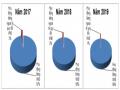 Structure of Capital Mobilization from Individual Customers by Currency
 -
 Solutions to enhance capital mobilization at Dong Trieu Branch of Investment and Development Bank - Quang Ninh - 4
 -
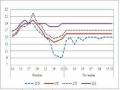 Developments in Capital Mobilization, Investment, Deposits, and Lending on the Interbank Market Up to September 2012

Phu Ha | ||||
21.26% | ||||
8.14% | 59.83% | |||
9.41% | ||||
1.37% | ||||
Korea Japan | America Vietnam | China | ||
Trung Ha
100%
Vietnam
60.9 | Cam Khe 3% | 24.77% 14.30% | ||
Korea | China | Vietnam | ||
1.12% White Crane 98.88% | ||
China Vietnam | ||
2.16% | Dong Lang | ||
23.60% | |||
56.98% | |||
17.35% | |||
Korea | China | Singapore Vietnam | |
Figure 3.9. Investment capital structure by region
(Source: Summary report of Phu Tho Provincial Management Board 2015-2020)
Through table 3.13 and figure 3.9, we can see that the investment projects in the industrial parks of Phu Tho province are mostly domestic investment projects (96 projects, equivalent to 52.46% of the total number of investment attraction projects), foreign investors account for 47.54% of the total number of investment projects. Among the foreign investors in the industrial parks in Phu Tho province, investors from Korea account for the highest proportion with a total of 69 investment projects (37.7%) corresponding to a registered capital of 880.06 million USD, mainly concentrated in Thuy Van Industrial Park and Phu Ha Industrial Park, Dong Lang Industrial Park. In addition, there are 14 investment projects from China (equivalent to
with an investment capital of 10.42 million USD), 02 investment projects from Japan (29.5 million USD), 01 investment project from the US (4.95 million USD) and 01 investment project from Singapore (17 million USD). Thus, apart from Korea and China, other countries investing in industrial parks in Phu Tho province are very few.
Regarding the structure of investment capital by territory in each industrial zone, Phu Ha Industrial Zone and Dong Lang Industrial Zone attract diverse capital sources from countries, of which Phu Ha Industrial Zone attracts investment projects from countries such as Korea, China, the US, Japan and Vietnam. Dong Lang Industrial Zone also attracts investment capital from 3 countries outside of Vietnam: Korea, China and Singapore. The remaining industrial zones mostly have capital from Korea and China. In particular, although Trung Ha Industrial Zone was established in 2015, it is still 100% domestic investment capital, Bach Hac Industrial Zone also has only one FDI investment project from China.
Although the local government and the Management Board of Industrial Zones have been very active in promoting investment to diversify investment in many forms such as compiling investment promotion documents (investment information brochures) in 5 languages: Vietnamese, English, Korean, Japanese, Chinese; actively participating in investment promotion conferences of the province, domestically and abroad such as: Australia, New Zealand, Korea, China, ... but basically still have not really attracted diverse FDI capital sources from different regions and territories.
e. Investment capital structure by project sector and industry
The structure of investment capital in industrial parks in Phu Tho province by field and industry, investment projects mainly focus on industries such as: mechanics, assembly, electronics, construction materials, textiles, footwear, food, pharmaceuticals, agricultural and forestry processing, supporting industries, etc. Especially in recent years, the capital structure has tended to shift from attracting projects in the fields of mechanics, assembly and construction materials to electronics. Because this is a field that uses modern technology, attracting capital with a large proportion, in line with the policy of the province's investment promotion fields, which is to selectively attract production and business projects.
The business is focusing on environmentally friendly projects, with high technology content, using less energy, resources and increasing the quality of human resources. However, besides that, industries such as textiles and footwear are industries that require a lot of labor and cause environmental pollution. Although their proportion has also tended to decrease, on average they still account for about 9.85% of the total capital attracted for investment.
Table 3.14. Investment capital structure by attractive sectors and industries
Unit: %
Field, profession
Year 2015 | Year 2016 | Year 2017 | Year 2018 | Year 2019 | Year 2020 | |
Mechanical and assembly industry | 29.28 | 28.25 | 30.05 | 29.38 | 25.78 | 28.45 |
Electrical and electronic industry | 24.58 | 23.06 | 23.86 | 22.76 | 25.48 | 32.18 |
Construction Materials Industry | 25.32 | 28.47 | 29.54 | 31.24 | 27.56 | 25.00 |
Textile and footwear industry | 10.08 | 12.58 | 8.56 | 10.28 | 9.09 | 8.48 |
Other industries | 10.74 | 7.64 | 7.99 | 6.34 | 12.09 | 5.89 |
Total | 100.00 | 100.00 | 100.00 | 100.00 | 100.00 | 100.00 |
(Source: Summary report of Phu Tho Provincial Management Board 2015-2020)
3.2. 3. 3. Evaluation of factors affecting investment decisions in industrial parks
To mobilize investment capital for industrial zones, in addition to capital from the State budget for infrastructure, it is also necessary to mobilize capital from investment projects to develop production and business in industrial zones. Therefore, considering the factors affecting the investment decisions of investors in industrial zones is the basis for proposing appropriate capital mobilization methods.
a. Influencing factors
Based on the theoretical basis, the studies on factors affecting investment capital mobilization (input mobilization) in chapter 1, the thesis serves as a basis to determine the factors affecting the investment decisions of investors in production and business in industrial zones (how to use output capital). The thesis builds a research model with factors affecting the investment decisions in industrial zones in Phu Tho province including:
Investment infrastructure (CSHT): Enterprises decide to invest when the infrastructure of industrial parks meets requirements such as convenient transportation, can take advantage of infrastructure connections with neighboring provinces to avoid duplication and waste of resources. Hard infrastructure must be synchronized with the quality of accompanying services (electricity, water, road maintenance, ...) In addition, logistic infrastructure such as customs, domestic customs clearance, and transportation are also very important, because this is the bloodline system that helps businesses operate smoothly.
Investment incentive policies (UDDT): businesses are interested in a clear and transparent policy system that is quickly implemented, attractive investment incentive policies on land rent, corporate income tax, support for site clearance costs, and preferential credit for investment in building infrastructure in industrial parks.
Living and working environment (MTS ) : businesses are interested in the responsiveness of the system, education, health care, living environment, community cultural activities, entertainment, cultural similarities and friendliness of the people, whether disagreements between workers and businesses are satisfactorily resolved or not. Investment industry advantages (LTDT): businesses are interested in the supply of raw materials for production, economies of scale when located near major supply and distribution partners, access to local consumption markets and competition.
compete with main competitors.
Local institutions (TCDP): businesses are interested in the dynamism of the leadership team and local government, interested in the settlement of administrative procedures, whether the implementation between government levels is consistent or not, whether the action programs are drastic or not, whether the local government is interested in and accompanies businesses to overcome difficulties as a long-term partner throughout the investment process to encourage them to expand investment and attract other investors.
Communication (TT): businesses are concerned about whether they receive full information about investment incentives, whether information about investment incentives is fully updated on the website and mass media, or
Investment promotion activities organized by the province to attract investment.
Human resources (HR): businesses are interested in high-quality supply (with labor discipline and professional skills). The training and vocational training system is linked to market needs and business requirements.
Business costs (CPKD): businesses are concerned with land rental costs, compensation costs for site clearance, raw material costs, cheap labor, reasonable electricity and water costs, and competitive transportation and communication services. If business costs are high, it will negatively impact investment decisions and vice versa.
Below is a summary table of factors affecting investment decisions in industrial parks in Phu Tho province.
Table 3.15. Factors affecting investment decisions in Phu Tho Industrial Park
Symbol
Image factor enjoy | Source | |
Infrastructure | Infrastructure | Location advantage theory; industrial organization theory, theory of national competitiveness; Chia-Li Lin and Gwo- Hshiung Tzeng (2009); Yue-man Y et al. (2009); UNIDO (2015); Ha Bao Khanh (2017); Le Thi Lan (2017); Pham Van On and Tran Phan Doan Khanh (2015); Dinh Phi Ho (2011); Le Hoang Ba Huyen (2013); Mai Van Nam and Nguyen Thanh Vu (2010). |
UDDT | Investment incentives policy | Eclectic theory; Industrial organization theory; Yue- man Y et al. (2009); UNIDO (2015); Ha Bao Khanh (2017); Le Thi Lan (2017); Pham Van On and Tran Phan Doan Khanh (2015). |
MTS | Living environment and work | Industrial organization theory; Eclectic theory; Ha Bao Khanh (2017); Le Thi Lan (2017); Pham Van On and Tran Phan Doan Khanh (2015); Nguyen Dinh Tho and Nguyen Thi Mai Trang (2008). |
LTDT | Investment advantages | Eclectic Theory; Industrial Theory; Ha Bao Khanh (2017); Le Thi Lan (2017). |
TT | Media | Eclectic Theory; Industrial Theory; Tetsushi Sonobe and Keijiro Otsuka (2011); Le Thi Lan (2017). |
TCDP | Local institutions | Location advantage theory; Yue-man Y et al. (2009); Le Thi Lan (2017); Nguyen Dinh Tho and Nguyen Thi Mai Trang (2008). |
Symbol
Image factor enjoy | Source | |
NNL | Quality of human resources | Theory of national competitiveness; Chia-Li Lin and Gwo- Hshiung Tzeng (2009); Tetsushi Sonobe and Keijiro Otsuka (2011); Ha Bao Khanh (2017); Le Thi Lan (2017); Pham Van On and Tran Phan Doan Khanh (2015); Dinh Phi Ho (2011); Nguyen Dinh Tho and Nguyen Thi Mai Trang (2009); Vu Hung Cuong and Tran Xuan Duong (2014); Pham Van Nam et al. (2010). |
CPKD | Business expenses | Industrial organization theory; eclectic theory; location advantage theory; Tetsushi Sonobe and Keijiro Otsuka (2011); Ha Bao Khanh (2017); Le Thi Lan (2017); Pham Van On and Tran Phan Doan Khanh (2015); Mai Van Nam and Nguyen Thanh Vu (2010). |
QDDT | Decision invest | International Trade Theory; Theory of Customer Satisfaction Investor; Dinh Phi Ho (2011). |
(Source: Research synthesis)
b. Research model
Decision to invest in Phu Tho Industrial Park
The research model of factors affecting investment decisions in industrial parks in Phu Tho province includes 8 independent variables and 1 dependent variable.
Investment infrastructure
Investment incentive policies |
Living and working environment |
Investment industry advantages |
Local institutions |
Media |
Human resources |
Business expenses |
Figure 3.10. Model of factors affecting investment decisions in Phu Tho Industrial Park
To identify factors affecting investment decisions in industrial parks, the research model is presented as follows:
QDDT = b 0 + b 1 Infrastructure + b 2 UDDT + b 3 MTS + b 4 LTDT + b 5 TCDP + b 6 TT
+ b 7 NNL + b 8 CPKD + e i
In which: QDDT: Dependent variable CSHT, UDDT,......CPKD: Independent variable
Research hypothesis
Infrastructure has a very important impact on the production and business efficiency of enterprises. According to Le Hoang Ba Huyen (2014) and Mai Van Nam (2010), infrastructure is the top concern of investors when making investment decisions. Good infrastructure is one of the important factors to evaluate the investment environment. Outdated infrastructure will increase investment costs and create barriers to investment activities. Theories such as Location Advantage Theory; Industrial Organization Theory, National Competitiveness Theory as well as empirical studies by Ha Bao Khanh (2017), Le Hoang Ba Huyen (2012), Dinh Phi Ho (2011), .... have proven the importance of this factor. Therefore, the author proposes hypothesis H1:
Hypothesis H1: Infrastructure has a positive (+) influence on investment decisions.
Incentive policies are considered as one of the powerful tools to attract investment and impact the investment decisions of enterprises in industrial zones (Eclectic theory; Industrial organization theory). Attractive incentive policies are also one of the basic characteristics of economic zones and industrial zones in the world. This factor has also been confirmed to have a positive influence on the investment decisions of enterprises in previous studies by Yue-man Y et al. (2009); UNIDO (2015); Ha Bao Khanh (2017); Le Thi Lan (2017); Pham Van On and Tran Phan Doan Khanh (2015). Therefore, the author proposes hypothesis H2:
Hypothesis H2: Investment incentive policies have a positive (+) influence on investment decisions.
The Living Environment factor is also known as the social infrastructure of the industrial park. This is the operating environment of the enterprise and also the place where the workers live. A good living environment will positively affect the investment decision of the
business (Industrial Organization Theory; Eclectic Theory). Studies by Ha Bao Khanh (2017); Le Thi Lan (2017); Pham Van On and Tran Phan Doan Khanh (2015); Nguyen Dinh Tho and Nguyen Thi Mai Trang (2008) have also demonstrated that these factors have a positive impact on investment decisions. Therefore, the author proposes hypothesis H3:
Hypothesis H3: Living and working environment have a positive (+) influence on investment decisions.
Eclectic theory; Industrial theory both affirm that the advantage of the investment industry is one of the factors that positively affects the investor's decision. Besides, the studies of Ha Bao Khanh (2017); Le Thi Lan (2017) have also proven this. Therefore, the author proposes hypothesis H4:
Hypothesis H4: Investment industry advantage has a positive (+) influence on investment decisions.
Local institutions are believed to have a positive impact on investment decisions. (Location theory). In Vietnam, each locality has its own institutions. It depends on the dynamism of local leaders, administrative procedures, and the support of local authorities. Therefore, a locality with a good investment institution will positively influence investment decisions. In the study of Yue-man Y et al. (2009); Le Thi Lan (2017); Nguyen Dinh Tho and Nguyen Thi Mai Trang (2008) also pointed out this. On this basis, the author proposes hypothesis H5 as follows:
Hypothesis H5: Local institutions have a positive (+) influence on investment decisions.
According to Kotler (2002), the media factor is one of the important factors to convey information to investors. Favorable location, attractive incentive policies, competitive input costs... are not really meaningful if this information is not known to investors (Eclectic theory; Industrial theory). In addition, from the research of Dinh Phi Ho (2012), it has also been proven that these factors have a positive impact on investment decisions. Therefore, the author proposes hypothesis H6: