
to reduce borrowing costs, thus capital flows from one currency to another also significantly affect exchange rate fluctuations.
c/ Factor: level of political stability
A country's political stability can change the supply and demand of any one currency, causing changes in its exchange rate relative to another.
Objective factors
Maybe you are interested!
-
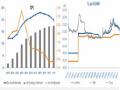
 CPI Fluctuations and Usd/VND Exchange Rate in the Second Half of 2011
 -
 Research Results on the Relationship Between Exchange Rate Level and FDI Capital in Vietnam and Discussion
 -
 The impact of interest rate and exchange rate fluctuations on profitability and stock return fluctuations at Vietnamese commercial banks - 9
 -
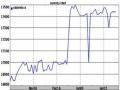 Usd/vnd Exchange Rate Developments During 11/26/2008 – 01/23/2009
 -
 Theoretical Basis of Risk and Risk Management in Foreign Exchange Trading of Joint Stock Commercial Banks
a/ Reputation of money:
In the foreign exchange market, the reputation of a currency also affects exchange rate fluctuations. A reputable currency is a currency with stable purchasing power, widely used in commercial activities, international payments and national reserves. Meanwhile, a non-reputable currency is rarely or not circulated in the international market, so the foreign economic activities of that country must go through a number of reputable currencies, leading to dependence on the country's ability to reserve strong foreign currencies. When the import demand in that country increases, the demand for foreign currency to serve imports increases, leading to an increase in the exchange rate.

b/ Inflation correlation between two currencies (relative price levels between two countries)
The effect of inflation rates of two countries on exchange rates comes from the theory of purchasing power parity (PPP). The theory of purchasing power parity is the use of the law of one price. The basic content of this law is: If we ignore transportation costs, trade barriers, risks and the market is perfectly competitive, then identical goods will have the same price everywhere when converted into a common currency.
Example 1: If a ton of steel produced in the US costs 100 USD and a ton of steel produced in Japan costs 10,000 JPY (assuming the steel is identical), then the exchange rate E(JPY/USD) = 100
Example 2: A Japanese company and a US company both sell goods that are substitutes for each other. If US inflation spikes significantly while Japanese inflation remains the same, this will cause an increase in US demand for Japanese goods. In addition, the spike in US inflation will reduce Japanese demand for US goods, thus reducing the supply of JPY to buy goods (Figure H2).
JPY S 2 value
S 1
E 2 E 1
Figure H1
D 2
D 1
Amount of JPY
When there is no sudden increase in inflation in the US: D 1 : US demand curve for JPY S 1 : Supply curve for JPY
E 1 : Equilibrium exchange rate of JPY/USD


When the inflation rate in the US increases suddenly, the demand curve for JPY shifts to D 2 and the supply curve for JPY shifts to S 2. The new equilibrium exchange rate is E 2 , E 2 > E 1
Although PPP theory provides some guidance on the long-run movements of exchange rates, it is not perfect in the short run. PPP theory also fails to fully explain exchange rate movements because
+ PPP theory assumes that all goods are identical in both countries, but this assumption is not always true for different types of goods.
+ Many goods and services are not traded across borders such as houses, land and services such as restaurants, hairdressers... Therefore, even though the prices of those goods may increase and lead to an increase in prices, it has very little impact on the exchange rate.
+ International trade relations must bear transaction costs such as transportation, insurance, etc.
Nevertheless, PPP is always a useful guide to predicting the direction of exchange rate movements and explaining the causes of exchange rate movements in the long run.
Factors affecting exchange rates in the short term
When observing the fluctuations of exchange rates, we see that exchange rates fluctuate much faster and stronger in the short term than in the long term. The question is: what factors determine the trend of exchange rate fluctuations in the short term?
a) Interest rate correlation factor between two currencies
According to the interest rate parity theory (IRP), the exchange rate between two currencies must fluctuate to reflect the correlation of interest rates between them according to the formula:
R – R*
ÄE= x 100%
1 + R*
In which: ÄE: percentage change in exchange rate after one year R: annual interest rate of domestic currency
R* : annual interest rate of foreign currency
For example: If the interest rate of VND is 8.5%/year, that of USD is 3.5%/year. For VND and USD to have equal interest rates, the VND/USD exchange rate must increase by a percentage/year of:
0.085 – 0.035
ÄE = X 100% = 4.83% 1 + 0.035
In the above example, if the exchange rate at the beginning of the year is 1 USD = 16,970 VND, according to the interest rate parity theory, the exchange rate at the end of the year must be:
E1 = 16,970 + 16,790 x 4.83% = 17,790
Since R and R* are interest rates, the frequency of change depends on the monetary policy of the central bank. In a monetary economy, the central bank frequently changes interest rates to positively impact the economy. The more frequent the change, the faster the exchange rate fluctuates. Therefore, the interest rate correlation between two currencies determines the short-term exchange rate movement trend.
(Source: Nguyen Van Tien (2006), "Risk assessment and prevention in banking business", Statistical Publishing House, p.171)
The formula for the interest rate correlation between two currencies according to the interest rate parity theory is only valid when other factors remain unchanged (income, inflation, etc.). Meanwhile, the economy is always affected by many factors, so exchange rate fluctuations also depend on relative interest rates and real interest rates.
Relative interest rates : Changes in relative interest rates affect foreign stock investments, which in turn affect the supply and demand for money, leading to changes in exchange rates.
JPY value S 1
S 2
E 1 E 2
D 1
D 2
Amount of JPY
Figure H3: Impact of an increase in US interest rates on the equilibrium value of the JPY
When there is no change in interest rates in the US:
D 1 : US demand curve for JPY S 1 : Supply curve for JPY
E 1 : Equilibrium exchange rate of JPY/USD
When the US interest rate increases, while the Japanese interest rate remains unchanged. In this case, US firms are likely to reduce their demand for JPY because the US interest rate is relatively more attractive than the Japanese interest rate and therefore there is less investment in Japanese bank deposits, the supply of JPY increases as Japanese firms establish more deposits in US banks, the JPY supply curve S 1 shifts outward to S 2 , the JPY demand curve decreases and shifts inward to D 2, creating a new equilibrium exchange rate E 2 , E 2 < E 1. If the US interest rate decreases relative to the Japanese interest rate, the JPY supply and demand curves are expected to shift inversely.
Real interest rates : Relatively high interest rates may attract foreign capital inflows (to invest in high-yielding securities), but at the same time high interest rates reflect expectations of high inflation. High inflation may put downward pressure on the currency, thus discouraging foreign investors from investing in securities denominated in that currency. Therefore, it is necessary to consider the real interest rate, which is the nominal interest rate adjusted for inflation. According to the Frisher effect:
Real Interest Rate = Nominal Interest Rate – Inflation Rate
Comparing real interest rates between countries to assess exchange rate fluctuations is the current way of assessing for investors because it combines nominal interest rates and inflation rates, two factors that affect exchange rates. When other factors are constant, there will be a high correlation between the difference in real interest rates of two countries and the exchange rates of those two countries.
Trading in the foreign exchange market facilitates the flow of either trade or finance. Trade-related foreign exchange transactions are generally less sensitive to news than financial-related foreign exchange transactions. Any news that affects the expected movement of a currency immediately affects the supply and demand for the currency. Such speculative trading makes exchange rates very volatile. It is not uncommon for a strong dollar one day to weaken significantly the next. It is the overreaction of speculators to intraday news that causes short-term volatility in the dollar exchange rate.
b/ International Fisher Effect (IFE)
If the PPP theory explains how the inflation differential between two countries affects the exchange rate, the International Fisher Effect theory explains
The difference in interest rates between two countries affects the exchange rate. The PPP theory is closely related to the IFE theory because interest rate differentials between countries can be the result of differences in inflation.
The exact relationship between the interest rate differential of two countries and the expected exchange rate change according to the international Fisher effect can be expressed as follows:
+ The real rate of return when investing domestically (for example: buying securities, or short-term bank deposits) is the interest rate of that security or the bank interest rate.
+ The real rate of return when investing abroad (for example: buying foreign securities or depositing foreign currency in a foreign bank for a short term) is not only the interest rate of foreign securities or bank interest rates but also depends on the percentage change in the foreign currency value (e f ) of the securities or foreign currency deposited in the bank.
However, the international Fisher effect does not always hold because the international Fisher effect is based on purchasing power parity, which does not always hold in certain periods (as discussed above). Furthermore, there are many other factors besides inflation that affect exchange rates, so exchange rates do not only adjust to inflation differentials.
However, investors all recognize three theories: interest rate parity (IRP) - purchasing power parity (PPP) - international Fisher effect are related to determining exchange rates and they rely on these three theories to decide whether to invest domestically or abroad to be most effective on the basis of combining with some other economic - political factors.
c) Government regulation in each period.
In addition to general regulations on foreign exchange management, tariffs and quotas, interest rates of currencies, etc., the Government can intervene in the foreign exchange market at a time when necessary to control the value of a currency. The main reasons for central banks to manage exchange rates are: to smooth exchange rate fluctuations; to establish implicit exchange rate bands; to respond to temporary disturbances.
When a central bank perceives that its economy will be affected by sudden fluctuations in the value of its currency, it will attempt to smooth out currency fluctuations in a number of ways: directly and indirectly.
Direct intervention: Some central banks attempt to maintain the domestic currency exchange rate within unofficial or hidden bands by releasing large amounts of hard currency into the market. In other cases, central banks intervene to insulate the value of a currency from temporary fluctuations by subsidizing the price of imported goods that have increased. For example, in Vietnam in 2008, due to the continuous increase in world oil prices, at times exceeding 100 USD/barrel, the Vietnamese government had to subsidize the oil price for oil import companies to stabilize and gradually increase domestic oil prices to avoid sudden fluctuations in the exchange rate.
Indirect intervention: The government can influence the exchange rate of a foreign currency by influencing factors that affect that foreign currency such as: changing lending interest rates, foreign currency mobilization interest rates; dissolving or merging large corporations to encourage competition for the country's strategic goods; applying barriers to international finance and trade; changing senior personnel in key economic/political fields to change macroeconomic management policies. For example: on June 2, 1987, news that Paul Volcker would