
Through the two typical brands in the convenience store chain business above, Vietnamese businesses can learn some experiences:
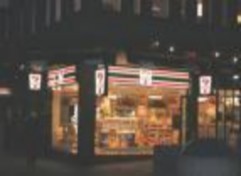
Regarding goods: 7-Eleven as well as Family mart create their own exclusive and distinct products. 7-Eleven America has its own brands, 7-Eleven Japan focuses on instant food products and
Famima creates its own products in the US with sushi and rice balls. All of these items make customers immediately remember the brand of the chain of stores and the brand name when they buy the products.
Maybe you are interested!
-
 General Introduction About Ba Mien Restaurant In Hilton Hanoi Opera Hotel
 -
 Factors Affecting the Development of Retail Distribution Systems
 -
 General Introduction to Banks in Phu Tho Province
 -
 General Introduction About Ha Long City - Quang Ninh
 -
 General Introduction of Joint Stock Commercial Bank for Foreign Trade of Vietnam, Hue Branch
Along with the development of chain stores, the private brands of products are also growing. In addition, imported goods until they are displayed for sale must always ensure quality standards by strictly checking the source and quality of goods, paying attention to storage conditions when storing and displaying goods.
Regarding distribution: In addition to setting up distribution centers, suppliers of goods to small stores must always pay attention to ensuring the quantity of goods for the stores, not lacking in popular items. 7-Eleven predicts market demand based on many factors including the weather. Items such as beer and cold drinks in hot weather will be supplied to stores 6 times a day instead of just 3 times.
About store layout design: Create a unique style while ensuring the criteria of easy access, easy to see, and friendly when shopping. The shelves, lighting systems, air conditioning systems, and even the entrance systems of 7-Eleven and Family Mart stores are always carefully arranged to be the most convenient and comfortable for customers. The locations of the stores are also carefully selected. In addition, 7-Eleven and Family Mart stores are designed with glass facades, making the items displayed inside more visible.
in can be clearly seen by customers passing by the store.
Regarding the variety of goods and services: Family Mart and 7-Eleven chains have built for themselves specialized and diverse services in addition to the rich variety of goods. ATM services, paying utility bills, delivering parcels, buying phone cards, bus tickets, renting CDs, photocopying, and internet are things that Vietnamese businesses can flexibly apply.
Franchising is also a point that Vietnamese businesses can learn from these corporations to expand their scope of operations as well as increase their brand position. However, it should also be seen from 7-Eleven and Family Mart that these corporations only franchise when they have a certain influence and always build their own monitoring system to ensure consistency in the convenience store chains.
CHAPTER II:
CURRENT STATE OF CONVENIENCE STORE CHAINS IN VIETNAM
Because convenience stores are a type of retail, and moreover, a modern type of retail, to learn about convenience stores in Vietnam, we must first put it in the context of the current Vietnamese retail system to better understand this type.
I. GENERAL INTRODUCTION TO RETAIL DISTRIBUTION SYSTEM IN VIETNAM
1. Types of retail distribution in Vietnam
Currently in Vietnam, the retail system includes traditional retail system and modern retail system, in which:
Traditional retail system: is a spontaneously formed retail distribution system, including traditional markets, grocery stores... run and managed by households. This is a form of retail with a long history but currently accounts for a large proportion of the distribution channel in Vietnam. The connection between traditional retail channels and manufacturers is loose and unstable because goods are not supplied directly from manufacturers but are often obtained through intermediaries, including the connection with consumers due to unstable quality of goods. It is difficult for the State to control the business activities of this system.
However, the role of traditional markets still exists and is quite important. This is a distribution channel that is suitable for the shopping habits of Vietnamese people and Asians in general. Traditional market culture is hard to lose when people still have the habit of eating fresh food, like to talk and exchange information, the habit and joy of bargaining when buying goods... In addition, at traditional markets, buyers can also buy goods at reasonable prices and receive attentive service.
According to 2005 statistics, the country has more than 9,000 rural markets and 2,275 urban markets. Most of the markets are small in scale with an area of
On average, each point of sale in urban markets is 11.7m2, in rural areas it is 12.5m2. In addition, there are about 180,000 grocery stores.
Statistics from the Ministry of Commerce (formerly) in 2005 showed that only 11.6% of markets nationwide were solidly built. Most of the markets were spontaneously formed, many of them were formed right on the sidewalks and roadsides, serving the food and necessities needs of local residents. The goods in the markets are often of unknown origin, especially food products, so food hygiene and safety are not guaranteed.
Modern retail system: The difference between a modern retail system and a traditional retail system is in the management and service methods. If traditional markets are often managed by small-scale family businesses, a modern retail system is centrally and systematically managed by a company or corporation with trained staff, a bright and clean store display, and self-service sales, with a few having dedicated guidance from the seller. Typical types of modern retail systems are supermarkets, convenience stores, shopping malls, discount stores, hypermarkets, etc.
Concept of some types of modern retail:
Convenience store: a small store that sells mainly essential goods, open late at night or 24 hours, abbreviated as c-store
Department store: A store with a typical sales area of 2,500 square meters or more, selling mainly non-food goods and having at least 5 product lines arranged in different areas, usually on different floors.
Hypermarket: A store with a sales area of over 2,500m2, with at least 35% of that area devoted to non-essential products. Hypermarkets are often located in outlying locations or serve as the central store within a shopping mall or shopping center.
Supermarket: is most commonly used to refer to a sales area from 400m2 to 2500 m2 with at least 70% of goods being food and other regular goods.
The advantages of modern retail channels are cleanliness, airy and comfortable space, goods are clearly listed in price, displayed in a concentrated manner, have their origin and are often guaranteed in quality, in addition, self-service also allows customers to freely choose the goods they like without being constrained. The disadvantage of modern distribution channels is the price, prices in these types (except for discount stores) are often higher than prices in traditional distribution systems. However, along with the rapid growth of the economy, the average income per capita is increasing, the urbanization process is taking place rapidly and consumer habits are gradually changing, the modern retail system is increasingly increasing its proportion in the current distribution system of our country. In 2006, our country had over 250 supermarkets, about 50 shopping centers, and more than 1,000 convenience stores operating in 35/64 provinces and cities nationwide.
Statistics show that approximately 30% of goods circulate through traditional distribution systems; 44% through independent retail stores; 14% through modern distribution systems such as supermarkets and shopping malls. The remainder is sold directly to consumers by manufacturers. In the two largest cities of the country, Hanoi and Ho Chi Minh City, the amount of goods circulated through modern distribution channels increased from 15% in 2004 to nearly 30% in 2007.
2. Characteristics of the retail distribution system in Vietnam
It is easy to see that the Vietnamese retail distribution system is increasingly centralized, reflected in the replacement of small, independent stores by modern supermarkets and the formation of supermarket chains and convenience store chains. Large enterprises in the retail distribution industry with brands such as Hapro, CoopMart, Citimart... with supermarket chains and convenience stores are increasingly expanding.
The company also increasingly establishes close and intimate relationships with manufacturers as well as intermediary distributors, creating an increasingly professional and effective distribution system.
More and more modern retail forms are appearing in the Vietnamese retail system. The whole country currently has about 200 supermarkets, 32 shopping malls and over 1,000 modern retail stores. This shows that Vietnamese people are increasingly approaching modern shopping habits. Along with the opening process, convenience stores, supermarkets and shopping malls have appeared more and more in localities, especially in big cities. The Vietnamese retail distribution system has not only developed in terms of breadth - quantity and variety but also in depth. This is reflected in the expansion of business scale in terms of both store area and quantity and variety of goods for sale as well as the establishment of a network of goods suppliers. The most obvious manifestation is in supermarkets. Having a source of goods with guaranteed quality, reasonable prices, and an expanded scale with a variety of goods for customers to choose from has created trust among consumers, attracting a large number of customers to domestic supermarkets.
Distribution through traditional retail systems - markets and grocery stores still play a major role in the Vietnamese retail system. Modern retail systems account for only 14% of the quantity of goods in circulation compared to 30% in China and 60% in Thailand. However, the role of modern retail systems is gradually increasing over time. Research on modern distribution channels (supermarkets, convenience store chains...) in the two cities of Hanoi and Ho Chi Minh City shows that this distribution channel has increased from 18% in 2004 to 23% in 2005 compared to traditional distribution channels (markets, food stores, grocery stores...) which are decreasing from 82% to 77%. This trend is also clearly shown when the number of stores in Ho Chi Minh City and Hanoi in the traditional distribution channel is decreasing from
45,346 stores down to 44,638 stores. Experts predict that trend
This trend will continue to grow strongly in the coming years as more retail corporations come to Vietnam.
The participation of transnational and multinational companies in the Vietnamese retail system is increasing. Foreign retail groups operating in Vietnam such as Metro Cash & Carry (Germany), Bourbon (France), Parkson of Lion Group (Malaysia), Zen Plaza (Japan) and Diamond Plaza (Korea) ... are actively accelerating the expansion of market share through their business activities. Metro Cash & Carry is operating with 6 supermarkets in Hanoi, Hai Phong, Da Nang, Ho Chi Minh City, Can Tho with the form of wholesale and retail of about 10,000-15,000 items of all kinds. Big C supermarket system (Bourbon Group) is operating with 3 supermarkets, 2 in Ho Chi Minh City and 1 in Dong Nai and 1 in Hanoi, 1 in Hai Phong. Malaysia's Parkson Group has opened the first shopping center in a system of 10 centers that it will invest in Vietnam... With advantages in business methods, capital, management level, and technology, many international distribution groups have built plans to penetrate the market after Vietnam joined the WTO, including the world's three leading retail groups: Wal-Mart (USA), Carefour (France) and Tesco (UK), along with many Asian groups such as Dairy Farm (Hong Kong) and South Asia Investment (Singapore), which will create great competitive pressure on Vietnamese manufacturers and distributors. Charoen Pokphand, the group that owns Seven Eleven Thailand, is also planning to bring Seven Eleven convenience stores to the Vietnamese market. Thai trading and technology company Loxley and consumer products group Saha also announced plans to open a chain of 108 convenience stores in Vietnam. According to Loxley, Vietnam's open and booming economy will be a good opportunity for them.
The development of Franchising in Vietnam is also a noticeable feature in recent years, in 2006, 2007 Pho 24 and G7 Mart chain stores were the names mentioned a lot with franchising. With franchising, businesses can
The brand can develop a wide network of stores in different countries. Pho 24 has brought its brand to the US, Malaysia or Singapore, while G7 has 500 franchise stores nationwide. Looking at the development of the US, Japan, especially Thailand or China, franchising plays an important role in developing the retail system, especially in the convenience store business.
Along with the development of the Vietnamese retail market, the scarcity of premises is a clear feature - especially for Hanoi and Ho Chi Minh City. Currently, Ho Chi Minh City has 13 shopping malls, providing the market with 140,000m2 of retail premises with a rental rate of 99%. Hanoi has about 100,000m2 in 6 shopping malls with a rental rate of 99%. The average rental price in these two areas has increased rapidly since 2002 and reached 40 USD/m2/month at the end of 2007, in good locations this figure can reach 200 USD/m2/month. The strong development of the retail market and the development of supermarkets and shopping malls is a good thing, but with the opening of the retail market approaching and the high rental price of business premises as it is now, it is also a big challenge for businesses.
domestic retailers. 12
3. Influences from the world and domestic environment on the development of modern retail systems in Vietnam
3.1 Influence from the world environment
The growth of the world economy creates favorable conditions for the retail industry as well as the development of convenience stores . According to a report recently published by the World Bank (WB), the globalization process with the increasingly deep development of the market economy, especially in developing countries, will make the world's income increase faster in the next 25 years than in the past.
12 http://www.vovnews.vn/?page=109&nid=55663