
66
innovate to adapt to circumstances, continue to maintain its position as a dynamic and active partner, making an important contribution to promoting cooperation and dialogue for peace, stability, cooperation and development in the region as well as the world. Singapore currently has one of the best infrastructures in Asia and is an important financial, manufacturing and commercial center in the region, attracting many large corporations and companies in the world, with more than 1,600 transnational companies headquartered here.
FDI liberalization will lead to difficulties for Vietnam in competing with other countries, especially when countries in the region are all trying to improve the environment for attracting FDI. In particular, due to lessons learned from the Asian financial and monetary crisis about the positive role of FDI compared to stock investment and commercial loans, Southeast Asian countries, Korea, and China quickly adjusted their FDI attraction policies in an increasingly liberal direction to increase the attractiveness of this capital flow.
2.2.1.2. Domestic context
Faced with the global competition trend in attracting investment, as well as the country's demand for FDI capital accounting for about 18% of the total social investment capital, Vietnam is increasingly active in continuing to improve the investment environment, improve the legal environment to reduce barriers, improve the economic and social infrastructure system, train and improve the quality of human resources, and fully implement the commitments of the WTO. Vietnam's participation in the Association of Southeast Asian Nations (ASEAN) and the World Trade Organization (WTO) is one of the basic advantages that can be exploited to promote foreign investment from APEC.
Competition in attracting investment takes place not only between countries but also between regions, areas and provinces in the country. The demand for investment capital for socio-economic development of the provinces is very large, while the state budget
limited. Therefore, all provinces must make efforts to attract domestic and foreign investment through an attractive investment environment. In the period of newly forming investment environment, many localities tend to improve the investment environment by increasing investment incentives. However, for real investors, investment incentives are only temporarily attractive, while business opportunities and the necessary conditions to turn these opportunities into profits, including the institutional environment, friendliness, transparency, and reliability of local government agencies, are the most important factors determining the possibility of long-term success. Experience in the world and in Vietnam shows that a serious investor will invest if they see opportunities and a good investment environment, even without special incentives.
The need for investment capital for socio-economic development requires the provinces of the Central Highlands to improve their investment environment. Based on the target plan and orientation for socio-economic development in the coming time, the provinces of the Central Highlands have determined that capital mobilization for development plays a decisive role. In the current context, when the state budget only accounts for about 30-40% of the total social investment capital, the issue of capital mobilization from domestic and foreign enterprises is extremely important, having a decisive impact on economic growth indicators and economic restructuring. Table 2.1 below shows that the capital mobilization demand of the provinces of the Central Highlands from now to 2015 is very large, the highest is Bac Giang province with approximately 100 trillion VND, followed by Son La province with 78 trillion VND. About 60% of this total capital will be mobilized from domestic and foreign enterprises. To achieve this goal, provinces must focus on improving to have an open investment environment, attracting investors, and motivating investors to confidently invest capital in this area.
Table 2.1. Investment capital needs of provinces by 2015
TT
Province name | 2011 | 2012 | 2013 | 2014 | 2015 | Total | |
1 | Peace | 5,953 | 7,308 | 8,926 | 10,533 | 12,567 | 45,287 |
2 | Son La | 16,500 | 18,000 | 16,000 | 14,439 | 13,000 | 77,939 |
3 | Lao Cai | 8,500 | 20,000 | 14,000 | 9,000 | 7,500 | 59,000 |
4 | Bac Giang | 12,800 | 16,700 | 19,805 | 23,064 | 27,157 | 99,526 |
Maybe you are interested!
-
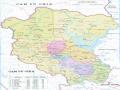
 Some Experiences in Perfecting the Investment Environment
 -
 Mechanism, Policy and Investment Environment for Sustainable Tourism Development in the Central Highlands
 -
 Legal and Economic Environment Factors of Investment
 -
 Investment Environment and Its Components
 -
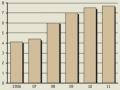 Assessment of Vietnam's Investment Environment in the Period 2007-2011

Source: Department of Planning and Investment of provinces 2010
2.2.2. Experience in improving the domestic and foreign investment environment
2.2.2.1. Foreign experience
2.2.2.1.1. Improving the investment environment in rural Thailand
Thailand is considered to have achieved relatively rapid development in the region, in which foreign investors have made important contributions. Many economic analysts believe that Thailand could not have built a strong economy like today without attracting foreign investment. Thailand has focused on improving the investment environment, especially the investment environment in rural areas, and has achieved remarkable results due to:
Firstly, Thailand has built an investment attraction strategy with many measures such as: resolving and eliminating obstacles to create a truly healthy investment environment, applying investment incentives, developing industries such as agricultural service industry, agricultural product processing, automobile manufacturing, information technology and telecommunications, information technology, etc. Strengthening the construction of a nationwide investment network, including establishing direct cooperation between local and foreign governments, building investment cooperation with banks and large financial groups in the world.
Second is to improve management capacity. Thailand focuses on improving management capacity in investment promotion, increasing efficiency and expanding the scope of closed service provision, reducing intermediaries, and eliminating obstacles.
To create favorable conditions for foreign investors, support the development of Thai enterprises by encouraging production cooperation between large companies and small and medium enterprises at home and abroad to promote the advantages of enterprises and enhance technology transfer activities. Implement financial support measures and market information to help Thai enterprises have the ability to produce, export and provide investment services that meet international standards. Improve working equipment, computerize the one-stop information system, apply information technology in providing investment services, establish investment databases to provide to investors.
Third, improve investment attraction policies. The three outstanding policies of the Thai government to attract domestic and foreign investment can be summarized as follows: first, focus on the private economy and build a legal system suitable for each period to harmonize the interests of the country with the interests of investors; second, increase support for investors in terms of investment information and administrative procedures; third, focus on training high-quality human resources to meet the production and business needs of enterprises. There have been many initiatives to increase the value of agricultural products encouraged in the One Tambon, One Product program implemented in rural areas of Thailand, creating jobs and income for farmers.
Thailand considers the private economy as the driving force of development and has therefore had stable policies in this direction. In particular, after the economic crisis in 1997, Thailand took drastic actions to regain the confidence of investors. In just nearly 3 years from 1997 to 1999, Thailand issued over 100 new laws or amended laws to reform the outdated economic law system. In particular, the Investment Promotion Law has stipulated against nationalization and state monopoly, foreign investors are granted land ownership rights, are allowed to enter and reside, and are allowed to transfer foreign currency abroad easily, eliminating localization conditions for manufacturing.
70
Since then, the Thai Government has continued to closely monitor the changes in the international investment market to continue adjusting its policies accordingly, and has regularly held dialogues with investors, most recently two seminars in July and September 2010, with the presence of the Prime Minister and Ministers, to identify and respond to investors’ needs.
In parallel with building a favorable legal framework for investors, the Thai government has long recognized that providing investors with attractive financial stimulus packages is not enough. To continue to be an attractive investment environment, it is necessary to provide investors with services, before, during, and after they make their investment procedures.” In 1977, Thailand established the Board of Investment, under the Investment Promotion Law 1977 (amended in 1991 and 2002). The Board is chaired by the Prime Minister, and includes economic ministers, senior officials, representatives of major private economic organizations, and scholars as advisors. The Board of Investment of Thailand has an information website that has twice been ranked fifth among the world’s best investment promotion websites by Corporate Location magazine. In 2009, Thailand established the One Start One Stop Investment Centre, a division of the Board of Investment, with the task of assisting investors in completing all procedures, explaining to investors what they need to register a company, obtain investment incentives, foreign business licenses, environmental impact assessments, and land use permits for industrial purposes. At the same time, the One Start One Stop Investment Centre for visas and work permits (both of which are processed within 3 hours) also moved to the same location as the aforementioned One Start One Stop Investment Centre, closing the investor procedure process, which is especially convenient for foreign investors. Thailand has developed a policy of developing one village one product (
71
one tambon, one product) in rural areas to encourage agricultural and rural development.
Fourth, improving the quality of human resources. Another key strategy of Thailand is to focus on training high-quality human resources, with the view that "human capital is the top priority in a country's competitiveness". Thailand's educational programs are built to meet the specific needs of different industries. For vocational training, the curriculum is also improved to support training in industrial parks later, while providing additional skills such as English, business administration and communication skills to raise Thailand's workforce to international standards. In addition, there are separate training facilities to help technical staff of enterprises and businesses improve their management skills, communication skills and professionalism. In particular, the Board of Investment of Thailand also participates in human resource development to balance the needs of industries with the ability to supply labor. In addition, the Ministry of Labor established training centers across the country to improve the quality of labor in Thailand in general and develop skills in using new machinery and tools in particular. With this approach, Thai workers have the knowledge and skills to meet the strict requirements of businesses. Thailand's strategy is to improve the quality of labor in a way that both quality and price are competitive with developed countries, and to attract investment projects based on quality rather than quantity, especially focusing on projects with the potential to develop knowledge and skills for workers. Thanks to this, Thailand has created a cycle that benefits the country: using high-quality workers to attract quality projects, from which quality projects contribute to improving the qualifications of workers.
Fifth, infrastructure investment. Thailand pays special attention to investment in improving infrastructure, focusing mainly on investment in water systems, transportation systems including roads, railways, airports and water systems.
72
Thailand has attracted a large amount of private investment in the form of public-private partnerships for infrastructure investment.
2.2.2.1.2. Improving the investment environment in the mountainous areas of western China
China has been the largest recipient of foreign direct investment among developing countries since 1993 and has the best investment climate index.
One of the factors that greatly affects China's investment attraction results is improving the investment environment. China has actively created an environment to attract healthy investment, proposed solutions to improve the environment to increase investment, including policies such as strongly reforming the investment appraisal and licensing mechanism, creating a fair competitive environment for enterprises of different ownership forms, especially after joining the World Trade Organization (WTO). China has further improved the investment environment such as: amending and promulgating policies and regulations related to attracting foreign investment in a consistent manner, increasing the efficiency and improving the quality of services of government agencies, state administrative management agencies of localities, eliminating the monopoly of ministries and branches and removing barriers of localities to establish a unified and orderly market system nationwide, protecting the legitimate rights and interests of foreign investors equally with other domestic investors.
China has used its advantages to attract foreign investors. This application is clearly seen through the fact that investors focus on some geographical areas such as special economic zones, economic zones on the East coast of China. Because these locations are geographically favorable for trade, production and business, and the government has implemented preferential investment policies for foreign investors. After the economic zones on the East coast of China have developed, the Chinese government shifted investment incentives to the mountainous areas in the West. In 1999, China developed
73
strategic development of the West. This area includes Guangxi, Yunnan, Sichuan, Chongqing. This area is characterized by rugged mountains, sparse population, and slow economic development. To attract investment in this area, China focuses on developing infrastructure. In 2009, China started construction of 18 key projects, with a total investment of 268.9 billion yuan. These projects include: the Chengdu (Sichuan) to Lanzhou railway in Sanju province, the Chongqing to Guiyang railway, the Kunming to Nanning railway, and the Guangyuan to Nanchong expressway. Construction and upgrading of a number of airports. China focuses on developing its abundant labor force, with training to improve the quality of its labor, and labor market prices being cheaper than in other developing countries, meeting the needs of foreign investors in terms of market search and cheap labor market search. At the same time, the Chinese government has also implemented policies to gradually reduce regulations that are barriers to foreign investors' access to the market, production and business sectors and enterprises in China. These changes are reflected in the policies that China has implemented, such as: gradually opening up to foreign investors geographically, from limiting investment areas to opening up the entire country; from restricting investment in many industries and business sectors to allowing foreign investors to invest in most production and service sectors; from a strategy of concentrating production to expanding the market and exchanging natural resources for capital and assets. Other related policies such as exchange rate, labor force policy shifting from administrative management to market control, fixed price system to market price system, capital market expansion policy, stock market and commitment to copyright protection for technology of foreign invested enterprises when making capital contribution have created a competitive business environment, an attractive investment environment for foreign investors.