
Tan Phong Islet is associated with the specialty rambutan crop.
Located on the right bank of Cai Be floating market is Tan Phong islet, formerly Con Cu, belonging to Dinh Vien district, Long Ho palace, with a total area of 2,430 hectares. Tan Phong commune currently has 7 hamlets that are always fertilized by alluvium and have fresh water all year round. The favorable factors of nature have created a favorable position for Tan Phong in developing garden economy, especially famous for its large and sweet rambutan gardens. Currently, rambutan is the main tree contributing to changing the appearance of a rural area of the island. Of the total fruit garden area of Tan Phong of 1,382 hectares, the area for growing rambutan accounts for more than 1/3 (431 hectares), mainly longan rambutan, Java rambutan, Thai rambutan grown in 2 hamlets of Tan Luong A and Tan Buong B.
In particular, on the Doan Ngo Festival (the 5th day of the 5th lunar month), Tan Phong Islet has many people from all over the province and outside the province coming here not only to admire and enjoy the specialty of rambutan trees full of fruit but also to "bathe in alcohol", a very typical form of activity of the river islet that few places have.
2.3.6.7. Ngu Hiep Island Garden
This island is separated from the mainland of Cai Lay district by a small river in the North, called Nam Thon river. Ngu Hiep island is about 13 km long, the widest part is about 2 km, the further to the end of the island, the more fertile alluvial layers are added to the land. This island is favored by nature in many aspects such as fertile land, fresh water all year round, fresh air, ... favorable for fruit trees to grow. Therefore, Ngu Hiep island has become a large fruit growing area of the district with many types of fruit trees, but the most famous is the specialty durian, one of the main fruit trees of the province.
Ngu Hiep Islet Commune has 8 hamlets, with 3,459 households living on 1,471 hectares, including:
3,135 households grow durian, an area of over 1,257 hectares, with an output of 38,000 - 40,000 tons/year. When coming to Ngu Hiep, you will not only enjoy delicious fruit but also see the beautiful scenery with afternoon boats on the poetic river with the fragrant scent of durian. Meet gentle and friendly people when listening to the ringing bells of the church. Currently, Ngu Hiep Islet grows very well all kinds of Southern Fruits; including in the tour programs of travel agencies.
2.4. Assessing tourists' satisfaction with the "garden - river" ecotourism type in Tien Giang.
2.4.1. Characteristics of tourists coming to “garden – river” eco-tourism in Tien Giang according to survey results.
“ Garden – river ” tourism is a new type of tourism that has been exploited in Tien Giang. The routes with strengths in this field are: Thoi Son island eco-tourism area (Con Lan); and Cai Be tourist area. These are the two tourist destinations with the largest number of tourists participating in this type of tourism because they are associated with the Tien River system. According to statistics from the Department of Culture, Sports and Tourism, up to 2012, the total number of tourists visiting the two tourist destinations above was 688,234 (accounting for 58.9%) of the total number of tourists visiting the whole province in 2012. Of which, Thoi Son island garden tourist destination welcomed about 594,112; Cai Be river garden tourist destination welcomed about
94,122 views.
Table 2.6 Tourists by region in the period 2007 - 2012
(Unit: Turn)
Year
2007 | 2008 | 2009 | 2010 | 2011 | 2012 | |
I. THOI SON ISLAND TOURIST AREA | ||||||
+ Total visitors | 375,950 | 406,521 | 502.030 | 575,910 | 554,735 | 594,112 |
- International | 323,529 | 346,635 | 339,156 | 379.105 | 460,020 | 478,634 |
- Domestic | 52,421 | 59,886 | 162,874 | 196,805 | 94,715 | 115,478 |
II. CAI BE TOURIST AREA | ||||||
+ Total visitors | 39,056 | 49,175 | 89,500 | 107,545 | 76,230 | 94,122 |
- International | 32,260 | 38,348 | 71,600 | 93,734 | 64,980 | 64,058 |
- Domestic | 6,796 | 10,827 | 17,900 | 13,811 | 11,250 | 30,064 |
Maybe you are interested!
-
 Identify Rating Levels and Rating Scales
zt2i3t4l5ee
zt2a3gstourism,quan lan,quang ninh,ecology,ecotourism,minh chau,van don,geography,geographical basis,tourism development,science
zt2a3ge
zc2o3n4t5e6n7ts
of the islanders. Therefore, this indicator will be divided into two sub-indicators:
a1. Natural tourism attractiveness a2. Cultural tourism attractiveness
b. Tourist capacity
The two island communes in Quan Lan have different capacities to receive tourists. Minh Chau Commune is home to many standard hotels and resorts, attracting high-income domestic and international tourists. Meanwhile, Quan Lan Commune has many motels mainly built and operated by local people, so the scale and quality are not high, and will be suitable for ordinary tourists such as students.
c. Time of exploitation of Quan Lan Island Commune:
Quan Lan tourism is seasonal due to weather and climate conditions and festivals only take place on certain days of the year, specifically in spring. In Quan Lan commune, the period from April to June and from September to November is considered the best time to visit Quan Lan because the cultural tourism activities are mainly associated with festivals taking place during this time.
Minh Chau island commune:
Tourism exploitation time is all year round, because this is a place with a number of tourist attractions with diverse ecosystems such as Bai Tu Long National Park Research Center, Tram forest, Turtle Laying Beach, so besides coming to the beach for tourism and vacation in the summer, Minh Chau will attract research groups to come for tourism combined with research at other times of the year.
d. Sustainability
The sustainability of ecotourism sites in Quan Lan and Minh Chau communes depends on the sensitivity of the ecosystems to climate changes.
landscape. In general, these tourist destinations have a fairly high level of sustainability, because they are natural ecosystems, planned and protected. However, if a large number of tourists gather at certain times, it can exceed the carrying capacity and affect the sustainability of the environment (polluted beaches, damaged trees, animals moving away from their habitats, etc.), then the sustainability of the above ecosystems (natural ecosystems, human ecosystems) will also be affected and become less sustainable.
e. Location and accessibility
Both island communes have ports to take tourists to visit from Van Don wharf:
- Quan Lan – Van Don traffic route:
Phuc Thinh – Viet Anh high-speed boat and Quang Minh high-speed boat, depart at 8am and 2pm from Van Don to Quan Lan, and at 7am and 1pm from Quan Lan to Van Don. There are also wooden boats departing at 7am and 1pm.
- Van Don - Minh Chau traffic route:
Chung Huong high-speed train, Minh Chau train, morning 7:30 and afternoon 13:30 from Van Don to Minh Chau, morning 6:30 and afternoon 13:00 from Minh Chau to Van Don.
f. Infrastructure
Despite receiving investment attention, the issue of infrastructure and technical facilities for tourism on Quan Lan Island is still an issue that needs to be resolved because it has a direct impact on the implementation of ecotourism activities. The minimum conditions for serving tourists such as accommodation, electricity, water, communication, especially medical services, and security work need to be given top priority. Ecotourism spots in Minh Chau commune are assessed to have better infrastructure and technical facilities for tourism because there are quite complete and synchronous conditions for serving tourists, meeting many needs of domestic and foreign tourists.
3.2.1.4. Determine assessment levels and assessment scales
Corresponding to the levels of each criterion, the index is the score of those levels in the order of 4, 3, 2, 1 decreasing according to the standard of each level: very attractive (4), attractive (3), average (2), less attractive (1).
3.2.1.5. Determining the coefficients of the criteria
For the assessment of DLST in the two communes of Quan Lan and Minh Chau islands, the students added evaluation coefficients to show the importance of the criteria and indicators as follows:
Coefficient 3 with criteria: Attractiveness, Exploitation time. These are the 2 most important criteria for attracting tourists to tourism in general and eco-tourism in particular, so they have the highest coefficient.
Coefficient 2 with criteria: Capacity, Infrastructure, Location and accessibility . Because the assessment area is an island commune of Van Don district, the above criteria are selected by the author with appropriate coefficients at the average level.
Coefficient 1 with criteria: Sustainability. Quan Lan has natural and human-made ecotourism sites, with high biodiversity and little impact from local human factors. Most of the ecotourism sites are still wild, so they are highly sustainable.
3.2.1.6. Results of DLST assessment on Quan Lan island
a. Assessment of the potential for natural tourism development
For Minh Chau commune:
+ Natural tourism attractiveness is determined to be very attractive (4 points) and the most important coefficient (coefficient 3), so the score of the Attractiveness criterion is 4 x 3 = 12.
+ Capacity is determined as average (2 points) and the coefficient is quite important (coefficient 2), then the score of Capacity criterion is 2 x 2 = 4.
+ Exploitation time is long (4 points), the most important coefficient (coefficient 3) so the score of the Exploitation time criterion is 4 x 3 = 12.
+ Sustainability is determined as sustainable (4 points), the important coefficient is the average coefficient (coefficient 1), so the score of the Sustainability criterion is 4 x 1 = 4 points
+ Location and accessibility are determined to be quite favorable (2 points), the coefficient is quite important (coefficient 2), the criterion score is 2 x 2 = 4 points.
+ Infrastructure is assessed as good (3 points), the coefficient is quite important (coefficient 2), then the score of the Infrastructure criterion is 3 x 2 = 6 points.
The total score for evaluating DLST in Minh Chau commune according to 6 evaluation criteria is determined as: 12 + 4 + 12 + 4 + 4 + 6 = 42 points
Similar assessment for Quan Lan commune, we have the following table:
Table 3.3: Assessment of the potential for natural ecotourism development in Quan Lan and Minh Chau communes
Attractiveness of self-tourismof course
Capacity
Mining time
Sustainability
Location and accessibility
Infrastructure
Result
Point
DarkMulti
Point
DarkMulti
Point
DarkMulti
Point
DarkMulti
Point
DarkMulti
Point
DarkMulti
CommuneMinh Chau
12
12
4
8
12
12
4
4
4
8
6
8
42/52
Quan CommuneLan
6
12
6
8
9
12
4
4
4
8
4
8
33/52
b. Assessment of the potential for humanistic tourism development
For Quan Lan commune:
+ The attractiveness of human tourism is determined to be very attractive (4 points) and the most important coefficient (coefficient 3), so the score of the Attractiveness criterion is 4 x 3 = 12.
+ Capacity is determined to be large (3 points) and the coefficient is quite important (coefficient 2), then the score of the Capacity criterion is 3 x 2 = 6.
+ Mining time is average (3 points), the most important coefficient (coefficient 3) so the score of the Mining time criterion is 3 x 3 = 9.
+ Sustainability is determined as sustainable (4 points), the important coefficient is the average coefficient (coefficient 1), so the score of the Sustainability criterion is 4 x 1 = 4 points.
+ Location and accessibility are determined to be quite favorable (2 points), the coefficient is quite important (coefficient 2), the criterion score is 2 x 2 = 4 points.
+ Infrastructure is rated as average (2 points), the coefficient is quite important (coefficient 2), then the score of the Infrastructure criterion is 2 x 2 = 4 points.
The total score for evaluating DLST in Quan Lan commune according to 6 evaluation criteria is determined as: 12 + 6 + 6 + 4 + 4 + 4 = 36 points.
Similar assessment with Minh Chau commune we have the following table:
Table 3.4: Assessment of the potential for developing humanistic eco-tourism in Quan Lan and Minh Chau communes
Attractiveness of human tourismliterature
Capacity
Mining time
Sustainability
Location and accessibility
Infrastructure
Result
Point
DarkMulti
Point
DarkMulti
Point
DarkMulti
Point
DarkMulti
Point
DarkMulti
Point
DarkMulti
Quan CommuneLan
12
12
6
8
9
12
4
4
4
8
4
8
39/52
Minh CommuneChau
6
12
4
8
12
12
4
4
4
8
6
8
36/52
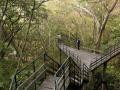
Basically, both Minh Chau and Quan Lan localities have quite favorable conditions for developing ecotourism. However, Quan Lan commune has more advantages to develop ecotourism in a humanistic direction, because this is an area with many famous historical relics such as Quan Lan Communal House, Quan Lan Pagoda, Temple worshiping the hero Tran Khanh Du, ... along with local festivals held annually such as the wind praying ceremony (March 15), Quan Lan festival (June 10-19); due to its location near the port and long exploitation time, the beaches in Quan Lan commune (especially Quan Lan beach) are no longer hygienic and clean to ensure the needs of tourists coming to relax and swim; this is also an area with many beautiful landscapes such as Got Beo wind pass, Ong Phong head, Voi Voi cave, but the ability to access these places is still very limited (dirt hill road, lots of gravel and rocks), especially during rainy and windy times; In addition, other natural resources such as mangrove forests and sea worms have not been really exploited for tourism purposes and ecotourism development. On the contrary, Minh Chau commune has more advantages in developing ecotourism in the direction of natural tourism, this is an area with diverse ecosystems such as at Rua De Beach, Bai Tu Long National Park Conservation Center...; Minh Chau beach is highly appreciated for its natural beauty and cleanliness, ranked in the top ten most beautiful beaches in Vietnam; Minh Chau commune is also home to Tram forest with a large area and a purity of up to 90%, suitable for building bridges through the forest (a very effective type of natural ecotourism currently applied by many countries) for tourists to sightsee, as well as for the purpose of studying and researching.
Figure 3.1: Thenmala Forest Bridge (India) Source: https://www.thenmalaecotourism.com/(August 21, 2019)
3.2.2. Using SWOT matrix to evaluate Quan Lan island tourism
General assessment of current tourism activities of Quan Lan island is shown through the following SWOT matrix:
Table 3.5: SWOT matrix evaluating tourism activities on Quan Lan island
Internal agent
Strengths- There is a lot of potential for tourism development, especially natural ecotourism and humanistic ecotourism.- The unskilled labor force is relatively abundant.- resource environmentunpolluted, still
Weaknesses- Poorly developed infrastructure, especially traffic routes to tourist destinations on the island.- The team of professional staff is still weak.- Tourism products in general
quite wild, originalintact
general and DLST in particularalone is monotonous.
External agents
Opportunity- Tourism is a key industry in the socio-economic development strategy of the province and Van Don economic zone.- Quan Lan was selected as a pilot area for eco-tourism development within the framework of the green growth project between Quang Ninh province and the Japanese organization JICA.- The flow of tourists and especially ecotourism in the world tends toincreasing
Challenge- Weather and climate change abnormally.- Competition in tourism products is increasingly fierce, especially with other localities in the province such as Ha Long, Mong Cai...- Awareness of tourists, especially domestic tourists, about ecotourism and nature conservation is not high.
Through summary analysis using SWOT matrix we see that:
To exploit strengths and take advantage of opportunities, it is necessary to:
- Diversify products and service types (build more tourism routes aimed at specific needs of tourists: experiential tourism immersed in nature, spiritual cultural tourism...)
- Effective exploitation of resources and differentiated products (natural resources and human resources)
div.maincontent .p { color: black; font-family:"Times New Roman", serif; font-style: normal; font-weight: normal; text-decoration: none; font-size: 14pt; margin:0pt; } div.maincontent p { color: black; font-family:"Times New Roman", serif; font-style: normal; font-weight: normal; text-decoration: none; font-size: 14pt; margin:0pt; } div.maincontent .s1 { color: black; font-family:"Times New Roman", serif; font-style: normal; font-weight: normal; text-decoration: none; font-size: 13pt; } div.maincontent .s2 { color: black; font-family:"Times New Roman", serif; font-style: normal; font-weight: normal; text-decoration: none; font-size: 13pt; } div.maincontent .s3 { color: #0D0D0D; font-family:"Times New Roman", serif; font-style: normal; font-weight: bold; text-decoration: none; font-size: 14pt; } div.maincontent .s4 { color: black; font-family:"Times New Roman", serif; font-style: italic; font-weight: normal; text-decoration: none; font-size: 14pt; } div.maincontent .s5 { color: black; font-family:"Times New Roman", serif; font-style: italic; font-weight: bold; text-decoration: none; font-size: 14pt; } div.maincontent .s6 { color: black; font-family:"Times New Roman", serif; font-style: italic; font-weight: normal; text-decoration: none; font-size: 14pt; vertical-align: -3pt; } div.maincontent .s7 { color: black; font-family:"Times New Roman", serif; font-style: italic; font-weight: normal; text-decoration: none; font-size: 14pt; vertical-align: -2pt; } div.maincontent .s8 { color: black; font-family:"Times New Roman", serif; font-style: italic; font-weight: normal; text-decoration: none; font-size: 14pt; vertical-align: -1pt; } div.maincontent .s9 { color: black; font-family:"Times New Roman", serif; font-style: normal; font-weight: normal; text-decoration: none; font-size: 14pt; } div.maincontent .s10 { color: black; font-family:"Times New Roman", serif; font-style: normal; font-weight: bold; text-decoration: none; font-size: 14pt; } div.maincontent .s11 { color: black; font-family:"Times New Roman", serif; font-style: normal; font-weight: normal; text-decoration: none; font-size: 14pt; } div.maincontent .s12 { color: black; font-family:Symbol, serif; font-style: normal; font-weight: normal; text-decoration: none; font-size: 14pt; } div.maincontent .s13 { color: black; font-family:Wingdings; font-style: normal; font-weight: normal; text-decoration: none; font-size: 14pt; } div.maincontent .s14 { color: black; font-family:"Times New Roman", serif; font-style: normal; font-weight: normal; text-decoration: none; font-size: 9pt; vertical-align: 5pt; } div.maincontent .s15 { color: black; font-family:"Times New Roman", serif; font-style: normal; font-weight: normal; text-decoration: none; font-size: 9pt; vertical-align: 5pt; } div.maincontent .s16 { color: black; font-family:Cambria, serif; font-style: italic; font-weight: normal; text-decoration: none; font-size: 14pt; } div.maincontent .s17 { color: #080808; font-family:"Times New Roman", serif; font-style: normal; font-weight: bold; text-decoration: none; font-size: 14pt; } div.maincontent .s18 { color: #080808; font-family:"Times New Roman", serif; font-style: normal; font-weight: normal; text-decoration: none; font-size: 14pt; } div.maincontent .s19 { color: black; font-family:"Times New Roman", serif; font-style: normal; font-weight: normal; text-decoration: none; font-size: 11pt; } div.maincontent .s20 { color: black; font-family:"Times New Roman", serif; font-style: normal; font-weight: normal; text-decoration: none; font-size: 10pt; } div.maincontent .s21 { color: black; font-family:"Times New Roman", serif; font-style: normal; font-weight: bold; text-decoration: none; font-size: 11pt; } div.maincontent .s22 { color: black; font-family:"Times New Roman", serif; font-style: normal; font-weight: normal; text-decoration: none; font-size: 11pt; } div.maincontent .s23 { color: black; font-family:"Times New Roman", serif; font-style: italic; font-weight: normal; text-decoration: none; font-size: 14pt; } div.maincontent .s24 { color: #212121; font-family:"Times New Roman", serif; font-style: normal; font-weight: normal; tex
Identify Rating Levels and Rating Scales
zt2i3t4l5ee
zt2a3gstourism,quan lan,quang ninh,ecology,ecotourism,minh chau,van don,geography,geographical basis,tourism development,science
zt2a3ge
zc2o3n4t5e6n7ts
of the islanders. Therefore, this indicator will be divided into two sub-indicators:
a1. Natural tourism attractiveness a2. Cultural tourism attractiveness
b. Tourist capacity
The two island communes in Quan Lan have different capacities to receive tourists. Minh Chau Commune is home to many standard hotels and resorts, attracting high-income domestic and international tourists. Meanwhile, Quan Lan Commune has many motels mainly built and operated by local people, so the scale and quality are not high, and will be suitable for ordinary tourists such as students.
c. Time of exploitation of Quan Lan Island Commune:
Quan Lan tourism is seasonal due to weather and climate conditions and festivals only take place on certain days of the year, specifically in spring. In Quan Lan commune, the period from April to June and from September to November is considered the best time to visit Quan Lan because the cultural tourism activities are mainly associated with festivals taking place during this time.
Minh Chau island commune:
Tourism exploitation time is all year round, because this is a place with a number of tourist attractions with diverse ecosystems such as Bai Tu Long National Park Research Center, Tram forest, Turtle Laying Beach, so besides coming to the beach for tourism and vacation in the summer, Minh Chau will attract research groups to come for tourism combined with research at other times of the year.
d. Sustainability
The sustainability of ecotourism sites in Quan Lan and Minh Chau communes depends on the sensitivity of the ecosystems to climate changes.
landscape. In general, these tourist destinations have a fairly high level of sustainability, because they are natural ecosystems, planned and protected. However, if a large number of tourists gather at certain times, it can exceed the carrying capacity and affect the sustainability of the environment (polluted beaches, damaged trees, animals moving away from their habitats, etc.), then the sustainability of the above ecosystems (natural ecosystems, human ecosystems) will also be affected and become less sustainable.
e. Location and accessibility
Both island communes have ports to take tourists to visit from Van Don wharf:
- Quan Lan – Van Don traffic route:
Phuc Thinh – Viet Anh high-speed boat and Quang Minh high-speed boat, depart at 8am and 2pm from Van Don to Quan Lan, and at 7am and 1pm from Quan Lan to Van Don. There are also wooden boats departing at 7am and 1pm.
- Van Don - Minh Chau traffic route:
Chung Huong high-speed train, Minh Chau train, morning 7:30 and afternoon 13:30 from Van Don to Minh Chau, morning 6:30 and afternoon 13:00 from Minh Chau to Van Don.
f. Infrastructure
Despite receiving investment attention, the issue of infrastructure and technical facilities for tourism on Quan Lan Island is still an issue that needs to be resolved because it has a direct impact on the implementation of ecotourism activities. The minimum conditions for serving tourists such as accommodation, electricity, water, communication, especially medical services, and security work need to be given top priority. Ecotourism spots in Minh Chau commune are assessed to have better infrastructure and technical facilities for tourism because there are quite complete and synchronous conditions for serving tourists, meeting many needs of domestic and foreign tourists.
3.2.1.4. Determine assessment levels and assessment scales
Corresponding to the levels of each criterion, the index is the score of those levels in the order of 4, 3, 2, 1 decreasing according to the standard of each level: very attractive (4), attractive (3), average (2), less attractive (1).
3.2.1.5. Determining the coefficients of the criteria
For the assessment of DLST in the two communes of Quan Lan and Minh Chau islands, the students added evaluation coefficients to show the importance of the criteria and indicators as follows:
Coefficient 3 with criteria: Attractiveness, Exploitation time. These are the 2 most important criteria for attracting tourists to tourism in general and eco-tourism in particular, so they have the highest coefficient.
Coefficient 2 with criteria: Capacity, Infrastructure, Location and accessibility . Because the assessment area is an island commune of Van Don district, the above criteria are selected by the author with appropriate coefficients at the average level.
Coefficient 1 with criteria: Sustainability. Quan Lan has natural and human-made ecotourism sites, with high biodiversity and little impact from local human factors. Most of the ecotourism sites are still wild, so they are highly sustainable.
3.2.1.6. Results of DLST assessment on Quan Lan island
a. Assessment of the potential for natural tourism development
For Minh Chau commune:
+ Natural tourism attractiveness is determined to be very attractive (4 points) and the most important coefficient (coefficient 3), so the score of the Attractiveness criterion is 4 x 3 = 12.
+ Capacity is determined as average (2 points) and the coefficient is quite important (coefficient 2), then the score of Capacity criterion is 2 x 2 = 4.
+ Exploitation time is long (4 points), the most important coefficient (coefficient 3) so the score of the Exploitation time criterion is 4 x 3 = 12.
+ Sustainability is determined as sustainable (4 points), the important coefficient is the average coefficient (coefficient 1), so the score of the Sustainability criterion is 4 x 1 = 4 points
+ Location and accessibility are determined to be quite favorable (2 points), the coefficient is quite important (coefficient 2), the criterion score is 2 x 2 = 4 points.
+ Infrastructure is assessed as good (3 points), the coefficient is quite important (coefficient 2), then the score of the Infrastructure criterion is 3 x 2 = 6 points.
The total score for evaluating DLST in Minh Chau commune according to 6 evaluation criteria is determined as: 12 + 4 + 12 + 4 + 4 + 6 = 42 points
Similar assessment for Quan Lan commune, we have the following table:
Table 3.3: Assessment of the potential for natural ecotourism development in Quan Lan and Minh Chau communes
Attractiveness of self-tourismof course
Capacity
Mining time
Sustainability
Location and accessibility
Infrastructure
Result
Point
DarkMulti
Point
DarkMulti
Point
DarkMulti
Point
DarkMulti
Point
DarkMulti
Point
DarkMulti
CommuneMinh Chau
12
12
4
8
12
12
4
4
4
8
6
8
42/52
Quan CommuneLan
6
12
6
8
9
12
4
4
4
8
4
8
33/52
b. Assessment of the potential for humanistic tourism development
For Quan Lan commune:
+ The attractiveness of human tourism is determined to be very attractive (4 points) and the most important coefficient (coefficient 3), so the score of the Attractiveness criterion is 4 x 3 = 12.
+ Capacity is determined to be large (3 points) and the coefficient is quite important (coefficient 2), then the score of the Capacity criterion is 3 x 2 = 6.
+ Mining time is average (3 points), the most important coefficient (coefficient 3) so the score of the Mining time criterion is 3 x 3 = 9.
+ Sustainability is determined as sustainable (4 points), the important coefficient is the average coefficient (coefficient 1), so the score of the Sustainability criterion is 4 x 1 = 4 points.
+ Location and accessibility are determined to be quite favorable (2 points), the coefficient is quite important (coefficient 2), the criterion score is 2 x 2 = 4 points.
+ Infrastructure is rated as average (2 points), the coefficient is quite important (coefficient 2), then the score of the Infrastructure criterion is 2 x 2 = 4 points.
The total score for evaluating DLST in Quan Lan commune according to 6 evaluation criteria is determined as: 12 + 6 + 6 + 4 + 4 + 4 = 36 points.
Similar assessment with Minh Chau commune we have the following table:
Table 3.4: Assessment of the potential for developing humanistic eco-tourism in Quan Lan and Minh Chau communes
Attractiveness of human tourismliterature
Capacity
Mining time
Sustainability
Location and accessibility
Infrastructure
Result
Point
DarkMulti
Point
DarkMulti
Point
DarkMulti
Point
DarkMulti
Point
DarkMulti
Point
DarkMulti
Quan CommuneLan
12
12
6
8
9
12
4
4
4
8
4
8
39/52
Minh CommuneChau
6
12
4
8
12
12
4
4
4
8
6
8
36/52
Basically, both Minh Chau and Quan Lan localities have quite favorable conditions for developing ecotourism. However, Quan Lan commune has more advantages to develop ecotourism in a humanistic direction, because this is an area with many famous historical relics such as Quan Lan Communal House, Quan Lan Pagoda, Temple worshiping the hero Tran Khanh Du, ... along with local festivals held annually such as the wind praying ceremony (March 15), Quan Lan festival (June 10-19); due to its location near the port and long exploitation time, the beaches in Quan Lan commune (especially Quan Lan beach) are no longer hygienic and clean to ensure the needs of tourists coming to relax and swim; this is also an area with many beautiful landscapes such as Got Beo wind pass, Ong Phong head, Voi Voi cave, but the ability to access these places is still very limited (dirt hill road, lots of gravel and rocks), especially during rainy and windy times; In addition, other natural resources such as mangrove forests and sea worms have not been really exploited for tourism purposes and ecotourism development. On the contrary, Minh Chau commune has more advantages in developing ecotourism in the direction of natural tourism, this is an area with diverse ecosystems such as at Rua De Beach, Bai Tu Long National Park Conservation Center...; Minh Chau beach is highly appreciated for its natural beauty and cleanliness, ranked in the top ten most beautiful beaches in Vietnam; Minh Chau commune is also home to Tram forest with a large area and a purity of up to 90%, suitable for building bridges through the forest (a very effective type of natural ecotourism currently applied by many countries) for tourists to sightsee, as well as for the purpose of studying and researching.
Figure 3.1: Thenmala Forest Bridge (India) Source: https://www.thenmalaecotourism.com/(August 21, 2019)
3.2.2. Using SWOT matrix to evaluate Quan Lan island tourism
General assessment of current tourism activities of Quan Lan island is shown through the following SWOT matrix:
Table 3.5: SWOT matrix evaluating tourism activities on Quan Lan island
Internal agent
Strengths- There is a lot of potential for tourism development, especially natural ecotourism and humanistic ecotourism.- The unskilled labor force is relatively abundant.- resource environmentunpolluted, still
Weaknesses- Poorly developed infrastructure, especially traffic routes to tourist destinations on the island.- The team of professional staff is still weak.- Tourism products in general
quite wild, originalintact
general and DLST in particularalone is monotonous.
External agents
Opportunity- Tourism is a key industry in the socio-economic development strategy of the province and Van Don economic zone.- Quan Lan was selected as a pilot area for eco-tourism development within the framework of the green growth project between Quang Ninh province and the Japanese organization JICA.- The flow of tourists and especially ecotourism in the world tends toincreasing
Challenge- Weather and climate change abnormally.- Competition in tourism products is increasingly fierce, especially with other localities in the province such as Ha Long, Mong Cai...- Awareness of tourists, especially domestic tourists, about ecotourism and nature conservation is not high.
Through summary analysis using SWOT matrix we see that:
To exploit strengths and take advantage of opportunities, it is necessary to:
- Diversify products and service types (build more tourism routes aimed at specific needs of tourists: experiential tourism immersed in nature, spiritual cultural tourism...)
- Effective exploitation of resources and differentiated products (natural resources and human resources)
div.maincontent .p { color: black; font-family:"Times New Roman", serif; font-style: normal; font-weight: normal; text-decoration: none; font-size: 14pt; margin:0pt; } div.maincontent p { color: black; font-family:"Times New Roman", serif; font-style: normal; font-weight: normal; text-decoration: none; font-size: 14pt; margin:0pt; } div.maincontent .s1 { color: black; font-family:"Times New Roman", serif; font-style: normal; font-weight: normal; text-decoration: none; font-size: 13pt; } div.maincontent .s2 { color: black; font-family:"Times New Roman", serif; font-style: normal; font-weight: normal; text-decoration: none; font-size: 13pt; } div.maincontent .s3 { color: #0D0D0D; font-family:"Times New Roman", serif; font-style: normal; font-weight: bold; text-decoration: none; font-size: 14pt; } div.maincontent .s4 { color: black; font-family:"Times New Roman", serif; font-style: italic; font-weight: normal; text-decoration: none; font-size: 14pt; } div.maincontent .s5 { color: black; font-family:"Times New Roman", serif; font-style: italic; font-weight: bold; text-decoration: none; font-size: 14pt; } div.maincontent .s6 { color: black; font-family:"Times New Roman", serif; font-style: italic; font-weight: normal; text-decoration: none; font-size: 14pt; vertical-align: -3pt; } div.maincontent .s7 { color: black; font-family:"Times New Roman", serif; font-style: italic; font-weight: normal; text-decoration: none; font-size: 14pt; vertical-align: -2pt; } div.maincontent .s8 { color: black; font-family:"Times New Roman", serif; font-style: italic; font-weight: normal; text-decoration: none; font-size: 14pt; vertical-align: -1pt; } div.maincontent .s9 { color: black; font-family:"Times New Roman", serif; font-style: normal; font-weight: normal; text-decoration: none; font-size: 14pt; } div.maincontent .s10 { color: black; font-family:"Times New Roman", serif; font-style: normal; font-weight: bold; text-decoration: none; font-size: 14pt; } div.maincontent .s11 { color: black; font-family:"Times New Roman", serif; font-style: normal; font-weight: normal; text-decoration: none; font-size: 14pt; } div.maincontent .s12 { color: black; font-family:Symbol, serif; font-style: normal; font-weight: normal; text-decoration: none; font-size: 14pt; } div.maincontent .s13 { color: black; font-family:Wingdings; font-style: normal; font-weight: normal; text-decoration: none; font-size: 14pt; } div.maincontent .s14 { color: black; font-family:"Times New Roman", serif; font-style: normal; font-weight: normal; text-decoration: none; font-size: 9pt; vertical-align: 5pt; } div.maincontent .s15 { color: black; font-family:"Times New Roman", serif; font-style: normal; font-weight: normal; text-decoration: none; font-size: 9pt; vertical-align: 5pt; } div.maincontent .s16 { color: black; font-family:Cambria, serif; font-style: italic; font-weight: normal; text-decoration: none; font-size: 14pt; } div.maincontent .s17 { color: #080808; font-family:"Times New Roman", serif; font-style: normal; font-weight: bold; text-decoration: none; font-size: 14pt; } div.maincontent .s18 { color: #080808; font-family:"Times New Roman", serif; font-style: normal; font-weight: normal; text-decoration: none; font-size: 14pt; } div.maincontent .s19 { color: black; font-family:"Times New Roman", serif; font-style: normal; font-weight: normal; text-decoration: none; font-size: 11pt; } div.maincontent .s20 { color: black; font-family:"Times New Roman", serif; font-style: normal; font-weight: normal; text-decoration: none; font-size: 10pt; } div.maincontent .s21 { color: black; font-family:"Times New Roman", serif; font-style: normal; font-weight: bold; text-decoration: none; font-size: 11pt; } div.maincontent .s22 { color: black; font-family:"Times New Roman", serif; font-style: normal; font-weight: normal; text-decoration: none; font-size: 11pt; } div.maincontent .s23 { color: black; font-family:"Times New Roman", serif; font-style: italic; font-weight: normal; text-decoration: none; font-size: 14pt; } div.maincontent .s24 { color: #212121; font-family:"Times New Roman", serif; font-style: normal; font-weight: normal; tex -
 Domestic Tourist Tourism Consumption by Product and Tourist Type (Tourist Final Consumption Expenditure in Cash) (Price
 -
 Maraj Rehman Sofi, Iqbal Ahmad Hakim And Mohd Rafiq (2014), “Service Quality Variables And Tourist Satisfaction At Destination Level – A Study Of J&k Tourism”, International Journal Of
 -
 Impact of tourism service quality on tourist satisfaction in Ho Chi Minh City - 14
 -
 Tourism and travel services Factors affecting domestic tourist satisfaction at tourist destinations in An Giang province - 1
(Source: Department of Culture, Sports and Tourism of Tien Giang)
2.4.1.1. Social characteristics of “garden – river” ecotourists
+ About gender characteristics
Table 2.7 Gender of tourists
SEX
SAMPLE NUMBER | RATE (%) | |
Male | 177 | 60 |
Female | 118 | 40 |
TOTAL | 295 | 100.0 |
(Source: SPSS – Descriptive statistics from 295 interview samples, 2013)
According to descriptive statistics from SPSS 295 interview samples of tourists participating in garden ecotourism in Tien Giang. We see that the majority of tourists visiting are men, accounting for 60%, the rest are women, accounting for 40% of the total number of tourists surveyed.
40
60
Male Female
Chart 2.3. Gender chart of tourists
(Source: SPSS – Descriptive statistics from 295 interview samples, 2013)
However, this difference is not significant, because we see that “garden – river” tourism is a type of tourism that is easily adapted to all types of tourists. In particular, the cool and fresh ecological conditions of the garden are ideal conditions to attract tourists.
+ About the education and occupation of tourists
Also according to descriptive statistics from SPSS 295 interview samples, most of the " garden - river " eco-tourists are guests with a fairly high level of education, the majority have a university degree or higher, accounting for 42.0%, followed by college and high school, accounting for 23.7% of the total interview sample, the rest have secondary and high school degrees, accounting for 16.0% and 18.3% of visitors refused to answer.
Table 2.8 Educational level and occupation of tourists
CRITERIA | SAMPLE NUMBER | RATE (%) | |
EDUCATION | College or higher | 124 | 42.0 |
College, high school | 70 | 23.7 | |
Level 3 | 45 | 15.3 | |
Level 2 | 2 | 0.7 | |
Refuse to answer | 54 | 18.3 | |
TOTAL | 295 | 100.0 | |
JOB | Student | 103 | 34.9 |
Sales staff | 102 | 34.6 |
Housewife | 75 | 25.4 | |
Teacher | 9 | 3.1 | |
Other professions | 6 | 2.0 | |
TOTAL | 295 | 100.0 |
(Source: SPSS – Descriptive statistics from 295 interview samples, 2013)
Tourists who travel to the garden for ecotourism are usually educated tourists, as mentioned above, most of them are university and college graduates... among them are business staff in various fields and students account for a fairly high proportion. The proportion of students participating in tourism is 34.9%, business staff accounts for 34.6% of the total number of tourists surveyed, the rest are groups of tourists whose occupations are housewives (25.4%), teachers (3.1%) and some participating in other professional fields (2.0%).
Understanding the occupational characteristics of tourists visiting ecotourism in the garden is extremely important for tourism businesses. From there, it is possible to offer many forms of entertainment suitable for tourists and satisfy tourists when visiting the facility. Students are often a group of young tourists, so their hobby is to travel and explore with many fun activities that are collective and dynamic, the time to participate in tourism is often during summer vacation and holidays; sales staff in companies; teachers; ... are often middle-aged tourists, they often travel with friends and colleagues to entertain and relax after tiring working days, so they need a cool space, with light entertainment activities, the time to participate in tourism is often at the end of the year or on weekends. The target group of tourists are mostly housewives who like to shop, relax and enjoy the fresh air of the garden. This group often travels mainly with their families.
We see that each type of tourist has its own characteristics or in other words, different interests, but they all have a common goal of liking to participate in eco-tourism " garden - river " and liking simple, rustic activities... because it is closely related to the simple life of the people. Therefore, it is necessary to build and design tours to suit all types of tourists in order to satisfy tourists when participating in this tourism activity.
+ About tourist income
Table 2.9 Average income of tourists
INCOME | SAMPLE NUMBER | RATE (%) |
<1,500,000 VND | 108 | 36.6 |
1,500,000 - 3,000,000 VND | 42 | 14.2 |
3,000,000 - 4,500,000 VND | 143 | 48.5 |
4,500,000 - 6,500,000 VND | 2 | 0.7 |
TOTAL | 295 | 100.0 |
(Source: SPSS – Descriptive statistics from 295 interview samples, 2013)
According to the survey, tourists participating in tourism in Tien Giang have a fairly high and stable income. The income group from 3 million - 4.5 million VND/month accounts for the highest rate of 48.5%, mostly concentrated in tourists who work in business; next is the income group under 1.5 million VND/month, accounting for 36.6%, mostly students and recent graduates.
36.6
48.5
14.2
0.7
< 1.5 million VND
From 1.5 - 3.0 million VND
From 3.0 - 4.5 million VND
From 4.5 - 6.5 million VND
Chart 2.4. Chart of average income structure of tourists
(Source: SPSS – Descriptive statistics from 295 interview samples, 2013)
The higher the income of tourists, the more likely they are to participate in tourism activities. On the other hand, understanding this, tourism businesses can create suitable tourism products, effective tourism services that are affordable for tourists to attract tourists and create satisfaction for tourists when they visit this tourist destination.
+ About age group structure
49.5
45.8
4.7
18 - 24 years old
25 - 40 years old
40 - 60 years old
Chart 2.5. Chart of tourist age structure
(Source: SPSS – Descriptive statistics from 295 interview samples, 2013)
The total number of samples collected during the interview period was 295. Based on the above chart of the age structure of tourists, we can see that there are no samples under 18 years old and samples over 60 years old because these are two age groups that are not the subject of the author's interview; " garden - river " eco-tourists to Tien Giang are mainly between the ages of 25 - 40 years old, accounting for 45.8%, the ages of 18 - 24 years old account for 49.5% and the ages of 40 - 60 years old and above account for 0.7%. Thus, tourists traveling in this form have all age groups, so depending on each age group and the social needs of tourists, tourist facilities or destinations need to have suitable tourism products to satisfy tourists.
2.4.1.2. Habits of “garden – river” eco-tourists
Tourists coming to Tien Giang mainly participate in eco-tourism activities and the ideal type for this activity is “garden – river” tourism. According to the actual survey results, most tourists participating in this type of tourism have the same characteristics, the author would like to call it “tourist habits ”. Including the following habits:
+ First , it is the purpose of travel: According to descriptive statistics from SPSS 295 survey samples, the main purpose of tourists coming here is pure tourism or in other words, the main purpose of tourists coming to Tien Giang is mainly to visit the sights and participate in fun tourist activities.
Table 2.10. Tourists' travel purposes
PURPOSE OF TRAVEL
SAMPLE NUMBER | RATE (%) | |
Pure tourism | 280 | 94.9 |
Visit relatives | 1 | .3 |
Study | 14 | 4.7 |
TOTAL | 295 | 100.0 |
(Source: SPSS – Descriptive statistics from 295 interview samples, 2013)
Tourists coming to Tien Giang for purely tourism purposes account for a very high proportion of 94.9% of the total number of tourists; the purpose of visiting relatives accounts for 0.3%; and the purpose of learning tourism experiences accounts for 4.7%. According to the survey results, most tourists coming to this type of river and garden ecology are for the first time, very few visitors come for the second time. This also shows that the tourism industry of Tien Giang in general and " garden - river " tourism in Tien Giang in particular are not attractive enough to retain, some activities still do not satisfy tourists when visiting here.
+ Second , the subjects who often travel with tourists and travel time:
Table 2.11. People who often travel with tourists
OBJECT
SAMPLE NUMBER | RATE (%) | |
Friend | 116 | 39.3 |
Colleague | 113 | 38.3 |
Family | 66 | 22.4 |
TOTAL | 295 | 100.0 |
(Source: SPSS – Descriptive statistics from 295 interview samples, 2013)
Through the above statistical table, we see that the subjects who often travel with tourists are mainly friends (39.3%); colleagues (38.3%) and family (22.4%). Therefore, the majority of them often choose to travel on weekends, holidays, or summer vacations to go sightseeing and relax together.
Table 2.12 Tourist travel time
TIME | SAMPLE NUMBER | RATE (%) | |
Weekend | 137 | 46.4 | |
Vacation | 130 | 44.1 | |
Holiday | 28 | 9.5 | |
TOTAL | 295 | 100.0 |
(Source: SPSS – EFA factor analysis from 295 interview samples, 2013)
The time tourists often choose to travel is on weekends, accounting for 46.4%; during summer vacations, it is 44.1%; the remaining number of tourists often choose to travel on holidays, accounting for 9.5% of the total number of tourists surveyed.
+Thirdly , it is a source of tourism information for tourists: According to the questionnaire designed by the author and the results obtained are as follows:
Table 2.13 Sources of tourism information
TRAVEL CHANNEL | SAMPLE NUMBER | RATE (%) | |
Newspapers, magazines | 1 | .3 | |
Television | 24 | 8.1 | |
Friends, colleagues, relatives | 147 | 49.8 | |
Travel agency | 122 | 41.4 | |
Internet | 1 | .3 | |
TOTAL | 295 | 100.0 |
(Source: SPSS – Descriptive statistics from 295 interview samples, 2013)
Tourists know about the type of ecotourism " garden - river " in Tien Giang province mainly through information channels such as friends, colleagues, relatives; information from local travel agents; television; and some other sources of tourism services such as: newspapers, magazines; internet;...
0.3 0.3
8.1
41.4
49.8
Newspapers, magazines, TV
Friends, relatives
Travel agency
Internet
Figure 2.6. Structure chart of tourism information sources
( Source: SPSS – Descriptive statistics from 295 interview samples, 2013)
According to the chart, the analysis shows that tourists know about the type of eco-tourism " garden - river " in Tien Giang mostly from information sources from friends and colleagues.