
Question 5. Teachers, please evaluate the combination between kindergarten and disabled children's education center in planning the education of autistic children.
STT
Review content | Reviews | |||
TX | TT | CTH | ||
1 | Educational planning | |||
2 | Identifying inclusive education goals according to the model combination image | |||
3 | Organization of implementation of inclusive education content by combined model | |||
4 | Identify means of organizing educational activities integrated education | |||
5 | Identify inclusive education methods according to combined model | |||
6 | Determine the time and process of impact | |||
7 | Implementing a combination plan between teachers kindergarten and center staff | |||
8 | Socialization of inclusive education according to the model of integration fit | |||
9 | Check and evaluate the results of inclusive education according to combined model | |||
Maybe you are interested!
-
 Present the Definition, Diagnostic Criteria According to International Convention and State the Epidemiological Characteristics of Nephrotic Syndrome
 -
 Epidemiology of autism spectrum disorder in children aged 18 - 30 months and barriers to accessing autism spectrum disorder diagnosis and intervention services in Vietnam, 2017 - 2019 - 2
 -
 Criteria for Evaluating the Efficiency of Deposit Mobilization Activities of Commercial Banks
 -
 Criteria for Assessing the Sustainability of Tourism Activities
 -
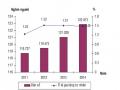 Divergence of Land Use Criteria in the Planning of Van Yen District in 2014 and Forecast for 2015 (Unit: %)
Question 6. Teachers, please evaluate the ability to plan and implement individual education plans for autistic children of teachers in kindergarten classes with autistic children (Teachers, please mark an X in a box on the right in each assessment content corresponding to a score of 5 being very good, 1 being very poor)
STT
Review content | Score | |||||
5 | 4 | 3 | 2 | 1 | ||
1 | Identify children's individual abilities and needs | |||||
2 | Building personal educational goals | |||||
3 | Identify individual education content | |||||
4 | Building a specialized impact operation system | |||||
5 | Take direct intervention measures | |||||
6 | Coordination of implementation of preschool teachers and center staff | |||||
7 | Assessing the results of change in children according to goals | |||||
Question 7. Teachers, please evaluate the level of implementation of the content of integrating inclusive education for autistic children according to the model of combining the center for education of children with disabilities and kindergartens?
STT
Content | Reviews | |||
TX | TT | CTH | ||
1 | Combine building a plan to organize activities | |||
2 | Combine content building | |||
3 | Combining educational activities | |||
4 | Incorporate in performance evaluation | |||
5 | Combine in exchanging professional experience for teachers on inclusive education for children with autism | |||
Question 8. Teachers, please evaluate the level and results of using inclusive education methods for autistic children according to the combined model between the center for education of children with disabilities and the kindergarten?
STT
Method | Level of implementation | Implementation results | |||||||
RTX | TX | Condition | CBG | Good | Rather | TB | Weak | ||
1 | Psychomotor method | ||||||||
2 | Time segmentation method | ||||||||
3 |
| ||||||||
4 | Method arising from reality | ||||||||
5 | ABA method - analysis application behavior | ||||||||
6 | TEACCH Method - Therapy and Education for Autistic Children and children with communication difficulties | ||||||||
7 | PECS - Communication System by exchanging pictures | ||||||||
8 | OT - (Occupational Therapy) Occupational therapy | ||||||||

Comment and evaluation method | |||||||||
10 | Psychological counseling methods | ||||||||
11 | Methods of developing and implementing individual intervention education programs for autistic children preschool age |
9
Question 9. Teachers, please evaluate the level of implementation of the inclusive education process for autistic children according to the combined model between the center for education of children with disabilities and the kindergarten?
STT
Educational process | Level of implementation | Implementation results | |||||||
RTX | TX | Condition | CBG | Good | Rather | TB | Weak | ||
1 | Coordinate diagnostic capabilities children's abilities and needs | ||||||||
2 | Collaborate on goal setting and intervention planning individual | ||||||||
3 | Organization of implementation of individual education plan for each child | ||||||||
4 | Coordinate results evaluation inclusive education | ||||||||
Question 10. According to teachers, is inclusive education for autistic children using a model combining a center for disabled children and a kindergarten effective?
Normal Effect
Inefficient
Question 11. Teachers, please compare the results of educating autistic children after applying the inclusive education model for autistic children according to the combined model between the center for education of children with disabilities and the kindergarten?
...................................................................................................................................................
...................................................................................................................................................
...................................................................................................................................................
...................................................................................................................................................
...................................................................................................................................................
...................................................................................................................................................
...................................................................................................................................................
Question 12. Do teachers want to participate in courses and training sessions on inclusive education in general and inclusive education for autistic children in particular?
Yes No
Question 13. Are teachers regularly trained in knowledge and skills in inclusive education for autistic children?
Often Sometimes Never
Question 14. Please state your wishes?
Material support with reasonable policies
Improve your level Teach regular classes Other
Question 15. How has the school inspected and evaluated the care and education of autistic children?
Regularly Periodically Unscheduled No
- Do schools and centers require teachers to have individual education plans for each autistic child?
Yes No
- Does the school or center have any additional regulations or requirements for teachers of disabled children?
Yes No
If so, what are the regulations and requirements:..........................................................................
Question 16. What recommendations do teachers have for the following forces to move towards the best educational environment for autistic children?
With the higher education management agency (Ministry of Education, Department of Education): ....................
...................................................................................................................................................
...................................................................................................................................................
With preschool teacher training facilities: ..........................................................................
...................................................................................................................................................
...................................................................................................................................................
To the School Board: ..............................................................................
................................................................................................................................................
................................................................................................................................................
................................................................................................................................................
With social educational organizations: ..............................................................................
................................................................................................................................................
................................................................................................................................................
For parents of autistic children: ................................................................................................................
................................................................................................................................................
................................................................................................................................................
We sincerely thank teachers for their cooperation and help.
APPENDIX 2
REQUEST FOR OPINIONS FROM MANAGERS AND TEACHERS ON MEASURES
INCLUSIVE EDUCATION FOR AUTISTIC CHILDREN ACCORDING TO THE COMBINATION MODEL BETWEEN DISABLED EDUCATION CENTER AND KINDERGARTEN
Hello comrade!
To educate autistic children in an integrated model combining a center for disabled children and a kindergarten, we propose 06 measures in the table below. Please give your opinion on the urgency and feasibility of each measure.
STT
Measures | Necessity (Percentage %) | Feasibility (Percentage %) | |||||
Very necessary design | Necessary | No need design | Very possible exam | Possible | Not feasible | ||
1 | Building content and inclusive education programs for autistic children according to a combined model between child education centers disability and preschool | ||||||
2 | Develop a plan for inclusive education and care for autistic children according to a model combining child education centers disability and preschool | ||||||
3 | Organizing the exchange and sharing of knowledge on inclusive education for autistic children according to a combined model between the center for education of children with disabilities disabilities and kindergarten | ||||||
4 | Building an inclusive education process for autistic children in preschools according to a combined model | ||||||
5 | Combining teaching methods, educational methods and special education methods into inclusive education for autistic children according to the combined model of the center for education of children with disabilities and kindergarten | ||||||
6 | Strengthening the inspection and assessment of inclusive education and assessment of autistic children according to the combined model of child education centers disability and preschool | ||||||
Information about the interviewee
Full name:........................................................................................................................
Work unit:……………………………………………………………………………………...
Thank you very much, comrade!
APPENDIX 3: AUTISM DIAGNOSTIC CRITERIA: ACCORDING TO DSM-IV (AMERICAN PSYCHOLOGICAL ASSOCIATION)
A. There are at least 6 criteria from (1), (2), (3):
(1) Defects in the quality of social relationships, with at least 2 of the following signs: | |
1. Marked impairment in the use of nonverbal communication behaviors (such as eye contact) eye contact, facial expressions, body posture and gestures to manage social relationships) | |
2. Poor development of age-appropriate friendships | |
3. Lack of seeking to share joy, interests, and achievements with others (not knowing how to show off or show others things) I like) | |
4. Lack of social relationships or emotional expression | |
(2) Qualitative communication deficit, with at least one of the following signs: | |
1. Slow or complete lack of development of speaking skills (not including attempts to Try to substitute other forms of nonverbal communication such as gestures or facial expressions) | |
2. Children who can speak have a marked deficit in the ability to initiate initiate and maintain conversation with others. | |
3. Using repetitive and stereotyped language or using eccentric language | |
4. Lack of varied, socially appropriate pretend or imitation play appropriate to the level of development. | |
(3) Repetitive, stereotyped patterns of behavior, interests, and activities (with at least one of the following signs) | |
1. Preoccupied, pervasive with one or more abnormally patterned interests often both in intensity and concentration. | |
2. Marked, uncompromising absorption in activities or interests special ceremony | |
3. Have repetitive or stereotyped gestures or movements (drawing, wringing hands, or complex body movements) | |
4. Persistent preoccupation with details of objects. | |
B. Developmental delay or abnormality in at least 1 of the following areas (<3 years old) | |
1. Social relations | |
2. Using language in communication | |
3. Symbolic or Imaginative Play |
How to write:
(-) None (+) Occasionally (++) Frequently (+++)Clear manifestation
APPENDIX 4
AUTISM RATING SCALE (CARS): CONSISTS OF 15 AREAS
1
Relationship with people | How to score: Each area is given from 1 to 4 points. From 15 to 30 points: Not autistic 31 to 36 points: Mild and moderate autism 37 to 60 points: Severe autism | ||
2 | Mimic | ||
3 | Emotional response | ||
4 | Body movements | ||
5 | Using objects | ||
6 | Adapt to change | ||
7 | Visual response | ||
8 | Auditory response | ||
9 | Reaction through taste and smell feel, touch | ||
10 | Fear or excitement | ||
11 | Verbal communication | ||
12 | Non-verbal communication | ||
13 | Activity level | ||
14 | Intellectual Response | ||
15 | General impressions of autism | ||
Total score |