
LIST OF ABBREVIATIONS
→ | Early Autism and Developmental Disabilities Monitoring | |
ASQ | → | Ages & Stages Questionnaires |
CARS | → | Childhood Autism Rating Scale autism in children) |
CDC | → | Centers for Disease Control and Prevention (Centre (US Department of Disease Control and Prevention) |
CD | → | Diagnose |
CS | → | Partner |
University of Health Sciences | → | School of Public Health |
DSM-IV | → | Diagnostic and Statistical Manual of Mental Disorders, 4th Edition (Diagnostic Statistical Manual of Mental Disorders, Fourth Edition) |
Mobile | → | Diabetes |
National Defense | → | Research object |
TV | → | Investigator |
Director | → | Family |
GDDB | → | Special Education |
ICD | → | International Classification of Diseases about disease) |
KTBS | → | Birth defects |
KTC | → | Confidence interval |
M-CHAT | → | Modified Checklist for Autism in Toddlers (Checklist Autism Screening (modified) |
N/A | → | Not applicable/no information available |
NCS | → | Caregiver |
Maybe you are interested!
-
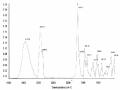
 1 H, 13 C-Nmr Spectrum Data Of At3 (Cd 3 Od, 500/125Mhz)
 -
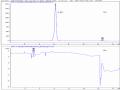 Hplc Spectrum of 5-Fu (A) and Hplc Spectrum of Pns-Gptms-Cs-Mpeg System Carrying Released 5-Fu (B)
 -
 Esi-Ms-Negative Spectrum of Ph11
 -
 1H Spectrum of Cde4 (Myricitrin)
 -
 Esi-Ms-Negative Spectrum of Ph12
→ | Negative predictive value | |
NVYT | → | Healthcare staff |
PDDST-II | → | Pervasive Developmental Disorders Screening Test-II (Pervasive Developmental Disorders Screening Test - II) |
PPV | → | Positive predictive value |
RLPTK | → | Autism spectrum disorder |
RLTK | → | Neurological disorder |
RLTT | → | Mental disorder |
STAT | → | Screening Tool for Autism in Two-Year-Olds (Tool autism screening for 2 year olds) |
EXCUSE | → | Hypertension |
TTSL | → | Data collection |
Medical Center | → | Medical Center |
LIST OF TABLES
Table 1. 1. Some popular RLPTK screening tools 18
Table 1. 2. Some diagnostic tools/criteria for ASD in children 22
Table 1.3. Prevalence of RLPTK in countries around the world 31
Table 2.1. Subjects and samples of qualitative research 68
Table 2. 2. Summary of 03 research phases 71
Table 3.1. Distribution of children participating in the study according to some personal factors of children 80
Table 3.2. Distribution of children participating in the study according to some family factors 81
Table 3. 3. Distribution of children according to some prenatal factors of mothers 82
Table 3.4. Distribution of children according to some factors during birth 83
Table 3.5. Distribution of children according to some postnatal factors 84
Table 3.6: Some information about screening activities using the M-CHAT checklist 85
Table 3.7: Screening results using M-CHAT checklist 86
Table 3. 8: Autism diagnosis results using DSM-IV 86
Table 3.9: Analysis of abnormal signs of children with autism spectrum disorder through M-CHAT 86
Table 3.10. Validity assessment of the M-CHAT Checklist for detecting RLTK (based only on the number of children who received DSM-IV diagnosis 1282) 88
Table 3. 11. Comparison of screening and diagnosis results of RLTK 88
Table 3.12. Validity assessment of the M-CHAT Checklist based on an estimated total of 40,243 children 89
Table 3.13. Univariate regression analysis of the association between some personal factors and RLPTK in children 89
Table 3.14. Univariate regression analysis of the association between some family factors and RLPTK in 91 children
Table 3.15. Univariate regression analysis of the association between some prenatal factors and RLPTK in 92 children
Table 3.16. Univariate regression analysis of the association between some factors in birth and RLPTK in children 94
Table 3.17. Univariate regression analysis of the association between some postnatal factors and RLPTK in children 96
Table 3.18. Multivariate logistic regression model of the association between individual, family, pre-, intra- and post-natal factors with RLPTK in children 98
LIST OF CHARTS, DIAGRAMS
Diagram 1. 1. Theoretical framework of factors related to RLPTK in children 46
Diagram 1. 2. Theoretical framework of barriers to provision and access to diagnostic and intervention services for RLPTK 63
Diagram 3. 1. Screening and diagnosis process for RLPTK 85
PROBLEM STATEMENT
Autism spectrum disorder (ASD) is one of the most common developmental disorders in children. Children with ASD have three characteristics: impaired social interaction, difficulty in communication, and limited, stereotyped, and repetitive behaviors. ASD not only affects the child's development but also has a great impact on the family and society [18]. The abnormalities of ASD have lifelong effects on individual functions in many areas such as learning, social adaptation relationships, and independence. The level of impact can range from mild to severe depending on the severity of ASD and associated disorders. However, the obvious lack of functions makes people with ASD disabled in the community, severely reducing their quality of life, and at the same time being a burden on the family and society, reducing the labor force, and leading to long-term economic costs.
In recent decades, due to changes in awareness and diagnostic criteria combining biological and environmental factors, the incidence of ASD has increased rapidly. Lotter (1966) conducted an epidemiological study of autism and reported that the rate of autism in children aged 8-10 years in the UK was 4.5/10,000 (0.45‰) [205]. According to data from the Centers for Disease Control and Prevention in the US, the rate of ASD in 8-year-old children in 2002 was 1/150 children (6.6‰), in 2012 it was 1/68 (14.6‰) and in 2014 it was 1/59 (16.8‰) [73].
In Vietnam, RLPTK has only been of interest since the 1990s. Research at the National Children's Hospital shows that the number of children diagnosed and treated for RLPTK is increasing; the number of children with RLPTK coming for examination in 2007 increased 50 times compared to 2000; the number of children coming for treatment for RLPTK in 2007 increased 33 times compared to 2000 [2]. In 5 years (2011-2015 period), there were 15,524 children coming to see a psychiatrist, accounting for 24.4% of the number of children visiting the psychiatric department at the National Children's Hospital [12]. Up to now, Vietnam has no data on the rate of children with autism nationwide. Research by Nguyen Thi Huong Giang in Thai Binh province [1], Pham Trung Kien in Thai Nguyen province [8] and Nguyen Thi Hoang Yen in some northern provinces [19] showed that the rate of autism in children fluctuates between 4-5‰.
Because the cause of ASD is still unclear, intervention and treatment are still very difficult and the results are limited. Early detection and timely intervention of ASD are very important to the child's recovery ability [113]. In developed countries, children with ASD are diagnosed very early in the first months of life thanks to screening and early detection of ASD integrated into the routine health care system [356]. In Vietnam, children are more concerned with assessing their physical development (such as weight, height) than their psychomotor development, so children are often screened and diagnosed with ASD late. At the National Children's Hospital, the rate of children with ASD who come for examination and are diagnosed late is 43.8% [2].
In addition, families with children with ASD in Vietnam face many difficulties in accessing early diagnosis and intervention services for their children. Parents and the community's understanding of ASD is still limited, the lack of ASD diagnosis and intervention services, social misconceptions, and stigma and discrimination against children with ASD can be barriers to early detection and intervention.
Epidemiological research on autism spectrum disorder and difficulties in accessing diagnosis and intervention services for autism spectrum disorder nationwide is extremely necessary to provide specific data for each region, as a basis for planning national programs on diagnosis and intervention for autism. Therefore, we conducted the study: "Epidemiology of autism spectrum disorder in children aged 18-30 months and barriers to accessing diagnosis and intervention services for autism spectrum disorder in Vietnam, 2017-2019" .
RESEARCH QUESTION
1. What is the prevalence of autism spectrum disorder in children aged 18-30 months in Vietnam?
2. What factors are associated with autism spectrum disorder in children aged 18-30 months in Vietnam?
3. Why do some families not take their children to intervention facilities even when they have been diagnosed with autism spectrum disorder?
4. What difficulties have parents of children with autism spectrum disorder faced and are facing when accessing autism diagnosis and intervention services in the socio-cultural context of Vietnam?
RESEARCH OBJECTIVES
1. Evaluation of screening results for autism spectrum disorder in children aged 18-30 months using the M-CHAT tool and diagnosis using DSM-IV in Vietnam in the period 2017-2018 .
2. Analysis of some related factors (individual, family, pre-, intra- and post-natal factors) with autism spectrum disorder in children aged 18-30 months in Vietnam in the period 2017-2018.
3. Analysis of some barriers in accessing diagnostic and intervention services of families with children with autism spectrum disorder in Vietnam in the period 2018-2019.