
disproportionate, only at 37-39% and creating jobs for more than 30% of the workforce [44].
According to the 2006 enterprise survey results of the General Statistics Office, the number of SOEs has continuously decreased, currently accounting for only 3.61%. SOEs are still the sector that attracts a large number of workers (accounting for 32.69%), concentrates the largest capital source (accounting for 54.06%), has high profits (accounting for 41.19%), and contributes the most to the State budget (accounting for 40.76%). This result accurately reflects the current state of SOEs: accumulating capital, establishing strong corporations, and operating more effectively [40].
But in reality, state-owned enterprises are still facing many difficulties, their business efficiency is still low, debt settlement and financial supervision are limited. The contribution of state-owned enterprises to the budget is not commensurate with the State's investment in them, as well as with the potential of state-owned enterprises; the situation of capital loss and leakage is very serious; the management of enterprises is still weak, etc. Revenue from state-owned enterprises in 2004 and 2005 consecutively did not meet the estimate, one of the biggest reasons being the low production and business efficiency of enterprises, the situation of continuous losses and only operating at a low level. There were 4/19 enterprises (accounting for 21%) audited in 2004 with a loss of 124 billion VND; there were 11/19 enterprises (accounting for 58%) with accumulated losses up to 1,058 billion VND as of December 31, 2004. The pre-tax profit margin of audited enterprises is very low, only reaching from 0.18% to 0.8%. These enterprises only use 50% of their assets but have a total tax debt of up to 4,300 billion VND while continuing to receive State guarantees for domestic and foreign loans with a very large volume. The inefficiency of many state-owned enterprises, in turn, increases the level of risk and drags down the business efficiency as well as the profitability of creditors, which are state-owned commercial banks. The dissolution of the Leather and Footwear Corporation, the serious degradation of the Seafood Corporation, the Silkworm Corporation,
To, the Livestock Corporation and a series of corruption cases discovered in almost all large SOEs are clear signs of the above inefficiency [33].
According to the Ministry of Finance's classification of SOEs, of the total number of SOEs classified, only 44.4% were classified as A, 39.5% were classified as B, and 16.1% were classified as C. The number of loss-making enterprises accounted for 19.5%, with the total loss of SOEs arising in 2005 being 1,919 billion VND; the total accumulated loss up to the end of 2005 was 654 billion VND [31].
Maybe you are interested!
-
 Current Status of Inspection and Examination of State-Owned Enterprise Activities in Dak Lak Province
 -
 Current Status of State Ownership Model in State-Owned Enterprises in Vietnam in the Period 1995-2020
 -
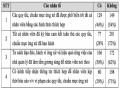 Current Status of Completing Internal Control System at Vietnam's State-owned Enterprises According to COSO International Standards
 -
 Current Status of Medium and Long-Term Credit for State-owned Enterprises at the State Treasury of Vietnam
 -
 Status of Equitization of State-owned Enterprises in Thanh Hoa Province
According to the Report of the State Enterprise Innovation Board, by the end of September 2006, the whole country had 105 corporations and general corporations; by the end of December 2007, the whole country had about 1,900 state-owned enterprises. It is expected that by the end of 2010, the whole country will have 554 enterprises with 100% state capital, including 26 large-scale corporations and general corporations. That is not to mention the enterprises that have been equitized but the State still holds more than 51% and are still operating under the state-owned enterprise mechanism. After more than 20 years of innovation, despite continuous growth in scale, the disadvantages of the state-owned enterprise system remain intact [42].
3.2. Current status of state-owned enterprises in Vietnam
The development of SOEs in Vietnam began with State Enterprises established after the August Revolution in 1945 through nationalization. However, in the period 1945-1960, the number of SOEs was limited. The massive development of SOEs in terms of quantity took place after the country was unified. In 1992, the whole country had 12,084 SOEs; in December 2007, this number decreased to about 1,900. Although the number of SOEs has decreased, this number is still large for our country's current economy [34].
Currently, compared to the total number of enterprises operating in the country, the number of SOEs accounts for 3.6%; 32.7% of the total number of employees; nearly 50% of total capital; 51.1% of fixed asset value and 40% of revenue,... [39].
Not only are they larger in scale, SOEs are also very strong thanks to their prime locations, large areas, brands that have existed for many years,... and more importantly, they have "managing" ministries, branches, provinces, and cities behind them. Some SOEs have business advantages and enjoy many special policies that have achieved quite high results and efficiency.
However, in general, the state-owned enterprise sector is not really strong, and there are even many weak enterprises. Commenting on state-owned enterprises, all opinions acknowledge that: they have great potential, receive many incentives, and receive large investments from the State, but their business efficiency is low and their competitiveness is poor [39].
According to statistics, up to now, the whole country still has about 1,900 state-owned enterprises, holding 20% of total social investment capital, nearly 50% of total state investment capital, 70% of total loans from foreign banks and nearly 60% of total credit capital of state-owned commercial banks,.... However, every year, the state-owned enterprise sector only contributes 40% of the income in the country's GDP [39].
Regarding production and business results and efficiency, except for SOEs with business advantages, enjoying many special policies with high results and efficiency, the rest are generally low, not commensurate with their position and budget investment. As of early 2008, our country still had over 600 SOEs operating from break-even to loss. Over 430 SOEs were classified as C (mainly due to low profit targets and low return on capital), including a number of transport corporations with accumulated capital and debt of up to thousands of billions of VND, dozens of times higher than the average capital of a SOE. According to the Ministry of Finance, the total assets of SOEs reached 747.4 trillion VND. Of the total "measured" assets, receivables accounted for 22.2%, and due debts amounted to 449.2 trillion VND. The debt-to-state capital ratio of many SOEs, especially those operating in the field of traffic construction, is very high, up to 5 times, and some units even reach 30-35 times.
times, not only makes the ability to pay debt poor but also leads to risks. According to data from the Vietnam Development Bank, in 2007, traffic construction projects had to repay 1,416 billion VND of State development investment credit loans (both principal and interest due or deferred) [33].
The Ministry of Finance stated that, currently, because the State does not have a mechanism to closely monitor this activity, many State-owned enterprises have mobilized too much capital, with outstanding debts many times higher than equity, leading to an uncertain payment capacity, affecting financial security. The latest data shows that out of 70 corporations and general companies, 30 units have a debt-to-capital ratio exceeding 3 times, and many enterprises even exceed 20 times, such as: Traffic Construction Corporation 5 42 times, Traffic Construction Corporation 1 22.5 times, Vietnam Machinery Installation Corporation 21.5 times, Vietnam Shipbuilding Industry Corporation 21.8 times, etc. [33].
Currently, SOEs still hold 51.1% of national fixed assets, but in reality, SOEs only produce less than 40% of GDP, contribute 30% of tax revenue and create jobs for only 3.6% of the workforce [35].
On the path to socialism and building a market economy, state-owned enterprises have an important position in the leading role of the state economy:
- State-owned enterprises must dominate development in economic sectors that are important to the stable development of the country's economy.
- State-owned enterprises must be the driving force for the development of other enterprises through high operational efficiency based on modern production technology and advanced management systems.
- State-owned enterprises are the main material resource of the State. State-owned enterprises must make a decisive contribution to the State budget. Based on the main contributions of State-owned enterprises and through the ownership of enterprises, the State
Socialism has in hand the strong economic potential to carry out its mission.
- State-owned enterprises are exemplary in solving social policies such as: employment, social assistance. In the past practice of our country, State-owned enterprises played an important role in solving social problems. Many social policies were well implemented through State-owned enterprises.
From the contradiction between the role of SOEs and the current state of production and business activities of SOEs as mentioned above, if our country wants to achieve the goal of economic-political-social development, and raise Vietnam's position in the international arena, we need to implement a new management mechanism and learn from the experience of the leading countries in the reform of SOEs. Therefore, the most urgent task of our country at present to reform SOEs is to equitize SOEs.
3.3. Limitations and causes of limitations 3.3.1. Limitations
Besides the achieved results, SOEs still have some of the following limitations:
Firstly, the scale of SOEs is still not large, there are still many enterprises operating in a number of industries and fields that the State does not need to control. Many provinces and cities have not been resolute in equitization, still allowing many SOEs to operate. The number of enterprises participating in the task of providing public products and services is still large, especially in the security and defense sectors. Many units have a low proportion of public product and service provision, a large proportion of production and business activities, but still continue to maintain SOEs [42].
Furthermore, the technological level of SOEs is still backward; some enterprises still use old technology, consuming high fuel and energy. Many fixed assets of SOEs are outdated from 10 to 30 years, including many assets awaiting liquidation. Many machines and equipment, although invested in modernly, are not fully utilized (many enterprises have low efficiency in using
Fixed asset utilization only reaches 50-60%) or total investment capital is large, leading to high depreciation costs and interest costs in product costs. Many state-owned enterprises have low labor productivity and operating efficiency, and their competitiveness does not meet the requirements of international economic integration; about 15% of enterprises are operating at a loss [39].
Second, the production and business results of state-owned enterprises in general and state-owned corporations in particular are not commensurate with state investment. The debt-to-capital ratio of state-owned enterprises is still too high, some companies have debts five times the state capital in the company, some companies have borrowed more than 20 times the capital, leading to high risks and low debt payment capacity. The handling of financial problems is still slow due to many reasons but has not been overcome [35].
Third, the implementation of new management models is still slow. Many SOEs and equitized enterprises have not had the conditions to fundamentally change corporate governance, partly because the State continues to hold a large proportion of shares in equitized enterprises. Some State corporations have not yet promoted their dominant role in the industry and field of operation. Some companies are still operating inefficiently. In many corporations, there is no consensus between the Chairman of the Board of Directors and the General Director in managing and operating the enterprise. In addition, the management mechanism of SOEs still has many shortcomings, from the autonomy in selecting personnel, operating the enterprise, to finance, prices, salaries, etc. [42].
Fourth, the transfer of the right to represent the capital ownership to the State Capital Investment Corporation is still slow. Some localities, in order to avoid the transfer, have transferred the State capital in these enterprises to other enterprises for management [42].
3.3.2. Causes of limitations
The State economic sector was born and grew up in a centralized planning mechanism, bureaucratic subsidy lasting for decades with policies
handover and allocation books. State-owned enterprises operate under the condition that capital is provided by the State, materials are imported according to quotas, and products are delivered according to pre-arranged plans. The material conditions are balanced by the State according to the quotas. Enterprises are simply units that produce goods according to plans of superiors, which loses autonomy and competitiveness. Therefore, the initiative and creativity of a business unit is not realized, so when switching to a market economy, that State economic sector reveals all the limitations in the production and business efficiency of enterprises, the weak and unsynchronized apparatus structure in adapting to the market. Specifically:
Firstly, state-owned enterprises have long been out of the competitive environment, their production and business activities are not linked to the market, thus they are slow to innovate technology and improve product quality. In a difficult economy due to both economic and historical reasons, the products these enterprises make are forced to be accepted by society despite their low quality and bad design. On the other hand, due to the widespread subsidy mechanism, economic accounting in enterprises is just a form of production without calculating costs, the phenomenon of fake profits and real losses and chasing after achievements in an ineffective way is extremely common. The inevitable thing that happens is that the level of management organization and technology progress slowly and the gap with the world is getting wider and wider [33].
Second, due to the use of raw materials higher than the norm, waste in the production process, many damaged products, increased salary costs and the need to expand production, many units have borrowed capital accounting for up to 90% of total capital, leading to depreciation costs and interest costs accounting for a large proportion of product costs [33].
Third, the organization of the State-owned enterprise apparatus is not suitable because the concept of ownership of enterprises is unclear, there is no full distinction between State ownership and business management rights of the Director and the collective of employees.
Collective ownership in general, essentially “ownerless” is common in enterprises [35].
Fourth, the distribution is not actually carried out according to the principle of distribution according to labor but mainly serves the social policy with a heavy egalitarian character, which does not create motivation to stimulate workers in state-owned enterprises to improve work efficiency and labor productivity. In addition, the staff with knowledge and qualifications do not meet the requirements of the market economy, lacking dynamism and risk in business [42].
In summary, it can be seen that the inefficiency of the State economic sector is basically due to the existence of the centralized planning, bureaucracy, and subsidy mechanism in the past decades. Previously, due to the historical conditions of the resistance war against the US, the economy was managed in such a way that it would ensure the highest mobilization of all potentials for the victorious resistance without having to take into account efficiency. However, when the country has moved to a period of peace, building a multi-sector commodity economy in the direction of socialism under the leadership of the Party and the management of the State, and at the same time our country is on the path of international economic integration, the slow innovation of thinking and slow innovation of action will hinder the development of productive forces and push the economy into crisis.
Currently, our country is entering a new phase, the issue of how to accelerate economic growth and improve people's lives is the top priority. Since 1990, in order to improve the efficiency of state-owned enterprises, our Party has advocated piloting the transformation of a number of state-owned enterprises into joint stock companies to create new motivation in enterprise management; on the other hand, to improve the quality of state-owned enterprises' operations, mobilize more capital for development investment requirements and adjust the structure of state-owned enterprises to be competitive when opening up more widely and deeply.