
Due to the lack of a strategy for educating cadres and party members about communism when changing the mechanism (from subsidized to market mechanism)
Ethics is the manifestation of voluntary and self-conscious consciousness in human behavior. To perform ethical behavior, one must first have ethical consciousness. Therefore, each person must be educated and trained in ethics from childhood to adulthood and throughout life. Ethics is historical, so the concept of ethics and ethical values always change according to historical circumstances. If there is no regular education to shape and strengthen ethical awareness, people can easily become corrupt and degenerate.
The 8th Congress of our Party has pointed out that the Party building work in recent years has “not paid due attention to the issue of education and training of political and moral qualities for cadres and party members” [4, p.137]. The reason is that we do not have a correct concept of the role of moral education in Party building work. There is a notion that cadres and party members are mature and steadfast in all aspects, so there is no need for moral education! There is also a notion that when the economy develops, social ethics and personal ethics will “automatically” develop, so moral education is redundant, etc. Such misconceptions have led to a situation of laxity and underestimation of moral education for cadres and party members. Even if anyone raises the issue of moral education and moral training, they are still considered old-fashioned and rigid, so we do not have a reasonable moral education strategy when society is transforming its economy from a centralized bureaucratic subsidy mechanism to a market mechanism.
Due to the lack of strategy, in the training, education, and development of cadres, if any, moral education is only carried out in a formal way, lacking persuasiveness, far from reality, with sketchy content, monotonous form, and not bringing practical results. In schools, moral education is not considered as important as all other subjects, this is an undeniable reality in the education and training of cadres today. This has become the cause contributing to the moral degradation, allowing individualism to prevail in a part of the current leaders and managers.
Due to the failure to properly inspect, supervise, manage cadres and promptly and strictly handle degenerate cadres who violate Party discipline and State laws.
Maybe you are interested!
-

 Current Status of Applying Ho Chi Minh's Thought on Cadre Ethics
 -
 Applying Ho Chi Minh's thought in political theory education at district-level political training centers in Vietnam today - 27
 -
 Current status of career guidance education management in high schools in District 1, Ho Chi Minh City - 12
 -
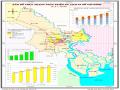 Current Status of Exploiting Human Resources to Serve Tourism Development in Ho Chi Minh City in the Period 2006 - 2011
 -
 Building the Party Committee of current Military Officer Schools according to Ho Chi Minh's ideology - 2
In addition to the lack of proper attention to the work of revolutionary ethics education, we also underestimate, or even neglect, the supervision, inspection, and management of cadres and party members by all levels, sectors, and the people. In fact, in recent years, "the handling of degenerate elements in the Party and the State apparatus has not been strict. The spirit of criticism and self-criticism has declined at many levels of the Party" [6, p.53].
It can be said that the management and inspection, first of all, of the agencies with the function of managing cadres and Party committees at all levels, are still very loose. The organization of people to participate in supervising and educating cadres and Party members is not done regularly and is not good. Therefore, many cadres and Party members speak according to the Party's principles but live differently, perform well at the agency but not well at home and in the residential area. The implementation of the principle of criticism and self-criticism in the Party's grassroots organizations is not serious, leading to the consequence that some cadres with positions and power who violate the law and are not reminded and corrected in time, so their shortcomings become more and more serious. Meanwhile, the handling of cadres who violate the law and have degraded their moral and lifestyle is not strict and not timely. This leads to the function of prevention, deterrence as well as education in the Party being limited, even losing its positive effect. Ho Chi Minh also quoted Lenin's opinion when Lenin learned that the Moscow People's Court had lightly handled a bribery case on May 2, 1918, saying that "not executing bribe takers, but handling them in such a joking, soft, and gentle manner, that is a shame for the Communist Party, for the revolutionaries. It is necessary to name the comrades who take bribes so that public opinion can reprimand them and expel them from the Party" [15, p.496] to emphasize the need to be strict when dealing with corrupt cadres. Failure to handle them strictly not only makes the masses lose confidence, and become less active in monitoring, inspecting, and fighting against violations of ethics and laws by cadres with positions and power, but also makes the cadres themselves

This disregards discipline and the law, setting a bad example of moral awareness and legal awareness before the masses.
The above causes can be considered the most fundamental causes affecting the moral qualities of cadres. Therefore, to limit this situation, we must first limit and eliminate the causes that have given rise to it. That is, we must perfect the mechanisms, policies and laws in the market economy, pay attention to improving the work of ideological and moral education, the work of inspecting and controlling cadres... and raise the awareness of training and striving of each cadre in the current period.
2.1.3. Current status of applying Ho Chi Minh's thought on cadre ethics in cadre work of some other organizations in the political system
* The current status of regulations on ethics of Vietnam Fatherland Front cadres in the Charter of the Vietnam Fatherland Front . The Vietnam Fatherland Front has the task of gathering and building the great national unity bloc, increasing
Strengthen political and spiritual consensus among the people; propagate and mobilize the people to promote their mastery, implement the Party's guidelines and policies, strictly enforce the Constitution and laws; provide social criticism on draft Party guidelines and policies and laws of the State, supervise the activities of State agencies, elected representatives and State officials; collect opinions and recommendations of the people to reflect and recommend to the Party and State; participate in building and consolidating the people's government; work with the State to care for and protect the legitimate rights and interests of the people; participate in developing friendship and cooperation between the Vietnamese people and people of countries in the region and the world.
Article 2 of the Vietnam Fatherland Front Charter stipulates the obligations of members : 1. Implement the Charter and Program of the Vietnam Fatherland Front ; collect and reflect the opinions and recommendations of the people and notify the results of the implementation of the program of coordination and unified action with the Vietnam Fatherland Front Committee at the same level; 2. Propaganda and mobilize members, union members and people to implement the Constitution and laws, implement the Vietnam Fatherland Front Program ; 3. Urge members of their organizations to properly implement the policy of great national unity and participate in the work of the Front in their place of residence; 4. Unite, cooperate and help organizations and individuals who have not joined the Front but have the spirit of responding to, supporting and implementing the Vietnam Fatherland Front Program .
The Vietnam Fatherland Front advocates promoting the tradition of patriotism, national pride, the will to be self-reliant and self-reliant, uniting all Vietnamese people at home and abroad, regardless of social class, ethnicity, religion, belief, past, ideology and political views, as long as they support the renovation process, with the aim of maintaining independence, national sovereignty and territorial integrity, successfully carrying out the cause of industrialization and modernization of the country for a rich people, a strong country, a fair, democratic and civilized society, implementing President Ho Chi Minh's Testament : "Building a peaceful, unified, independent, democratic and prosperous Vietnam" , actively contributing to the cause of peace, national independence, democracy and social progress in the world.
The Vietnam Fatherland Front is a part of the political system of the Socialist Republic of Vietnam led by the Communist Party of Vietnam, the political basis of the people's government, representing the legitimate and legal rights and interests of the people, a place to express the will and aspirations, gather the great national unity bloc, promote the people's mastery, and a place to consult, coordinate and unify the actions of its members.
* The current status of applying Ho Chi Minh's ideology on cadre ethics in the Vietnam Fatherland Front organization. In general, most cadres of the Vietnam Fatherland Front have achieved the ethical standards.
ethics of cadres as stipulated in the charter. However, there are still some limitations that need to be specifically overcome:
- Basically, the Front organization has not yet promoted its role as a representative of the legitimate interests of the people, and has not yet deeply propagated and mobilized potential talented and virtuous people to introduce to the Party and the State. The cadre organization still lacks professional training and development, has not yet self-cultivated to improve professional qualifications, has not yet improved revolutionary ethics when it has not been close to the people, closely followed the people, and has not yet seen the people's thoughts and aspirations to reflect to the Party. Many pressing issues of the people have not been coordinated by the Fatherland Front cadres to promptly overcome them. The cadres are still weak in terms of quantity and organization, leading to slow development and when facing difficulties in reality, they easily fall into individualism, leading to further degradation of cadre ethics.
- Being a bridge between the people and the Party and the State with many limitations in the work of organizing cadres, the old regime still has many cadres of the Fatherland Front who do not want to acquire new knowledge, do not want to change themselves to suit the new conditions, so they are stagnant, do not understand the problem deeply, and do not cultivate ethics regularly throughout their lives, making the people's reflections when the Fatherland Front cadres receive and convey them to their superiors may not be accurate, do not really grasp the aspirations, leading to the possibility that the policies and guidelines set by the superiors are not suitable to the actual aspirations and requirements. The coordination between the State and the work of the Fatherland Front is still stuck, not concretized into detailed and easy-to-understand documents, leading to shortcomings in operations.
- The ethics of the Vietnam Fatherland Front cadres have not yet fully grasped President Ho Chi Minh's ideology on great national unity, wholeheartedly serving the people, specifically revolutionary ethics, always placing themselves as servants of the people for the people. Therefore, many cadres in the Vietnam Fatherland Front organization are still corrupt, corrupt, take bribes, abuse power, and abuse many people.
* Reasons for the above limitations:
- The staff of the Fatherland Front is not up to par with the new requirements and tasks of the country, lacking dynamism, creativity and professionalism in their work. They have not seriously applied Ho Chi Minh's moral thought on cadres, leading to a lack of research and updating of new issues arising in practice, leading to a very passive application of work. The spirit of initiative, creativity and responsibility of some cadres working for the Fatherland Front in some places has not been promoted.
- The ethics of the Front cadres have not been promoted, thus affecting the people's right to mastery at the grassroots level, which is not fully promoted. Policies and working conditions still have many shortcomings, and the tasks assigned by the Party and the State are still neglected. There is a sense of criticism, self-criticism, self-study and self-cultivation to improve the theoretical and professional level and raise the ethical awareness of cadres in the organization in order to keep that organization from falling behind the new era.
* Revolutionary ethics for union members and youth:
During his lifetime, President Ho Chi Minh always attached great importance to moral education for union members and young people. He looked at union members and young people comprehensively, clearly seeing their position and role as "a supporter of the older generation of youth, and at the same time a person in charge of guiding the future generation of youth." Therefore, he paid special attention to organizing and nurturing union members and young people into revolutionary shock troops, the Party's reserve force to faithfully and excellently continue the cause of the class and the nation.
He required each member and youth to be self-disciplined, constantly study, and be exemplary in all work. Along with intellectual education, improving professional qualifications, and mastering science and technology, each member and youth must constantly cultivate revolutionary ethics because according to him: "Young people must have virtue and talent. Having talent without virtue is like a very good economist who embezzles money, not only does not do anything beneficial to society, but also harms society. If one has virtue but no talent, it is like a Buddha who does not do any harm, but also does not benefit humanity" . That revolutionary ethics is the radical loyalty to the revolution, wholeheartedly serving the people, and being ready to sacrifice oneself for the country, which is reflected in the daily thoughts and actions of each member and youth. In order for the youth to become true revolutionaries, new socialist people, he emphasized the need to educate union members and young people in honesty, integrity, modesty, simplicity, a positive, diligent, daring and creative working spirit. Union members and young people must always strive to improve themselves, live in thrift, integrity, impartiality, always put the interests of the Party and the nation above all else, and must practice self-criticism and serious criticism to help each other progress.
Not only that, he also required each union member and young person to fight against inferiority complex, self-interest, only caring about their own interests and activities, against the mentality of wanting pleasure and avoiding hardship, against the habit of looking down on labor, especially manual labor... these are bad habits that hinder the spirit of progress of union members and young people.
Loving wholeheartedly and placing complete trust in the members and youth, he emphasized: " The youth will be the masters of the country. They must study forever and progress forever to be truly young ". Before leaving, he left behind "a myriad of love" for the members and youth. He assessed: "Our members and youth are generally good, they are enthusiastic in everything, not afraid of difficulties, and have the will to progress" ; and advised: " The Party needs to take care of educating them in revolutionary ethics, training them to become successors in building socialism who are both "red" and "expert". Nurturing the next generation of revolutionaries is a very important and necessary task" . From his heartfelt letter to the Vietnamese youth at the beginning of the century to his last "Will", Uncle Ho always reserved for the members and youth love, affection, and thoughtful care.
Not only caring for, educating, and encouraging union members and young people to study and strive, President Ho Chi Minh was also a model of revolutionary morality, integrity, impartiality, wholeheartedly serving the revolution and the people. He fought all his life for the independence and unification of the Fatherland, for a prosperous and happy life for the people.
Imbued with and thoroughly grasping his ideology, our Party and State always promote the role of union members and youth. They are considered the vanguard force, the Party's reliable reserve force, and youth work is considered a matter of special concern and direction. Whether the cause of innovation is successful or not, whether the country has a worthy position in the world community or not largely depends on the union members and youth, on the training and education of the young generation. Therefore, it is necessary to pay attention to education, training and comprehensive development in politics, ideology, ethics, lifestyle, culture, health, career, job creation, talent development - creativity, promoting the vanguard role... of union members and youth in the cause of building and defending the Fatherland.
Studying and following Uncle Ho's ideology and example, under the leadership of the Party, with the spirit of "Nothing is difficult, only fear of not being steadfast, digging mountains and filling seas, determination will make it happen", the youth of the whole country have promoted the tradition of the previous generation.
Before, enthusiastically and passionately responded to the campaigns and movements: "Pioneering socio-economic development and national defense", "Accompanying young people to establish their careers", actively participating in forums: "Vietnamese youth live, fight, work and study following the example of great Uncle Ho", "Carrying on the tradition - Forever twenty", "Young people live beautifully and usefully"...
2.2. Solutions to continue applying Ho Chi Minh's thoughts on cadre ethics in Vietnam today
2.2.1. Overall solution
The general goal of the Socio-Economic Development Strategy 2011-2020 is: “By 2020, our country will basically become an industrialized country in a modern direction; the socio-political situation will be stable, democratic, disciplined, and consensual; the material and spiritual life of the people will be significantly improved; independence, sovereignty, unity, and territorial integrity will be maintained; Vietnam's position in the international arena will continue to be raised; creating a solid foundation for further development in the following period” . That goal requires party organizations and the entire Party to have new leadership capacity and fighting strength, in which the key issue is to build a clean and strong contingent of cadres and party members.
Draft Report on the assessment of the results of the implementation of the 5-year socio-economic development tasks 2011-2015 and the direction and tasks of the 5-year socio-economic development tasks 2016-2020 Resolution of the 10th Party Congress clearly stated: "Developing high-quality human resources, especially a team of good leaders and managers; a team of leading scientists, technologists, and cultural officials..." is considered one of the important driving forces to promote the cause of industrialization and modernization, a condition to promote human resources, a basic factor for social development and rapid and sustainable economic growth. Promote training and fostering of cadres at all levels to meet the development requirements of the country. Implement well the " Cadre strategy in the period of promoting industrialization and modernization".
Therefore, from now until 2020, focus on implementing well the following major tasks and solutions:
(1). Thoroughly grasp the viewpoints and goals of building a team of cadres: Cadres are the decisive factor in the success or failure of the revolution, and are