
as well as the sublimation of human beauty. Along with space, artistic time is also an indispensable means for the expression of images. The time that prevails in works about war is present, linear time; in works of everyday life, simultaneous time dominates, because it is an effective means for characters to express their "past feelings".
The closest and most direct artistic means is artistic language. Writers pay great attention to the speech of the Central Highlands people, incorporating it into their works in a very natural way, highlighting the cultural life and personality of the Central Highlands people. That is the phonetic system according to the Vietnamese pronunciation of the Central Highlands people, the vocabulary system that combines common vocabulary with local words, and grammatical structures that often do not follow Vietnamese grammar intentionally by the author. All bear the strong mark of life attached to the mountains and forests. The use of rhetorical devices is also a notable point. In addition to common devices such as metaphor, metonymy, hyperbole, listing, etc.; writers focus on two devices: comparison and personification as the best way to express the linguistic habits of the Central Highlands people, to emphasize the Central Highlands character in their works. The sentence system also clearly shows the linguistic characteristics of the Central Highlands people and of Central Highlands prose works. In direct speech, short sentences are very prominent. They show the atmosphere of the story, the way of thinking and the language level of the Central Highlands people. In indirect speech, long sentences are also used to show the inner life of the character and to lead the story. In addition, tone is also an important artistic technique that creates the atmosphere of the story. There are two prominent tones, which are the heroic epic tone that shows the heroic character and the heroic battle atmosphere of the Central Highlands fighting. That is the lyrical tone that shows the calmness of souls filled with love for their homeland and community; and also the sadness of the gradual loss of good cultural values.
5. Literature is the world of love, sadness and beauty. The condensation of aesthetic values is what every writer strives for. To do so, the writer must have intense emotions. If the writer does not have a special affection for his aesthetic object, his artistic world will be a terrifying void, a void left by blandness and tastelessness. Jacques Dournes said about his love for the Central Highlands: “If you have to understand in order to love, then you have to love in order to understand”. For the Central Highlands, you have to love in order to understand, the more you understand, the more you love. In addition to the native writers, other writers have loved the Central Highlands as their own homeland, loved the Central Highlands people as their own blood relatives, especially Nguyen Ngoc and Trung Trung Dinh. It is that love that has created works that have a long-lasting vitality in the hearts of readers. These works have contributed to promoting and preserving the cultural values as well as the good qualities of the Central Highlands people who are in danger of gradually deteriorating in the face of the unprecedentedly vigorous evolution taking place here. These works have the fundamental nature and value of creating momentum for the development of Central Highlands prose in the later stages. These works have contributed to the river of Vietnamese culture and literature a stream full of alluvium and rich in sedimentation, thereby beautifying the Vietnamese soul.
Maybe you are interested!
-
 Exploring the space of gong culture in the Central Highlands. Current situation and solutions for local tourism development - 11
 -
 Organizing and Managing the Performance of Central Highlands Gong Culture
 -
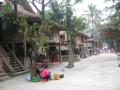 Some Pictures of the Transformation of Traditional Culture of Thai People in Mai Chau
 -
 Solutions for sustainable tourism development in the Central Highlands - 23
 -
 Political culture of political cadres at the platoon level of the Vietnam People's Army today - 5
6. Culture and people are only two specific aspects of artistic prose written about the Central Highlands. No matter how closely the study of these two issues is done, it is difficult to highlight the entire life of the Central Highlands that writers have generalized in their literary works. Literature written about the Central Highlands is currently developing strongly in both prose and poetry. In recent years, many remarkable literary works have appeared reflecting the contemporary life of the Central Highlands. Studying the entire literature of the Central Highlands and literature written about the Central Highlands is the next direction for researchers in the coming time.
AUTHOR'S WORKS RELATED TO THE THESIS
HAS BEEN ANNOUNCED
1. The Central Highlands Forest through the pages of literature. Literary Commentary Yearbook - Ho Chi Minh City Association for Research and Teaching Literature 2009.
2. Literature and the storytelling culture of the Central Highlands . Science Journal - Ho Chi Minh City University of Education, No. 23, October 2010.
3. The echo of gongs in the literature of the Central Highlands . Journal of Ethnic Culture, May 2009 issue.
4. The Central Highlands quality in Nguyen Ngoc's literature . Young scientists conference 2008 - University of Social Sciences and Humanities, Ho Chi Minh City.
5. The ferry, a treasure of the Central Highlands villages . Hon Viet Magazine, December 2009 issue.
6. Xanu forest from a cultural perspective . Dat Quang Magazine, October 2010 issue.
7. Can wine - "miraculous forgetting medicine". Gia Lai Education Magazine, Spring 2008.
8. Water in the consciousness of the Central Highlands people, Gia Lai Monthly, Spring 2010 issue.
9. Faces of culture . Science and Technology Magazine - Gia Lai Department of Science and Technology, Spring issue 2010.
10. Nup – the one who brings spring to the Central Highlands. Gia Lai Monthly Magazine No. 2043, December 2007.
11. Cloves, rice wine and... Trung Trung Dinh . Gia Lai Monthly, December 31, 2009.
12. The beauty of the Central Highlands people in Trung Trung Dinh's literature . Gia Lai monthly magazine spring 2009.
13. The Fire of the Central Highlands . Gia Lai Police Magazine, Spring 2009 issue.
14. Stor Village today . Saigon Giai Phong Newspaper, Saturday, March 15, 2009.
SURVEY DOCUMENTS
1. Ngoc An (2007), “Suoi dan to-rung” Three letters , People's Army, Hanoi
2. Trung Trung Dinh (1998), The life of artist Xu Man , National Culture, Hanoi.
3. Trung Trung Dinh (1996), Eleven short stories , Writers Association, Hanoi.
4. Trung Trung Dinh (1993), “The Legend of Ialy”, Literature and Arts Newspaper (44), pp.10-11
5. Trung Trung Dinh (2006), Lost in the forest, Alley with holes , Literature, Hanoi.
6. Trung Trung Dinh (2002), Lunar Eclipse Night , Writers Association, Hanoi.
7. Y Dien (1978), Ho Giang , Ho Chi Minh City Publishing House.
8. Y Dien (1986), Drai Holing goes to the light, Culture, Hanoi.
9. Y Dien (1993), Stories on the banks of the Hinh River , Ethnic Culture, Hanoi.
10. Y Dien (1996), Three brothers , Ethnic culture, Hanoi.
11. Y Dien (2005), Fire in our hands , Dak Lak Literature and Arts Association.
12. Vu Hanh (2007), Jungle novel , Culture, Hanoi.
13. Vu Hanh (1980), Jade , Literature and Arts, Ho Chi Minh City
14. Vu Hanh (1986), Blood Pen , Literature, Hanoi.
15. Vu Hanh (1987), Xa Nieng Girl , Tre, Ho Chi Minh City
16. Thu Loan (1997), “Mo Village”, Ethnic and mountainous literature and arts (1,2) pp.24-26.
17. Thu Loan (2008), The mist has not yet cleared in Trang village , Ethnic culture, Hanoi.
18. Suong Nguyet Minh (2003), "Tay Nguyen Chronicle", VN Army (560), pp.64-74.
19. Kim Nhat (2000), “The Jungle Man on the Top of Elephant Mountain”, Ethnic Culture (3)
20. H'Linh Nie (2005), Red Wind , Writers Association, Hanoi.
21. Linh Nga Nie Kdam (2005), Ngan nga Rlet Mnong, Kim Dong, Hanoi.
22. Linh Nga NieKdam (2007), Tay Nguyen Village Elder, Ethnic Culture, Hanoi.
23. Linh Nga Nie Kdam (1999), Moon of Dialogs, Ethnic Culture, Hanoi.
24. http//www.linhnganiekdam/truyen-ngan-linh-nga
25. Nguyen Ngoc (1957, White Flower Spring, Women, Hanoi. 26a. Nguyen Ngoc (1970) The Country Stands Up , Education, Hanoi.
26. Nguyen Ngoc (1999), Ninh Nong Month , Da Nang Publishing House.
27. Nguyen Ngoc (2005), Random thoughts on remembering and forgetting, Ho Chi Minh City Literature and Arts.
28. Nguyen Ngoc (2008), Barefoot, Ho Chi Minh City Literature and Arts.
29. Nguyen Ngoc (2006), Thinking along the way, Ho Chi Minh City Literature and Arts.
30. Nguyen Ngoc (2006) Selected works, Literature, Hanoi.
31. Nguyen Ngoc (2009), Nguyen Ngoc, works, Writers Association, Hanoi.
32. Khuat Quang Thuy (1981 ), Pui Ko Lo, Kim Dong, Hanoi.
33. Khuat Quang Thuy (1996 ), Wooden Tears, Labor, Hanoi.
34. Khuat Quang Thuy (1986 ), Sunny Threshold, Women, Hanoi.
35. Khuat Quang Thuy (1999 ), Not a Joke, Writers Association, Hanoi.
36. Khuat Quang Thuy (1998), Selected short stories , Writers Association, Hanoi.
37. Do Tien Thuy (2009), Urban Wounds, Tre, Ho Chi Minh City.
38. Thao Truong (1998) “Meeting Hero Nup Again” First Prize in Literature , Writers Association, Hanoi
39. Various authors (2002), 20th century Central Highlands prose, Ethnic culture, Hanoi
40. Many authors (2000), Collection of ethnic and mountainous prose of the 20th century , Ethnic Culture, Hanoi.
41. Many authors (1995), Gia Lai Literature Collection , Gia Lai Literature and Arts Association.
42. Various authors (1998), Collection of ethnic and mountainous literature , Education, Hanoi
B- RESEARCH MATERIALS
43. Nguyen An (2000), “Writer Nguyen Ngoc during the years of resistance against America” , Army Literature and Arts, Hanoi (4).
44. Due Anh (1998), “Gong life”, Nhan Dan, March 26.
45. Phuong Anh (1999), “Central Highlands Identity”, Culture of Ethnic Groups (4), p.4.
46. Nguyen Kim Anh, Nguyen Thi Truc Bach, Nguyen Tan Dac (2002), Culture - Literature from a perspective , Social Sciences, Hanoi.
47. Nguyen Kim Anh, editor-in-chief (2004), Southern novels in the late 19th and early 20th centuries , Ho Chi Minh City National University.
48. Ngoc Anh (1960), Xo Dang ethnic group , Ethnic Magazine (13), pp.35-39.
49. Ngoc Anh (1961), Indomitable Central Highlands , Popular, Hanoi.
50. Ngoc Anh… collected (1965), Bana Tay Nguyen Folk Tales , Literature, Hanoi.
51. M. Bakhtin (1992), Theory and poetics of the novel , Nguyen Du Writing School, Hanoi.
52. Roland Barthes (1997), Zero Degrees of Writing , Writers Association, Hanoi.
53. Nong Quoc Binh (1998), "To have better compositions about the Central Highlands", Journal of Ethnic Culture (8) pp.21-22.
54. Nong Quoc Binh (1998), “Central Highlands, to have pages to write” , Culture Newspaper, July 5.
55. Ngo Vinh Binh (1991), “Mother Rice, Supreme Being on the Highlands”, Culture and Arts (21,22), p.3.
56. Ngo Vinh Binh (1993), “Tet in the Upper Highlands”, Education and Times, January 11, p.12.
57. Phan Xuan Bien (1985), “Organization of traditional villages of the Central Highlands ethnic groups”, Ethnology (3), pp.31-40.
58. Tran Lam Bien (1993), “Long Mile of the Central Highlands”, Culture and Arts (2), pp.45-47.
59. Dambo (2003), The Land of Fantasy, Writers' Association, Hanoi.
60. Thu Bon (1964), Song of the Cho Rao Bird , Literature, Hanoi.
61. Thu Bon (1877), Thirsty Ba-dan , Thanh Nien, Hanoi.
62. Nguyen Van Bong (1998), Notes on the Central Highlands , New Works, Hanoi.
63. Phan Van Be (2006), Brief History of the Central Highlands , Education, Hanoi.
64. Tran Manh Cat (1990), “Mourning of indigenous people in the Central Highlands”, Ethnology (4), pp.47-52.
65. Nong Quoc Chan, Kpa Y Lang, Nay Phin (1981), Anthology of poems and literature of Vietnamese ethnic minorities , Culture, Hanoi.
66. Nong Quoc Chan (1993), “The sound of gongs, the “Yang” command or the human soul”, Nhan Dan Newspaper (16), p.8.
67. Selected by Nong Quoc Chan (1998), Central Highlands Literature Conference , Writers Association, Hanoi.
68. Duong Manh Chau (1970), Vietnamese ethnic minorities under French colonial rule , National Academy of Public Administration, Saigon.
69. Y Son Chau (1984), "Some cultural and social issues in the Central Highlands" , Social Sciences (2), pp.69-80.
70. Hue Chi, Phong Le (1960) “The way of expressing people in the story collection Underground Water”, Literature Magazine (7).
71. Dao Tu Chi (1957), “The Village Head in the Southern Truong Son region”, Ethnic Special Issue (6) pp.33-36.
72. Le Dinh Chi (1969), The problem of ethnic minorities in Vietnam , National Academy of Public Administration, Saigon.
73. Nguyen Kim Chi (1969), Institution of the Thuong customary court , National Academy of Administration, Saigon.
74. Nguyen Kim Chi (1969), Law and customs in the Highlands , National Academy of Public Administration, Saigon.
75. Nguyen Van Chinh... selected (2007), Tay Nguyen Literature and Art - unique features in Vietnamese culture, People's Army, Hanoi
76. Dambo (2003), The Land of Fantasy, Writers' Association, Hanoi.
77. Nguyen Van Dan (1998), Comparative Literature Theory, Social Sciences, Hanoi.
78. 47. Nguyen Van Dan (2004), Literary research methodology, Social Sciences, Hanoi.
79. Phan Huu Dat (1994), Harvest praying ceremonies of ethnic groups in Vietnam , Ethnic culture, Hanoi.
80. Chu Xuan Dien (2002) Vietnamese Cultural Foundations , Ho Chi Minh City National University.
81. Chu Xuan Dien (1963), "Studying the value of the song of Dam San", Literature Review (3).
82. Jacques Dournes (2002), Forest, Women, Madness , Writers Association, Hanoi.
83. Ngo Van Doanh (1993), “Unique statues of the Central Highlands tombs”, Journal of Culture and Arts (2), pp. 55-59.
84. Ngo Van Doanh (1991), “Central Highlands tomb statue style”, Folklore (3), pp. 57-61.
85. Ngo Van Doanh (1995), Grave-abandoning Festival in the Northern Central Highlands , Ethnic Culture, Hanoi.
86. Ngo Van Doanh (1993), “Grave-leaving prayers - a type of folk literature
"special features of the Central Highlands", Folklore Magazine (2) pp.32-38.
87. Collected by Ngo Van Doanh (2001), King of Fire, King of Water , Kim Dong, Hanoi.
88. Ngo Van Doanh (2007), Po thi - the resurrected death: Tomb abandonment ceremony and mausoleum in the Northern Central Highlands, The Gioi, Ho Chi Minh City.
89. Luu Danh Du (1958), "Tet of the Southern Highlanders", Economic Revival (51,52).
90. Nguyen Ngoc Du (1970), Ethnic groups in the Highlands , National Academy of Public Administration, SG.
91. Nguyen Dang Duy (2002), Vietnamese Cultural Studies , Culture and Information, Hanoi.
92. Hoang Du (1988), Iado female chief , Ethnic culture, Hanoi.
93. Bui Minh Dao (2004), “Some things about Rong house, Rong house and Central Highlands culture”, Ethnology (4), pp. 36-42.
94. Nguyen Tan Dac (1985), “From gong music to Central Highlands culture”, Folklore Magazine (3-4).
95. Nguyen Tan Dac (2005), Culture, society and people of the Central Highlands , Social Sciences, Hanoi.
96. Nguyen Tan Dac, Nguyen Van Hanh (1999), Cultural, literary and linguistic issues , Social Sciences, Hanoi.
97. Trung Trung Dinh (1999), “Bok Nup”, Military Literature (9), pp.49-54.
98. Trung Trung Dinh (1998), “A cultural address in the Central Highlands”, Nhan Dan Newspaper, January 5.
99. Trung Trung Dinh (1995), “Central Highlands Rhythm”, Gia Lai Newspaper, January 1.
100. Trung Trung Dinh (1998), “Deep Forest Chronicle”, Military Literature (17) pp. 4-22
101. Trung Trung Dinh (2001), Legend of a love , Kim Dong, Hanoi.
102. Trung Trung Dinh, Tran Dang Khoa, Nguyen Quang Lap edited (2002), Vietnamese Short Stories of the 20th Century: Period 1946-1975, Kim Dong, Hanoi.