
CSR helps businesses enhance their brand value and reputation. Consumers in developed countries today not only care about product quality but also value the way companies make those products. They want to know whether the products they intend to buy are environmentally friendly, friendly to the community, humane, and healthy. Businesses with a reputation for CSR not only improve their image in the eyes of the public and local people, but it also helps the company increase sales or make investment procedures more convenient.
Another benefit of CSR is the optimization of corporate governance. The way in which a company interacts with its shareholders, employees, customers, suppliers, governments, NGOs, international organizations and other partners is always considered a key feature of the CSR concept. Thus, corporate governance will be optimized by maintaining high-quality human resources and cutting down on waste in the business process by implementing CSR activities well.
Enterprises that implement CSR well help maintain sustainable development. Enterprises will be successful in applying CSR if there is commitment from the board of directors, truly understanding the importance and benefits of CSR in the long term and making CSR a part of the corporate culture. Moreover, implementing CSR creates a favorable environment, ensuring the rights of employees, thereby making employees strive to do their best for the development of the enterprise. That is the foundation for sustainable development of the enterprise.
1.1.3. Content of social responsibility of travel businesses
The content of corporate social responsibility can include many issues related to the enterprise meeting the expectations of stakeholders. In general, the content of corporate social responsibility includes many aspects related to the responsibility of the enterprise towards the subjects and objects involved in the enterprise's operations: from producers, marketers, consumers, consumers to local suppliers of raw materials and materials, from employees to shareholders of the enterprise.
Businesses that want to develop sustainably must always comply with standards on protecting the natural environment, working environment, gender equality, and occupational safety.
labor, labor rights, employee training and development, contributing to community development (Tran Thi Tra My, 2020). Therefore, the content of CSR of travel businesses can include many main issues such as: business responsibility in internal management, responsibility to partners, responsibility to the natural environment, responsibility to the community and tourists.
- Corporate responsibility in internal management: Enterprises need to demonstrate social responsibility through corporate operating criteria, labor policies for employees, training policies and development opportunities for employees, and transparency in corporate financial management.
- Responsibility of enterprises to partners: Enterprises should proactively research to choose reputable tourism service providers with good product quality because their products will constitute the products of the tourism enterprise. It is necessary to select and maintain relationships with suppliers, ensuring the interests of both parties, and negotiate a price that is appropriate for both parties. In addition, travel enterprises (TOEs) need to periodically review the quality of suppliers. When customers are not satisfied with the service, TOEs should respond to suppliers so that they can make some adjustments or if necessary.
- Responsibility to customers: Customers play a huge role in influencing the existence and development of tourism enterprises, therefore tourism enterprises need to have thoughtful customer care policies. Travel enterprises are responsible for providing full information about the company's products and services, the situation of the destination, and cultural differences between regions for tourists. Ensuring the quality of tourism products; the travel schedule is implemented scientifically, reasonably, and on time to ensure maximum satisfaction of tourists and comply with the provisions of law. In addition, tourism enterprises need to ensure the health of customers and the safety of tourism products. Tourism enterprises are responsible for controlling and ensuring the health and safety of tourists at accommodation facilities and destinations.
- Responsibility for the natural environment: The activities of DNLH have an impact on the natural environment at many different destinations because tourism is a widespread activity in all regions. From the perspective of a DNLH, responsible actions demonstrate the most practical protection of the natural environment such as: Raising awareness for tourists to preserve the surrounding environment; not organizing sightseeing tourism activities
affecting the natural environment; not working with partners whose activities cause too many negative impacts on the environment such as not treating waste before discharging it into the environment; organizing green activities related to preserving and cleaning the environment for company employees or tourists such as: organizing garbage collection at beaches, craft villages, planting trees...
- Responsibility to the community: Enterprises in general and tourism enterprises in particular need to be responsible for participating in and supporting community programs such as: participating in social charity activities; developing tourism programs suitable for the destination community; respecting local culture; actively using and training local labor resources; supporting local businesses in tourism activities and sharing profits fairly.
1.1.4. Some models of corporate social responsibility
1.1.4.1. Caroll's pyramid model
There are several classifications of Corporate Social Responsibility by different practitioners. Carroll (Carroll, 1991) first introduced four levels of CSR in his CSR Pyramid. Carroll (1991) talked about four types of social responsibilities that constitute the Total Corporate Social Responsibility: economic, legal, ethical and philanthropic. Those four types of social responsibilities represent the CSR Pyramid and it is “a framework for understanding the evolving nature of the economic, legal, ethical and philanthropic activities of the corporation” (Carroll, 1991). The implementation of Corporate Social Responsibility depends on many factors such as the size of the company, the style of management, the strategy of the company, the characteristics of the industry in which the company operates, the economy, etc. (Carroll, 1991).
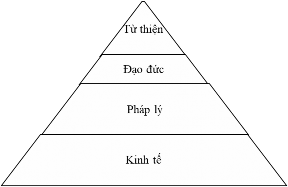
Figure 1.1. Caroll's pyramid model (1991)
Economic Responsibility: The main reason why companies exist is to produce goods, sell them, and make a profit. If a business does not make a profit, it will
cannot pay salaries to employees, return investment to shareholders, and provide products to customers. Therefore, the first and legitimate responsibility of every company is to maintain business operations. This is the foundation of Carroll's pyramid of CSR on which all researchers rely (Carroll, 1991).
Legal Responsibility: The legal responsibility of businesses requires companies to obey the law (Carroll, 1991). Businesses that ignore legal responsibilities may face legal prosecution.
Ethical responsibilities: Ethical responsibilities are what society expects from businesses beyond economic and legal expectations (Carroll, 1991), including responsibilities that are not enforced by law. However, ethical responsibilities are expected by the public because businesses have an obligation to be good citizens and “do the right thing” (Porter & Kramer, 2006).
Philanthropic responsibility is the top of the pyramid because philanthropic responsibility is neither mandatory nor expected by the public. Philanthropy is about improving the quality of life of employees and local communities. Philanthropy can contribute to the sustainability of a society (Porter & Kramer, 2006). Philanthropic responsibility involves the contribution of a business in financial terms or in other ways such as donations to charities, education, arts, etc. (Carroll, 1991). Philanthropic activities are often reported as money or volunteer time spent (Porter & Kramer, 2006).
Corporate social responsibility requires the implementation of all four elements of the CSR Pyramid including economic, legal, ethical and philanthropic responsibilities (Carroll, 1991). Businesses implementing CSR not only aim to maximize profits but also comply with the law, be ethical and respect stakeholders (Carroll, 1991). Some companies believe that CSR is simply becoming good citizens in the community (Carroll, 1991). Hoang Anh Vien (2018) used Carroll's pyramid model (1991) to conduct a study on "the relationship between brand equity and CSR business results of Vietnamese tourism enterprises". The research results show that economic, legal, ethical and philanthropic responsibilities all have an impact on brand and business results. Although all four types of responsibilities are important to businesses, the implementation of CSR by businesses is either incomplete or inconsistent with the company's strategy, internal policies and core activities. Companies often focus on one CSR activity such as planting trees, donating to charities or other organizations.
various local grants. Such activities are credible, but merely having such initiatives does not mean that the company has real CSR (Manente, Minghetti, & Mingotto, 2014).
1.1.4.2. Social entrepreneurship model by Wartich and Cochran (1985)
Wartick and Cochran (1985) evaluated and synthesized the factors considered to be challenges arising from the economic responsibility of enterprises as well as the ability to respond to social needs. Wartick and Cochran's CSR model (Figure 2) shows three orientations for individuals, institutions and the whole economy, and organizations and enterprises, respectively. The principles are based on Carroll's (1979) theory of four expectations of society from enterprises - economic, legal, ethical and philanthropic; and also on the theory of social contract (Rousseau, 1762) and the view that enterprises need to behave as moral entities in society. The process of responding to social needs of enterprises goes through four stages: reaction, self-defense, adaptation, and proactive response to social needs. Finally, the approach to managing social issues includes identifying, recognizing, analyzing the issue, and responding to development. These policies help businesses prepare for unexpected social changes, thereby deciding which policies are effective (Wood, 2010).
Figure 1.2. Wartick and Cochran's (1985) CSR model
Principle
Procedure | Policy | |
Corporate Social Responsibility (1) Economy (2) Law (3) Ethics (4) Charity Aimed at: (1) Corporate social contract (2) Business as a moral entity linking individuals | Businesses respond to social needs (1) Reaction (2) Self-defense (3) Adaptation (4) Proactively Aim For: (1) Ability to respond to changes in social conditions (2) A managerial approach to feedback | Management methods for social issues (1) Problem identification (2) Problem analysis (3) Feedback for development Towards: (1) Minimize the factors of sudden social changes (2) Decide on policies |
Maybe you are interested!
-
 The relationship between social responsibility, green marketing strategy, corporate reputation and business performance - Research on tourism and travel businesses in Ho Chi Minh City - 24
 -
 The relationship between social responsibility, green marketing strategy, corporate reputation and business performance: a study of tourism and travel businesses in Ho Chi Minh City - 20
 -
 Business Performance of the Company in the Period 2009–2011 Table 2.1. Business Results of Viet Holiday Travel Company
 -
 Corporate Social Responsibility (Csr) Has Positive Impact on Building and Developing Corporate Culture
 -
 Some solutions to develop international travel business of Vietnam tourism industry - 11
to develop | effective social books | |
Individual Orientation | Institutional and economy-wide orientation | Organizational and business orientation |
human and people
1.1.4.3. Wood's CSR model (2010)
Inheriting the models of Carroll (1979) and Wartick and Cochran (1985), Wood (1991) argued that Carroll may accurately describe how managers perceive corporate social responsibility, but managers do not take into account the social complexity and the impacts of corporate actions on social actors (Wood, 2010). In other words, managers respond as if they are rationally managing in a closed system. To further develop the CSR model, Wood illustrates a three-stage process: principles of social responsibility (as input); the process of responding to social needs, and finally the output impact and impact of social responsibility implementation (Figure 3).
In the principle of social responsibility, Wood (1991) refers to legitimacy, that is, considering enterprises as economic entities with community responsibilities and responsible management orientation. The process of responding to social needs of enterprises, according to Wood (1991), is not only a process of reaction, self-defense, adaptation, and initiative as in Carroll (1979) or Wartick and Cochran (1985). The process of responding to social needs of enterprises (Wood, 1991) helps to specify three contents including environmental analysis, management of stakeholders related to business interests and management of social issues. Output impact, according to Wood's model, supplements the limitation in Carroll's original CSR model. Carroll's model does not mention output impact, while Wartick and Cochran's model only mentions policy as output. Wood (2010) believes that performance and output impacts are generated from the behavior and activities of the business. Regarding the impact of CSR implementation, Wood mentioned 3 impacts: impact on people and organizations, impact on the environment, and impact on social systems and institutions. According to Wood (2010), CSR has been extended to all three levels of responsibility: institutional and economy-wide, business and organization, and individual level.
Figure 1.3. Wood's CSR model (2010)
Principles of social responsibility
The process of responding to social needs | Output Impact & Impact of CSR Implementation | ||
Legitimacy : businesses that abuse social power lose legitimacy. | Information gathering and filtering : to understand and analyze the social, political, legal and ethical environment. | Impact on People and Organizations | |
Social responsibility : businesses must be responsible for outputs that have direct and indirect connections with society. | Stakeholder Management : Actively and constructively engage in relationships with stakeholders of interest to the business. | Impact on the natural and physical environment | |
Management actions : managers and employees of the enterprise must be ethical people; the enterprise has departments that act responsibly and ethically towards society. | Social demand management : a series of processes that enable businesses to identify, analyze and solve political and social issues that have a significant impact on the business. | Impact on social systems and institutions |
1.1.4.4. TOI's corporate social responsibility model
Basically, the understanding of CSR is similar to that of enterprises in other industries, however, due to the specific nature of the business environment, there are certain differences. Below is a model proposed by the association of travel businesses TOI (Tour Operator Initiative) so that readers can better visualize the connotations of the concept of CSR with DNLH. The model includes 8 elements:
1. Employee training, good working environment
2. Support local people
3. Customer satisfaction
4. Added value
5. Quality products
6. Environmental protection
7. Long-term relationship with partners
8. Community Development
Value added
Customer satisfaction
Support local people
Quality products
Protect your lips
Social Responsibility
Develop
Employee training, good working environment
school
Long term relationship with partners
add
copper
Figure 1.4: TOI's corporate social responsibility model
Advantages of the model: This model presents the contents of CSR with travel businesses in a fairly comprehensive and accessible way. The model has given readers a deeper understanding of the multidimensionality of CSR with travel businesses. This model has outstanding advantages in measuring the awareness of travel businesses in areas such as: policies for employees, support for local people, customer care policies, added value, product and service quality, environmental protection, relations with partners and local communities.