
economic, financial. Provide complete, honest, timely, public, transparent information to meet the requirements of organizations, management agencies, state agencies, enterprises, organizations and individuals.
The structure of the Law is divided into 7 chapters and 64 articles. It unifies accounting terminology, summarizes tasks - requirements - principles - accounting objects. It states the main contents of accounting work (Chapter 2) such as: Accounting vouchers, Accounts and accounting books, Financial statements and Accounting inspection. At the same time, it stipulates a number of standards, conditions, rights and responsibilities of accountants (Chapter 3) and affirms that the State management of accounting is managed by the Government and agencies under the Government (Article 60), detailing the contents of State management of accounting (Article 59).
However, as mentioned above, the Accounting Law is only meant as a legal framework for accounting work, so the techniques for accounting professional activities such as regulations and guidelines on principles, contents, methods and basic accounting procedures for accountants to have a basis for accounting and preparing accounting reports are to build a system of national accounting standards . Therefore, the issued accounting standards create more legal and technical frameworks for accounting professional activities. The emergence of accounting standards overcomes the situation of applying many different methods in accounting methods, serving as a basis for inspection and auditing work to give "honest and reasonable" assessments on an issue related to the financial statements of an entity.
The Accounting Law and accounting standards are the basic legal framework for building an accounting system. Accountants must comply with the principles and methods of the issued accounting regime, regardless of whether the accounting unit performs accounting manually or using accounting software.
Maybe you are interested!
-
 History of Formation and Development of Thanh Hoa Province
 -
 History of Formation and Development of Agricultural Tourism
 -
 Overview of the History of Formation and Development of Vietnam Joint Stock Commercial Bank for Foreign Trade
 -
 History of Formation and Development of Vietnam Joint Stock Commercial Bank for Industry and Trade
 -
 History of Formation and Development of Nhpt Quang Binh Branch.
Basic contents in the accounting regime must be complied with. For example, electronic documents are a proof, after completing electronic transactions, the accountant must print out the electronic documents to save on paper as evidence for inspection and auditing. Another example of accounting books, the Accounting Law stipulates that accounting units can perform accounting entries by machine but at the end of the accounting period must close the books, print on paper and store them according to the prescribed time with the storage of accounting documents as if performing accounting work manually.
In summary : Creating a strict legal environment will be a positive factor influencing the provision of useful information through the accounting system of a country in general and of each enterprise in particular. Because in today's information society, with the role and tasks of accounting, the accounting department is the place that provides the most information compared to other departments within each enterprise. Therefore, whether the information provided by accounting is reliable, honest and reasonable or not, ... is largely influenced by the legal environment.
1.4.2 Business environment
The business environment has a great influence on the accounting system. In fact, from 1995 to now, Vietnam has changed its business accounting system twice. One of the main reasons is the change in the business environment. When it was a centrally planned economy, there were no concepts or accounts describing bonds, stocks, capital surplus, business advantages, business consolidation, etc. When the economy opened up, business followed the law of supply and demand, many economic sectors participated in the market, many problems arose that had to be amended and supplemented in the national accounting system to keep up with and meet the management requirements of the economy. To prove this, accountants in Vietnam easily recognize that every few years, a number of accounts were added, and the financial reporting system was changed.
more scientific model, the accounting system is adjusted accordingly,... On the other hand, due to the rapid progress of information technology, some basic accounting methods have been changed, for example, in the method of accounting documents, traditionally paper documents, now electronic documents and electronic payments have appeared; in terms of accounting forms, because the manual work process is also very different from the machine accounting process, a new form of accounting has been born: "Computerized accounting form",...
In summary: In the process of economic innovation in our country in recent years, the development of science and technology has changed the business environment, this is an objective factor that directly affects the accounting system. Therefore, the accounting system must be amended and supplemented to suit the general trend of society.
CONCLUSION OF CHAPTER 1
Chapter 1 deals with general theoretical issues of accounting and accounting information systems. General theoretical issues of accounting indicate the nature of accounting, thereby clarifying the users of accounting information through the role of accounting. To perform well the role of accounting in providing information, accounting must comply with the requirements and generally accepted accounting principles.
Chapter 1, the thesis emphasizes the application of information technology, especially accounting software, to the organization of accounting information systems in the current digital age. Basically, the nature of accounting still retains its traditional features. However, the relationship between the goals and users of accounting information has essentially changed because the nature of modern accounting is a multidimensional system, an intersection of many fields (information technology field, accounting field and commercial field) and is no longer purely
of the traditional accounting industry. And the developed accounting software will be the platform to provide information to different users (managers, investors, tax authorities, etc.), and finally, the accounting software is the place to collect, store, process and provide information to form e-businesses, e-governments and e-society, etc. because all accounting information that wants to be digitized must be processed through accounting software.
The organization of accounting information systems in enterprises or more briefly, the organization of using enterprise accounting software in Vietnam in recent times has been implemented by many enterprises. However, the implementation process is still spontaneous and does not have a solid theoretical basis. The organization process consists of five basic implementation stages (planning, analysis, design, installation, use and maintenance) is a scientific organization process that has been implemented by many countries in the world, aiming to establish an accounting system and a control system, assign and arrange personnel to implement the system, serving the digitalization process today. Organizing and managing the accounting information system in a systematic manner will be extremely important for the success of the enterprise.
CHAPTER 2
CURRENT STATUS OF ORGANIZATIONAL ACCOUNTING SOFTWARE USE IN ENTERPRISES IN VIETNAM
2.5 BRIEF HISTORY OF THE FORMATION AND DEVELOPMENT OF THE ACCOUNTING INFORMATION SYSTEM IN VIETNAM
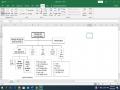
The formation and development process of our country's accounting information system is closely linked to the development of the management information system, which is specifically demonstrated through the historical stages of the struggle to defend the country and the information technology revolution, and can be summarized in Diagram 2.1: The development of the accounting information system (IS).
Pre-1970 period
Accountant
Financial accounting
Prepare financial statements
Accounting systems are performed mainly manually.
Period 1970 - 1980
Financial accounting
Cost accounting
Accountant
Prepare financial statements
Accounting information systems begin to have the support of accounting software.
Establish and control costs
Accounting software supports cost planning and control
Period 1980 to present
Financial accounting
Management accounting
Accountant
Prepare financial statements
Accounting software supports financial reporting
Create management reports
Accounting software supports management reporting
Figure 2.1 - Development of accounting information systems
Management information system is a system that synthesizes information from processing systems including systems that support operations, support decision making, support strategic competitive advantages, etc. Accounting information system as a system that supports operations, along with the function of a management tool and information provision has developed with the development of information technology through each historical period:
Pre-1970 period
Until 1960, the role of the accounting information system was very simple, mainly processing transactions manually, the accountant's job was to synthesize to create financial reports of a business.
In 1957, for the first time, after the establishment of the Accounting Regime Department, two unified accounting regimes were issued (Industrial Enterprise Accounting Regime and Basic Construction Accounting Regime [45]).
In 1961, the Government issued the Charter of the State Accounting Organization (Decree 175/CP, October 28, 1961), which was the highest legal document that laid the foundation for building the system of organization and accounting regime from the central to the grassroots level. During and after the process of drafting and promulgating the Charter of the State Accounting Organization, the Accounting Regime Department issued many other regimes such as the Warehouse Accounting Regime (1962), the Temporary Regime on Accounting Inspection (1962), and the Accounting Document and Book Regime (1964).
During the resistance war against France (before 1960), the State had no economic establishments other than small factories and economic organizations in the rear, so the accounting information system mainly recorded the initial budget revenue and expenditure. In 1961, our country entered the first 5-year plan, building the material foundation for Socialism, the State paid great attention to accounting work, so the accounting information system at economic organizations
The economy was better organized, as evidenced by a series of accounting regimes that were established in the period 1961-1965, laying the foundation for the Vietnamese accounting information system to become orderly. However, before the end of the first five-year plan, in 1964, the war escalated and destroyed the North of the United States. The economy shifted to wartime, and economic production facilities had to be divided and evacuated. Therefore, the accounting information system organized in enterprises also fell into a state of coping with the war.
Period 1970 - 1980
By 1970, the Ministry of Statistics and Finance had issued the initial recording regime such as a unified system of accounts, vouchers, accounting books and statistical - accounting reports. In particular, the Accounting Regime Department also developed and issued instructions on accounting operations such as "Accounting for materials by the balance method", "Accounting for costs by the standard method". The birth of this accounting regime was the first step in the formation of a disciplined and orderly accounting information system at that time. With the role of a place to collect information through vouchers, accounting books, then using accounting processes and methods, manually processing the collected data to provide information, mainly information on financial reports provided by financial accounting, serving the management and operation of enterprises.
During the period 1971 - 1980, the accounting information system also played a fairly simple role in providing information in a business. Information collection and processing were still mainly done manually. However, the information technology industry had initially penetrated into businesses, so during this period, mechanization to replace manual accounting work to reduce the burden of having to record documents and accounting books by hand was performed and processed on "mini-minimum computers" (mainly in the South, which had become popular).
It should also be added that the "mini computer" of this period had the size of a 4x4m room, usually produced by IBM (the Accounting Regime Department received the Computer Center in Ho Chi Minh City with 193 employees and a number of accounting specialists from the Ministry of Finance of the old Saigon regime [45], after the liberation of the South and the reunification of the country in 1975), most commonly used in enterprises in Vietnam in industries or services such as electricity, post and telecommunications, etc.
Regarding the provision of information to managers, at that time, it was mainly information from financial reports. We can also easily see that information from financial reports did not meet the decision-making needs of managers. Managers wanted to find information to make decisions from the accounting information system at this stage and the answer could only be found in financial reports. However, to manage a business, the information of primary concern was the investment costs for the business's production and business activities. The demand for information on these costs prompted cost accounting to be formed and born as a separate part from financial accounting. To perform this new role, the accounting information system was also upgraded. In addition to processing simple operations to prepare financial reports, the accounting information system began to create cost management and control methods such as production planning, production cost collection, methods of evaluating unfinished products, methods of calculating product costs, etc. These issues developed according to the objective laws of accounting work and there was absolutely no intervention or guidance from the State. This support helped managers have many types of best decision making when they had to face many specific types of problems in practice.
Period 1980 to present: