
MINISTRY OF CONSTRUCTION
HO CHI MINH CITY COLLEGE OF CONSTRUCTION
CURRICULUM FOR INTERNAL CIRCULATION
BASIC ELECTRONICS ENGINEERING
City. HO CHI MINH CITY 2018
GENERAL OVERVIEW OF ELECTRONIC COMPONENTS
Introduce:
Electronic components are discrete components, integrated circuits (ICs) ... that make up electronic circuits and electronic systems.
Electronic components are applied in many fields. The most prominent applications are in the fields of electronics, telecommunications, and IT. Electronic components are very rich, with many diverse types. Electronic component manufacturing technology has developed strongly, creating microcircuits with very large density (Pentium 4 microprocessor: > 40 million Transistors,... )
The trend of electronic components has increasing integration density, powerful features, great speed...
Target:
- Present an overview of the development of electronic technology
- Present electronic materials, classification and applications of electronic components
- Practice seriousness in studying and performing work.
1.History of electronic technology development
Target:
Present the history of electronic technology development
Semiconductor components such as diodes, transistors and integrated circuits (ICs) can be found everywhere in life (Walkman, TV, car, washing machine, air conditioner, computer, etc.)
…). These devices have increasingly higher quality at cheaper prices.
PCs illustrate this trend very well
The main factor that brought about the successful development of the computer industry was the fact that through advanced techniques and industrial skills people were able to manufacture transistors with increasingly smaller sizes → reducing cost and power. .
Development history:
- 1883 Thomas Alva Edison (“Edison Effect”)
- 1904 John Ambrose Fleming (“Fleming Diode”)
- 1906 Lee de Forest (“Triode”) Vacuum tube devices continued to evolve
- 1940 Russell Ohl (PN junction)
- 1947 Bardeen and Brattain (Transistor)
- 1952 Geoffrey WA Dummer (IC concept)
- 1954 First commercial silicon transistor
- 1955 First field effect transistor – FET
- 1958 Jack Kilby (Integrated circuit)
- 1959 Planar technology invented
- 1960 First MOSFET fabricated At Bell Labs by Kahng
- 1961 First commercial ICs Fairchild and Texas Instruments
- 1962 TTL invented
- 1963 First PMOS IC produced by RCA
- 1963 CMOS invented by Frank Wanlass at Fairchild Semiconductor
- US patent #3,356,858
2. Classification of electronic components
Target:
- Present the content as a basis for classifying electronic components 2.1. Classification based on physical characteristics
Components operating on electromagnetic principles and surface effects: semiconductor resistors, DIOT, BJT, JFET, MOSFET, MOS capacitance... ICs from low density to ultra-large density UVLSI.
Components operating on the photoelectric principle: photoresistors, photodiodes, batteries, APD, CCD, LED, LASER luminescent components, photovoltaic energy conversion components such as solar cells, display components, Optoelectronic ICs
Components operate based on the sensor principle: thermal, electric, magnetic, and chemical sensor families; Mechanical, pressure, photo-radiation, biological sensor families and smart IC types are based on a combination of traditional IC technology and sensor manufacturing technology.
Components that operate based on quantum effects and new effects: components made using nanotechnology with microscopic structures: One-electron memory, One-electron transistor, quantum wells and wires, components tunnel an electron,...
2.2 Classification based on signal processing function (Figure 1)
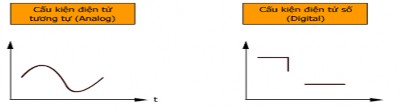
Figure 1: Classification of components based on signal processing function 2.3. Classification by application
Microchips and applications : (Figure 2; Figure 3)
- Processors: CPU, DSP, Controllers
- Memory chips: RAM, ROM, EEPROM
- Analog: Mobile communication, audio/video processing
- Programmable: PLA, FPGA
- Embedded systems: Automotive equipment, factories, Network cards System-on-chip (SoC).
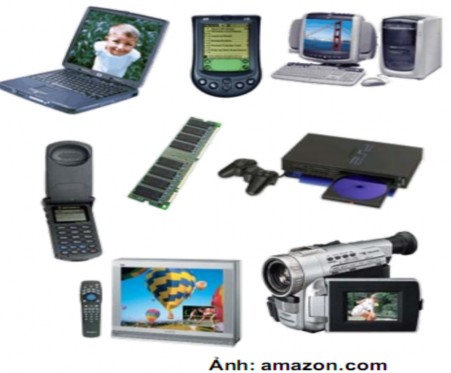
Figure 2: Application of IC
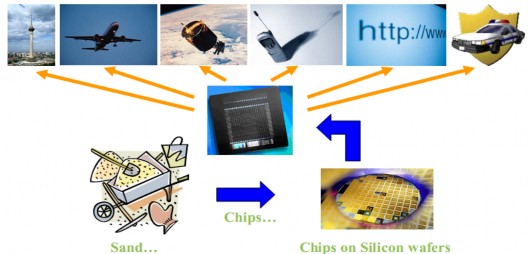
Figure 3: Application of electronic components
Passive components: R, L, C…
Active components: DIOT, BJT, JFET, MOSFET… IC integrated circuit: Analog IC, digital IC, Microprocessor… Controlled rectifier components
Optoelectronic components: Optical receiving and luminescent components
3. Introduction to electronic materials
Target:
- Introduce types of electronic materials 3.1. Insulators (dielectrics)
Definition: A poor conductor of electricity, a material with high resistivity (10 7
÷10 17 Ω.m) at normal temperature. Insulators consist mostly of inorganic as well as organic materials.
Properties greatly affect the quality of components
- Properties of dielectrics.
- Relative electric permittivity (dielectric constant - ε)
- Dielectric loss (Pa)
- Electrical strength of dielectric material (Ed.t)
- Temperature tolerance
- Current in the dielectric (I)
- Insulation resistance of dielectric material 3.2. Conductor
Definition: A material with high electrical conductivity. Its resistivity value
(about 10-8 ÷ 10-5 Ωm) is smaller than other types of materials. In nature, conductors can be solids – metals, liquids – molten metals, electrolyte solutions or gases in high electric field.
Properties of electrical conductors
- Resistivity
- Thermal coefficient of resistivity (α)
- Thermal conductivity coefficient: λ
- Work of electrons in metals
- Contact potential 3.3. Magnetic materials
Definition: Magnetic materials are materials that when placed in a magnetic field become infected
from
- Characteristic properties of magnetic materials
- Reluctance and magnetism
- Relative permeability (μr)
- Magnetization curve
LESSON 1: BASIC CONCEPTS
Article code: 13-01
Introduce:
The foundation of electrical systems in general and electrical engineering in particular revolves around the issue of electrical conductivity and insulation of substances called electrical materials. Therefore, understanding the nature of electrical materials, conduction and insulation issues of materials and components is an indispensable content in the knowledge of electricians and electronics workers. That is the content of this lesson.
Target :
- State the properties and working conditions of electric current on electronic components according to the content of the lesson learned.
- Calculate resistance, current, voltage on DC circuits according to given conditions.
- Practice accuracy and seriousness in studying and performing work
job.
1. Conductors and insulators
Target:
- Present the basic concepts of electrical conductors and insulators
- Present the characteristics of electrical conductors and insulators
1.1 Conductors and insulators: In engineering, materials are divided into two main types:
Objects that allow electricity to pass through are called conductors
Objects that do not allow electric current to pass through are called insulators
However, this concept is only relative. They depend on the material structure and external conditions affecting the material
About structure: Matter is made up of the smallest particles called atoms. Atoms are composed of a nucleus (including protons, which are positively charged particles (+), neutrons, which are uncharged particles) and an atom's shell (which are electrons with a negative charge e -- ). Matter is made up of the bonds between atoms, creating the stability of matter. (picture 1-1)
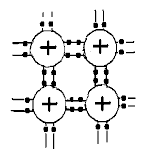
Figure 1-1. The atomic network structure of matter
The bonds that create the outermost shell have the number of protons equal to the number of electrons, in which state the atom is stable and is called electrically neutral. These substances do not conduct electricity and are called insulators
The bonds that make the outermost shell have a different number of protons than the number of electrons become ions, they easily give and receive electrons, these substances are called conductors.
Regarding environmental temperature: Under normal temperature conditions (< 25 0 C), atoms are firmly bonded. As the temperature increases, the average kinetic energy of the atoms increases, causing the bonds to weaken. Some electrons escape the bond and become free electrons . At this time, if an external electric field is applied, material that can conduct electricity.
Regarding the external electric field: On the surface of a material, when an electric field is placed on both sides, an electric field force E will appear. The electrons will be affected by this electric field force. If the electric field force is large enough, the e -- will move in the opposite direction of the electric field, forming an electric current. The magnitude of the electric field force depends on the potential difference between the two applied points and the thickness of the conductor.
In summary: The conductivity or insulation of materials depends largely on the following factors:
Atomic structure of matter
Temperature of the working environment
Potential difference between two points applied to the material
Thickness of material
Conductors: Conductors are materials that in their normal state have the ability to conduct electricity. In other words, a substance in its normal state has free charges available to form an electric current
1.2.Characteristics of conductors and insulators
- Characteristics of conductive materials.
- Resistivity
- Heat coefficient
- Melting temperature
- Density
The parameters and application scope of common conductive materials are introduced in (Table 1-1)
Table 1-1. Conductive materials
tt
Material name | Yield resistance mm 2 /m | Thermal coefficient | Melting temperature t 0 C | Density | Alloy | Scope of application | Note | |
1 | Red copper or technical copper | 0.0175 | 0.004 | 1080 | 8.9 | Mainly used as conductor | ||
2 | Brass | (0.03 - 0.06) | 0.002 | 900 | 3.5 | copper with zinc | - The leaves are exposed - Wire connectors | |
3 | Aluminum | 0.028 | 0.0049 | 660 | 2.7 | - Make electrical wires - Make aluminum foil in rotating capacitors - Make heat radiating wings - Used as a capacitor (capacitor) | - Oxidizes quickly, forming a protective layer, making it difficult to weld and corrode - Corroded by salt water vapor | |
4 | Silver | 960 | 10.5 | - Plating the outer shell of the conductor to use the outer surface effect in the ultra-high frequency field | ||||
5 | Nickel | 0.07 | 0.006 | 1450 | 8.8 | - Plating the outer shell of the conductor to use the outer surface effect in the ultra-high frequency field | Cheaper than silver | |
6 | Tin | 0.115 | 0.0012 | 230 | 7.3 | Compounds used to make solder include: - Tin 60% - Lead 40% | - Solder wires. - Tin and lead alloys have lower melting temperatures than the melting temperatures of individual tin and lead metals.. | Solder used for soldering while assembling electronic components |
7 | Lead | 0.21 | 0.004 | 330 | 11.4 | - Fuse for overcurrent protection - Used in lead batteries - Buried cable cover | Used as a soldering iron (see above) | |
8 | Iron | 0.098 | 0.0062 | 1520 | 7.8 | - Cream-plated iron wire for light-load conductors - Bimetallic wire consists of an iron core with a copper sheath as a conductor that can withstand large mechanical forces | - Galvanized iron wire costs less than copper wire - Bimetal wire conducts electricity almost like copper wire due to the surface effect |
Maybe you are interested!
-
 Basic Electronic Engineering - Ho Chi Minh City College of Construction Part 2 - 7
 -
 Basic Electronic Engineering - Ho Chi Minh City College of Construction Part 1 - 11
 -
 Basic Electronic Engineering - Ho Chi Minh City College of Construction Part 1 - 9
 -
 Electronic Engineering - Ho Chi Minh City College of Transport - 31
 -
 Basic Refrigeration Refrigeration and Air Conditioning Engineering - Intermediate - Ha Nam Vocational College 2020 - 1