
One of the leading tourist destinations to implement this important content to contribute to accelerating the development of the tourism industry. Specifically:
+ Compile and publish quality publications and official information about Huong Son tourism to introduce tourists to the people and landscapes, information about accommodations, tourist attractions, restaurants, entertainment venues, living costs, transportation... and addresses of travel consulting companies.
+ Promote the production and widespread distribution of documentary films on cultural history, architectural works, relics, scenic spots, craft villages, festivals... and also the opportunities and investment potential of Huong Son tourist area to introduce to domestic and foreign tourists. This information is very useful not only for tourists who want to visit and attend festivals but also necessary for investors and businesses.
Maybe you are interested!
-
 Identify Rating Levels and Rating Scales
zt2i3t4l5ee
zt2a3gstourism,quan lan,quang ninh,ecology,ecotourism,minh chau,van don,geography,geographical basis,tourism development,science
zt2a3ge
zc2o3n4t5e6n7ts
of the islanders. Therefore, this indicator will be divided into two sub-indicators:
a1. Natural tourism attractiveness a2. Cultural tourism attractiveness
b. Tourist capacity
The two island communes in Quan Lan have different capacities to receive tourists. Minh Chau Commune is home to many standard hotels and resorts, attracting high-income domestic and international tourists. Meanwhile, Quan Lan Commune has many motels mainly built and operated by local people, so the scale and quality are not high, and will be suitable for ordinary tourists such as students.
c. Time of exploitation of Quan Lan Island Commune:
Quan Lan tourism is seasonal due to weather and climate conditions and festivals only take place on certain days of the year, specifically in spring. In Quan Lan commune, the period from April to June and from September to November is considered the best time to visit Quan Lan because the cultural tourism activities are mainly associated with festivals taking place during this time.
Minh Chau island commune:
Tourism exploitation time is all year round, because this is a place with a number of tourist attractions with diverse ecosystems such as Bai Tu Long National Park Research Center, Tram forest, Turtle Laying Beach, so besides coming to the beach for tourism and vacation in the summer, Minh Chau will attract research groups to come for tourism combined with research at other times of the year.
d. Sustainability
The sustainability of ecotourism sites in Quan Lan and Minh Chau communes depends on the sensitivity of the ecosystems to climate changes.
landscape. In general, these tourist destinations have a fairly high level of sustainability, because they are natural ecosystems, planned and protected. However, if a large number of tourists gather at certain times, it can exceed the carrying capacity and affect the sustainability of the environment (polluted beaches, damaged trees, animals moving away from their habitats, etc.), then the sustainability of the above ecosystems (natural ecosystems, human ecosystems) will also be affected and become less sustainable.
e. Location and accessibility
Both island communes have ports to take tourists to visit from Van Don wharf:
- Quan Lan – Van Don traffic route:
Phuc Thinh – Viet Anh high-speed boat and Quang Minh high-speed boat, depart at 8am and 2pm from Van Don to Quan Lan, and at 7am and 1pm from Quan Lan to Van Don. There are also wooden boats departing at 7am and 1pm.
- Van Don - Minh Chau traffic route:
Chung Huong high-speed train, Minh Chau train, morning 7:30 and afternoon 13:30 from Van Don to Minh Chau, morning 6:30 and afternoon 13:00 from Minh Chau to Van Don.
f. Infrastructure
Despite receiving investment attention, the issue of infrastructure and technical facilities for tourism on Quan Lan Island is still an issue that needs to be resolved because it has a direct impact on the implementation of ecotourism activities. The minimum conditions for serving tourists such as accommodation, electricity, water, communication, especially medical services, and security work need to be given top priority. Ecotourism spots in Minh Chau commune are assessed to have better infrastructure and technical facilities for tourism because there are quite complete and synchronous conditions for serving tourists, meeting many needs of domestic and foreign tourists.
3.2.1.4. Determine assessment levels and assessment scales
Corresponding to the levels of each criterion, the index is the score of those levels in the order of 4, 3, 2, 1 decreasing according to the standard of each level: very attractive (4), attractive (3), average (2), less attractive (1).
3.2.1.5. Determining the coefficients of the criteria
For the assessment of DLST in the two communes of Quan Lan and Minh Chau islands, the students added evaluation coefficients to show the importance of the criteria and indicators as follows:
Coefficient 3 with criteria: Attractiveness, Exploitation time. These are the 2 most important criteria for attracting tourists to tourism in general and eco-tourism in particular, so they have the highest coefficient.
Coefficient 2 with criteria: Capacity, Infrastructure, Location and accessibility . Because the assessment area is an island commune of Van Don district, the above criteria are selected by the author with appropriate coefficients at the average level.
Coefficient 1 with criteria: Sustainability. Quan Lan has natural and human-made ecotourism sites, with high biodiversity and little impact from local human factors. Most of the ecotourism sites are still wild, so they are highly sustainable.
3.2.1.6. Results of DLST assessment on Quan Lan island
a. Assessment of the potential for natural tourism development
For Minh Chau commune:
+ Natural tourism attractiveness is determined to be very attractive (4 points) and the most important coefficient (coefficient 3), so the score of the Attractiveness criterion is 4 x 3 = 12.
+ Capacity is determined as average (2 points) and the coefficient is quite important (coefficient 2), then the score of Capacity criterion is 2 x 2 = 4.
+ Exploitation time is long (4 points), the most important coefficient (coefficient 3) so the score of the Exploitation time criterion is 4 x 3 = 12.
+ Sustainability is determined as sustainable (4 points), the important coefficient is the average coefficient (coefficient 1), so the score of the Sustainability criterion is 4 x 1 = 4 points
+ Location and accessibility are determined to be quite favorable (2 points), the coefficient is quite important (coefficient 2), the criterion score is 2 x 2 = 4 points.
+ Infrastructure is assessed as good (3 points), the coefficient is quite important (coefficient 2), then the score of the Infrastructure criterion is 3 x 2 = 6 points.
The total score for evaluating DLST in Minh Chau commune according to 6 evaluation criteria is determined as: 12 + 4 + 12 + 4 + 4 + 6 = 42 points
Similar assessment for Quan Lan commune, we have the following table:
Table 3.3: Assessment of the potential for natural ecotourism development in Quan Lan and Minh Chau communes
Attractiveness of self-tourismof course
Capacity
Mining time
Sustainability
Location and accessibility
Infrastructure
Result
Point
DarkMulti
Point
DarkMulti
Point
DarkMulti
Point
DarkMulti
Point
DarkMulti
Point
DarkMulti
CommuneMinh Chau
12
12
4
8
12
12
4
4
4
8
6
8
42/52
Quan CommuneLan
6
12
6
8
9
12
4
4
4
8
4
8
33/52
b. Assessment of the potential for humanistic tourism development
For Quan Lan commune:
+ The attractiveness of human tourism is determined to be very attractive (4 points) and the most important coefficient (coefficient 3), so the score of the Attractiveness criterion is 4 x 3 = 12.
+ Capacity is determined to be large (3 points) and the coefficient is quite important (coefficient 2), then the score of the Capacity criterion is 3 x 2 = 6.
+ Mining time is average (3 points), the most important coefficient (coefficient 3) so the score of the Mining time criterion is 3 x 3 = 9.
+ Sustainability is determined as sustainable (4 points), the important coefficient is the average coefficient (coefficient 1), so the score of the Sustainability criterion is 4 x 1 = 4 points.
+ Location and accessibility are determined to be quite favorable (2 points), the coefficient is quite important (coefficient 2), the criterion score is 2 x 2 = 4 points.
+ Infrastructure is rated as average (2 points), the coefficient is quite important (coefficient 2), then the score of the Infrastructure criterion is 2 x 2 = 4 points.
The total score for evaluating DLST in Quan Lan commune according to 6 evaluation criteria is determined as: 12 + 6 + 6 + 4 + 4 + 4 = 36 points.
Similar assessment with Minh Chau commune we have the following table:
Table 3.4: Assessment of the potential for developing humanistic eco-tourism in Quan Lan and Minh Chau communes
Attractiveness of human tourismliterature
Capacity
Mining time
Sustainability
Location and accessibility
Infrastructure
Result
Point
DarkMulti
Point
DarkMulti
Point
DarkMulti
Point
DarkMulti
Point
DarkMulti
Point
DarkMulti
Quan CommuneLan
12
12
6
8
9
12
4
4
4
8
4
8
39/52
Minh CommuneChau
6
12
4
8
12
12
4
4
4
8
6
8
36/52
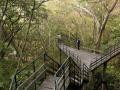
Basically, both Minh Chau and Quan Lan localities have quite favorable conditions for developing ecotourism. However, Quan Lan commune has more advantages to develop ecotourism in a humanistic direction, because this is an area with many famous historical relics such as Quan Lan Communal House, Quan Lan Pagoda, Temple worshiping the hero Tran Khanh Du, ... along with local festivals held annually such as the wind praying ceremony (March 15), Quan Lan festival (June 10-19); due to its location near the port and long exploitation time, the beaches in Quan Lan commune (especially Quan Lan beach) are no longer hygienic and clean to ensure the needs of tourists coming to relax and swim; this is also an area with many beautiful landscapes such as Got Beo wind pass, Ong Phong head, Voi Voi cave, but the ability to access these places is still very limited (dirt hill road, lots of gravel and rocks), especially during rainy and windy times; In addition, other natural resources such as mangrove forests and sea worms have not been really exploited for tourism purposes and ecotourism development. On the contrary, Minh Chau commune has more advantages in developing ecotourism in the direction of natural tourism, this is an area with diverse ecosystems such as at Rua De Beach, Bai Tu Long National Park Conservation Center...; Minh Chau beach is highly appreciated for its natural beauty and cleanliness, ranked in the top ten most beautiful beaches in Vietnam; Minh Chau commune is also home to Tram forest with a large area and a purity of up to 90%, suitable for building bridges through the forest (a very effective type of natural ecotourism currently applied by many countries) for tourists to sightsee, as well as for the purpose of studying and researching.
Figure 3.1: Thenmala Forest Bridge (India) Source: https://www.thenmalaecotourism.com/(August 21, 2019)
3.2.2. Using SWOT matrix to evaluate Quan Lan island tourism
General assessment of current tourism activities of Quan Lan island is shown through the following SWOT matrix:
Table 3.5: SWOT matrix evaluating tourism activities on Quan Lan island
Internal agent
Strengths- There is a lot of potential for tourism development, especially natural ecotourism and humanistic ecotourism.- The unskilled labor force is relatively abundant.- resource environmentunpolluted, still
Weaknesses- Poorly developed infrastructure, especially traffic routes to tourist destinations on the island.- The team of professional staff is still weak.- Tourism products in general
quite wild, originalintact
general and DLST in particularalone is monotonous.
External agents
Opportunity- Tourism is a key industry in the socio-economic development strategy of the province and Van Don economic zone.- Quan Lan was selected as a pilot area for eco-tourism development within the framework of the green growth project between Quang Ninh province and the Japanese organization JICA.- The flow of tourists and especially ecotourism in the world tends toincreasing
Challenge- Weather and climate change abnormally.- Competition in tourism products is increasingly fierce, especially with other localities in the province such as Ha Long, Mong Cai...- Awareness of tourists, especially domestic tourists, about ecotourism and nature conservation is not high.
Through summary analysis using SWOT matrix we see that:
To exploit strengths and take advantage of opportunities, it is necessary to:
- Diversify products and service types (build more tourism routes aimed at specific needs of tourists: experiential tourism immersed in nature, spiritual cultural tourism...)
- Effective exploitation of resources and differentiated products (natural resources and human resources)
div.maincontent .p { color: black; font-family:"Times New Roman", serif; font-style: normal; font-weight: normal; text-decoration: none; font-size: 14pt; margin:0pt; } div.maincontent p { color: black; font-family:"Times New Roman", serif; font-style: normal; font-weight: normal; text-decoration: none; font-size: 14pt; margin:0pt; } div.maincontent .s1 { color: black; font-family:"Times New Roman", serif; font-style: normal; font-weight: normal; text-decoration: none; font-size: 13pt; } div.maincontent .s2 { color: black; font-family:"Times New Roman", serif; font-style: normal; font-weight: normal; text-decoration: none; font-size: 13pt; } div.maincontent .s3 { color: #0D0D0D; font-family:"Times New Roman", serif; font-style: normal; font-weight: bold; text-decoration: none; font-size: 14pt; } div.maincontent .s4 { color: black; font-family:"Times New Roman", serif; font-style: italic; font-weight: normal; text-decoration: none; font-size: 14pt; } div.maincontent .s5 { color: black; font-family:"Times New Roman", serif; font-style: italic; font-weight: bold; text-decoration: none; font-size: 14pt; } div.maincontent .s6 { color: black; font-family:"Times New Roman", serif; font-style: italic; font-weight: normal; text-decoration: none; font-size: 14pt; vertical-align: -3pt; } div.maincontent .s7 { color: black; font-family:"Times New Roman", serif; font-style: italic; font-weight: normal; text-decoration: none; font-size: 14pt; vertical-align: -2pt; } div.maincontent .s8 { color: black; font-family:"Times New Roman", serif; font-style: italic; font-weight: normal; text-decoration: none; font-size: 14pt; vertical-align: -1pt; } div.maincontent .s9 { color: black; font-family:"Times New Roman", serif; font-style: normal; font-weight: normal; text-decoration: none; font-size: 14pt; } div.maincontent .s10 { color: black; font-family:"Times New Roman", serif; font-style: normal; font-weight: bold; text-decoration: none; font-size: 14pt; } div.maincontent .s11 { color: black; font-family:"Times New Roman", serif; font-style: normal; font-weight: normal; text-decoration: none; font-size: 14pt; } div.maincontent .s12 { color: black; font-family:Symbol, serif; font-style: normal; font-weight: normal; text-decoration: none; font-size: 14pt; } div.maincontent .s13 { color: black; font-family:Wingdings; font-style: normal; font-weight: normal; text-decoration: none; font-size: 14pt; } div.maincontent .s14 { color: black; font-family:"Times New Roman", serif; font-style: normal; font-weight: normal; text-decoration: none; font-size: 9pt; vertical-align: 5pt; } div.maincontent .s15 { color: black; font-family:"Times New Roman", serif; font-style: normal; font-weight: normal; text-decoration: none; font-size: 9pt; vertical-align: 5pt; } div.maincontent .s16 { color: black; font-family:Cambria, serif; font-style: italic; font-weight: normal; text-decoration: none; font-size: 14pt; } div.maincontent .s17 { color: #080808; font-family:"Times New Roman", serif; font-style: normal; font-weight: bold; text-decoration: none; font-size: 14pt; } div.maincontent .s18 { color: #080808; font-family:"Times New Roman", serif; font-style: normal; font-weight: normal; text-decoration: none; font-size: 14pt; } div.maincontent .s19 { color: black; font-family:"Times New Roman", serif; font-style: normal; font-weight: normal; text-decoration: none; font-size: 11pt; } div.maincontent .s20 { color: black; font-family:"Times New Roman", serif; font-style: normal; font-weight: normal; text-decoration: none; font-size: 10pt; } div.maincontent .s21 { color: black; font-family:"Times New Roman", serif; font-style: normal; font-weight: bold; text-decoration: none; font-size: 11pt; } div.maincontent .s22 { color: black; font-family:"Times New Roman", serif; font-style: normal; font-weight: normal; text-decoration: none; font-size: 11pt; } div.maincontent .s23 { color: black; font-family:"Times New Roman", serif; font-style: italic; font-weight: normal; text-decoration: none; font-size: 14pt; } div.maincontent .s24 { color: #212121; font-family:"Times New Roman", serif; font-style: normal; font-weight: normal; tex
Identify Rating Levels and Rating Scales
zt2i3t4l5ee
zt2a3gstourism,quan lan,quang ninh,ecology,ecotourism,minh chau,van don,geography,geographical basis,tourism development,science
zt2a3ge
zc2o3n4t5e6n7ts
of the islanders. Therefore, this indicator will be divided into two sub-indicators:
a1. Natural tourism attractiveness a2. Cultural tourism attractiveness
b. Tourist capacity
The two island communes in Quan Lan have different capacities to receive tourists. Minh Chau Commune is home to many standard hotels and resorts, attracting high-income domestic and international tourists. Meanwhile, Quan Lan Commune has many motels mainly built and operated by local people, so the scale and quality are not high, and will be suitable for ordinary tourists such as students.
c. Time of exploitation of Quan Lan Island Commune:
Quan Lan tourism is seasonal due to weather and climate conditions and festivals only take place on certain days of the year, specifically in spring. In Quan Lan commune, the period from April to June and from September to November is considered the best time to visit Quan Lan because the cultural tourism activities are mainly associated with festivals taking place during this time.
Minh Chau island commune:
Tourism exploitation time is all year round, because this is a place with a number of tourist attractions with diverse ecosystems such as Bai Tu Long National Park Research Center, Tram forest, Turtle Laying Beach, so besides coming to the beach for tourism and vacation in the summer, Minh Chau will attract research groups to come for tourism combined with research at other times of the year.
d. Sustainability
The sustainability of ecotourism sites in Quan Lan and Minh Chau communes depends on the sensitivity of the ecosystems to climate changes.
landscape. In general, these tourist destinations have a fairly high level of sustainability, because they are natural ecosystems, planned and protected. However, if a large number of tourists gather at certain times, it can exceed the carrying capacity and affect the sustainability of the environment (polluted beaches, damaged trees, animals moving away from their habitats, etc.), then the sustainability of the above ecosystems (natural ecosystems, human ecosystems) will also be affected and become less sustainable.
e. Location and accessibility
Both island communes have ports to take tourists to visit from Van Don wharf:
- Quan Lan – Van Don traffic route:
Phuc Thinh – Viet Anh high-speed boat and Quang Minh high-speed boat, depart at 8am and 2pm from Van Don to Quan Lan, and at 7am and 1pm from Quan Lan to Van Don. There are also wooden boats departing at 7am and 1pm.
- Van Don - Minh Chau traffic route:
Chung Huong high-speed train, Minh Chau train, morning 7:30 and afternoon 13:30 from Van Don to Minh Chau, morning 6:30 and afternoon 13:00 from Minh Chau to Van Don.
f. Infrastructure
Despite receiving investment attention, the issue of infrastructure and technical facilities for tourism on Quan Lan Island is still an issue that needs to be resolved because it has a direct impact on the implementation of ecotourism activities. The minimum conditions for serving tourists such as accommodation, electricity, water, communication, especially medical services, and security work need to be given top priority. Ecotourism spots in Minh Chau commune are assessed to have better infrastructure and technical facilities for tourism because there are quite complete and synchronous conditions for serving tourists, meeting many needs of domestic and foreign tourists.
3.2.1.4. Determine assessment levels and assessment scales
Corresponding to the levels of each criterion, the index is the score of those levels in the order of 4, 3, 2, 1 decreasing according to the standard of each level: very attractive (4), attractive (3), average (2), less attractive (1).
3.2.1.5. Determining the coefficients of the criteria
For the assessment of DLST in the two communes of Quan Lan and Minh Chau islands, the students added evaluation coefficients to show the importance of the criteria and indicators as follows:
Coefficient 3 with criteria: Attractiveness, Exploitation time. These are the 2 most important criteria for attracting tourists to tourism in general and eco-tourism in particular, so they have the highest coefficient.
Coefficient 2 with criteria: Capacity, Infrastructure, Location and accessibility . Because the assessment area is an island commune of Van Don district, the above criteria are selected by the author with appropriate coefficients at the average level.
Coefficient 1 with criteria: Sustainability. Quan Lan has natural and human-made ecotourism sites, with high biodiversity and little impact from local human factors. Most of the ecotourism sites are still wild, so they are highly sustainable.
3.2.1.6. Results of DLST assessment on Quan Lan island
a. Assessment of the potential for natural tourism development
For Minh Chau commune:
+ Natural tourism attractiveness is determined to be very attractive (4 points) and the most important coefficient (coefficient 3), so the score of the Attractiveness criterion is 4 x 3 = 12.
+ Capacity is determined as average (2 points) and the coefficient is quite important (coefficient 2), then the score of Capacity criterion is 2 x 2 = 4.
+ Exploitation time is long (4 points), the most important coefficient (coefficient 3) so the score of the Exploitation time criterion is 4 x 3 = 12.
+ Sustainability is determined as sustainable (4 points), the important coefficient is the average coefficient (coefficient 1), so the score of the Sustainability criterion is 4 x 1 = 4 points
+ Location and accessibility are determined to be quite favorable (2 points), the coefficient is quite important (coefficient 2), the criterion score is 2 x 2 = 4 points.
+ Infrastructure is assessed as good (3 points), the coefficient is quite important (coefficient 2), then the score of the Infrastructure criterion is 3 x 2 = 6 points.
The total score for evaluating DLST in Minh Chau commune according to 6 evaluation criteria is determined as: 12 + 4 + 12 + 4 + 4 + 6 = 42 points
Similar assessment for Quan Lan commune, we have the following table:
Table 3.3: Assessment of the potential for natural ecotourism development in Quan Lan and Minh Chau communes
Attractiveness of self-tourismof course
Capacity
Mining time
Sustainability
Location and accessibility
Infrastructure
Result
Point
DarkMulti
Point
DarkMulti
Point
DarkMulti
Point
DarkMulti
Point
DarkMulti
Point
DarkMulti
CommuneMinh Chau
12
12
4
8
12
12
4
4
4
8
6
8
42/52
Quan CommuneLan
6
12
6
8
9
12
4
4
4
8
4
8
33/52
b. Assessment of the potential for humanistic tourism development
For Quan Lan commune:
+ The attractiveness of human tourism is determined to be very attractive (4 points) and the most important coefficient (coefficient 3), so the score of the Attractiveness criterion is 4 x 3 = 12.
+ Capacity is determined to be large (3 points) and the coefficient is quite important (coefficient 2), then the score of the Capacity criterion is 3 x 2 = 6.
+ Mining time is average (3 points), the most important coefficient (coefficient 3) so the score of the Mining time criterion is 3 x 3 = 9.
+ Sustainability is determined as sustainable (4 points), the important coefficient is the average coefficient (coefficient 1), so the score of the Sustainability criterion is 4 x 1 = 4 points.
+ Location and accessibility are determined to be quite favorable (2 points), the coefficient is quite important (coefficient 2), the criterion score is 2 x 2 = 4 points.
+ Infrastructure is rated as average (2 points), the coefficient is quite important (coefficient 2), then the score of the Infrastructure criterion is 2 x 2 = 4 points.
The total score for evaluating DLST in Quan Lan commune according to 6 evaluation criteria is determined as: 12 + 6 + 6 + 4 + 4 + 4 = 36 points.
Similar assessment with Minh Chau commune we have the following table:
Table 3.4: Assessment of the potential for developing humanistic eco-tourism in Quan Lan and Minh Chau communes
Attractiveness of human tourismliterature
Capacity
Mining time
Sustainability
Location and accessibility
Infrastructure
Result
Point
DarkMulti
Point
DarkMulti
Point
DarkMulti
Point
DarkMulti
Point
DarkMulti
Point
DarkMulti
Quan CommuneLan
12
12
6
8
9
12
4
4
4
8
4
8
39/52
Minh CommuneChau
6
12
4
8
12
12
4
4
4
8
6
8
36/52
Basically, both Minh Chau and Quan Lan localities have quite favorable conditions for developing ecotourism. However, Quan Lan commune has more advantages to develop ecotourism in a humanistic direction, because this is an area with many famous historical relics such as Quan Lan Communal House, Quan Lan Pagoda, Temple worshiping the hero Tran Khanh Du, ... along with local festivals held annually such as the wind praying ceremony (March 15), Quan Lan festival (June 10-19); due to its location near the port and long exploitation time, the beaches in Quan Lan commune (especially Quan Lan beach) are no longer hygienic and clean to ensure the needs of tourists coming to relax and swim; this is also an area with many beautiful landscapes such as Got Beo wind pass, Ong Phong head, Voi Voi cave, but the ability to access these places is still very limited (dirt hill road, lots of gravel and rocks), especially during rainy and windy times; In addition, other natural resources such as mangrove forests and sea worms have not been really exploited for tourism purposes and ecotourism development. On the contrary, Minh Chau commune has more advantages in developing ecotourism in the direction of natural tourism, this is an area with diverse ecosystems such as at Rua De Beach, Bai Tu Long National Park Conservation Center...; Minh Chau beach is highly appreciated for its natural beauty and cleanliness, ranked in the top ten most beautiful beaches in Vietnam; Minh Chau commune is also home to Tram forest with a large area and a purity of up to 90%, suitable for building bridges through the forest (a very effective type of natural ecotourism currently applied by many countries) for tourists to sightsee, as well as for the purpose of studying and researching.
Figure 3.1: Thenmala Forest Bridge (India) Source: https://www.thenmalaecotourism.com/(August 21, 2019)
3.2.2. Using SWOT matrix to evaluate Quan Lan island tourism
General assessment of current tourism activities of Quan Lan island is shown through the following SWOT matrix:
Table 3.5: SWOT matrix evaluating tourism activities on Quan Lan island
Internal agent
Strengths- There is a lot of potential for tourism development, especially natural ecotourism and humanistic ecotourism.- The unskilled labor force is relatively abundant.- resource environmentunpolluted, still
Weaknesses- Poorly developed infrastructure, especially traffic routes to tourist destinations on the island.- The team of professional staff is still weak.- Tourism products in general
quite wild, originalintact
general and DLST in particularalone is monotonous.
External agents
Opportunity- Tourism is a key industry in the socio-economic development strategy of the province and Van Don economic zone.- Quan Lan was selected as a pilot area for eco-tourism development within the framework of the green growth project between Quang Ninh province and the Japanese organization JICA.- The flow of tourists and especially ecotourism in the world tends toincreasing
Challenge- Weather and climate change abnormally.- Competition in tourism products is increasingly fierce, especially with other localities in the province such as Ha Long, Mong Cai...- Awareness of tourists, especially domestic tourists, about ecotourism and nature conservation is not high.
Through summary analysis using SWOT matrix we see that:
To exploit strengths and take advantage of opportunities, it is necessary to:
- Diversify products and service types (build more tourism routes aimed at specific needs of tourists: experiential tourism immersed in nature, spiritual cultural tourism...)
- Effective exploitation of resources and differentiated products (natural resources and human resources)
div.maincontent .p { color: black; font-family:"Times New Roman", serif; font-style: normal; font-weight: normal; text-decoration: none; font-size: 14pt; margin:0pt; } div.maincontent p { color: black; font-family:"Times New Roman", serif; font-style: normal; font-weight: normal; text-decoration: none; font-size: 14pt; margin:0pt; } div.maincontent .s1 { color: black; font-family:"Times New Roman", serif; font-style: normal; font-weight: normal; text-decoration: none; font-size: 13pt; } div.maincontent .s2 { color: black; font-family:"Times New Roman", serif; font-style: normal; font-weight: normal; text-decoration: none; font-size: 13pt; } div.maincontent .s3 { color: #0D0D0D; font-family:"Times New Roman", serif; font-style: normal; font-weight: bold; text-decoration: none; font-size: 14pt; } div.maincontent .s4 { color: black; font-family:"Times New Roman", serif; font-style: italic; font-weight: normal; text-decoration: none; font-size: 14pt; } div.maincontent .s5 { color: black; font-family:"Times New Roman", serif; font-style: italic; font-weight: bold; text-decoration: none; font-size: 14pt; } div.maincontent .s6 { color: black; font-family:"Times New Roman", serif; font-style: italic; font-weight: normal; text-decoration: none; font-size: 14pt; vertical-align: -3pt; } div.maincontent .s7 { color: black; font-family:"Times New Roman", serif; font-style: italic; font-weight: normal; text-decoration: none; font-size: 14pt; vertical-align: -2pt; } div.maincontent .s8 { color: black; font-family:"Times New Roman", serif; font-style: italic; font-weight: normal; text-decoration: none; font-size: 14pt; vertical-align: -1pt; } div.maincontent .s9 { color: black; font-family:"Times New Roman", serif; font-style: normal; font-weight: normal; text-decoration: none; font-size: 14pt; } div.maincontent .s10 { color: black; font-family:"Times New Roman", serif; font-style: normal; font-weight: bold; text-decoration: none; font-size: 14pt; } div.maincontent .s11 { color: black; font-family:"Times New Roman", serif; font-style: normal; font-weight: normal; text-decoration: none; font-size: 14pt; } div.maincontent .s12 { color: black; font-family:Symbol, serif; font-style: normal; font-weight: normal; text-decoration: none; font-size: 14pt; } div.maincontent .s13 { color: black; font-family:Wingdings; font-style: normal; font-weight: normal; text-decoration: none; font-size: 14pt; } div.maincontent .s14 { color: black; font-family:"Times New Roman", serif; font-style: normal; font-weight: normal; text-decoration: none; font-size: 9pt; vertical-align: 5pt; } div.maincontent .s15 { color: black; font-family:"Times New Roman", serif; font-style: normal; font-weight: normal; text-decoration: none; font-size: 9pt; vertical-align: 5pt; } div.maincontent .s16 { color: black; font-family:Cambria, serif; font-style: italic; font-weight: normal; text-decoration: none; font-size: 14pt; } div.maincontent .s17 { color: #080808; font-family:"Times New Roman", serif; font-style: normal; font-weight: bold; text-decoration: none; font-size: 14pt; } div.maincontent .s18 { color: #080808; font-family:"Times New Roman", serif; font-style: normal; font-weight: normal; text-decoration: none; font-size: 14pt; } div.maincontent .s19 { color: black; font-family:"Times New Roman", serif; font-style: normal; font-weight: normal; text-decoration: none; font-size: 11pt; } div.maincontent .s20 { color: black; font-family:"Times New Roman", serif; font-style: normal; font-weight: normal; text-decoration: none; font-size: 10pt; } div.maincontent .s21 { color: black; font-family:"Times New Roman", serif; font-style: normal; font-weight: bold; text-decoration: none; font-size: 11pt; } div.maincontent .s22 { color: black; font-family:"Times New Roman", serif; font-style: normal; font-weight: normal; text-decoration: none; font-size: 11pt; } div.maincontent .s23 { color: black; font-family:"Times New Roman", serif; font-style: italic; font-weight: normal; text-decoration: none; font-size: 14pt; } div.maincontent .s24 { color: #212121; font-family:"Times New Roman", serif; font-style: normal; font-weight: normal; tex -
 Improving the business environment for Vietnamese tourism enterprises in the globalization process - 18
 -
 Some recommendations to improve the business strategy of Tay Ho Tourism Service Company - 9
 -
 Completing the accounting of revenue, expenses and determining business results at Huong Duong Tourism Development and Service Company - 10
 -
 Measuring customer satisfaction when using tourism services at Ben Thanh Tourism Service Joint Stock Company - 2
Through this, we can see that the promotion and introduction of Huong Son tourist destination is not only the responsibility of the tourism industry but also the coordination of many industries and organizations to develop Huong Son tourism day by day.
Environmental resource management at Huong Son scenic relic site .
Natural environmental resources management.
+ Regarding resources : As mentioned above, Huong Son scenic relic site has a very rich and diverse natural resource system, but the decentralization of management as well as the coordination of management between sectors and levels are not yet synchronous and effective, leading to a situation where natural resources have not received special attention.
+ Regarding environmental sanitation : The outstanding features of Huong Son scenic relic site are air, water and waste.
+ Regarding the air environment : Due to the large number of visitors to Huong Son, especially at the same time during the festival season, this place has been greatly affected by engine noise, dust and exhaust fumes. At most food service locations, coal, firewood... are used for cooking, so the amount of CO and CO2 emitted is very large. In addition, due to spiritual needs, the amount of incense burned in temples, pagodas, caves
.... many, thus causing serious air pollution and also destroying existing natural landscapes. To overcome the above situation, in recent times, many sectors have coordinated to solve it, in which the main thing is to solve the traffic congestion at the key points to Huong Pagoda and from Thien Tru to Huong Tich Cave to reduce pollution, creating ventilation for travelers. Specifically, investments have been made to expand and upgrade roads, using volunteers to guide visitors. For temples, pagodas, caves ... there are measures to propagate and educate visitors to only burn incense in groups or only burn one incense stick to show sincerity, at the same time clean and ventilate the worship areas such as placing iron hats at the incense bowls to reduce pollution, create a comfortable feeling while still maintaining solemnity.
+ Water environment : It can be said that in recent times, not only Huong Son scenic relic site but also many other tourist clusters have had many shortcomings in water (clean water and wastewater). The situation of dumping waste into Yen stream, along the way is very common. In residential areas, many households use drilled wells but do not pay attention to wastewater treatment and let it seep in, service areas are near livestock barns, and sanitary facilities are not up to standard, causing pollution. In some areas such as Thien Tru yard, there are many restaurants and temporary rest stops, but the supply of clean water is limited, wastewater is mostly allowed to flow naturally along the mountain slopes, thereby polluting the surface water and groundwater of this area.
In recent years, the issue of ensuring hygiene and reducing water pollution for the Huong Son scenic relic site has been actively implemented. Every year, the Huong Son scenic relic site management board organizes garbage and moss collection, dredging Yen stream, collecting garbage on the road... However, the environmental sanitation problem of the area has not been completely resolved.
+ Waste environment : According to estimates, on average, each tourist visiting Huong Pagoda produces about 0.5 kg of waste per day, so each day at Huong Pagoda tourist area, 2-3 tons of waste must be treated. Recently, in parallel with investing in garbage collection and treatment in Huong Son, propaganda and education work has also been expanded.
Locals and visitors are aware of environmental protection and do not litter. Within the area and along the tourist routes, service points arrange trash bins and collect them regularly.
In general, in terms of environmental sanitation management in this area: during the festival season, the Management Board of Huong Son Monuments and Landscapes signed a contract with Yen Huong Company Limited to be responsible for managing sanitation work in Huong Son. In addition to the case of the Commune People's Committee mobilizing people to work together. In this area, there are also many investment projects for environmental sanitation work of sectors and levels (such as dredging Yen stream, stone embankments along both banks, placing trash bins on boats...). Therefore, it can be said that in the past time, environmental sanitation work in this area has made a lot of progress, but there are still many limitations that require more comprehensive and synchronous measures.
Human resource management.
Huong Son relic and landscape area is famous for its cultural tourism - spiritual festivals. For many years, the preservation and protection of this resource has been focused on such as investing in festival management, upgrading some landscape relics, educating tourists to be aware of protecting traditional beauty, customs and practices at relic sites and sacred places.
Management of social security order.
In the case of security and order management here, the Organizing Committee of Huong Pagoda Festival is responsible, with the participation of the city police, district police and commune police. In addition to this working group, the main task is the district police and commune police.
The social security situation in Huong Son in recent times still has some unhealthy phenomena, causing psychological insecurity and creating a sense of insecurity for tourists. The main cause of the above phenomenon is due to the lax management here.
The roads that often have traffic jams are the section from Chan Song mountain, the slope at the foot of Cua Vong temple. These are the most dangerous and difficult roads and are also the roads that many thieves take advantage of to pickpocket and steal property and personal belongings of tourists.
In addition, due to the large number of tourists coming during the festival season, combined with the negative impact caused by some elements; this is also one of the reasons that makes the security and order situation here more complicated, the landscape environment is unhealthy. These are the phenomena of selling gods and saints, superstition..., some tourists lack awareness of how to dress in the land of Buddha, the situation of jostling and pushing in Huong Tich cave not only causes chaos and loss of security but also reduces the sacred value of the Huong Son scenic relic site.
2.3. Assessment of tourism service business environment for Huong Son relic and scenic area - My Duc District, Hanoi City.
Through analyzing the potential and current status of Huong Son Relic and Scenic Area, My Duc District, Hanoi City, we can summarize the main strengths, weaknesses, opportunities and challenges of Huong Son Relic and Scenic Area as follows:
2.3.1. Strengths (S)
S1: Huong Son Relic and Scenic Area is a famous complex of relics and scenic spots, including a system of caves, temples, pagodas interspersed in the mountains and forests. Huong Son Relic and Scenic Area is located in a unique cultural area of the Northern region, with festivals, customs, and lifestyles typical of Vietnamese villages. It is a key area in the national tourism development strategy. Located in the key economic zone of My Duc district, Hanoi city, it is very convenient for attracting domestic tourists from the Northern provinces and domestic and foreign tourists when visiting the capital Hanoi.
S2: It can be said that Huong Son relic and scenic area is both a beautiful natural landscape and a complex of historical and cultural relics. The mountain ranges and primeval forests are suitable for eco-tourism, tourists can also go mountain climbing in Huong Son or go for health and medical tourism. The climate here is very pleasant, with few natural disasters and unusual weather, very convenient for sightseeing. The human resources of Huong Son relic and scenic area are also very rich, unique and traditional, from historical relics of religious architecture, folk cultural festivals, traditional crafts, cuisine to historical relics of resistance, very worthy of visitors.
research and discovery…. With such great advantages, to develop tourism here
easily diversify your tourism products.
S3: Huong Son relic and scenic area has the strength to attract a lot of investment capital to develop tourism services. Since 2003, the state budget has invested more than 500 billion VND to upgrade infrastructure, develop tourism such as parking lots, dredging streams, upgrading two ends of the wharf, which have been put into effective use. Some projects are currently being invested in construction with a budget of about 200 billion VND.
S4: Infrastructure and accommodation facilities are well developed and capable of meeting
Serving a wide range of guests, many motels are fully equipped with amenities.
S5: The Huong Son Relic and Scenic Area Complex, My Duc District, Hanoi City was formed and organized festivals very early. This festival tourist destination is not only famous domestically but also internationally for its festival scale, the longest festival duration and the largest number of visitors. Visitors to the Huong Pagoda festival, in addition to worshiping Buddha, also combine sightseeing. Buddhists from all over the country have come to worship the Huong Son Buddha, regardless of age, status, ethnicity, religion or country. Therefore, the number of people coming to the Huong Pagoda festival increases every year and the festival time is not only limited to the three spring months, but people still come to worship in the remaining months of the year because this is a place with rich and attractive natural resources, unique human resources and very valuable traditions.
S6: Besides industry and agriculture, tourism is a sector that receives special attention from the Hanoi People's Committee in general and My Duc district in particular, so all levels of government are determined to turn this sector into a spearhead economic sector. The city and My Duc district have created favorable conditions for the development of this sector, such as encouraging economic sectors to participate, planning land funds for tourism development, providing incentives to investors, gradually improving state management, and investing heavily in facilities and infrastructure.
S7: The social environment at Huong Son Scenic Relic Site has been greatly improved, ensuring safety, increasing general reputation in the tourism sector, and preventing epidemics well.
S8: Huong Son Relic and Scenic Area has diverse cultural resources.
form, rich
S9: The master plan for tourism was established very early, in which the areas that need investment to develop tourism services are very clear.
2.3.2. Weaknesses of Huong Son Relic and Scenic Area (W)
W1: Tourism products are not yet diverse, attractive, and of low quality. Entertainment areas are lacking, leading to a lack of attraction for long-term tourists.
W2: The natural environment is being affected by rapid urbanization, many areas
The area began to be polluted.
W3: Human resources are not properly exploited.
W4: The spontaneous situation in business is still common, state management cannot keep up with development, leading to a chaotic situation in business "advertising a sheep's head but selling dog meat", losing customers' trust.
W5: The tourism industry of the city and locality has only developed in breadth, not depth. Exploitation of natural resources in many places has been expanded to serve tourism but the quality of existing tourism products and services has not been improved.
W6: The quality of human resources in the industry is still limited, service awareness
Local people's tourist services are still poor.
W7: Tourism image promotion is not good, not paying due attention to its importance. Tourism businesses and individuals have to promote tourism themselves because there is no clear support policy.
W8: Coordination between departments, branches and organizations is not close and continuous, leading to the loss of many investment opportunities in this area.
W9: Investment capital in this relic site is still spread out, leading to ineffective use.
capital is not high.
W10: Land policies are constantly changing, land lease and allocation procedures are still complicated, and there is no overall plan for the relic site suitable for current conditions.
2.3.3. Opportunities for tourism development (O)
O1: The open-door integration policy has helped our tourism industry develop strongly. Vietnam's participation in the World Tourism Organization, the Asia-Pacific Travel Association, and the signing of the ASEAN tourism agreement will help our tourism industry attract more international tourists to visit.
O2: Vietnam has many beautiful landscapes, including many world heritages such as Ha Long Bay, Phong Nha Cave... Besides, Vietnam is famous for its diverse and unique culture and a long history of the world. This place is blessed by nature, the people are friendly, the politics are stable and it is recognized by the world as one of the safest destinations.
O3: The world is paying attention to Vietnam as a fast-growing, stable economy. Rapid economic growth has led to a marked improvement in people's lives. Domestic demand for tourism has increased, and the ability to attract international tourists has also improved over the years.
O4: The government is paying more and more attention to the tourism industry, actively promoting many activities to promote the image of Vietnamese tourism abroad. The budget for the tourism industry has also increased rapidly in recent years. Visa exemption for citizens of some countries in the region makes entry procedures easier, making it easier for citizens of these countries to come to Vietnam.
O5: The world situation in recent years has had many unstable fluctuations, tourists have shifted to more stable regions and territories. The recent tsunami also caused heavy losses to some countries with tourism industries, Vietnam was not affected by the tsunami and has a stable political and social strength. This is an opportunity to shift international tourists to Vietnam.
O6: Developing the tourism business sector in Huong Son DT-TC area is part of the general development strategy of Vietnam on tourism and of Hanoi city as well as My Duc district. This allows the tourism sector in Huong Son DT-TC area to receive much support and priority from the state in the process of developing and implementing its plans.
O7: Huong Son Scenic Relic Area is located in Hanoi city, is the center of exchange with other provinces and localities in the country and internationally, located in the most dynamic economic region of Vietnam, very convenient to attract tourists, especially the ability to attract domestic tourists from these areas.
2.3.4. Challenges (T)
T1: Vietnam's tourism industry in general and the tourism sector in Huong Son DT-TC area in particular are in the investment and development stage. Experience and management capacity are still weak, the ability to compete with other countries with developed tourism industries is facing many difficulties, we have only focused on exploiting natural resources.
T2: The world situation has changed badly in recent years, such as terrorism, the bird flu pandemic (which has occurred in some Asian countries including Vietnam, and can break out at any time), and recently tsunamis, natural disasters, floods, etc., which have caused a sharp decrease in the number of tourists. The tourism industry of the world as well as Vietnam has been strongly affected, and it will take some time for this industry to recover.
T3: Vietnam's competitors in the region all have strategies to develop tourism into a spearhead economic sector. They promote their country's tourism image very strongly, invest in building large international tourism centers, diversify tourism products, link industries, tours, etc. Compared to us, they have many competitive advantages.
T4: The ability to coordinate and connect between sectors in Vietnam is still weak, not for the common goal of the country. This has reduced the competitiveness of our tourism industry.
T5: The ability to diversify Vietnam's tourism products as well as the tourist area
The relics and landscapes of Huong Son in the near future are very limited.
T6: The natural environment in Vietnam in general and Huong Son Eco-tourism Area in particular are at risk of being exhausted, over-concreted, and polluted due to the speed and rapid development of tourism business. Poor management and poor awareness of the people are the causes of the above difficulties. To develop sustainable tourism, there must be attention and direction from all levels of government, cooperation, and cooperation.