
MINISTRY OF EDUCATION AND TRAINING HO CHI MINH CITY UNIVERSITY OF ECONOMICS

Maybe you are interested!
-

 The impact of job satisfaction on employee commitment to the Bank for Agriculture and Rural Development of Ben Tre - 3
 -
 Assessing the level of satisfaction of individual customers with savings deposit services at Saigon Commercial Joint Stock Bank SCB - Ninh Kieu Branch - 13
 -
 Theoretical and Practical Basis of Employee Job Satisfaction
 -
 Assessing customer satisfaction with the quality of medical examination and treatment at Ba Ria General Hospital - 11
 -
 The impact of job satisfaction on employee commitment to the Bank for Agriculture and Rural Development of Ben Tre - 5
NGUYEN CAO ANH

Topic:
ASSESSMENT OF EMPLOYEE SATISFACTION WITH ENTERPRISES IN BEN TRE PROVINCE
Major: DEVELOPMENT ECONOMICS Code: 60.31.05
MASTER'S THESIS IN ECONOMICS
Scientific supervisor: Assoc.Prof.Dr. DINH PHI HO
Ho Chi Minh City - 2011
INDEX
Page
List of figures List of tables
INTRODUCTION 1
1. Urgency of the topic 1
2. Research objective 2
3. Research object and scope 2
4. Research method 3
5. Structure of topic 4
Chapter 1: THEORETICAL BASIS AND RESEARCH MODEL 5
1.1. Theory of employee satisfaction 5
1.1.1. Some concepts 5
1.1.2. Some research theories on satisfaction 8
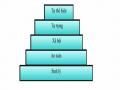
1.1.2.1. Abraham Maslow's Hierarchy of Needs Theory 8
1.1.2.2. John Stacey Adam's Theory of Equity 8
1.1.2.3. James L. McClelland's Achievement Theory 9
1.1.2.4. Victor Vroom's Expectancy Theory 10
1.1.2.5. Hackman & Oldham's job characteristics model 12
1.1.2.6. Herzberg's two-factor theory 14
1.1.2.7. Clayton P. Alderfer's ERG Theory 15
1.1.2.8. Kreitner & Kinicki's general model of organizational behavior 16
1.1.2.9. Comparison of characteristics of some theories 17
1.1.3. Some studies on factor 19 scale
1.1.3.1. Job Description Index JDI by Smith, Kendall and Hulin 19
1.1.3.2. Weiss's MSQ satisfaction measurement criteria 20
1.1.3.3. Edwin Locke's Measurement of Work Value 20
1.1.3.4. SHRM Survey Report 21
1.1.4. Some research results 22
1.1.4.1. Andrew's research results 22
1.1.4.2. Research results of Keith & John 23
1.1.4.3. Tom's research results 23
1.1.4.4. Research results of Tran Kim Dung and colleagues 23
1.2. Research model of topic 24
1.2.1. Formation process 24
1.2.2. Evaluation criteria in factor scales 25
1.2.3. Employee satisfaction assessment model
for businesses in Ben Tre province 27
Chapter 2: RESEARCH DESIGN 29
2.1. Research design 29
2.1.1. Introduction to the research process. 29
2.1.2. Scale 31
2.1.3. Select sample 32
2.1.3.1. Sampling method 32
2.1.3.2. Sample size 33
2.1.4. Building questionnaires, methods of collecting information 34
2.2. Technical analysis tools. 35
2.2.1. Descriptive statistics 35
2.2.2. Testing the reliability of the scale 35
2.2.3. Exploratory factor analysis EFA 37
2.2.3.1. EFA factor analysis test 38
2.2.3.2. Explain the meaning of factor 39
2.2.3.3. Process of performing EFA factor analysis 41
2.2.4. Correlation and regression analysis 42
Chapter 3: RESEARCH RESULTS 45
3.1. Check database 45
3.1.1. Select sample 45
3.1.2. Method of information collection. 45
3.2. Descriptive statistics 46
3.2.1. Description of personal characteristics of employees 46
3.2.2. Combining and comparing personal characteristics 47
3.2.3. Description of factors of interest to employees 50
3.2.4. Description of workers' wishes 51
3.2.5. Describe the difficulties of workers 52
3.2.6. Description of welfare regime, training program 52
3.2.7. Summary of descriptive statistics results 52
3.3. Testing the reliability of the scale 53
3.3.1. Results of reliability test of factor 53 scale
3.3.2. Results of reliability testing of general measurement criteria. 54
3.4. Exploratory factor analysis EFA 54
3.4.1. EFA factor analysis of the set of variables X k (k=50) 54
3.4.2. EFA factor analysis of 3 common measurement criteria 56
3.4.3. One-Sample T-Test parameter test of factor variables (GENERAL) 56
3.5. Correlation and regression analysis 57
3.5.1. Adjusting the hypothesis 57
3.5.2. Regression and testing results 58
3.6. Comparison of personal characteristics affecting satisfaction 61
3.6.1. Gender 61
3.6.2. Age group 61
3.6.3. Education level 62
3.6.4. Enterprise 62
3.6.5. Working time 62
3.6.6. Income 63
3.6.7. Welfare regime 63
3.7. Summary of research results 63
Chapter 4: CONCLUSION AND SUGGESTIONS FOR SOME SOLUTIONS 65
4.1. Conclusion 65
4.2. Suggested solutions 66
4.2.1. Main solution groups affecting overall customer satisfaction
Employees for businesses in Ben Tre province 66
4.2.2. Other solutions 69
4.3. Limitations of the topic and suggestions for further research 72
Appendix
References
LIST OF IMAGES
Page Figure A1-01: Maslow's Hierarchy of Needs Theory 8
Figure A1-02: Adam's Theory of Justice 9
Figure A1-03: McClelland's Theory of Achievement 10
Figure A1-04: Vroom's Expectancy Theory 11
Figure A1-05: Hackman & Oldham's job characteristics model 13
Figure A1-06: Herzberg's two-factor theory 14
Figure A1-07: Alderfer's ERG Theory 16
Figure A1-08: Kreitner & Kinicki's General Model of Organizational Behavior 17
Figure A1-09: Smith, Kendall, and Hulin's Job Description Index 19
Figure A1-10: Weiss's MSQ Job Satisfaction Measurement Criteria 20
Figure A1-11: Model for assessing employee satisfaction with the enterprise
in Ben Tre province 24
Figure A2-01: Research process diagram 30
Figure A2-02: Exploratory factor analysis model EFA 41
Figure A2-03: Adjustment model for assessing employee satisfaction 44
Figure A3-01: Structure of workers in terms of education level and average income 47
Figure A3-02: Combination of age group and median income 48
Figure A3-03: Combination of education level and average income 48
Figure A3-04: Combination of business and average income 49
Figure A3-05: Combination of working time and average income 49
Figure A3-06: The most important level ranked in order of priority of factor 50
Figure A3-07: Second level of importance ranked in order of priority of factor 50
Figure A3-08: Third level of importance ranked in order of priority of factor 50
Figure A3-09: Ranking of factor group preferences according to importance level 51
Figure A3-10: Explaining the Number of Factors Using Eigenvalue 55
Figure A3-11: Satisfaction Assessment Adjustment Model 57
Figure A3_12: Histogram SAT 60
Figure A3_13: QQ plot SAT 60 chart
Figure A3_14: Scatter plot SAT 60
Figure A4_01: Diagram of key solutions affecting overall satisfaction 67
LIST OF TABLES
Page Table 1-01: Characteristics of motivational factors and maintenance factors 14
Table 1-02: Comparison of positive and negative characteristics of satisfaction 18
Table 1-03: Work and Means Measurement Values 21
Table 1-04: Basis for forming 10 factor scales in model 25
Table 1-05: Evaluation criteria in factor scales 25
Table 3-01: Employee interest if the business improves 50
Table 3-02: Summary results of reliability test of scale 54
Table 3-03: Summary of factor variables F j after EFA analysis 55
INTRODUCTION
1. URGENCY OF THE TOPIC
In the context of the changing world economic situation from 2006 to present, Vietnam's economy has been strongly affected by both positive and negative aspects from the outside in the economic field, Ben Tre is still a poor province with an agricultural economic base, attracting investment capital, technical infrastructure and labor resources are still slow to develop. In order to strive to bring Ben Tre province out of poverty, develop on par with other provinces in the country, the issues of solving jobs for workers, the demand for labor of enterprises, shifting the labor force from low-income areas to high-income areas, and conflicts of interests between enterprises and workers are issues of concern to the provincial government.
Along with the development of the Vietnamese economy in recent years, workers have had many major changes in their awareness of the value and achievements of their labor contributing to the business, and businesses are increasingly paying more attention to the issue of building a "capable" and "stable" human resource to minimize errors, save time and costs, which is also becoming an issue of great concern to business owners.
The issues raised revolve around workers. What criteria are used to measure issues that workers are concerned about such as income, nature of work, working facilities, occupational safety, etc. This study was conducted to investigate and evaluate the current level of employee satisfaction with enterprises in Ben Tre province, and at the same time find out the factors affecting this satisfaction, helping enterprises and management agencies understand what issues workers need to care about? Therefore, it is necessary to study employee satisfaction with enterprises in Ben Tre province, with the aim of supporting management agencies in choosing