
"Sustainable development orientation of the western border area from Thanh Hoa to Kon Tum", University of Science - Vietnam National University, Hanoi.
23. Pham Trung Luong (chief editor) (2008), Scientific basis for developing coastal island tourism in the North Central Coast tourism region , Ministry-level scientific project, Institute of Tourism Research and Development, Hanoi.
24. Pham Trung Luong (2009), Developing Vietnam's sea tourism with national branding, Workshop paper: Building Vietnam's Sea Tourism brand, Ha Long - Quang Ninh.
25. Pham Trung Luong (2010), Tourism Development in the North Central Region: Issues Raised, Conference Paper: Orientation for Tourism Development in the North Central Region, Vinh - Nghe An.
Maybe you are interested!
-
 The role of the state in Vietnam's international economic integration - 3
 -
 Improving the competitiveness of Vietnam's tourism industry in the period of international economic integration - 12
 -
 Opportunities and Challenges of International and Regional Economic Integration for Vietnam's Foreign Trade
 -
 VNPT brand building strategy in the process of international economic integration - 10
 -
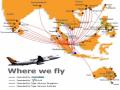 Linking low-cost air travel in international economic integration in Vietnam - 22
26. Pham Trung Luong (2012), Vietnam Tourism with International Integration, Lecture for Tourism Industry Officials
27. Nguyen Van Luu (2008), Tourism market , Hanoi National University Publishing House.
28. Nguyen Van Luu (2011), "Human resource development planning is an important solution to implement tourism development strategy", Vietnam Tourism Magazine , (2), pp.36 - 37.
29. Nguyen Van Manh and Pham Hong Chuong (2009), Travel business management textbook , National Economics University Publishing House, Hanoi.
30. Vu Duc Minh (2004) Some solutions to improve the efficiency of human resource use of state-owned tourism enterprises in Hanoi in the process of regional and international integration , PhD thesis in Economics, University of Commerce, Hanoi.
31. Dong Ngoc Minh, Vuong Loi Dinh editors (2000), Tourism economics and
Tourism Studies , Tre Publishing House, Hanoi.
32. Le Van Minh (director) (2006), Research and proposal of investment solutions for tourism development , Ministry-level scientific project, Institute of Tourism Research and Development, Hanoi.
33. Nguyen Quynh Nga (editor) (2000), Research and evaluation of some characteristics of Japanese and Chinese markets to develop tourist sources of Vietnam tourism , Institute of Tourism Research and Development, Hanoi.
34. Kim Ngoc (2002), "Service industry in the world economy in the first decades of the 21st century", Journal of World Economic Issues , (6), pp.18-25.
35. Tran Nhan (1996), Tourism and tourism business , Culture and Information Publishing House, Hanoi.
36. National Assembly of the Socialist Republic of Vietnam (2005), Law on Tourism
calendar , Hanoi.
37. Truong Si Quy (2002 ), Directions and some solutions to diversify tourism types and products in Quang Nam Da Nang , PhD thesis in Economics , National Economics University, Hanoi.
38. Nguyen Dinh Son (2007), Development of tourism economy in the Northern tourist region and its impact on national defense and security , PhD thesis in Economics, Academy of Politics and Military, Hanoi.
39. Nguyen Hong Son (editor) (2010), Vietnam Services 2020: Towards quality, efficiency and modernity , Hanoi National University Publishing House.
40. Ha Van Su (2001), Some basic solutions to develop tourism businesses in Vietnam today , PhD thesis in Economics, University of Commerce, Hanoi.
41. Do Cam Tho (director) (2007), Research on building Vietnamese tourism products that are competitive in the region and internationally , Ministry-level scientific project, Institute of Tourism Research and Development, Hanoi.
42. Prime Minister (2004), Decision 153/QD-TTg on promulgating the Strategic Orientation for Sustainable Development in Vietnam (Vietnam's Agenda 21) (153), Hanoi.
43. Prime Minister (2011), Decision No. 247/QD-TTg of the Prime Minister dated December 30, 2011 "Approving the strategy for Vietnam tourism development to 2020, vision to 2030" .
44. Nguyen Thi Tinh (2010), "Developing Tourism in the Northern Coastal Region",
Vietnam Tourism Magazine , (2), pp.46 - 47.
45. Vietnam National Administration of Tourism (2001), project: Policy and solutions to promote tourism development in the Central Highlands - Central Region .
46. Vietnam National Administration of Tourism and Spanish Sustainable Development Foundation (2003),
Capacity Building Project for Tourism Development in Vietnam .
47. National Center for Social Sciences and Humanities (2003), Globalization and Sustainable Development.
48. Pham Quoc Tru (2011), "International integration: Some theoretical and practical issues", Journal of International Studies , (2), pp.77-99.
49. Le Anh Tuan, Pham Manh Cuong (2010), "From the ASEAN region", Vietnam Tourism Magazine , (8), pp.20 - 21.
50. Nguyen Anh Tuan (2010), Competitiveness of Vietnam's tourism destinations , PhD thesis in Economics, Vietnam National University, Hanoi.
51. Nguyen Anh Tuan (2010), "Competitiveness of Vietnam Tourism Destination", Vietnam Tourism Magazine , (8), pp.22-23, 32.
52. Nguyen Van Tuan (2010), "Vietnam tourism: difficulties, challenges and development opportunities", Vietnam Tourism Magazine , (1), pp.3-4.
53. Do The Tung (2002), "Some main viewpoints in C. Marx's theory of services in the work "Capital" and their current significance", Journal of Political Theory , (10), pp.16-18.
54. Nguyen Thi Tu (2006), Solutions for developing Vietnam's ecotourism in the integration trend , PhD thesis in Economics, University of Commerce, Hanoi.
55. Nguyen Quang Vinh (2011) Competitiveness of Vietnamese international travel and tourism enterprises after Vietnam joined WTO
Joining the World Trade Organization (WTO) , PhD Thesis in Economics, National Economics University, Hanoi.
56. Institute of Tourism Research and Development (2001), Summary report on the Master plan for tourism development in the Northern tourist region to 2010 and orientation to 2020 , Hanoi.
57. Institute of Tourism Research and Development (2001), Summary report on the Master plan for tourism development in the North Central region to 2010 and orientation to 2020 , Hanoi.
58. Institute of Tourism Research and Development (2012), Summary report on the Master plan for tourism development in the North Central region to 2020, vision to 2030, Hanoi.
59. Department of Economic Synthesis - Ministry of Foreign Affairs (2000), Inter-regional development cooperation - along the East-West Corridor , Thanh Nien Publishing House, Hanoi.
60. Website: www.itdr.org.vn, Ha Van Sieu (2010), Breakthrough points in Vietnam's tourism development strategy, vision to 2030, Institute of Tourism Research and Development.
61. Website: www.itdr.org.vn, (2012), Approval of Vietnam Tourism Development Strategy, vision to 2030, Institute of Tourism Research and Development.
62. Website: www. vietnamtourism.gov.vn, www.moit.gov.vn, www. itdr.org.vn, www. chinphu.vn
63. Bui Thi Hai Yen (2009), Tourism planning , Education Publishing House, Hanoi.
II. English Documents
64. Martin Oppermann and Kye - Sung Chon (1997), Tourism in Developing Countries , International Thomson Business Press.
65. William Theobald (1994), Global Tourism - The next decade , William Theobald Publishing House.
66. John Ward, Phil Higson and William Campbell (1994), Leisure and Tourism, Stanley Thornes Ltd.
67. Stephen J. Page and Don Getz (1997), The Business of Rural Tourism International Perspectives, International Thomson Business Press.
68. Susan A.Weston (1996), Commercial Recreation & Tourism - An Introduction to Business Oriented Recreation , Brown & Benchmark Publishing House.
69. S. Medlik (1995), Managing Tourism , Butterworth Publishing House - Heinemann Ltd.
70. John Tribe (1995), The Economics of Leisure and Tourism , Butterworth Publishing House - Heinemann Ltd.
71. Thierry Libaert (2003), Le plan de communication.
72. Robert Lanquar (1993), Tourism Economics , World Publishing House.
73. Robert Lanquar and Robert Hollier (1992), Tourism Marketing, World Publishing House.
74. www.tourism.gov.my; www.tourismthailand.org; www.unwto.org; www.wttc.org; www.visitsingapore.com.
APPENDIX
Appendix 1 : World Heritage in the North Central provinces today
As of 2012, out of 16 world heritages of Vietnam recognized by UNESCO, there are 04 heritages in the North Central region: Hue Monuments Complex; Phong Nha - Ke Bang National Park; Hue Royal Court Music and Ho Dynasty Citadel. In addition, Nguyen Dynasty Woodblocks were also recognized by UNESCO as a "World Documentary Heritage".
A. World Heritage Sites
1. Hue Monuments Complex
The Complex of Hue Monuments was recognized as a world cultural heritage in 1993. Located along both banks of the Perfume River in Hue city and some neighboring areas of Thua Thien - Hue province, this complex of monuments includes historical - cultural relics of the Nguyen Dynasty built from the early 19th century to the first half of the 20th century in the ancient capital of Hue (now Hue city - the cultural, political and economic center of the province), the capital of the Nguyen feudal dynasty. The Complex of Hue Monuments is divided into clusters of works including those outside the Hue Citadel and those inside the Hue Citadel. In which, the cluster of monuments in the Hue Citadel includes: Hue Citadel, Hue Imperial Citadel, and Forbidden City. The citadel system here is a model of a harmonious combination of many naturally available symbolic elements. The relics outside the citadel include: a system of mausoleums, pagodas and other relics. In addition, Hue garden houses are also a unique form of architecture, attracting tourists.
2. Hue Royal Court Music
According to UNESCO's assessment, "among traditional music genres in Vietnam, only Nha Nhac has reached national stature". Nha Nhac has been developed since the 13th century in Vietnam. During the Nguyen Dynasty, Nha Nhac of Hue Royal Court reached its most mature and complete level. Therefore, in 2005, Nha Nhac of Hue Royal Court reached its most mature and complete level.
In 2003, UNESCO recognized Hue Royal Court Music as a Masterpiece of Oral and Intangible Heritage of Humanity. This is a genre of royal court music in the feudal period, performed on annual ceremonies of the Nguyen Dynasty of Vietnam.
3. Phong Nha - Ke Bang National Park
Phong Nha - Ke Bang National Park is located in Bo Trach and Minh Hoa districts, Quang Binh province, about 50km northwest of Dong Hoi city, in a limestone mountain area of about 200,000 hectares. Phong Nha - Ke Bang was recognized by UNESCO as a world natural heritage in July 2003.
This place is considered a giant geological museum of global value and significance. Besides the value of geological history, topography, geomorphology, Phong Nha - Ke Bang is also blessed by nature with mysterious and majestic landscapes. Phong Nha - Ke Bang National Park contains many natural mysteries, with hundreds of caves in limestone mountains with a total length of more than 80 km created millions of years ago, along with underground rivers and rare flora and fauna listed in the Vietnam Red Book and the World Red Book. With unique values of the history of the formation of the earth, geological history, topography, geomorphology; majestic and mysterious landscape; the biodiversity of the National Park along with unique cultural and historical values.
The main entrance of this cave system is Khe Ry cave and En cave, located at an altitude of about 300m above sea level. The caves in this system are distributed in the form of tree branches running in the Northeast - Southwest direction. The Vom cave system has a total length of over 30km, originating from Ruc Ca Roong cave, located at an altitude of 360m above sea level and ending at Vom cave. The Vom cave system is located on an axis with a general direction of South - North, the Ruc Ca Roong river sometimes hides in the rocky mountains, sometimes appears in narrow and deep valleys, and finally flows into the Chay river at the entrance of Vom cave.
Ruc Mon cave system located in Minh Hoa district is also one of the large caves but has not been exploited much. Besides the cave
Phong Nha is Tien Son Cave or Dry Cave - a famous beautiful cave in Phong Nha - Ke Bang area, where there are majestic and magical stalactites and stalagmites. In addition, there is Thien Duong Cave which is considered to be larger and longer than Phong Nha Cave. In particular, recently, a British expedition discovered one of the newest caves, Son Dong, which is considered the largest cave in the world. The largest chamber in Son Dong is over 5 km long, 200 m high and 150 m wide.
4. Ho Dynasty Citadel
On June 27, 2011, at the 35th meeting of the UNESCO World Heritage Committee held from June 19-29, 2011 in Paris (France), the Ho Dynasty Citadel relic in Vinh Loc district, Thanh Hoa province of Vietnam was recognized as a World Cultural Heritage. The Ho Dynasty Citadel World Heritage Complex includes the stone Imperial Citadel, Nam Giao altar, and La Thanh, built by Ho Quy Ly in 1397-1402. The citadel represents the exchange and communication of important human values between Vietnam and East Asian and Southeast Asian countries in the late 14th and early 15th centuries.
Up to now, the Ho Dynasty Citadel has been around for more than 600 years. What is special and unique is that the citadel was built from large stone slabs, with an average length of 1.5m, some up to 6m long, stacked on top of each other without adhesives. This unique work has demonstrated a new development in architectural style and construction techniques. The use of large stone construction techniques is an unprecedented breakthrough in Vietnam, demonstrating the strong determination of the Ho Dynasty in the process of reforming and building the country.
B. World Documentary Heritage
* Nguyen Dynasty woodblocks
Nguyen Dynasty woodblocks were produced due to the need to widely disseminate social norms and laws that people had to follow, to pass on the achievements of kings and lords, historical events, etc. Nguyen Dynasty woodblock documents were mainly formed during the activities of the Nguyen Dynasty.