
. Equipment operation process, characteristics of each type of equipment serving the creation and release of information products and services; how to use software, manage and operate the network; how to disseminate digital information; how to find modern information;
. Knowledge and skills related to the process of organizing, processing, distributing and sharing information resources; proficient use of search tools, information exploitation, and mastery of information search languages.
. Practical skills and appropriate communication methods to guide NDTs in searching for information; NDTs' methods of understanding and understanding NCTs.
2) For the group of staff with expertise in information processing
Maybe you are interested!
-
 Situation of Information Technology Application in Enterprises
 -
 The Impact of Accounting Information System Quality on Operational Performance
 -
 Information Technology and Information Technology Applications
 -
 Benefits of Bank Credit Information System
 -
 Solutions for developing application information systems in the current Vietnamese banking system - 17
Foster some knowledge about tourism profession; knowledge about characteristics, origin, value of scenic spots, historical sites, customs and practices... only then can we do well in selecting and analyzing tourism information, providing good Q&A services, consulting and disseminating selective information.
In addition to professional knowledge, this group of staff needs to have foreign language skills, participate in professional training courses, training courses to improve service skills in the information environment, and modern libraries; improve knowledge of information technology and IT such as organizing short-term and long-term training courses on administration, operation, and maintenance of network and computer systems.
3) For IT/IT staff
This is a group of staff who hold a very important position in the process of operating modern tourism information systems. For staff with advanced IT skills, they should be trained in tourism knowledge and information management skills.
In addition to organizing training to improve professional qualifications suitable for each group of staff participating in the above-mentioned HĐTT, the tourism industry regularly develops programs, organizes training and fosters CBTT through training courses, information skills training, skills in using multimedia technology, skills in collecting, processing and exploiting online data at home and abroad, creating a team of CBTT with quality, synchronization, and expertise to ensure the following criteria:
- Ability to create quality products and services, know how to orient and provide information to users.
- Ability to fluently use at least one foreign language to effectively exploit and process foreign language information sources;
- Have knowledge of law, understand Intellectual Property Law, Copyright Law, information security issues and other legal issues in the electronic information environment;
3.2.4. Unification of information technology infrastructure and application of technology in information activities
In order for the IT system to operate effectively, in addition to promoting and utilizing existing facilities, the IT department should increase investment in applying science and IT to serve the IT system in the network environment. To do this, it is necessary to design a network diagram of the IT system [Figure 3.6, p.152] and invest in IT infrastructure for the IT department at each level as follows:
* Information technology infrastructure, software systems applied at tourism information agencies
- For the Tourism Information Center (Data Integration Center) under the General Department of Tourism
Data integration center: includes server system, LAN operating system on which information systems and shared databases are organized to provide information to all domestic and foreign investors on LAN, WAN, Intranet and Internet...
The server system at the Data Integration Center must have:
The server system of the data integration center includes: management server (Manager Server), database server (Database Server), web server, mail server (Mail Server), backup server (Backup Server) and firewall along with components serving security, remote access, system safety.[PL3. p.221]
The system management server requires high configuration and system management software installed. The database server has high configuration to meet the requirements for stability and security of the database.
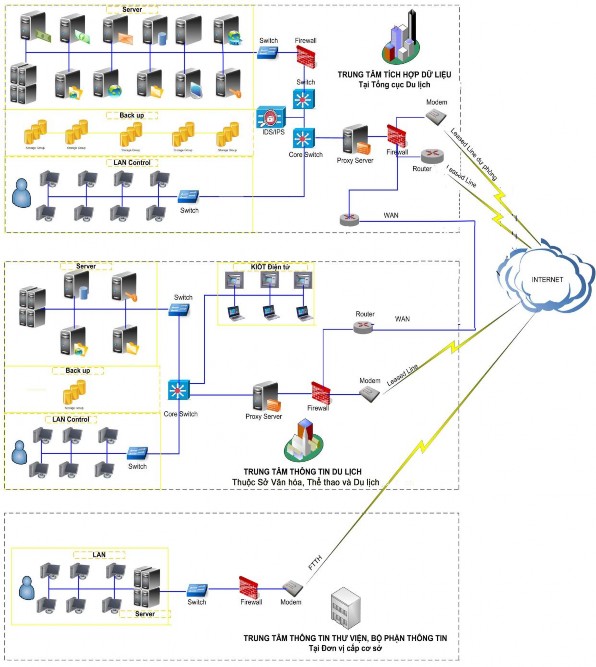
Figure 3.6. Network diagram of the Tourism Information System
Develop a web-based and GIS database system to meet the flexibility in changing and editing of each member unit.
Operating systems on servers use licensed operating systems such as: Windows Server, Linux, Unix;
Database software such as: My SQL, SQL server, Oracle, Infomix;
Software for managing executive documents, resource management...; tourism information lookup system, GIS system.
Also use specialized anti-virus, security, data backup and recovery software, and virtualization software.
* Tourist information center of the Department of Culture, Sports and Tourism
For this system, the network model serves both the province and city, updates and collects information for the shared database system, and provides information to the information center, library, and system information department at grassroots units.
The server system includes servers used to run specialized database systems, email systems, data management and backup software systems, and firewalls. The server does not require much because it connects to get data from the Tourism Information Center under the General Department of Tourism [PL3, p.222].
Operating system, system software: Windows Server, Linux;
Database software such as: My SQL, SQL server; specialized software such as: Gis, work schedule, executive document management, resource management... Specialized data backup and recovery software, anti-virus software...
Software system, specialized database serving management : management system, user classification, tourism information lookup system, software system, specialized database located here are basically identical to the system at the Data Integration Center; update operations into the database according to the authority assigned to the province, city, create a backup copy at the center.
* Information center, library, information department at grassroots level
The model is a dedicated LAN system, the system includes 03 servers used to run specialized database systems, data management and backup software systems, and firewall [PL3, p.223].
Licensed server operating system using Windows server, database software such as My SQL; specialized data backup and recovery software; anti-virus software...
The specialized software and database systems serving management located here are updated to the system at the Tourism Information Center under the Department of Culture, Sports and Tourism.
In addition to ensuring the unified technology and software infrastructure as above, when the TTTDL system is put into operation, the TTTDL system will process information and store the information products issued by the TTTDL system and the information products submitted for deposit by units in the field under its management; libraries of training institutions and research institutes will increase the addition of documents, compile general theses, specialized directories, summary directories, etc. In particular, to ensure the construction and sharing of information resources, the information agencies must uniformly apply exchange standards and other standardized tools in the exchange of information between information agencies in the entire system.
In summary, the information system ensures infrastructure requirements appropriate to each level, unified use of system software operating systems: Windows Server, Linux, Unix, My SQL, SQL server, Oracle, Infomix; specialized data backup and recovery software, anti-virus software, and unified exchange standards and standardization tools to ensure that the information system can well manage electronic information sources, digitization, multimedia documents, and integrate shared databases throughout the industry; create the ability to exchange, link and share information with information systems inside and outside the system.
3.2.5. The Government issues a policy to invest in reasonable information technology infrastructure for the tourism industry.
To enhance tourism exploitation services via the Internet (electronic tourism transactions, providing online tourism products), the Government should issue inter-sectoral regulations on coordinating planning and implementing the construction and use of IT infrastructure networks; linking IT infrastructure development planning with socio-economic development planning and tourism development planning; encouraging all economic sectors to participate in investing and providing IT infrastructure services; perfecting regulations on information safety and security on the network.
The Government and the tourism industry focus on directing investment in projects on building information infrastructure and network systems to meet practical social requirements and tourism development.
Focus on prioritizing areas with potential to develop into national tourist areas; difficult areas, remote areas but with potential for tourism development; support funding for Internet subscriptions (in whole or in part, depending on the specific conditions of each unit), creating conditions for units in the industry to build, share, exploit and use digital information sources in the network environment, serving tourism activities, serving the elderly of tourist investors.
3.2.6. Marketing information products and services through word-of-mouth channels from users
To ensure the effective operation of the tourism information system, the agencies need to focus on marketing tourism products and services through word of mouth from consumers. According to our survey results, the reason why tourists choose Vietnam tours from information channels based on the advice of friends and relatives is ranked 3rd, accounting for 41%. According to the survey results of Google Insights, 45% of individual tourists and 54% of business tourists have plans based on consulting the reviews and experiences of others. In addition, 40% of individual tourists and 46% of tourists use social networking sites to share their travel experiences [15]. In particular, when the internet revolution has achieved certain achievements, the dissemination of information has become more convenient than ever due to the explosion of social networks, each individual can have their own "newspaper" by tools such as blogs, facebook, twitter... At this time, the information channel from friends and relatives is more effective with strong transmission speed, fast transmission time, and wide spread scale . Therefore, it would be a mistake if the tourism industry ignores this information channel. However, to maximize the effectiveness of providing tourism information through this channel, the information agencies need to note the following points:
1) Turn the customer into a “superman”
Units focus on improving the quality of products and services in a central, key, and breakthrough manner. Consumers will spread word of mouth when they are satisfied with the products and services they have used. They are like a “superman” with a “communication” mission, thereby creating a widespread response for the products and services of the agency.
2) Impact of consumer drivers
Units should choose influential users (customers) in society and use customer care forms such as promotions, incentives, membership cards, VIP cards... to encourage word-of-mouth participation of customers when they receive incentives from the CQTT, from the business. The strength of this level is receiving endorsements from leaders - a factor that strongly affects the decision to choose a product, because people often have a crowd mentality and tend to follow the example of idols.
3) Group leadership impact
Group leadership influence is a form of word of mouth that seeks influencers to lead community groups. This form requires a well-organized, detailed program and a schedule to monitor and select reputable communities in society so that they can enthusiastically spread information to others. The strength of this level is the spread, and the impact is focused. However, it still depends on the enthusiasm of the influencer and the media influence of the head of the organization.
4) Participate in a networking development organization
This is a form of selecting organizations that develop relationships to participate in. The professional system and process of the organizations will continuously develop relationships and word of mouth. The strength of this form is the professional system, the NDT (customer) continuously updates information, and the information will spread quickly and stably.
3.2.7. Strengthen coordination with relevant ministries and branches
With the nature of an economic sector with high inter-sectoral, inter-regional and socialization, for the tourism industry to operate effectively, in addition to the attention and direction of the industry, the efforts of the management agencies and information officers, the tourism industry also needs the direction of the Government, the coordination of relevant agencies and departments through many forms:
1) Strengthening the close connection between the Tourism Information Center under the General Department of Tourism and the Information Centers under the Ministry of Culture, Sports and Tourism, Information Centers - Libraries under the culture and sports sector on the basis of exchanging and providing information. The form of effective connection is through networking.
2) The Ministry of Culture, Sports and Tourism and the General Department of Tourism proactively coordinate with the Ministry of Information and Communications to direct press agencies to propagate and support the management of the release and exploitation of tourism information by units inside and outside the tourism industry.
3) Expand cooperation and information exchange between the tourism industry (TTTTDL under the General Department of Tourism) and relevant ministries, departments and branches such as police, customs, transportation, environmental management... coordinate to build information dissemination tools with guidance on procedures for entry and exit, environmental landscape, business licenses; standards for tourist transport vehicles... Support and facilitate tourism agencies to access websites of ministries and branches to get information conveniently.
4) The tourism industry contacts research agencies, libraries, and information centers not related to the tourism industry to provide information and support the editing of information products for research and study in the fields of history, tourist attractions, ethnic customs and practices, foreign tourism information, tourism research projects, etc. through cooperation contracts and periodic information and data exchanges with agencies.
5) Strengthening relations with central and local press and radio agencies: coordinating the production of documentaries and reports on tourism, opening regular propaganda columns on tourist destinations, special local tourism programs, etc. increasing the frequency of broadcasting tourist route programs to the domestic public (domestic tourists), introducing local tourism potential, raising public awareness and calling for investment in local tourism.
6) Expanding links and cooperation with diplomatic sectors, Vietnamese airlines, Vietnamese representative agencies abroad, trade offices, Vietnamese cultural centers, overseas Vietnamese communities... to support the tourism industry.