
QUESTIONS AND EXERCISES
1. Exercises on particles e, p, n
1.1. A and B are two elements in the same subgroup and belong to two consecutive periods in the periodic system. The total number of protons in the two atomic nuclei of A and B is 32. Write the electron configurations of A and B and of the ions that A and B can form?
Answer: Z (A) = 20; Z (B) = 12.
Maybe you are interested!
-

 When Should a Healthy Child Get the First Dose of Hepatitis B Vaccine? (Check Only One)
 -
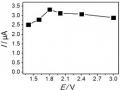 Effects of Voltage (A); Kcl Concentration (B); Electrolysis Time (C); and Stirring Time (D) on Hg Signal (Ii)
 -
 Equations Expressing the Relationship Dt/d1,3 In the Form: Dt = A + B.d1,3 At Different Ages
 -
 De Gruyter, C., Currie, G., Rose, G. (2017). Sustainability Measures Of Urban Public Transport In Cities: A World Review And Focus On The Asia/middle East Region . Sustainability, Vol. 9, No. 1,
 -
 Hplc Spectrum of 5-Fu (A) and Hplc Spectrum of Pns-Gptms-Cs-Mpeg System Carrying Released 5-Fu (B)
1.2. Two elements A and B are in two consecutive main subgroups in the periodic system. In the pure state, A and B do not react with each other. The total number of protons in the atomic nuclei of A and B is 23. Write the electron configurations of A and B.
Answer: Z (A) = 16; Z (B) = 7.
1.3. The total number of electrons in the anion XR 3 2- is 42. In the nuclei of X as well as R, the number of protons is equal to the number of neutrons.
1. Calculate the mass number of X and R?
2. Write the electron configuration and electron distribution into orbitals in the ground state of X, R?
Answer: A: S; B: O
1.4. An ionic compound is composed of M + ions and R 2- ions . In the M 2 R molecule , the total number of (p, n, e) particles is 140, in which the number of charged particles is 44 more than the number of uncharged particles. The mass number of M + ions is 23 larger than the mass number of R 2- ions. The total number of (p, n, e) particles in M + ions is 31 more than in R 2- ions.
1. Write the ion configuration of M + and R 2- ions ?
2. Determine the positions of M and R in the equation?
1.5. An atom of element R has a total of 40 particles, belonging to the main subgroup group III. Identify that element.
Answer: Al.
1.6. Compound Y has the formula MX 2 in which M accounts for 46.67% by mass. In the nucleus M, there are 4 more neutrons than protons. In the nucleus X, the number of neutrons is equal to the number of protons. The total number of protons in MX 2 is 58.
1. Find A M and A X .
2. Determine the molecular formula of MX 2 . Answer: FeS 2 .
2. Exercises on quantum numbers
1.7. Please state the value and meaning of the four quantum numbers that characterize the state of electrons in an atom.
1.8. 1. Can the following sublevels exist in a given atom? 2d5 , 3s13 , 4p1 , 4s1 .
Please explain?
2. The elements have the outermost electron sublevels 3s 2 3p 4 and 4s 2 3d 4
1.9. Given the sub-layers (energy levels) corresponding to the following quantum numbers: 1. n = 3, l = 2 2. n = 5 , l = 1
3. n = 2, l = 0 4. n = 4, l = 3
Name, determine the magnetic quantum number and orbital number of each sublevel above.
1.10. Why can't each set of four quantum numbers below be the set of four quantum numbers of an electron in a certain atom?
1. n = 3, l = +3, m l = +1, m s = +1/2
2. n = 2, l = +1, m l = +2, m s = +1/2
3. n = 2, l = +1, m l = -1, m s = 0
4. n = 4, l = +3, m l = -4, m s = -1/2
1.11. Make a table of the values of the 4 quantum numbers for each electron in the ground state of an atom with the configuration: 1s 2 2s 2 2p 2
1.12. How many electrons are there at most corresponding to: 1. n = 2
2. n = 2; l = 1
3. n = 3, l = 1, m l = 0
4. n = 3, l = 2, m l = 0, m s = +1/2
1.13. Identify the name of the atom whose last electron fills in the electron configuration with the following set of 4 quantum numbers:
1. n = 2, l = 0, m l = 0, m s = +1/2
2. n = 2, l = 1, m l = 1, m s = -1/2
3. n = 4, l = 0, m l = 0, m s = +1/2
4. n = 3, l = 2, m l = -2, m s = -1/2
Knowing Li(Z =3); Fe(Z = 26); Ne(Z = 10); K(Z = 19); O(Z =8); Zn(Z = 30)
1.14. What is the electron number in the atom that has the following 4 quantum numbers?
1. n = 2, l = 0, m l = 0, m s = +1/2
2. n = 3, l = 1, m l =-1, m s = -1/2
3. n = 3, l = 2, m l = +2, m s = +1/2
4. n = 4, l = 2, m l = +1, m s = -1/2
1.15. Given the set of 4 quantum numbers corresponding to the last electron of: 1. Mg (Z = 12) 2. Cl (Z = 17)
3. Exercises on electron configuration
1.16. What is an atomic orbital? Describe the electron cloud of a hydrogen atom.
1.17. What principles and rules does the distribution of electrons in an atom in its ground state follow? State them and give examples to illustrate.
1.18. Write the electron configurations of atoms in letter form and quantum cell form for the elements with atomic numbers 15, 26, 32 and 40.
1.19. Write the electron configuration of the ions Fe 2+ ; Fe 3+ ; S 2- ; Knowing that S is in box 16, Fe is in box 26 in
periodic table of chemical elements
4. Exercises on the HTTH table
1.20. Based on the electron configuration of an atom, how can we identify which period an element is in, whether it belongs to group A or group B, and the group number?
1.21 Please indicate the changes in properties of elements according to periods and groups: metallic and non-metallic properties; atomic and ionic radius; first ion energy; electron affinity; electronegativity; oxidation number; composition and properties of oxides and hydroxides of group A elements. The causes of periodic changes in these properties.
1.22. Write the electron configurations of atoms in letter form for the elements with atomic numbers 25, 30, 35, 50 and indicate (without using the periodic table):
- Period, group (A, B) contains them;
- Metal, non-metal or rare gas;
- Highest positive oxidation number, lowest negative oxidation number (if any).
1.23. Element X is a non-metal in period 4, forming the highest oxide XO 3 , in which X has the highest oxidation number. Write the electron configuration of X and indicate whether X
belongs to which group (A, B) and its order number in the periodic table. Answer: Se
1.24. Atom X has four electron layers, forming oxide X2O7 , in which X has the highest oxidation number, X has two electrons in the outermost layer. Write the electron configuration of X and indicate which group (A, B) X belongs to? Answer: Mn
1.25. Given that the atomic number of Cu is 29 and the outermost layer has 1 electron. Write the electron configuration of Cu 2+ ; Cu 1+ ; Cu. Determine the period number and subgroup of Cu.
1.26. The compound has the formula MR x in which M accounts for 46.67% by mass; M is a metal and R is a non-metal in period 3. In the nucleus of M, the number of uncharged particles is 4 more than charged particles. In the nucleus of M, the number of uncharged particles is equal to the number of charged particles. The total number of protons in MR x is 58.
Determine the name, mass number, and position of M and R in the periodic system. Write the configuration.
electrons of X?
Answer: M = Fe; R = S.
1.27. The cation R + has an outer electron configuration of 2p 6 .
1. Write the electron configuration and electron distribution in the orbital in the ground state of an atom?
2. Position of R in the periodic table? Explain the bonding nature of R with halogen?
3. What are the typical chemical properties of R? Give 2 illustrative examples? Answer: Z (R) = 11; Z (X) = 9.
1.28. Let M be a metal that produces two salts MCl x and MCl y and two oxides MO 0.5x and M 2 O y .
The mass fraction of chlorine in the two salts is 1:1.173 and that of oxygen in the two oxides is 1:1.1352.
Calculate the atomic mass of M?
1.29. The highest oxide of an element in group VIA contains 60% oxygen by mass. Identify the element and the electron configuration in the atom of that element?
Answer: S
CHAPTER 2. CHEMICAL BONDING AND MOLECULAR STRUCTURE
2.1. Basic characteristics of chemical bonds
2.1.1. Binding energy
For a diatomic molecule AB or A 2 , the bond energy is the energy required to break the bond between two atoms in the molecule in the ground state, gaseous state into atoms also in the ground state, gaseous state. The bond energy is calculated in kJ/mol.
For example: HCl (k,cb) H (k,cb) + Cl (k,cb) E H-Cl = 432kJ/mol N 2 (k,cb) N (k,cb) + N (k,cb) E NN = 941kJ/mol
For polyatomic molecules of type AB n, people use the concept of average bond energy, because in the molecule the bonds are the same but have different bond energies.
For example: In the methane molecule CH 4 there are four CH bonds, the first bond has an energy of 426.76 kJ/mol, the second, third, and fourth bonds have bond energies of 347.27; 535.55; 334.72 kJ/mol respectively, so the average energy of the CH bond in methane is:
426.76+347.27+535.55+334.72
E C-H = 4 =410.86kJ/mol
The larger the average bond energy, the more stable the bond.
2.1.2. Bond length
Bond length is the distance between the centers of two atoms directly bonded to each other.
-9 0 0
each other in the molecule. Its unit is nanometer (nm, 1nm = 10
= 10 -10 m).
m) or anstron ( , 1
For example: The bond length between two hydrogen atoms is 0.074nm
2.1.3. Bond angle
A bond angle is the angle formed by an atom bonded directly to two other atoms in a molecule.
C
Example: H
O
HH H H H
Corner
H · OH =104 0 5' Angle · HCH =109 0 28'
Figure 2.1. Molecular model of H 2 O and CH 4
2.1.4. Bonding multiple
The bond multiplicity between two atoms in a molecule is the number of electron pairs shared to form a bond between those two atoms in the molecule.
For example: The bond multiplicity between two nitrogen atoms in the N2 molecule is three: N N, the bond multiplicity between two carbon atoms in the ethylene molecule is two, between carbon and hydrogen is one.
HH
CC
H H
When the bond multiplicity is three it is called a triple bond, when the bond multiplicity is two it is a double bond, and when the bond multiplicity is one it is a single bond.
2.2. Ionic bonds
Ionic bond is a bond formed between two atoms of two elements with very different electronegativities, one side is a typical metal with very low electronegativity, the other side is a typical non-metal with very high electronegativity. As in the case between alkali metals, alkaline earth metals with halogens, oxygen.
When forming an ionic bond, there is a loss and gain of electrons to become cations and anions, then the oppositely charged ions attract each other by electrostatic attraction. So the nature of an ionic bond is the electrostatic attraction between oppositely charged ions.
Characteristics of ionic bonds
Ionic bonds are non-directional, since each ion creates an electric field around it, so bonding occurs in all directions.
Ionic bonds are unsaturated, because each ion can bond with many ions around it.
Ionic bonds are very strong, for example the bond energy in the KCl molecule is 404.25 kJ/mol. Compounds formed from ionic bonds under normal conditions are usually solids, with high melting points and high boiling points.
Examples: Bonding in salts, many metal oxides and hydroxides.
2.3. Covalent bonds
2.3.1. Covalent bonds according to classical theory
a. Concept of covalent bond according to classical theory
In 1916, American scientist Liuyt (G.Liewis) proposed the hypothesis that: In molecules such as H 2 , Cl 2 , CH 4 , the formation of bonds between two atoms is achieved by one or more pairs of electrons shared by the two atoms to have a stable electron configuration like that of inert gases. This type of bond is called a covalent bond or an atomic bond.
For example, the formation of covalent bonds in diatomic and polyatomic molecules is described by the following diagrams:
H g +
g gg g
g H
gg g
H g H
g
g gg g gg g
g C g gl
g
+ g C g gl g
gg g
g C gg l g C gg l g g gg g
H + gC g gl g H g C g gl g
g gg g g gg g
H + g O g g g H
gg
H g O g g g H
. H .
4H g + C g g
H :C . . : HH
b. Classification of covalent bonds
Covalent bonds are divided into two types:
Non-polar covalent bond : A pair of electrons is shared between the two atomic nuclei. This is the bond in simple molecules such as: H 2 , Cl 2 ...
Polar covalent bond : The shared pair of electrons is shifted towards the atom of the element with stronger non-metallic properties (or greater electronegativity). This is the chemical bond in compound molecules such as H 2 O, NH 3 , CH 4 , ...
2.3.2. Covalent bonds according to VB theory
a. The formation of H2 molecule from two H atoms
In 1927, W.Heitler and F.London sought to approximate the Schrodinger wave equation for the H2 molecule . The calculations allowed the determination of the bond energy and bond length of the hydrogen molecule.
For example: For the formation of H2 molecule ( a system of 2 nuclei and 2 electrons), people pay attention to the following types of interactions: Repulsion between two nuclei; repulsion between two electrons; attraction of the nucleus to each electron, and it has been calculated that if two hydrogen atoms have opposite spins (antiparallel), then when the two atoms approach each other, the attraction between them increases until the distance between the two atoms reaches a limit value r o , the energy of the system is minimal. Then at values smaller than r o , the attraction decreases, until at a certain distance a repulsion appears between the atoms, the repulsion increases as the distance gets smaller (Figure 2.2a).
Hetler and London first applied quantum mechanics to explain the nature of covalent bonds, based on the study of the formation of H2 molecules from two hydrogen atoms. The results showed that:
+ A bond between two hydrogen atoms can only be formed when the two electrons of the two atoms have opposite spin quantum number values, meaning one electron has m s = +1/2 and one electron has m s = -1/2.
The wavy lines on the diagram represent covalent bond formation.
The structural formula of H2 is H : H or HH which is called the Liuyt formula.
+ When forming a bond, the valence orbitals of two atoms overlap (Figure 2.2a), so the electron cloud density in the space between the two nuclei increases, this is shown when comparing the distance between the two nuclei in the H2 molecule and