
1.3.7.2. Children begin to communicate and learn
Communication is one of the psychological characteristics of preschool children. At this age, children begin to develop the ability to communicate and are excited about communicating with people. Children will observe what is happening around them, their parents, relatives and teachers to learn from. At this stage, in addition to ensuring standard communication language, educational content needs to provide rich vocabulary, close to children, and natural access through stories suitable for preschool age.
1.3.7.3. Children like to be loved
Children begin to interact with the outside world, so the psychological characteristics of preschool children at this stage are fear and need love from family, teachers and people around them. For these children, adults need to avoid "labeling" them with words like "shy" but should encourage and comfort them. When children make mistakes, teachers should also gently analyze them so that they can understand and recognize their own problems.
1.3.7.4. Children begin to form a sense of individuality.
Maybe you are interested!
-
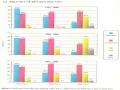
 Evaluation of Measures for Managing Organization and Coordination of Educational Forces Inside and Outside the School.
 -
 The process of building the organization and operation of the Southern Regional Party Committee and the Central Office for Southern Vietnam from 1945 to 1954 - 22
 -
 Factors Affecting the Organization of School Counseling Skills Training for High School Teachers in Particularly Difficult Areas
 -
 Some Theoretical Issues on Teaching Local History Traditions to Students in Secondary School
 -
 The process of building the organization and operation of the Southern Regional Party Committee and the Central Office for Southern Vietnam from 1945 to 1954 - 20
Although still young, at the preschool stage, children have begun to form their own personal awareness. Children can make their own comments when watching a movie or listening to a good piece of music. In addition, children also pay close attention to the comments of others about them. This is the "golden stage" for developing children's emotional and social skills. With such psychological characteristics of children, teachers and parents should observe and support children in the process of forming awareness, avoid encouraging children's wrong or incorrect actions, avoid praising, criticizing, and punishing children in front of others to avoid making children feel inferior or complacent about themselves.
1.3.7.5. Children begin to be independent
Children like to express their individuality, like to do things by themselves such as dressing, brushing teeth, washing hands, eating by themselves, arranging toys, going to the toilet, etc. Therefore, teachers should let children do things within their abilities and encourage them to help their families with tasks appropriate to their age and health.
1.4. Theoretical issues on building school organizational culture and managing preschool culture building activities
1.4.1. Kindergarten culture
Culture in general and art and culture in particular contribute to building an advanced culture and comprehensively developing people, aiming at truth - goodness - beauty, imbued with national spirit, humanity, democracy and science (Tran Van Dang, 2017). Culture is considered the soul of an organization and this is also true for schools, because: "School culture is sharing experiences both inside and outside the school, creating a sense of community, family and team members" (Wagner, 2006, p. 41). According to Peterson and Deal (2009), art and culture is a set of norms, values and beliefs, rituals and ceremonies, symbols and traditions that create the "appearance" of the school. According to Pham Minh Hac (2013), school culture is a system of standards and values that help the management team, teachers, parents and students have good ways of thinking, feeling and acting. “School culture is a system of material and spiritual values that exist in the school, making the school have its own unique features to distinguish this school from other schools. It includes the school atmosphere, the values that exist in teaching and educational activities, the landscape environment, facilities to the beliefs and expectations of each individual” (Vu Thi Quynh, 2018, p. 18). “Building and developing school culture is truly the mission and goal of each school, the responsibility and right of each individual and organization in the school, and the requirement of society. Because the school is the center of culture. The cultural and artistic environment has professional characteristics, with the diversity of impacts of cultural and social factors, of teachers and learners, of pedagogical standard behaviors" (Do Tien S, 2018, p. 13). "Culture and artistic are good values, formed by a collective and accepted by each individual in the school, good cultural and artistic aims at high quality standards" (Nguyen Thi Ngoc Phuong and Do Dinh Thai, 2018, p. 73). "Culture and artistic influence the quality of each school, is an important factor in improving quality, creating
create a unique brand for each school” (Vu Thi Quynh, 2017, p. 90). From the above perspectives, it can be understood that: Cultural and artistic values in preschools are a system of values, beliefs, and standards, formed and developed over a long period of time, recognized and influencing the thinking and behavior of the management staff, teachers, preschool children, and other related subjects in child care and education activities, creating a unique identity for each preschool.
* Characteristics of the current context affecting the management of building organizational culture in kindergartens:
Resolution No. 29-NQ/TW of the Central Executive Committee stated: “Raise awareness of the decisive role of education and training quality for teachers and educational managers; learners are the central subject of the educational process; families have the responsibility to coordinate with schools and society in educating their children's personality and lifestyle” (Central Executive Committee, 2013). In preschools, school culture (SC) affects the team of managers and teachers to create cohesion, encourage cooperative relationships, share experiences, and learn from each other; on the other hand, it also creates a positive learning atmosphere for children. Studying in a good environment, children will feel confident, comfortable, happy, eager to learn, actively participate in activities, and explore. Therefore, building SC in preschools is necessary in the current period.
1.4.2. Activities to build preschool culture
The above concept shows that there are points to note in building preschool culture:
Firstly , building a preschool culture is the process of correcting material and spiritual cultural values that are no longer suitable for improving the quality of education and training in preschools.
Second , building a preschool culture is the process of maintaining and developing appropriate and good material and spiritual cultural values for activities.
improve the quality of education and training in preschools. It is necessary to realize that: building a school culture is a long-term process, requiring the efforts and contributions of all members of the school. In which, the role of the head of the preschool is especially important. The culture of the preschool often bears the mark of the head. This is a process of consciously influencing to create or change the culture of the preschool, through identifying the values that need to be promoted, building trust in those values, and guiding members of the school towards the desired standards of behavior.
Based on the concept of school culture and building preschool culture as presented above, it is possible to identify the contents of building preschool culture including the following contents:
1.4.2.1. Regarding the material values of preschool culture
- For logos, icons
Edit logos and symbols when they are no longer suitable for training activities so that the school's logo and symbols must have high symbolic meaning, demonstrating the commitment of the members of the organization and the development goals of the academy.
- For slogans
Edit existing slogans when they are no longer suitable for educational philosophy, training requirements, educational innovation requirements of the country and international integration.
- For sign systems, directional diagrams
Edit and remove signs and diagrams that are no longer appropriate to the culture of the kindergarten and are not convenient for visitors to work with the school.
- For building architectural images
Repair and renovate the academy's buildings if they are no longer suitable for training activities, no longer meet the aesthetic requirements of an educational and training institution, and no longer meet the requirements of integration.
- For landscape space
Editing the existing landscape on the school campus in aspects such as infrastructure, trees, playgrounds, and entertainment areas. Building new parts of the school landscape space when conditions permit, including: building infrastructure (roads,
drainage), planting grass, trees, flowers, ...
- For vehicles and equipment
Dispose of old equipment that does not meet the requirements of teaching and learning activities such as: computers; projectors; microphones; work assignment boards; clocks; work schedules; notebooks; stationery; school website; learning materials...
1.4.2.2. For the spiritual values of preschool culture
- For mission and vision
Edit the preschool's mission and vision to make them relevant to training.
- For working motto
Edit and eliminate the working motto of the staff and teachers in the school that is no longer suitable for the requirements of the school's current training activities.
- Working process and procedures
Edit and eliminate complicated working processes and procedures that cause inconvenience to the school's training activities as well as difficulties for visitors to work with the school. Build new scientific and effective working processes and procedures that meet the requirements of administrative procedure reform. Build simple, convenient, effective and friendly working processes and procedures for everyone inside and outside the school.
- For ceremonies, rituals
Eliminate rituals and ceremonies that are no longer suitable for building the current preschool culture.
- For the trust and expectations of members
Review and correct any misrepresentations of beliefs by administrators, staff, teachers, and service personnel at the school.
- Regarding communication and behavior: Correct inappropriate expressions of communication and behavior in the academy between leaders and subordinates, teachers, parents, and students. Building appropriate, civilized and polite communication and behavior in kindergartens is shown in the following aspects: School leaders communicate with staff
Staff and teachers are respectful and proper; School leaders communicate with parents in a caring and friendly manner; School leaders communicate with individuals, organizations and partners in a polite, respectful and harmonious manner. Staff and teachers communicate with leaders in a respectful and proper manner.
1.4. 3. Managing activities to build preschool culture
Based on the organizational culture approach and the management function approach, the thesis identifies the following contents of management in building preschool culture:
1.4.3.1. Planning to build preschool culture
Planning to build preschool culture is reflected in the following specific aspects:
- Plan to build material values of kindergarten, including activities:
+ Eliminate or edit material values that are not suitable for the current school culture;
+ Constructing and promoting material values in accordance with the school culture at the kindergarten. These material values are: Logo, symbol; slogan; signboard, directional diagram; architectural image of the building; landscape space of the academy; means and equipment serving teaching and learning activities.
- Plan to build the spiritual values of the academy, including activities:
+ Eliminate or edit spiritual values that are not suitable for the current preschool culture;
+ Build and promote spiritual values in accordance with the school culture at the kindergarten. These spiritual values are: Mission, vision; working motto; working processes and procedures; rituals and ceremonies; beliefs and expectations of members; core values; leadership and management culture; communication and behavior: of leaders, teachers and students.
1.4.3.2. Organizing the implementation of building preschool culture
Based on plans for building school culture, preschool principals effectively organize plans to build school culture.
school according to predetermined goals. Whether the plans are put into practice or not; whether the plans are implemented effectively or not depends on the process of organizing and implementing the plan. The organization and implementation of school culture building in kindergartens focuses on eliminating or correcting material and spiritual values that are not suitable for the current school culture and building new ones and promoting material and spiritual values suitable for the school culture in kindergartens. The organization and implementation of school culture building in kindergartens needs to clearly define the role and position of the leader and manager; the role and position of the person in charge of implementation; the role and position of the person coordinating implementation. The content of organizing and managing the construction of preschool culture is mainly carried out through the following activities:
+ Announce the plan to individuals and organizations to implement school culture building.
+ Assign specific tasks to units, departments, and individuals in the school to participate in building school culture.
+ Establish a coordination mechanism between departments participating in building school culture.
+ Organize training and coaching on building school culture for units, departments and individuals in preschools.
+ Direct the resolution of situations arising during the implementation process...
1.4.3.3. Lead and direct the implementation of building school culture in preschools
The management of building school culture in kindergartens is greatly influenced by the school's Board of Directors. The stature, influence and skills of the leaders will contribute to the success right from the stage of planning to build school culture to the stages of organizing, implementing, checking, evaluating, summarizing, and resolving complaints and denunciations. However, the most direct influence still focuses on the leadership and direction in resolving situations arising in the process of implementing school culture building plans in kindergartens. The direction of implementing the construction of academy culture focuses on eliminating or correcting material and spiritual values that are not suitable for the school's culture.
current kindergartens; building new ones and promoting material and spiritual values in accordance with the school culture at kindergartens. The work of directing activities to build a kindergarten culture is expressed through the process of controlling implementation, adjusting activities, encouraging, motivating and especially the decision making on building a school culture by the leaders and managers of kindergartens.
The content of the work of controlling and directing the activities of building school culture in preschools is specifically determined in the following aspects:
+ Determine the direction, goals and activities for building school culture;
+ Make decisions on building school culture.
+ Encourage and motivate staff, lecturers, students and kindergartens to participate in building school culture.
+ Organize appropriate activities to build school culture.
+ Organize the implementation of school culture building content.
+ Encourage members to carry out school culture building activities.
+ Adjust the implementation plan for building school culture.
1.4.3.4. Checking and evaluating the results of building preschool culture
Without inspection and evaluation, it is considered as without management. Therefore, in the management of building preschool culture, the inspection and evaluation stage is identified as an important stage to ensure the sustainable cultural development of preschools. The results of inspection and evaluation will be the premise for the correct and close leadership and direction of leaders at all levels in building school culture; the basis for planning and developing school culture and the legal basis for resolving complaints and denunciations arising in the process of building school culture by competent authorities. Performing well the inspection and evaluation stage will contribute to the effective management of building school culture in preschools.
The inspection and evaluation stage is determined at the final stage of the implementation process of each content of building school culture in preschools. The inspection and evaluation of the implementation of building school culture in preschools