
The “General Principles” help interpret the others and play a fundamental role in the implementation of all rights in the Convention, for all children. The four principles are: Right to survival and development, Best interests of the child, Participation and Non-discrimination. Of which, the principle of “Best interests of the child” is the central principle [24]. Everyone in the social community, of which the “pillar” is the parents, is responsible for implementing the rights of children based on these principles. Violation of one of the four principles will also violate the remaining principles.
The 2016 Law on Children of Vietnam [46] also stipulates that the rights of children are protected by Vietnamese law, including 25 rights from Article 12 to Article 36 and dedicates Chapter IV to the Right to Protection, Chapter V to the Right to Participation of Children. Accordingly, the rights of children stipulated in the Law on Children are consistent with the United Nations Convention on the Rights of Children, such as: The right to life, The right to birth registration and nationality, The right to health care, The right to care and nurture; The right to education, learning and talent development; The right to recreation; The right to property; The right to privacy; The right to protection. The rights of children are also stipulated in Article 33 - Preschool Charter with 7 clauses related to the rights to appropriate nurturing, care and education; Rights for children with disabilities; The right to safety and equal treatment; The right to participation; The right to enjoy policies; enjoy other rights as prescribed in the Kindergarten Charter [5] and in Article 81 of the 2019 Law on Education [47].
1.3.3. The Relationship Between Children's Rights and Responsibilities
In addition to rights, children also have responsibilities, just like adult members of society. A child's rights end when the rights of another child or an adult begin. This means that rights have limits and a child must consider the rights of other children and adults when exercising his or her rights, ensuring that each individual knows how to protect his or her own rights, while also respecting the dignity, rights and freedoms of others. Rights and responsibilities go hand in hand. Children have the right to education, but at the same time they have the obligation to go to school. Children have the right to health care, but they have the obligation to care for their health. Children have the right to freedom of speech, but when exercising their freedom of speech, they must respect the rights of other children and adults, and above all, the right to protect their own honor and dignity.
The Convention on the Rights of the Child gives children the right to exercise their rights and responsibilities. This means that as a child grows, their autonomy increases and so does their scope of responsibility. Only when a child
If they are unable to exercise their rights, their parents or representatives will do so. The best interests of the child must always be the starting point.
Diagram 1.3 shows the relationship between children's Rights and Responsibilities, in which children are entitled to Rights but at the same time have the obligation to participate and take responsibility for themselves.
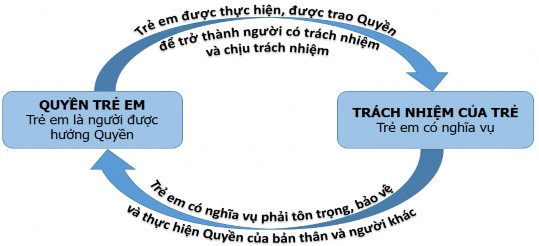
Diagram 1.3. The Relationship Between Children's Rights and Responsibilities
This is a two-way relationship that occurs simultaneously. Children are first and foremost the beneficiaries of Rights, meaning that children must be exercised and given Rights to become responsible and accountable for their own activities. Conversely, children's responsibilities are to fulfill obligations, meaning that children have the obligation to exercise, respect and protect the Rights of themselves and others in accordance with their abilities. The relationship between Children's Rights and Responsibilities is specified according to some QTEs in Table 1.2 as follows:
Table 1.2. Some Children's Rights and Children's Responsibilities
Group rights
Some Rights | Children's responsibilities | |
Right to survive | Right to life (UN Convention on the Rights of the Child; Article 19 of the 2013 Constitution and Article 12 of the 2016 Law on Children ; Clause 1, Article 33 of the 2015 Civil Code) | - Eat nutritious food - Choose healthy foods - Don't waste food |
Right to health care (Article 14 and Article 43 of the Law on Children 2016) | - Responsibility for body care and hygiene - Responsibility to tell adults when feeling tired, sore, sick. - Responsibility to follow doctor's advice when treating illness. | |
Right to development | Right to play and entertainment (Article 17 of the Law on Children 2016) | - Responsibility to actively participate in games - Responsibility for choosing safe toys and playing |
Maybe you are interested!
-
 Responsibility Education Based on Children's Rights for 5-6 Year Olds in Kindergarten - 2
 -
 Experimental Measures of Responsibility Education Based on Children's Rights for 5-6 Year Old Children in Kindergarten
 -
 Current Status of Testing and Evaluating Children's Rights and Duties Education Through Experiential Activities at Secondary Schools in Hung Yen City,
 -
 Incorporating Human Rights, Children's Rights, and School Violence Prevention into the Secondary School Curriculum
 -
 The role of mass media in implementing children's rights in Binh Phuoc province today - 21
Group rights
Some Rights | Children's responsibilities | |
healthy games - Responsibility for other players - Keep belongings and toys. - Responsibility to follow safety rules when playing, and in other activities (eating, sleeping, hygiene) - Responsibility for keeping the classroom/home environment safe (clean, neat, tidy, quiet) | ||
The right to education, learning and talent development (Article 16 of the Law on Children 2016; Article 11 of the Law on Education) | - Responsibility to study hard - Maintain and preserve school supplies. | |
Right to protection | The right to live with parents (Article 22 of the Law on Children 2016) | - Obey your parents; - Help your parents with housework within your capacity. - Love and be filial to grandparents and parents. |
The right to protection from exploitation of labor (Article 26 of the Law on Children 2016) | - Self-service - Do housework within your capacity - Tell your parents or another responsible adult (police, kindergarten teacher, child protection officer, 111 hotline) if you or another child is being exploited. | |
The right to be protected from violence, abandonment, and neglect (Article 27 of the Law on Children 2016) | -Responsibility to tell parents, teachers and other responsible people (police, child protection) if you are beaten or insulted; -Responsibility not to hit or insult others; - Protect other children if they are being beaten or abused by telling an adult. | |
Right to participate | Right to express opinions and assemble (Article 34 of the Law on Children 2016) | - Responsibility to speak up - Responsibility to contribute ideas in activities - Responsibility to listen to other people's opinions |
Ensuring children's participation in the family (Article 75, Law on Children 2016) Ensuring children's participation in schools and other educational institutions (Article 76, Law on Children 2016) | - Responsibility to participate actively; - Responsibility to contribute to family activities appropriately. |
Children cannot always defend their rights and interests themselves and need help and protection from adults. Children must be protected from mental and physical violence, injustice, neglect, abuse, sexual abuse and other threats. In addition, adults must ensure that children have what they need to survive and create appropriate conditions for the development of children's skills and interests. Therefore, to ensure that children fully enjoy their Rights, teachers and parents (guardians) need to carry out their social responsibilities towards children (presented in the annex). [13.2]
1.4. The process of educating responsibility based on Children's Rights for 5-6 year old preschool children
1.4.1. Concept of "Educating responsibility for 5-6 year old children"
Walsh (1990) defines education as the process of preparing young people to inherit their society and advocates three aspects of education - knowledge development, mental training and personality development [according to 68]. Nguyen Sinh Huy, Nguyen Van Le (1997), Education in a broad sense "is the purposeful and organized formation of human physical and mental strengths, the formation of a world view, moral face and aesthetic taste for people" [19, p.33]. In a narrow sense, "education includes the process of activities that create a scientific basis for a world view, moral ideals, aesthetic attitudes towards human reality, including the development of physical enhancement" [19, p.35].
Based on the concept of education and the concept of moral education, the thesis defines the concepts of "Children's Education" and "Children's Education based on Children's Rights" as follows:
Youth education for 5-6 year old children is a process of purposeful and planned impact by educators on children to form in them an awareness of what they want to do, what they need to do, in accordance with their social role, and self-consciously perform the work, and take responsibility for the consequences of their actions.
Child Rights-based education for 5-6 year old children is a process of purposeful and planned impact by educators on children in the direction of empowering children in activities, helping children understand their rights, thereby, being aware of what they want to do and need to do in accordance with their social role.
1.4.2. Objectives of responsibility education based on Children's Rights for 5-6 year old children
Defining the goal of responsibility education for preschool children from the perspective of value education, Júlia Klembarová (2016) said that “ in my opinion, in the younger grades, value education should be oriented on the recognition of personal values, including respect, responsibility, honesty, tolerance, kindness and others. It is important that students understand the nature of values and know how to apply them.
These values are instilled in children's behavior and actions, in other words, knowing how to behave tolerantly, responsibly, with respect for friends, teachers, family and others around them” [74, p102].
Diane Tillman and Diana Hsu identify the goals of responsibility education for 3-7 year olds as: (1) Increasing experiences of responsibility, (2) Raising children's awareness of responsibility, (3) Building a sense of responsibility.
In his book “101 Ways to Teach Children Social Skills,” Lawrence E. Shapiro identifies the goal of teaching responsibility as going hand in hand with helping children understand their rights [78].
So the educational goals for 5-6 year old children are determined as:
1) Raise children's awareness of their rights and responsibilities
2) Forming skills and behaviors to be responsible for oneself, others and the environment.
3) Build children's sense of responsibility towards themselves, others and the surrounding environment
1.4.3. Responsibility education content based on Children's Rights for 5-6 year old children
Based on the goals of early childhood education for 5-6 year old children, we identify the content of early childhood education for 5-6 year old children as including three groups of content:
Cognitive education content:
- Awareness of needs: physiological needs, safety needs, communication needs, respect needs, affirmation needs.
- Awareness of Rights: Right to survival, right to development, right to protection, right to participation.
- Awareness of responsibility:
+ Children know what they should and need to do for themselves, others and the environment.
+ Children understand why they need to do those things.
+ Children understand the consequences of their bad actions and must take responsibility.
Content of skills and behavior education:
- Children demonstrate responsible behavior towards themselves, people and things around them: doing the right job, completing the job well and taking responsibility for the consequences of their actions.
- Children have some skills to take responsibility: make choices and decisions, act independently, consider the effects of actions on others, meet their own needs without violating the rights of others.
Emotional and attitude education content:
- Children show interest and desire to take on responsibilities.
- Develop the will and belief that the job will be done.
- Forming in children self-awareness, voluntary performance of responsibilities and joy, readiness to accept consequences, desire and effort to overcome consequences.
1.4.4. Methods and measures to educate responsibility based on Children's Rights for 5-6 year old children
From two approaches to TTN education: character education and cognitive-developmental theorists [48], researchers have used specially designed programs or dilemmas about responsibility to clarify the value of responsibility for children. If the method is the movement of the content, the measure is the specific way to implement that content to achieve educational goals. In this section, the thesis presents the main methods and specific measures that are considered to have advantages, which have been applied by educators in the practice of TTN education.
1.4.4.1. Visual method
The visual method in preschool education for 5-6 year old children refers to the use of behavioral models. According to A.Bandura, there are three types of behavioral models: Behavior of people close to the child (parents, teachers, friends); symbolic behavior (famous people, characters in books, stories, movies) and verbal behavior [cited in 29]. Of these, the first two types of behavioral models can be chosen to be considered in the visual method group, and the familiar name often seen in preschools is the Example method.
Philosopher Joseph Joubert said, “Children need good examples rather than criticism” [quoted in 35, p. 289]. Setting an example is a method in which educators use positive examples of individuals or groups through specific words and actions to stimulate children to admire, trust and follow that example, in order to achieve the educational goals set. With this method, teachers often highlight examples of good responsibility to influence children's perception, thereby helping children believe in the effectiveness achieved when demonstrating positive behavior.
1.4.4.2. Verbal method
a) Discussion and reflection
Building on Aristotle's Ethics, virtue advocates argue that moral concepts and values should be explained in terms of character traits, which children can internalize, through pedagogy and reflection in the classroom. In the Soviet Union, this process of moral education was called “vospitanie” (Children's Care and Education). Desirable traits or virtues include tolerance, altruism, asceticism, benevolence, honesty, courage, justice, moderation, conscientiousness, thoughtfulness, impartiality, sincerity, modesty, generosity, sympathy, tactfulness, diligence, nobility, trust, self-control, solidarity, and frugality [108, pp. 2-3].
Discussion and reflection in the classroom is a process of conversation between teachers and children based on a system of questions and sharing to help children realize a truth, a meaningful conclusion about their own responsibility. Because the method of reflection in the classroom can internalize concepts and values into children [108, p.3].
b) Child guidance
Guiding children is not about using commands to ask them to do something when they are not mentally prepared. Guiding is to stimulate children's motivation [37]. We should say things like: "Today we play a game... okay?", "You study a little more", "This time try to do better than last time". During the guidance process, adults should avoid making negative comments such as labeling children (slow, shy, stupid, naughty, etc.) which makes it difficult for children to be motivated to carry out their responsibilities.
c) Use compliments
Compliments about children's abilities and compliments for their efforts have been discussed a lot in responsibility education for children. Children who are always complimented about their abilities often believe that they are good, that they are capable of doing everything even though they have not really tried hard, because they also receive compliments for easy tasks. When they encounter difficulties, children do not get good results, they think that they are not really smart, that their failure means they are incompetent. If children always receive compliments about their efforts, they do not think that they are incompetent. When they encounter difficulties, they will think that difficulty means they have to try harder. If they do not succeed, children do not consider it a failure and do not think that it reflects their intelligence, they still believe that if they continue to try, they will be able to do it [6].
d) Storytelling
Good, touching stories about responsible people will have the effect of properly orienting children about the value of responsibility, allowing them to reflect and draw valuable lessons for themselves. Short stories, suitable for the psychological characteristics of 5-6 year old children, are relatively easy to choose and integrate into children's daily activities, so they are also one of the effective methods used by teachers in preschools.
1.4.4.3. Practical-experiential method
Regarding the use of interactive participatory teaching methods, Van Driel, B., Darmody, M., Kerzil, J stated: Project-based learning, cooperative learning,
Service learning and peer education are active and engaging teaching methods that have proven effective in fostering tolerance, respect for diversity, and civic responsibility among students from diverse backgrounds. [106, p.13]
Experiential activities allow children to freely operate within the framework of general rules and regulations, children have the opportunity to satisfy their own needs and realize that they have the right to do many things [32]. At the same time, in the process, children must fulfill their responsibilities to ensure their rights as well as the rights of others. From there, children understand that everyone has the right to satisfy their needs, and to exercise their rights, each person must also fulfill their own responsibilities. For example, children have the right to play, they must be responsible for being active while playing, working/playing with friends; children have the right to use toys, they must also be responsible for preserving and maintaining toys.
Diane Tillman and colleagues (2014) also believe that teaching children about values is not enough, children need to experience them in many different situations [10, p.7]. Once children have experienced responsibility, the value of responsibility is truly theirs. Experiences give children a comprehensive sense of life, including positive feelings such as success, satisfaction, safety, love, happiness... and negative feelings such as disappointment, anxiety, fear, pain,... Negative feelings also have the meaning of making children understand and be patient, endure to find a way to overcome. Later on in life, children will be more steadfast. However, those experiences must not exceed the child's endurance and be under the control of adults as an effective measure to develop good will qualities, broadening children's vision [37, pp. 227-228].
Practical and experiential methods to educate children about TTN include:
- Assigning tasks: is a method in which teachers give children responsibility and authority to perform one or more tasks. Along with assigning tasks, teachers prepare necessary means and resources to facilitate children in completing assigned tasks.
- Games: is a method that helps the learning process to be carried out gently, lively, and attractive to children. Through games, children can both satisfy their right to play and have the responsibility to make efforts to participate in the game with their teammates to achieve the best results.
- Using situations: is a method of using situations and events that arise in children's real life, in which there is a conflict between being responsible and