
actions to motivate and encourage learners such as: Level 0- Teaching by invitation; Level 1- Giving rules; Level 2- Proposing and assigning tasks; Level 3- Goal orientation, creating motivation; Level 4- Using cooperative games; Level 5- Requesting feedback on learners from other teachers and parents [77]. Up to now, this model continues to be researched and applied by other educators, such as Kenioua Mouloud (2019) [77], Federico Carreres-Ponsoda et al. (2021) [58].
1.1.3. Research on responsibility education based on Children's Rights
Before the UN Convention on the Rights of the Child was born (1989), the educational ideology based on Children's Rights was mentioned by many educators with the viewpoint of "Child-centered". Representative is John Deway, education should be child-centered, education needs to have the initiative and interaction of learners; LX.Vygotxki with the theory of teaching in the "zone of proximal development" and then M.Montessori (1948) with the principle in the classroom: Freedom and Discipline - Let children be children, do not ask children when they are active, let children do what they want [26].
Since the Convention on the Rights of the Child was born, ensuring Children's Rights has become an urgent requirement, and has been of interest to social organizations and has promoted support to improve understanding and implementation capacity for teachers and those working with children. Diane Tillman and Diana Hsu (1997) [10], Lori DuPont et al. (1999) [81], have developed two educational programs, one on life values education, one on origins, rights and responsibilities education, both of which originate from the International Convention on the Rights of the Child. The first program originates from a principle in the United Nations Charter, which is: "Reaffirming faith in the fundamental rights of human dignity and worth" [10, pp. 18-19]. The second program is built on the strength of the parent-child relationship, helping to create positive thinking for both parents and children to educate about citizenship rights; Moral education and enhancing self-esteem and confidence in children and families. [81]. The research direction on QTE-based TTN education has the following main points:
- Research on the goals of TTN education based on Children's Rights
Maybe you are interested!
-
 Responsibility Education Based on Children's Rights for 5-6 Year Olds in Kindergarten - 2
 -
 Experimental Measures of Responsibility Education Based on Children's Rights for 5-6 Year Old Children in Kindergarten
 -
 Current Status of Testing and Evaluating Children's Rights and Duties Education Through Experiential Activities at Secondary Schools in Hung Yen City,
 -
 Incorporating Human Rights, Children's Rights, and School Violence Prevention into the Secondary School Curriculum
 -
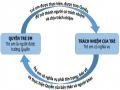 The Relationship Between Children's Rights and Responsibilities
In Australia, the 1999 Adelaide Declaration on National Goals for 21st Century Schools identified two goals that address education for responsibility and concern for the Rights of the Child [according to 48, pp.38-39]. Goal 1 (related to responsibility): “When students leave school, they have the capacity to exercise judgment in matters of ethics and social justice (…) to make rational, informed decisions about their own lives and to take responsibility for their actions; to be active and informed citizens; to have an understanding of and concern for the stewardship of the natural environment; and to have the knowledge and skills to contribute to sustainable development.”
ecologically sustainable; have the knowledge and skills to establish and maintain a healthy lifestyle and to make creative and satisfying use of leisure time…”. Goal 3 (related to Rights): “Schools must be social, so that: student outcomes are not affected by negative forms of discrimination, all students have equal access and opportunity to learn…; students possess the knowledge, skills and understanding to contribute to and benefit from reconciliation between Indigenous and non-Indigenous Australians; from cultural and linguistic diversity,…”
Also in 1999, the goal of youth education according to the human rights approach wasidentified in the study by Lori DuPont et al. are: 1- To promote understanding of human rights and the UN Convention on the Rights of the Child; 2- To understand the rights and responsibilities of individuals in relation to the UN Convention on the Rights of the Child; 3- To promote communicationfamily rights and encourage commitment to the UN Convention on the Rights of the Child; 4- To promote citizenship, social skills and democratic life skills in children [81].
Thus, the goal of educating children about responsibility based on Children's Rights needs to aim at raising children's awareness and understanding of their own and others' rights and needs; from there, children know how to choose actions and make decisions to do things that are beneficial to themselves, the community and the environment.
- Research on the content of TTN education based on children's rights
No trespassing
The lessons were designed by Lori DuPont et al. [81] to provide experiences for children, revolving around three contents: building children's confidence; respecting human rights (including children's rights and the rights of others); and developing responsibility.(Empowering children, helping children realize their ability to choose what theywant to do, nurture the sense and ability of mastery, make children feel worthyparticipate in community life). The life values program for children aged 3-7 by Diane Tillman and colleagues [10] has built activities to educate children about responsibility values around the following contents: educating children about their responsibilities at home, the responsibilities of those around them (parents, teachers), what it means to be a responsible person; educating children about pride, trying to do their best; and action skills such as thinking about responsibility, making responsible choices. According to Katherine Covell& R. Brian Howe (2007), the content of Responsibility learning includes: 1- the rights of others by inappropriate behavior; 2- Actively participating in theensure the rights of others [75]. It can be seen that the content of TTN education is based onChildren's Rights focus primarily on the Rights and Responsibilities to be fulfilled in order to contribute topart of ensuring the Rights of self and others. Based on empowerment, childrenchildren feel part of the community they belong to, they are willing to makeresponsible choices. When children learn to make decisions and consider the consequences of their actions,their actions, they will make better choices - choices with fewer negative outcomes.
- Form of TTN education based on Children's Rights
There is no publication that indicates a specific form of TTN education, but syntheses of life value education, including responsibility value education, have identified two forms: explicit and implicit [48]. Implicit Learning (IL) refers to learning based on random exposure, without verbal guidance or direction. Implicit learning occurs unconsciously and unintentionally (learners do not know they are learning something). Meanwhile, explicit learning (EL) occurs consciously and intentionally (learners know what they are learning). In 2014, Esra Dereli-Iman's study on the impact of values education on the development of children (5.5-6 years old) developed the Values Education Program, which is considered an explicit form of education, with 33 lessons taking place in 11 weeks, three lessons per week. The experimental results were noted by teachers and parents as positive [57, p.266]. Then, another study, published in 2019, " Communicating values with children by preschool teachers" by Ingibjorg Osk Sigurdardottir et al. based on the observation results of 68 activities (these activities were recorded with a total time of 9 hours and 17 minutes), showed that teachers communicated values to children in an implicit rather than explicit form [69]. This shows that values education in general and preschool education in particular can combine both of these forms.
- Methods and measures of educating children based on Children's Rights
Many methods and measures for educating children have been proposed such as:suggestions for teachers and parents in the process of educating children, but theseMethods and measures of educating children based on children's rights are still quite vague.published studies. Some of the authors and notable measures can be mentioned.following:
Diane Tillman and Diana Hsu (1997) chose the discussion and reflection method.The two authors believe that, in children aged 3-7, “children's learning takes place through the process of"self-discovery, reflection and experience", therefore, parents and teachers only play the rolesupport and guide children, not “discipline” them [10, p.7]. Some techniques that can help children learn to take responsibility include: giving clear and positive instructions; suggesting instead of ordering; talking about consequences helps children develop a sense of responsibility for their actions.
Interested in practical-experiential methods include authors DianeTillman et al. [10], Van Driel et al. [106], Jamal Hussain [71]. Van Driel (2016) stated: “ Project-based learning, cooperative learning, service learning and educationPeer-to-peer are active and engaging teaching methods that have proven effective.its results in fostering tolerance, respect for diversity and responsibilitycivic responsibility for students from different backgrounds” [106, p.13]. Jamal Hussain (2017) also emphasized the experiential education of children: experiences must
safe; it must take place in supervised, protected conditions, so that children can gradually come into contact with the adult world, and one day function as independent, responsible individuals. Preaching dos and don'ts is not enough. Education towards responsibility must raise the level of awareness, criticism and autonomy of students [71].
In addition, the authors emphasize the use of role models and praise. Praising children for their efforts is much more valuable than praising their achievements. Teachers and parents should be good role models because children are learning by imitation and need to demonstrate appropriate behaviors such as keeping promises, sharing, cooperating, helping, taking care of things, and being responsible.
- Research on TTN assessment based on Children's Rights
To date, there has been no study with a specific research design for assessing the TTN of preschool children. The books guiding parents or teachers on responsibility education for children only provide the goals, content and methods of responsibility education but do not provide specific criteria, scales and ways to assess children's TTN. However, research designs on life values education, civic education for children, or research designs on student responsibility are also important bases for applying to the assessment of TTN of 5-6 year old children based on QTE. The authors include Gary Mitchell Allan (2006) [60], Katherine Covell & R. Brian Howe (2007) [75], Geert ten Dam et al. (2011) [61], Le Thi Hoai Lan (2018) [23]. The authors are interested in the criteria of children's awareness, attitudes and behaviors in performing responsibilities. In which, the group of authors Katherine Covell & R. Brian Howe (2007) identified the criteria for assessing children's understanding of responsibility including: helping and caring for others, behaving well, taking care of things around, listening and learning, knowing how to connect to rights [75]. Weidong Li and colleagues (2008) identified children's awareness of responsibility in two aspects: personal responsibility and social responsibility with 4 criteria: respect, care-help, effort and self-direction, divided into 14 sub-items [107].
Inheriting existing achievements and identifying unclear issues, the thesis focuses on researching the nature and process of forming intellectual capacity in 5-6 year old children, manifestations of intellectual capacity and measures to educate intellectual capacity for 5-6 year old children according to the approach based on Children's Rights.
1.2. Responsibility of 5-6 year old children
1.2.1. Concept of “Responsibility”
There are different views on “Responsibility”:
Moscow Philosophy Dictionary (1986), responsibility is an ethical and juridical category that reflects the ethical and legal attitude of an individual towards society (towards humanity in general) [28, p.55].
Oxford Sociology Dictionary [9], “Responsibility” is defined in three senses: 1- Duty to resolve or care for a person or something; 2- Taking responsibility/accepting fault for something bad that has happened; 3- Obligation to help or care for someone due to work or social position.
According to the Vietnamese Dictionary (Nguyen Nhu Y), Responsibility is understood in two meanings: 1- The assigned work or considered assigned work must be completed, if the result is not good, one must bear the consequences; 2- The obligation to one's words and actions, ensuring correctness, if wrong, one must bear the consequences [43, p985].
Molly Ware and Rosalie Romano (2014) defined the concept of responsibility in three senses. One is the state of being accountable. Two is the ability to act independently and make decisions without authorization. Three is a moral obligation to respond in respect [85, pp. 63-68]. Lauermann and Karabenick (2011): “Responsibility is a sense of personal duty, a commitment to produce an outcome or prevent an outcome” [cited in 71, p.2].
Unifying the above views, “Responsibility” needs to be understood in the following three aspects. First is: The work that is done (right) or assigned to be done (obligation, including moral and legal obligations), second is: Performing duties prescribed by social roles and positions, third is: Taking responsibility for the work done.
From the above analysis, "Responsibility" is understood as the individual's awareness of the action he wants to do, needs to do in accordance with his social role and voluntarily perform it, and bear the consequences of the action he has caused.
If “Responsibility” is a category of philosophy, ethics and law reflecting human consciousness, “Responsibility” is considered from the perspective of psychology and education. “Responsibility” as a psychological quality of a person, is not innate but is formed in the process of individual activities and communication. Therefore , responsibility is a psychological quality of an individual, showing that the individual is aware of the action he wants to do, needs to do in accordance with his social role and voluntarily performs it, and bears the consequences of the action he has caused.
The connotation of this concept indicates three aspects that need to be considered about an individual's TTN. First, the individual correctly perceives what he wants to do, needs to do, and is consistent with his social role. Second, the individual voluntarily performs the job well. Third, the individual bears the consequences of his actions.
1.2.2. Elements that make up children's responsibility
To determine the elements that make up children's TTN, the thesis analyzes some works of previous researchers. According to Aristotle, the structure of responsibility includes
including: “voluntary, state of character, choice and deliberation make up the concept of moral responsibility”. Of these four elements, choice is related to attitude (deliberate desire), deliberation is considered cognitive (consideration, assumption about results, consequences), voluntary is both attitude (internal or external motivation) and cognitive (knowing or not knowing), and state of character is related to the action aspect (habit, repetitive action) [53]. Michael P. Muller et al. (2014) identify the components of emotion, sense of position, legal understanding, problem-solving action. Thus, according to Michael's point of view, responsibility includes emotional, cognitive and action elements [84].
Paulo Martins et al. (2017) [89] argued that personal responsibility and social responsibility are influenced by the factors “Involvement” and “Motivation”. The components of involvement include: self-confidence, dedication, vigour, and enthusiasm. Motivation includes internal motivation: to know, to achieve results, to experience; external motivation: to affirm, due to regulations, due to inner thinking. In this study, the authors emphasize the responsible attitude aspect (respect, effort, desire to progress, confidence, enthusiasm, and motivation) and the responsible action aspect (helping, encouraging, treating others well, setting goals for oneself).
Hélène Hagège (2017) considers “responsibility” based on three aspects. In terms of action, there is consistency between thoughts, words and deeds. In terms of perception, there is congruence between self-awareness and recognition by others. In terms of attitude, related to emotions, the emotional integration or emotional disconnection of an individual will affect that person’s attitude of responsibility [110].
Based on the above studies, it is possible to identify the structure of responsibility consisting of the following three components:
AWARENESS: Is a person's understanding of responsibility, knowing about concepts, terms, events/actions/situations related to responsibility, understanding the nature of responsibility is being ready to accept tasks, trying your best to complete work, caring for others, being fair to friends, protecting and preserving everything around. The cognitive factor plays a role in guiding action, meaning that thanks to correct awareness/understanding of responsibility, children try to demonstrate responsible actions everywhere, at all times with all different objects, situations and circumstances.
ACTION: Is the external expression of an individual when carrying out responsibilities, through words and specific actions in relation to oneself, to people and to things around. Children's actions are motivated by purpose and motive: wanting to do, liking to do or wanting to be praised, loved, or maybe
is due to obedience/fear of punishment. The action element plays a role in regulation and control. This means that only through the concrete actions of people expressed in relationships with people and things around can we understand their true emotional and cognitive attitudes.
ATTITUDE: Is the willingness, readiness, interest, joy, and respect when showing responsibility for oneself and those around one, expressed outwardly through facial expressions, gestures, and movements; is the need, desire, and motivation. The attitude factor plays a key role, acting as a driving force to encourage people to actively acquire knowledge to have a correct understanding of responsibility and demonstrate responsible behavior towards themselves, others, and things around them. This is especially important for children, when their awareness of responsibility is still limited, and their self-awareness is still in the process of forming and developing and is not yet stable. Children's actions start from their personal desires and needs, from what they like to do, and are done to meet their needs.
In real life, the elements that make up TTN do not exist separately, but are linked and unified with each other, forming a solid structure, demonstrating the true capacity of a person in dealing with himself, people and things around him. The relationship between the elements is shown in diagram 1.1.
Awareness of
responsibility
Attitude
responsibility
Act
responsibility
Figure 1.1. Structural components of accountability
1.2.3. Classification of responsibility
Based on the studies presented in the overview section, the thesis classifies children's responsibilities towards objects in the surrounding environment: responsibility towards themselves, responsibility towards others and responsibility towards the environment.
Responsibility for oneself: Responsibility for oneself is at the center, the individual freely considers responsibility as a way of life, the individual is responsible for his own life and the results of his actions, both of which require a high level of self-awareness and determination [71]. Children understand their bodies, learn to care for and look after their bodies, and ensure their own safety; children are aware of and express their own needs, thoughts, emotions, and feelings; children know their place in the family and try to fulfill their responsibilities in the family [31, pp.62-64].
Responsibility to others: Responsibility to others demonstrates that the individual sees himself as closely connected to all members of humanity. It is a moral worldview with empathy and compassion, at its core a sensitivity to the suffering of others. A responsible individual will have compassion for those whom he has hurt (whether intentionally or unintentionally). Responsibility to others includes the ability to respond to the calls of others and make commitments to them about what we will do or be, and to commit to meeting the needs of others without expecting anything in return [71]. Children always have a desire to care for others, when this need is satisfied, they will experience joy [26, p77]. Children can learn to offer to help a friend; they also learn to make amends when they hurt others [97].
Responsibility for others requires the emotional capacity to empathize with others and understand them in their otherness, that is, to put oneself in the other person's shoes. Anxiety is an emotion closely related to responsibility, which arises when the individual feels that something bad is likely to happen but cannot prevent it. Anxiety is a constant companion of love and care.
Environmental responsibility: The transition from individual to collective opens directly to environmental responsibility [112]. Environmental responsibility holds that humans need to be responsible for their actions towards nature – the human living environment. An individual is responsible towards the environment when he or she behaves correctly in the ethical relationship between humans and nature [17]. In children, children demonstrate environmental responsibility every day when they learn to use fragile things carefully; learn to take care of furniture; learn to take care of plants, classrooms and the surrounding environment [97]. Children really like flowers, but they want to grow them themselves, not just surround and gaze at colorful flowers. Children love to care for small animals. From these children radiate the light of gentleness, warmth and the desire to share and help animals [26, pp. 77-79].
Thinking responsibly about environmental issues requires children to have a basic understanding of the function of the environment, the role of each environmental component, and