
solve this painful situation at its root. Currently, there are many children in remote areas who have to work too hard, are beaten, starved but have not really received attention from society. The issue here is not just punishment, but more importantly, propaganda, education, changing the awareness of each individual and each family.
The tragic incidents of abuse that continue to occur once again make us question the role and responsibility of authorities and social organizations. The situation of violence and child abuse is becoming more serious and complicated and has become a more urgent social issue than ever.
3.2. Some shortcomings in the process of enforcing laws on domestic violence prevention and control
Through research, we can see that many provisions of the Law on Prevention and Control of Domestic Violence are difficult to enforce.
Firstly, there is the issue of applying the measure of prohibiting contact (people who commit acts of domestic violence are prohibited from approaching the victim within a distance of less than 30m). This measure is decided by competent State agencies, but the supervision of implementation is assigned to the head of the residential community (village, hamlet, village, residential group leader, etc.) who assigns people to supervise the implementation (Article 22). In principle, whichever State agency makes the decision must be responsible for monitoring and ensuring that its decision is implemented. The monitoring activities of social organizations and elected officials only have a supporting and supervisory role. The period of prohibiting contact of only three days is unreasonable. How will the 30m distance of prohibiting contact be enforced in practice? How will the residential group leader monitor and conclude that the person prohibited from contact has violated this 30m distance?
Maybe you are interested!
-

 Law on Protecting Children's Rights and Interests When Parents Divorce in Historical Periods in Vietnam
 -
 Current Status of Testing and Evaluating Children's Rights and Duties Education Through Experiential Activities at Secondary Schools in Hung Yen City,
 -
 Incorporating Human Rights, Children's Rights, and School Violence Prevention into the Secondary School Curriculum
 -
 Protecting women's rights in property relations between husband and wife under the Law on Marriage and Family 2000 - 2
 -
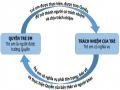 The Relationship Between Children's Rights and Responsibilities
Second, the Law has not really created a safe legal basis for whistleblowers and informants about domestic violence. Therefore, in reality, there are
Many people know about domestic violence but do not dare to report it for fear of being "touched", of being retaliated against or of affecting the neighborhood.
Third, the regulation on “Community trusted address” is recorded in Article 30 of the Law on Prevention and Control of Domestic Violence as “ individuals and organizations with prestige, ability and willingness to help victims of domestic violence in the community ” and “ Individuals and organizations notify the People's Committee of the commune where the trusted address is located about accepting the position as a trusted address. Depending on the actual conditions and capabilities, the trusted address in the community receives victims of domestic violence, supports, advises, arranges temporary shelter for victims and notifies the competent authority ”. Thus, it can be understood that “Community trusted address” is a temporary shelter for a certain period of time for victims of domestic violence, which can be the home of someone trusted in the community, capable of sheltering, protecting and helping victims of violence. Therefore, the issue of attitude, enthusiasm, and responsibility towards victims of violence also needs to be raised. In addition, there is still no clear mechanism for financial support for "Community Trust Addresses". Although the establishment of "Community Trust Addresses" depends on the ability and voluntariness of individuals and organizations, there should also be financial support from the state to increase the effectiveness of this activity.
Fourth, in terms of human resources, officers who carry out the task of preventing and combating domestic violence often hold multiple positions, so it is very difficult to simply ask them to volunteer and be self-aware. Therefore, there must be a clear policy on income subsidies for them.
Fifth, the regulations on shelters reveal concerns about the feasibility of this model, when the method of operation and organization are not clearly defined and the regulations are passive - victims of violence must hide. The State has only stopped at encouraging the establishment of shelters and the regulations on financial support for the operation of these facilities are general and lack specificity. For example: Clause 2, Article 19 of Decree 08/CP
Regulations on financial support for facilities supporting victims of domestic violence are implemented according to plans on domestic violence prevention and control established by People's Committees at all levels; the support funds are arranged in the annual budget estimates of all levels for domestic violence prevention and control. This fund is determined based on the scale and operational efficiency of the facility, the number of domestic violence victims supported annually. If it only stops at such regulations, it will be difficult to determine how much funding is available to support shelters. Furthermore, when children are victims of domestic violence, how will they access the Shelter? In the case where the father is the one who commits violence against the child, the mother can request temporary shelter for the child, or in the case where the mother commits violence, the father can request temporary shelter. However, if both parents commit violence against the child, can the child request temporary shelter? Or will another adult in the family exercise this right? In addition, children are still dependent on their parents, so it seems inappropriate for outsiders to take them to a shelter without the consent of their parents. In this situation, the intervention of competent state agencies is necessary to ensure the legitimate rights and interests of children. Thus, the Law on Prevention and Control of Domestic Violence should stipulate that competent state agencies in protecting children's rights can request the separation of children from their parents when their lives and health are harmed by violence from their parents.
Sixth, the regulations on fines also reveal shortcomings. The fines stipulated in Decree 167/2013/ND-CP are not really reasonable and lack deterrence because the fines are generally low. For example: Warning or fine from 100,000 VND to 300,000 VND for the act of forcing others into early marriage by torturing, mistreating, mentally intimidating or by other means (Article 55) or fine from 500,000 VND to 1,000,000 VND for the act of forcing family members to perform obscene acts or use aphrodisiacs (Article 52); Fine from 300,000 VND to 500,000 VND
The measure is also used for the act of regularly threatening violence to force family members out of their legal residence (Article 57). On the other hand, in many cases this measure can become a “double-edged sword”, making the violence more serious: the violent person, because of having to pay the fine, vents his anger on the victim with more terrible and sophisticated acts of violence.
Acts of mental violence in the family are becoming more and more common and unpredictable. Unlike physical violence that is easily expressed on the outside so that society can condemn and intervene, acts of mental oppression are often very secretive, often the victims are afraid and silently endure it alone.
In summary, the implementation of the Law on Domestic Violence Prevention and Control has encountered many shortcomings. The law enforcement instructions are not specific and have not reached those working directly at the grassroots level. There is no overall plan and clear budget allocation for law enforcement at the local level. Capacity building and training of human resources on domestic violence and law enforcement are still weak. There is no systematic assessment of the effectiveness of law enforcement.
3.3. Some recommendations to improve the law on Domestic Violence Prevention to protect children's rights
3.3.1. Regulations on measures to prohibit contact
The provision of a temporary ban on contact between the victim and the perpetrator is necessary to ensure the victim's safety, to give both parties time to consider their actions, and to educate the perpetrator about their crimes. However, the application of this measure requires the consent of the victim or guardian (usually another family member), which is not feasible. Because the nature of family relationships is close and strong, if one person intends to give up and move out, the relationship between members is often considered to become loose and unacceptable. Moreover, for victims of violence who are children, due to their high dependence on adults in the family, especially
especially fathers and mothers, so even though they are treated cruelly, they can still endure and continue to live with the person who commits violent acts. Therefore, the regulation on applying the measure of prohibiting contact must have the consent of the victim, although it is very reasonable to let the victim consider and decide according to their feelings and consciousness, but when the victim is a child, there is no clear implementation mechanism to protect children from dangerous acts of violence that may occur.
In addition, the regulation on one of the conditions for applying the contact prohibition measure is not really reasonable: the person who commits domestic violence and the victim of domestic violence have different places of residence during the contact prohibition period, this place of residence includes the home of relatives, friends, trusted addresses or other places of residence where the victim of domestic violence voluntarily moves to. It is clear that children who are victims of domestic violence continue to suffer: they are hurt, and to avoid this hurt, children are forced to leave their homes. Such a regulation reveals the unreasonableness: when the victim of domestic violence is a child, it is very difficult for them to move to a new place of residence, far away from other relatives in the family, they will have difficulty accepting this and even that isolation will have a more serious impact on the child's psychology and emotions. The law should stipulate the opposite, that is, the person who commits domestic violence is the one who must be quarantined because they themselves have violated the law.
In addition, when applying this measure, in my opinion, in some cases, the victim's request or consent is not required. For example: cases where the act of violence causes extremely serious damage to the victim's health and honor; the act is repeated many times; the person who has committed the act has been educated but continues to violate... and cases where the victim is a child. Because according to the common psychology of children, they never want to be separated from their parents and relatives. Therefore, to ensure the rights and interests of children, it is not necessary to have the consent of the child in the case of isolating the person who committed the act of violence and the child is the victim of violence.
3.3.2. Regulations on fines when handling administrative violations in the field of domestic violence prevention and control
Decree 167/2013/ND-CP has provided necessary sanctions for those who commit acts of domestic violence. However, the provision on fines in this Decree is not really reasonable, because the penalty level is generally low and has no deterrent effect. Therefore, I think that the penalty of fines can be eliminated and replaced with community service in handling administrative violations in preventing and combating domestic violence. This measure is more feasible because it has a positive educational meaning for those who commit acts of violence, while not affecting the rights of the victims. Moreover, this measure also has a positive educational effect on other individuals: they do not want to be subjected to such a public and widely known form of punishment, so they will try to avoid it by not committing the violation. However, it is also necessary to see that this measure is quite new in Vietnam, so it can be regulated flexibly: only apply mandatory to repeat offenders; calculate community service time equivalent to the fine amount; carry out community service in certain economic establishments. However, if this form of punishment has been applied, it is not allowed to replace it with a fine to ensure the strictness of the law.
3.3.3. Regulations on the responsibilities of competent agencies and organizations
right
Through research, we see illegal acts.
In the field of preventing and combating domestic violence, many agencies are responsible for handling it. However, the local government plays an important role in preventing and combating domestic violence because it is the level closest to the people. It can be said that the local government is the place to grasp and manage all activities taking place in the area under its management. However, in reality, there have been many acts of domestic violence that have occurred for a long time without the government knowing and not having timely measures to handle and intervene, leading to unfortunate consequences.
Therefore, the law needs to clearly define the responsibilities of the heads of local authorities as well as their legal responsibilities when they fail to fulfill their duties.
The practice of domestic violence in Vietnam shows that: information and propaganda on domestic violence prevention and control to raise awareness, thereby changing awareness of the problem is extremely important and necessary, but it seems that it has not received due attention. Lawmakers have spent a lot of effort to develop these regulations but have not stipulated a mechanism for their implementation in practice, but only general regulations in Chapter 4 of the Law on Domestic Violence Prevention and Control on the responsibilities of individuals, agencies and organizations in enforcing the Law. Therefore, in our opinion, it is necessary to stipulate more detailed regulations on this issue. Specifically: it is necessary to stipulate this propaganda as a regular responsibility of a specific agency or organization in each locality, each facility (Committee on Population, Family and Children; Committee for the Advancement of Women; Women's Union; Neighborhood Groups...).
Tolerating, covering up, not handling, or not handling domestic violence in accordance with the law are among the prohibited acts as stipulated in Article 8 of the Law on Prevention and Control of Domestic Violence. These acts of competent authorities and individuals are one of the reasons why the situation of domestic violence has not improved: those who commit acts of violence are not handled, become more aggressive, thinking they are right; the victims become more fearful and do not dare to react; those around them see this and have more reason to be indifferent, not care, and may even think that they can do the same. The impact of this behavior is very serious and dangerous. However, when considering Decree 167/2013/ND-CP, there is no form of punishment for these acts, although all other prohibited acts are handled at different levels. This is completely unreasonable and needs to be amended. Therefore, we believe that it is necessary to more strictly regulate the responsibilities of agencies and organizations in preventing and combating domestic violence: behavior
Violations must be dealt with; but indifference, lack of concern, and irresponsibility also need appropriate sanctions.
It can be seen that no single sector or level can completely solve a sensitive and complex social problem like domestic violence. Therefore, there needs to be a common plan for capacity building and implementation activities, clear roles and responsibilities, as well as a unified intervention process and orientation among sectors.
3.3.4. Raising responsibility and awareness of family members in protecting children's rights
- Parents and other family members need to strengthen their children's education in self-protection skills and boldly denounce acts of domestic violence.
- Family members need to raise their sense of responsibility for preventing and combating domestic violence by paying close attention to children; protecting, caring for and educating children. This is important in detecting and preventing early acts of domestic violence against children.
- Family members need to be properly aware of the seriousness of domestic violence against children. It is necessary to resolutely eliminate the idea of covering up and concealing family members who commit acts of violence against children, especially acts of child sexual abuse. Only then can acts of violence against children be prevented in a timely manner and avoid recurring and seriously affecting the lives of children.
In short, in order for the Law on Prevention and Control of Domestic Violence to soon come into effect and be effective in the community, in addition to perfecting the law, it is necessary to combine the implementation of many synchronous solutions, focusing on solutions such as: further strengthening the information and propaganda work on the Law on Prevention and Control of Domestic Violence to raise awareness and change the behavior of all classes of people regarding domestic violence; doing a good job of protecting and supporting children who are victims of domestic violence; equipping children with weapons.