
To ensure good implementation of management and payment of unemployment insurance regimes, the Social Insurance Agency and the Provincial Employment Service Center have developed a coordination process between the two units. According to this process, each unit is responsible for one stage and coordinates and links with each other to strictly control and manage beneficiaries, prevent abuse and profiteering of unemployment insurance regimes. The responsibility for management and settlement of unemployment insurance regimes is clearly defined between the two agencies. Accordingly, the Provincial Employment Service Center is responsible for receiving unemployment insurance regime applications, reviewing and implementing procedures for settling unemployment insurance regimes for employees. The payment of unemployment insurance regimes is the responsibility of the Provincial Social Insurance through many forms such as direct payment, through payment representatives or through employees' bank accounts. Flexibility in unemployment insurance payment activities has reduced inconvenience for employees receiving unemployment benefits. Currently, the payment time has been reduced to 05 working days from the date the Social Insurance agency receives the unemployment benefit decisions of employees transferred by the Provincial Employment Service Center.
Chart 2.2: Unemployment benefits for the period 2015 - 2019
157898
126795
67555
78549
87304
8381
8137
7207
9034
9943
180000
160000
140000
120000
100000
80000
60000
40000
20000
0
2015 2016 2017 2018 2019
Number of people Amount of money (million VND)
(Source: Hai Duong Provincial Social Insurance) The results of unemployment insurance payments from 2015 to 2019 show that monthly unemployment insurance payments for unemployed workers increased rapidly in both beneficiaries and the amount of benefits paid. The number of people receiving unemployment insurance in 2019 increased by 18.6% compared to 2015, equivalent to 1,562 people. The amount paid increased by 33.7%, equivalent to VND 90,343 million. The rate of monthly unemployment insurance beneficiaries is 98.2% of the number of people applying for unemployment insurance, which is the rate
high. Of the 42,702 people receiving unemployment benefits, 34,796 people received unemployment benefits from 3 to 6 months and 7,906 people received unemployment benefits from 7 to 12 months. In 2015, there were no cases of unemployment benefits from 7 to 12 months, but by 2019, the number of people receiving unemployment benefits from 7 to 12 months was 3,010 people, accounting for 30.2%. The close coordination between the Social Insurance Agency and the Provincial Employment Service Center has helped the payment of unemployment benefits to policy beneficiaries to be much faster and more convenient than before.
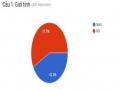
The average level of unemployment benefit increased from VND 2,039,189 in 2015 to VND 3,052,230 in 2019. The rate of workers with a decision to receive unemployment benefit under 24 years old is 12.4%; from 24-40 years old is 70.9%; over 40 years old is 16.7%. The rate of women with a decision to receive unemployment benefit is 61.7%. Workers aged 24-40 receiving unemployment benefit accounts for a high proportion. This is a group of workers with work experience, good health and dynamism. Therefore, the trend of job conversion of this group is higher than other groups, leading to a higher rate of unemployment benefit for this age group than for the remaining age groups. Female workers lose their jobs more than male workers, mainly in the age group of 24-40 years old due to facing many barriers in the labor market such as discrimination between female and male workers; limited job choices (some fields female workers cannot participate in), table 2.4
Table 2.4: Structure of workers receiving unemployment benefits by age group and gender from 2015 to 2019
Unit: Person
STT
Gender | Age | Year 2015 | Year 2016 | Year 2017 | Year 2018 | Year 2019 | Total number | Proportion (%) | |
01 | Male | ≤24 years old | 346 | 283 | 263 | 268 | 321 | 1,481 | 3.5 |
25 - 40 years old | 2,133 | 2,295 | 2,261 | 2,673 | 2,764 | 12,126 | 28.4 | ||
> 40 years old | 362 | 479 | 483 | 617 | 805 | 2,746 | 6.4 | ||
02 | Female | ≤24 years old | 1,089 | 790 | 608 | 675 | 628 | 3,790 | 8.9 |
25 - 40 years old | 3,702 | 3,615 | 2,867 | 3,840 | 4,144 | 18,168 | 42.5 | ||
> 40 years old | 749 | 675 | 725 | 961 | 1,281 | 4,391 | 10.3 | ||
03 | Total | 8,381 | 8,137 | 7,207 | 9,034 | 9,943 | 42,702 | 100 | |
Maybe you are interested!
-

 The Integration Process Creates a New, More Dynamic Economic Environment Serving the Growth Process and Gradually Shifting the Economic Structure
 -
 Structure of a Program Using Lock Variables for Synchronization
 -
 State management institution on unemployment insurance in Vietnam - 1
 -
 State management institutions on unemployment insurance in Vietnam - 29
 -
 Deduct social insurance, health insurance, and unemployment insurance from production and business expenses
(Source: Hai Duong Provincial Employment Service Center) The organization of payment of unemployment insurance and other unemployment insurance regimes for policy beneficiaries has been implemented by the Social Insurance Agency and the Provincial Employment Service Center according to standard procedures from the stage of receiving documents and checking conditions.
and issue decisions. During the implementation process from 2015 to present, the Social Insurance Agency and the Provincial Employment Service Center have updated and supplemented this process 3 times in the direction of simplifying administrative procedures, reducing waiting time and transactions for employees; increasing the application of information technology, circulating records through the postal system; implementing decentralization of handling records for unemployment insurance benefits to professional departments, thereby creating favorable conditions, saving time, costs and efforts for organizations and individual employees when completing procedures for unemployment insurance benefits. 100% of employees receiving unemployment benefits are issued health insurance cards by the Provincial Social Insurance on time. From 2016 to present, the Employment Service Center has coordinated with the Provincial Social Insurance to issue health insurance cards to employees receiving unemployment benefits right at the center on the day the employee comes to receive the decision on unemployment benefits, creating favorable conditions for employees to have timely medical examination and treatment and not having to travel to many places to receive health insurance cards.
2.3.3. Results of implementing vocational training support policy
The number of people participating in vocational training has increased sharply over the years. The total number of people supported to learn vocational training from 2015 to 2019 is 1,121 people. Of which, in 2015, 105 people were supported to learn vocational training, equal to 1.25% of the number of people with decisions to receive TCTN (8,381 people); in 2016, 207 people, an increase of 97% compared to 2015, equal to 2.54% of the number of people with decisions to receive TCTN; in 2017, 273 people, an increase of 31.8% compared to 2016, equal to 3.78% of the number of people with decisions to receive TCTN; in 2018, 243 people, a decrease of 11% compared to 2017, equal to 2.68% of the number of people with decisions to receive TCTN; In 2019, there were 293 people, an increase of 20.5% compared to 2018, equal to 2.9% of the number of people with decisions to receive TCTN (Table 2.5).
Table 2.5: Number of people supported with vocational training, counseling, and job referrals in the period 2015 - 2019
Unit: Person
Content
2015 | 2016 | 2017 | 2018 | 2019 | |
Number of unemployed people receiving counseling and referral job introduction | 7,977 | 10,323 | 10,547 | 11,955 | 11,916 |
Number of unemployed people referred to jobs | 3,576 | 8,115 | 9,732 | 11,345 | 11,565 |
Number of unemployed people supported to learn a trade | 105 | 207 | 273 | 243 | 293 |
Total | 11,658 | 18,645 | 20,552 | 23,543 | 23,774 |
(Source: Hai Duong Provincial Employment Service Center)
The average annual increase in the number of people supported for vocational training is 37.3%. The results in Table 2.5 also show that the number of unemployed people supported for vocational training in terms of growth rate (293 people in 2019, an increase of 179% compared to 2015) but the number is not large. Compared to the total number of people applying for and the number of people receiving TCTN, the number of vocational trainees is still very low. This shows that vocational training support advice for unemployed workers is still limited and this only considers and evaluates the number of vocational trainees without mentioning the quality of vocational training of unemployed workers.
The number of people who wish to and receive support for vocational training is not large due to reasons such as:
- Unemployed workers in the province are mainly unskilled workers, life is already difficult, so when they lose their jobs, they only care about receiving unemployment benefits. The common mentality of unemployed workers is to find other jobs to have income to maintain their lives and then consider vocational training. On the other hand, Hai Duong is a province with a large proportion of agriculture, forestry and fishery and is currently in the process of shifting its economic structure towards increasing the proportion of the industrial - construction and service sectors, the demand for unskilled workers is large, so workers can easily find new jobs after unemployment.
- The recruitment needs of some enterprises that use a lot of labor are mainly to recruit unskilled workers, so workers can find new jobs immediately after losing their jobs without having to learn another profession. Some enterprises recruit trained workers, but after being recruited, the enterprise only pays wages according to the job position as unskilled workers without distinguishing between trained and untrained workers when doing the same job position.
- The current vocational training support level is still low (maximum 1 million VND/person/month), short duration (maximum 6 months), making it difficult for workers to participate in training courses over 6 months, so workers are reluctant to participate in vocational training classes with higher training costs than the prescribed support level, long training time; tuition payment procedures are still cumbersome, making it difficult to attract private facilities to participate in vocational training.
- Workers have few opportunities to choose a training profession because the list of training professions is not rich, the training professions are outdated, and the training fees are high. Vocational training facilities are not interested in accepting unemployed workers to learn a profession due to insufficient enrollment. Monitoring the time of participation in vocational training of workers and the actual training program of vocational training facilities is very difficult because there are no regulations and monitoring and supervision tools.
- The quality of vocational training for unemployed workers is not high, so workers do not want to participate.
The main occupations that workers currently register to study are driving; office informatics; culinary; cosmetology; computer repair; civil electricity; industrial electricity; industrial sewing... with vocational training support ranging from 3 to 5 million VND. After completing the course, workers are consulted and introduced to jobs suitable for the profession they have been trained for.
2.3.4. Results of implementing job consulting and referral policies
From 2015 to 2019, the DVVL Center provided vocational training support and job referrals to 98,172 people. Of which, in 2015, 11,658 people received vocational training support and job referrals; in 2016, 18,645 people received vocational training support and job referrals, an increase of 59.9%; in 2017, 20,552 people received vocational training support and job referrals, an increase of 10.2% compared to 2016; in
In 2018, there were 23,543 arrivals, an increase of 14.5% compared to 2017; in 2019, there were 23,774 arrivals, an increase of 1% compared to 2018. The average annual growth rate was 21.4% (Table 2.5).
2.3.5. Results of implementing policies to support training and improve vocational skills to maintain employment for workers
By the end of 2019, in Hai Duong province, there were no employers receiving support for training, fostering, and improving vocational skills to maintain employment for employees. Although the conditions for enjoying this regime according to the provisions of Decree No. 61/2020/ND-CP of the Government have been relaxed compared to Decree No. 28/2015/ND-CP, specifically: Reducing the number of employees at risk of being cut to receive support and expanding the cases of force majeure to receive support (adding cases of implementing the request of competent state agencies on relocation or narrowing of production and business locations), it is still very strict. Employers have difficulty accessing and meeting the conditions for enjoying this regime.
2.4. General assessment of the implementation of unemployment insurance policy in Hai Duong province in the period 2015-2019
2.4.1. Results achieved
2.4.1.1. Policy dissemination and propaganda work
Information and propaganda activities have been given due attention, in a variety of forms and with the close coordination of press and media agencies, so they have been widely deployed to employers and employees in the province, gradually raising awareness and sense of responsibility of employees, employers and vocational training institutions in implementing unemployment insurance policies.
2.4.1.2. Assignment and coordination of policy implementation
The agencies responsible for implementing the policy in the province have correctly recognized their role and position in implementing the unemployment insurance policy. There is a clear division of responsibilities and regular coordination in propaganda, training, staff training, implementation guidance, information sharing, and resolving problems arising in practice. The system of documents guiding unemployment insurance has been relatively complete, creating favorable conditions for organizing and implementing the policy. On the basis of the system of legal documents on unemployment insurance, the Department of Labor, Invalids and Social Affairs, Social Insurance and socio-political organizations regularly coordinate in issuing documents guiding the implementation of management of employment and unemployment insurance; Guide units responsible for implementing tasks related to unemployment insurance policies at the local level to ensure consistency, completeness, and timeliness in bringing policies into life, in accordance with the provisions of the Law on Employment, the Law on Social Insurance, and guiding documents of the Ministry of Labor, Invalids and Social Affairs and Vietnam Social Insurance.
2.4.1.3. Unemployment insurance fund and collection management
The number of participants and the size of the unemployment insurance fund have increased rapidly. The provincial Social Insurance has closely coordinated with all levels and sectors to manage the employers and employees, implementing the principles of correct, full and timely collection while strictly managing the expenditure, so the current balance of the unemployment insurance fund is guaranteed to be safe for many years to come, meeting the requirements for payment of unemployment insurance regimes in times of economic crisis.
economic difficulties, creating sustainability for the policy. Good application of information technology in the management of collection objects, so the collection and closing of social insurance books for employees is carried out accurately, promptly, according to the correct contribution level of employees.
2.4.1.4. Receiving and settling unemployment insurance payments Hai Duong Employment Service Center is organized and operates according to a model that integrates the settlement of unemployment insurance with consulting, job referrals, and vocational training support. The implementation of the above model of organization of activities has brought certain effectiveness to the Center in recent times such as: (i) Collecting information on vacant jobs, connecting jobs for employees effectively, and monitoring more closely; (ii) Coordination and combination in performing a number of tasks of functional departments have been improved, with increasingly high efficiency; (iii) The number of unemployed employees receiving consultation, job referrals, and vocational training support has increased compared to the same period in previous years. When coming to contact the Center, employees have many opportunities to contact units and businesses as well as grasp information on the labor market quickly.
quickly and have appropriate orientation before thinking about receiving TCTN.
The work of receiving and settling the payment of unemployment insurance regimes has been increasingly improved on the basis of gradually applying information technology and reforming administrative procedures. Software, data management systems, performing electronic transactions, and applying digital signatures are being completed and put into use, creating conditions for the Provincial Social Security and Employment Service Center to improve the quality of service for employees. The Provincial Social Security has managed beneficiaries well by updating the increase and decrease of the number of unemployed people in a timely and accurate manner. Disbursing unemployment insurance to beneficiaries on time, in sufficient quantity, without causing inconvenience to employees. Timely issuing health insurance cards to unemployment insurance beneficiaries as soon as employees come to receive the decision on unemployment insurance.
The number of beneficiaries of unemployment insurance policies is increasing, and unemployment support services are diverse. Unemployment insurance policies truly support employers and employees when contracts are terminated or they lose their jobs, and are a support for both employees and employers, contributing to ensuring social security, especially when businesses encounter financial difficulties, and are highly appreciated by all sectors, levels, and society.
Facilities and human resources for implementing social insurance policies have been given attention, ensuring effective implementation of social insurance policies in the province.
2.4.1.5. Monitoring and inspection work
The inspection, examination and control of the implementation of the unemployment insurance policy in the province have been focused on and resolutely implemented by the provincial Social Insurance Agency, the Department of Labor, Invalids and Social Affairs, the Employment Service Center and other relevant agencies. The results of the inspection, examination and supervision have changed the awareness and compliance with legal regulations in the field of unemployment insurance of organizations and individuals in the process of implementing the policy, contributing to putting the implementation of the unemployment insurance policy into order. Ensuring the legitimate rights of participants and beneficiaries; promptly detecting and preventing violations of the law and profiteering from the unemployment insurance fund during the policy implementation process.
2.4.2. Limitations
2.4.2.1. Coordination in implementing unemployment insurance policy
The competent authorities in charge of managing and implementing policies have not yet coordinated synchronously and drastically in organizing the implementation of administrative, economic and judicial measures to limit the situation of evasion, debt, insufficient payment and level of payment, and profiteering from the unemployment insurance fund. There are no clear regulations on coordination between the Department of Labor, Invalids and Social Affairs and the Social Insurance agency in organizing the implementation of policies. The implementation of the sharing of the inter-sectoral labor - social insurance database is still in the implementation roadmap, which is also an existing problem, causing difficulties in considering and resolving unemployment insurance benefits, creating administrative procedures and difficulties for monitoring and inspection.
2.4.2.2. Development of participants and collection of unemployment insurance
The development of participants and management of social insurance collection in the province is still limited and inadequate, such as the situation of social insurance debt, although it has a decreasing trend, is still quite high. Social insurance participants have not covered all subjects with labor relations, especially workers in the informal sector. It has not been expanded to workers with labor contracts from 1 month to less than 3 months. If the current regulations are maintained, only those with labor contracts of 3 months or more are eligible to participate.