
have introduced and implemented policies and laws to mobilize all resources in society to develop infrastructure, including highways. For example, in the Republic of Poland, the Government issued Law No. 17 of 2005 on joint ventures of public and private enterprises.
– Law No. 17 has become a guideline for infrastructure development activities in the form of cooperation between the State and the private sector, from which the problem of lack of capital for infrastructure development in general and the development of the highway system in particular in Poland has been overcome, upgraded, created and developed.
To reduce the pressure of lack of investment capital from the State budget and in reality to be able to successfully implement infrastructure development projects, including highways, a public good that almost no country has, the Government does not encourage the participation of investment capital from all sectors in the economy, creating, both to diversify investment capital sources, to gather experience in effective investment capital management and to mobilize participation in solving major State problems from the non-State budget sector, contributing to the implementation of strategic goals of the Governments of countries.
1.1.1. Theoretical
Maybe you are interested!
-

 Domestic Research on Project Investment Management Using State Budget Capital.
 -
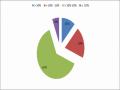 Domestic Investment Capital Demand for Tourism Development of Tourism Institutions under the Ministry of Culture, Sports and Tourism in the Period 2006-2013
 -
 Solutions for tourism development in Tien Lang - 10
zt2i3t4l5ee
zt2a3gstourism, tourism development
zt2a3ge
zc2o3n4t5e6n7ts
- District People's Committees and authorities of communes with tourist attractions should support, promote, and provide necessary information to people, helping them improve their knowledge about tourism. Raise tourism awareness for local people.
*
* *
Due to limited knowledge and research time, the thesis inevitably has shortcomings. Therefore, I look forward to receiving guidance from teachers, experts as well as your comments to make the thesis more complete.
Chapter III Conclusion
Through the issues presented in Chapter II, we can come to some conclusions:
Based on the strengths of available tourism resources, the types of tourism in Tien Lang that need to be promoted in the coming time are sightseeing and resort tourism, discovery tourism, weekend tourism. To improve the quality and diversify tourism products, Tien Lang district needs to combine with local cultural tourism resources, at the same time combine with surrounding areas, build rich tourism products. The strengths of Tien Lang tourism are eco-tourism and cultural tourism, so developing Tien Lang tourism must always go hand in hand with restoring and preserving types of cultural tourism resources. Some necessary measures to support and improve the efficiency of exploiting tourism resources in Tien Lang are: strengthening the construction of technical facilities and labor force serving tourism, actively promoting and advertising tourism, and expanding forms of capital mobilization for tourism development.
CONCLUDE
I Conclusion
1. Based on the results achieved within the framework of the thesis's needs, some basic conclusions can be drawn as follows:
Tien Lang is a locality with great potential for tourism development. The relatively abundant cultural tourism resources and ecological tourism resources have great appeal to tourists. Based on this potential, Tien Lang can build a unique tourism industry that is competitive enough with other localities within Hai Phong city and neighboring areas.
In recent years, the exploitation of the advantages of resources to develop tourism and build tourist routes in Tien Lang has not been commensurate with the available potential. In terms of quantity, many resource objects have not been brought into the purpose of tourism development. In terms of time, the regular service time has not been extended to attract more visitors. Infrastructure and technical facilities are still weak. The labor force is still thin and weak in terms of expertise. Tourism programs and routes have not been organized properly, the exploitation content is still monotonous, so it has not attracted many visitors. Although resources have not been mobilized much for tourism development, they are facing the risk of destruction and degradation.
2. Based on the results of investigation, analysis, synthesis, evaluation and selective absorption of research results of related topics, the thesis has proposed a number of necessary solutions to improve the efficiency of exploiting tourism resources in Tien Lang such as: promoting the restoration and conservation of tourism resources, focusing on investment and key exploitation of ecotourism resources, strengthening the construction of infrastructure and tourism workforce. Expanding forms of capital mobilization. In addition, the thesis has built a number of tourist routes of Hai Phong in which Tien Lang tourism resources play an important role.
Exploiting Tien Lang tourism resources for tourism development is currently facing many difficulties. The above measures, if applied synchronously, will likely bring new prospects for the local tourism industry, contributing to making Tien Lang tourism an important economic sector in the district's economic structure.
REFERENCES
1. Nhuan Ha, Trinh Minh Hien, Tran Phuong, Hai Phong - Historical and cultural relics, Hai Phong Publishing House, 1993
2. Hai Phong City History Council, Hai Phong Gazetteer, Hai Phong Publishing House, 1990.
3. Hai Phong City History Council, History of Tien Lang District Party Committee, Hai Phong Publishing House, 1990.
4. Hai Phong City History Council, University of Social Sciences and Humanities, VNU, Hai Phong Place Names Encyclopedia, Hai Phong Publishing House. 2001.
5. Law on Cultural Heritage and documents guiding its implementation, National Political Publishing House, Hanoi, 2003.
6. Tran Duc Thanh, Lecture on Tourism Geography, Faculty of Tourism, University of Social Sciences and Humanities, VNU, 2006
7. Hai Phong Center for Social Sciences and Humanities, Some typical cultural heritages of Hai Phong, Hai Phong Publishing House, 2001
8. Nguyen Ngoc Thao (editor-in-chief, Tourism Geography, Hai Phong Publishing House, two volumes (2001-2002)
9. Nguyen Minh Tue and group of authors, Hai Phong Tourism Geography, Ho Chi Minh City Publishing House, 1997.
10. Nguyen Thanh Son, Hai Phong Tourism Territory Organization, Associate Doctoral Thesis in Geological Geography, Hanoi, 1996.
11. Decision No. 2033/QD – UB on detailed planning of Tien Lang town, Hai Phong city until 2020.
12. Department of Culture, Information, Hai Phong Museum, Hai Phong relics
- National ranked scenic spot, Hai Phong Publishing House, 2005. 13. Tien Lang District People's Committee, Economic Development Planning -
Culture - Society of Tien Lang district to 2010.
14.Website www.HaiPhong.gov.vn
APPENDIX 1
List of national ranked monuments
STT
Name of the monument
Number, year of decisiondetermine
Location
1
Gam Temple
938 VH/QĐ04/08/1992
Cam Khe Village- Toan Thang commune
2
Doc Hau Temple
9381 VH/QĐ04/08/1992
Doc Hau Village –Toan Thang commune
3
Cuu Doi Communal House
3207 VH/QĐDecember 30, 1991
Zone II of townTien Lang
4
Ha Dai Temple
938 VH/QĐ04/08/1992
Ha Dai Village –Tien Thanh commune
APPENDIX II
STT
Name of the monument
Number, year of decision
Location
1
Phu Ke Pagoda Temple
178/QD-UBJanuary 28, 2005
Zone 1 - townTien Lang
2
Trung Lang Temple
178/QD-UBJanuary 28, 2005
Zone 4 – townTien Lang
3
Bao Khanh Pagoda
1900/QD-UBAugust 24, 2006
Nam Tu Village -Kien Thiet commune
4
Bach Da Pagoda
1792/QD-UB11/11/2002
Hung Thang Commune
5
Ngoc Dong Temple
177/QD-UBNovember 27, 2005
Tien Thanh Commune
6
Tomb of Minister TSNhu Van Lan
2848/QD-UBSeptember 19, 2003
Nam Tu Village -Kien Thiet commune
7
Canh Son Stone Temple
2160/QD-UBSeptember 19, 2003
Van Doi Commune –Doan Lap
8
Meiji Temple
2259/QD-UBSeptember 19, 2002
Toan Thang Commune
9
Tien Doi Noi Temple
477/QD-UBSeptember 19, 2005
Doan Lap Commune
10
Tu Doi Temple
177/QD-UBJanuary 28, 2005
Doan Lap Commune
11
Duyen Lao Temple
177/QD-UBJanuary 28, 2005
Tien Minh Commune
12
Dinh Xuan Uc Pagoda
177/QD-UBJanuary 28, 2005
Bac Hung Commune
13
Chu Khe Pagoda
177/QD-UBJanuary 28, 2005
Hung Thang Commune
14
Dong Dinh
2848/QD-UBNovember 21, 2002
Vinh Quang Commune
15
President's Memorial HouseTon Duc Thang
177/QD-UBJanuary 28, 2005
NT Quy Cao
Ha Dai Temple
Ben Vua Temple
Tien Lang hot spring
div.maincontent .p { color: black; font-family:"Times New Roman", serif; font-style: normal; font-weight: normal; text-decoration: none; font-size: 14pt; margin:0pt; } div.maincontent p { color: black; font-family:"Times New Roman", serif; font-style: normal; font-weight: normal; text-decoration: none; font-size: 14pt; margin:0pt; } div.maincontent .s1 { color: black; font-family:"Times New Roman", serif; font-style: normal; font-weight: normal; font-size: 16pt; } div.maincontent .s2 { color: black; font-family:"Times New Roman", serif; font-style: italic; font-weight: bold; text-decoration: none; font-size: 14pt; } div.maincontent .s3 { color: black; font-family:"Times New Roman", serif; font-style: italic; font-weight: normal; text-decoration: none; font-size: 14pt; } div.maincontent .s4 { color: black; font-family:"Times New Roman", serif; font-style: normal; font-weight: normal; font-size: 14pt; } div.maincontent .s5 { color: black; font-family:"Times New Roman", serif; font-style: normal; font-weight: bold; font-size: 14pt; } div.maincontent .s6 { color: black; font-family:"Times New Roman", serif; font-style: normal; font-weight: normal; text-decoration: none; font-size: 14pt; } div.maincontent .s7 { color: black; font-family:"Times New Roman", serif; font-style: normal; font-weight: bold; text-decoration: none; font-size: 14pt; } div.maincontent .s8 { color: black; font-family:"Times New Roman", serif; font-style: normal; font-weight: normal; text-decoration: none; font-size: 9pt; vertical-align: 6pt; } div.maincontent .s9 { color: black; font-family:"Times New Roman", serif; font-style: normal; font-weight: bold; text-decoration: none; font-size: 12pt; } div.maincontent .s11 { color: black; font-family:"Times New Roman", serif; font-style: normal; font-weight: normal; tex
Solutions for tourism development in Tien Lang - 10
zt2i3t4l5ee
zt2a3gstourism, tourism development
zt2a3ge
zc2o3n4t5e6n7ts
- District People's Committees and authorities of communes with tourist attractions should support, promote, and provide necessary information to people, helping them improve their knowledge about tourism. Raise tourism awareness for local people.
*
* *
Due to limited knowledge and research time, the thesis inevitably has shortcomings. Therefore, I look forward to receiving guidance from teachers, experts as well as your comments to make the thesis more complete.
Chapter III Conclusion
Through the issues presented in Chapter II, we can come to some conclusions:
Based on the strengths of available tourism resources, the types of tourism in Tien Lang that need to be promoted in the coming time are sightseeing and resort tourism, discovery tourism, weekend tourism. To improve the quality and diversify tourism products, Tien Lang district needs to combine with local cultural tourism resources, at the same time combine with surrounding areas, build rich tourism products. The strengths of Tien Lang tourism are eco-tourism and cultural tourism, so developing Tien Lang tourism must always go hand in hand with restoring and preserving types of cultural tourism resources. Some necessary measures to support and improve the efficiency of exploiting tourism resources in Tien Lang are: strengthening the construction of technical facilities and labor force serving tourism, actively promoting and advertising tourism, and expanding forms of capital mobilization for tourism development.
CONCLUDE
I Conclusion
1. Based on the results achieved within the framework of the thesis's needs, some basic conclusions can be drawn as follows:
Tien Lang is a locality with great potential for tourism development. The relatively abundant cultural tourism resources and ecological tourism resources have great appeal to tourists. Based on this potential, Tien Lang can build a unique tourism industry that is competitive enough with other localities within Hai Phong city and neighboring areas.
In recent years, the exploitation of the advantages of resources to develop tourism and build tourist routes in Tien Lang has not been commensurate with the available potential. In terms of quantity, many resource objects have not been brought into the purpose of tourism development. In terms of time, the regular service time has not been extended to attract more visitors. Infrastructure and technical facilities are still weak. The labor force is still thin and weak in terms of expertise. Tourism programs and routes have not been organized properly, the exploitation content is still monotonous, so it has not attracted many visitors. Although resources have not been mobilized much for tourism development, they are facing the risk of destruction and degradation.
2. Based on the results of investigation, analysis, synthesis, evaluation and selective absorption of research results of related topics, the thesis has proposed a number of necessary solutions to improve the efficiency of exploiting tourism resources in Tien Lang such as: promoting the restoration and conservation of tourism resources, focusing on investment and key exploitation of ecotourism resources, strengthening the construction of infrastructure and tourism workforce. Expanding forms of capital mobilization. In addition, the thesis has built a number of tourist routes of Hai Phong in which Tien Lang tourism resources play an important role.
Exploiting Tien Lang tourism resources for tourism development is currently facing many difficulties. The above measures, if applied synchronously, will likely bring new prospects for the local tourism industry, contributing to making Tien Lang tourism an important economic sector in the district's economic structure.
REFERENCES
1. Nhuan Ha, Trinh Minh Hien, Tran Phuong, Hai Phong - Historical and cultural relics, Hai Phong Publishing House, 1993
2. Hai Phong City History Council, Hai Phong Gazetteer, Hai Phong Publishing House, 1990.
3. Hai Phong City History Council, History of Tien Lang District Party Committee, Hai Phong Publishing House, 1990.
4. Hai Phong City History Council, University of Social Sciences and Humanities, VNU, Hai Phong Place Names Encyclopedia, Hai Phong Publishing House. 2001.
5. Law on Cultural Heritage and documents guiding its implementation, National Political Publishing House, Hanoi, 2003.
6. Tran Duc Thanh, Lecture on Tourism Geography, Faculty of Tourism, University of Social Sciences and Humanities, VNU, 2006
7. Hai Phong Center for Social Sciences and Humanities, Some typical cultural heritages of Hai Phong, Hai Phong Publishing House, 2001
8. Nguyen Ngoc Thao (editor-in-chief, Tourism Geography, Hai Phong Publishing House, two volumes (2001-2002)
9. Nguyen Minh Tue and group of authors, Hai Phong Tourism Geography, Ho Chi Minh City Publishing House, 1997.
10. Nguyen Thanh Son, Hai Phong Tourism Territory Organization, Associate Doctoral Thesis in Geological Geography, Hanoi, 1996.
11. Decision No. 2033/QD – UB on detailed planning of Tien Lang town, Hai Phong city until 2020.
12. Department of Culture, Information, Hai Phong Museum, Hai Phong relics
- National ranked scenic spot, Hai Phong Publishing House, 2005. 13. Tien Lang District People's Committee, Economic Development Planning -
Culture - Society of Tien Lang district to 2010.
14.Website www.HaiPhong.gov.vn
APPENDIX 1
List of national ranked monuments
STT
Name of the monument
Number, year of decisiondetermine
Location
1
Gam Temple
938 VH/QĐ04/08/1992
Cam Khe Village- Toan Thang commune
2
Doc Hau Temple
9381 VH/QĐ04/08/1992
Doc Hau Village –Toan Thang commune
3
Cuu Doi Communal House
3207 VH/QĐDecember 30, 1991
Zone II of townTien Lang
4
Ha Dai Temple
938 VH/QĐ04/08/1992
Ha Dai Village –Tien Thanh commune
APPENDIX II
STT
Name of the monument
Number, year of decision
Location
1
Phu Ke Pagoda Temple
178/QD-UBJanuary 28, 2005
Zone 1 - townTien Lang
2
Trung Lang Temple
178/QD-UBJanuary 28, 2005
Zone 4 – townTien Lang
3
Bao Khanh Pagoda
1900/QD-UBAugust 24, 2006
Nam Tu Village -Kien Thiet commune
4
Bach Da Pagoda
1792/QD-UB11/11/2002
Hung Thang Commune
5
Ngoc Dong Temple
177/QD-UBNovember 27, 2005
Tien Thanh Commune
6
Tomb of Minister TSNhu Van Lan
2848/QD-UBSeptember 19, 2003
Nam Tu Village -Kien Thiet commune
7
Canh Son Stone Temple
2160/QD-UBSeptember 19, 2003
Van Doi Commune –Doan Lap
8
Meiji Temple
2259/QD-UBSeptember 19, 2002
Toan Thang Commune
9
Tien Doi Noi Temple
477/QD-UBSeptember 19, 2005
Doan Lap Commune
10
Tu Doi Temple
177/QD-UBJanuary 28, 2005
Doan Lap Commune
11
Duyen Lao Temple
177/QD-UBJanuary 28, 2005
Tien Minh Commune
12
Dinh Xuan Uc Pagoda
177/QD-UBJanuary 28, 2005
Bac Hung Commune
13
Chu Khe Pagoda
177/QD-UBJanuary 28, 2005
Hung Thang Commune
14
Dong Dinh
2848/QD-UBNovember 21, 2002
Vinh Quang Commune
15
President's Memorial HouseTon Duc Thang
177/QD-UBJanuary 28, 2005
NT Quy Cao
Ha Dai Temple
Ben Vua Temple
Tien Lang hot spring
div.maincontent .p { color: black; font-family:"Times New Roman", serif; font-style: normal; font-weight: normal; text-decoration: none; font-size: 14pt; margin:0pt; } div.maincontent p { color: black; font-family:"Times New Roman", serif; font-style: normal; font-weight: normal; text-decoration: none; font-size: 14pt; margin:0pt; } div.maincontent .s1 { color: black; font-family:"Times New Roman", serif; font-style: normal; font-weight: normal; font-size: 16pt; } div.maincontent .s2 { color: black; font-family:"Times New Roman", serif; font-style: italic; font-weight: bold; text-decoration: none; font-size: 14pt; } div.maincontent .s3 { color: black; font-family:"Times New Roman", serif; font-style: italic; font-weight: normal; text-decoration: none; font-size: 14pt; } div.maincontent .s4 { color: black; font-family:"Times New Roman", serif; font-style: normal; font-weight: normal; font-size: 14pt; } div.maincontent .s5 { color: black; font-family:"Times New Roman", serif; font-style: normal; font-weight: bold; font-size: 14pt; } div.maincontent .s6 { color: black; font-family:"Times New Roman", serif; font-style: normal; font-weight: normal; text-decoration: none; font-size: 14pt; } div.maincontent .s7 { color: black; font-family:"Times New Roman", serif; font-style: normal; font-weight: bold; text-decoration: none; font-size: 14pt; } div.maincontent .s8 { color: black; font-family:"Times New Roman", serif; font-style: normal; font-weight: normal; text-decoration: none; font-size: 9pt; vertical-align: 6pt; } div.maincontent .s9 { color: black; font-family:"Times New Roman", serif; font-style: normal; font-weight: bold; text-decoration: none; font-size: 12pt; } div.maincontent .s11 { color: black; font-family:"Times New Roman", serif; font-style: normal; font-weight: normal; tex -
 Increasing capital mobilization from individual customers of commercial banks - Case study of Vietnam Joint Stock Commercial Bank for Investment and Development, Phu Tho Branch - 1
 -
 Stakeholders in Relationship with Investment Capital in Defense Economic Zones
Among the forms of investment aimed at mobilizing capital outside the state budget for socio-economic development, the form of public-private partnership (PPP) is considered a breakthrough, an effective solution to the lack of capital for development investment in some countries. The form of public-private partnership has been applied in many countries around the world since the early 90s of the last century. Up to now, in countries that have successfully applied the form of PPP, PPP has shown to be an expected method in providing public goods, solving the problem of lack of investment capital for infrastructure development. Therefore, the form of PPP attracts the attention of many scientists, many managers and governments of many countries around the world, there have been many works and many research topics on the form of PPP investment. The studies, first of all, focus on clarifying the concepts of investment outside the state sector, such as the concept of PPP, the characteristics of PPP (Yescombe, 2007); Factors affecting the development of PPP, the functions of the State in the development of PPP (Yescombe, 2007); Actions

that the private sector needs to implement to increase the value of investment money when participating in public-private partnerships. At the same time, according to Yescombe, to overcome market shortcomings, the Government can choose some ways such as:
- The government uses a price mechanism with taxes or subsidies to encourage participation in the supply of public goods from the market (as in the case of Japan).
- The government delegates the provision of public goods to the private sector.
- The Government directly provides public goods and public services, especially purely public services when the Government needs to ensure the implementation of fair and effective goals; at the same time, the Government has sufficient resources and management capacity in that field.
- The government supports the private sector to provide public goods and services through the issuance of policies, such as to give the private sector equal access to capital flows in the market.
One of the market failures, according to research results, is that if the Government allows the private sector to directly provide non-pure public services, such as to overcome traffic congestion through toll collection, it may cause social welfare loss. If so, can it be understood that the Government has overcome all market failures? In this case, it seems that the Government has enough resources to provide public services and the capacity to effectively manage public services without causing social welfare loss?
Duncan's (1948) research gave birth to the "public choice theory", according to this theory, government policies are planned by individuals or groups for private interests, therefore, the effectiveness of public spending depends largely on institutional conditions, especially the budget allocation process, the level of decentralization and the proportion of public goods and services in the basket of goods provided by the government. Duncan also argued that reform in the public sector to be successful must change fundamentally, first of all eliminating the motives and conditions that foster privileges and benefits. However, although Duncan pointed out the causes, it was not enough to explain market failures.
When studying the actual situation in the construction and development of infrastructure in Vietnam, Mr. Kijiyokora, Director of the Central Japan Expressway Company, commented: The current situation of road construction and development in Vietnam is similar to that in Japan nearly 50 years ago. He also said that Japan's experience in developing the road and highway traffic system is that Japan has divided it into four development stages to mobilize capital. As early as 1950, the Japanese Government introduced measures such as " gasoline tax " to invest in the development of roads and highways. Then, the establishment of a common capital fund mechanism for highways with the ability to recover capital quickly was also given priority for investment with traffic fees three to four times higher than the corresponding fees in France and the US. In addition, the Japanese Government has established a State-owned company for road investment and management. The Japanese government also applies a mechanism to recover capital from business land without paying taxes to develop the highway network. As a result of applying the " gasoline tax " in 2005, the Japanese government collected 3,000 billion Yen to reinvest, upgrade roads and develop highways.
1.1.2. In practice
From a practical perspective, research by scientists and consultants focuses on surveying the current situation, assessing the actual implementation situation, and from there, making recommendations to developing countries in applying investment forms to mobilize capital outside the state budget for investment in construction and development of highways.
According to analysis by ADB experts in 2008, countries that have implemented PPP have common characteristics:
+ The contractual agreement defines the roles and responsibilities of the State as well as the private sector,
+ Reasonable risk sharing,
+ Private sector profits need to be commensurate with results and contributions.
According to Yescombe (2007), ADB (2008), in the form of public-private partnership, on the State side, the State plays a decisive role in the development of PPP, the State creates an environment such as policies, legal framework, at the same time the State unifies legal regulations, bidding procedures, creates capital sources and financial instruments, acts as an arbitrator when it is necessary to resolve disputes, the State conducts inspection, supervision and evaluation of the project implementation process. On the private side, to be able to participate in a PPP project, the private sector must have sufficient financial capacity to pursue reasonable benefits over a relatively long period of time.
Over the past decades, public-private partnerships have become a major mode of public service delivery in most Asian countries, both developed and developing. The reality in countries that have successfully implemented PPPs shows that, if well designed and managed, PPPs can bring many benefits such as reducing the burden on the state budget, risks can be shared from the public sector to the private sector, increasing “value for money” used in public services - infrastructure because this form is more efficient, costs less and services are more reliable. However, the issue of PPP specifically for highways has not been mentioned in these studies.
According to the experience of countries developing infrastructure, there are at least two areas where the PPP form can be effective, which are projects that cannot or are difficult to apply to the equitization method and projects in which the State cannot participate directly. Also according to the results of these studies, the form of capital mobilization through the application of the cooperation model between the State and the private sector - PPP brings achievements that can be listed as follows:
- Reducing costs, reducing risks and creating a highly competitive environment is something that not only governments, but also businesses and investors, especially private investors, are very interested in.
- Help access financial resources, advanced technology, modern management methods, complete projects on time and exploit projects most effectively. This is the desire of all governments.
- Contributing to shifting the payment burden from taxpayers to consumers is something that no government does not want in building a people-friendly State apparatus.
- Contribute to the fight against corruption and waste, because the private sector manages investment capital more closely and effectively. This is also what most governments have been doing in the process of reforming public financial management in each country.
The studies focus on surveying the current situation, evaluating the implementation situation and making recommendations for developing countries. Developing countries need to consider these as model models, how to apply them creatively based on the actual situation of each country, and how to apply them flexibly and appropriately, which is something that countries must pay attention to and find their own way. There cannot be a common template for all countries, especially model models from practical research of developed countries, in which the necessary conditions for the success of mobilizing capital outside the state budget to implement projects to build and develop technical infrastructure, which is a complete legal system, as well as a developed financial market, are almost fully met. Meanwhile, for developing countries, it takes time, resources and project management experience to meet the conditions to successfully implement infrastructure development projects in general and highways in particular.
Through the Public-Private Partnership (PPP) Handbook, the Asian Development Bank (ADB) has provided an overview of the Public-Private Partnership, helping readers gain basic knowledge about PPP, the motivations for participating in the Relationship; The Handbook also provides and analyzes the structure of a PPP relationship; how to select, the role, design, structure and implementation of the PPP model in infrastructure development, affirming that public-private partnership (PPP) has taken place in most developing countries. However, the ability to attract capital to successfully implement PPP is only focused on a few countries such as Brazil, China, India, Poland and the Russian Federation... Thus, contrary to expectations,
As desired by many governments, PPP may not be a miracle cure for the "incurable" disease of lack of investment capital for all countries. Through the handbook, ADB also provides options for implementing PPP cooperation, preparation work and steps to implement this partnership. However, compiled by foreign experts, the handbook is mainly compiled based on the experience of some countries and these experts. The research is in the direction of general analysis for the application of PPP in Asia - Pacific countries, without reference and practical application in Vietnam. Therefore, the handbook does not mention how it will be applied in Vietnam under specific conditions and circumstances, so it does not provide a feasible option. However, this is also a document that needs to be consulted, the lesson needs to be studied and analyzed thoroughly to choose and at the same time create a suitable path for Vietnam in mobilizing capital outside the state budget to build and develop highways.
In terms of field of activity, PPP is applied in the provision of public services and investment in infrastructure construction. The strongly developing fields are energy, telecommunications, transportation, water and waste. In the period 2000 - 2009, in the East Asia and Pacific region, energy has always been the most successful field, attracting 35% of investment capital in public-private partnership (63 billion USD), followed by telecommunications with 30% of PPP investment capital (54 billion USD), the transportation sector accounts for about 25% (46 billion USD) [75, p. 10]
Recognized as a breakthrough in the development of PPP fields, and in infrastructure development, PPP is the main driving force for the enhancement of the application of this model in the future. However, Smith (2008) pointed out the failures in PPP investment in infrastructure construction in developing countries during the period 1990 - 2006 and he also affirmed that political support and commitment are the most important factors to ensure the success and sustainable development of PPP contracts. According to him, most countries that have applied the PPP model unsuccessfully do not meet the conditions for political support and commitment from their governments. However, he did not point out a
Specifically, what specific commitments the Government makes, and how they impact the success of PPP projects. Therefore, follow-up studies are needed to find answers to these questions.
1.2. Some studies by domestic authors
* Organization of investment management and construction of traffic works. Dr. Bui Minh Huan, and Dr. Chu Xuan Nam, co-editors, the authors mentioned the scientific basis of investment activities and construction of traffic infrastructure systems; state management of investment capital - traffic construction; management of traffic construction enterprises. However, the authors have not yet proposed a way to mobilize capital outside the state budget to develop the transport system, especially highways.
* How to mobilize capital for highway construction? Many authors have pointed out the challenges when Vietnam builds and develops highways, suggesting forms of capital mobilization such as international trade, domestic trade, public-private cooperation, transfer - sale of toll collection rights, bond issuance... But the problem is that the non-state budget forces that the authors mentioned in mobilizing capital for highway construction in Vietnam and the question of how to attract them to be willing to contribute capital still need to be analyzed to clarify.
* Finance for growth - policy choices in a volatile world (translated into Vietnamese by Vu Cuong, Hoang Thanh Duong, Phan Minh Tue, Nguyen Anh Tuan; Culture - Information Publishing House, Hanoi - 2001), the author has systematically analyzed the experiences of some specific countries, as well as econometric analyses with appropriate data of the countries, the author also gives a perspective in the case of choosing the appropriate financial policy for each specific situation of each country and taking advantage of the opportunities created by the international environment. However, the issue of financing for highways has not been mentioned in this work.
Mobilizing all resources from all economic sectors to invest in developing the expressway network in Vietnam will be a matter that must be raised. The issue of capital mobilization in what form? What direction to achieve the highest efficiency? According to the
experts, there are many ways to raise capital by applying many forms of investment such as BOOT (Build – Own – Operate – Transfer), BOO (Build
– Ownership – Business)...
* In the project of PPP Model for Vietnam (ministerial level project in 2010 ) , experts and scientists of the Ministry of Planning and Investment have presented an overall picture of the conditions for successful implementation of the PPP model for infrastructure development. Lessons learned from successes and failures, from which options are proposed, in which the advantages and disadvantages of each option are clearly analyzed for the application of the PPP model for infrastructure development in Vietnam. However, it seems that it is not possible to apply a specific and convincing option for infrastructure development investment in general, and highways in particular, in Vietnam.
* Conditions and solutions for applying the PPP investment form at HIPT Company, author Nguyen Duc Quyet, in the Introduction chapter and the chapter Nature and fields of application of the PPP investment form, also generalized the theories about PPP, stated the conditions for applying the PPP form, but only stopped at applying the PPP investment form for the provision of Information and Communication services.
* One of the solutions to mobilize capital for highway construction that many authors researching this field believe is that the Government should apply the investment model in the form of PPP. The authors also show that, because highway construction projects require large initial investment capital and a relatively long payback period, if we only rely on revenue from highway usage fees of highway users when the highway project is completed, it is not really attractive to investors and contains many risk factors. The basis for this assessment seems to be only speculative.
* Many domestic authors also believe that in order to attract investors to contribute capital to build highways in Vietnam, in addition to direct revenue from user fees, the Government needs to have a mechanism to increase benefits for investors, such as allowing investors to exploit certain types of other businesses that are connected and directly serve the project, such as