
in a certain relationship; (3) the psychological conditions for organizing and implementing that knowledge and skills in a unified structure and according to a clear direction.
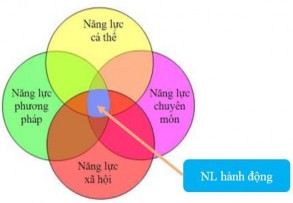
According to [38], the general structure of action NL is described as a combination of 4 component NLs as depicted in Figure 1.3.Thus, NL has a dynamic structure, is open, multi-component, hierarchical, and contains not only knowledge and skills but also attitudes, beliefs, values, responsibilities, etc.
, expressed in readiness for action
in practical conditions.
Approach by departmental capacity:
Figure 1.3. Structural diagram general capacity to act [38] |
Maybe you are interested!
-

 Organizing chemistry teaching according to an integrated approach to develop the ability to apply knowledge and skills for secondary school students - 27
 -
 Organizing chemistry teaching according to an integrated approach to develop the ability to apply knowledge and skills for secondary school students - 36
 -
 Organizing Capacity Training to Develop School Education Programs According to the New General Education Program for Management and Teaching Staff
 -
 Research and develop experiential activities for first graders in teaching rhymes - 8
 -
 Principles of Building Measures to Develop Teaching Skills for Secondary School Teachers
The two approaches above complement each other, fully visualizing the component competencies and expressive behaviors, then we can determine the component resource elements and allocate them at appropriate levels. Therefore, teaching to develop students' competencies does not only stop at equipping them with knowledge, skills, attitudes, etc., but also has to make book knowledge become real understanding, skills are applied in life and attitudes are cultivated through each lesson have the conditions to be revealed, developed through behaviors, becoming sustainable qualities in students.
1.2.1.3. Capacity assessment
Competency development is the teaching goal of the new program, so student competence must also be assessed and measured. Competency assessment is a special form of student assessment - assessing knowledge, skills and attitudes in a meaningful context, focusing on testing the ability to creatively apply knowledge in different situations.
“Assessment of competence is the process of collecting, analyzing, processing and interpreting evidence about the development of learners' competence” [44] with the aim of “providing accurate, timely and valuable information about the level of achievement (requirements to be achieved) of the program and the progress of students to guide learning, adjust teaching activities, manage and develop the program, ensure the progress of each student and improve the quality of education” [8]. Assessment of competence uses different tools, assessment tools are
understood as the methods, means and techniques used throughout the process to achieve assessment goals [34]. Below are some tools used in assessing the competence of high school students:
a. Assessment through observation : Observation is a method that refers to monitoring students performing activities (process observation) or commenting on a product made by students (product observation), which can be conducted formally and pre-determined or informally and unpre-determined. To assess through observation, teachers can use specific tools such as : recording daily events, scales, checklists, especially rubrics - a set of teacher expectations to assess students' level of understanding and create conditions for students to know the expectations and what they need to do to achieve high learning results [34].
b. Self-assessment: Students compare and contrast the results of their tasks with the goals of the learning process. Students look back at what they have done using assessment criteria, thereby recognizing their own progress and areas for improvement. This encourages students to study more independently and contributes to increasing their interest in learning.
c. Peer assessment : Peer assessment is when students participate in assessing the work products of other students. When assessing, students need to clearly understand the expected content to be assessed in their classmates' work products.
d. Assessment of learning portfolio: The learning portfolio is a document that proves the progress of students, in which students self-assess themselves (strengths, weaknesses, interests...), record learning results, self-assess, compare with the goal of recognizing progress, find causes and ways to overcome in the future. When assessing, there should be appropriate and clear criteria to evaluate the products in the student's learning portfolio. However, teachers can allow students to participate in discussing the criteria to create a sense of "mastery" of the work and help students understand the nature of the content of the learning portfolio they create.
e. Test: Teachers evaluate students' abilities by creating tests with questions/situational exercises. Students complete them within a certain time, then teachers evaluate and give scores. There are two main types of tests: oral tests and written tests.
f. Assessment of learning products: assessment of learning outcomes when those outcomes are expressed through specific products such as reports, presentations, seminars, project products... of students. Assessment must be based on specific, clear criteria and levels in a specific context.
To effectively assess students' competencies, teachers must clearly identify the manifestations of competencies that need to be assessed, thereby determining specific and clear criteria and assessment levels, and flexibly combining the above tools in the competency assessment process.
1.2.2. Some fundamental theories for teaching to develop students' capacity
Learning theories represent the philosophy, fundamental concepts and psychological mechanisms of learning, which are the theoretical basis for organizing and improving teaching methods. In the thesis, we identify a number of theories: cognitive theory, constructivism, connectionism, and development zone theory as the methodological basis for orienting teaching measures to develop competence, especially competence for students.
1.2.2.1 Cognitive theory
The theory was initiated in 1920 with important contributions from Jeans Piaget [38]. Cognitive theory has the following basic views:
- The cognitive process is a structured process and has a decisive influence on behavior. People receive external information, process, evaluate and make decisions.
decisions for behavior.
- Internal cognition is an information processing process of the brain.
Figure 1.4. Cognitive learning model |

- Intellectual activity is the center of the cognitive process. Experience is the key in the structure of human cognition. To change human cognition, appropriate impacts are needed.
- Each individual has their own cognitive structure. People can self-regulate their cognitive process: set goals, make plans and execute them, then self-observe, self-evaluate and self-stimulate without external stimulation.
The theory shows that learning objectives are not only the results but the learning and thinking process (from small problems to complex problems) is important. Therefore, the task of the teacher is to create a favorable learning environment, encourage students to act and think positively in situations from simple to complex. And it is necessary to have an appropriate combination between the content conveyed by the teacher and the tasks of self-study, self-reliance to acquire and apply knowledge of the students.
1.2.2.2. Constructivism
According to Brooks [66]: “ The constructivist perspective in teaching asserts that learners need to create understanding of the world by synthesizing new experiences into what they have previously had. Learners establish rules through feedback in interactive relationships with subjects and ideas ”. Constructivism puts the role of the cognitive subject in the top position, knowledge appears through the subject's perception and self-structuring into his or her internal system. Each learner is an active construction process, self-reflecting on the world according to their own experiences. What learners acquire depends a lot on their existing knowledge and experience and the specific situation.
The teaching process emphasizes the active and creative role of students, not passive reception from the environment. Each student's learning is the center of the teaching process, knowledge is built and applied in a unified way with personal experiments. Therefore, the complex teaching content is close to life, suitable in the existing whole, focusing on students' interests and the assessment of students' learning outcomes is not only focused on products but also on their progress in the learning process.
1.2.2.3 Connectionism
Connectivism is formed based on the theoretical foundations of behavioral theory, cognitive theory, constructivism and was introduced in 2005, is a learning theory based on the connection of many learning resources related to the lesson, such as the internet and it takes place in the rapidly developing digital age [70], [103]. The two basic views of this theory are that knowledge lies in the diversity of information and learning is a process of connecting information nodes. In addition, with the emergence of new teaching models based on ICT in the current context, the nature of "connectivity" has been supplemented with a series of new characteristics and individuals can have information through: (a) online classes/courses (b) social networks and (c) virtual reality platforms.
According to Tran Trung Ninh [43], the connectivism theory emphasizes a number of characteristics: Learning and knowledge are achieved through the diversity of opinions; Learning is a process of connecting key knowledge about the subject and information sources; Learning can come from non-human devices.
Teaching in the digital age aims to create knowledge through individuals building and organizing networks to connect with learning communities. At that time, learning takes place not only in the classroom but also independently at home, requiring teachers to create a flexible and open learning environment, increasing the use of technology and the internet to connect and exploit information from many different sources in the classroom. Students also need to have a high level of autonomy in organizing and controlling their own learning.
1.2.2.4. Development area
According to Lev Vygotsky (1896-1934), each student has 2 developmental zones in the process of psychological development: (1) Zone of Current Development (ZAD) represents mature psychological functions, students solve tasks by themselves without outside help;
(2) The zone of proximal development (ZPD) represents maturing psychological functions, students can only complete tasks with the cooperation or help of others. Vygotsky's theoretical model of the zone of development is shown in Figure 1.5.
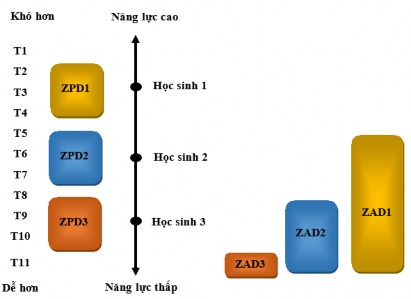
Figure 1.5. Vygotsky's zone of current development and zone of proximal development
With HS1 having the same position as task T3, so: the ZPD1 area of the student (including tasks from T2 - T4) is where the student needs help and support from the teacher or friends with higher abilities; the ZAD1 area (including tasks from T5 - T11) is where the student completely masters this knowledge and skills, similar to HS2 and HS3. In addition, each student also has a knowledge and skills area that they cannot reach even with the support of others, called the "potential development area" such as area {T1} with HS1, {T1,..., T4} with HS2 and {T1,..., T7} with HS3.
Applying the theory of the zone of proximal development in teaching requires teachers to outline favorable and optimal conditions for students' development; organize and guide them to reach the zones of proximal development, form the next development zone,... at the same time, it is necessary to take into account the suitability of two factors: students' readiness to learn and mutual support to increase the level of proficiency when performing tasks [44].
1.3. Self-study and self-study capacity of high school students
1.3.1. Overview of self-study
1.3.1.1. Concept of self-study
Self-study plays an important role and meaning in school education and in life. Currently, there are many different definitions of TH.
According to Rubakin [45]: "TH is the process of acquiring knowledge and historical social experience in personal practice by establishing relationships to improve initial experiences, comparing with models reflecting real circumstances, turning human knowledge into the subject's own knowledge, experience, skills, and techniques." According to Nguyen Canh Toan [51]: "TH is to brainstorm, think, and use knowledge by oneself.
Intellectual capacity and sometimes even muscles and qualities of the learner, both motivation, emotions, outlook on life and world view to conquer a certain field of human knowledge, turning that field into one's own possession".
Thai Duy Tuyen [59] affirmed: “TH is an independent activity to acquire knowledge, skills, techniques, is to brainstorm, think, use intellectual abilities and qualities, motivations, emotions to acquire knowledge of a certain field of knowledge or historical and social experience of humanity, turning it into the possession of the learner himself”. The above viewpoints show that TH is a personal process with high self-awareness, positivity and perseverance, requiring exploration, creativity in self-study, self-expression, self-testing, self-adjustment of the learner. From there, to be consistent with the research direction for high school students, we conceive: TH is a process in which students are self-aware, proactive, and actively acquire knowledge through their own activities to achieve the set learning goals. Activities here include both intellectual and muscular activities and other attributes.
other personal characteristics such as motivation, emotions, outlook on life, world view , etc.
1.3.1.2. Forms of self-study
According to Nguyen Canh Toan, there are 3 forms of TH below [51]:
- Self-study without guidance : Students conduct independent learning, find their own materials to read.
understand and apply knowledge to satisfy interests, hobbies, and personal needs, and self-supplement and expand new knowledge. This is the most difficult form of learning but promotes high independence of students.
- Self-study with indirect guidance: Teachers living far away guide students through documents/other means of information. Students themselves arrange plans to use material conditions to complete learning tasks. This form requires students' self-organization skills.
- Self-study with direct guidance : Students have documents and meet with teachers for some periods of the day or week, are guided and explained by teachers and then go home to study. At that time, students are active cognitive subjects, develop personal abilities, and carry out actions to acquire knowledge under the guidance of teachers. This is the most convenient form of study but easily makes students rely too much on the guidance and requirements of teachers.
Thus, students can learn in many different forms and levels. To suit the psychological characteristics and cognitive level of high school students, in this thesis we will focus mainly on studying the organization of guided learning activities. The learning process of students emphasizes self-study, research; self-implementation; self-assessment and adjustment and the corresponding roles of orientation; organization; support, advice and evaluation of teachers as described in Figure 1.6.
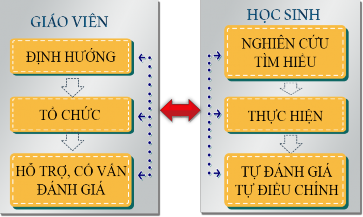
Figure 1.6. Student and teacher activities in guided self-study
1.3.2. Self-study ability
1.3.2.1. Concept of self-study capacity
The overall program and 27 programs of subjects and educational activities of the new general education program have been issued in Circular 32/2018/TT-BGDDT, which identifies the core qualities and competencies that need to be developed for high school students (Figure 1.7).
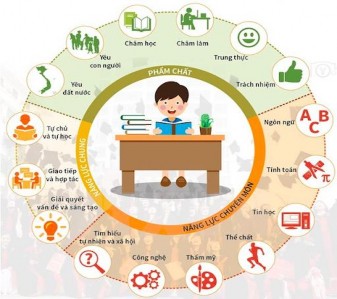
Figure 1.7. Qualities and abilities of high school students
Through organizing chemistry teaching activities in various forms, we will aim to contribute to the formation and development of chemical capacity in students (including components: chemical awareness, understanding the natural world from a chemical perspective, applying learned knowledge and skills) and at the same time contribute to the formation and development of key qualities and general capacity in students with other subjects and educational activities.
Learning competence is the most important general competence that needs to be formed and developed for students at all levels of education. This is an essential competence that determines learning outcomes and is the foundation for lifelong learning. Many authors have defined learning competence. According to Trinh & Rijlaarsdam: Learning competence is demonstrated through the subject's correct determination of his/her own learning motivation, the ability to self-manage his/her own learning, having a positive attitude in activities to be able to work independently, adjust learning activities and evaluate his/her own learning outcomes to be able to work independently and work cooperatively with others [110]. According to Malcolm Shepherd Knowles: Learning competence is a process in which learners are able to carry out learning activities themselves, with or without the support of others, predict their own learning needs, identify learning goals, discover sources of documents that help and support the learning process, and know how to choose.
and implement learning strategies and evaluate performance [82].
According to Trinh Van Bieu: NLTH is the attribute of the learner, independent, actively seeking, acquiring knowledge and applying it to solve learning and practical problems in a way.