
19
Each type of landscape is evaluated based on 7 criteria, the evaluation result is the total score of the criteria after multiplying the weights. The highest score is 30 points (CQ No. 4, 5, 6), the lowest score is 11 points (CQ No. 24).
3.2.1.2. For forestry (production forest plantation)
For production forest plantations, landscapes with remaining forest vegetation and shrub grasslands will be prioritized for evaluation. In addition, we also consider some types of landscapes that are currently producing agriculture but are facing difficulties due to natural factors (alkaline contamination, deep flooding, etc.) and have low profits for evaluation for forestry (landscapes 23, 24), the remaining landscapes are prioritized for agricultural and fishery development. Therefore, in the system of landscape types evaluated for this purpose, the following landscapes have been excluded: 2, 3, 4, 5, 6, 8, 10, 11, 14, 15,
16, 18, 19, 20, 21, 25. Thus, here we conduct an assessment of 9 types of landscapes for forestry (production forest plantations).
Table 3.5: Separate assessment of the favorableness of landscape types for the forestry sector in the Dong Thap Muoi region.
CQ number
Evaluation criteria | Total points | |||||||
Vegetation | Depth of J layer or P | Location of CQ | Flood depth | Conditions on facilities, HT | ||||
Weight | Point | Point | Weight | Point | Point | Point | ||
1 | 3 | 3 | 3 | 2 | 3 | 3 | 2 | 23 |
7 | 3 | 1 | 3 | 2 | 3 | 3 | 2 | 17 |
9 | 3 | 3 | 3 | 2 | 2 | 2 | 2 | 20 |
12 | 3 | 1 | 3 | 2 | 1 | 2 | 2 | 12 |
13 | 3 | 3 | 2 | 2 | 2 | 1 | 2 | 18 |
17 | 3 | 3 | 2 | 2 | 2 | 1 | 2 | 18 |
22 | 3 | 3 | 1 | 2 | 2 | 1 | 1 | 16 |
23 | 3 | 1 | 1 | 2 | 2 | 1 | 1 | 10 |
24 | 3 | 1 | 1 | 2 | 1 | 1 | 1 | 8 |
Maybe you are interested!
-
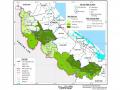
 Map of Assessment of the Favorability of Natural Resources for Tourism Development in Mountainous Districts of Tri - Thien Area
 -
 Assessment of the Quality of Sustainable Tourism Development Factors in Nghe An Province from Provincial Tourism Management Officers
 -
 General Assessment of Factors Affecting Tourism Development in Vientiane City
 -
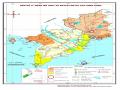 Comprehensive Assessment Results for Sightseeing Tourism Development
 -
 General Assessment After 5 Years of Implementing the Tourism Ordinance
Each landscape type is evaluated based on 5 criteria, the evaluation result is the total score of the criteria after multiplying the weights. The highest score is 23 points (CQ No. 1), the lowest score is 8 points (CQ No. 24).
3.2.1.3. For fisheries (freshwater aquaculture)
In assessing the favorable level of landscape types serving the development of the fishing industry in the Dong Thap Muoi region, we have excluded landscape types that are not suitable or do not have conditions for the development of the industry, only assessing landscape types with systems of rivers, canals, ponds, lakes or landscapes located along large rivers and canals, including landscapes
agricultural production but flooded for 3 months or more during flood season,
The landscape is a flooded forest that can still be
combine to
aquaculture
freshwater. The landscapes excluded from the assessment for fisheries include: 1, 2, 3, 4, 7, 9, 10, 11, 12, 13, 14, 15, 17, 18, 19, 20, 22, 23, 24. Thus, in
Here we evaluate seven landscape types for fishery production.
Table 3.6: Separate assessment of the favorableness of landscape types for the fishing industry in the Dong Thap Muoi region.
Landscape number
Evaluation criteria | Total points | |||||
Water surface area | Water quality | Traditional farming hydroponics soft drink products | Infrastructure and facilities system | |||
Weight number | Point | Point | Point | Point | ||
5 | 2 | 1 | 2 | 3 | 3 | 10 |
6 | 2 | 1 | 2 | 3 | 3 | 10 |
8 | 2 | 3 | 3 | 3 | 3 | 15 |
16 | 2 | 3 | 2 | 2 | 2 | 12 |
21 | 2 | 2 | 1 | 1 | 2 | 8 |
25 | 2 | 2 | 1 | 1 | 1 | 7 |
Each type of landscape is evaluated based on 4 criteria, the evaluation result is the total score of the criteria after multiplying the weights. The highest score is 15 points (CQ number 8), the lowest score is 7 (CQ number 25).
3.2.1.4. For sustainable tourism exploitation activities
Regarding tourism exploitation activities in the research area, according to the documents we collected from the locality as well as the General Department of Tourism, in our general assessment, the tourism potential of the research area is very large.
For tourism exploitation activities, we list tourist attractions, geographical locations as well as the value of each location, and specific exploitation forms as follows.
Table 3.7 Tourist attractions in the study area
Tourist attractions
Location | Form of operation dynamic | Strategy | |
Xeo Quyt | belong to 2 American communes | historical site | Travel is a |
Hiep and My Long, | Melaleuca forest ecology | economic sector | |
Cao Lanh district | Job Supply | ||
Go Thap relic site | The tower is located in Hamlet 4, Tan Kieu Commune. Thap Muoi district | Go Thap has many cultural values. historical | do need technique |
and also popular work | |||
inform people | |||
Relic site of Vice-Chancellor Nguyen Sinh Sac | The relic site of Mr. Pho Bang Nguyen Sinh Sac is located in Cao Lanh City. | Nguyen Sinh Sac relic site is a cultural architectural complex. attractive in the province | local. u Protecting the natural environment Harmonious architecture |
Dong Thap, is | Maintaining values | ||
Ministry of Culture, Information | traditional | ||
daily ranking news | Benefits | ||
April 9, 1992 | diffusion from plus | ||
National Park | National Park | National Park | copper. |
Tram Chim | Tram Chim belongs to | Tram Chim has | ư The limits of increase |
7 communes: Tan | State-owned | Chief | |
Cong Sinh, Phu | invest, upgrade, |
Germany, Phu Tho, Phu | expand into one | Maximum satisfaction | |
City A, Phu | Museum of Nature | main needs | |
Thanh B, Phu Hiep | however, a medium | worth | |
and Tram town | ecotourism center | ||
Bird, Tam district | attractive | ||
Nong, Dong Nai province | |||
Tower. | |||
Ecotourism area | Ecotourism area | This tourist area has | |
Gao Giong | Gao Giong | 36ha bird sanctuary with | |
located in the area | 15 species of birds together | ||
Melaleuca forest in hamlet | hundreds of species | ||
6, Gao Giong commune, | flora and fauna | ||
Cao Lanh district | aquatic products |
3.2.2. Classification of convenience level.
From the results of scoring each indicator for the development of each sector of the landscape types, proceed to classify the level of convenience. Here, it is divided into 3 levels:
Very convenient
Average advantage
Less convenient
The higher the overall assessment score of the CQ, the more favorable the CQ is for the industry being assessed. Each level of convenience corresponds to a range of values of the overall assessment score. The D-score distance of the levels of convenience is calculated according to the formula [19]:
The score gap of each level of convenience is calculated by the formula:
D Smax Smin
M
In which: Smax is the highest rating
Smin is the lowest rating
M is the number of rating levels (here M = 3)
Thus, through separate assessment of the favorable level of landscape types for
For each specific industry and the calculation results, we get the following favorable levels:
* For agricultural production: the score gap of each level of convenience in the scale of convenience classification is:
DN = (30 – 11)/3 = 6.3
We will round the number D = 6
Thus, agricultural production in the research territory is divided into 3 favorable levels:
+ Very favorable (N1): landscapes with a rating of 24 to 30
+ Average Favorability (N2): Landscapes with a rating of 17 to 23
+ Less favorable (N3): landscapes with a rating of 11 to 16
* For forestry production: the score gap of each level of convenience in the scale of convenience classification is:
DL = (23 – 8)/3 = 5
Therefore, the level of favorability for this industry is divided into 3 levels:
+ Very favorable (L1): landscapes with a rating of 18 to 23.
+ Average favorability (L2): landscapes with a rating of 13 to 17.
+ Less favorable (L3): landscapes with a rating of 8 to 12.
* For fishery production: the distance between the points of each favorable level
on the scale of favorableness is: DT = (15 – 7)/3 = 2.6
We will round the number D = 2
So, the level of favorability for this industry is divided into 3 levels as follows:
+ Very favorable (T1): landscapes with a rating of 13 to 15.
+ Average convenience (T2): landscapes with a rating of 10 to 12.
+ Less favorable (T3): landscapes with a rating of 7 to 9.
3.2.3. Results of evaluating landscape types for developing manufacturing industries
export
Table 3.8: Results of the overall assessment of the level of convenience of different types of landscapes
Dong Thap Muoi region for manufacturing industries
Landscape type
Agriculture | Forestry export | Fishery | Summary of assessment results private | ||||
Point | Class | Point | Class | Point | Class | ||
1 | 23 | L1 | L1 | ||||
2 | 24 | N1 | N1 | ||||
3 | 26 | N1 | N1 | ||||
30 | N1 | 10 | T2 | N1T2 | |||
5 | 30 | N1 | 10 | T2 | N1T2 | ||
6 | 30 | N1 | 10 | T2 | N1T2 | ||
7 | 29 | N1 | 17 | L2 | N1L2 | ||
8 | 15 | T1 | T1 | ||||
9 | 20 | L1 | L1 | ||||
10 | 26 | N1 | N1 | ||||
11 | 26 | N1 | N1 | ||||
12 | 27 | N1 | 12 | L3 | N1L3 | ||
13 | 18 | L1 | L1 | ||||
14 | 16 | N3 | N3 | ||||
15 | 18 | N2 | N2 | ||||
16 | 12 | T2 | T2 | ||||
17 | 18 | L1 | L1 | ||||
18 | 16 | N3 | N3 | ||||
19 | 15 | N3 | N3 | ||||
20 | 17 | N2 | N2 | ||||
21 | 8 | T3 | T3 | ||||
22 | 16 | L2 | L2 | ||||
23 | 11 | N3 | 10 | L3 | N3L3 | ||
24 | 11 | N3 | 8 | L3 | N3L3 | ||
25 | 7 | T3 | T3 |
4
* For agricultural production:
The results of the overall assessment and classification of the level of convenience for agricultural production in the table (table 23) above show that there are 16 types of landscapes evaluated. Of which, the level of very favorable is 9 types of landscapes (landscapes number 2, 3, 4, 5, 6,
7, 10, 11, 12,), these types of landscapes belong to the low plain sub-class, located on both sides of the Tien River, Hau River as well as other small river and canal systems, the terrain is flat, deposited by alluvium every year, so it is very fertile and very convenient for irrigation. Along with the favorable location, fertile land, flooding time in the flood season as well as the flooding depth of these types of landscapes are also among the lowest in the research territory, these favorable factors are very good for production.
agricultural production, especially intensive production and long production periods (multiple crops) in a year.
The average favorable level includes 2 types of landscapes (landscapes number: 15, 20). The limiting factors of these types of landscapes are the fertility, soil fertility, location relatively far from rivers, canals as well as large flooding depth (over 100cm), which limits the ability to produce and increase crops compared to the group of landscapes that are very favorable for agricultural production above.
The less favorable level has 5 types of landscapes (landscape numbers: 14, 18, 19, 23, 24), the most concentrated distribution is the landscapes located deep inside Dong Thap Muoi. The limiting factors of these types of landscapes are soil type, small depth of J or P layer, difficult irrigation, large flooding depth and duration leading to difficult production and lack of initiative. In addition, due to the location of these types of landscapes located deep in the fields, there are many difficulties in infrastructure and infrastructure to meet agricultural production. Therefore, to use these types of landscapes reasonably, it is necessary to have reasonable measures to improve land and irrigation or have reasonable measures to combine cultivation.
* For forestry (production forest planting): There are 9 types of landscapes evaluated.
price.
The level of very favorable conditions for production forest planting includes 4 types of landscapes (the
Landscape number: 1, 9, 13, 17). These types of landscapes are distributed in favorable locations for afforestation because they are close to the border (protection function) or located in the center of Dong Thap Muoi (function of preserving the saline wetland ecosystem). Moreover, with the current status of the existing forest vegetation, these are landscapes that are highly prioritized for forestry development.
The average favorable level includes 2 types of landscapes (landscapes number: 7, 22). Landscape number 7 is distributed in both different zones, but only the zone distributed in the area near the Cambodian border (in Hong Ngu district) is favorable for forestry development because of its location near the border with a protective function, the remaining zone of landscape type number 7 is distributed on river sandbanks (in Cao Lanh district) so it is not favorable for forestry. The limiting factor for landscapes at this level is the current lack of forest vegetation, here there is currently only grassland and shrubs.
The less favorable level has 3 types of landscapes (landscape numbers: 12, 23, 24). Except for landscape number 12 distributed in the river sandbar area (not suitable for forestry production).
The remaining landscapes are distributed deep inside the fields of the DTM. The limitations of these types of landscapes are the small depth of the P (pyrite) layer, which makes it easy for alum to arise, the large flooding depth, and poor infrastructure and infrastructure conditions all limit the growth of forest trees. However, if there are measures to improve and combine reasonable cultivation, forestry development here will be of high value.
* For fisheries (freshwater aquaculture)
Through the results of the comprehensive assessment and classification of the level of convenience, 7 types of landscapes were assessed. Of which:
The very favorable level has only 1 type of landscape (landscape number 8), distributed close to Tien River, very favorable for aquaculture in terms of location, water quality, infrastructure, and HT are all good. Besides, the tradition of freshwater aquaculture here has also developed for a long time and has been invested quite synchronously.
The average level of convenience has 4 types of landscapes (landscapes numbers 4, 5, 6,
16). In which, landscape types 4, 5, 6 are agricultural production landscapes.
but due to seasonal flooding, freshwater aquaculture can be done during the flood season. These are landscapes concentrated in areas with relatively large river, canal, pond, and lake systems, good infrastructure and infrastructure systems,
People also have a long tradition of aquaculture. The limitations of
These types of landscapes for fishery development are inundated by the occasional flooding of the farming areas, which is only periodically flooded during the flood season for about 3-4 months, so aquaculture can only be done during the flood season or a combination of aquaculture and agricultural production. Landscape No. 16 is limited in terms of location.
The less favorable level has 2 types of landscapes (landscapes number 21, 25). Both types of landscapes are distributed deep in the center of the DTM. These are low-lying landscapes, deeply flooded and prolonged during the flood season. Although the flooded area is favorable for fishery development, due to its location deep in the center of Dong Thap Muoi, the water quality is poor. In addition, the conditions for processing facilities, transportation and communication, and aquaculture traditions are all low. Therefore, these are areas that are less favorable for the pure development of the fishery industry. If we want to develop well, we can only have a reasonable direction of improvement or combine it with agriculture and forestry.
Table 3.9: Summary of results of assessing the level of convenience of landscape types for manufacturing industries
The
manufacturing industry
Very convenient | Average advantage | Less convenient | |||
Agriculture | Landscape type: 2, 3, 4, 5, 6, 7, 10, 11, 12.. | Landscape type: | Landscape type: | ||
15, 20. | 14, 18, 19, 23, 24. | ||||
Forestry | Landscape type: 1, 9, 13, 17. | Landscape type: 7, 22. | Landscape type: | ||
12, 23, 24. | |||||
Fishery | Landscape type: 8. | Landscape type: 4, 5, 6, 16. | Landscape type: | ||
21, 25. | |||||