
2.3.2.2 Visitor days and seasonality in ecotourism in the Central Highlands
a/ Guest date:
Through tourism data in the Central Highlands, it shows that there is an uneven distribution in the two regions of Ninh Thuan and Binh Thuan in terms of time of enjoyment and stay. The number of days of stay of tourists in Ninh Thuan is very low, the highest length of stay of international visitors is only 2.48 days (2010), the lowest is 1.83 days. For domestic visitors, the highest is 1.83 days, the lowest is 1.45 days, this shows that visitors to Ninh Thuan are mostly transit visitors, transient visitors, without a real purpose of choosing the main destination here. Meanwhile, in Binh Thuan, the length of stay is longer, reaching 3.1 days/international visitor and 1.92 days/domestic visitor. From 2008 to now, the average number of days of visitors to the Central Highlands has increased significantly. Tourists coming to relax, explore and participate in sea sports have registered for longer stays, especially Russian tourists traveling in groups, many groups staying over 15 days. Ecotourism visitors to national parks and nature reserves in Ninh Thuan and Binh Thuan mainly explore, camp, climb mountains, walk, etc. with a stay of 2-3 days/trip. The low number of visitors to ecotourism destinations shows that the exploitation and development of ecotourism in the Central Highlands is still at the initial stage, not yet systematic. Therefore, it is necessary to research and develop ecotourism products associated with tours and ecotourism destinations to attract more visitors and extend their stay, especially for domestic visitors.
b/ Seasonality of ecotourism activities : due to the nature of the year-round warm and sunny weather, close to the fresh ocean climate, the season of visitors is distributed quite evenly throughout the year. For international visitors, depending on international holidays, the season also shows that there are low and high seasons every year. The peak season for ecotourism visitors to the Central Highlands is from January to May, September, November, December. Especially during holidays, Tet, summer vacations... Domestic ecotourism visitors concentrate in the summer, decreasing significantly in August, October, November. International ecotourism visitors concentrate in the last 2 months of the year and January, February and March of the following year.
Table 2.9 Seasonality coefficient of ecotourism in the Central Highlands region
Month
1 | 2 | 3 | 4 | 5 | 6 | 7 | 8 | 9 | 10 | 11 | 12 | |
Coefficient DLST season(*) | 1.32 | 2.0 | 1.85 | 1.04 | 1.15 | 0.99 | 0.93 | 0.86 | 1.16 | 0.97 | 1.25 | 1.03 |
Coefficient general travel season | 1.02 | 1.75 | 1.97 | 0.86 | 1.44 | 1.18 | 0.95 | 1.05 | 1.01 | 0.99 | 0.97 | 1.26 |
Maybe you are interested!
-
 Identify Rating Levels and Rating Scales
zt2i3t4l5ee
zt2a3gstourism,quan lan,quang ninh,ecology,ecotourism,minh chau,van don,geography,geographical basis,tourism development,science
zt2a3ge
zc2o3n4t5e6n7ts
of the islanders. Therefore, this indicator will be divided into two sub-indicators:
a1. Natural tourism attractiveness a2. Cultural tourism attractiveness
b. Tourist capacity
The two island communes in Quan Lan have different capacities to receive tourists. Minh Chau Commune is home to many standard hotels and resorts, attracting high-income domestic and international tourists. Meanwhile, Quan Lan Commune has many motels mainly built and operated by local people, so the scale and quality are not high, and will be suitable for ordinary tourists such as students.
c. Time of exploitation of Quan Lan Island Commune:
Quan Lan tourism is seasonal due to weather and climate conditions and festivals only take place on certain days of the year, specifically in spring. In Quan Lan commune, the period from April to June and from September to November is considered the best time to visit Quan Lan because the cultural tourism activities are mainly associated with festivals taking place during this time.
Minh Chau island commune:
Tourism exploitation time is all year round, because this is a place with a number of tourist attractions with diverse ecosystems such as Bai Tu Long National Park Research Center, Tram forest, Turtle Laying Beach, so besides coming to the beach for tourism and vacation in the summer, Minh Chau will attract research groups to come for tourism combined with research at other times of the year.
d. Sustainability
The sustainability of ecotourism sites in Quan Lan and Minh Chau communes depends on the sensitivity of the ecosystems to climate changes.
landscape. In general, these tourist destinations have a fairly high level of sustainability, because they are natural ecosystems, planned and protected. However, if a large number of tourists gather at certain times, it can exceed the carrying capacity and affect the sustainability of the environment (polluted beaches, damaged trees, animals moving away from their habitats, etc.), then the sustainability of the above ecosystems (natural ecosystems, human ecosystems) will also be affected and become less sustainable.
e. Location and accessibility
Both island communes have ports to take tourists to visit from Van Don wharf:
- Quan Lan – Van Don traffic route:
Phuc Thinh – Viet Anh high-speed boat and Quang Minh high-speed boat, depart at 8am and 2pm from Van Don to Quan Lan, and at 7am and 1pm from Quan Lan to Van Don. There are also wooden boats departing at 7am and 1pm.
- Van Don - Minh Chau traffic route:
Chung Huong high-speed train, Minh Chau train, morning 7:30 and afternoon 13:30 from Van Don to Minh Chau, morning 6:30 and afternoon 13:00 from Minh Chau to Van Don.
f. Infrastructure
Despite receiving investment attention, the issue of infrastructure and technical facilities for tourism on Quan Lan Island is still an issue that needs to be resolved because it has a direct impact on the implementation of ecotourism activities. The minimum conditions for serving tourists such as accommodation, electricity, water, communication, especially medical services, and security work need to be given top priority. Ecotourism spots in Minh Chau commune are assessed to have better infrastructure and technical facilities for tourism because there are quite complete and synchronous conditions for serving tourists, meeting many needs of domestic and foreign tourists.
3.2.1.4. Determine assessment levels and assessment scales
Corresponding to the levels of each criterion, the index is the score of those levels in the order of 4, 3, 2, 1 decreasing according to the standard of each level: very attractive (4), attractive (3), average (2), less attractive (1).
3.2.1.5. Determining the coefficients of the criteria
For the assessment of DLST in the two communes of Quan Lan and Minh Chau islands, the students added evaluation coefficients to show the importance of the criteria and indicators as follows:
Coefficient 3 with criteria: Attractiveness, Exploitation time. These are the 2 most important criteria for attracting tourists to tourism in general and eco-tourism in particular, so they have the highest coefficient.
Coefficient 2 with criteria: Capacity, Infrastructure, Location and accessibility . Because the assessment area is an island commune of Van Don district, the above criteria are selected by the author with appropriate coefficients at the average level.
Coefficient 1 with criteria: Sustainability. Quan Lan has natural and human-made ecotourism sites, with high biodiversity and little impact from local human factors. Most of the ecotourism sites are still wild, so they are highly sustainable.
3.2.1.6. Results of DLST assessment on Quan Lan island
a. Assessment of the potential for natural tourism development
For Minh Chau commune:
+ Natural tourism attractiveness is determined to be very attractive (4 points) and the most important coefficient (coefficient 3), so the score of the Attractiveness criterion is 4 x 3 = 12.
+ Capacity is determined as average (2 points) and the coefficient is quite important (coefficient 2), then the score of Capacity criterion is 2 x 2 = 4.
+ Exploitation time is long (4 points), the most important coefficient (coefficient 3) so the score of the Exploitation time criterion is 4 x 3 = 12.
+ Sustainability is determined as sustainable (4 points), the important coefficient is the average coefficient (coefficient 1), so the score of the Sustainability criterion is 4 x 1 = 4 points
+ Location and accessibility are determined to be quite favorable (2 points), the coefficient is quite important (coefficient 2), the criterion score is 2 x 2 = 4 points.
+ Infrastructure is assessed as good (3 points), the coefficient is quite important (coefficient 2), then the score of the Infrastructure criterion is 3 x 2 = 6 points.
The total score for evaluating DLST in Minh Chau commune according to 6 evaluation criteria is determined as: 12 + 4 + 12 + 4 + 4 + 6 = 42 points
Similar assessment for Quan Lan commune, we have the following table:
Table 3.3: Assessment of the potential for natural ecotourism development in Quan Lan and Minh Chau communes
Attractiveness of self-tourismof course
Capacity
Mining time
Sustainability
Location and accessibility
Infrastructure
Result
Point
DarkMulti
Point
DarkMulti
Point
DarkMulti
Point
DarkMulti
Point
DarkMulti
Point
DarkMulti
CommuneMinh Chau
12
12
4
8
12
12
4
4
4
8
6
8
42/52
Quan CommuneLan
6
12
6
8
9
12
4
4
4
8
4
8
33/52
b. Assessment of the potential for humanistic tourism development
For Quan Lan commune:
+ The attractiveness of human tourism is determined to be very attractive (4 points) and the most important coefficient (coefficient 3), so the score of the Attractiveness criterion is 4 x 3 = 12.
+ Capacity is determined to be large (3 points) and the coefficient is quite important (coefficient 2), then the score of the Capacity criterion is 3 x 2 = 6.
+ Mining time is average (3 points), the most important coefficient (coefficient 3) so the score of the Mining time criterion is 3 x 3 = 9.
+ Sustainability is determined as sustainable (4 points), the important coefficient is the average coefficient (coefficient 1), so the score of the Sustainability criterion is 4 x 1 = 4 points.
+ Location and accessibility are determined to be quite favorable (2 points), the coefficient is quite important (coefficient 2), the criterion score is 2 x 2 = 4 points.
+ Infrastructure is rated as average (2 points), the coefficient is quite important (coefficient 2), then the score of the Infrastructure criterion is 2 x 2 = 4 points.
The total score for evaluating DLST in Quan Lan commune according to 6 evaluation criteria is determined as: 12 + 6 + 6 + 4 + 4 + 4 = 36 points.
Similar assessment with Minh Chau commune we have the following table:
Table 3.4: Assessment of the potential for developing humanistic eco-tourism in Quan Lan and Minh Chau communes
Attractiveness of human tourismliterature
Capacity
Mining time
Sustainability
Location and accessibility
Infrastructure
Result
Point
DarkMulti
Point
DarkMulti
Point
DarkMulti
Point
DarkMulti
Point
DarkMulti
Point
DarkMulti
Quan CommuneLan
12
12
6
8
9
12
4
4
4
8
4
8
39/52
Minh CommuneChau
6
12
4
8
12
12
4
4
4
8
6
8
36/52
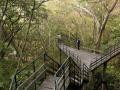
Basically, both Minh Chau and Quan Lan localities have quite favorable conditions for developing ecotourism. However, Quan Lan commune has more advantages to develop ecotourism in a humanistic direction, because this is an area with many famous historical relics such as Quan Lan Communal House, Quan Lan Pagoda, Temple worshiping the hero Tran Khanh Du, ... along with local festivals held annually such as the wind praying ceremony (March 15), Quan Lan festival (June 10-19); due to its location near the port and long exploitation time, the beaches in Quan Lan commune (especially Quan Lan beach) are no longer hygienic and clean to ensure the needs of tourists coming to relax and swim; this is also an area with many beautiful landscapes such as Got Beo wind pass, Ong Phong head, Voi Voi cave, but the ability to access these places is still very limited (dirt hill road, lots of gravel and rocks), especially during rainy and windy times; In addition, other natural resources such as mangrove forests and sea worms have not been really exploited for tourism purposes and ecotourism development. On the contrary, Minh Chau commune has more advantages in developing ecotourism in the direction of natural tourism, this is an area with diverse ecosystems such as at Rua De Beach, Bai Tu Long National Park Conservation Center...; Minh Chau beach is highly appreciated for its natural beauty and cleanliness, ranked in the top ten most beautiful beaches in Vietnam; Minh Chau commune is also home to Tram forest with a large area and a purity of up to 90%, suitable for building bridges through the forest (a very effective type of natural ecotourism currently applied by many countries) for tourists to sightsee, as well as for the purpose of studying and researching.
Figure 3.1: Thenmala Forest Bridge (India) Source: https://www.thenmalaecotourism.com/(August 21, 2019)
3.2.2. Using SWOT matrix to evaluate Quan Lan island tourism
General assessment of current tourism activities of Quan Lan island is shown through the following SWOT matrix:
Table 3.5: SWOT matrix evaluating tourism activities on Quan Lan island
Internal agent
Strengths- There is a lot of potential for tourism development, especially natural ecotourism and humanistic ecotourism.- The unskilled labor force is relatively abundant.- resource environmentunpolluted, still
Weaknesses- Poorly developed infrastructure, especially traffic routes to tourist destinations on the island.- The team of professional staff is still weak.- Tourism products in general
quite wild, originalintact
general and DLST in particularalone is monotonous.
External agents
Opportunity- Tourism is a key industry in the socio-economic development strategy of the province and Van Don economic zone.- Quan Lan was selected as a pilot area for eco-tourism development within the framework of the green growth project between Quang Ninh province and the Japanese organization JICA.- The flow of tourists and especially ecotourism in the world tends toincreasing
Challenge- Weather and climate change abnormally.- Competition in tourism products is increasingly fierce, especially with other localities in the province such as Ha Long, Mong Cai...- Awareness of tourists, especially domestic tourists, about ecotourism and nature conservation is not high.
Through summary analysis using SWOT matrix we see that:
To exploit strengths and take advantage of opportunities, it is necessary to:
- Diversify products and service types (build more tourism routes aimed at specific needs of tourists: experiential tourism immersed in nature, spiritual cultural tourism...)
- Effective exploitation of resources and differentiated products (natural resources and human resources)
div.maincontent .p { color: black; font-family:"Times New Roman", serif; font-style: normal; font-weight: normal; text-decoration: none; font-size: 14pt; margin:0pt; } div.maincontent p { color: black; font-family:"Times New Roman", serif; font-style: normal; font-weight: normal; text-decoration: none; font-size: 14pt; margin:0pt; } div.maincontent .s1 { color: black; font-family:"Times New Roman", serif; font-style: normal; font-weight: normal; text-decoration: none; font-size: 13pt; } div.maincontent .s2 { color: black; font-family:"Times New Roman", serif; font-style: normal; font-weight: normal; text-decoration: none; font-size: 13pt; } div.maincontent .s3 { color: #0D0D0D; font-family:"Times New Roman", serif; font-style: normal; font-weight: bold; text-decoration: none; font-size: 14pt; } div.maincontent .s4 { color: black; font-family:"Times New Roman", serif; font-style: italic; font-weight: normal; text-decoration: none; font-size: 14pt; } div.maincontent .s5 { color: black; font-family:"Times New Roman", serif; font-style: italic; font-weight: bold; text-decoration: none; font-size: 14pt; } div.maincontent .s6 { color: black; font-family:"Times New Roman", serif; font-style: italic; font-weight: normal; text-decoration: none; font-size: 14pt; vertical-align: -3pt; } div.maincontent .s7 { color: black; font-family:"Times New Roman", serif; font-style: italic; font-weight: normal; text-decoration: none; font-size: 14pt; vertical-align: -2pt; } div.maincontent .s8 { color: black; font-family:"Times New Roman", serif; font-style: italic; font-weight: normal; text-decoration: none; font-size: 14pt; vertical-align: -1pt; } div.maincontent .s9 { color: black; font-family:"Times New Roman", serif; font-style: normal; font-weight: normal; text-decoration: none; font-size: 14pt; } div.maincontent .s10 { color: black; font-family:"Times New Roman", serif; font-style: normal; font-weight: bold; text-decoration: none; font-size: 14pt; } div.maincontent .s11 { color: black; font-family:"Times New Roman", serif; font-style: normal; font-weight: normal; text-decoration: none; font-size: 14pt; } div.maincontent .s12 { color: black; font-family:Symbol, serif; font-style: normal; font-weight: normal; text-decoration: none; font-size: 14pt; } div.maincontent .s13 { color: black; font-family:Wingdings; font-style: normal; font-weight: normal; text-decoration: none; font-size: 14pt; } div.maincontent .s14 { color: black; font-family:"Times New Roman", serif; font-style: normal; font-weight: normal; text-decoration: none; font-size: 9pt; vertical-align: 5pt; } div.maincontent .s15 { color: black; font-family:"Times New Roman", serif; font-style: normal; font-weight: normal; text-decoration: none; font-size: 9pt; vertical-align: 5pt; } div.maincontent .s16 { color: black; font-family:Cambria, serif; font-style: italic; font-weight: normal; text-decoration: none; font-size: 14pt; } div.maincontent .s17 { color: #080808; font-family:"Times New Roman", serif; font-style: normal; font-weight: bold; text-decoration: none; font-size: 14pt; } div.maincontent .s18 { color: #080808; font-family:"Times New Roman", serif; font-style: normal; font-weight: normal; text-decoration: none; font-size: 14pt; } div.maincontent .s19 { color: black; font-family:"Times New Roman", serif; font-style: normal; font-weight: normal; text-decoration: none; font-size: 11pt; } div.maincontent .s20 { color: black; font-family:"Times New Roman", serif; font-style: normal; font-weight: normal; text-decoration: none; font-size: 10pt; } div.maincontent .s21 { color: black; font-family:"Times New Roman", serif; font-style: normal; font-weight: bold; text-decoration: none; font-size: 11pt; } div.maincontent .s22 { color: black; font-family:"Times New Roman", serif; font-style: normal; font-weight: normal; text-decoration: none; font-size: 11pt; } div.maincontent .s23 { color: black; font-family:"Times New Roman", serif; font-style: italic; font-weight: normal; text-decoration: none; font-size: 14pt; } div.maincontent .s24 { color: #212121; font-family:"Times New Roman", serif; font-style: normal; font-weight: normal; tex
Identify Rating Levels and Rating Scales
zt2i3t4l5ee
zt2a3gstourism,quan lan,quang ninh,ecology,ecotourism,minh chau,van don,geography,geographical basis,tourism development,science
zt2a3ge
zc2o3n4t5e6n7ts
of the islanders. Therefore, this indicator will be divided into two sub-indicators:
a1. Natural tourism attractiveness a2. Cultural tourism attractiveness
b. Tourist capacity
The two island communes in Quan Lan have different capacities to receive tourists. Minh Chau Commune is home to many standard hotels and resorts, attracting high-income domestic and international tourists. Meanwhile, Quan Lan Commune has many motels mainly built and operated by local people, so the scale and quality are not high, and will be suitable for ordinary tourists such as students.
c. Time of exploitation of Quan Lan Island Commune:
Quan Lan tourism is seasonal due to weather and climate conditions and festivals only take place on certain days of the year, specifically in spring. In Quan Lan commune, the period from April to June and from September to November is considered the best time to visit Quan Lan because the cultural tourism activities are mainly associated with festivals taking place during this time.
Minh Chau island commune:
Tourism exploitation time is all year round, because this is a place with a number of tourist attractions with diverse ecosystems such as Bai Tu Long National Park Research Center, Tram forest, Turtle Laying Beach, so besides coming to the beach for tourism and vacation in the summer, Minh Chau will attract research groups to come for tourism combined with research at other times of the year.
d. Sustainability
The sustainability of ecotourism sites in Quan Lan and Minh Chau communes depends on the sensitivity of the ecosystems to climate changes.
landscape. In general, these tourist destinations have a fairly high level of sustainability, because they are natural ecosystems, planned and protected. However, if a large number of tourists gather at certain times, it can exceed the carrying capacity and affect the sustainability of the environment (polluted beaches, damaged trees, animals moving away from their habitats, etc.), then the sustainability of the above ecosystems (natural ecosystems, human ecosystems) will also be affected and become less sustainable.
e. Location and accessibility
Both island communes have ports to take tourists to visit from Van Don wharf:
- Quan Lan – Van Don traffic route:
Phuc Thinh – Viet Anh high-speed boat and Quang Minh high-speed boat, depart at 8am and 2pm from Van Don to Quan Lan, and at 7am and 1pm from Quan Lan to Van Don. There are also wooden boats departing at 7am and 1pm.
- Van Don - Minh Chau traffic route:
Chung Huong high-speed train, Minh Chau train, morning 7:30 and afternoon 13:30 from Van Don to Minh Chau, morning 6:30 and afternoon 13:00 from Minh Chau to Van Don.
f. Infrastructure
Despite receiving investment attention, the issue of infrastructure and technical facilities for tourism on Quan Lan Island is still an issue that needs to be resolved because it has a direct impact on the implementation of ecotourism activities. The minimum conditions for serving tourists such as accommodation, electricity, water, communication, especially medical services, and security work need to be given top priority. Ecotourism spots in Minh Chau commune are assessed to have better infrastructure and technical facilities for tourism because there are quite complete and synchronous conditions for serving tourists, meeting many needs of domestic and foreign tourists.
3.2.1.4. Determine assessment levels and assessment scales
Corresponding to the levels of each criterion, the index is the score of those levels in the order of 4, 3, 2, 1 decreasing according to the standard of each level: very attractive (4), attractive (3), average (2), less attractive (1).
3.2.1.5. Determining the coefficients of the criteria
For the assessment of DLST in the two communes of Quan Lan and Minh Chau islands, the students added evaluation coefficients to show the importance of the criteria and indicators as follows:
Coefficient 3 with criteria: Attractiveness, Exploitation time. These are the 2 most important criteria for attracting tourists to tourism in general and eco-tourism in particular, so they have the highest coefficient.
Coefficient 2 with criteria: Capacity, Infrastructure, Location and accessibility . Because the assessment area is an island commune of Van Don district, the above criteria are selected by the author with appropriate coefficients at the average level.
Coefficient 1 with criteria: Sustainability. Quan Lan has natural and human-made ecotourism sites, with high biodiversity and little impact from local human factors. Most of the ecotourism sites are still wild, so they are highly sustainable.
3.2.1.6. Results of DLST assessment on Quan Lan island
a. Assessment of the potential for natural tourism development
For Minh Chau commune:
+ Natural tourism attractiveness is determined to be very attractive (4 points) and the most important coefficient (coefficient 3), so the score of the Attractiveness criterion is 4 x 3 = 12.
+ Capacity is determined as average (2 points) and the coefficient is quite important (coefficient 2), then the score of Capacity criterion is 2 x 2 = 4.
+ Exploitation time is long (4 points), the most important coefficient (coefficient 3) so the score of the Exploitation time criterion is 4 x 3 = 12.
+ Sustainability is determined as sustainable (4 points), the important coefficient is the average coefficient (coefficient 1), so the score of the Sustainability criterion is 4 x 1 = 4 points
+ Location and accessibility are determined to be quite favorable (2 points), the coefficient is quite important (coefficient 2), the criterion score is 2 x 2 = 4 points.
+ Infrastructure is assessed as good (3 points), the coefficient is quite important (coefficient 2), then the score of the Infrastructure criterion is 3 x 2 = 6 points.
The total score for evaluating DLST in Minh Chau commune according to 6 evaluation criteria is determined as: 12 + 4 + 12 + 4 + 4 + 6 = 42 points
Similar assessment for Quan Lan commune, we have the following table:
Table 3.3: Assessment of the potential for natural ecotourism development in Quan Lan and Minh Chau communes
Attractiveness of self-tourismof course
Capacity
Mining time
Sustainability
Location and accessibility
Infrastructure
Result
Point
DarkMulti
Point
DarkMulti
Point
DarkMulti
Point
DarkMulti
Point
DarkMulti
Point
DarkMulti
CommuneMinh Chau
12
12
4
8
12
12
4
4
4
8
6
8
42/52
Quan CommuneLan
6
12
6
8
9
12
4
4
4
8
4
8
33/52
b. Assessment of the potential for humanistic tourism development
For Quan Lan commune:
+ The attractiveness of human tourism is determined to be very attractive (4 points) and the most important coefficient (coefficient 3), so the score of the Attractiveness criterion is 4 x 3 = 12.
+ Capacity is determined to be large (3 points) and the coefficient is quite important (coefficient 2), then the score of the Capacity criterion is 3 x 2 = 6.
+ Mining time is average (3 points), the most important coefficient (coefficient 3) so the score of the Mining time criterion is 3 x 3 = 9.
+ Sustainability is determined as sustainable (4 points), the important coefficient is the average coefficient (coefficient 1), so the score of the Sustainability criterion is 4 x 1 = 4 points.
+ Location and accessibility are determined to be quite favorable (2 points), the coefficient is quite important (coefficient 2), the criterion score is 2 x 2 = 4 points.
+ Infrastructure is rated as average (2 points), the coefficient is quite important (coefficient 2), then the score of the Infrastructure criterion is 2 x 2 = 4 points.
The total score for evaluating DLST in Quan Lan commune according to 6 evaluation criteria is determined as: 12 + 6 + 6 + 4 + 4 + 4 = 36 points.
Similar assessment with Minh Chau commune we have the following table:
Table 3.4: Assessment of the potential for developing humanistic eco-tourism in Quan Lan and Minh Chau communes
Attractiveness of human tourismliterature
Capacity
Mining time
Sustainability
Location and accessibility
Infrastructure
Result
Point
DarkMulti
Point
DarkMulti
Point
DarkMulti
Point
DarkMulti
Point
DarkMulti
Point
DarkMulti
Quan CommuneLan
12
12
6
8
9
12
4
4
4
8
4
8
39/52
Minh CommuneChau
6
12
4
8
12
12
4
4
4
8
6
8
36/52
Basically, both Minh Chau and Quan Lan localities have quite favorable conditions for developing ecotourism. However, Quan Lan commune has more advantages to develop ecotourism in a humanistic direction, because this is an area with many famous historical relics such as Quan Lan Communal House, Quan Lan Pagoda, Temple worshiping the hero Tran Khanh Du, ... along with local festivals held annually such as the wind praying ceremony (March 15), Quan Lan festival (June 10-19); due to its location near the port and long exploitation time, the beaches in Quan Lan commune (especially Quan Lan beach) are no longer hygienic and clean to ensure the needs of tourists coming to relax and swim; this is also an area with many beautiful landscapes such as Got Beo wind pass, Ong Phong head, Voi Voi cave, but the ability to access these places is still very limited (dirt hill road, lots of gravel and rocks), especially during rainy and windy times; In addition, other natural resources such as mangrove forests and sea worms have not been really exploited for tourism purposes and ecotourism development. On the contrary, Minh Chau commune has more advantages in developing ecotourism in the direction of natural tourism, this is an area with diverse ecosystems such as at Rua De Beach, Bai Tu Long National Park Conservation Center...; Minh Chau beach is highly appreciated for its natural beauty and cleanliness, ranked in the top ten most beautiful beaches in Vietnam; Minh Chau commune is also home to Tram forest with a large area and a purity of up to 90%, suitable for building bridges through the forest (a very effective type of natural ecotourism currently applied by many countries) for tourists to sightsee, as well as for the purpose of studying and researching.
Figure 3.1: Thenmala Forest Bridge (India) Source: https://www.thenmalaecotourism.com/(August 21, 2019)
3.2.2. Using SWOT matrix to evaluate Quan Lan island tourism
General assessment of current tourism activities of Quan Lan island is shown through the following SWOT matrix:
Table 3.5: SWOT matrix evaluating tourism activities on Quan Lan island
Internal agent
Strengths- There is a lot of potential for tourism development, especially natural ecotourism and humanistic ecotourism.- The unskilled labor force is relatively abundant.- resource environmentunpolluted, still
Weaknesses- Poorly developed infrastructure, especially traffic routes to tourist destinations on the island.- The team of professional staff is still weak.- Tourism products in general
quite wild, originalintact
general and DLST in particularalone is monotonous.
External agents
Opportunity- Tourism is a key industry in the socio-economic development strategy of the province and Van Don economic zone.- Quan Lan was selected as a pilot area for eco-tourism development within the framework of the green growth project between Quang Ninh province and the Japanese organization JICA.- The flow of tourists and especially ecotourism in the world tends toincreasing
Challenge- Weather and climate change abnormally.- Competition in tourism products is increasingly fierce, especially with other localities in the province such as Ha Long, Mong Cai...- Awareness of tourists, especially domestic tourists, about ecotourism and nature conservation is not high.
Through summary analysis using SWOT matrix we see that:
To exploit strengths and take advantage of opportunities, it is necessary to:
- Diversify products and service types (build more tourism routes aimed at specific needs of tourists: experiential tourism immersed in nature, spiritual cultural tourism...)
- Effective exploitation of resources and differentiated products (natural resources and human resources)
div.maincontent .p { color: black; font-family:"Times New Roman", serif; font-style: normal; font-weight: normal; text-decoration: none; font-size: 14pt; margin:0pt; } div.maincontent p { color: black; font-family:"Times New Roman", serif; font-style: normal; font-weight: normal; text-decoration: none; font-size: 14pt; margin:0pt; } div.maincontent .s1 { color: black; font-family:"Times New Roman", serif; font-style: normal; font-weight: normal; text-decoration: none; font-size: 13pt; } div.maincontent .s2 { color: black; font-family:"Times New Roman", serif; font-style: normal; font-weight: normal; text-decoration: none; font-size: 13pt; } div.maincontent .s3 { color: #0D0D0D; font-family:"Times New Roman", serif; font-style: normal; font-weight: bold; text-decoration: none; font-size: 14pt; } div.maincontent .s4 { color: black; font-family:"Times New Roman", serif; font-style: italic; font-weight: normal; text-decoration: none; font-size: 14pt; } div.maincontent .s5 { color: black; font-family:"Times New Roman", serif; font-style: italic; font-weight: bold; text-decoration: none; font-size: 14pt; } div.maincontent .s6 { color: black; font-family:"Times New Roman", serif; font-style: italic; font-weight: normal; text-decoration: none; font-size: 14pt; vertical-align: -3pt; } div.maincontent .s7 { color: black; font-family:"Times New Roman", serif; font-style: italic; font-weight: normal; text-decoration: none; font-size: 14pt; vertical-align: -2pt; } div.maincontent .s8 { color: black; font-family:"Times New Roman", serif; font-style: italic; font-weight: normal; text-decoration: none; font-size: 14pt; vertical-align: -1pt; } div.maincontent .s9 { color: black; font-family:"Times New Roman", serif; font-style: normal; font-weight: normal; text-decoration: none; font-size: 14pt; } div.maincontent .s10 { color: black; font-family:"Times New Roman", serif; font-style: normal; font-weight: bold; text-decoration: none; font-size: 14pt; } div.maincontent .s11 { color: black; font-family:"Times New Roman", serif; font-style: normal; font-weight: normal; text-decoration: none; font-size: 14pt; } div.maincontent .s12 { color: black; font-family:Symbol, serif; font-style: normal; font-weight: normal; text-decoration: none; font-size: 14pt; } div.maincontent .s13 { color: black; font-family:Wingdings; font-style: normal; font-weight: normal; text-decoration: none; font-size: 14pt; } div.maincontent .s14 { color: black; font-family:"Times New Roman", serif; font-style: normal; font-weight: normal; text-decoration: none; font-size: 9pt; vertical-align: 5pt; } div.maincontent .s15 { color: black; font-family:"Times New Roman", serif; font-style: normal; font-weight: normal; text-decoration: none; font-size: 9pt; vertical-align: 5pt; } div.maincontent .s16 { color: black; font-family:Cambria, serif; font-style: italic; font-weight: normal; text-decoration: none; font-size: 14pt; } div.maincontent .s17 { color: #080808; font-family:"Times New Roman", serif; font-style: normal; font-weight: bold; text-decoration: none; font-size: 14pt; } div.maincontent .s18 { color: #080808; font-family:"Times New Roman", serif; font-style: normal; font-weight: normal; text-decoration: none; font-size: 14pt; } div.maincontent .s19 { color: black; font-family:"Times New Roman", serif; font-style: normal; font-weight: normal; text-decoration: none; font-size: 11pt; } div.maincontent .s20 { color: black; font-family:"Times New Roman", serif; font-style: normal; font-weight: normal; text-decoration: none; font-size: 10pt; } div.maincontent .s21 { color: black; font-family:"Times New Roman", serif; font-style: normal; font-weight: bold; text-decoration: none; font-size: 11pt; } div.maincontent .s22 { color: black; font-family:"Times New Roman", serif; font-style: normal; font-weight: normal; text-decoration: none; font-size: 11pt; } div.maincontent .s23 { color: black; font-family:"Times New Roman", serif; font-style: italic; font-weight: normal; text-decoration: none; font-size: 14pt; } div.maincontent .s24 { color: #212121; font-family:"Times New Roman", serif; font-style: normal; font-weight: normal; tex -
 Assessment of the Quality of Sustainable Tourism Development Factors in Nghe An Province from Provincial Tourism Management Officers
 -
 Tourism Development Situation in Laos
 -
 General Assessment of Factors Affecting Tourism Development in Vientiane City
 -
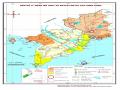 Comprehensive Assessment Results for Sightseeing Tourism Development
(Source: Department of Culture, Sports and Tourism of Ninh Thuan and Binh Thuan, Institute of Tourism Development Research and author's calculations)
(*) Seasonality coefficient of month i = average number of visitors in month i over the years/ average number of visitors in a month
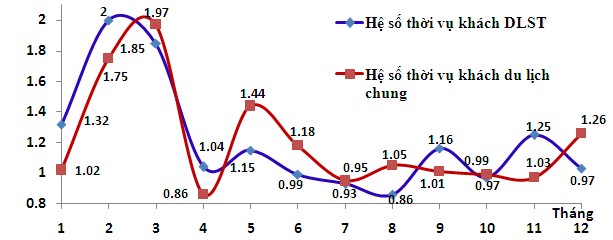
Chart 2.2: Seasonal coefficient in tourism activities in the Central Highlands region
2.3.2.3 Assessment of tourism development activities in the Central Highlands region:
With its increasingly strong development position, tourism affirms its trend of becoming a key economic sector of the Provinces alongside other strong sectors such as aquaculture, agriculture and forestry, etc. Tourism in the Central Highlands is making steady progress, as shown by the following general revenue:
In general, the revenue from tourism activities of the region has a very high average annual growth rate, the highest year reaching over 51%, the lowest year reaching 15.7%, the average growth rate of tourism revenue of the Central Highlands region in the past 10 years is 30.91%/year.
Revenue from ecotourism alone, according to local tourism management experts and the author's calculations, accounts for about 25-28% of total revenue from general tourism activities.
- According to statistics in 2010, revenue from tourism activities in Ninh Thuan is relatively diverse, the largest proportion is revenue from tourists' shopping services (accounting for 39.44% of the total), food and beverage expenses account for 36.40%, accommodation rental expenses account for 10.16%. In general, revenue from tourism in the past 10 years has increased 6.08 times and reached an average annual growth rate of 22.21% during this period.
- For Binh Thuan area, tourism revenue over the years has achieved a fairly high and stable growth rate. The average spending of international tourists in 2010 was 945,000 VND/person, of domestic tourists was 370,000 VND/person. However, in the total, revenue from domestic tourists accounted for 57.50% due to the number of visitors. In 2010, revenue reached 2,538 billion VND, 4.15 times higher than in 2005. Thus, over the past 10 years, from 2001 to present, tourism revenue of Binh Thuan has increased 20.65 times. The average growth rate in the past 10 years from 2000 to 2010 was 35.36%/year.
Compared to the general situation of ecotourism development in the entire South Central Coast region, the number of ecotourism visitors to the Central Coast region is quite high, both in quantity and growth rate. In 2010, the number of ecotourism visitors to the Central Coast region reached over 835,190 people (accounting for 26% of the total number of visitors), the average growth rate in 5 years was 31.89%/year, with international ecotourism visitors increasing by an average of 33.10% and domestic ecotourism visitors increasing by 31.79%. The types of ecotourism chosen by ecotourism visitors include: Table 2.10: The main types of ecotourism chosen by visitors when coming to the Central Coast region
Target audience
Sightseeing and discovery TN | Walk | Climbing | Marine sports (water skiing, parasailing) glide…) | Visit the village race | Diving discovery | Rowing | Explore the mountains and forests HST | Camp | Visit the garden, HST agriculture |
career | ||||||||||
International Tourist economy | * | * | * | * | * | * | * | |||
Guest Domestic tourism | * | * | * | * | * | * | * | * | * |
(Source: Department of Culture, Sports and Tourism of Binh Thuan, Ninh Thuan and author's investigation documents)
The seasonality of ecotourism activities is quite reasonable, the peak and low seasons are not too different, compared to other regions of the country, the distribution of visitors is relatively even. However, due to the lack of synchronous investment in service infrastructure and transportation, the means of transportation to remote areas are still difficult, so currently ecotourism visitors are mainly concentrated in tourist destinations along the coast, in mountainous and midland areas ecotourism tours are very scattered, with few visitors. The exploitation is generally fragmented, the whole region lacks the connection to organize and complete tours, lacks systematic and synchronous planning to exploit ecotourism spots, only paying attention to organizing and managing according to provincial administrative boundaries, leading to unreasonable division in exploitation, reducing the efficiency of exploiting ecotourism activities at the regional level. The shortcomings can be seen in the fact that the sea ecotourism tours and nature discovery ecotourism tours are locally fragmented, the sea resort and discovery tours organized by Ninh Thuan only take visitors to the border area of Ca Na and end, the tour is still poor in destinations but has plenty of time to operate. Meanwhile, the neighboring area, Vinh Hao and Cu Lao Cau marine protected area are very valuable ecotourism destinations that are overlooked. Similarly, in the Binh Thuan area, tourism companies also exploit tours to Vinh Hao and stop, the Ca Na, Phuoc Dinh, Nam Cuong sand dunes, especially Nui Chua National Park, a unique ecotourism destination of the region, are not connected for visitors to access. This fragmentation has made the sea resort and ecotourism tours poor in content, short in duration and less attractive to visitors.
Organizing cultural ecotourism tours is also similarly limited, instead of maintaining the flow of historical and cultural festivals associated with indigenous Cham Pa relics from Binh Thuan to Ninh Thuan as its inherent historical and cultural tradition. Operators
DLST is also organized according to provincial administrative boundaries, typically the Cham Kate festival. Before 1975, the Kate festival was held periodically and continuously from Phan Thiet to Phan Rang, attracting a large number of Cham people from all over the country to attend. But now the Kate festival is no longer organized inter-regionally as before, each province organizes it independently, separately without any organizational cohesion, leading to a situation of dividing the flow of cultural activities according to provincial administrative boundaries, causing a "break" in the cultural flow of the Cham Pa festival, a priceless intangible cultural heritage that has made a difference in the value of human resources of the DHCNTB region compared to other regions in the country.
2..3.2.4 Investment situation for tourism development: a/ General investment situation for tourism development:
In the entire DHCNTB region, as of December 31, 2010, there were 449 approved investment projects with a total registered investment capital of 70,813.1 billion VND, and an area of 9,683.9 hectares, specifically including:
Table 2.11 Overview of tourism investment projects in the Central Highlands region as of December 31, 2010
Category
Whole DHCNTB region | Ninh Thuan province area | Binh Thuan province area | ||
Quantity | Proportion | |||
Total project + Project completed + Project under implementation Area scale (ha) Capital scale ( billion VND) | 449 154 295 9,683.9 70,813.1 | 100 34.30 65.70 | 73 28 45 1,294 7,225 | 376 126 250 8,389.9 63,588.1 |
(Source: Department of Planning and Investment, Department of Culture, Sports and Tourism of the two provinces of Binh Thuan and Ninh Thuan)
b/ Investment situation in developing ecotourism resources: mainly from budget capital through the Ministry of Agriculture and Rural Development to national parks and nature reserves, a little from funding from international organizations.
i/ Regarding the investment situation in 2 National Parks and other habitats in Ninh Thuan:
Although Ninh Thuan has two large-scale national parks (ranked 9th out of 30 national parks nationwide) and has high biodiversity value that can be exploited for ecotourism activities, and the advantage is that the location of the two national parks is near major traffic routes that are easy to exploit to welcome tourists.
tourists, but the investment situation for the 2 National Parks in recent years has not been commensurate, on average each year, each National Park is only invested at a low level, not corresponding to the managed area. If calculating the state investment capital for 30 National Parks nationwide from 2000-2007, Nui Chua National Park has an investment capital of only 1.5% of the total investment capital, the investment capital for 1 hectare is only 385,000 VND/ in 7 years and Phuoc Binh National Park only accounts for 0.61% of the total investment capital, the investment capital for 1 hectare in 7 years is 227,110 VND (according to Decision No. 2370 QD/BNN-KL dated August 5, 2008).
Table 2.12: Investment status in national parks in Ninh Thuan province in the period 2001-2010
Investment Point
Year 2001 | 2004 | 2005 | 2006 | 2007 | Year 2009 | Year 2010 | |
Nui Chua National Park | 1,280.6 | 1,472.77 | 1,468.63 | 2,024.88 | 2,011.1 | 2,087.5 | 2,571 |
Phuoc Binh National Park | 0 | 1,003 | 1,989 | 1,990 | 2,899 | 2,180 | 2,639 |
TOTAL | 1,280.6 | 2,475.77 | 3,457.63 | 4,014.88 | 4,910.1 | 4,267.5 | 5.210 |
(Source: Management Board of Nui Chua National Park, Phuoc Binh National Park, Ninh Thuan Department of Agriculture and Rural Development, Forestry Department - Ministry of Agriculture and Rural Development)
According to statistics of the two National Parks of Nui Chua and Phuoc Binh, the average annual investment rate from the state budget in the past 9 years: Nui Chua National Park is 8.05%, Phuoc Binh National Park is 14.82%. In general, for both National Parks in Ninh Thuan, the annual investment growth rate is 16.87%. In which, investment capital for biodiversity conservation programs is one of the programs with content related to the development and protection of ecotourism resources, accounting for only a very small proportion of 14-20%, and some years there is no investment. (see details in the appendix)
In the investment plan for resource development in the National Parks in Ninh Thuan, it is expected that from 2009-2012, investment levels will be raised by about 2-3 times (see details in the appendix).
The expected investment sources in the national parks in the coming years in the table above show that capital is mainly spent on forestry activities, investment items for resource development and conservation as well as biodiversity development are still very limited.
ii/ Regarding the investment situation in developing eco-tourism in Binh Thuan:
In the province, there are currently two national nature reserves, namely Ong Mountain Nature Reserve (Tanh Linh) and Ta Kou Mountain Nature Reserve (Ham Thuan Nam), along with two marine protected areas (MPAs), Cau Island MPAs and Phu Quy Island MPAs. However, only two MPAs on the mainland have been officially approved by the Government and invested in with annual budget funds, while the MPAs have not yet received any significant investment. The investment situation for development at ecotourism sites in recent years is as follows:
Table 2.13: Investment situation for nature reserves in Binh Thuan
period 2001-2009
Unit: million VND
STT
Investment Point | Year 2001 | 2004 | 2005 | 2006 | 2007 | Year 2009 | Year 2010 | |
1 | Ong Mountain Nature Reserve | 572.61 | 804.22 | 1,076 | 1,399 | 3,493 | 3,252.2 | 3,076.5 |
2 | Ta Kou Mountain Nature Reserve | 441.5 | 1,119.48 | 500.48 | 775 | 2294,761 | 2,118.8 | 1,958.0 |
TOTAL | 1,014.11 | 1,923.70 | 1,576.48 | 2,174.00 | 5,787.76 | 5,371.0 | 5.034.5 |
(Source: Department of Agriculture and Rural Development of Binh Thuan, Ong Mountain Nature Reserve Management Board, Ta Kou Mountain Nature Reserve Management Board)
In general, the investment capital for nature reserves in Binh Thuan is still low. During the period from 2001 to 2009, Binh Thuan province invested a total of 20,523 billion VND for two nature reserves in the province, but these expenditures mainly focused on the operational expenditures of forest protection units. The capital for biodiversity conservation programs, scientific research programs and development of ecotourism resources is still very limited, accounting for only 18.84% of the total capital spent over the years (see details in the appendix).
Through the above data on investment programs in the MPAs in the coming years, it shows that in Binh Thuan, investment content focuses more on activities to conserve and develop ecological resources, notably paying attention to investing in social content combined with economic and community development.
2.4 Survey results of tourists and ecotourism on contents related to ecotourism activities in the Central Highlands region
a/ General introduction : Although in the Central Highlands region (two provinces of Ninh Thuan and Binh Thuan), there are 2005 survey documents of the General Statistics Office and the General Statistics Office.
Binh Thuan in 2007, but this was only a survey mainly on tourists' spending and destination choices according to the content of mass tourism activities and the surveys only took place in Binh Thuan, so it could not be used for an in-depth assessment of ecotourism for both provinces. The purpose of the survey conducted by the author of the thesis is to collect more in-depth information on ecotourism, to have the opportunity to access and understand more deeply the feelings and assessments of tourists towards the Binh Thuan-Ninh Thuan area, especially in the field of ecotourism, as a basis for the author to analyze and evaluate the current status of ecotourism in localities in a realistic way, at the same time, to better understand the "demand" factor as the target tourists and to have a basis for proposing more reasonable solutions for the "supply" factor.
b / Survey method and approach:
- Survey participation : The author, together with a group of collaborators who are local tourism managers, students of the Faculty of Business Administration and Foreign Languages at Ninh Thuan Pedagogical College and Binh Thuan Community College, conducted a survey of domestic and foreign tourists in the two provinces of Ninh Thuan and Binh Thuan from 2008-2009, lasting 6 weeks, divided into two periods (Phan Rang: 1.5 weeks, Phan Thiet: 4.5 weeks), distributed according to peak and low seasons.
- Survey content description :
For domestic tourists: the survey includes 25 thematic questions divided into 74 sub-questions according to the scale of evaluation levels (see details in the appendix) divided into 3 main parts:
 Part 1: from questions 1-6, the questions cover the overview of the trip, the form of organization, the number of participants, the number of visits, the initial plans and wishes before going.
 Part 2: from questions 7-13, the questions focus on the purpose of the trip, the understanding of eco-tourism of visitors, including information to know the tourist destination, means of transportation and choice of accommodation, important factors deciding the choice of destination in the Central Highlands region.