
2.2.3. Salary and bonus are still based on seniority and not entirely on the assessment of the employee's performance or ability.
As analyzed in section 2.2.2, paying salaries according to the State's salary scale coefficient is still popular in Vietnamese enterprises. According to this salary scale system, on average, every 3 years, employees will be increased in salary once and if they have excellent work performance, this period is even shorter. This leads to the situation that people who have worked for a long time will have a high salary level or basic salary coefficient and correspondingly, the salary according to the basic salary coefficient is also higher. Enterprises where the basic salary accounts for a high proportion, whether the salary is high or not will mainly depend on the basic salary level and coefficient, not on the capacity, work results and work achievements, so it is difficult to create motivation for young and talented workers.
2.2.4. Performance evaluation in enterprises is still ineffective.
In general, the current performance evaluation in Vietnam is still not really complete and has not achieved high efficiency. Enterprises that focus on investing in evaluation work are only in the process of building the system but the implementation is not very smooth. This is due to many reasons such as the system is not suitable for the actual situation of the enterprise, officers and employees do not have access to and learn about the system, the evaluators are subjective when evaluating or have an average nature and are afraid of offending the evaluated person. This can also be seen through the survey results at three enterprises. Only about 51% of respondents expressed satisfaction with the evaluation system in the enterprise and about 55% expressed interest in this system. Improving the effectiveness of performance appraisal needs to be given more attention in enterprises in Vietnam, especially in the current period when the trend of paying salary based on performance and capacity becomes popular worldwide, because appraisal will be an extremely important basis for calculating salary and bonus and more importantly, encouraging employees to contribute more to the organization.
Maybe you are interested!
-
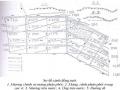
 System of Methods and Works for Biological Treatment of Wastewater Based on Oxidation Principle.
 -
 Rate of Deductions Based on Salary Applied from 2012 to 2013 (According to the Law on Social Insurance (2006) and Some Other Relevant Current Legal Documents)
 -
 Salary and Bonus Regime of Employees: Average Monthly Income of Company Employees: Table 3:
 -
 Compulsory medical treatment measures in Vietnamese Criminal Law based on data from Ho Chi Minh City - 1
 -
 Research on treatment of rotator cuff tears using modified Mason-Allen tendon endoscopic suturing technique and creating micro-damage at the attachment area - 2
2.3. Causes of limitations:
2.3.1. Objective reasons:
a) Trade Union activities in Vietnam
In Vietnam today, "trade union" is not considered a common noun. Defined by law, a trade union "is a large socio-political organization of the working class and Vietnamese workers (collectively referred to as workers) voluntarily established under the leadership of the Communist Party of Vietnam; is a member of the political system of Vietnamese society; is a school of socialism for workers" (Article 1, Clause 1 of the 1990 Trade Union Law). Many other provisions of this law provide "Trade Unions" with legal status (Article 1, Clause 3), with the right to represent workers in collective bargaining or in disputes before the court (Article 11, Clauses 1, 2 and 3). Even if they are not trade union members, workers have the right to request the Trade Union to represent them before the law (Article 11, Clause 4). Furthermore, the Trade Union is also provided with legislative power (submitting draft laws, Article 5, Clause 1), executive power (participating in state management, Article 4, Clause 1) and judicial power (supervising the enforcement of laws, requiring employers to be accountable, etc.). The Trade Union is also provided with the right to participate in the management of enterprises and companies. The freedom to join or not join a Trade Union is also clearly defined.
As in other totalitarian regimes, the trade union in Vietnam today is a monopoly organization belonging to the Communist Party of Vietnam and the Vietnamese State (belonging to, not participating in). All other spontaneous workers' associations are outlawed. While granted great powers, in practice, trade union activities in Vietnam can be banned and fined. Before the "open door" policies, the entire Vietnamese economy belonged to the state, and the state belonged to the "working class". At that time, workers were also considered the owners of the factory or company in which they worked, and the company's board of directors was also the representative of all workers. Any conflicts, if any, were obviously internal conflicts between workers and themselves and therefore did not need to be negotiated or court. Unless there were violations of criminal law, workers were never fired. Working conditions and wages are poor, but that is also a problem of
workers themselves, due to low productivity and poor labor organization; moreover, this happened in all companies so workers could not have a basis for comparison. The truly useful activities of the Trade Union during this period were to support funerals, illnesses, weddings, and childbirth. After the opening up, other private economic sectors were recognized and protected by law, including foreign-owned enterprises. While other laws as well as many state institutions gradually changed to protect the interests of the whole society, not just the working class, the Trade Union was still not separated from the overly tight management of the State, meaning that it also had to care about the interests of the whole, not just the interests of the workers. This led to serious contradictions in the functions defined by the Trade Union law. When there is a conflict between workers and employers, the Union always has to satisfy other goals than the interests of workers, such as: social order and security, maintaining the attractiveness of the cheap labor market, ensuring the business goals of the enterprise, etc.
The internal contradictions of the current Vietnamese "Trade Union" have eliminated the functions that it should have. The Trade Union no longer represents the interests of the hired workers only in name. Meanwhile, the law still does not recognize the legitimacy of any other organization of the hired workers other than the Trade Union. This led to tens of thousands of strikes by workers from 1990 to 2005, and most of these strikes were considered illegal because they were not organized by the "Trade Union". Surprisingly, many strikes occurred right in state-owned companies, where workers are considered the owners of all tools, organizations and labor processes. One thing that is considered absurd in Vietnamese trade unions is that the unions were not established by the workers and they receive salaries directly or indirectly from the companies where they are headquartered to protect the workers of that company. This is in contrast to unions in developed countries where workers form unions within their companies and pay the unions to protect them.
b) Inadequacies compared to the reality of the labor system in Vietnam
The Labor Code has gone through 14 years and has been amended and supplemented 3 times, but its “framework law” nature is still heavy. Along with the Code, the Government has issued
In addition to 30 Decrees, the Ministry of Labor, War Invalids and Social Affairs and relevant sectors have issued 68 Circulars guiding their implementation. However, there are still many articles and clauses that have not been guided. The Code has not yet incorporated all the basic rules of labor relations in a market economy. One of those "rules" is to create a unified legal foundation, promoting the self-regulation of labor relations. Meanwhile, some provisions of the Code are imperative and directive in nature. For example, Article 170a, Clause 1, Point b, assigning the right to resolve labor disputes to the Chairman of the People's Committee at the district level in the form of "administrative intervention" is not appropriate. The Code also does not clearly stipulate the tripartite mechanism but only stipulates the consultation of the parties. The way the Law is expressed makes people understand that the State seems to have escaped the equal dialogue with both parties (employees and employers). On the other hand, because the role of the State in the tripartite mechanism has not been clearly defined, state agencies are often confused when representing the State in resolving cases.
Regarding the issue of wages, working hours, and rest hours, recent reality shows that most of the work stoppages and strikes by workers stem from issues of wages, bonuses, working hours, and rest hours. Based on the above situation, the issue is that the legal regulations on the above areas need to be amended and supplemented to be more suitable to life, contributing to limiting the instability of labor relations in recent times.
c) Limitations of Vietnamese national culture
The outstanding features of national culture are the respect for humanism, harmony, the spirit of practicality, the will to strive for self-reliance and self-improvement... these are advantages for building a corporate culture with Vietnamese identity in modern times. However, Vietnamese culture also has limitations: Vietnamese people strive for "personal and family glory", love moderation, are happy with poverty, are easily satisfied with immediate benefits, and are afraid of competition; the ideology of "respecting agriculture and despising commerce" is deeply rooted in the Vietnamese mentality, which has greatly hindered the expansion of the market economy; the scattered living habits of the small-scale agricultural economy are not compatible with the modern lifestyle; the conservative habits and worship of experience, not daring to innovate and make breakthroughs hinder the development of modern enterprises. The tradition of "respecting the elderly and achieving longevity"
It seems to be deeply ingrained in the subconscious of Vietnamese people, so the emphasis on seniority in many businesses today (partly reflected in the companies' compensation policies) is not difficult to understand. However, this tradition stunts the motivation of young workers and creates inertia in production labor.
2.3.2. Subjective causes
a) Complex and cumbersome corporate structure
The current organizational structure of enterprises is mostly based on the pyramid principle, with the entire structure on the shoulders of all the workers at the bottom, and the control levels piled up to the top. When the enterprise is small, management is less difficult; but as the enterprise grows, problems begin to appear. The organizational structure tends to swell as the enterprise grows larger. Enterprises try to design a perfect organizational structure with many departments and functions; however, there is no close connection between the departments, or if there is, it is very loose. As a result, these departments operate locally, have a poor sense of responsibility, and often blame each other . If the market fluctuates abnormally, the existing hierarchy, partitions, and complex management structures will not be able to help the company maintain its competitive advantage.
b) Weak corporate culture
Corporate culture is the intangible asset of every enterprise. Along with the development of the market economy, building corporate culture is a very necessary but also difficult task. Corporate culture is the entire cultural values built during the existence and development of an enterprise, becoming values, concepts, customs, and traditions that are deeply ingrained in the operations of that enterprise and govern the feelings, thinking and behavior of all members of the enterprise in pursuing and implementing goals.
Generally speaking, the culture in agencies and enterprises in Vietnam still has certain limitations: It is a culture built on a low and complex foundation of education due to the influence of other factors; the working environment has many shortcomings leading to a short-term view; there is no correct concept of competition.
competition and cooperation, unprofessional work; still affected by the extreme tendencies of the subsidized economy; no intersection between the views on training management staff due to the training origin; no mechanism for using people, there are inadequacies in education and training so the quality is not high. On the other hand, corporate culture is also affected by other factors such as: poor agricultural production and the influence of imperialist and feudal remnants.
c) Poor awareness of the ability to build a performance-based compensation system:
Enterprises, especially those in the innovation sector, when moving to the innovation period still bear the marks of the subsidy period. This is reflected in the stagnation and passivity in the policies of enterprises. Many companies rely entirely on the State's salary scale to calculate salaries for employees; although this ensures the legality of the company's salary and bonus system, it does not demonstrate flexibility and motivate employees to work. These enterprises have not and perhaps do not want to build a performance-based salary and bonus system themselves because this is quite complicated and requires time, effort and money. However, they do not realize the benefits that this system brings. Building a performance-based salary and bonus system will not only help enterprises manage salaries more reasonably but also encourage employees in the enterprise to work more effectively and attract talented people to the enterprise.
d) The company's salary and bonus policies still have many limitations.
Vietnamese enterprises, including a large number of enterprises converted from state-owned enterprises, are facing difficulties in building and operating salary and performance evaluation systems. The limitations of salaries are currently present in enterprises, especially in state-owned enterprises. Many enterprises pay salaries focusing on qualifications and seniority, less closely linked to individual achievements, and there is a phenomenon of equalization in treatment, eliminating the leverage role of salaries. For enterprises converted from state-owned enterprises, the problem of innovating the salary and performance evaluation system is quite difficult and sensitive. When enterprises are not sure about the implementation techniques, the change management process often has many obstacles and difficulties. For non-state-owned enterprises, the salary and performance evaluation system
Performance prices are often not consistent due to the lack of systematic investment from the very beginning of the enterprise. This system is creating obstacles for enterprises as the scale of enterprises increases, especially when the salary fund is increasingly accounting for a large proportion of the cost price. Salary cannot be considered simply as expenses, it is essentially the most important investment of the enterprise. Paying wages is therefore both an art and a technique. Paying wages is an art, perceived by employees and employers. Imagine the enterprise's salary fund as a type of food. The quality of the meal and customer satisfaction depend largely on the cook. Enterprises in a market economy cannot only focus on paying high salaries, but must synchronize measures to motivate employees. Paying wages is a technique. Technique is shown from the operational perspective of implementing salary policies: Salary according to work, according to ability and according to achievements, ...
Chapter III . SOME SOLUTIONS TO IMPROVE THE EFFICIENCY OF THE SALARY AND REWARD SYSTEM BASED ON PERFORMANCE ASSESSMENT IN VIETNAM
I. LESSONS LEARNED FROM DEVELOPED COUNTRIES
1. Lessons from American experience
1.1. Experience with forms of treatment in the US :
Choosing the optimal form of salary is very important, because it stimulates working capacity, creating a healthy competitive atmosphere among employees in the company. In the past decade, the strong expansion of leading retail groups such as Walmart or Sams Club, specializing in selling goods at low prices, has forced many small companies to close because they cannot compete with the prices they offer. Facing the risk of bankruptcy, Cosoto, a mid-range American retailer, has applied a quite effective strategy of treating employees quite generously instead of competing on price. Costco has demonstrated the effectiveness of paying generous salaries and increasing employee benefits when announcing a 25% increase in profits and a 14% increase in sales in the first half of 2005.
At Walmart, the policy of minimizing costs has created a bad reputation for employee benefits. The average salary of a Walmart employee is $9.64/hour (the figure at Sam's Club is $11.52/hour), and the company's board of directors only pays health insurance for more than half of its employees. This has made the lives of workers quite difficult. Their limited income does not allow them to shop much. The amount of money Walmart contributes to the pension fund is also low, so in the long run, retired employees will have many difficulties in living. Employees without health insurance must apply for government subsidies, becoming a burden on local authorities. At Costco, with an average salary of $15.97/hour and higher benefits than Wal-Mart and Sams Club, workers have a more stable life. In addition, health care and pension benefits are also given due attention. Not to mention the fact that 13 out of 68,000 Costco employees are members of the Teamsters union, USA. The relaxed working spirit and attractive income have made Costco employees very satisfied and secure with their jobs.