
4.2.4. Solutions to perfect the regional transportation connection system in tourism development ..127
4.2.5. Regional connectivity solutions in tourism human resource training 129
4.2.6. Solutions to strengthen links between travel businesses 130
4.2.7. Regional connectivity solutions in tourism development associated with environmental protection 131
PART IV. CONCLUSIONS AND RECOMMENDATIONS 134
Maybe you are interested!
-
 Assessment of the Quality of Sustainable Tourism Development Factors in Nghe An Province from Provincial Tourism Management Officers
 -
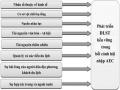 Theoretical and Practical Basis for Sustainable Tourism Development
 -
 Experiences Learned for Sustainable Tourism Development in Ba Ria - Vung Tau
 -
 Solutions for sustainable tourism development in the Central Highlands - 23
 -
 Theoretical Basis and Practical Experience on Sustainable Tourism Development of a Provincial Locality
REFERENCES 139
LIST OF TABLES
Table 3.1. Total tourism revenue by region in Vietnam in 2019 65
Table 3.2. Some key tourism promotion activities under the regional connectivity cooperation program of Quang Binh province 76
Table 3.3. Number of projects and investment capital scale of domestic enterprises in the tourism sector of Quang Binh province in the period 2015 - 2019 79
Table 3.4. Some inter-local tourism products in the North Central and South Central Coast regions 81
Table 3.5. Revenue of some tourism products in Phong Nha – Ke Bang National Park in 2019 84
Table 3.6. Air routes at Dong Hoi Airport, Quang Binh 86
Table 3.7. Number of workers in the tourism sector in Dong Hoi city 90
Table 3.8. Indicators measuring the overall structure of the network 93
Table 3.9. Indicators measuring the centrality of the tourism network of Quang Binh province 98
LIST OF FIGURES
Figure 2.1. Average income per capita of Quang Binh and central provinces in 2019 55
Figure 2.2. Framework for analyzing regional connectivity in sustainable tourism development in Quang Binh province 57
Figure 3.1. Number of visitors and tourism revenue of some key localities in tourist regions in Vietnam in 2019 63
Figure 3.2. Number of tourists to Quang Binh in the period 2017 - 2019 67
Figure 3.3. Number of domestic tourists to Quang Binh in the period 2010 - 2019 68
Figure 3.4. Total number of tourists to the provinces of the North Central and South Central Coast regions 69
Figure 3.5. Total tourism revenue of Quang Binh province 69
Figure 3.6. Total tourism revenue of the provinces in the North Central and South Central Coast regions in 2019 70
Figure 3.7. Number of passengers arriving and departing through Dong Hoi airport, Quang Binh province 88
Figure 3.8. Form of regional connection organization in tourism development of Quang Binh enterprises 92
Figure 3.9. Schematic diagram of the tourism network structure within Quang Binh province 94
Figure 3.10. Overall diagram of the network structure linking stakeholders in tourism development in Quang Binh province 95
Figure 3.11. Overall Moran's I index of tourism revenue of localities in the North Central and South Central Coast regions 100
Figure 3.12. Scatter plot of local Moran's I index on tourism revenue in the North Central and South Central Coast regions in 2012 and 2019 101
Figure 3.13. Business assessment of the impact of regional connectivity on the performance of tourism services in Quang Binh province 102
Figure 3.14. Average GRDP per capita of provinces and cities in the Central region in 2018 104
Figure 3.15. Contribution of tourism industry to GRDP of Quang Binh province 105
Figure 3.16. Social impacts of community tourism model in the buffer zone of PNKB National Park
................................................................ ................................................................ ................106
Figure 3.17. Tourists' perceptions of the environment at tourist attractions in Quang Binh province 108
Figure 3.19. Number of tourists to Phong Nha – Ke Bang by month in 2018 113
Figure 3.20. The proportion of investment capital implemented in the service sector in the total social investment capital in Quang Binh province 115
PART I. INTRODUCTION
1. Urgency of the topic
In recent years, regional linkage (connection) in tourism development has emerged as a new trend in the process of regional economic development cooperation and has become a key strategy in many countries around the world. Many studies have shown that the characteristics of the tourism industry require regional linkage in tourism development as an objective and inevitable reality. Saraniemi and Kylänen (2011) cited the characteristics of tourist destinations to explain the necessity of tourism linkage and cooperation. Accordingly, a tourist destination is not a stable and closed system, that is, a tourist destination should not be viewed as a defined geographical area or a fixed territorial entity.
– is the traditional static approach, in which tourist destinations need to be approached from an open perspective, from which cooperation and linkage strategies are built [89] . According to Blasco et al. (2014), tourist destinations can also be viewed from the perspective of tourists' consumption space and when the length of the consumption space exceeds the limits of a destination at the international border, cross-border cooperation and linkage are inevitable [49]. With the nature of an economic sector that is interdisciplinary, inter-regional and highly socialized, tourism development is not only limited to a territory but always extends beyond the administrative scope of a locality, a country, a region ( Hoang Van Hoa, 2019) [12]. Thus, only when the necessity of regional connectivity in tourism development has been confirmed, is it absolutely urgent to study the scientific basis as well as evaluate the practical situation to propose solutions to enhance regional connectivity in tourism development, not only at the national level but also at the local level.
In our country, the theme of regional connectivity in tourism development has also received special attention from the Government, ministries and local authorities and is reflected in many tourism development policy documents. The Vietnam tourism development strategy to 2020, vision to 2030 (issued under Decision No. 2473/QD-TTg dated December 30, 2011 of the Government) clearly stated the viewpoint: " ... Maximizing the potential and national advantages in terms of natural factors and national culture, the typical strengths of regions and areas throughout the country; strengthening linkages in tourism development ", in which it identifies solutions for tourism product development: "...Promoting strengths and strengthening linkages between regions, areas and localities towards
forming typical tourism products according to tourism regions” [3] . The master plan for tourism development in the South Central Coast region to 2020, with a vision to 2030 (issued under Decision No. 2350/QD-TTg dated December 24, 2014 of the Government) also clearly states the development perspective: “…strengthening tourism development linkages between localities in the region to maximize the potential and strengths of tourism in the whole region” [5] . From the policies and guidelines of the State, regional connectivity activities in tourism development have been organized and implemented at different levels and scopes. It is possible to mention the tourism development linkages of 8 provinces in the Northwest region [98], or the tourism linkages of 4 provinces of Thai Nguyen, Bac Giang, Hai Duong, Quang Ninh [39] ; model of linkage between 03 localities of Thua Thien Hue, Da Nang and Quang Nam [21] , ... However, the regional linkage models have not really brought about effectiveness; up to now, the tourism development thinking in localities is still mainly based on "local self-reliance", leading to division and fragmentation [31] . This shows that the study of regional connectivity in tourism development is not only meaningful in theory but also urgent from the practical aspects posed to the process of tourism development in the current integration conditions in our country in general and each locality in particular.
Quang Binh is one of the 6 provinces in the North Central region of Vietnam, a locality with many advantages and potentials for tourism development. This is demonstrated through the convergence of tourism resources, including natural tourism resources and human tourism resources. In particular, natural tourism resources are considered the outstanding advantage of Quang Binh province to promote the development of unique and highly competitive tourism products in the domestic and international markets.
Quang Binh's natural tourism resources must first mention Phong Nha - Ke Bang National Park, a world natural heritage with a system of over 300 large and small caves, the most magnificent underground rivers in the world such as: Phong Nha Cave, Tien Son Cave, En Cave, Son Doong Cave, Khe Ry Cave. Besides, Quang Binh also owns many beautiful beaches such as Nhat Le, Da Nhay, Quang Phu, ... and Bang hot mineral spring in Le Thuy district [28] . These advantages have made Quang Binh a very attractive tourist destination not only for domestic tourists but also for foreign tourists. According to the statistical yearbook of Quang Binh province, the number of tourists to Quang Binh in 2019 reached 5 million, including 270 thousand international visitors; total tourism revenue in 2019 is estimated at 5.7 trillion VND [10] , [38] .
However, the above results are not commensurate with the advantages and potential of tourism resources of the province. Statistics from the Quang Binh Provincial Statistical Yearbook show that most tourists coming to Quang Binh are mainly domestic visitors (accounting for about 95% of total visitors in the period 2017 - 2019); short stay (average about 1.1 days) and low spending on tourism and services [38] . Local people have not benefited much from the service - tourism type, the industry's influence on the local socio-economy is not really clear. According to the Report of the Department of Tourism of Quang Binh province, total revenue from food and beverage services in 2019 accounted for 70.25% of total social revenue from tourism (equivalent to 4.04 trillion VND); but revenue from accommodation services only reached about 326 billion VND (accounting for a modest proportion of 5.7%). Compared to other localities in the North Central region, tourism revenue in Quang Binh province is still much lower (ranked 4th out of 6 localities). Moreover, when compared to other provinces and cities in the South Central Coast region, Quang Binh is far behind many localities in terms of total revenue from tourists. Currently, Da Nang is the locality with the highest tourism revenue in the region (approximately 31 trillion VND in 2019), accounting for 31.8% of total tourism revenue in the whole region, ranked 2nd is Khanh Hoa (27.1 trillion VND), followed by Quang Nam (about 14 trillion VND) [41] .
Recognizing the current limitations of the tourism industry due to its low starting point, Quang Binh province has identified tourism development linkage as a key solution to exploit the tourist market, promote tourism, especially sharing support resources and experiences of localities and international countries to promote sustainable tourism development [6] . A number of local and regional cooperation activities in tourism development have been implemented in recent years, such as: tourism development linkage between Quang Binh and Hanoi, or the linkage bloc between 4 localities in the North Central region, including Thanh Hoa, Nghe An, Ha Tinh and Quang Binh; The "Central Heritage Road" tour was established to connect the most prominent heritages of the three provinces of Quang Binh - Thua Thien Hue - Quang Nam, including: PNKB National Park (Quang Binh), Hue Imperial City with two heritages: Hue Monuments Complex and Hue Royal Court Music (Thua Thien Hue), My Son Sanctuary and Hoi An Ancient Town (Quang Nam) [31] .
Although some initial results have been achieved, in general (as assessed by the Quang Binh Provincial Party Committee in the Action Program of the Provincial Party Committee on developing tourism to truly become a spearhead economic sector, the period
2021 - 2025, No. 01-CTr/TU dated December 9, 2020), regional cooperation activities in tourism development in Quang Binh province are still in the early stages and are formal, lacking direction, lacking constraints, and not yet substantive and practical [38] . This is the reason why tourism resources and assets in Quang Binh province have not been effectively exploited, have not really contributed strongly to the socio-economic development of the locality; the influence of the tourism industry on the economy is still low.
The above analysis results show that research on regional connectivity in sustainable tourism development is a major task, of urgent significance, suitable for the current socio-economic context in Vietnam in general and Quang Binh province in particular. Therefore, the topic of regional connectivity in tourism development has really attracted the attention of many scholars and scientists, demonstrated through published works and publications, exploiting many different aspects and dimensions of the issue of regional connectivity in tourism development. However, up to now, research works still lack systematicity; many issues have not been thoroughly resolved such as: forms, subjects, models, levels and scope of regional connectivity activities; the impact of regional connectivity on the performance of tourism enterprises and sustainability in tourism development.
Obviously, fully and satisfactorily resolving the above theoretical and practical issues is not only meaningful for tourism development at the local level, but also contributes to the effective implementation of the strategies, guidelines and policies of the Party and State, which is to develop tourism into a truly spearhead economic sector, creating a driving force to promote the development of other sectors and fields, and making an important contribution to the formation of a modern economic structure - one of the viewpoints clearly stated in the Vietnam Tourism Development Strategy to 2030 [8] .
Given the urgency of the topic of regional connectivity in tourism development, the theoretical and practical significance presented above, the author decided to choose the topic " Regional connectivity in sustainable tourism development in Quang Binh province" as the research topic of his doctoral thesis.
2. Research objectives
2.1. General objectives
Discuss theoretical issues on regional connectivity in sustainable tourism development and apply them to the case study of Quang Binh province, thereby proposing solutions.