
3.2.1.2. Meaning
- To avoid product copying, limit the abandonment of the company's products to use competitors' products.
- Science and technology have greatly supported the rapid research of new products, meeting human needs in conditions of limited financial resources and scarce raw materials.
- As people's lives improve, the demand for new products that are more high-end, modern and convenient will increase.
3.2.2.Model and characteristics of product life cycle stages
Maybe you are interested!
-
 Some marketing solutions contribute to promoting product consumption at Duy Tung Trading Company Limited - 11
 -
 Assessing the Impact of Quality of Work Life on Work Performance – Model 1 - Impact of Quality of Work Life
 -
 Local Marketing Model To Develop Ben Tre Tourism
 -
 Theory on Life Skills Education for Students in Primary Schools
 -
 Other Marketing Mix Policies Supporting Promotional Policies 3.1. Product Policy
Sales and profits
profit ($)
Sales
Profit
SP Design
SP Deployment
Develop
Saturated
Time
Decline
Investment loss/cost ($)
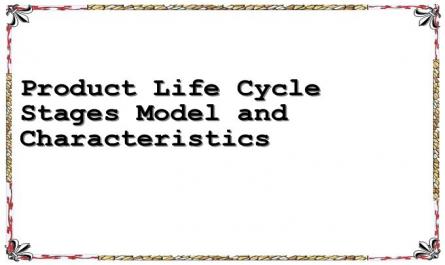
- Implementation phase (t 1 - t 2 ): Time and revenue increase slowly, high costs (due to promoting advertising, perfecting products, supporting consumption) => low profit or loss
- Growth stage (t 2 - t 3 ): Revenue increases sharply, costs decrease (due to reduced advertising costs and other costs), market expansion is favorable => profits reach maximum
- Saturation stage (t 3 - t 4 ): revenue increases slowly or starts to decrease, costs increase (fierce competition) => profits decrease
- Decline stage (t 4 - t 5 ): revenue decreases, costs decrease slightly => profits decrease sharply
3.3. Product policies
3.3.1. Product quality policy:
Product quality is the ability of a product to perform the function assigned to it, including: durability, reliability, accuracy, sharpness, variety of uses, perfect service...
Each enterprise's product quality policy is based on:
+ The business sees from the customer's perspective, meaning that the product meets and satisfies the customer's needs.
+ The level of quality that the company chooses must be at least equal to that of its competitors.
+ Quality is also reflected in style and accompanying services.
3.3.2. Product variety policy :
3.3.2.1 . Concept of product ladder/Product category : is a group of products that are closely related to each other due to similarity in function or because they are sold to the same customer groups or are classified at the same price.
3.3.2.2. Product variety policy:
Businesses can expand or narrow their product portfolio on the market depending on the level of competition or consumer demand.
Product spectrum/ Product portfolio: is a set of product categories or a set of different product ladders of the enterprise. The size of the product spectrum is determined by width, length, and depth.
+ Product spectrum width: is the total number of different product scales of the
DN
+ Length of product spectrum: is the total number of different items that make up the scale
of sp spectrum
+ Depth of product spectrum: is the number of product options within the framework of each group.
3.3.3. Product branding policy
3.3.3.1. Concept:
A product brand is a collection of names, designs, drawings, fonts, colors... or any other characteristics that distinguish it from other businesses' products. In a brand, it is necessary to distinguish:
+ Brand name: is the readable part of the brand such as Sony, Mc Donald's...
+ Brand mark: is the part of the brand that we can recognize (but cannot read) such as logo, symbol, drawing, color, special font...
+ Trade mark/brand: is the whole or part of a trademark protected by law.
3.3.3.2. Functions of trademarks:
- Acknowledge: ownership, reputation and quality of the business's products
- Differentiation: identify products of other businesses
- Specialized: shows the unique characteristics of the product
- Practice: convenient for buying and selling products, state management, protecting consumers and society. Based on the brand, businesses must ensure maintaining and developing product quality.
3.3.3.3. Requirements:
- Brand name: easy to read, easy to hear, easy to remember (short and unique), can be transcribed into a foreign language
- Trademarks must comply with the provisions of law: do not use or copy other people's trademarks.
- Language and brand elements must be consistent with customs and traditions, appropriate to the nation, must accurately reflect the nature and origin of the product (food, pharmaceuticals), and must be registered for usage rights.
3.3.4. Product packaging policy
3.3.4.1. Concept: product packaging is an item that contains, preserves and advertises a product.
3.3.4.2. Function:
- Technical function: protect, contain products, facilitate product buying and selling: such as product quantification, facilitate transportation, storage, preservation and consumption of products.
- Commercial function: providing necessary information to customers, increasing the attractiveness of goods, product packaging is the silent salesperson.
3.3.4.3. Requirements for packaging design:
- Must ensure 2 commercial and technical functions
- Comply with legal regulations, marking codes on packaging, information, packaging materials
- Language and elements on packaging must be consistent with customs and practices.
- Packaging that suits your habits
3.3.5. New product development policy
3.3.5.1. Concept : New products are understood as all products that are produced and sold for the first time at an enterprise.
3.3.5.2. Classification:
- New products according to the principle: are products that are produced and sold for the first time at the enterprise but there are no similar products.
- New products based on prototypes: are products that are produced and sold for the first time at the enterprise but are based on designs from other companies and in other markets.
- New products in improved form: are products that are completed and improved on the basis of the company's existing products.
3.3.5.3. New product development policies :
Market penetration: existing products - existing markets
Market development: existing products - new markets
Product development: new product - existing market
Market diversification: new products - new markets
CHAPTER 4: PRICING POLICY IN MARKETING ACTIVITIES
4.1. Price and factors affecting business valuation
4.1.1. Concept and position of pricing policy
4.1.1.1. Concept:
Price is the amount of money agreed upon between a buyer and a seller for the exchange of a product.
4.1.1.2. Role :
+ Price is one of the basic factors that determine the buyer's choice.
+ Price is the only element in the Marketing mix that generates revenue, so it affects sales and profits. At the same time, it is used quite flexibly and pursues different goals.
4.1.2. Factors affecting business valuation
4.1.2.1. Internal factors of the enterprise
* Business objectives:
Maximize profit: determine a price that corresponds to a sales volume that maximizes the difference between revenue and cost.
Increase the number of products consumed or increase the market share of the business: often set low prices to promote market penetration (expand market share)
Existence: In difficult market conditions or fierce competition to survive, businesses set low prices (no profit), even at a loss, to maintain demand and stabilize production scale.
Other goals: affirm product quality, product brand reputation, quality leadership, prevent competitors => high price
* Production and business costs
Cost is a basis for pricing a product. When determining a price for a product, that price should cover all costs of production, distribution and consumption, and at the same time generate a reasonable profit for the risks that the business must bear.
4.1.2.2. Factors external to the enterprise
Market demand for products: The dependent relationship between price and demand is formed according to the “law of demand”: when price increases, demand decreases and when price decreases, demand increases. However, there are also cases where the product is a rare or precious type, when price increases, demand increases.
After all, it is the customer who decides whether the price of the product is appropriate or not.
Competitors' prices and products
The quality of a company's products or those of its competitors will help the company determine its average price range.
If a company's product is similar to its competitors' products, the company is forced to price it close to theirs, otherwise the product will have difficulty selling.
A company can only charge higher prices than its competitors when it ensures that the quality of its goods is higher than theirs.
4.1.2.3. Other factors : economic crisis, war, natural disasters, floods..., global economic integration, progress in science and technology.
4.2. Method of determining pricing policy
To establish a base price for a product or service that a business wants to bring to market, the following steps need to be taken:
4.2.1. Cost-based pricing method :
4.2.1.1. Price calculation method based on "average cost plus profit" Formula: Expected selling price = Product cost + expected profit Example: Suppose a business has costs and expected consumption level as:
+ Variable cost/unit: 15,650 VND
+ Fixed cost: 350000000 VND
+ Estimated quantity consumed: 70,000 products.
Calculate the expected selling price of the business knowing that the expected profit is 30% of the cost price.
Fixed cost Unit cost = Variable cost + Number of products sold
= 15650 + 350000000/70000 = 20650 VND
Estimated selling price = 20650 x (1 + 0.3) = 26845 VND
- Disadvantages: This method does not take into account product demand or competitors' price changes, so it is difficult to reconcile market competition in terms of price.
- Advantages: quite popular, because it is easy to calculate and most businesses apply it. Moreover, this calculation method is felt by many people to ensure fairness for both buyers and sellers.
4.2.1.2. Pricing based on target profit margin:
Expected profit calculated on
investment capital
Guaranteed price = Unit cost +
Target profit Number of products sold
For example: Suppose the manufacturer has invested 1 billion VND in business. The cost of producing 1 unit of product is 17,500 VND, they want to achieve a profit on investment capital of 20%, the estimated consumption quantity is 50,000 products. Calculate the selling price with the desired profit as above?
Prize:
Expected profit is: 20% x 1 billion = 2,000,000,000 VND
Selling price: 17500 + 200000000/50000 = 21500 VND
This calculation is suitable for large joint stock companies, investors need these numbers to consider how long it will take to recover capital.
4.2.2. Customer Perceived Value Pricing Method
More and more companies are starting to base their pricing on the perceived value of their products. They see the basic factor in determining prices not as the seller’s cost but as the buyer’s acceptance. This explains why different companies with the same product charge different prices.
To determine price based on perceived value, the price maker must perform the following tasks:
- Develop product concepts for target markets with specific expected quality and price.
- Estimate desired sales volume at expected price
- Estimate the required capacity of machinery, investment capital and determine product manufacturing costs.
- Determine profit based on expected cost and price
To apply this method, the first thing that a business's price makers must do is to carefully research the target market to measure the market's perception of product value.
4.2.3. Current price valuation method
When setting prices based on going-price, the company mainly starts from the prices of its competitors and pays less attention to its own costs or customer demand. With this method, the company can set prices equal to, above, or below the prices of its competitors.
- Companies know that buyers often consider their prices by comparing them with the prices of similar competing products.
+ Businesses will price higher than their competitors if their products have better features or bring more benefits to customers.
+ Businesses will price lower if their products do not have the same features or benefits as their competitors, or when they are trying to expand market share.
- Businesses selling essential goods such as paper, salt, rice or gasoline, know that their products do not have much difference, so in general they all set the same price.
- Small businesses often have to adjust to the prices of their market-leading competitors, rather than depending on fluctuations in demand for their products or their own company costs.
- When competitors implement a price reduction strategy to attract customers' attention to purchase and consumption, businesses must also consider indirect or direct price reduction (keeping the same selling price but giving gifts or increasing product volume).
4.3. Pricing policies
If the product that needs to be priced by the business is a new type of product, when pricing it, the business needs to apply some of the following strategies:
4.3.1. Price discrimination policy
Is a price reduction to exploit different needs and adapt to market differences. Businesses will offer different prices for the same type of product. Including:
Differentiate by customer segment : is pricing according to different customer segments.
For example: Travel companies often have a policy of differentiating prices for international and domestic customers such as selling sightseeing tickets, hotel room prices, airline tickets, etc.
Place discrimination : is pricing differently at different locations and places where the product is used.
Time-based price discrimination : prices change over time such as season, day, hour for certain products and services .
For example: At coffee shops like Hawai, Truc Lam Vien... the prices of drinks during the day are 20% - 30% lower than at night.
4.3.2. Pricing policy for new products
4.3.2.1. Skimming method : set a high initial price to exploit market segments that accept high prices, then gradually reduce it to conquer price-sensitive market segments.
* Conditions apply:
Unique products and high prices support product images
There are some segments on the market that are accepted at high prices.
Products have short life cycles and low fixed costs
4.3.2.2. Penetration method : set a low initial price and accept a loss to attract a large number of customers. On that basis, increase sales volume and gain profit.
Conditions apply:
Price sensitive market, low price allows to exclude actual and potential competitors
Products have long life cycles and high fixed costs.
4.3.3. Price change policy
4.3.3.1. Discount
Reducing prices can potentially lead to price competition between businesses or some negative effects on customers. Therefore, businesses need to be very careful when reducing prices.
Coupon Discount
Special Occasion Discounts
Exchange discount: discount for buyers, bring old goods to exchange, mainly to maintain loyalty to their brand.
4.3.3.2. Price increase policy:
- The world's persistent inflation
- Too much demand
- New products, technically improved products or additional services