
The information is not limited to users, so at this step many businesses can choose other customer groups to receive information, such as employees, suppliers...
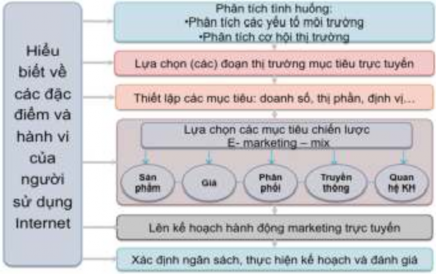
Figure 3: Online Marketing operation process according to the HVNTD model on the Internet
Source: author's research and synthesis 2008-2010
Maybe you are interested!
-
 Process of applying internet marketing in Vietnamese small and medium enterprises - 1
 -
 Evaluation of Online Marketing Activities of Philip Entertainment Media and Entertainment Company Limited - 1
 -
 Forecasting Internet Marketing Application Trends in Tourism Businesses and Development Directions of Internet Marketing in Vietnamese Tourism Businesses
 -
 Some Online Content Marketing Solutions To Improve Business Efficiency Of Ani International Training Academy
 -
 Some Recommendations for the State in Promoting the Application of Internet Marketing
In the step of setting goals, the administrator will have to rely on the manifesto, platform and resources of the enterprise to set goals for sales, market share and other goals, which are determined for each market segment that the enterprise pursues.
Another key content in this model is the Marketing-mix tools; in which the SP tool determines the means to transfer digital value to customers. The content of the electronic pricing strategy refers to cost reduction through the use of e-Marketing, price negotiation/negotiation models in e-commerce and segmented pricing strategies. The content of the electronic distribution strategy refers to content sponsorship models, direct sales, information intermediary models, distribution intermediary models (brokers, agents and online retailers). The content of the Marketing communication tools refers to advertising, public relations, online sales promotion, content publishing and email marketing. The relationship marketing tool is another content of the online Marketing-mix strategy, due to the interactive nature of the Internet environment, it includes online customer relationship management (E-CRM) and building online communities.[10]
Once strategies are in place, marketers will draft action plans or programs to implement the objectives of those strategies. Actual implementation will begin with determining the budget for the actions and end with evaluating the plans to correct and establish for the next marketing planning process.
The advantage of this model lies in its friendliness, especially for those who follow traditional marketing theories; and because of its friendliness, it is also easy to apply, especially when the model provides a formulaic process that allows users to apply it easily by performing the model's steps sequentially. Also because of this friendliness, marketers can only need to understand the core values of the model and easily refer to the extremely rich and diverse documents on implementation techniques to increase the effectiveness of application. Applying this model also allows for a relatively general review of the factors affecting online marketing strategies, including both strategic and tactical factors. Furthermore, the starting point and core of the model is the understanding of customers - Internet users, which can allow businesses to come up with many strategies and marketing efforts to gain customer approval - the key to keeping customers loyal on the Internet according to the Permission Marketing ideology introduced by Seth Godin - Deputy General Director of Marketing of Yahoo! [17], [18], [19]. Thanks to these reasons, this model has the prospect of being widely applied in Vietnam, due to its suitability with the cultural and social characteristics of Vietnam and the Internet usage behavior of businesses and customers in this country, but first of all, it must overcome many of its disadvantages.
The first limitation that must be mentioned is that it does not fully cover the factors that affect the e-Marketing strategy, such as technology, engineering, enterprise resources, especially human resources, issues of technology infrastructure, vision and government policies for the e-economy, website design, implementation and management... The lack of detail of this model will also require the person applying it to have a fairly broad and deep amount of background knowledge, and must
Research and collect additional knowledge. Scientifically, equating CRM with one of the Marketing-mix tools makes the user not see its strategic nature and importance in affecting the entire Marketing program, but tends to focus on "implementation" without seeing its strategic nature ("seeing the trees but not the forest"). In addition, electronic presence is only considered a part of the electronic Marketing communication strategy and online relationship Marketing, which does not make the user understand and effectively apply this content. This is the fundamental reason why many businesses only focus on investing in websites with superior software but forget to draft a strategic content plan, as well as the need to continuously invest in the customer attractiveness of the business's electronic presence - the current situation of many Vietnamese businesses when operating e-commerce in general and IM in particular. For this reason, electronic presence points through online distribution points are also inconsistent. Another limitation is that this model seems to separate marketing activities on the Internet from marketing activities in the real environment, thus not promoting the overall effectiveness of marketing activities, and at the same time making the person applying it feel confused in arranging and organizing staff to implement. This disadvantage will be a factor that prevents many small and medium enterprises in Vietnam from applying the model, because most of them operate simultaneously online, offline and in the real environment.
1.2.4. IM strategy model
This model, which is quite popular worldwide, was developed by the famous online Marketing researcher Dave Chaffey and his colleagues. Currently, this process has been widely popularized in the US and Europe [78], [80], [86], [92], [93].
The process and elements of this model are shown in Figure 4.
This model is similar to model number 3 in the implementation sequence with the first step being the analysis of the IM operating environment, with two basic groups: the environment
The next step is to establish an IM strategy, which is concerned with how the Internet strategy can be linked to the business and marketing strategies of the enterprise, describing a strategic approach with the stages of situation analysis, goal setting, strategy formulation and allocation of enterprise resources for strategy implementation. The content of Internet Marketing – Mix addresses the issue of how the different elements of the Marketing – Mix (4Ps) can be changed as part of the strategy. Internet Relationship Marketing describes in detail the strategy and tactics in using the Internet to build and maintain “one-to-one” relationships with customers. These three major contents are closely related to each other in defining and creating the electronic presence of the enterprise. This presence is closely coordinated with interactive Marketing communications activities with customers and Maintaining and monitoring Marketing activities on the Internet.
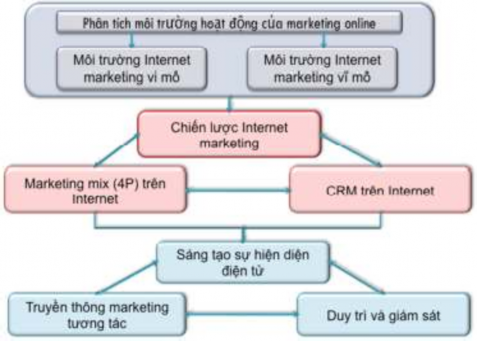
Figure 2.4: Online Marketing operation process according to IM strategy model
Source: author's research and synthesis 2008-2011
The advantage of this model is similar to the advantage of model number 3, in its user-friendly process, especially in Vietnam. Another advantage is that it studies quite fully and in detail the factors that impact and influence the online marketing strategy of the enterprise, including both strategic and tactical factors. A better point of this model compared to model number 3 is that the important factors are separated and studied in detail, while showing the interaction and mutual influence between the factors that make up the model, allowing the user to have a detailed view while still covering the strategic aspect of the entire model.
The disadvantages and limitations of the model are that it requires a very good foundation of knowledge from the person applying it, both in general and in detail. In addition, although the model shows its strategic vision, it lacks detailed practical guidance. Therefore, with the limited knowledge and awareness of Vietnamese enterprises about IM, to apply it successfully, it needs to be detailed but still ensure simplicity.
This model also does not emphasize on understanding the target customer's behavior in detail, but understanding the target customer is only considered as one of the micro-environment factors. This makes it difficult to ensure the success of IM interaction and personalization activities. Another important drawback is that the electronic presence is implemented after determining the IM strategy, as well as choosing the Marketing mix tools and CRM program. This will lead to the electronic presence being completely unstrategically oriented in terms of location and content, which can easily lead to businesses being creative and arbitrary in their electronic appearance, thereby losing the focus and/or causing unwanted impacts on the image of the company.
In addition, there are some other models, but the author does not focus on research because of their lack of widespread popularity and difficulty in applying them in Vietnam's conditions.
Chapter 1 Summary and Conclusion:
Research on IM and the IM application process, although not a very new issue, but due to its specificity (in terms of technological characteristics, rapid changes, application conditions...), the research results both domestically and internationally are still scattered, unfocused and inconsistent, even with many controversial issues, such as which approach is appropriate or how IM tools should be grouped most appropriately. Within the scope of the research topic, in order to have a theoretical basis for proposing an application process according to the general research objectives of the thesis, the author has generalized the views on IM and related concepts, characteristics of IM activities, the applicability and benefits of IM application for business efficiency of enterprises. In addition, the thesis has also gathered existing application studies on IM into 4 process models and ways to apply IM in business, including:
- E-commerce Marketing Model
- 4S-web Marketing model
- Model of consumer behavior on the Internet and Marketing mix
- IM strategy model
In each model, the thesis has analyzed the content, circumstances of birth, advantages, limitations and applicability of each group in the current conditions and context of Vietnam.
With all four models, the author believes that there is no process or application method that is completely suitable and easy to use in the current business conditions and context of Vietnamese SMEs. This is due to the common limitations of these models, including: (1) unfriendly, not suitable for the way of thinking, working and managing marketing activities of Vietnamese SMEs today; (2) not generalizing enough all factors related to IM strategy, and not detailed enough to guide implementation; (3) not focusing on understanding consumer behavior to come up with strategies and tactics that are suitable for the behavioral characteristics of Vietnamese people - specifically in terms of electronic presence and content strategy to engage with Internet users.
Therefore, it is necessary to have additional research on the application conditions of Vietnamese SMEs in order to be able to build appropriate IM application processes and methods. This will be mentioned and resolved in the following chapter 2.
CHAPTER 2
SURVEY RESEARCH ON CURRENT SITUATION AS A BASIS FOR BUILDING APPLICATION PROCESS
INTERNET MARKETING IN VIETNAM
2.1. Research design
2.1.1. Research content framework
2.1.1.1. Theoretical basis for research design
To be able to learn about the behavior and effectiveness of IM application, it is necessary to rely on the IM theory system. As presented in chapter 1, current IM theories are quite fragmented, lacking in system and many different approaches. Current application processes in the world are relatively difficult to apply because of their unfriendly nature, meaning they are not suitable for the application conditions as well as the thinking and marketing methods of Vietnamese enterprises.
With the author's experience accumulated during the working process, and through exchanges, contacts, and discussions with many experts, researchers, and market activists, the author discovered that the way of thinking, thinking, and doing Marketing in general and IM in particular of Vietnamese SMEs today is strongly influenced by the Marketing theory school of Philip Kotlers - which is also the Marketing theory that is being widely taught in Vietnam. Therefore, the author chose this theory as the main theoretical basis for his research topic. Accordingly, the logical framework of the Marketing strategy process includes 5 steps as shown in Figure 2.1 below [41], [42], [43], [64]. The author relies on this theoretical framework as the basis for establishing a practical research plan for enterprises, in order to assess whether the application of IM activities in enterprises follows the scientific process of a marketing strategy or not.
In addition, to assess whether enterprises have selected and applied the right tools and practices according to the specific principles of IM, the author also relies on other studies and theories on IM tools, from typical IM researchers such as Judy Strauss and Raymond Frost [83], [84], Dave Chaffey [80], Paul