
part of the East Sea with a coastline of 3,260 km. The sea area of Vietnam accounts for about 1,000,000 km 2 with an average of 1 km of coastline for every 100 km 2 , this ratio is 6 times higher than the ratio of coastal countries in the world. According to statistics, out of 63 provinces and centrally-run cities, there are 28 provinces and cities with sea, including 125 coastal districts and 12 island districts with nearly half of the population living in coastal provinces and cities. In the sea and islands under Vietnam's sovereignty in the East Sea,
The two archipelagos of Hoang Sa (Da Nang) and Truong Sa (Khanh Hoa) together with more than 3,000 large and small islands near and far from shore, form a defense line to protect, control and dominate the seas and continental shelf of our country.
The two archipelagos of Hoang Sa and Truong Sa have extremely important positions, guarding the East Sea, where the most important shipping routes in the world pass through. Due to their location along the coast of Vietnam, Hoang Sa and Truong Sa are outposts protecting the eastern flank of the country, as well as the seas and coasts of the Fatherland. Economically, these two archipelagos contain many rich and diverse biological and mineral resources, especially accounting for more than 70% of the oil and gas reserves of the East Sea. Therefore, Hoang Sa and Truong Sa archipelagos are not only important in economic activities, controlling the sea routes through the East Sea but also have important strategic defense significance for Vietnam.
With such a strategic position, the East Sea is home to complex disputes in the world, especially around the issue of sovereignty over seas and islands. In the trend of globalization, the complicated disputes affect peace and cooperation in the East Sea region. In recent years, the situation in the East Sea has become increasingly complicated as the disputes have become increasingly tense. The risks of violating national territorial sovereignty have caused a strong wave of struggle among all classes of Vietnamese people with the desire to protect the sovereignty of the sea and islands of the Fatherland, and maintain peace and stability in the East Sea.
Maybe you are interested!
-
 Basic Requirements When Determining Measures to Educate Students on the Awareness of National Sea and Island Sovereignty in Teaching History Grade 12 –
 -
 Orientation of the Party, State, Ministry of Education and Training on Education in General and Education on Awareness of Sea and Island Sovereignty in Particular
 -
 Tradition of Protecting and Enforcing Sea and Island Sovereignty in the Central Region Before the Nguyen Dynasty
 -
 Identify Rating Levels and Rating Scales
zt2i3t4l5ee
zt2a3gstourism,quan lan,quang ninh,ecology,ecotourism,minh chau,van don,geography,geographical basis,tourism development,science
zt2a3ge
zc2o3n4t5e6n7ts
of the islanders. Therefore, this indicator will be divided into two sub-indicators:
a1. Natural tourism attractiveness a2. Cultural tourism attractiveness
b. Tourist capacity
The two island communes in Quan Lan have different capacities to receive tourists. Minh Chau Commune is home to many standard hotels and resorts, attracting high-income domestic and international tourists. Meanwhile, Quan Lan Commune has many motels mainly built and operated by local people, so the scale and quality are not high, and will be suitable for ordinary tourists such as students.
c. Time of exploitation of Quan Lan Island Commune:
Quan Lan tourism is seasonal due to weather and climate conditions and festivals only take place on certain days of the year, specifically in spring. In Quan Lan commune, the period from April to June and from September to November is considered the best time to visit Quan Lan because the cultural tourism activities are mainly associated with festivals taking place during this time.
Minh Chau island commune:
Tourism exploitation time is all year round, because this is a place with a number of tourist attractions with diverse ecosystems such as Bai Tu Long National Park Research Center, Tram forest, Turtle Laying Beach, so besides coming to the beach for tourism and vacation in the summer, Minh Chau will attract research groups to come for tourism combined with research at other times of the year.
d. Sustainability
The sustainability of ecotourism sites in Quan Lan and Minh Chau communes depends on the sensitivity of the ecosystems to climate changes.
landscape. In general, these tourist destinations have a fairly high level of sustainability, because they are natural ecosystems, planned and protected. However, if a large number of tourists gather at certain times, it can exceed the carrying capacity and affect the sustainability of the environment (polluted beaches, damaged trees, animals moving away from their habitats, etc.), then the sustainability of the above ecosystems (natural ecosystems, human ecosystems) will also be affected and become less sustainable.
e. Location and accessibility
Both island communes have ports to take tourists to visit from Van Don wharf:
- Quan Lan – Van Don traffic route:
Phuc Thinh – Viet Anh high-speed boat and Quang Minh high-speed boat, depart at 8am and 2pm from Van Don to Quan Lan, and at 7am and 1pm from Quan Lan to Van Don. There are also wooden boats departing at 7am and 1pm.
- Van Don - Minh Chau traffic route:
Chung Huong high-speed train, Minh Chau train, morning 7:30 and afternoon 13:30 from Van Don to Minh Chau, morning 6:30 and afternoon 13:00 from Minh Chau to Van Don.
f. Infrastructure
Despite receiving investment attention, the issue of infrastructure and technical facilities for tourism on Quan Lan Island is still an issue that needs to be resolved because it has a direct impact on the implementation of ecotourism activities. The minimum conditions for serving tourists such as accommodation, electricity, water, communication, especially medical services, and security work need to be given top priority. Ecotourism spots in Minh Chau commune are assessed to have better infrastructure and technical facilities for tourism because there are quite complete and synchronous conditions for serving tourists, meeting many needs of domestic and foreign tourists.
3.2.1.4. Determine assessment levels and assessment scales
Corresponding to the levels of each criterion, the index is the score of those levels in the order of 4, 3, 2, 1 decreasing according to the standard of each level: very attractive (4), attractive (3), average (2), less attractive (1).
3.2.1.5. Determining the coefficients of the criteria
For the assessment of DLST in the two communes of Quan Lan and Minh Chau islands, the students added evaluation coefficients to show the importance of the criteria and indicators as follows:
Coefficient 3 with criteria: Attractiveness, Exploitation time. These are the 2 most important criteria for attracting tourists to tourism in general and eco-tourism in particular, so they have the highest coefficient.
Coefficient 2 with criteria: Capacity, Infrastructure, Location and accessibility . Because the assessment area is an island commune of Van Don district, the above criteria are selected by the author with appropriate coefficients at the average level.
Coefficient 1 with criteria: Sustainability. Quan Lan has natural and human-made ecotourism sites, with high biodiversity and little impact from local human factors. Most of the ecotourism sites are still wild, so they are highly sustainable.
3.2.1.6. Results of DLST assessment on Quan Lan island
a. Assessment of the potential for natural tourism development
For Minh Chau commune:
+ Natural tourism attractiveness is determined to be very attractive (4 points) and the most important coefficient (coefficient 3), so the score of the Attractiveness criterion is 4 x 3 = 12.
+ Capacity is determined as average (2 points) and the coefficient is quite important (coefficient 2), then the score of Capacity criterion is 2 x 2 = 4.
+ Exploitation time is long (4 points), the most important coefficient (coefficient 3) so the score of the Exploitation time criterion is 4 x 3 = 12.
+ Sustainability is determined as sustainable (4 points), the important coefficient is the average coefficient (coefficient 1), so the score of the Sustainability criterion is 4 x 1 = 4 points
+ Location and accessibility are determined to be quite favorable (2 points), the coefficient is quite important (coefficient 2), the criterion score is 2 x 2 = 4 points.
+ Infrastructure is assessed as good (3 points), the coefficient is quite important (coefficient 2), then the score of the Infrastructure criterion is 3 x 2 = 6 points.
The total score for evaluating DLST in Minh Chau commune according to 6 evaluation criteria is determined as: 12 + 4 + 12 + 4 + 4 + 6 = 42 points
Similar assessment for Quan Lan commune, we have the following table:
Table 3.3: Assessment of the potential for natural ecotourism development in Quan Lan and Minh Chau communes
Attractiveness of self-tourismof course
Capacity
Mining time
Sustainability
Location and accessibility
Infrastructure
Result
Point
DarkMulti
Point
DarkMulti
Point
DarkMulti
Point
DarkMulti
Point
DarkMulti
Point
DarkMulti
CommuneMinh Chau
12
12
4
8
12
12
4
4
4
8
6
8
42/52
Quan CommuneLan
6
12
6
8
9
12
4
4
4
8
4
8
33/52
b. Assessment of the potential for humanistic tourism development
For Quan Lan commune:
+ The attractiveness of human tourism is determined to be very attractive (4 points) and the most important coefficient (coefficient 3), so the score of the Attractiveness criterion is 4 x 3 = 12.
+ Capacity is determined to be large (3 points) and the coefficient is quite important (coefficient 2), then the score of the Capacity criterion is 3 x 2 = 6.
+ Mining time is average (3 points), the most important coefficient (coefficient 3) so the score of the Mining time criterion is 3 x 3 = 9.
+ Sustainability is determined as sustainable (4 points), the important coefficient is the average coefficient (coefficient 1), so the score of the Sustainability criterion is 4 x 1 = 4 points.
+ Location and accessibility are determined to be quite favorable (2 points), the coefficient is quite important (coefficient 2), the criterion score is 2 x 2 = 4 points.
+ Infrastructure is rated as average (2 points), the coefficient is quite important (coefficient 2), then the score of the Infrastructure criterion is 2 x 2 = 4 points.
The total score for evaluating DLST in Quan Lan commune according to 6 evaluation criteria is determined as: 12 + 6 + 6 + 4 + 4 + 4 = 36 points.
Similar assessment with Minh Chau commune we have the following table:
Table 3.4: Assessment of the potential for developing humanistic eco-tourism in Quan Lan and Minh Chau communes
Attractiveness of human tourismliterature
Capacity
Mining time
Sustainability
Location and accessibility
Infrastructure
Result
Point
DarkMulti
Point
DarkMulti
Point
DarkMulti
Point
DarkMulti
Point
DarkMulti
Point
DarkMulti
Quan CommuneLan
12
12
6
8
9
12
4
4
4
8
4
8
39/52
Minh CommuneChau
6
12
4
8
12
12
4
4
4
8
6
8
36/52
Basically, both Minh Chau and Quan Lan localities have quite favorable conditions for developing ecotourism. However, Quan Lan commune has more advantages to develop ecotourism in a humanistic direction, because this is an area with many famous historical relics such as Quan Lan Communal House, Quan Lan Pagoda, Temple worshiping the hero Tran Khanh Du, ... along with local festivals held annually such as the wind praying ceremony (March 15), Quan Lan festival (June 10-19); due to its location near the port and long exploitation time, the beaches in Quan Lan commune (especially Quan Lan beach) are no longer hygienic and clean to ensure the needs of tourists coming to relax and swim; this is also an area with many beautiful landscapes such as Got Beo wind pass, Ong Phong head, Voi Voi cave, but the ability to access these places is still very limited (dirt hill road, lots of gravel and rocks), especially during rainy and windy times; In addition, other natural resources such as mangrove forests and sea worms have not been really exploited for tourism purposes and ecotourism development. On the contrary, Minh Chau commune has more advantages in developing ecotourism in the direction of natural tourism, this is an area with diverse ecosystems such as at Rua De Beach, Bai Tu Long National Park Conservation Center...; Minh Chau beach is highly appreciated for its natural beauty and cleanliness, ranked in the top ten most beautiful beaches in Vietnam; Minh Chau commune is also home to Tram forest with a large area and a purity of up to 90%, suitable for building bridges through the forest (a very effective type of natural ecotourism currently applied by many countries) for tourists to sightsee, as well as for the purpose of studying and researching.
Figure 3.1: Thenmala Forest Bridge (India) Source: https://www.thenmalaecotourism.com/(August 21, 2019)
3.2.2. Using SWOT matrix to evaluate Quan Lan island tourism
General assessment of current tourism activities of Quan Lan island is shown through the following SWOT matrix:
Table 3.5: SWOT matrix evaluating tourism activities on Quan Lan island
Internal agent
Strengths- There is a lot of potential for tourism development, especially natural ecotourism and humanistic ecotourism.- The unskilled labor force is relatively abundant.- resource environmentunpolluted, still
Weaknesses- Poorly developed infrastructure, especially traffic routes to tourist destinations on the island.- The team of professional staff is still weak.- Tourism products in general
quite wild, originalintact
general and DLST in particularalone is monotonous.
External agents
Opportunity- Tourism is a key industry in the socio-economic development strategy of the province and Van Don economic zone.- Quan Lan was selected as a pilot area for eco-tourism development within the framework of the green growth project between Quang Ninh province and the Japanese organization JICA.- The flow of tourists and especially ecotourism in the world tends toincreasing
Challenge- Weather and climate change abnormally.- Competition in tourism products is increasingly fierce, especially with other localities in the province such as Ha Long, Mong Cai...- Awareness of tourists, especially domestic tourists, about ecotourism and nature conservation is not high.
Through summary analysis using SWOT matrix we see that:
To exploit strengths and take advantage of opportunities, it is necessary to:
- Diversify products and service types (build more tourism routes aimed at specific needs of tourists: experiential tourism immersed in nature, spiritual cultural tourism...)
- Effective exploitation of resources and differentiated products (natural resources and human resources)
div.maincontent .p { color: black; font-family:"Times New Roman", serif; font-style: normal; font-weight: normal; text-decoration: none; font-size: 14pt; margin:0pt; } div.maincontent p { color: black; font-family:"Times New Roman", serif; font-style: normal; font-weight: normal; text-decoration: none; font-size: 14pt; margin:0pt; } div.maincontent .s1 { color: black; font-family:"Times New Roman", serif; font-style: normal; font-weight: normal; text-decoration: none; font-size: 13pt; } div.maincontent .s2 { color: black; font-family:"Times New Roman", serif; font-style: normal; font-weight: normal; text-decoration: none; font-size: 13pt; } div.maincontent .s3 { color: #0D0D0D; font-family:"Times New Roman", serif; font-style: normal; font-weight: bold; text-decoration: none; font-size: 14pt; } div.maincontent .s4 { color: black; font-family:"Times New Roman", serif; font-style: italic; font-weight: normal; text-decoration: none; font-size: 14pt; } div.maincontent .s5 { color: black; font-family:"Times New Roman", serif; font-style: italic; font-weight: bold; text-decoration: none; font-size: 14pt; } div.maincontent .s6 { color: black; font-family:"Times New Roman", serif; font-style: italic; font-weight: normal; text-decoration: none; font-size: 14pt; vertical-align: -3pt; } div.maincontent .s7 { color: black; font-family:"Times New Roman", serif; font-style: italic; font-weight: normal; text-decoration: none; font-size: 14pt; vertical-align: -2pt; } div.maincontent .s8 { color: black; font-family:"Times New Roman", serif; font-style: italic; font-weight: normal; text-decoration: none; font-size: 14pt; vertical-align: -1pt; } div.maincontent .s9 { color: black; font-family:"Times New Roman", serif; font-style: normal; font-weight: normal; text-decoration: none; font-size: 14pt; } div.maincontent .s10 { color: black; font-family:"Times New Roman", serif; font-style: normal; font-weight: bold; text-decoration: none; font-size: 14pt; } div.maincontent .s11 { color: black; font-family:"Times New Roman", serif; font-style: normal; font-weight: normal; text-decoration: none; font-size: 14pt; } div.maincontent .s12 { color: black; font-family:Symbol, serif; font-style: normal; font-weight: normal; text-decoration: none; font-size: 14pt; } div.maincontent .s13 { color: black; font-family:Wingdings; font-style: normal; font-weight: normal; text-decoration: none; font-size: 14pt; } div.maincontent .s14 { color: black; font-family:"Times New Roman", serif; font-style: normal; font-weight: normal; text-decoration: none; font-size: 9pt; vertical-align: 5pt; } div.maincontent .s15 { color: black; font-family:"Times New Roman", serif; font-style: normal; font-weight: normal; text-decoration: none; font-size: 9pt; vertical-align: 5pt; } div.maincontent .s16 { color: black; font-family:Cambria, serif; font-style: italic; font-weight: normal; text-decoration: none; font-size: 14pt; } div.maincontent .s17 { color: #080808; font-family:"Times New Roman", serif; font-style: normal; font-weight: bold; text-decoration: none; font-size: 14pt; } div.maincontent .s18 { color: #080808; font-family:"Times New Roman", serif; font-style: normal; font-weight: normal; text-decoration: none; font-size: 14pt; } div.maincontent .s19 { color: black; font-family:"Times New Roman", serif; font-style: normal; font-weight: normal; text-decoration: none; font-size: 11pt; } div.maincontent .s20 { color: black; font-family:"Times New Roman", serif; font-style: normal; font-weight: normal; text-decoration: none; font-size: 10pt; } div.maincontent .s21 { color: black; font-family:"Times New Roman", serif; font-style: normal; font-weight: bold; text-decoration: none; font-size: 11pt; } div.maincontent .s22 { color: black; font-family:"Times New Roman", serif; font-style: normal; font-weight: normal; text-decoration: none; font-size: 11pt; } div.maincontent .s23 { color: black; font-family:"Times New Roman", serif; font-style: italic; font-weight: normal; text-decoration: none; font-size: 14pt; } div.maincontent .s24 { color: #212121; font-family:"Times New Roman", serif; font-style: normal; font-weight: normal; tex
Identify Rating Levels and Rating Scales
zt2i3t4l5ee
zt2a3gstourism,quan lan,quang ninh,ecology,ecotourism,minh chau,van don,geography,geographical basis,tourism development,science
zt2a3ge
zc2o3n4t5e6n7ts
of the islanders. Therefore, this indicator will be divided into two sub-indicators:
a1. Natural tourism attractiveness a2. Cultural tourism attractiveness
b. Tourist capacity
The two island communes in Quan Lan have different capacities to receive tourists. Minh Chau Commune is home to many standard hotels and resorts, attracting high-income domestic and international tourists. Meanwhile, Quan Lan Commune has many motels mainly built and operated by local people, so the scale and quality are not high, and will be suitable for ordinary tourists such as students.
c. Time of exploitation of Quan Lan Island Commune:
Quan Lan tourism is seasonal due to weather and climate conditions and festivals only take place on certain days of the year, specifically in spring. In Quan Lan commune, the period from April to June and from September to November is considered the best time to visit Quan Lan because the cultural tourism activities are mainly associated with festivals taking place during this time.
Minh Chau island commune:
Tourism exploitation time is all year round, because this is a place with a number of tourist attractions with diverse ecosystems such as Bai Tu Long National Park Research Center, Tram forest, Turtle Laying Beach, so besides coming to the beach for tourism and vacation in the summer, Minh Chau will attract research groups to come for tourism combined with research at other times of the year.
d. Sustainability
The sustainability of ecotourism sites in Quan Lan and Minh Chau communes depends on the sensitivity of the ecosystems to climate changes.
landscape. In general, these tourist destinations have a fairly high level of sustainability, because they are natural ecosystems, planned and protected. However, if a large number of tourists gather at certain times, it can exceed the carrying capacity and affect the sustainability of the environment (polluted beaches, damaged trees, animals moving away from their habitats, etc.), then the sustainability of the above ecosystems (natural ecosystems, human ecosystems) will also be affected and become less sustainable.
e. Location and accessibility
Both island communes have ports to take tourists to visit from Van Don wharf:
- Quan Lan – Van Don traffic route:
Phuc Thinh – Viet Anh high-speed boat and Quang Minh high-speed boat, depart at 8am and 2pm from Van Don to Quan Lan, and at 7am and 1pm from Quan Lan to Van Don. There are also wooden boats departing at 7am and 1pm.
- Van Don - Minh Chau traffic route:
Chung Huong high-speed train, Minh Chau train, morning 7:30 and afternoon 13:30 from Van Don to Minh Chau, morning 6:30 and afternoon 13:00 from Minh Chau to Van Don.
f. Infrastructure
Despite receiving investment attention, the issue of infrastructure and technical facilities for tourism on Quan Lan Island is still an issue that needs to be resolved because it has a direct impact on the implementation of ecotourism activities. The minimum conditions for serving tourists such as accommodation, electricity, water, communication, especially medical services, and security work need to be given top priority. Ecotourism spots in Minh Chau commune are assessed to have better infrastructure and technical facilities for tourism because there are quite complete and synchronous conditions for serving tourists, meeting many needs of domestic and foreign tourists.
3.2.1.4. Determine assessment levels and assessment scales
Corresponding to the levels of each criterion, the index is the score of those levels in the order of 4, 3, 2, 1 decreasing according to the standard of each level: very attractive (4), attractive (3), average (2), less attractive (1).
3.2.1.5. Determining the coefficients of the criteria
For the assessment of DLST in the two communes of Quan Lan and Minh Chau islands, the students added evaluation coefficients to show the importance of the criteria and indicators as follows:
Coefficient 3 with criteria: Attractiveness, Exploitation time. These are the 2 most important criteria for attracting tourists to tourism in general and eco-tourism in particular, so they have the highest coefficient.
Coefficient 2 with criteria: Capacity, Infrastructure, Location and accessibility . Because the assessment area is an island commune of Van Don district, the above criteria are selected by the author with appropriate coefficients at the average level.
Coefficient 1 with criteria: Sustainability. Quan Lan has natural and human-made ecotourism sites, with high biodiversity and little impact from local human factors. Most of the ecotourism sites are still wild, so they are highly sustainable.
3.2.1.6. Results of DLST assessment on Quan Lan island
a. Assessment of the potential for natural tourism development
For Minh Chau commune:
+ Natural tourism attractiveness is determined to be very attractive (4 points) and the most important coefficient (coefficient 3), so the score of the Attractiveness criterion is 4 x 3 = 12.
+ Capacity is determined as average (2 points) and the coefficient is quite important (coefficient 2), then the score of Capacity criterion is 2 x 2 = 4.
+ Exploitation time is long (4 points), the most important coefficient (coefficient 3) so the score of the Exploitation time criterion is 4 x 3 = 12.
+ Sustainability is determined as sustainable (4 points), the important coefficient is the average coefficient (coefficient 1), so the score of the Sustainability criterion is 4 x 1 = 4 points
+ Location and accessibility are determined to be quite favorable (2 points), the coefficient is quite important (coefficient 2), the criterion score is 2 x 2 = 4 points.
+ Infrastructure is assessed as good (3 points), the coefficient is quite important (coefficient 2), then the score of the Infrastructure criterion is 3 x 2 = 6 points.
The total score for evaluating DLST in Minh Chau commune according to 6 evaluation criteria is determined as: 12 + 4 + 12 + 4 + 4 + 6 = 42 points
Similar assessment for Quan Lan commune, we have the following table:
Table 3.3: Assessment of the potential for natural ecotourism development in Quan Lan and Minh Chau communes
Attractiveness of self-tourismof course
Capacity
Mining time
Sustainability
Location and accessibility
Infrastructure
Result
Point
DarkMulti
Point
DarkMulti
Point
DarkMulti
Point
DarkMulti
Point
DarkMulti
Point
DarkMulti
CommuneMinh Chau
12
12
4
8
12
12
4
4
4
8
6
8
42/52
Quan CommuneLan
6
12
6
8
9
12
4
4
4
8
4
8
33/52
b. Assessment of the potential for humanistic tourism development
For Quan Lan commune:
+ The attractiveness of human tourism is determined to be very attractive (4 points) and the most important coefficient (coefficient 3), so the score of the Attractiveness criterion is 4 x 3 = 12.
+ Capacity is determined to be large (3 points) and the coefficient is quite important (coefficient 2), then the score of the Capacity criterion is 3 x 2 = 6.
+ Mining time is average (3 points), the most important coefficient (coefficient 3) so the score of the Mining time criterion is 3 x 3 = 9.
+ Sustainability is determined as sustainable (4 points), the important coefficient is the average coefficient (coefficient 1), so the score of the Sustainability criterion is 4 x 1 = 4 points.
+ Location and accessibility are determined to be quite favorable (2 points), the coefficient is quite important (coefficient 2), the criterion score is 2 x 2 = 4 points.
+ Infrastructure is rated as average (2 points), the coefficient is quite important (coefficient 2), then the score of the Infrastructure criterion is 2 x 2 = 4 points.
The total score for evaluating DLST in Quan Lan commune according to 6 evaluation criteria is determined as: 12 + 6 + 6 + 4 + 4 + 4 = 36 points.
Similar assessment with Minh Chau commune we have the following table:
Table 3.4: Assessment of the potential for developing humanistic eco-tourism in Quan Lan and Minh Chau communes
Attractiveness of human tourismliterature
Capacity
Mining time
Sustainability
Location and accessibility
Infrastructure
Result
Point
DarkMulti
Point
DarkMulti
Point
DarkMulti
Point
DarkMulti
Point
DarkMulti
Point
DarkMulti
Quan CommuneLan
12
12
6
8
9
12
4
4
4
8
4
8
39/52
Minh CommuneChau
6
12
4
8
12
12
4
4
4
8
6
8
36/52
Basically, both Minh Chau and Quan Lan localities have quite favorable conditions for developing ecotourism. However, Quan Lan commune has more advantages to develop ecotourism in a humanistic direction, because this is an area with many famous historical relics such as Quan Lan Communal House, Quan Lan Pagoda, Temple worshiping the hero Tran Khanh Du, ... along with local festivals held annually such as the wind praying ceremony (March 15), Quan Lan festival (June 10-19); due to its location near the port and long exploitation time, the beaches in Quan Lan commune (especially Quan Lan beach) are no longer hygienic and clean to ensure the needs of tourists coming to relax and swim; this is also an area with many beautiful landscapes such as Got Beo wind pass, Ong Phong head, Voi Voi cave, but the ability to access these places is still very limited (dirt hill road, lots of gravel and rocks), especially during rainy and windy times; In addition, other natural resources such as mangrove forests and sea worms have not been really exploited for tourism purposes and ecotourism development. On the contrary, Minh Chau commune has more advantages in developing ecotourism in the direction of natural tourism, this is an area with diverse ecosystems such as at Rua De Beach, Bai Tu Long National Park Conservation Center...; Minh Chau beach is highly appreciated for its natural beauty and cleanliness, ranked in the top ten most beautiful beaches in Vietnam; Minh Chau commune is also home to Tram forest with a large area and a purity of up to 90%, suitable for building bridges through the forest (a very effective type of natural ecotourism currently applied by many countries) for tourists to sightsee, as well as for the purpose of studying and researching.
Figure 3.1: Thenmala Forest Bridge (India) Source: https://www.thenmalaecotourism.com/(August 21, 2019)
3.2.2. Using SWOT matrix to evaluate Quan Lan island tourism
General assessment of current tourism activities of Quan Lan island is shown through the following SWOT matrix:
Table 3.5: SWOT matrix evaluating tourism activities on Quan Lan island
Internal agent
Strengths- There is a lot of potential for tourism development, especially natural ecotourism and humanistic ecotourism.- The unskilled labor force is relatively abundant.- resource environmentunpolluted, still
Weaknesses- Poorly developed infrastructure, especially traffic routes to tourist destinations on the island.- The team of professional staff is still weak.- Tourism products in general
quite wild, originalintact
general and DLST in particularalone is monotonous.
External agents
Opportunity- Tourism is a key industry in the socio-economic development strategy of the province and Van Don economic zone.- Quan Lan was selected as a pilot area for eco-tourism development within the framework of the green growth project between Quang Ninh province and the Japanese organization JICA.- The flow of tourists and especially ecotourism in the world tends toincreasing
Challenge- Weather and climate change abnormally.- Competition in tourism products is increasingly fierce, especially with other localities in the province such as Ha Long, Mong Cai...- Awareness of tourists, especially domestic tourists, about ecotourism and nature conservation is not high.
Through summary analysis using SWOT matrix we see that:
To exploit strengths and take advantage of opportunities, it is necessary to:
- Diversify products and service types (build more tourism routes aimed at specific needs of tourists: experiential tourism immersed in nature, spiritual cultural tourism...)
- Effective exploitation of resources and differentiated products (natural resources and human resources)
div.maincontent .p { color: black; font-family:"Times New Roman", serif; font-style: normal; font-weight: normal; text-decoration: none; font-size: 14pt; margin:0pt; } div.maincontent p { color: black; font-family:"Times New Roman", serif; font-style: normal; font-weight: normal; text-decoration: none; font-size: 14pt; margin:0pt; } div.maincontent .s1 { color: black; font-family:"Times New Roman", serif; font-style: normal; font-weight: normal; text-decoration: none; font-size: 13pt; } div.maincontent .s2 { color: black; font-family:"Times New Roman", serif; font-style: normal; font-weight: normal; text-decoration: none; font-size: 13pt; } div.maincontent .s3 { color: #0D0D0D; font-family:"Times New Roman", serif; font-style: normal; font-weight: bold; text-decoration: none; font-size: 14pt; } div.maincontent .s4 { color: black; font-family:"Times New Roman", serif; font-style: italic; font-weight: normal; text-decoration: none; font-size: 14pt; } div.maincontent .s5 { color: black; font-family:"Times New Roman", serif; font-style: italic; font-weight: bold; text-decoration: none; font-size: 14pt; } div.maincontent .s6 { color: black; font-family:"Times New Roman", serif; font-style: italic; font-weight: normal; text-decoration: none; font-size: 14pt; vertical-align: -3pt; } div.maincontent .s7 { color: black; font-family:"Times New Roman", serif; font-style: italic; font-weight: normal; text-decoration: none; font-size: 14pt; vertical-align: -2pt; } div.maincontent .s8 { color: black; font-family:"Times New Roman", serif; font-style: italic; font-weight: normal; text-decoration: none; font-size: 14pt; vertical-align: -1pt; } div.maincontent .s9 { color: black; font-family:"Times New Roman", serif; font-style: normal; font-weight: normal; text-decoration: none; font-size: 14pt; } div.maincontent .s10 { color: black; font-family:"Times New Roman", serif; font-style: normal; font-weight: bold; text-decoration: none; font-size: 14pt; } div.maincontent .s11 { color: black; font-family:"Times New Roman", serif; font-style: normal; font-weight: normal; text-decoration: none; font-size: 14pt; } div.maincontent .s12 { color: black; font-family:Symbol, serif; font-style: normal; font-weight: normal; text-decoration: none; font-size: 14pt; } div.maincontent .s13 { color: black; font-family:Wingdings; font-style: normal; font-weight: normal; text-decoration: none; font-size: 14pt; } div.maincontent .s14 { color: black; font-family:"Times New Roman", serif; font-style: normal; font-weight: normal; text-decoration: none; font-size: 9pt; vertical-align: 5pt; } div.maincontent .s15 { color: black; font-family:"Times New Roman", serif; font-style: normal; font-weight: normal; text-decoration: none; font-size: 9pt; vertical-align: 5pt; } div.maincontent .s16 { color: black; font-family:Cambria, serif; font-style: italic; font-weight: normal; text-decoration: none; font-size: 14pt; } div.maincontent .s17 { color: #080808; font-family:"Times New Roman", serif; font-style: normal; font-weight: bold; text-decoration: none; font-size: 14pt; } div.maincontent .s18 { color: #080808; font-family:"Times New Roman", serif; font-style: normal; font-weight: normal; text-decoration: none; font-size: 14pt; } div.maincontent .s19 { color: black; font-family:"Times New Roman", serif; font-style: normal; font-weight: normal; text-decoration: none; font-size: 11pt; } div.maincontent .s20 { color: black; font-family:"Times New Roman", serif; font-style: normal; font-weight: normal; text-decoration: none; font-size: 10pt; } div.maincontent .s21 { color: black; font-family:"Times New Roman", serif; font-style: normal; font-weight: bold; text-decoration: none; font-size: 11pt; } div.maincontent .s22 { color: black; font-family:"Times New Roman", serif; font-style: normal; font-weight: normal; text-decoration: none; font-size: 11pt; } div.maincontent .s23 { color: black; font-family:"Times New Roman", serif; font-style: italic; font-weight: normal; text-decoration: none; font-size: 14pt; } div.maincontent .s24 { color: #212121; font-family:"Times New Roman", serif; font-style: normal; font-weight: normal; tex -
 Managing medical ethics education for nursing students in medical colleges - 32
Therefore, strengthening the education of awareness of protecting the sovereignty of the sea and islands for all classes of people, including students, and at the same time guiding the correct behaviors according to the Party and State's guidelines is an urgent requirement. One of the most effective methods is to incorporate the content of education on awareness of the sovereignty of the sea and islands of the Fatherland into teaching activities in schools nationwide, especially for subjects with advantages in educational work such as History, Geography, Civic Education, National Defense Education, etc., as well as through extracurricular activities. This is an extremely important and urgent political task of schools nationwide today.

2.2.2. Practice of educating students about sovereignty over seas and islands in history teaching in high schools
2.2.2.1. Situation of educating students about sea and island sovereignty in localities in recent years
Based on the characteristics and current situation of Vietnam's seas and islands, the Party and State have issued many policies to enhance the education of awareness of sea and island sovereignty for the people, including young people. In particular, the content of education on awareness of sea and island sovereignty has been included in the teaching content as well as in extracurricular activities by high schools across the country.
Recognizing the importance of educating students about sea and island sovereignty in schools, since the 2011-2012 school year, the Ministry of Education and Training has compiled and published "Guidelines for teaching and learning about marine and island resources and environment for high school students" to serve the teaching of teachers and the learning of students. Since then, in provinces and cities across the country, activities to educate students about sea and island sovereignty have been carried out in both the curricular and extracurricular programs. Taking the lead in implementing and initially achieving remarkable results, we can mention a few provinces and cities as follows:
In Hanoi - the capital of the country, educational activities are carried out in many forms, especially through HĐNK. Many schools have established clubs "Discovering Vietnam - Sea and islands of the homeland" ; organizing map-making activities for Vietnam; organizing Talent Festival with the theme "Pharos" - The lighthouse towards the distant sea and islands; organizing many charity activities to call for help for families and children in difficult circumstances in remote areas, especially border areas and islands...
In Quang Binh, the Provincial Party Committee's Propaganda Department, the Department of Education and Training, in coordination with the 83rd Naval Brigade (Da Nang), organized propaganda about the sea and islands for students at high schools in Bo Trach and Le Thuy districts to raise awareness of responsibility for protecting the border and islands. In addition, high schools also organized many competitions to learn about the sea and islands, draw pictures, and exhibit images of the sea and islands of the Fatherland.
Closely related to the Hoang Sa archipelago, education and propaganda work on sea and island sovereignty in Da Nang city has been focused. Since the 2011-2012 school year, the content of education on sea and island sovereignty has been included in the teaching activities of schools at all levels, officially including the lesson "History of Da Nang, history of Hoang Sa sovereignty" in the local history section in the official history program of secondary and high schools. Schools regularly organize learning activities on the topic of sea and islands with many forms.
awareness, contributing to deeply educating students about the sovereignty of the sea and islands such as: Tran Phu High School organized the "Lighting the Fire of Hoang Sa" Camp ; Ngu Hanh Son High School collected documents about Hoang Sa, Truong Sa and set up a gallery; Thai Phien High School and Thanh Khe High School established the "I Love History" club ;...
Quang Ngai Department of Education and Training organizes propaganda activities for students, especially in Ly Son island district; compiles teaching materials to serve the education of awareness of sea and island sovereignty for students at all levels. Coastal schools have many ideas in implementing the teaching of sea and island sovereignty. In addition, the organization of learning activities is also focused on: Binh Son High School organizes drawing and presentation contests; Ba Gia High School organizes the contest "Sea and islands in my heart", Ly Son High School organizes to learn about the traditional house of Hoang Sa team, cleans the coast... In particular, the painting contest to protect sea and island sovereignty on the annual "Khao le the linh Hoang Sa" festival organized by the Provincial People's Committee, or the contest "Learning about the history, homeland, country and people of Quang Ngai" in the form of dramatization... brings practical educational effects.
Since the 2012-2013 school year, the Department of Education and Training of Binh Dinh has actively responded and organized useful activities towards the sea and islands of the Fatherland with many diverse and attractive forms such as: Quoc Hoc Quy Nhon High School, Nguyen Thai Hoc High School or Tran Cao Van organized activities with the theme "Homeland sea and islands", "Rivers and borders", "Sea and island festival" ...; organized propaganda about borders and islands for students at 6 high schools across the province: Trung Vuong High School, Nguyen Thai Hoc High School (Quy Nhon), Phu Cat High School No. 3, Nguyen Hong Dao High School (Phu Cat), My Tho High School, Nguyen Trung Truc High School (Phu My); especially organized activities with the theme "Embrace of love" for nearly 300 students on Nhon Chau island commune (Quy Nhon) ...
Phu Yen is one of 28 coastal provinces and cities, with a coastline of nearly 200km. Recognizing the role and position of the sea and islands early, accepting the policies of the Party, the State and the Ministry of Education and Training, since the 2011-2012 school year, the Provincial Party Committee's Propaganda Department and the Department of Education and Training have conducted training and deployed the content of "Guidelines for teaching educational content on marine and island resources and environment for high school students" for cadres, teachers and students at all levels in the province and initially achieved remarkable results. The content of educating awareness of sea and island sovereignty for students in general schools has been increasingly popularized with many diverse and rich forms, not only in the internal curriculum but also promoting extracurricular activities, especially for the subjects of History, Geography, Civic Education and National Defense Education.
Khanh Hoa province, in association with Truong Sa island district, has also compiled teaching and learning materials to serve the education of sea and island sovereignty awareness for students. The education of sea and island sovereignty has been promoted in many diverse forms, initially demonstrating feasibility and effectiveness. Historical and geographical knowledge about Truong Sa is integrated into the History and Geography curriculum at secondary and high schools with the topics "Khanh Hoa sea and islands - the economic development strength of the province", "Hoang Sa and Truong Sa, the sacred and inseparable territory" ... In the learning activities, knowledge about the importance of sea and islands; the responsibility of the young generation in protecting the sovereignty of Hoang Sa and Truong Sa is focused on, typically: Ha Huy Tap High School, ISCHOOL High School, Nguyen Thai Hoc High School organized extracurricular activities "Sea and islands of the homeland" , "I love the sea and islands of the homeland" ; Le Quy Don High School for the Gifted organized the contest " Sea and islands of my homeland" ...
In Ninh Thuan, Binh Thuan provinces and many other coastal localities, the work of educating students about sea and island sovereignty has also been focused on with many diverse forms from knowledge competitions, to painting competitions, propaganda, distributing leaflets, designing posters on the theme of sea and islands, or organizing photo exhibitions about island soldiers... These are very practical activities, suitable for the age of each grade level, so they bring high educational efficiency.
In the Southern provinces, propaganda and education on sea and island sovereignty also take place in many schools at all levels. In Ho Chi Minh City, primary schools organize painting contests on the theme of sea and islands; secondary and high schools launch contests to learn about the sea and islands of the Fatherland, and exhibitions of pictures of Vietnam's seas and islands. In Ba Ria - Vung Tau, Bac Lieu, Dong Thap, etc., propaganda activities on protecting the marine and island environment take many rich forms. In Kien Giang, Ca Mau - the southernmost provinces of the Fatherland associated with the sea and islands, schools pay great attention to education on sea and island sovereignty, especially with instructions to include in the teaching content of History, Geography, Civic Education, Biology, etc. propaganda content on sovereignty and protection of the marine and island environment for students.
In general, since the 2011-2012 school year, many high schools across the country have recognized the importance of educating about the sovereignty of the sea and islands and have implemented education for students in a variety of forms. In addition to integrating the content of the sea and islands into the internal lessons of all subjects, a series of extracurricular activities with the theme of the sea and islands of the Fatherland have been organized in all localities.
2.2.2.2. Survey and investigation of the practice of educating students on sea and island sovereignty awareness in high schools
To grasp the actual situation of educating awareness of sea and island sovereignty for students in the DHLS in high schools, we conducted a survey of 96 teachers and 2,160 students at 24 high schools in 14 provinces (8 provinces in the South Central Coast, 2 provinces in the Northern Delta, 2 provinces in the South, 1 province in the North Central Coast and 1 province in the Central Highlands) (see Appendix 1). The survey focused on three issues: the importance of educating awareness of sea and island sovereignty in history teaching in high schools; forms and measures of educating awareness of sea and island sovereignty in DHLS in high schools; causes leading to limitations in educating awareness of sea and island sovereignty in DHLS in high schools (see Appendix 3 and 4).
* Investigation and survey content
- For history teachers: We focus on clarifying some key issues such as:
+ The need to educate students about the awareness of sovereignty over seas and islands in general teaching and history teaching in particular in high schools.
+ Contents on sea and island issues in current History textbooks.
+ Forms and methods of teaching content about seas and islands in internal history lessons and learning activities.
+ Causes leading to limitations in educating students about sea and island sovereignty in history teaching at high schools.
+ Suggested ideas contribute to improving the effectiveness of teaching the subject as well as improving the effectiveness of education on sea and island sovereignty in DHLS in high schools.
- For students: Focus on clarifying some basic issues as follows:
+ Find out students' interest in learning history in general and the issue of Vietnam's sea and island sovereignty in particular.
+ Students' awareness of the issue of sea and island sovereignty through subjects.
+ Forms of education on sea and island sovereignty organized in schools (form, frequency, effectiveness).
+ Students' understanding of Vietnam's sovereignty over seas and islands in the East Sea, including the Hoang Sa and Truong Sa archipelagos.
+ Difficulties of students when learning and studying contents related to the sovereignty of the sea and islands of the Fatherland in the history subject.
+ Students' proposals on educating awareness of sea and island sovereignty in history teaching (on content, form, and measures).
* Investigation and survey methods
To understand the current situation of education on sea and island sovereignty awareness in high schools, we conducted survey methods such as using questionnaires, directly interviewing managers, teachers, students, observing, and observing classes... After collecting and processing information sources from practice in high schools with diverse types of schools, in many different regions, we drew some comments as follows:
- On the part of history teachers:
We conducted a survey with 96 history teachers of 24 high schools (each school surveyed 04 teachers), the survey results showed the following opinions:
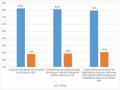
+ When asked about the necessity of educating awareness of sea and island sovereignty in high school curriculum: 78.26% of teachers said that this is very necessary; 21.74% said it is necessary; no opinion said that this is unnecessary.
+ Assessing the subjects that have advantages in educating students about the awareness of sovereignty over seas and islands in high schools: 52.78% of teachers said that History has the most advantages; 26.19% of teachers said Geography; 21.30% chose Civic Education and National Defense Education. Thus, the majority of teachers see the role of History in educating students about the awareness of sovereignty over seas and islands.
+ Regarding the forms and measures of educating awareness of sovereignty over seas and islands in history teaching in high schools: up to 82.15% of opinions said that it is necessary to flexibly and effectively use forms and teaching methods, combining teaching of in-class lessons with extracurricular activities, and between modern and traditional teaching methods to promote students' positivity and independence. However, some teachers (17.85%) do not want to include the content of sovereignty over seas and islands in teaching the subject.
+ Regarding the current status of educating students about sea and island sovereignty in high schools: 76.17% of opinions said that the issue of educating students about sea and island sovereignty was mentioned in subject teaching; 14.23% of teachers integrated the content of sea and island sovereignty in internal history lessons; 9.60% of opinions said that the issue of educating students about sea and island sovereignty was integrated into subjects such as Geography, Civic Education and National Defense Education.
+ When asking teachers to choose the form of education on sea and island sovereignty for students in teaching the subject: up to 62.88% said that education on sea and island sovereignty should be implemented in teaching internal history lessons; 25.77% chose the form of extracurricular activities to propagate and educate about sea and island issues; some teachers (11.35%) said that students must learn and exploit other information channels (Internet, TV, newspapers, etc.). In particular, 93.62% of teachers agreed that education on sea and island sovereignty awareness for students should be carried out in both internal history lessons and extracurricular activities.
+ Considering the content of sea and island sovereignty in the textbook program, most teachers (96.14%) emphasized: the issue of establishing and continuously implementing the sovereignty of our country's sea and island through historical periods and the struggle to protect the sovereignty of the sea and island of generations of Vietnamese people should be included in the textbooks of Vietnamese history in all grades. The inclusion in the program can be integrated into lessons or built into separate topics on the issue of Vietnam's sea and island sovereignty.
- For students:
We conducted a survey of 2,160 students in 24 high schools (each school surveyed 90 students, including 30 grade 10 students; 30 grade 11 students; 30 grade 12 students). Most of them were interested in the issue of sovereignty over seas and islands and cooperated well, which was an important condition for us to be able to investigate and collect results, specifically:
+ The majority of students (82.50%) think that it is very necessary to include the content of educating about the awareness of sea and island sovereignty in history teaching in high schools; only 14.00% think that it is not necessary because it makes the subject content more difficult; a few students (3.5%) think that this content should be included in other subjects.
+ Studying students' knowledge of the most basic issues related to Vietnam's sovereignty over seas and islands in general, and the two archipelagos of Hoang Sa and Truong Sa in particular: only 26.75% of students answered the questions correctly, the majority (73.25) answered incorrectly or did not answer. This is a sad reality because the survey content is very basic and familiar, learned in many different subjects.
+ Questions related to the form of education on sovereignty over seas and islands that has been conducted in history teaching in high schools: 63.85% of students said that the issue of sovereignty over seas and islands has been integrated into the curriculum of some subjects such as History, Civic Education, Geography, and National Defense Education; 31.52% of students said that the school has organized extracurricular activities and propaganda on a grade-wide or school-wide scale; 4.63% of students also said that the content of sovereignty over seas and islands of the Fatherland has not been given attention and included in the teaching of subjects in high schools.
+ When asked about the difficulties in the process of learning educational content on sea and island sovereignty: 79.50% of students said that the school lacks facilities and learning materials on the topic of sea and island; 68.12% of students said that the subject teachers' teaching of content on sea and island is not really attractive to students; 32.08% of students said that their curriculum is too heavy so there is not enough time to add content on sea and island sovereignty; in particular, 2.80% said that knowledge on sea and island sovereignty is not really necessary so there is no need to learn.
2.2.2.3. General comments on the current status of education on sea and island sovereignty awareness in DHLS in high schools
Through surveys and investigations of teachers and students at high schools in many different locations, we have the basis to draw general conclusions about the current state of education on awareness of sea and island sovereignty in history teaching in high schools as follows:
- On the part of history teachers:
+ Most teachers are aware of the role and significance of educating awareness of sea and island sovereignty in general teaching and history teaching in particular, in which history is a dominant subject. Up to 92.5% of teachers surveyed believe that the content of education on sea and island sovereignty should be included in the textbook program for teaching students. However, many teachers seem quite confused when exploiting the content related to the issue of sea and island sovereignty in the curriculum, especially in choosing and applying forms and pedagogical measures appropriate to the students.
+ In fact, many teachers have tried to integrate the content of sovereignty over seas and islands into history lessons, but only use one teaching method, which is oral presentation, without combining modern teaching methods smoothly, so the lessons are boring, monotonous, and lack appeal to students. In many cases, teachers abuse reference materials about seas and islands, leading to a "overloaded" situation, making the lessons heavy and losing the characteristics of history lessons. The flexible combination of forms and methods of organizing teaching by many teachers is still limited, leading to low effectiveness in educating about sovereignty over seas and islands.
- For students:
+ Most high school students are interested in the issue of sovereignty over the sea and islands of the Fatherland, including the two archipelagos of Hoang Sa and Truong Sa, but the level of understanding varies depending on the regions. The majority of students are aware of the significance of the issue of education on sovereignty over the sea and islands and believe that it is necessary to include the content of education on sovereignty over the sea and islands in teaching, especially in history. However, there are still many students who are not interested or indifferent to the issue of sovereignty over the sea and islands of the Fatherland. That shows the limitation of the sense of civic responsibility of many students.
+ Talking about the forms of organization and measures to educate awareness of sea and island sovereignty in history teaching, the majority of students said that sea and island sovereignty should be educated in both in-class lessons and extracurricular activities. At the same time, teachers need to innovate teaching methods so that the content of sea and island sovereignty included in teaching becomes attractive, close and attracts students' attention.
+ Although aware of the importance, students' understanding of the subject matter