
If you do not visit the old town, it is a great pity. Most of these old quarters are named after the products produced or traded there such as: Hang Duong, Hang Bac, Hang Ma... Previously, Hang Dao and Hang Ngang streets only traded silk, but today they have become shopping areas with ready-made clothes taking place both day and night with other products as well.
Hanoi Old Quarter is famous for its long and deep tube houses, crowded streets with never-ending traffic, and temples with soft curved roofs. That creates an urban space with legendary and sacred colors that makes visitors feel more attractive and appealing.
In addition to the Old Quarter, Hanoi also has an old quarter, including 3 areas: the concession area, the ancient citadel area, and the area south of Hoan Kiem Lake. This is also a place where tourists love to stroll and enjoy the scenery because this quarter has many valuable ancient architectures.
The rectangular concession area was originally a naval station of the ancient Hanoi province. This is an “orthodox” architectural structure, with a black tiled roof and a corridor running around it, and a curved house.
The ancient citadel includes Phan Dinh Phung, Hung Vuong, Hoang Dieu, Dien Bien Phu, Le Hong Phong, Chu Van An, and Tran Phu streets. Oh? Here are villas in the architecture of Northern France, with sloping roofs, elaborate and meticulous decorative details on the doors and roofs, showing the meticulousness, carefulness, and perseverance of the people who built them.
Maybe you are interested!
-
 Evaluation of Officials and Leaders at Enterprises Selling Cultural Tourism Products in Hanoi on Contents Related to Effectiveness
 -
 Research on assessing tourism potential with forest products in Ba Vi National Park, Ba Vi district, Hanoi city - 1
 -
 Solutions for tourism development in Tien Lang - 10
zt2i3t4l5ee
zt2a3gstourism, tourism development
zt2a3ge
zc2o3n4t5e6n7ts
- District People's Committees and authorities of communes with tourist attractions should support, promote, and provide necessary information to people, helping them improve their knowledge about tourism. Raise tourism awareness for local people.
*
* *
Due to limited knowledge and research time, the thesis inevitably has shortcomings. Therefore, I look forward to receiving guidance from teachers, experts as well as your comments to make the thesis more complete.
Chapter III Conclusion
Through the issues presented in Chapter II, we can come to some conclusions:
Based on the strengths of available tourism resources, the types of tourism in Tien Lang that need to be promoted in the coming time are sightseeing and resort tourism, discovery tourism, weekend tourism. To improve the quality and diversify tourism products, Tien Lang district needs to combine with local cultural tourism resources, at the same time combine with surrounding areas, build rich tourism products. The strengths of Tien Lang tourism are eco-tourism and cultural tourism, so developing Tien Lang tourism must always go hand in hand with restoring and preserving types of cultural tourism resources. Some necessary measures to support and improve the efficiency of exploiting tourism resources in Tien Lang are: strengthening the construction of technical facilities and labor force serving tourism, actively promoting and advertising tourism, and expanding forms of capital mobilization for tourism development.
CONCLUDE
I Conclusion
1. Based on the results achieved within the framework of the thesis's needs, some basic conclusions can be drawn as follows:
Tien Lang is a locality with great potential for tourism development. The relatively abundant cultural tourism resources and ecological tourism resources have great appeal to tourists. Based on this potential, Tien Lang can build a unique tourism industry that is competitive enough with other localities within Hai Phong city and neighboring areas.
In recent years, the exploitation of the advantages of resources to develop tourism and build tourist routes in Tien Lang has not been commensurate with the available potential. In terms of quantity, many resource objects have not been brought into the purpose of tourism development. In terms of time, the regular service time has not been extended to attract more visitors. Infrastructure and technical facilities are still weak. The labor force is still thin and weak in terms of expertise. Tourism programs and routes have not been organized properly, the exploitation content is still monotonous, so it has not attracted many visitors. Although resources have not been mobilized much for tourism development, they are facing the risk of destruction and degradation.
2. Based on the results of investigation, analysis, synthesis, evaluation and selective absorption of research results of related topics, the thesis has proposed a number of necessary solutions to improve the efficiency of exploiting tourism resources in Tien Lang such as: promoting the restoration and conservation of tourism resources, focusing on investment and key exploitation of ecotourism resources, strengthening the construction of infrastructure and tourism workforce. Expanding forms of capital mobilization. In addition, the thesis has built a number of tourist routes of Hai Phong in which Tien Lang tourism resources play an important role.
Exploiting Tien Lang tourism resources for tourism development is currently facing many difficulties. The above measures, if applied synchronously, will likely bring new prospects for the local tourism industry, contributing to making Tien Lang tourism an important economic sector in the district's economic structure.
REFERENCES
1. Nhuan Ha, Trinh Minh Hien, Tran Phuong, Hai Phong - Historical and cultural relics, Hai Phong Publishing House, 1993
2. Hai Phong City History Council, Hai Phong Gazetteer, Hai Phong Publishing House, 1990.
3. Hai Phong City History Council, History of Tien Lang District Party Committee, Hai Phong Publishing House, 1990.
4. Hai Phong City History Council, University of Social Sciences and Humanities, VNU, Hai Phong Place Names Encyclopedia, Hai Phong Publishing House. 2001.
5. Law on Cultural Heritage and documents guiding its implementation, National Political Publishing House, Hanoi, 2003.
6. Tran Duc Thanh, Lecture on Tourism Geography, Faculty of Tourism, University of Social Sciences and Humanities, VNU, 2006
7. Hai Phong Center for Social Sciences and Humanities, Some typical cultural heritages of Hai Phong, Hai Phong Publishing House, 2001
8. Nguyen Ngoc Thao (editor-in-chief, Tourism Geography, Hai Phong Publishing House, two volumes (2001-2002)
9. Nguyen Minh Tue and group of authors, Hai Phong Tourism Geography, Ho Chi Minh City Publishing House, 1997.
10. Nguyen Thanh Son, Hai Phong Tourism Territory Organization, Associate Doctoral Thesis in Geological Geography, Hanoi, 1996.
11. Decision No. 2033/QD – UB on detailed planning of Tien Lang town, Hai Phong city until 2020.
12. Department of Culture, Information, Hai Phong Museum, Hai Phong relics
- National ranked scenic spot, Hai Phong Publishing House, 2005. 13. Tien Lang District People's Committee, Economic Development Planning -
Culture - Society of Tien Lang district to 2010.
14.Website www.HaiPhong.gov.vn
APPENDIX 1
List of national ranked monuments
STT
Name of the monument
Number, year of decisiondetermine
Location
1
Gam Temple
938 VH/QĐ04/08/1992
Cam Khe Village- Toan Thang commune
2
Doc Hau Temple
9381 VH/QĐ04/08/1992
Doc Hau Village –Toan Thang commune
3
Cuu Doi Communal House
3207 VH/QĐDecember 30, 1991
Zone II of townTien Lang
4
Ha Dai Temple
938 VH/QĐ04/08/1992
Ha Dai Village –Tien Thanh commune
APPENDIX II
STT
Name of the monument
Number, year of decision
Location
1
Phu Ke Pagoda Temple
178/QD-UBJanuary 28, 2005
Zone 1 - townTien Lang
2
Trung Lang Temple
178/QD-UBJanuary 28, 2005
Zone 4 – townTien Lang
3
Bao Khanh Pagoda
1900/QD-UBAugust 24, 2006
Nam Tu Village -Kien Thiet commune
4
Bach Da Pagoda
1792/QD-UB11/11/2002
Hung Thang Commune
5
Ngoc Dong Temple
177/QD-UBNovember 27, 2005
Tien Thanh Commune
6
Tomb of Minister TSNhu Van Lan
2848/QD-UBSeptember 19, 2003
Nam Tu Village -Kien Thiet commune
7
Canh Son Stone Temple
2160/QD-UBSeptember 19, 2003
Van Doi Commune –Doan Lap
8
Meiji Temple
2259/QD-UBSeptember 19, 2002
Toan Thang Commune
9
Tien Doi Noi Temple
477/QD-UBSeptember 19, 2005
Doan Lap Commune
10
Tu Doi Temple
177/QD-UBJanuary 28, 2005
Doan Lap Commune
11
Duyen Lao Temple
177/QD-UBJanuary 28, 2005
Tien Minh Commune
12
Dinh Xuan Uc Pagoda
177/QD-UBJanuary 28, 2005
Bac Hung Commune
13
Chu Khe Pagoda
177/QD-UBJanuary 28, 2005
Hung Thang Commune
14
Dong Dinh
2848/QD-UBNovember 21, 2002
Vinh Quang Commune
15
President's Memorial HouseTon Duc Thang
177/QD-UBJanuary 28, 2005
NT Quy Cao
Ha Dai Temple
Ben Vua Temple
Tien Lang hot spring
div.maincontent .p { color: black; font-family:"Times New Roman", serif; font-style: normal; font-weight: normal; text-decoration: none; font-size: 14pt; margin:0pt; } div.maincontent p { color: black; font-family:"Times New Roman", serif; font-style: normal; font-weight: normal; text-decoration: none; font-size: 14pt; margin:0pt; } div.maincontent .s1 { color: black; font-family:"Times New Roman", serif; font-style: normal; font-weight: normal; font-size: 16pt; } div.maincontent .s2 { color: black; font-family:"Times New Roman", serif; font-style: italic; font-weight: bold; text-decoration: none; font-size: 14pt; } div.maincontent .s3 { color: black; font-family:"Times New Roman", serif; font-style: italic; font-weight: normal; text-decoration: none; font-size: 14pt; } div.maincontent .s4 { color: black; font-family:"Times New Roman", serif; font-style: normal; font-weight: normal; font-size: 14pt; } div.maincontent .s5 { color: black; font-family:"Times New Roman", serif; font-style: normal; font-weight: bold; font-size: 14pt; } div.maincontent .s6 { color: black; font-family:"Times New Roman", serif; font-style: normal; font-weight: normal; text-decoration: none; font-size: 14pt; } div.maincontent .s7 { color: black; font-family:"Times New Roman", serif; font-style: normal; font-weight: bold; text-decoration: none; font-size: 14pt; } div.maincontent .s8 { color: black; font-family:"Times New Roman", serif; font-style: normal; font-weight: normal; text-decoration: none; font-size: 9pt; vertical-align: 6pt; } div.maincontent .s9 { color: black; font-family:"Times New Roman", serif; font-style: normal; font-weight: bold; text-decoration: none; font-size: 12pt; } div.maincontent .s11 { color: black; font-family:"Times New Roman", serif; font-style: normal; font-weight: normal; tex
Solutions for tourism development in Tien Lang - 10
zt2i3t4l5ee
zt2a3gstourism, tourism development
zt2a3ge
zc2o3n4t5e6n7ts
- District People's Committees and authorities of communes with tourist attractions should support, promote, and provide necessary information to people, helping them improve their knowledge about tourism. Raise tourism awareness for local people.
*
* *
Due to limited knowledge and research time, the thesis inevitably has shortcomings. Therefore, I look forward to receiving guidance from teachers, experts as well as your comments to make the thesis more complete.
Chapter III Conclusion
Through the issues presented in Chapter II, we can come to some conclusions:
Based on the strengths of available tourism resources, the types of tourism in Tien Lang that need to be promoted in the coming time are sightseeing and resort tourism, discovery tourism, weekend tourism. To improve the quality and diversify tourism products, Tien Lang district needs to combine with local cultural tourism resources, at the same time combine with surrounding areas, build rich tourism products. The strengths of Tien Lang tourism are eco-tourism and cultural tourism, so developing Tien Lang tourism must always go hand in hand with restoring and preserving types of cultural tourism resources. Some necessary measures to support and improve the efficiency of exploiting tourism resources in Tien Lang are: strengthening the construction of technical facilities and labor force serving tourism, actively promoting and advertising tourism, and expanding forms of capital mobilization for tourism development.
CONCLUDE
I Conclusion
1. Based on the results achieved within the framework of the thesis's needs, some basic conclusions can be drawn as follows:
Tien Lang is a locality with great potential for tourism development. The relatively abundant cultural tourism resources and ecological tourism resources have great appeal to tourists. Based on this potential, Tien Lang can build a unique tourism industry that is competitive enough with other localities within Hai Phong city and neighboring areas.
In recent years, the exploitation of the advantages of resources to develop tourism and build tourist routes in Tien Lang has not been commensurate with the available potential. In terms of quantity, many resource objects have not been brought into the purpose of tourism development. In terms of time, the regular service time has not been extended to attract more visitors. Infrastructure and technical facilities are still weak. The labor force is still thin and weak in terms of expertise. Tourism programs and routes have not been organized properly, the exploitation content is still monotonous, so it has not attracted many visitors. Although resources have not been mobilized much for tourism development, they are facing the risk of destruction and degradation.
2. Based on the results of investigation, analysis, synthesis, evaluation and selective absorption of research results of related topics, the thesis has proposed a number of necessary solutions to improve the efficiency of exploiting tourism resources in Tien Lang such as: promoting the restoration and conservation of tourism resources, focusing on investment and key exploitation of ecotourism resources, strengthening the construction of infrastructure and tourism workforce. Expanding forms of capital mobilization. In addition, the thesis has built a number of tourist routes of Hai Phong in which Tien Lang tourism resources play an important role.
Exploiting Tien Lang tourism resources for tourism development is currently facing many difficulties. The above measures, if applied synchronously, will likely bring new prospects for the local tourism industry, contributing to making Tien Lang tourism an important economic sector in the district's economic structure.
REFERENCES
1. Nhuan Ha, Trinh Minh Hien, Tran Phuong, Hai Phong - Historical and cultural relics, Hai Phong Publishing House, 1993
2. Hai Phong City History Council, Hai Phong Gazetteer, Hai Phong Publishing House, 1990.
3. Hai Phong City History Council, History of Tien Lang District Party Committee, Hai Phong Publishing House, 1990.
4. Hai Phong City History Council, University of Social Sciences and Humanities, VNU, Hai Phong Place Names Encyclopedia, Hai Phong Publishing House. 2001.
5. Law on Cultural Heritage and documents guiding its implementation, National Political Publishing House, Hanoi, 2003.
6. Tran Duc Thanh, Lecture on Tourism Geography, Faculty of Tourism, University of Social Sciences and Humanities, VNU, 2006
7. Hai Phong Center for Social Sciences and Humanities, Some typical cultural heritages of Hai Phong, Hai Phong Publishing House, 2001
8. Nguyen Ngoc Thao (editor-in-chief, Tourism Geography, Hai Phong Publishing House, two volumes (2001-2002)
9. Nguyen Minh Tue and group of authors, Hai Phong Tourism Geography, Ho Chi Minh City Publishing House, 1997.
10. Nguyen Thanh Son, Hai Phong Tourism Territory Organization, Associate Doctoral Thesis in Geological Geography, Hanoi, 1996.
11. Decision No. 2033/QD – UB on detailed planning of Tien Lang town, Hai Phong city until 2020.
12. Department of Culture, Information, Hai Phong Museum, Hai Phong relics
- National ranked scenic spot, Hai Phong Publishing House, 2005. 13. Tien Lang District People's Committee, Economic Development Planning -
Culture - Society of Tien Lang district to 2010.
14.Website www.HaiPhong.gov.vn
APPENDIX 1
List of national ranked monuments
STT
Name of the monument
Number, year of decisiondetermine
Location
1
Gam Temple
938 VH/QĐ04/08/1992
Cam Khe Village- Toan Thang commune
2
Doc Hau Temple
9381 VH/QĐ04/08/1992
Doc Hau Village –Toan Thang commune
3
Cuu Doi Communal House
3207 VH/QĐDecember 30, 1991
Zone II of townTien Lang
4
Ha Dai Temple
938 VH/QĐ04/08/1992
Ha Dai Village –Tien Thanh commune
APPENDIX II
STT
Name of the monument
Number, year of decision
Location
1
Phu Ke Pagoda Temple
178/QD-UBJanuary 28, 2005
Zone 1 - townTien Lang
2
Trung Lang Temple
178/QD-UBJanuary 28, 2005
Zone 4 – townTien Lang
3
Bao Khanh Pagoda
1900/QD-UBAugust 24, 2006
Nam Tu Village -Kien Thiet commune
4
Bach Da Pagoda
1792/QD-UB11/11/2002
Hung Thang Commune
5
Ngoc Dong Temple
177/QD-UBNovember 27, 2005
Tien Thanh Commune
6
Tomb of Minister TSNhu Van Lan
2848/QD-UBSeptember 19, 2003
Nam Tu Village -Kien Thiet commune
7
Canh Son Stone Temple
2160/QD-UBSeptember 19, 2003
Van Doi Commune –Doan Lap
8
Meiji Temple
2259/QD-UBSeptember 19, 2002
Toan Thang Commune
9
Tien Doi Noi Temple
477/QD-UBSeptember 19, 2005
Doan Lap Commune
10
Tu Doi Temple
177/QD-UBJanuary 28, 2005
Doan Lap Commune
11
Duyen Lao Temple
177/QD-UBJanuary 28, 2005
Tien Minh Commune
12
Dinh Xuan Uc Pagoda
177/QD-UBJanuary 28, 2005
Bac Hung Commune
13
Chu Khe Pagoda
177/QD-UBJanuary 28, 2005
Hung Thang Commune
14
Dong Dinh
2848/QD-UBNovember 21, 2002
Vinh Quang Commune
15
President's Memorial HouseTon Duc Thang
177/QD-UBJanuary 28, 2005
NT Quy Cao
Ha Dai Temple
Ben Vua Temple
Tien Lang hot spring
div.maincontent .p { color: black; font-family:"Times New Roman", serif; font-style: normal; font-weight: normal; text-decoration: none; font-size: 14pt; margin:0pt; } div.maincontent p { color: black; font-family:"Times New Roman", serif; font-style: normal; font-weight: normal; text-decoration: none; font-size: 14pt; margin:0pt; } div.maincontent .s1 { color: black; font-family:"Times New Roman", serif; font-style: normal; font-weight: normal; font-size: 16pt; } div.maincontent .s2 { color: black; font-family:"Times New Roman", serif; font-style: italic; font-weight: bold; text-decoration: none; font-size: 14pt; } div.maincontent .s3 { color: black; font-family:"Times New Roman", serif; font-style: italic; font-weight: normal; text-decoration: none; font-size: 14pt; } div.maincontent .s4 { color: black; font-family:"Times New Roman", serif; font-style: normal; font-weight: normal; font-size: 14pt; } div.maincontent .s5 { color: black; font-family:"Times New Roman", serif; font-style: normal; font-weight: bold; font-size: 14pt; } div.maincontent .s6 { color: black; font-family:"Times New Roman", serif; font-style: normal; font-weight: normal; text-decoration: none; font-size: 14pt; } div.maincontent .s7 { color: black; font-family:"Times New Roman", serif; font-style: normal; font-weight: bold; text-decoration: none; font-size: 14pt; } div.maincontent .s8 { color: black; font-family:"Times New Roman", serif; font-style: normal; font-weight: normal; text-decoration: none; font-size: 9pt; vertical-align: 6pt; } div.maincontent .s9 { color: black; font-family:"Times New Roman", serif; font-style: normal; font-weight: bold; text-decoration: none; font-size: 12pt; } div.maincontent .s11 { color: black; font-family:"Times New Roman", serif; font-style: normal; font-weight: normal; tex -
 Research on building coffee tourism products into one of the main brands of Dak Lak tourism - 2
 -
 Tourism Products and Product Systems of Travel Agencies
The area south of Hoan Kiem Lake is a rectangle whose two long sides are Trang Thi.
– Trang Tien and Tran Hung Dao, two sides are Phan Boi Chau and Phan Chu Trinh. Here is the Opera House built in 1902 in the French style, there is Trang Tien street which is now a large shopping center of Hanoi. In addition, Hanoi currently owns a very rich source of tangible and intangible cultural tourism resources that are of great significance to history and other countries. That contributes to increasing the attractiveness of tourists to explore Hanoi and gives Hanoi unique features worthy of being the historical but magnificent capital of Vietnam.
2.2. Overview of Hanoi tourism products
According to the concept of tourism products of the Vietnam Tourism Law, " Tourism products are a set of necessary services to satisfy the needs of tourists during their trip ". However, within the scope of this thesis, tourism products are understood and referred to as types of tourism that can be organized within Hanoi. Accordingly, the current tourism product system in Hanoi includes the following products:
City tour
Any tourist coming to Hanoi for the first time wants to join this tour. Because this is a quite popular tour - Hanoi discovery tour, providing tourists with necessary information, helping tourists understand the culture, history and people of Hanoi. Joining this tour, tourists can visit the relics, typical landscapes of Hanoi such as Hoan Kiem Lake and Ngoc Son Temple, Temple of Literature - the first university in Vietnam; visit President Ho Chi Minh Mausoleum and One Pillar Pagoda - a unique Buddhist architectural work built during the Ly Dynasty. In addition, tourists have the opportunity to sit on a cyclo to visit Hanoi's Old Quarter - One of the major commercial centers of Hanoi famous for its thirty-six streets with traditional craft villages; Have the opportunity to enjoy Hanoi's delicious specialties and traditional folk culture.
Coming to this tour, visitors can visit Hanoi streets according to the following basic tours:
Program 1: Hoan Kiem Lake – Hang Ngang – Hang Dao – Quan Thanh – West Lake
Program 2: Hoan Kiem Lake - Trang Thi - West Lake
Program 3: Ngoc Son Temple - visit Hanoi Old Quarter - Pass by Dong Xuan Market - visit the ancient citadel - visit the Mausoleum and Museum - President Ho Chi Minh's stilt house - One Pillar Pagoda. Quan Thanh Temple - Tran Quoc Pagoda - Ethnological Museum - Temple of Literature
Program 4: Ho Chi Minh Mausoleum and Ho Chi Minh Museum – One Pillar Pagoda – Temple of Literature – Hoan Kiem Lake and Ngoc Son Temple – Vietnam Museum of Ethnology and the Old Quarter
Program 5: Ho Chi Minh Mausoleum and Museum – One Pillar Pagoda – Temple of Literature
– Fine Arts Museum – visit Vietnam Museum of Ethnology – Hoan Kiem Lake - Ngoc Son Temple and the Old Quarter.
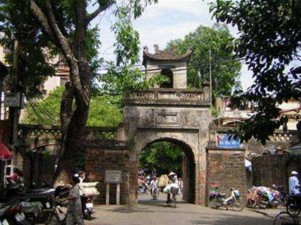
Nowadays, city tours are gradually becoming boring for tourists and facing many
New challenges and difficulties arise, partly due to boredom with the same repetition between programs, partly due to the encroachment on historical relics by business and commercial activities, and the degradation of resources without management.
preservation and upgrading. In the context of economic development, trading and business activities are increasingly taking place in the Old Quarter - one of the major commercial centers of Hanoi. That has a great impact on the preservation and conservation of traditional values, causing the Old Quarter to become overloaded and increasingly degraded. Although there have been projects and policies to renovate and preserve the Old Quarter, they have not been really effective due to the lack of rationality and coordination of actions between management agencies and people living in the Old Quarter. Perhaps this is the reason why this type of tourism is no longer attractive to tourists.
Museum tourism
Hanoi has the richest and largest museum system in the country, with up to 6 central museums. This is a favorable condition for developing a unique and meaningful tourism product: museum tourism. The museum system is distributed throughout the city, they are living evidences.
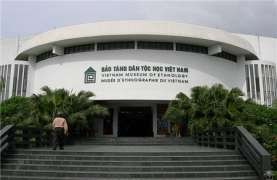
The museum reflects in a concentrated and comprehensive way the heroic history and creative capacity of the great family of Vietnamese ethnic groups in the cause of building and defending the country with the Vietnam History Museum and the Vietnam Revolution Museum, the museum
Ho Chi Minh City, Vietnam Museum of Ethnology, Hanoi Museum... and specialized museums such as Vietnam People's Army Museum, Vietnam Fine Arts Museum, Air Defense - Air Force Museum...
Depending on the purpose and interests, visitors can have their own choices when they want to visit a certain museum. If they want to learn about the history of the founding and defending of the country of the Vietnamese people from the beginning to the birth of the Democratic Republic of Vietnam, visitors can visit the History Museum, visit the collections of revolutionary activities of Ho Chi Minh and other leaders, the collection of Party books and newspapers, the collection of weapons of the Revolutionary Museum recreating the history of the struggle of the Vietnamese people against French colonialism, Japanese fascism, American imperialism, against feudalism to regain independence and freedom, all becoming a system to help visitors find for themselves a feeling or a moment of Vietnamese history.
Visitors can also choose to visit the art collections of ethnic minorities, ancient wood carvings, thirty years of lacquer art, and folk paintings. The Vietnam Fine Arts Museum is a treasure trove of Vietnamese visual arts. The Military Museum is a relatively complete illustration of the will of the Vietnamese people that “nothing is more precious than independence and freedom.”
A museum that cannot be missed when visiting Hanoi is the Vietnam Museum of Ethnology. This is a museum with a larger area than other museums. It currently displays typical artifacts of 54 Vietnamese ethnic groups. Visitors coming here will discover the lifestyle, habits, and customs of each ethnic group in different regions across Vietnam.
It can be said that this is a very meaningful tourism product, but the number of visitors is still quite modest, mainly international tourists, people who want to learn about Vietnamese culture, people who want to study, etc.
Cultural and historical tourism
Hanoi is very famous for its extremely rich humanistic tourism resources, including a system of historical and cultural relics that have great significance for the history and people of Vietnam. When talking about Hanoi, visitors often remember an ancient, sacred and splendid Hanoi in the modernity of an increasingly developing economy or remember the heroic history of the Vietnamese people in general and Hanoi in particular. The history of Hanoi associated with the system of historical relics has entered poetry, movies and even in the memory of every child of the beloved Vietnamese homeland. Today's young generation always remembers the vivid images of Hanoi through the film "Em Be Ha Noi" by director Hai Ninh, or songs about Hanoi such as "Ha Noi dem chua gio" by Trong Dai, "Ha Noi mua vac nhung conu mua" by Truong Quy Hai... all of which make up a truly beautiful and precious Hanoi.
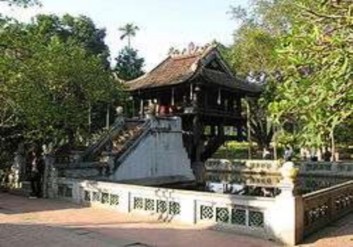
Tourists can go by themselves or, it will be easy to find a tour to visit historical sites in Hanoi at a reasonable price and it will not take much time to visit some typical historical sites of Hanoi such as One Pillar Pagoda (Dien Huu), an ancient pagoda with a very special architecture with only one room located on the top.
a stone pillar in the middle of Linh Chieu Lake with lotus flowers planted, inside worshiping the statue of Bodhisattva Quan Am. Legend has it that this pagoda was built based on the dream of King Ly Thai Tong according to the design suggestion of
monk Thien Tue in 1049. This is one of the temples considered to be
The oldest pagoda in Vietnam still preserved to this day. The pagoda was built in an architectural style similar to the architecture of the Later Le Dynasty, very unique, evoking the image of a lotus rising above the lotus pond, very impressive to tourists coming here, especially foreign tourists. The One Pillar Pagoda has been chosen as one of the symbols of the capital Hanoi, especially the symbol of the One Pillar Pagoda can also be seen on the back of the 5000 VND coin of Vietnam. Currently, in some places, if tourists do not know, they can confuse the One Pillar Pagoda in Hanoi with some pagodas in other places, such as Nhat Tru Pagoda (One Pillar Pagoda) in the ancient capital Hoa Lu - Ninh Binh, which was built before the One Pillar Pagoda in Hanoi, associated with the name of King Le Dai Hanh.
In addition, tourists should also visit the most diverse and rich relic complex of Hanoi, which is the Temple of Literature located in the south of Thang Long citadel during the Ly Dynasty. In the past, it was the place where steles were erected to record the names of those who passed the doctoral exams and recruited excellent students. Now it is a place for domestic and foreign tourists to visit and is also a place where scholars often come to "pray for luck" before each important exam.
The Temple of Literature was built in "August of the year Canh Tuat (1070), the second year of Than Vu under the reign of Ly Thanh Tong, with statues of Chu Cong, Confucius and Tu Phoi, paintings of the Seventy-two Sages, and four-season offerings. The Crown Prince came here to study". In 1076, Ly Nhan Tong established the Imperial Academy, which can be considered the first university in Vietnam. Initially, the school was reserved for the king's children and children of high-ranking officials, so it was called Quoc Tu. From 1253, King Tran Thai Tong expanded the Imperial Academy and accepted children of ordinary people with excellent academic ability. The Temple of Literature was repaired many times until 802, when King Gia Long built the Khue Van Cac. Having gone through many historical events, today the Temple of Literature - Quoc Tu Giam attracts many tourists every day.
In addition, visitors can visit some other historical sites in Hanoi such as: Ba Dinh Square - Ho Chi Minh Mausoleum, House 48 Hang Ngang (where Ho Chi Minh wrote the Declaration of Independence of Vietnam), House 5D Ham Long (where the first Communist Party cell was established), Hanoi Citadel,
Co Loa Citadel, B52 Victory Monument, etc. In the inner city of Hanoi, visitors will not take much time to visit many of the above historical sites because they are located quite close to each other and there are many means of transportation for visitors to choose from depending on each person's preferences.
Sightseeing
Hanoi during the day, tourists are often familiar with the hustle and bustle of life in a fast pace under economic development but still do not forget to put on the city the sacred beauty, peace in the ancient features of the thousand-year-old capital. When tourists have the opportunity to stay overnight in Hanoi, they will feel more interesting and attracted if they participate in a night sightseeing tour in some places in Hanoi. Hanoi at night brings an interesting beauty that is even more prominent and attractive when appearing under the colorful lights of the streets looming under the canopy of many-year-old trees leaning to cover the ancient capital roads throughout the streets of Hanoi.
With a short amount of time in the evening in Hanoi, visitors can find their own private space to walk on the streets of Hanoi, especially when the sky is about to change to Autumn, causing the rows of trees on both sides of the streets such as Hoang Dieu and Dinh Tien Hoang to playfully drop yellow leaves to fly in the gentle breeze, making people passing by feel romantic and their souls lighter, more relaxed, and much younger.
Tourists can also choose a suitable means of transport to explore the streets of Hanoi at night by cyclo or choose a tour that is not too expensive compared to the income level of Vietnam to visit some places in Hanoi when the sun has set. Some places that tourists can go to are Hoan Kiem Lake, Ngoc Son Temple, West Lake, or visit the Old Quarter night market, etc. However, if tourists do not have much time to stay in Hanoi for many nights, they can choose to visit the Hoan Kiem Lake area because it is very close to the Old Quarter so that tourists can both enjoy the scenery and shop for souvenirs for themselves and their families.
Hoan Kiem Lake area is not only the central area of the district but also
of the capital Hanoi. The reason it occupies an important position in the history of the capital's development, becoming a source of pride and passion, deeply interested in the hearts of people across the country as today is because this area has been and is containing a system of historical heritage values, cultural art, architecture extremely large, containing a long-term historical value. It has witnessed many heroic historical events of the nation in the cause of fighting foreign invaders to maintain independence for foreign countries. In other words, it carries within it 1000 years of history of building and defending the country of the Vietnamese people. It is also one of the few busiest trading places in the country from the past to the present and is the face of the country in foreign relations.
This area is located in the old quarter of Hoan Kiem district, including the wards of Cua Nam, Tran Hung Dao, Phan Chu Trinh, Trang Tien, Trang Thi, Dinh Tien Hoang, Cau Go, Ly Thai To, Hang Bong, Hang Trong, Hang Bai. Many types of beautiful architectural works such as villas, offices, theaters, shops, hotels, museums, libraries... All of the above streets have a long-standing historical value. It is not obvious that they have existed there for 1000 years, but they are evidence of 1000 years of national development history. In particular, works such as theaters, French-style villas, national libraries... are all works with beautiful architecture and high aesthetic value, marking the process of cultural import of neighboring countries into Vietnam from the previous centuries.
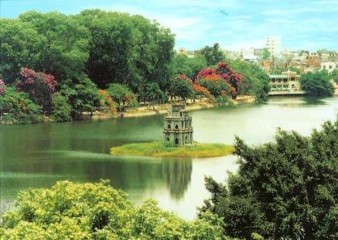
When coming to Hoan Kiem Lake area, visitors will be able to see with their own eyes the relics with a rich history.
ancient sites such as Hoan Kiem Lake, Turtle Tower, Ngoc Son Temple, Pen Tower, Inkstone Platform, Hoa Phong Tower, Ba Kieu Temple, etc. These are all historical relics bearing within them a mark of time from the time King Ly Thai To moved the capital to Thang Long.