
From the above results, it can be seen that with many DLTC and DTLS combined with rugged limestone terrain and river systems flowing around the caves, it has created an attraction for tourists with the need for nature tourism, visiting villages and adventure tourism, visiting caves, waterfalls, and mountain climbing with the selection rates of 30% and 27% respectively for domestic visitors and 30% and 40% for international visitors.
3.3.2. Number of tourists
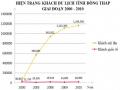
Tourism in Vo Nhai district has not been strongly developed yet. However, in recent years, Vo Nhai district has mobilized resources from the Central and the district to preserve and promote the values of historical relics and scenic spots in the locality. In the period of 2016-2018, the district invested over 1.3 billion VND to embellish, repair, and make signs to historical relics and scenic spots... In particular, the district has attracted Hanh Hanh One Member Co., Ltd. to invest 40 billion VND to implement the Phuong Hoang Eco-tourism Site Project. This tourist site officially came into operation in early June but is still under construction, so it is not synchronous (lacking a restaurant, children's play area, accommodation), tourism products are still too monotonous, souvenirs are few and not regionally typical. Therefore, compared to many other tourist sites in the district, this place is not really attractive. Table 3.8 shows the number of tourists to Vo Nhai from 2015-2019, both international and domestic tourists increased every year. The number of tourists to Vo Nhai is mainly concentrated at Hang Phuong Hoang - Suoi Mo Ga. In 2017, Vo Nhai district rebuilt Hang Phuong Hoang tourist area, so the number of tourists decreased significantly. Through table 3.8, we can see that the tourism potential, especially eco-tourism, of Vo Nhai is very diverse and has not attracted tourists to explore.
Table 3.10. Number of tourists to Vo Nhai from 2015-2019 (unit: number of visitors)
Year
Target
2015 | 2016 | 2017 | 2018 | 2019 | |
International guests | 0 | 0 | 0 | 60 | 100 |
Domestic guests | 13,600 | 11,800 | 6000 | 8256 | 13,000 |
Maybe you are interested!
-
 Master's thesis in Natural Resources and Environment Management: Research on the potential and current status of resources for ecotourism development in Vo Nhai district, Thai Nguyen province - 2
 -
 Identify Rating Levels and Rating Scales
zt2i3t4l5ee
zt2a3gstourism,quan lan,quang ninh,ecology,ecotourism,minh chau,van don,geography,geographical basis,tourism development,science
zt2a3ge
zc2o3n4t5e6n7ts
of the islanders. Therefore, this indicator will be divided into two sub-indicators:
a1. Natural tourism attractiveness a2. Cultural tourism attractiveness
b. Tourist capacity
The two island communes in Quan Lan have different capacities to receive tourists. Minh Chau Commune is home to many standard hotels and resorts, attracting high-income domestic and international tourists. Meanwhile, Quan Lan Commune has many motels mainly built and operated by local people, so the scale and quality are not high, and will be suitable for ordinary tourists such as students.
c. Time of exploitation of Quan Lan Island Commune:
Quan Lan tourism is seasonal due to weather and climate conditions and festivals only take place on certain days of the year, specifically in spring. In Quan Lan commune, the period from April to June and from September to November is considered the best time to visit Quan Lan because the cultural tourism activities are mainly associated with festivals taking place during this time.
Minh Chau island commune:
Tourism exploitation time is all year round, because this is a place with a number of tourist attractions with diverse ecosystems such as Bai Tu Long National Park Research Center, Tram forest, Turtle Laying Beach, so besides coming to the beach for tourism and vacation in the summer, Minh Chau will attract research groups to come for tourism combined with research at other times of the year.
d. Sustainability
The sustainability of ecotourism sites in Quan Lan and Minh Chau communes depends on the sensitivity of the ecosystems to climate changes.
landscape. In general, these tourist destinations have a fairly high level of sustainability, because they are natural ecosystems, planned and protected. However, if a large number of tourists gather at certain times, it can exceed the carrying capacity and affect the sustainability of the environment (polluted beaches, damaged trees, animals moving away from their habitats, etc.), then the sustainability of the above ecosystems (natural ecosystems, human ecosystems) will also be affected and become less sustainable.
e. Location and accessibility
Both island communes have ports to take tourists to visit from Van Don wharf:
- Quan Lan – Van Don traffic route:
Phuc Thinh – Viet Anh high-speed boat and Quang Minh high-speed boat, depart at 8am and 2pm from Van Don to Quan Lan, and at 7am and 1pm from Quan Lan to Van Don. There are also wooden boats departing at 7am and 1pm.
- Van Don - Minh Chau traffic route:
Chung Huong high-speed train, Minh Chau train, morning 7:30 and afternoon 13:30 from Van Don to Minh Chau, morning 6:30 and afternoon 13:00 from Minh Chau to Van Don.
f. Infrastructure
Despite receiving investment attention, the issue of infrastructure and technical facilities for tourism on Quan Lan Island is still an issue that needs to be resolved because it has a direct impact on the implementation of ecotourism activities. The minimum conditions for serving tourists such as accommodation, electricity, water, communication, especially medical services, and security work need to be given top priority. Ecotourism spots in Minh Chau commune are assessed to have better infrastructure and technical facilities for tourism because there are quite complete and synchronous conditions for serving tourists, meeting many needs of domestic and foreign tourists.
3.2.1.4. Determine assessment levels and assessment scales
Corresponding to the levels of each criterion, the index is the score of those levels in the order of 4, 3, 2, 1 decreasing according to the standard of each level: very attractive (4), attractive (3), average (2), less attractive (1).
3.2.1.5. Determining the coefficients of the criteria
For the assessment of DLST in the two communes of Quan Lan and Minh Chau islands, the students added evaluation coefficients to show the importance of the criteria and indicators as follows:
Coefficient 3 with criteria: Attractiveness, Exploitation time. These are the 2 most important criteria for attracting tourists to tourism in general and eco-tourism in particular, so they have the highest coefficient.
Coefficient 2 with criteria: Capacity, Infrastructure, Location and accessibility . Because the assessment area is an island commune of Van Don district, the above criteria are selected by the author with appropriate coefficients at the average level.
Coefficient 1 with criteria: Sustainability. Quan Lan has natural and human-made ecotourism sites, with high biodiversity and little impact from local human factors. Most of the ecotourism sites are still wild, so they are highly sustainable.
3.2.1.6. Results of DLST assessment on Quan Lan island
a. Assessment of the potential for natural tourism development
For Minh Chau commune:
+ Natural tourism attractiveness is determined to be very attractive (4 points) and the most important coefficient (coefficient 3), so the score of the Attractiveness criterion is 4 x 3 = 12.
+ Capacity is determined as average (2 points) and the coefficient is quite important (coefficient 2), then the score of Capacity criterion is 2 x 2 = 4.
+ Exploitation time is long (4 points), the most important coefficient (coefficient 3) so the score of the Exploitation time criterion is 4 x 3 = 12.
+ Sustainability is determined as sustainable (4 points), the important coefficient is the average coefficient (coefficient 1), so the score of the Sustainability criterion is 4 x 1 = 4 points
+ Location and accessibility are determined to be quite favorable (2 points), the coefficient is quite important (coefficient 2), the criterion score is 2 x 2 = 4 points.
+ Infrastructure is assessed as good (3 points), the coefficient is quite important (coefficient 2), then the score of the Infrastructure criterion is 3 x 2 = 6 points.
The total score for evaluating DLST in Minh Chau commune according to 6 evaluation criteria is determined as: 12 + 4 + 12 + 4 + 4 + 6 = 42 points
Similar assessment for Quan Lan commune, we have the following table:
Table 3.3: Assessment of the potential for natural ecotourism development in Quan Lan and Minh Chau communes
Attractiveness of self-tourismof course
Capacity
Mining time
Sustainability
Location and accessibility
Infrastructure
Result
Point
DarkMulti
Point
DarkMulti
Point
DarkMulti
Point
DarkMulti
Point
DarkMulti
Point
DarkMulti
CommuneMinh Chau
12
12
4
8
12
12
4
4
4
8
6
8
42/52
Quan CommuneLan
6
12
6
8
9
12
4
4
4
8
4
8
33/52
b. Assessment of the potential for humanistic tourism development
For Quan Lan commune:
+ The attractiveness of human tourism is determined to be very attractive (4 points) and the most important coefficient (coefficient 3), so the score of the Attractiveness criterion is 4 x 3 = 12.
+ Capacity is determined to be large (3 points) and the coefficient is quite important (coefficient 2), then the score of the Capacity criterion is 3 x 2 = 6.
+ Mining time is average (3 points), the most important coefficient (coefficient 3) so the score of the Mining time criterion is 3 x 3 = 9.
+ Sustainability is determined as sustainable (4 points), the important coefficient is the average coefficient (coefficient 1), so the score of the Sustainability criterion is 4 x 1 = 4 points.
+ Location and accessibility are determined to be quite favorable (2 points), the coefficient is quite important (coefficient 2), the criterion score is 2 x 2 = 4 points.
+ Infrastructure is rated as average (2 points), the coefficient is quite important (coefficient 2), then the score of the Infrastructure criterion is 2 x 2 = 4 points.
The total score for evaluating DLST in Quan Lan commune according to 6 evaluation criteria is determined as: 12 + 6 + 6 + 4 + 4 + 4 = 36 points.
Similar assessment with Minh Chau commune we have the following table:
Table 3.4: Assessment of the potential for developing humanistic eco-tourism in Quan Lan and Minh Chau communes
Attractiveness of human tourismliterature
Capacity
Mining time
Sustainability
Location and accessibility
Infrastructure
Result
Point
DarkMulti
Point
DarkMulti
Point
DarkMulti
Point
DarkMulti
Point
DarkMulti
Point
DarkMulti
Quan CommuneLan
12
12
6
8
9
12
4
4
4
8
4
8
39/52
Minh CommuneChau
6
12
4
8
12
12
4
4
4
8
6
8
36/52
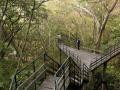
Basically, both Minh Chau and Quan Lan localities have quite favorable conditions for developing ecotourism. However, Quan Lan commune has more advantages to develop ecotourism in a humanistic direction, because this is an area with many famous historical relics such as Quan Lan Communal House, Quan Lan Pagoda, Temple worshiping the hero Tran Khanh Du, ... along with local festivals held annually such as the wind praying ceremony (March 15), Quan Lan festival (June 10-19); due to its location near the port and long exploitation time, the beaches in Quan Lan commune (especially Quan Lan beach) are no longer hygienic and clean to ensure the needs of tourists coming to relax and swim; this is also an area with many beautiful landscapes such as Got Beo wind pass, Ong Phong head, Voi Voi cave, but the ability to access these places is still very limited (dirt hill road, lots of gravel and rocks), especially during rainy and windy times; In addition, other natural resources such as mangrove forests and sea worms have not been really exploited for tourism purposes and ecotourism development. On the contrary, Minh Chau commune has more advantages in developing ecotourism in the direction of natural tourism, this is an area with diverse ecosystems such as at Rua De Beach, Bai Tu Long National Park Conservation Center...; Minh Chau beach is highly appreciated for its natural beauty and cleanliness, ranked in the top ten most beautiful beaches in Vietnam; Minh Chau commune is also home to Tram forest with a large area and a purity of up to 90%, suitable for building bridges through the forest (a very effective type of natural ecotourism currently applied by many countries) for tourists to sightsee, as well as for the purpose of studying and researching.
Figure 3.1: Thenmala Forest Bridge (India) Source: https://www.thenmalaecotourism.com/(August 21, 2019)
3.2.2. Using SWOT matrix to evaluate Quan Lan island tourism
General assessment of current tourism activities of Quan Lan island is shown through the following SWOT matrix:
Table 3.5: SWOT matrix evaluating tourism activities on Quan Lan island
Internal agent
Strengths- There is a lot of potential for tourism development, especially natural ecotourism and humanistic ecotourism.- The unskilled labor force is relatively abundant.- resource environmentunpolluted, still
Weaknesses- Poorly developed infrastructure, especially traffic routes to tourist destinations on the island.- The team of professional staff is still weak.- Tourism products in general
quite wild, originalintact
general and DLST in particularalone is monotonous.
External agents
Opportunity- Tourism is a key industry in the socio-economic development strategy of the province and Van Don economic zone.- Quan Lan was selected as a pilot area for eco-tourism development within the framework of the green growth project between Quang Ninh province and the Japanese organization JICA.- The flow of tourists and especially ecotourism in the world tends toincreasing
Challenge- Weather and climate change abnormally.- Competition in tourism products is increasingly fierce, especially with other localities in the province such as Ha Long, Mong Cai...- Awareness of tourists, especially domestic tourists, about ecotourism and nature conservation is not high.
Through summary analysis using SWOT matrix we see that:
To exploit strengths and take advantage of opportunities, it is necessary to:
- Diversify products and service types (build more tourism routes aimed at specific needs of tourists: experiential tourism immersed in nature, spiritual cultural tourism...)
- Effective exploitation of resources and differentiated products (natural resources and human resources)
div.maincontent .p { color: black; font-family:"Times New Roman", serif; font-style: normal; font-weight: normal; text-decoration: none; font-size: 14pt; margin:0pt; } div.maincontent p { color: black; font-family:"Times New Roman", serif; font-style: normal; font-weight: normal; text-decoration: none; font-size: 14pt; margin:0pt; } div.maincontent .s1 { color: black; font-family:"Times New Roman", serif; font-style: normal; font-weight: normal; text-decoration: none; font-size: 13pt; } div.maincontent .s2 { color: black; font-family:"Times New Roman", serif; font-style: normal; font-weight: normal; text-decoration: none; font-size: 13pt; } div.maincontent .s3 { color: #0D0D0D; font-family:"Times New Roman", serif; font-style: normal; font-weight: bold; text-decoration: none; font-size: 14pt; } div.maincontent .s4 { color: black; font-family:"Times New Roman", serif; font-style: italic; font-weight: normal; text-decoration: none; font-size: 14pt; } div.maincontent .s5 { color: black; font-family:"Times New Roman", serif; font-style: italic; font-weight: bold; text-decoration: none; font-size: 14pt; } div.maincontent .s6 { color: black; font-family:"Times New Roman", serif; font-style: italic; font-weight: normal; text-decoration: none; font-size: 14pt; vertical-align: -3pt; } div.maincontent .s7 { color: black; font-family:"Times New Roman", serif; font-style: italic; font-weight: normal; text-decoration: none; font-size: 14pt; vertical-align: -2pt; } div.maincontent .s8 { color: black; font-family:"Times New Roman", serif; font-style: italic; font-weight: normal; text-decoration: none; font-size: 14pt; vertical-align: -1pt; } div.maincontent .s9 { color: black; font-family:"Times New Roman", serif; font-style: normal; font-weight: normal; text-decoration: none; font-size: 14pt; } div.maincontent .s10 { color: black; font-family:"Times New Roman", serif; font-style: normal; font-weight: bold; text-decoration: none; font-size: 14pt; } div.maincontent .s11 { color: black; font-family:"Times New Roman", serif; font-style: normal; font-weight: normal; text-decoration: none; font-size: 14pt; } div.maincontent .s12 { color: black; font-family:Symbol, serif; font-style: normal; font-weight: normal; text-decoration: none; font-size: 14pt; } div.maincontent .s13 { color: black; font-family:Wingdings; font-style: normal; font-weight: normal; text-decoration: none; font-size: 14pt; } div.maincontent .s14 { color: black; font-family:"Times New Roman", serif; font-style: normal; font-weight: normal; text-decoration: none; font-size: 9pt; vertical-align: 5pt; } div.maincontent .s15 { color: black; font-family:"Times New Roman", serif; font-style: normal; font-weight: normal; text-decoration: none; font-size: 9pt; vertical-align: 5pt; } div.maincontent .s16 { color: black; font-family:Cambria, serif; font-style: italic; font-weight: normal; text-decoration: none; font-size: 14pt; } div.maincontent .s17 { color: #080808; font-family:"Times New Roman", serif; font-style: normal; font-weight: bold; text-decoration: none; font-size: 14pt; } div.maincontent .s18 { color: #080808; font-family:"Times New Roman", serif; font-style: normal; font-weight: normal; text-decoration: none; font-size: 14pt; } div.maincontent .s19 { color: black; font-family:"Times New Roman", serif; font-style: normal; font-weight: normal; text-decoration: none; font-size: 11pt; } div.maincontent .s20 { color: black; font-family:"Times New Roman", serif; font-style: normal; font-weight: normal; text-decoration: none; font-size: 10pt; } div.maincontent .s21 { color: black; font-family:"Times New Roman", serif; font-style: normal; font-weight: bold; text-decoration: none; font-size: 11pt; } div.maincontent .s22 { color: black; font-family:"Times New Roman", serif; font-style: normal; font-weight: normal; text-decoration: none; font-size: 11pt; } div.maincontent .s23 { color: black; font-family:"Times New Roman", serif; font-style: italic; font-weight: normal; text-decoration: none; font-size: 14pt; } div.maincontent .s24 { color: #212121; font-family:"Times New Roman", serif; font-style: normal; font-weight: normal; tex
Identify Rating Levels and Rating Scales
zt2i3t4l5ee
zt2a3gstourism,quan lan,quang ninh,ecology,ecotourism,minh chau,van don,geography,geographical basis,tourism development,science
zt2a3ge
zc2o3n4t5e6n7ts
of the islanders. Therefore, this indicator will be divided into two sub-indicators:
a1. Natural tourism attractiveness a2. Cultural tourism attractiveness
b. Tourist capacity
The two island communes in Quan Lan have different capacities to receive tourists. Minh Chau Commune is home to many standard hotels and resorts, attracting high-income domestic and international tourists. Meanwhile, Quan Lan Commune has many motels mainly built and operated by local people, so the scale and quality are not high, and will be suitable for ordinary tourists such as students.
c. Time of exploitation of Quan Lan Island Commune:
Quan Lan tourism is seasonal due to weather and climate conditions and festivals only take place on certain days of the year, specifically in spring. In Quan Lan commune, the period from April to June and from September to November is considered the best time to visit Quan Lan because the cultural tourism activities are mainly associated with festivals taking place during this time.
Minh Chau island commune:
Tourism exploitation time is all year round, because this is a place with a number of tourist attractions with diverse ecosystems such as Bai Tu Long National Park Research Center, Tram forest, Turtle Laying Beach, so besides coming to the beach for tourism and vacation in the summer, Minh Chau will attract research groups to come for tourism combined with research at other times of the year.
d. Sustainability
The sustainability of ecotourism sites in Quan Lan and Minh Chau communes depends on the sensitivity of the ecosystems to climate changes.
landscape. In general, these tourist destinations have a fairly high level of sustainability, because they are natural ecosystems, planned and protected. However, if a large number of tourists gather at certain times, it can exceed the carrying capacity and affect the sustainability of the environment (polluted beaches, damaged trees, animals moving away from their habitats, etc.), then the sustainability of the above ecosystems (natural ecosystems, human ecosystems) will also be affected and become less sustainable.
e. Location and accessibility
Both island communes have ports to take tourists to visit from Van Don wharf:
- Quan Lan – Van Don traffic route:
Phuc Thinh – Viet Anh high-speed boat and Quang Minh high-speed boat, depart at 8am and 2pm from Van Don to Quan Lan, and at 7am and 1pm from Quan Lan to Van Don. There are also wooden boats departing at 7am and 1pm.
- Van Don - Minh Chau traffic route:
Chung Huong high-speed train, Minh Chau train, morning 7:30 and afternoon 13:30 from Van Don to Minh Chau, morning 6:30 and afternoon 13:00 from Minh Chau to Van Don.
f. Infrastructure
Despite receiving investment attention, the issue of infrastructure and technical facilities for tourism on Quan Lan Island is still an issue that needs to be resolved because it has a direct impact on the implementation of ecotourism activities. The minimum conditions for serving tourists such as accommodation, electricity, water, communication, especially medical services, and security work need to be given top priority. Ecotourism spots in Minh Chau commune are assessed to have better infrastructure and technical facilities for tourism because there are quite complete and synchronous conditions for serving tourists, meeting many needs of domestic and foreign tourists.
3.2.1.4. Determine assessment levels and assessment scales
Corresponding to the levels of each criterion, the index is the score of those levels in the order of 4, 3, 2, 1 decreasing according to the standard of each level: very attractive (4), attractive (3), average (2), less attractive (1).
3.2.1.5. Determining the coefficients of the criteria
For the assessment of DLST in the two communes of Quan Lan and Minh Chau islands, the students added evaluation coefficients to show the importance of the criteria and indicators as follows:
Coefficient 3 with criteria: Attractiveness, Exploitation time. These are the 2 most important criteria for attracting tourists to tourism in general and eco-tourism in particular, so they have the highest coefficient.
Coefficient 2 with criteria: Capacity, Infrastructure, Location and accessibility . Because the assessment area is an island commune of Van Don district, the above criteria are selected by the author with appropriate coefficients at the average level.
Coefficient 1 with criteria: Sustainability. Quan Lan has natural and human-made ecotourism sites, with high biodiversity and little impact from local human factors. Most of the ecotourism sites are still wild, so they are highly sustainable.
3.2.1.6. Results of DLST assessment on Quan Lan island
a. Assessment of the potential for natural tourism development
For Minh Chau commune:
+ Natural tourism attractiveness is determined to be very attractive (4 points) and the most important coefficient (coefficient 3), so the score of the Attractiveness criterion is 4 x 3 = 12.
+ Capacity is determined as average (2 points) and the coefficient is quite important (coefficient 2), then the score of Capacity criterion is 2 x 2 = 4.
+ Exploitation time is long (4 points), the most important coefficient (coefficient 3) so the score of the Exploitation time criterion is 4 x 3 = 12.
+ Sustainability is determined as sustainable (4 points), the important coefficient is the average coefficient (coefficient 1), so the score of the Sustainability criterion is 4 x 1 = 4 points
+ Location and accessibility are determined to be quite favorable (2 points), the coefficient is quite important (coefficient 2), the criterion score is 2 x 2 = 4 points.
+ Infrastructure is assessed as good (3 points), the coefficient is quite important (coefficient 2), then the score of the Infrastructure criterion is 3 x 2 = 6 points.
The total score for evaluating DLST in Minh Chau commune according to 6 evaluation criteria is determined as: 12 + 4 + 12 + 4 + 4 + 6 = 42 points
Similar assessment for Quan Lan commune, we have the following table:
Table 3.3: Assessment of the potential for natural ecotourism development in Quan Lan and Minh Chau communes
Attractiveness of self-tourismof course
Capacity
Mining time
Sustainability
Location and accessibility
Infrastructure
Result
Point
DarkMulti
Point
DarkMulti
Point
DarkMulti
Point
DarkMulti
Point
DarkMulti
Point
DarkMulti
CommuneMinh Chau
12
12
4
8
12
12
4
4
4
8
6
8
42/52
Quan CommuneLan
6
12
6
8
9
12
4
4
4
8
4
8
33/52
b. Assessment of the potential for humanistic tourism development
For Quan Lan commune:
+ The attractiveness of human tourism is determined to be very attractive (4 points) and the most important coefficient (coefficient 3), so the score of the Attractiveness criterion is 4 x 3 = 12.
+ Capacity is determined to be large (3 points) and the coefficient is quite important (coefficient 2), then the score of the Capacity criterion is 3 x 2 = 6.
+ Mining time is average (3 points), the most important coefficient (coefficient 3) so the score of the Mining time criterion is 3 x 3 = 9.
+ Sustainability is determined as sustainable (4 points), the important coefficient is the average coefficient (coefficient 1), so the score of the Sustainability criterion is 4 x 1 = 4 points.
+ Location and accessibility are determined to be quite favorable (2 points), the coefficient is quite important (coefficient 2), the criterion score is 2 x 2 = 4 points.
+ Infrastructure is rated as average (2 points), the coefficient is quite important (coefficient 2), then the score of the Infrastructure criterion is 2 x 2 = 4 points.
The total score for evaluating DLST in Quan Lan commune according to 6 evaluation criteria is determined as: 12 + 6 + 6 + 4 + 4 + 4 = 36 points.
Similar assessment with Minh Chau commune we have the following table:
Table 3.4: Assessment of the potential for developing humanistic eco-tourism in Quan Lan and Minh Chau communes
Attractiveness of human tourismliterature
Capacity
Mining time
Sustainability
Location and accessibility
Infrastructure
Result
Point
DarkMulti
Point
DarkMulti
Point
DarkMulti
Point
DarkMulti
Point
DarkMulti
Point
DarkMulti
Quan CommuneLan
12
12
6
8
9
12
4
4
4
8
4
8
39/52
Minh CommuneChau
6
12
4
8
12
12
4
4
4
8
6
8
36/52
Basically, both Minh Chau and Quan Lan localities have quite favorable conditions for developing ecotourism. However, Quan Lan commune has more advantages to develop ecotourism in a humanistic direction, because this is an area with many famous historical relics such as Quan Lan Communal House, Quan Lan Pagoda, Temple worshiping the hero Tran Khanh Du, ... along with local festivals held annually such as the wind praying ceremony (March 15), Quan Lan festival (June 10-19); due to its location near the port and long exploitation time, the beaches in Quan Lan commune (especially Quan Lan beach) are no longer hygienic and clean to ensure the needs of tourists coming to relax and swim; this is also an area with many beautiful landscapes such as Got Beo wind pass, Ong Phong head, Voi Voi cave, but the ability to access these places is still very limited (dirt hill road, lots of gravel and rocks), especially during rainy and windy times; In addition, other natural resources such as mangrove forests and sea worms have not been really exploited for tourism purposes and ecotourism development. On the contrary, Minh Chau commune has more advantages in developing ecotourism in the direction of natural tourism, this is an area with diverse ecosystems such as at Rua De Beach, Bai Tu Long National Park Conservation Center...; Minh Chau beach is highly appreciated for its natural beauty and cleanliness, ranked in the top ten most beautiful beaches in Vietnam; Minh Chau commune is also home to Tram forest with a large area and a purity of up to 90%, suitable for building bridges through the forest (a very effective type of natural ecotourism currently applied by many countries) for tourists to sightsee, as well as for the purpose of studying and researching.
Figure 3.1: Thenmala Forest Bridge (India) Source: https://www.thenmalaecotourism.com/(August 21, 2019)
3.2.2. Using SWOT matrix to evaluate Quan Lan island tourism
General assessment of current tourism activities of Quan Lan island is shown through the following SWOT matrix:
Table 3.5: SWOT matrix evaluating tourism activities on Quan Lan island
Internal agent
Strengths- There is a lot of potential for tourism development, especially natural ecotourism and humanistic ecotourism.- The unskilled labor force is relatively abundant.- resource environmentunpolluted, still
Weaknesses- Poorly developed infrastructure, especially traffic routes to tourist destinations on the island.- The team of professional staff is still weak.- Tourism products in general
quite wild, originalintact
general and DLST in particularalone is monotonous.
External agents
Opportunity- Tourism is a key industry in the socio-economic development strategy of the province and Van Don economic zone.- Quan Lan was selected as a pilot area for eco-tourism development within the framework of the green growth project between Quang Ninh province and the Japanese organization JICA.- The flow of tourists and especially ecotourism in the world tends toincreasing
Challenge- Weather and climate change abnormally.- Competition in tourism products is increasingly fierce, especially with other localities in the province such as Ha Long, Mong Cai...- Awareness of tourists, especially domestic tourists, about ecotourism and nature conservation is not high.
Through summary analysis using SWOT matrix we see that:
To exploit strengths and take advantage of opportunities, it is necessary to:
- Diversify products and service types (build more tourism routes aimed at specific needs of tourists: experiential tourism immersed in nature, spiritual cultural tourism...)
- Effective exploitation of resources and differentiated products (natural resources and human resources)
div.maincontent .p { color: black; font-family:"Times New Roman", serif; font-style: normal; font-weight: normal; text-decoration: none; font-size: 14pt; margin:0pt; } div.maincontent p { color: black; font-family:"Times New Roman", serif; font-style: normal; font-weight: normal; text-decoration: none; font-size: 14pt; margin:0pt; } div.maincontent .s1 { color: black; font-family:"Times New Roman", serif; font-style: normal; font-weight: normal; text-decoration: none; font-size: 13pt; } div.maincontent .s2 { color: black; font-family:"Times New Roman", serif; font-style: normal; font-weight: normal; text-decoration: none; font-size: 13pt; } div.maincontent .s3 { color: #0D0D0D; font-family:"Times New Roman", serif; font-style: normal; font-weight: bold; text-decoration: none; font-size: 14pt; } div.maincontent .s4 { color: black; font-family:"Times New Roman", serif; font-style: italic; font-weight: normal; text-decoration: none; font-size: 14pt; } div.maincontent .s5 { color: black; font-family:"Times New Roman", serif; font-style: italic; font-weight: bold; text-decoration: none; font-size: 14pt; } div.maincontent .s6 { color: black; font-family:"Times New Roman", serif; font-style: italic; font-weight: normal; text-decoration: none; font-size: 14pt; vertical-align: -3pt; } div.maincontent .s7 { color: black; font-family:"Times New Roman", serif; font-style: italic; font-weight: normal; text-decoration: none; font-size: 14pt; vertical-align: -2pt; } div.maincontent .s8 { color: black; font-family:"Times New Roman", serif; font-style: italic; font-weight: normal; text-decoration: none; font-size: 14pt; vertical-align: -1pt; } div.maincontent .s9 { color: black; font-family:"Times New Roman", serif; font-style: normal; font-weight: normal; text-decoration: none; font-size: 14pt; } div.maincontent .s10 { color: black; font-family:"Times New Roman", serif; font-style: normal; font-weight: bold; text-decoration: none; font-size: 14pt; } div.maincontent .s11 { color: black; font-family:"Times New Roman", serif; font-style: normal; font-weight: normal; text-decoration: none; font-size: 14pt; } div.maincontent .s12 { color: black; font-family:Symbol, serif; font-style: normal; font-weight: normal; text-decoration: none; font-size: 14pt; } div.maincontent .s13 { color: black; font-family:Wingdings; font-style: normal; font-weight: normal; text-decoration: none; font-size: 14pt; } div.maincontent .s14 { color: black; font-family:"Times New Roman", serif; font-style: normal; font-weight: normal; text-decoration: none; font-size: 9pt; vertical-align: 5pt; } div.maincontent .s15 { color: black; font-family:"Times New Roman", serif; font-style: normal; font-weight: normal; text-decoration: none; font-size: 9pt; vertical-align: 5pt; } div.maincontent .s16 { color: black; font-family:Cambria, serif; font-style: italic; font-weight: normal; text-decoration: none; font-size: 14pt; } div.maincontent .s17 { color: #080808; font-family:"Times New Roman", serif; font-style: normal; font-weight: bold; text-decoration: none; font-size: 14pt; } div.maincontent .s18 { color: #080808; font-family:"Times New Roman", serif; font-style: normal; font-weight: normal; text-decoration: none; font-size: 14pt; } div.maincontent .s19 { color: black; font-family:"Times New Roman", serif; font-style: normal; font-weight: normal; text-decoration: none; font-size: 11pt; } div.maincontent .s20 { color: black; font-family:"Times New Roman", serif; font-style: normal; font-weight: normal; text-decoration: none; font-size: 10pt; } div.maincontent .s21 { color: black; font-family:"Times New Roman", serif; font-style: normal; font-weight: bold; text-decoration: none; font-size: 11pt; } div.maincontent .s22 { color: black; font-family:"Times New Roman", serif; font-style: normal; font-weight: normal; text-decoration: none; font-size: 11pt; } div.maincontent .s23 { color: black; font-family:"Times New Roman", serif; font-style: italic; font-weight: normal; text-decoration: none; font-size: 14pt; } div.maincontent .s24 { color: #212121; font-family:"Times New Roman", serif; font-style: normal; font-weight: normal; tex -
 Forecast of Number of Rooms for the Period 2020 – 2030 (Unit: Room)
 -
 Number of Domestic Tourists in Vietnam from 2000 - 2007
 -
 Number of International and Domestic Tourists in the Period 2001 – 2010
(Source: socio-economic reports of Vo Nhai district over the years)
3.3.3. Revenue from tourism
The number of tourists increasing over the years has proven that Vo Nhai tourism industry is changing and developing, contributing to increasing tourism revenue. On a normal summer day, there are only 300-400 tourists here,
On holidays, it attracts 700-800 visitors/day. Before 2018, in the district, there was only one tourist destination, Phuong Hoang cave - Mo Ga stream, which generated revenue but very little, only an average of 50 million VND/year ( Source: socio-economic reports of Vo Nhai district over the years) . Some other places such as: 7-storey waterfall, Mua Roi waterfall, Nguom stone roof in Than Sa commune also only attracted a small number (about 100 people/day) to visit, rest and cool off in the summer. As for other places, there are almost none. Because these places have not been managed, updated, and exploited, they have not generated revenue and have not brought revenue to the State budget.
3.3.4. Sources of tourism information
One of the criteria to distinguish ecotourism from other types of tourism is to emphasize the role of environmental education and explanation. The criteria are demonstrated through providing full information to tourists, ensuring the reality before visiting with the full understanding of the tour guide team.
In order to know the information related to choosing an ideal tourist destination, tourists often find a lot of information about the tourist destination and that information can come from many different sources. This is also something that tourists are particularly interested in when traveling. Therefore, we see that the source of information is also very important, it gives tourists inspiration and desires in choosing a truly satisfactory tourist destination. The author conducts additional surveys in Table 3.9.
Table 3.11. Sources of information visitors know about Vo Nhai
Information source
Domestic guests | International guests | |||
Number join | % | Number join | % | |
Family and friends referrals | 60 | 67% | 1 | 10% |
Company, travel agency | 33 | 37% | 5 | 50% |
Books, Newspapers, Advertising Publications | 7 | 8% | 0 | 0% |
Travel website | 29 | 32% | 2 | 20% |
TV/Radio | 10 | 11% | 0 | 0% |
Social network | 50 | 56% | 7 | 70% |
Total | 60 | 67% | 1 | 10% |
(Source: Field survey form 2019)
Through the above data table from the survey of 100 tourist samples, most tourists know about Vo Nhai tourism through information from friends and relatives, 60% of them.
(choice) of domestic tourists and 1 (choice) of international tourists, information sources from social networks have been increasingly used by young people, so information from here is also of great interest to tourists with 50 choices for domestic tourists and 7 choices for international tourists. In addition, information sources from travel companies account for 37% and websites specializing in tourism account for 32% of the total. Information sources through viewing advertisements and marketing on newspapers and radio are also available but very few, accounting for only 8% and 11% of the total. Thereby, we see that information sources from family, friends and social networks are the main sources. These are also the two sources of information that tourists are interested in when learning about Vo Nhai tourist destination. Information sources from travel guides, travel companies or travel agents have not really created an attraction for tourists. This is also a problem for managers who want to promote tourism and need to apply the right information channels to make it most suitable and effective.
Thus, most tourists coming to Vo Nhai have been equipped with necessary information about the natural and cultural values of the locality as well as the necessary preparations for a tour. Through the investigation, it is shown that tourists are very eager to learn and know in detail about traditional customs, folk singing and dancing culture, farming systems, flora and fauna but rarely receive this information from tour guides of tour companies or from units with the function of publishing. Tourists often learn directly through talking with local people, especially indigenous people, however, the response to the information needs of local people who are not properly trained will not meet the needs of tourists, thereby affecting partly the revenue from tourism of the local people and the interest of tourists. Training qualified tour guides to meet the needs of tourists and the requirements of ecotourism activities should be given top priority, especially training a team of ethnic minority tour guides with deep understanding of the locality to be able to guide and promote to tourists the unique culture and beautiful scenery of Vo Nhai. Local authorities need to provide adequate information about nature and take measures to develop the potential of ecotourism.
3.3.5. Number of return visits and length of stay in Vo Nhai
To find out the number of times tourists have returned to Vo Nhai, we conducted a survey according to table 3.10.
Table 3.12. Number of tourists visiting Vo Nhai
Number of times
Domestic guests | International guests | |||
Number of participants family | % | Number join | % | |
1 time | 56 | 62% | 8 | 80% |
2 times | 24 | 27% | 2 | 20% |
3 times | 8 | 9 % | 0 | 0% |
4 times | 2 | 2% | 0 | 0% |
5 times | 0 | 0% | 0 | 0% |
(Source: Field survey form 2019)
With the above data, the majority of tourists coming to Vo Nhai for the first time is very high (56/90 domestic tourists and 8/10 international tourists asked), accounting for 62% of domestic tourists and 80% of international tourists, the second time is 24/90 domestic tourists and 2/10 international tourists. Tourists returning to Vo Nhai for the 3rd and 4th times are very few and there are no tourists for the 5th time. Although the number of tourists coming for the second time or more is not high, this is also a positive result for the development of Vo Nhai tourism activities, when tourists have returned after the first trip. According to this survey, the majority of tourists coming here are spontaneous tourists and from places near Vo Nhai, traveling spontaneously and on a small scale, individually. In addition to attracting tourists to Vo Nhai for the first time, it is even more important to create good feelings from tourists to be able to retain tourists in the next trips. Along with that is meeting the needs of relaxation combined with rest here. If meeting the requirements of tourists, Vo Nhai promises to welcome a very high number of returning tourists.
Tourists' travel has a great influence on the economic development of tourist destinations, especially when the more tourists spend, the revenue of tourism business will have a great influence on the economic development speed of the destination. Therefore, in the tourism sector, tourism managers always want to find ways to extend the length of stay of tourists. Therefore, we need to study the travel time of tourists when coming to Vo Nhai. If the length of stay of tourists is longer, tourism activities have created attraction for tourists and contributed to the development of tourism economy in Vo Nhai in general. Regarding the length of stay in Vo Nhai, most tourists come to Vo Nhai for only 1 day and then have to leave. Because at the tourist destinations here, there are no resort services such as the number of motels and hotels is very small, and food services have not met the needs of tourists.
3.3.6. Tourist satisfaction level
To measure the level of satisfaction of tourists to Vo Nhai, the author conducted a field survey as shown in Table 3.11. With 100 questionnaires, the author received 90/90 questionnaires from domestic tourists and 10/10 questionnaires from international tourists, and the proportion of tourists participating in the response corresponding to different levels is shown in Table 3.11.
Thereby, we see that the satisfaction level accounts for the largest number of 47%. Next is very satisfied with 37/90 votes, accounting for 41%. This coincides with the assessment of tourism resources according to the assessment method in the above section. Vo Nhai has rich and diverse tourism resources, however, these resources are still wild, with the characteristics of nature that have not been changed by humans in the direction of developing ecotourism. Tourists coming here for the first time are surprised by the wild beauty of nature, but without investment and reasonable exploitation, it will be difficult to bring satisfaction to tourists returning to Vo Nhai in the next times.
Table 3.13. Measuring tourist satisfaction
Level
Domestic guests | International guests | |||
Number join | % | Number join | % | |
Very satisfied | 37 | 41% | 3 | 30% |
Satisfied | 42 | 47% | 5 | 50% |
Normal | 8 | 9% | 2 | 20% |
Less satisfied | 3 | 3% | 0 | 0% |
Not satisfied | 0 | 0% | 0 | 0% |
(Source: Field survey form 2019)
3.3.7. Infrastructure and facilities for tourism development
a. Infrastructure at tourist destinations :
Vo Nhai is a mountainous district, the economy is still slow to develop and there are many difficulties: the infrastructure system is weak, especially transportation, electricity, water, commercial services... are still very limited.
However, in recent times, tourism has received attention from the district and local authorities at all levels, infrastructure has also been gradually improved, invested in, and renovated, such as some main roads and roads leading to festival sites. Investment plans to build new hotels, motels, etc. have also gradually come into effect. However, this service has not yet been developed to meet the needs.
Resting place for tourists when coming to Vo Nhai. There are no standard motels yet, only spontaneous motels of the local people here.
With the aim of preserving and promoting the values of cultural space associated with the development of community tourism in Mo Ga hamlet, Phu Thuong commune; preserving the traditional values of the Tay ethnic group associated with building cultural families, strengthening the great national unity bloc;
Therefore, the Department of Culture, Sports and Tourism of Thai Nguyen has just organized the groundbreaking ceremony for the project to preserve the traditional Tay ethnic village in Mo Ga hamlet, Phu Thuong commune, Vo Nhai district. This project aims to preserve and promote the value of the traditional cultural space of the Tay ethnic group in association with developing community tourism to improve people's lives. The project has a total investment of more than 8.6 billion VND for preserving the cultural space and building a two-storey cultural house, each floor is about 185 m2 wide according to the traditional stilt house architecture of the Tay ethnic group; renovating and restoring Mo Ga communal house and traditional Tay ethnic houses of four families in Mo Ga hamlet; restoring three water wheels and some other auxiliary works. The project will be completed in 2021 and divided into 2 phases:
Phase 1: 2019 - 2020 includes renovating and embellishing the traditional architecture of 04 traditional Tay ethnic houses combined with tourism development; restoring 03 water wheels; building a cultural house; renovating and embellishing Mo Ga Communal House; building toilets; technical infrastructure: Leveling the ground, surface drainage system, yard, road, stone embankment, gate and fence.
Phase 2, from 2020 to 2021, includes preserving intangible culture such as festivals, costumes, cuisine, traditional folk games; training in community tourism; practicing homestay and promoting tourism information associated with historical relic tourism and scenic spots of Phuong Hoang cave - Mo Ga stream. and promises to be a famous tourist destination attracting a large number of tourists.
In addition, other tourist attractions are also being invested in and may come into operation in the future. Through that, we can see the synchronization between TNDL and infrastructure, technical infrastructure to serve the development of ecotourism in Vo Nhai.
b. Road traffic
In recent years, Vo Nhai has been investing heavily in the construction of a transportation system. The inter-village and inter-hamlet transportation system has developed quite well. Therefore, transportation to tourist destinations and clusters is quite convenient. For example, the routes: Cuc Duong - Thuong Nung - Sang Moc. Many bid packages belong to the projects: Road from Dan Tien Commune People's Committee to Lang Muoi Hamlet; Trang Xa - Phuong Giao road connecting to Bac Son District (Lang Son); Na Rang - Khe Rac - Cao Son road (Vu Nhai Commune).
Chan) to Cao Bien hamlet (Phu Thuong commune)... has also been completed, handed over and put into use. Since 2018, the project to expand and pour concrete on the road has been completed and put into use. Thanks to that, people's travel and transportation of goods has become much more convenient.
c. Power supply and postal and telecommunications systems
The power system has not yet met the production and life needs of the people in the district. The power system in some locations has not been maintained stably. Transformer stations have not been installed to serve the needs of tourism.
With the postal and telecommunications network, recently the postal and telecommunications network of Vo Nhai has been interested in developing, meeting the requirements of the district's rapid development towards industrialization and modernization. With the number of telephones, over 100% of communes have telephones. Currently, the postal and telecommunications system has been invested a lot such as upgrading communication to districts, developing internet services, installing more BTS, expanding telephone coverage, building fiber optic lines... These are good conditions to meet and promote the development of Vo Nhai tourism.
3.3.8. Human resources
According to the current survey results, the direct labor force in the tourism industry is about 200 people. The level of training here is still low, the number of people with university and post-graduate degrees is still low at 4.5%, the number of people with college and intermediate degrees accounts for 8.5%. In addition, there are some workers who have moved from other industries to work in tourism. Private motel and restaurant businesses with staff mainly family members have not been trained in tourism, some students who have just finished high school also serve in private motels, having only completed elementary tourism classes. The limitations in management and professional skills of the tourism workforce in Vo Nhai have limited economic efficiency. Recently, some employees of Hanh Hanh One Member Co., Ltd. have invested in Phuong Hoang Cave, along with a large number of employees here who have been trained in tourism. The tour guides of the district have not been trained in professional skills and foreign languages. Only a few know English, very few know Chinese. Regarding foreign language proficiency, there are A, B, C, mainly A, B level.
In general, the human resources for tourism in Vo Nhai in the past have not met the current requirements. Therefore, the issue of training to improve the expertise, professionalism and foreign languages for tourism human resources, meeting the needs of tourism development in Vo Nhai is one of the urgent issues.
Table 3.14. Labor in the tourism industry
Year
University and post-graduate | College and high school learn | Other labor | |
2015 | 3 | 7 | 50 |
2016 | 7 | 10 | 70 |
2017 | 10 | 15 | 90 |
2018 | 20 | 30 | 195 |
2019 | 25 | 50 | 200 |
Source: Vo Nhai District Culture Department 2019
3.3.9. Current status of organization and management of tourism business activities
Although Vo Nhai Cultural Department has achieved some achievements, besides the advantages in tourism management in Vo Nhai, there are still many disadvantages and limitations as follows:
• The Department does not have tools to check and monitor tourism activities, training of human resources is not conducted regularly, statistical work is not done well, causing difficulties in collecting data and documents, and difficulties for organizations and individuals to conduct research.
• In the organization of staff, there is still a lack of tourism management staff, especially highly qualified staff who are properly trained in tourism. Currently, the department has 4 staff including 1 leader and 3 specialists, so the department's activities in recent years have encountered many difficulties.
• Although there is a planning management board at the relic sites, this unit operates ineffectively, and the ability to apply theory to practice is limited. There are still many shortcomings in professional work, especially in statistics and research. Propaganda and education promotion is only initial, of low quality, not carried out systematically, regularly, continuously, and investment is not commensurate. This is a major difficulty for tourism planning in the coming time.
3.3.10. Investment capital
Vo Nhai is a poor district, the technical infrastructure is generally lacking and weak. The tourism industry is almost non-existent. This sets the task for Vo Nhai to study specific solutions to create a favorable environment and the ability to attract investment to build entertainment, sports, passenger transportation, souvenir production facilities, handicraft production and other services... That is the source of high revenue. Currently, the number of investment projects in Vo Nhai is not much, there are only a few enterprises and mainly state capital, not attracting domestic and foreign projects to invest.