
Boating activities on rivers in Da Nang City are all due to the spontaneous needs of tourists, so currently there are no regulations on areas or routes reserved for this activity, which can easily cause many dangerous risks. Therefore, the competent authorities need to have a plan, invest in infrastructure and technical facilities, delimit areas, and build routes to effectively exploit this tourism activity and ensure the safety of participants.
+ Other combined tourism activities have been exploited in the upper reaches of the Cu De River. Many tourist sites have been built by local people, exploiting a number of tourism products such as accommodation combined with river bathing, experiencing and exploring the culture of the Co Tu community, overnight camping combined with entertainment activities, enjoying the riverside scenery, eating and drinking activities, enjoying the space, taking pictures... along the river are very popular with tourists, but these tourism products are all spontaneous and entangled in violations of the law. On the Co Co River, Cam Le River, and Tuy Loan River, there are currently very few or almost no tourism products exploited, only fishing activities of local people appear.
- To objectively assess the current status of tourism development in Da Nang City, the thesis surveyed a number of tourism businesses in the city (Appendix 3) . The results show that most of these businesses have included a number of tourism products such as cruises and cultural, entertainment and events along the Han River in their tourism programs at a level of exploitation of "Very often". The quality of tourism activities is at the level of "Attractive". According to experts, the competitiveness of tourism with other types of tourism in Da Nang City is assessed at the level of "High" and "Very high". However, when assessing the general status of tourism exploitation in Da Nang City, businesses all said that the current exploitation status is only at the level of "Average". Some experts commented that " River tourism is still limited in terms of tourism products and exploitation scope, or more precisely, it only focuses on cruise activities and some cultural and artistic activities along the Han River, missing out on many other attractive river tourism products " , "entertainment activities on boats have few themes to choose from ", "updating cultural and entertainment programs for businesses is still limited". With the above results, it shows that in order to develop river tourism into a key tourism product, it is necessary to diversify river tourism products as well as expand the exploitation area and create unique river tourism products of Da Nang City.
2.3.2. According to tourism industry indicators
2.3.2.1. River tourists
* Number of river tourists
- Regarding the number of tourists to Da Nang City: Da Nang City is one of the attractive destinations in Vietnam, so the number of tourists is increasing. In the period from 2010 - 2020, the total number of tourists to the city has continuously increased rapidly, especially from 2000 to 2019, the number of tourists increased from 1,790 thousand to 9,658 thousand, an increase of 5.4 times, in which from 2016 onwards, tourists have tended to increase faster because the city has had many policies to promote tourism development to become a key economic sector. Regarding growth according to the structure of tourists, international tourists have increased more strongly, from 291 thousand to 4,370 thousand, an increase of 15 times. Domestic tourists increased slightly from 1,499 thousand to 5,288 thousand, an increase of 3.5 times. The Covid 19 epidemic has negatively affected the entire socio-economic situation, causing a serious decline in the number of tourists to Da Nang City. Specifically, in 2020, the total number of tourists to the city decreased by more than 3.1 times, down to 3,121 thousand visitors, and by 2021, it decreased by 8.3 times, down to 1,170 thousand visitors compared to 2019. In particular, the number of international tourists decreased particularly sharply, in 2020 it decreased to 850 thousand visitors, a decrease of 5.1 times compared to 2019.
Table 2.5. Number of tourists to Da Nang city in the period 2010 - 2020
Unit: thousand visitors
Tourist
2010 | 2011 | 2012 | 2013 | 2014 | 2015 | 2016 | 2017 | 2018 | 2019 | 2020 | |
Tourists international calendar | 291 | 403 | 409 | 595 | 531 | 679 | 1,030 | 2.014 | 3,412 | 4,370 | 850 |
Domestic tourists | 1,499 | 2,228 | 2.161 | 2,348 | 2,928 | 3,066 | 3,445 | 4.151 | 4.406 | 5,288 | 2,271 |
Total | 1,790 | 2,631 | 2,570 | 2,943 | 3,459 | 3,745 | 4.475 | 6.165 | 7,818 | 9,658 | 3.121 |
Maybe you are interested!
-
 Solutions for tourism development in Tien Lang - 10
zt2i3t4l5ee
zt2a3gstourism, tourism development
zt2a3ge
zc2o3n4t5e6n7ts
- District People's Committees and authorities of communes with tourist attractions should support, promote, and provide necessary information to people, helping them improve their knowledge about tourism. Raise tourism awareness for local people.
*
* *
Due to limited knowledge and research time, the thesis inevitably has shortcomings. Therefore, I look forward to receiving guidance from teachers, experts as well as your comments to make the thesis more complete.
Chapter III Conclusion
Through the issues presented in Chapter II, we can come to some conclusions:
Based on the strengths of available tourism resources, the types of tourism in Tien Lang that need to be promoted in the coming time are sightseeing and resort tourism, discovery tourism, weekend tourism. To improve the quality and diversify tourism products, Tien Lang district needs to combine with local cultural tourism resources, at the same time combine with surrounding areas, build rich tourism products. The strengths of Tien Lang tourism are eco-tourism and cultural tourism, so developing Tien Lang tourism must always go hand in hand with restoring and preserving types of cultural tourism resources. Some necessary measures to support and improve the efficiency of exploiting tourism resources in Tien Lang are: strengthening the construction of technical facilities and labor force serving tourism, actively promoting and advertising tourism, and expanding forms of capital mobilization for tourism development.
CONCLUDE
I Conclusion
1. Based on the results achieved within the framework of the thesis's needs, some basic conclusions can be drawn as follows:
Tien Lang is a locality with great potential for tourism development. The relatively abundant cultural tourism resources and ecological tourism resources have great appeal to tourists. Based on this potential, Tien Lang can build a unique tourism industry that is competitive enough with other localities within Hai Phong city and neighboring areas.
In recent years, the exploitation of the advantages of resources to develop tourism and build tourist routes in Tien Lang has not been commensurate with the available potential. In terms of quantity, many resource objects have not been brought into the purpose of tourism development. In terms of time, the regular service time has not been extended to attract more visitors. Infrastructure and technical facilities are still weak. The labor force is still thin and weak in terms of expertise. Tourism programs and routes have not been organized properly, the exploitation content is still monotonous, so it has not attracted many visitors. Although resources have not been mobilized much for tourism development, they are facing the risk of destruction and degradation.
2. Based on the results of investigation, analysis, synthesis, evaluation and selective absorption of research results of related topics, the thesis has proposed a number of necessary solutions to improve the efficiency of exploiting tourism resources in Tien Lang such as: promoting the restoration and conservation of tourism resources, focusing on investment and key exploitation of ecotourism resources, strengthening the construction of infrastructure and tourism workforce. Expanding forms of capital mobilization. In addition, the thesis has built a number of tourist routes of Hai Phong in which Tien Lang tourism resources play an important role.
Exploiting Tien Lang tourism resources for tourism development is currently facing many difficulties. The above measures, if applied synchronously, will likely bring new prospects for the local tourism industry, contributing to making Tien Lang tourism an important economic sector in the district's economic structure.
REFERENCES
1. Nhuan Ha, Trinh Minh Hien, Tran Phuong, Hai Phong - Historical and cultural relics, Hai Phong Publishing House, 1993
2. Hai Phong City History Council, Hai Phong Gazetteer, Hai Phong Publishing House, 1990.
3. Hai Phong City History Council, History of Tien Lang District Party Committee, Hai Phong Publishing House, 1990.
4. Hai Phong City History Council, University of Social Sciences and Humanities, VNU, Hai Phong Place Names Encyclopedia, Hai Phong Publishing House. 2001.
5. Law on Cultural Heritage and documents guiding its implementation, National Political Publishing House, Hanoi, 2003.
6. Tran Duc Thanh, Lecture on Tourism Geography, Faculty of Tourism, University of Social Sciences and Humanities, VNU, 2006
7. Hai Phong Center for Social Sciences and Humanities, Some typical cultural heritages of Hai Phong, Hai Phong Publishing House, 2001
8. Nguyen Ngoc Thao (editor-in-chief, Tourism Geography, Hai Phong Publishing House, two volumes (2001-2002)
9. Nguyen Minh Tue and group of authors, Hai Phong Tourism Geography, Ho Chi Minh City Publishing House, 1997.
10. Nguyen Thanh Son, Hai Phong Tourism Territory Organization, Associate Doctoral Thesis in Geological Geography, Hanoi, 1996.
11. Decision No. 2033/QD – UB on detailed planning of Tien Lang town, Hai Phong city until 2020.
12. Department of Culture, Information, Hai Phong Museum, Hai Phong relics
- National ranked scenic spot, Hai Phong Publishing House, 2005. 13. Tien Lang District People's Committee, Economic Development Planning -
Culture - Society of Tien Lang district to 2010.
14.Website www.HaiPhong.gov.vn
APPENDIX 1
List of national ranked monuments
STT
Name of the monument
Number, year of decisiondetermine
Location
1
Gam Temple
938 VH/QĐ04/08/1992
Cam Khe Village- Toan Thang commune
2
Doc Hau Temple
9381 VH/QĐ04/08/1992
Doc Hau Village –Toan Thang commune
3
Cuu Doi Communal House
3207 VH/QĐDecember 30, 1991
Zone II of townTien Lang
4
Ha Dai Temple
938 VH/QĐ04/08/1992
Ha Dai Village –Tien Thanh commune
APPENDIX II
STT
Name of the monument
Number, year of decision
Location
1
Phu Ke Pagoda Temple
178/QD-UBJanuary 28, 2005
Zone 1 - townTien Lang
2
Trung Lang Temple
178/QD-UBJanuary 28, 2005
Zone 4 – townTien Lang
3
Bao Khanh Pagoda
1900/QD-UBAugust 24, 2006
Nam Tu Village -Kien Thiet commune
4
Bach Da Pagoda
1792/QD-UB11/11/2002
Hung Thang Commune
5
Ngoc Dong Temple
177/QD-UBNovember 27, 2005
Tien Thanh Commune
6
Tomb of Minister TSNhu Van Lan
2848/QD-UBSeptember 19, 2003
Nam Tu Village -Kien Thiet commune
7
Canh Son Stone Temple
2160/QD-UBSeptember 19, 2003
Van Doi Commune –Doan Lap
8
Meiji Temple
2259/QD-UBSeptember 19, 2002
Toan Thang Commune
9
Tien Doi Noi Temple
477/QD-UBSeptember 19, 2005
Doan Lap Commune
10
Tu Doi Temple
177/QD-UBJanuary 28, 2005
Doan Lap Commune
11
Duyen Lao Temple
177/QD-UBJanuary 28, 2005
Tien Minh Commune
12
Dinh Xuan Uc Pagoda
177/QD-UBJanuary 28, 2005
Bac Hung Commune
13
Chu Khe Pagoda
177/QD-UBJanuary 28, 2005
Hung Thang Commune
14
Dong Dinh
2848/QD-UBNovember 21, 2002
Vinh Quang Commune
15
President's Memorial HouseTon Duc Thang
177/QD-UBJanuary 28, 2005
NT Quy Cao
Ha Dai Temple
Ben Vua Temple
Tien Lang hot spring
div.maincontent .p { color: black; font-family:"Times New Roman", serif; font-style: normal; font-weight: normal; text-decoration: none; font-size: 14pt; margin:0pt; } div.maincontent p { color: black; font-family:"Times New Roman", serif; font-style: normal; font-weight: normal; text-decoration: none; font-size: 14pt; margin:0pt; } div.maincontent .s1 { color: black; font-family:"Times New Roman", serif; font-style: normal; font-weight: normal; font-size: 16pt; } div.maincontent .s2 { color: black; font-family:"Times New Roman", serif; font-style: italic; font-weight: bold; text-decoration: none; font-size: 14pt; } div.maincontent .s3 { color: black; font-family:"Times New Roman", serif; font-style: italic; font-weight: normal; text-decoration: none; font-size: 14pt; } div.maincontent .s4 { color: black; font-family:"Times New Roman", serif; font-style: normal; font-weight: normal; font-size: 14pt; } div.maincontent .s5 { color: black; font-family:"Times New Roman", serif; font-style: normal; font-weight: bold; font-size: 14pt; } div.maincontent .s6 { color: black; font-family:"Times New Roman", serif; font-style: normal; font-weight: normal; text-decoration: none; font-size: 14pt; } div.maincontent .s7 { color: black; font-family:"Times New Roman", serif; font-style: normal; font-weight: bold; text-decoration: none; font-size: 14pt; } div.maincontent .s8 { color: black; font-family:"Times New Roman", serif; font-style: normal; font-weight: normal; text-decoration: none; font-size: 9pt; vertical-align: 6pt; } div.maincontent .s9 { color: black; font-family:"Times New Roman", serif; font-style: normal; font-weight: bold; text-decoration: none; font-size: 12pt; } div.maincontent .s11 { color: black; font-family:"Times New Roman", serif; font-style: normal; font-weight: normal; tex
Solutions for tourism development in Tien Lang - 10
zt2i3t4l5ee
zt2a3gstourism, tourism development
zt2a3ge
zc2o3n4t5e6n7ts
- District People's Committees and authorities of communes with tourist attractions should support, promote, and provide necessary information to people, helping them improve their knowledge about tourism. Raise tourism awareness for local people.
*
* *
Due to limited knowledge and research time, the thesis inevitably has shortcomings. Therefore, I look forward to receiving guidance from teachers, experts as well as your comments to make the thesis more complete.
Chapter III Conclusion
Through the issues presented in Chapter II, we can come to some conclusions:
Based on the strengths of available tourism resources, the types of tourism in Tien Lang that need to be promoted in the coming time are sightseeing and resort tourism, discovery tourism, weekend tourism. To improve the quality and diversify tourism products, Tien Lang district needs to combine with local cultural tourism resources, at the same time combine with surrounding areas, build rich tourism products. The strengths of Tien Lang tourism are eco-tourism and cultural tourism, so developing Tien Lang tourism must always go hand in hand with restoring and preserving types of cultural tourism resources. Some necessary measures to support and improve the efficiency of exploiting tourism resources in Tien Lang are: strengthening the construction of technical facilities and labor force serving tourism, actively promoting and advertising tourism, and expanding forms of capital mobilization for tourism development.
CONCLUDE
I Conclusion
1. Based on the results achieved within the framework of the thesis's needs, some basic conclusions can be drawn as follows:
Tien Lang is a locality with great potential for tourism development. The relatively abundant cultural tourism resources and ecological tourism resources have great appeal to tourists. Based on this potential, Tien Lang can build a unique tourism industry that is competitive enough with other localities within Hai Phong city and neighboring areas.
In recent years, the exploitation of the advantages of resources to develop tourism and build tourist routes in Tien Lang has not been commensurate with the available potential. In terms of quantity, many resource objects have not been brought into the purpose of tourism development. In terms of time, the regular service time has not been extended to attract more visitors. Infrastructure and technical facilities are still weak. The labor force is still thin and weak in terms of expertise. Tourism programs and routes have not been organized properly, the exploitation content is still monotonous, so it has not attracted many visitors. Although resources have not been mobilized much for tourism development, they are facing the risk of destruction and degradation.
2. Based on the results of investigation, analysis, synthesis, evaluation and selective absorption of research results of related topics, the thesis has proposed a number of necessary solutions to improve the efficiency of exploiting tourism resources in Tien Lang such as: promoting the restoration and conservation of tourism resources, focusing on investment and key exploitation of ecotourism resources, strengthening the construction of infrastructure and tourism workforce. Expanding forms of capital mobilization. In addition, the thesis has built a number of tourist routes of Hai Phong in which Tien Lang tourism resources play an important role.
Exploiting Tien Lang tourism resources for tourism development is currently facing many difficulties. The above measures, if applied synchronously, will likely bring new prospects for the local tourism industry, contributing to making Tien Lang tourism an important economic sector in the district's economic structure.
REFERENCES
1. Nhuan Ha, Trinh Minh Hien, Tran Phuong, Hai Phong - Historical and cultural relics, Hai Phong Publishing House, 1993
2. Hai Phong City History Council, Hai Phong Gazetteer, Hai Phong Publishing House, 1990.
3. Hai Phong City History Council, History of Tien Lang District Party Committee, Hai Phong Publishing House, 1990.
4. Hai Phong City History Council, University of Social Sciences and Humanities, VNU, Hai Phong Place Names Encyclopedia, Hai Phong Publishing House. 2001.
5. Law on Cultural Heritage and documents guiding its implementation, National Political Publishing House, Hanoi, 2003.
6. Tran Duc Thanh, Lecture on Tourism Geography, Faculty of Tourism, University of Social Sciences and Humanities, VNU, 2006
7. Hai Phong Center for Social Sciences and Humanities, Some typical cultural heritages of Hai Phong, Hai Phong Publishing House, 2001
8. Nguyen Ngoc Thao (editor-in-chief, Tourism Geography, Hai Phong Publishing House, two volumes (2001-2002)
9. Nguyen Minh Tue and group of authors, Hai Phong Tourism Geography, Ho Chi Minh City Publishing House, 1997.
10. Nguyen Thanh Son, Hai Phong Tourism Territory Organization, Associate Doctoral Thesis in Geological Geography, Hanoi, 1996.
11. Decision No. 2033/QD – UB on detailed planning of Tien Lang town, Hai Phong city until 2020.
12. Department of Culture, Information, Hai Phong Museum, Hai Phong relics
- National ranked scenic spot, Hai Phong Publishing House, 2005. 13. Tien Lang District People's Committee, Economic Development Planning -
Culture - Society of Tien Lang district to 2010.
14.Website www.HaiPhong.gov.vn
APPENDIX 1
List of national ranked monuments
STT
Name of the monument
Number, year of decisiondetermine
Location
1
Gam Temple
938 VH/QĐ04/08/1992
Cam Khe Village- Toan Thang commune
2
Doc Hau Temple
9381 VH/QĐ04/08/1992
Doc Hau Village –Toan Thang commune
3
Cuu Doi Communal House
3207 VH/QĐDecember 30, 1991
Zone II of townTien Lang
4
Ha Dai Temple
938 VH/QĐ04/08/1992
Ha Dai Village –Tien Thanh commune
APPENDIX II
STT
Name of the monument
Number, year of decision
Location
1
Phu Ke Pagoda Temple
178/QD-UBJanuary 28, 2005
Zone 1 - townTien Lang
2
Trung Lang Temple
178/QD-UBJanuary 28, 2005
Zone 4 – townTien Lang
3
Bao Khanh Pagoda
1900/QD-UBAugust 24, 2006
Nam Tu Village -Kien Thiet commune
4
Bach Da Pagoda
1792/QD-UB11/11/2002
Hung Thang Commune
5
Ngoc Dong Temple
177/QD-UBNovember 27, 2005
Tien Thanh Commune
6
Tomb of Minister TSNhu Van Lan
2848/QD-UBSeptember 19, 2003
Nam Tu Village -Kien Thiet commune
7
Canh Son Stone Temple
2160/QD-UBSeptember 19, 2003
Van Doi Commune –Doan Lap
8
Meiji Temple
2259/QD-UBSeptember 19, 2002
Toan Thang Commune
9
Tien Doi Noi Temple
477/QD-UBSeptember 19, 2005
Doan Lap Commune
10
Tu Doi Temple
177/QD-UBJanuary 28, 2005
Doan Lap Commune
11
Duyen Lao Temple
177/QD-UBJanuary 28, 2005
Tien Minh Commune
12
Dinh Xuan Uc Pagoda
177/QD-UBJanuary 28, 2005
Bac Hung Commune
13
Chu Khe Pagoda
177/QD-UBJanuary 28, 2005
Hung Thang Commune
14
Dong Dinh
2848/QD-UBNovember 21, 2002
Vinh Quang Commune
15
President's Memorial HouseTon Duc Thang
177/QD-UBJanuary 28, 2005
NT Quy Cao
Ha Dai Temple
Ben Vua Temple
Tien Lang hot spring
div.maincontent .p { color: black; font-family:"Times New Roman", serif; font-style: normal; font-weight: normal; text-decoration: none; font-size: 14pt; margin:0pt; } div.maincontent p { color: black; font-family:"Times New Roman", serif; font-style: normal; font-weight: normal; text-decoration: none; font-size: 14pt; margin:0pt; } div.maincontent .s1 { color: black; font-family:"Times New Roman", serif; font-style: normal; font-weight: normal; font-size: 16pt; } div.maincontent .s2 { color: black; font-family:"Times New Roman", serif; font-style: italic; font-weight: bold; text-decoration: none; font-size: 14pt; } div.maincontent .s3 { color: black; font-family:"Times New Roman", serif; font-style: italic; font-weight: normal; text-decoration: none; font-size: 14pt; } div.maincontent .s4 { color: black; font-family:"Times New Roman", serif; font-style: normal; font-weight: normal; font-size: 14pt; } div.maincontent .s5 { color: black; font-family:"Times New Roman", serif; font-style: normal; font-weight: bold; font-size: 14pt; } div.maincontent .s6 { color: black; font-family:"Times New Roman", serif; font-style: normal; font-weight: normal; text-decoration: none; font-size: 14pt; } div.maincontent .s7 { color: black; font-family:"Times New Roman", serif; font-style: normal; font-weight: bold; text-decoration: none; font-size: 14pt; } div.maincontent .s8 { color: black; font-family:"Times New Roman", serif; font-style: normal; font-weight: normal; text-decoration: none; font-size: 9pt; vertical-align: 6pt; } div.maincontent .s9 { color: black; font-family:"Times New Roman", serif; font-style: normal; font-weight: bold; text-decoration: none; font-size: 12pt; } div.maincontent .s11 { color: black; font-family:"Times New Roman", serif; font-style: normal; font-weight: normal; tex -
 Research on factors affecting tourists' purchasing decisions for the 3N2D Da Nang - Hoi An tour of Dai Bang Advertising Media and Tourism Services Joint Stock Company - 11
 -
 Number of International and Domestic Tourists in the Period 2001 – 2010
 -
 Head of the Liaison Group in the Hue - Da Nang - Quang Nam Tourism Cluster in the Period from 2012 to 2020
 -
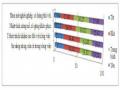 Results of Evaluating the Level of Dedication to Work of Human Resources at Tourism Enterprises in Da Nang City, 2017
(Source: Da Nang City Statistical Yearbook, 2012, 2016, 2020)
- Regarding the number of tourists visiting Da Nang City: In the period 2010 - 2020, the scale of tourists visiting Da Nang City has changed a lot and can be divided into 2 periods: 2010 - 2015 and 2016 - 2020, specifically:
+ Period from early 2010 - 2015: "river tourism developed slowly" (Da Nang City People's Committee, 2017), therefore, the number of river tourism visitors increased more slowly, within 5 years only
increased from 100 thousand visitors to 197.3 thousand visitors, an increase of nearly 2 times. In particular, from 2010 to 2012, the number of tourists decreased from 100 thousand visitors to 80 thousand visitors. The reason for the decrease in tourists is that this is the new stage of exploiting tourism, so the number of ships and wharves is still small, the ships are mainly converted from fishing boats, tourism products are still unattractive, so they have not created attraction for tourists and tourism businesses. Since the end of 2014, the People's Committee of Da Nang City issued Decision No. 48/QD-UBND on policies to encourage and support investment in developing tourist piers at destinations and tourist ships in inland waterway tourism routes in Da Nang City and calling on investors to innovate the tourism ship system to improve professionalism in developing tourism. Therefore, from 2013 to 2015, tourism activities had more investment, so the number of tourists also increased slightly from 173 thousand to 173.3 thousand.
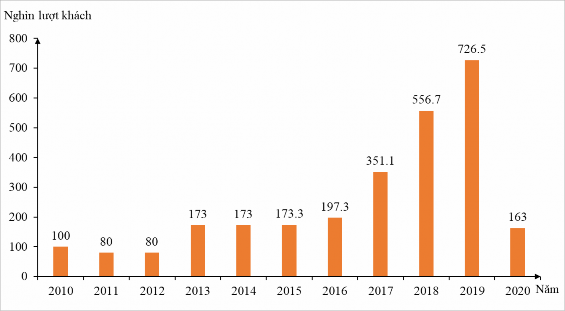
Figure 2.3. Number of river tourists in Da Nang city, 2010 - 2020
(Source: Da Nang City People's Committee, 2020; Da Nang City Department of Tourism 2021)
+ Period from 2016 - 2020: This is the period when tourism activities are invested and developed, so the number of tourism visitors in Da Nang City has grown rapidly, especially from 2016 to 2019, the number of tourism visitors increased from 197.3 thousand to 726.5 thousand, an increase of 3.7 times compared to 2016. During this period, Da Nang City identified tourism as a typical type of tourism of the city and gradually turned tourism into a key tourism product. In particular, after the sinking of the Thao Van 2 ship in 2016, the city.
Da Nang has made a change in investing in infrastructure and tourism infrastructure, new ships have replaced converted fishing boats, and recreational activities on ships and on the riverbank have been focused on attracting tourists. Many new architectural works with impressive designs along the river have been inaugurated, such as the Carp Transforming into a Dragon Statue, the Administrative Center Building, Han River Port, Love Bridge, Bach Dang Walking Street, etc., creating landscape highlights and attracting tourists as well as tourism businesses to put into operation. In 2020 alone, due to the general impact of the Covid-19 pandemic, the number of tourism visitors has decreased sharply, the number of tourism visitors has decreased to 163 thousand visitors, down 4.5 times compared to 2019.
+ Although the number of tourists has increased over the years, when comparing the number of tourists with the total number of tourists in Da Nang City, the proportion of tourists is still quite low. In 2010, tourists only accounted for 5.6% of the total number of tourists in Da Nang City. By 2019, it increased to 7.5% of the total number of tourists in the city, and in 2020, it was only 5.2%.
- Regarding the structure of the tourism market, there is an imbalance between the domestic tourism market and international tourism. When tourism was first put into operation in the period of 2010 - 2015, the market was mainly domestic tourists. But in the later period from 2016 - 2020, there was a change, most of the tourism visitors were international tourists, accounting for more than 90% of the total number of tourism visitors, while domestic tourists only accounted for 10%.
% of total visitors. This shows that currently the domestic tourism market still has great potential to exploit. In addition, in the international tourism market, there is also a huge difference in the sources of visitors. The majority of international tourism visitors are visitors from the Northeast Asian market (China and Korea) with 85% of the total number of visitors, while the international tourism market from other countries only accounts for 5% of the total number of visitors. Therefore, it is necessary to have an adjustment policy to attract international visitors from other markets, especially the markets in Southeast Asia, North America, and Europe.
* Average spending of river tourists
- Due to limitations in tourism revenue data, the data on average tourism visitor spending is only calculated for the period 2016 - 2020. In general, the average tourism visitor spending in Da Nang City fluctuates, in which from 2016 to 2019, the average tourism visitor spending tends to decrease from 1,312.4 thousand VND/visitor to
896.5 thousand VND/guest. From 2019 to 2020, the average spending of tourists tends to increase from 896.5 thousand VND/guest to 1296.1 thousand VND/guest.
- Compared to the average spending of tourists in Da Nang City, the average spending of tourists for tourism services tends to increase in the period 2016 - 2020, specifically from 2016 to 2018, the average spending of tourists for tourism services increased slightly from 400.4 thousand VND/guest to 588.3 thousand VND/guest. From 2018 to 2020, it increased to 1098.2 thousand VND/guest. This shows a positive change in quality, the investment in tourism services of Da Nang City has initially brought positive results.
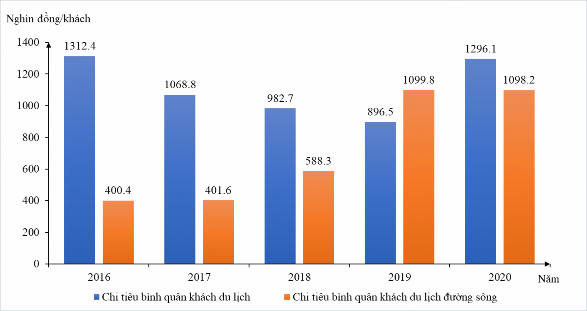
Figure 2.4. Average spending of river tourists in Da Nang city, 2016 - 2020
(Source: Processing from Da Nang City People's Committee, 2020; Da Nang City Department of Tourism 2021)
Although there is an increase in the average spending of tourists, compared to the average spending of tourists in Da Nang City, it is still low. Specifically, in 2016, the average spending of tourists was only 30% of the average spending of tourists in the whole city. In 2020, it increased to 84.7% compared to the average of the whole city, but this result is still low. This shows that the efficiency of tourism activities is still not high, not satisfying the needs of tourists to be willing to pay. Therefore, investment in tourism development needs to focus on both quality depth and improving service quality to satisfy tourists so that they can prolong their participation, payment and experience tourism products.
* Evaluation of tourist satisfaction with river tourism in Da Nang city
- Overview of research sample
The results of data collection and verification of 432 valid questionnaires, descriptive analysis of the sample, are shown in (Appendix 9) .
Of the total 432 tourists, the proportion of male and female tourists was almost equal, with 199 men, accounting for 46.1%, and 214 women, accounting for 49.5%. The remaining 19 tourists, accounting for 4.4%, did not provide gender information. The proportion of male and female in the research sample was almost equal, ensuring the representativeness of each gender's viewpoint.
In terms of age, most of the tourists are between 26 and 40 years old with 178 tourists, accounting for 44.7% and from 18 to 25, accounting for 41.2%. Tourists are between 41 and 55 years old, under 18 years old and over 55 years old, corresponding to 44, 9, 8 tourists, accounting for 10.2%; 2.1% and 1.9% respectively. With the proportion of tourists mainly between 18 and 55 years old accounting for 96.1%, tourists have a complete understanding of the research issue.
Regarding marital status, single tourists accounted for 54.9% and married tourists accounted for
45.1%. This ratio shows the balance of marital status in the survey sample.
Regarding income, the results show that tourists with income from 10 to 25 million account for the highest proportion with 39.8%. Tourists with income from 5 to 10 million are in second place with 18.4%. Corresponding to the next positions are tourists with income below 5 million, none and over 25 million, specifically 17.1% of tourists have income below 5 million; 14.1% have none and 10.6% have income above 25 million.
There were 244 new tourists visiting Da Nang City for the first time (56.5%), 135 tourists for the second time and 53 tourists for 2 times or more.
Access to destination information is conveyed to tourists through many different forms and means. For tourism, information channels such as the internet, television, newspapers, magazines, businesses, business agents or from relatives and friends, etc. provide important information to customers and strongly influence their destination selection behavior. Survey results show that the main source of information for tourists about tourism activities is mainly through information from businesses and tourism service agents with 42.8%, followed by the internet with 31.9%. Sources of information
Information from relatives, friends, television, newspapers and magazines accounted for 12.7% and 12.5% respectively.
- Results of evaluating tourists' satisfaction with river tourism in Da Nang city
The model results are shown in Table 2.6.
Table 2.6. Results of regression analysis of the research model
Model
Unstandardized coefficient | Standard coefficient chemical | T | Significance level | Multicollinearity index | |||
B | Error standard | Β | Handicap receive | Coefficient exaggerated | |||
Constant | - 0.105 | 0.180 | - 0.582 | 0.561 | - 0.105 | ||
Tangible means (PTHH) | 0.137 | 0.030 | 0.151 | 4,510 | 0.000 | 0.397 | 0.137 |
Reliability (DTC) | 0.141 | 0.035 | 0.148 | 4,075 | 0.000 | 0.452 | 0.141 |
Response capacity application (SDU) | 0.207 | 0.030 | 0.228 | 6,838 | 0.000 | 0.435 | 0.207 |
Safety (DAT) | 0.187 | 0.032 | 0.209 | 5,936 | 0.000 | 0.477 | 0.187 |
Attractiveness (DHD) | 0.375 | 0.033 | 0.415 | 11,467 | 0.000 | 0.657 | 0.375 |
(Source: Thesis author) Specifically, the proposed hypotheses are all accepted. Accordingly, all 5 factors including tangible means, reliability, responsiveness, safety and attractiveness have a positive correlation with tourists' satisfaction with tourism services in Da Nang City.
The linear regression equation with standardized regression coefficients is as follows:
HL=0.415 x DHD+ 0.228x SDU + 0.209 x DAT + 0.151 x PTHH + 0.148 x DTC+
The factors Attractiveness, Responsiveness, Safety, Tangibles and Reliability have coefficients of 0.415; 0.228; 0.209; 0.151 and 0.148 respectively and are positively related to tourists' satisfaction with DDL. This corresponds to the level of influence on tourists' satisfaction with DDL in decreasing order. At the same time, the corresponding coefficients of each factor also show the change (increase/decrease) in satisfaction when there is a change (increase/decrease) in the factors, specifically:
+ When tourists rate the criterion "Attractiveness" by 1 point, their satisfaction with tourism activities in the research area increases by 0.415 points.
+ When tourists rate the criterion "Responsiveness" by 1 point, their satisfaction with tourism activities in the research area increases by 0.228 points.
+ When tourists rate the "Safety" criterion by 1 point, their satisfaction with tourism activities in the research area increases by 0.209 points.
+ When tourists rate the criterion "Tangible means" increasing by 1 point, their satisfaction with tourism activities in the research area increases by 0.151 points.
+ When tourists rate the criterion "Reliability" increasing by 1 point, their satisfaction with tourism activities in the research area increases by 0.148 points.
The role of factors in tourist satisfaction with tourism in Da Nang city in percentage (%) is shown as follows:
Table 2.7. The role of factors in tourists' satisfaction with river tourism in Da Nang city
Factor
Standard coefficient chemical | Total coefficient standardize | Level affect (%) | |
Attractiveness | 0.415 | 1,151 | 36.1 % |
Response capacity | 0.228 | 19.8 % | |
Safety | 0.209 | 18.1 % | |
Tangible means | 0.151 | 13.1 % | |
Reliability | 0.148 | 12.9 % |
(Source: Thesis author)
The results from Table 2.7 show that “Attractiveness” is rated as having the strongest influence on tourist satisfaction with tourism services in Da Nang City, reaching 36.1%. “Responsiveness” is rated second with 19.8%. Other factors with decreasing ratings are “Safety”, “Tangibles” and “Reliability” with 18.1% respectively.
%; 13.1% and 12.9%. Therefore, to meet the satisfaction of tourists with tourism services in Da Nang city, it is necessary to pay attention to all of the above factors, in which priority should be given to implementing measures in order of priority from factors that have a high impact on tourist satisfaction to factors with a low impact level.