
3. The role of bank cards
For Banks
Banks can mobilize idle capital from the population to meet the capital needs of the economy : The bank card business brings revenue to banks because banks not only generate revenue from customer fees but also payment by card through banks creates favorable conditions for banks to mobilize capital at low prices, this additional capital can be used by banks to invest in production and business. [14]
On the other hand, bank cards also bring banks other intangible benefits such as:
- Bank cards help promote brand image and enhance the position of the bank: Bank cards have the outstanding advantage of being able to reach the community, a very large number of customers. Many banks accept losing money in card business, but still promote it because they consider it the most effective image promotion tool. On the bank card, there is always the name and logo of the bank and therefore banks need to consider bank cards as an effective means of promoting to the public, so in addition to developing the features of the card, a beautiful and eye-catching design is very important.
Maybe you are interested!
-
![Experience in Bank Marketing Activities in Some Countries [4] & [24]](https://tailieuthamkhao.com/en/uploads/2024/08/22/experience-in-bank-marketing-activities-in-some-countries-4-24-120x90.jpg)
![Experience in Bank Marketing Activities in Some Countries [4] & [24]](data:image/svg+xml,%3Csvg%20xmlns=%22http://www.w3.org/2000/svg%22%20viewBox=%220%200%2075%2075%22%3E%3C/svg%3E) Experience in Bank Marketing Activities in Some Countries [4] & [24]
Experience in Bank Marketing Activities in Some Countries [4] & [24] -
 The effectiveness of marketing communication activities for the program "An gia lap nghiep" for individual customers at Vietnam Joint Stock Commercial Bank for Investment and Development - Thua Thien Hue branch - 13
 -
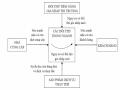 Factors Affecting Bank Marketing Activities
 -
 Causes and Limitations in Marketing Activities of Tien Phong Commercial Joint Stock Bank
 -
 Solutions to improve marketing activities of Vietnam Bank for Agriculture and Rural Development - Bac Ninh Branch - 11
- Bank cards have the ability to contribute to attracting customers to banks: with the flexibility and utilities that it brings to all related subjects, bank cards have been attracting the attention of the whole community and increasingly affirming its position in banking business activities. The use of bank cards is not only economic but also has spiritual value. That means when customers use bank cards, if the card product is safe and convenient, it will create sympathy from customers for not only the card service but also other services of the bank.
For cardholders

Another important thing is that bank cards help change people's spending and payment habits (from cash payments to card payments).
This is a convenient, safe and time-saving payment method. Customers can forget about the troubles and inconveniences caused by using cash, do not have to worry about losing money, counterfeit money or problems with small change, etc. When needing to pay for goods and services, they can use payment cards at card acceptance points or withdraw money when needed at cash advance points of the bank or branches, transaction offices of that bank or allied banks nationwide.
In addition, cardholders enjoy more and more card benefits due to increasing competition between banks. In addition to basic functions such as withdrawing money, printing account statements, transferring money, customers can enjoy many other additional benefits (overdraft, loyalty, paying service bills, etc.).
For society
Card payments contribute to the effective implementation of the national monetary policy by enhancing the circulation of money in the economy, increasing the turnover of money, unblocking different capital flows, creating important conditions for controlling the volume of payment transactions of the population and the entire economy, thereby creating the premise for calculating the amount of money supply and effectively implementing monetary policy.[14]
In addition, card payments help limit underground economic activities : cardholders pay for goods and services by card through accounts opened at banks. Therefore, banks can control economic transactions, contributing to minimizing the negative impacts of underground economic activities, and enhancing the State's initiative in regulating the economy.[14]
This is a civilized non-cash payment method, thus reducing the cost of cash circulation and the disadvantages of cash payments such as counterfeit money, poor quality money. In the world, cards have become a popular means of payment, especially in developed countries, all payment transactions
All are done through accounts so that the government can easily manage people's income.
At the same time, the use of bank cards also contributes to helping the Vietnamese economy integrate faster with the regional and world economy because this is a popular payment method in the world.
4. Participants in the card market
Although the process of making a transaction takes place in a very short period of time, it involves many participants: cardholder, card accepting agent and card issuing bank, card paying bank and international card organization.
International card organization
Is an organization that links members together, sets regulations that members must apply and comply with in a unified global system [25] . Any bank currently operating in the field of international payment cards must join an international card organization.
International card organization is also the processing, licensing and payment center of its members.
Card Issuing Bank (CB)
Is a bank authorized to issue cards, can be an official member of an international card organization, is a bank that provides credit to customers in the form of credit cards. The issuing bank is responsible for receiving card applications, processing and issuing cards, opening and managing card accounts, and is responsible for card payments. [25]
Through the issuance of bank cards, the issuing bank can gain some benefits: collecting fees for payment, issuance and lending. Through the issuance of bank cards, it is possible to attract new customers and maintain old customer relationships. At the same time, other businesses also develop such as credit, deposit taking and foreign exchange trading.
Cardholder
Is an individual (or authorized person if a company employee) authorized by the issuing bank to use the card within an allowed limit (revolving credit limit and deposit amount) [25]
Card payment bank (CBP)
As a member of an international card organization, accepting international credit card payments or cash advances through a network of card acceptance facilities, ATMs or cash advance points (POS) [25]
For payment banks, there will be risks when advancing payment to customers and the issuing bank will delay payment when the issuing bank encounters difficulties.
Revenue from card payment activities of payment banks is not really much and only accounts for a very small proportion of total revenue from banking services.
Paying Agent Bank (PAB)
Is a bank selected by the State Bank to perform a number of common card payment acceptance services through agent bank contracts such as collection, payment with credit institutions, and cash advances to cardholders. [25]
Card Acceptance Unit (CPO)
As units providing goods and services, signing contracts to accept cards.
Cash advance points : are units, agent banks, authorized by the State Bank to advance cash to cardholders.
Card accepting units also gain certain benefits through card services in that the card accepting units can diversify payment methods and reduce costs of document management, invoices, counting costs and cashier management (This cost is often quite large and accounts for about 3% of total revenue).
II. OVERVIEW OF CARD MARKETING
We all know that the products that banks provide to customers are in the form of services. Or banking products are banking services. Banking services include many services, including card services. Therefore, it is necessary to
understand that card marketing is marketing for card services. And moreover, the type of marketing applied in banking is not marketing in general businesses but banking marketing. Therefore, card marketing or more specifically, banking marketing for card services.
Therefore, to understand card marketing, we must understand bank marketing and finally its application in developing card services.
1. Concept and role of bank marketing
1.1. Concept of Bank Marketing
For businesses today, Marketing is an indispensable activity in business operations.
Bank marketing is a management system of a bank to achieve the bank's set goal of best satisfying the capital needs, as well as other banking services for selected customer groups through policies and measures aimed at the ultimate goal of profit .[10]
1.2. The role of bank marketing
Bank marketing is also based on the common foundation of basic marketing, which plays a huge role in the success or failure of each bank in the market mechanism.
With the ultimate goal of profit, commercial banks must admit that marketing is a business tool, considered an indispensable modern banking technology if they want to survive and develop.
The role of bank marketing is reflected in five important points: (i) Marketing helps connect banks and the market, (ii) Marketing contributes to creating competitive positions for banks, (iii) Marketing is an effective tool to limit risks and finally (iv) Marketing is an effective tool to attract customers.
1.2.1. Marketing becomes the bridge connecting bank activities with the market
The market is both the service object and the operating environment of the bank. The activities of the bank with the market have an organic impact and direct influence on each other. Therefore, understanding the market demand to closely link the activities of the bank with the activities of the bank is highly effective. Marketing helps bankers recognize market factors, customer needs for products, goods and services and their fluctuations. On the other hand, Marketing is a tool to guide the flow of capital, exploit the ability to mobilize capital, and divide capital according to market needs in a reasonable way. R.Brion and J.Staffort in the article "The legend of Marketing in banking activities" clearly affirmed the two-sided role of bank Marketing: the first side lies in determining the Marketing mix on the basis of market research, grasping business opportunities. The second aspect is expressed in the coordination of all banking activities to satisfy customers' needs and desires at the level that is most beneficial to customers.[10]
1.2.2. Marketing contributes to creating a competitive position for banks
The market mechanism is the competitive mechanism. Moreover, with the continuous development of the world economy as well as the domestic economy, competitors are not only domestic banks and non-bank financial institutions but also strong competitors in the international arena. Therefore, how to improve competitiveness is always the top concern of commercial banks.
We know that the banking market is a very monotonous market in terms of both customers and products. Therefore, launching a new product is a difficult task and requires a lot of time and effort. However, banks are the only units that cannot monopolize a new product (imitating banking products and services is very easy and not illegal). Therefore, commercial banks must have marketing strategies to create differentiation in their services to attract customers. Moreover, as soon as they dominate the market, commercial banks also need to immediately carry out protection strategies as well as market consolidation strategies to ensure that competitors cannot quickly copy and imitate, and proceed to dominate the newly opened market of their bank.[3]
Therefore, marketing not only researches customers but also researches and analyzes competitors. Based on a clear understanding of the potential of competitors, marketing managers will have predictions about the reactions as well as the strategies that competitors intend to carry out and have solutions to deal with them. Thus, thanks to conducting marketing activities according to strategic thinking on the basis of calculating the strength of competitors in advance, commercial banks are always proactive, not falling into a confusing situation when being resisted or attacked by competitors, so the possibility of success is higher.
1.2.3. Marketing is a tool to minimize risks
Banking is a high-risk business. Therefore, to be successful in this field, bank managers must accept risks. Without risk, there is no business, but if the risk is too high, it will lead to bankruptcy. The problem here is how to know what is an acceptable level of risk. So accepting risks here does not mean recklessly disregarding everything, but must be based on market analysis and prediction. Marketing will be an effective tool for bank managers in this case. With the nature of its work, marketing will not only help banks know the needs of customers but also inform them of the potential risks in each customer, about financial capacity, honesty, thereby helping managers make the right decisions about providing services to customers. Furthermore, by studying and closely following the fluctuations of the marketing market, valuable information can be provided to help bank managers make timely decisions to deal with the market and competitors [3]. Thereby, banks can fully anticipate all risks and proactively and promptly come up with solutions, conducting business safely while still ensuring profits.
1.2.4. Marketing is an effective tool to attract customers.
The characteristic of banking services is that they are very easy to imitate and imitate legally, so it is very difficult to maintain copyright. On the other hand, compared to commercial banks in the world, in general, banking services in Vietnam today are all under
traditional services and are quite similar among commercial banks. In order to attract and retain customers, commercial banks have paid more attention to designing and implementing new services that are more suitable to customers' needs. However, the performance of these new services is often not high, mainly at the experimental level and some services even fail and cannot be further implemented. This situation is due to the fact that most new services are launched according to the subjective opinions of bankers. Market penetration is not anticipated, the utility of the new service does not match the needs of customers, and the quality of service is unstable. To overcome this situation, there is no other way than for banks to build a reasonable marketing strategy, programmed from the time of understanding customer needs until the product or service reaches customers, satisfying their needs to the maximum. Only in that way can banks provide customers with the most suitable and fastest services, with the most reasonable prices or fees, creating the most comfortable and convenient feeling for customers in transactions. If they can do so, there is no reason why customers would not come to the bank. Moreover, the bank's products are also highly public and socialized, meaning that the reviews of customers who have used the service have a great influence not only on the customer's own decision on whether to continue to maintain a relationship with the bank, but also on the decision of potential customers. Therefore, we can affirm that thanks to marketing activities, banks can retain old customers and attract new customers in the most effective way.
2. Characteristics of Bank Marketing
Bank Marketing is the application of principles and techniques of Commercial Marketing to the business activities of banks [10]. Therefore, Bank Marketing has distinct characteristics compared to Marketing in other fields, expressed through the following characteristics:
2.1. Bank Marketing is a type of service marketing.
In banking activities, products and services are inseparable, constantly developing and improving in quality and increasing customer satisfaction.