
LIST OF TABLES
Page
Table 1.1. Current teaching plan for Information Technology subject 20
Table 1.2. Content orientation of Applied Informatics 31
Table 1.3. Computer Science content orientation 32
Maybe you are interested!
-
 Developing the capacity to use information and communication technology in teaching Informatics for Ethnic University preparatory students - 1
 -
 Managing the application of information technology in teaching at national standard primary schools in Dien Bien Dong district, Dien Bien province - 16
 -
 Managing information technology projects at the Department of Customs Information and Statistics - 11
 -
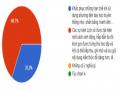 Chart of Teachers' Opinions on the Role and Significance of Applying Information Technology in Teaching History in High Schools (Unit %)
 -
 Application of Information Technology in Teaching at Secondary Schools
Table 2.1. Number of classrooms, subject classrooms, IT classrooms 52
Table 2.2. Managers, teachers, staff 53
Table 2.3. Number of students 54
Table 2.4. Academic results 55
Table 2.5. Conduct results 56
Table 2.6. Quality of Information Technology subject 57
Table 2.7. Facilities and equipment for teaching Informatics 59
Table 2.8. Current status of management staff 60
Table 2.9. Current status of managers and teachers of Information Technology 60
Table 2.10. Teaching management work 63
Table 2.11. Perception of innovation in teaching methods of managers and teachers 64
Table 2.12. Current status of teaching planning activities 66
Table 2.13. Professional profile of teachers 67
Table 2.14. Current status of teaching assignment 68
Table 2.15. Current status of lesson preparation and preparation for grade 70
Table 2.16. Current status of teachers' teaching hours management 71
Table 2.17. Current status of management of teaching observation and evaluation activities
teacher 72
Table 2.18. Current status of innovation management of teaching methods 74
Table 2.19. Current status of student learning activities management 76
Table 2.20. Current status of testing and evaluating students' learning outcomes 78
Table 2.21. Current status of professional training of teachers 79
Table 2.22. Current status of management of facilities, teaching equipment, and classrooms
Computer Science Practice 80
Table 3.1. Survey of the urgency and feasibility of topic 102
Table 3.2. Feasibility survey 104
LIST OF CHARTS, FIGURES
Chart 2.1: Class size 53
Chart 2.2: Managers, teachers, staff 54
Chart 2.3: Student size 55
Chart 2.4: Academic results 56
Chart 2.5: Conduct results 57
Chart 2.6: Quality of Information Technology subject 58
Chart 2.7: Number of computers used in teaching 59
Figure 1.1: The relationship between teaching and learning 12
INTRODUCTION
1. Reason for choosing the topic
Today, the 4.0 revolution has had a huge impact on many areas of the country's economic and social life. It opens up many opportunities, but also presents us with many challenges. Assessing the huge impacts of the 4.0 industrial revolution will impact many aspects of social life. Our Party and State have paid attention to directing the implementation of agencies and sectors to proactively mobilize, innovate, and respond to this revolution. Resolution No. 52-NQ/TW dated September 27, 2019 of the Politburo stated " The Fourth Industrial Revolution opens up many opportunities, but also poses many challenges for each country, organization and individual; has had and is having an increasingly strong impact on all areas of the country's economic and social life " [13].
So what do we need to do to grasp the achievements of this revolution? After more than 30 years of innovation and opening up, our country has had strong developments in economy, science and technology... Thanks to the determination of the Party, State and People, our country has been changing. Many achievements in economy, culture, science and technology, health... have been recognized by the world. In which, the two fields of economy and culture have become strong development factors, at the same time promoting the development of education and training, science and technology. In recent years, industrial revolutions in the world have taken place continuously, the knowledge economy has gradually gained the upper hand. This poses many significant challenges to countries in terms of human resources, especially high-quality human resources. As in our country, to ensure sustainable development, it is necessary to have a strategy to develop high-quality human resources to meet the requirements of society. In particular, what needs to be done now is to innovate education to improve the quality of human resources, equipping the young generation with an advanced and modern knowledge foundation that is appropriate and necessary for the global trend.
In the context of rapid globalization, the market economy is constantly changing, science and technology in the world are constantly developing, more and more new technologies are being born to serve life. To keep up with the development trend of the times, the promulgation of Resolution 29/NQ-TW dated November 4, 2013 on fundamental and comprehensive innovation of education and training to meet the requirements of industrialization and modernization in the conditions of a socialist-oriented market economy and international integration is necessary in the current context. Innovation takes place in all subjects to comprehensively develop both qualities and abilities, harmonize morality, intelligence, physique, aesthetics and best promote the potential of each student, thereby forming a generation of knowledgeable and capable youth to serve the development needs of the country.
With the current general education program, which is being built according to the content orientation, focusing on knowledge transfer, not focusing on helping students apply the knowledge they have learned into practice. According to this model, knowledge is both the "material", "input" and "result", "output" of the educational process. Therefore, students have to learn and memorize a lot but the ability to apply and use it in real life is very limited.
The new general education program is built according to the capacity development model, through basic, practical, modern knowledge, and active methods of student activities, helping students form and develop the qualities and capacities expected by schools and society.
Among the reformed subjects, Information Technology plays a key and important role in equipping students with the knowledge and skills of the new era such as: the ability to search, receive, expand knowledge and be creative in the age of information, connection and globalization.
The subject of Information Technology has the mission of helping students form and develop information technology skills with the great purpose of: students must know how to use and manage information technology and communication (IT) means; students know
appropriate behavior in the digital environment; students know how to solve problems with the support of ICT; and students know how to collaborate in the digital environment.
So, how can the current teaching and learning of Informatics approach and meet the requirements of the new general education program? What should Informatics teachers do to promote students' abilities and strengths, and at the same time help students exploit the "endless" resources of humanity, contributing to building and forming high-quality human resources for the country?
For the above reasons, the author would like to choose the topic " Management of teaching and learning information technology at high schools - Yen Lap District - Phu Tho Province according to the orientation of the new general education program ".
2. Research purpose
Based on theoretical research and the current status of teaching Informatics in high schools in Yen Lap district - Phu Tho province, from the assessment of the current situation, strengths, weaknesses that need to be overcome, a number of measures are proposed suitable to the actual conditions of the schools. In order to meet the requirements of teaching Informatics according to the orientation of the new general education program.
3. Research subjects and objects
3.1. Research object
- Teaching IT to high school students.
3.2. Research subjects
- Manage teaching activities of Information Technology at high schools in Yen Lap district - Phu Tho province according to the new general education program.
4. Research questions
- Given the requirements for goals and content in the Informatics subject according to the new general education program, what problems does the management of teaching Informatics pose for managers and what measures are needed to solve those problems?
5. Scientific hypothesis
From the current status of teaching management activities such as: content management, curriculum, innovation in teaching methods, innovation in assessment and evaluation... in the current IT program in high schools in Yen Lap district - Phu Tho. However, the management of teaching IT according to the new general education program still has many difficulties and shortcomings. If the study proposes measures to manage teaching activities suitable to the conditions of schools, it will overcome the difficulties in managing teaching activities of IT, thereby contributing to improving the quality and meeting the new general education program.
6. Research tasks
6.1. Research on theoretical basis of managing teaching activities of Information Technology for high school students according to the orientation of the new general education program.
6.2. Survey and analyze the current status of management of teaching and learning activities of Information Technology at high schools in Yen Lap district - Phu Tho province.
6.3. Propose measures to manage the teaching and learning of Information Technology at high schools in Yen Lap district - Phu Tho province to meet the new general education program. Test the urgency and feasibility of the proposed measures.
7. Limitation of research scope
- Regarding the subject: The topic focuses on finding measures to manage the program and teaching plan of Informatics at high schools - Yen Lap district.
– Phu Tho province.
- About time: Data collected in the last 3 school years of Luong Son, Yen Lap, and Minh Hoa high schools.
8. Research methods
The author combines the following methods to develop the research content in the thesis:
8.1. Group of theoretical research methods
- Research Directives and Resolutions of the Party, State, Ministry of Education and Training, Department of Education and Training and relevant levels related to the content of the topic.
- Research domestic and foreign articles, published scientific works, magazines, books, newspapers... related to the subject of Informatics and teaching Informatics in schools. From there, analyze and evaluate to find out the theoretical bases that have been researched and identify the problems that need to be solved.
8.2. Group of practical research methods
- Questionnaire survey method
Build student surveys and teacher opinion polls according to the following steps:
1) Develop an investigation plan.
2) Build survey forms.
3) Select a representative survey sample for the majority.
4) Processing collected documents and data.
5) Review the research results.
- Direct interview method
Use questions to interview teachers and students about teaching and learning conditions with the new Computer Science subject.
- Direct and indirect observation methods
Observe how teachers and students teach and learn in class and through other educational activities.
- Method of obtaining expert opinion
To develop research content or solutions, the author organizes to collect opinions from many people, including experts and colleagues. Send plans or issues to those who need opinions via email or post, or in person.
- In-depth interview method
Hold meetings with teachers to get their opinions on the current curriculum and what needs to be improved. Also talk to students to get feedback on teaching and learning methods and what needs to be improved.
8.3. Complementary research methods
Based on the results obtained, the author synthesizes, processes, and analyzes data using statistical functions of Microsoft Excel software.
9. Contributions of the topic
- In theory: determine scientific bases for managing teaching activities in Information Technology.
- In practice: propose solutions to help teachers improve teaching methods and planning methods in teaching Informatics at high schools in Yen Lap district - Phu Tho according to the new general education program.
10. Thesis structure
In addition to the introduction, conclusion and recommendations, references and appendices, the thesis is presented in 3 chapters:
Chapter 1 : Theoretical basis for managing teaching activities of Informatics at high schools according to the orientation of the new general education program
Chapter 2 : Current status of management of teaching activities of Informatics at high schools - Yen Lap district - Phu Tho province according to the orientation of the new general education program
Chapter 3 : Measures to manage teaching activities of Informatics at high schools - Yen Lap district - Phu Tho province to meet the requirements of the new general education program